Pomo Indians have lived in Northern California for at least 5,000 years, and like First Californians around the San Francisco Bay Area, they created culturally rich societies that AI programs cannot fully comprehend. This is ironic, since engineers creating AI systems in San Francisco and Silicon Valley aren’t able to fully appreciate the ways that people who have lived on the same ground the longest have perceived and thought.
The Pomo have lived from coastal Sonoma and Marin County to Clear Lake in the East. Clear Lake was culturally and naturally diverse enough to focus on in this article.
The Pomo linguistic family includes seven distint languages, which are mutually unintelligible. Two have been spoken around Clear Lake: Southeastern Pomo and Eastern Pomo. Robert Oswalt figured that the division between Northern Pomo and the southern group is a little over 1,500 years, which is about as long as the division between Western Romance languages and Romanian. The distance between the Pomo languages was hundreds of miles shorter; people had settled into their locations for a long time, sharing the same natural environment and traditions that their ancestors from mythic times did.
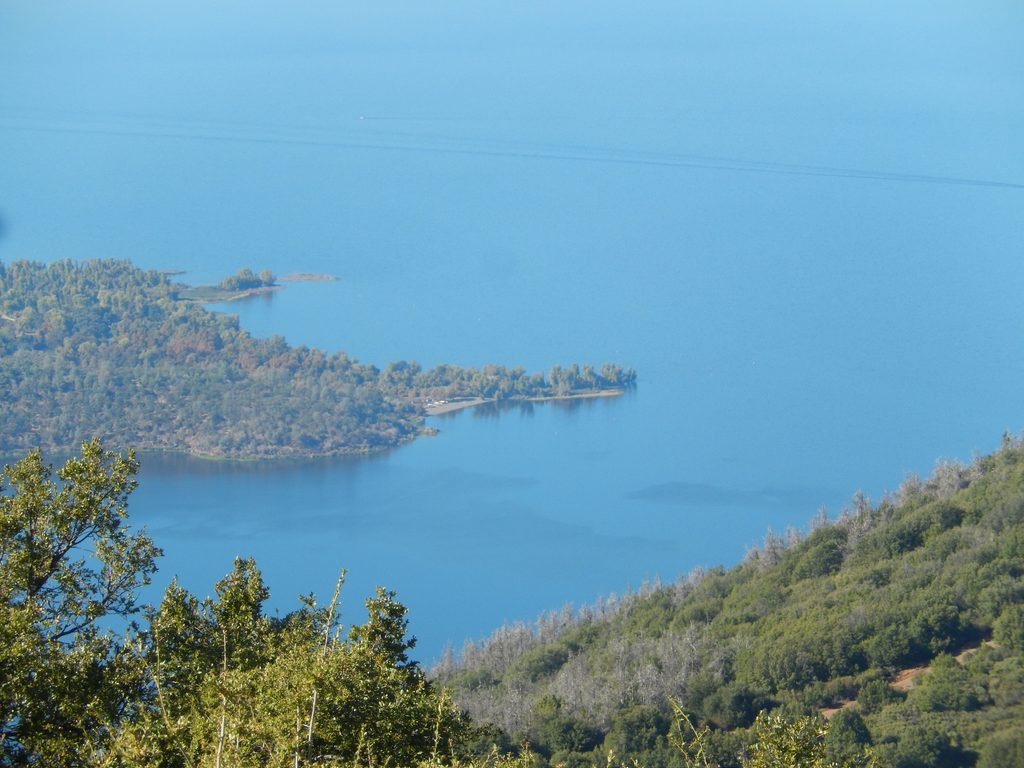
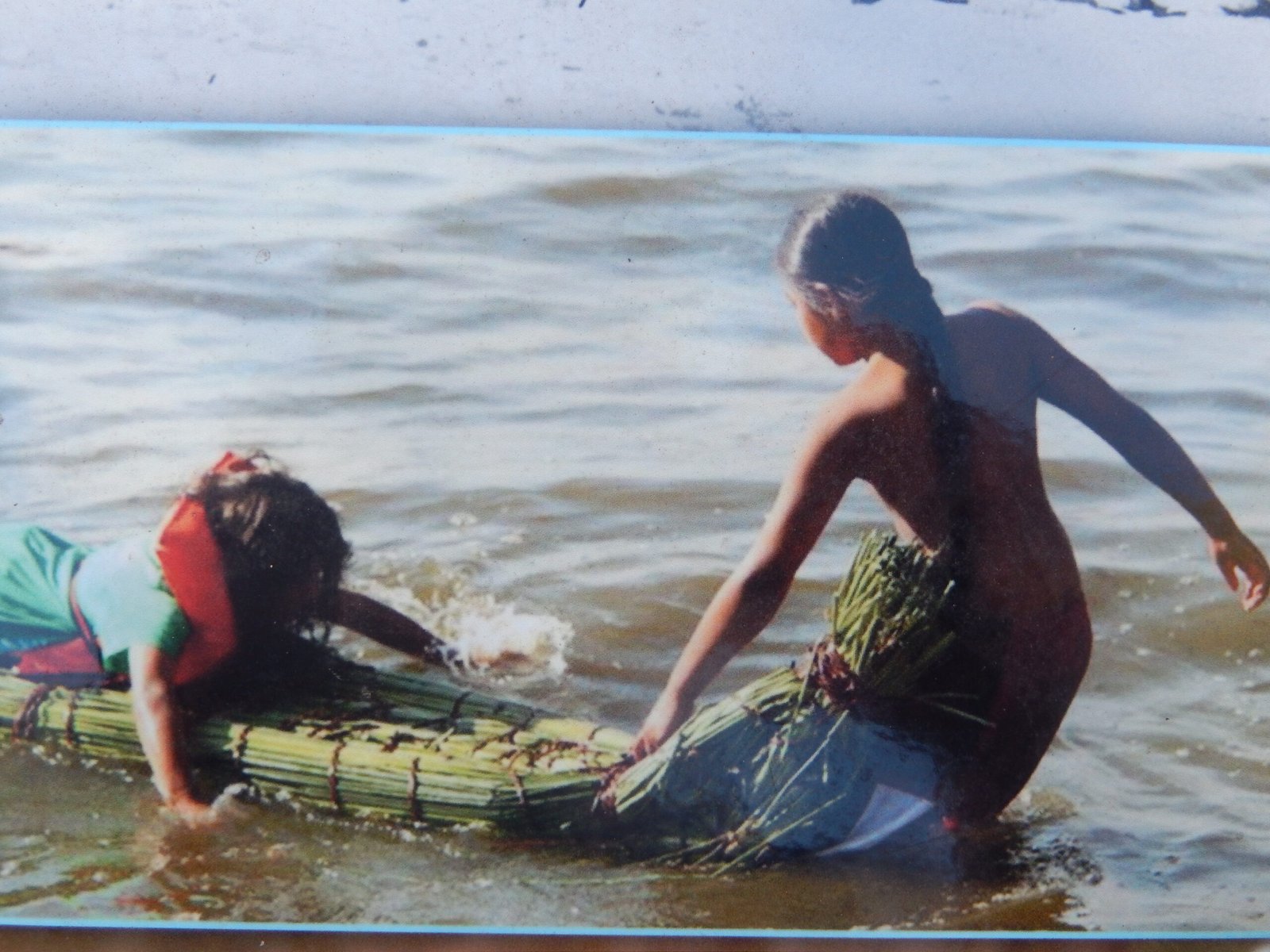
Local groups around the lake fished and hunted waterfall within marshes and adjacent waters. They used marsh plants for food and for manufacturing many essential things in daily life. Tules were used to construct moccasins, leggings, and some houses. Shredded tule was employe to make shirts, skirts, and bedding. The Pome used willow shoots, roots, and sedges to weave baskets, cradles, and fish traps. And they utilized bundled tule to fashion boats.
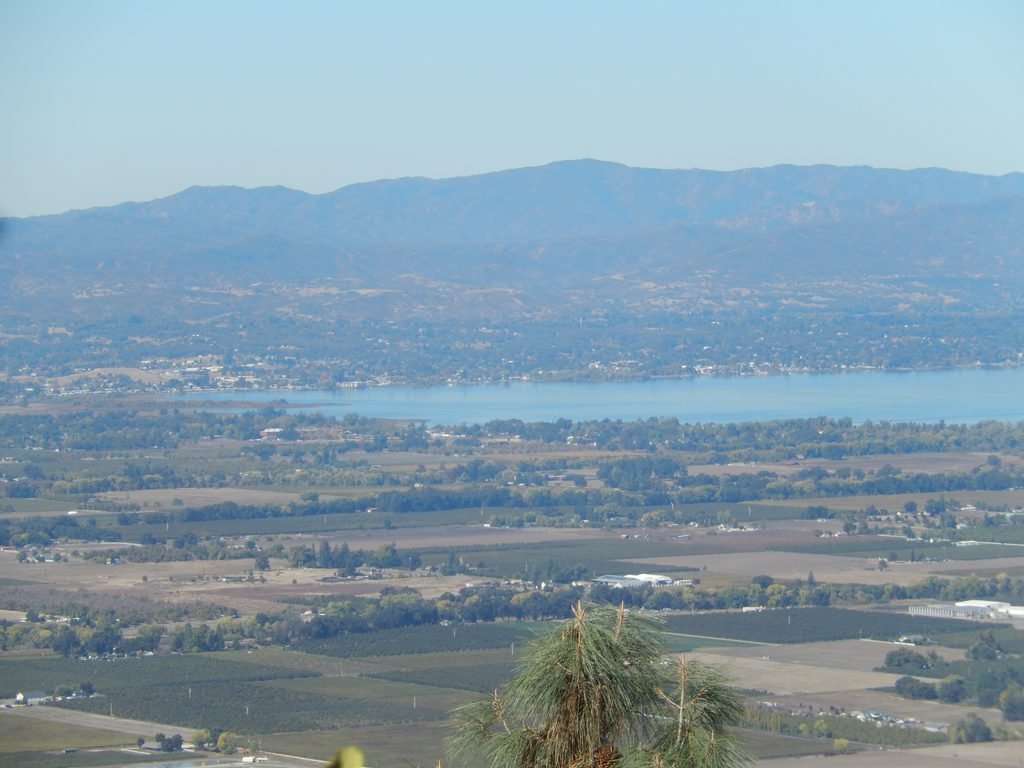
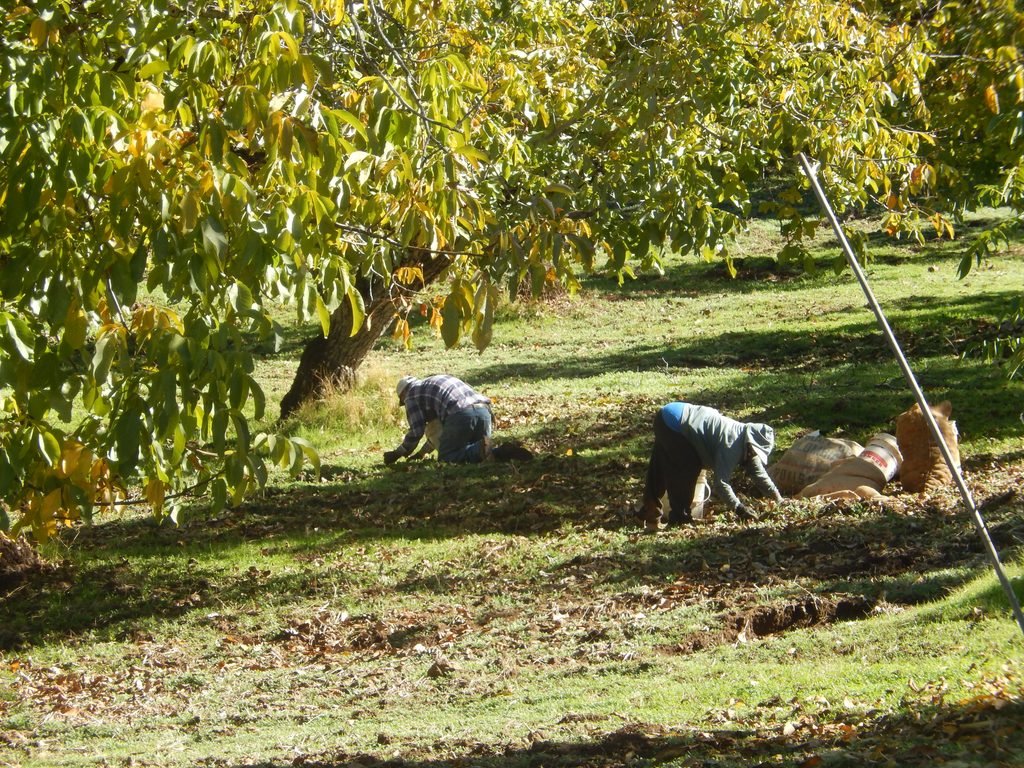
People could also hunt game and gather acorns, other nuts, and fruit on the plain by the lake’s northwestern shore and in the surrounding mountains.
The abundance of tule around the lake enabled the Pomo to become virtuoso basket makers. They used an unusually large number of weaving techniques, sometimes in the same basket. Some were five feet tall, which were probably used for storage. They also had an especially high number of decorative techniques and patterns, often covering the whole outer surface of baskets with feathers. Alfred Kroeber noted more than 800 designs appearing on about 300 baskets.
Many design patterns were named after animals, including deer-back, deer-teeth, turtle-neck, turtle-back, goose-excrement, grasshopper-elbow, kill-deer-eyebrow, quail-plume, crow-foot, batwing, and sunfish-rib. They were often combined with a descriptive term, such as barbed, pointed, short, round, large, downward, bulging, blank, white, half, single, imperfect, and resembling. A third class of terms qualified patterns’ names, including crossing, meeting, collected, on both sides, connected, close in a row, near, on, among, along, in the middle, tied, scattered, separated, leading, and following. All these terms allowed a huge number of permutations.
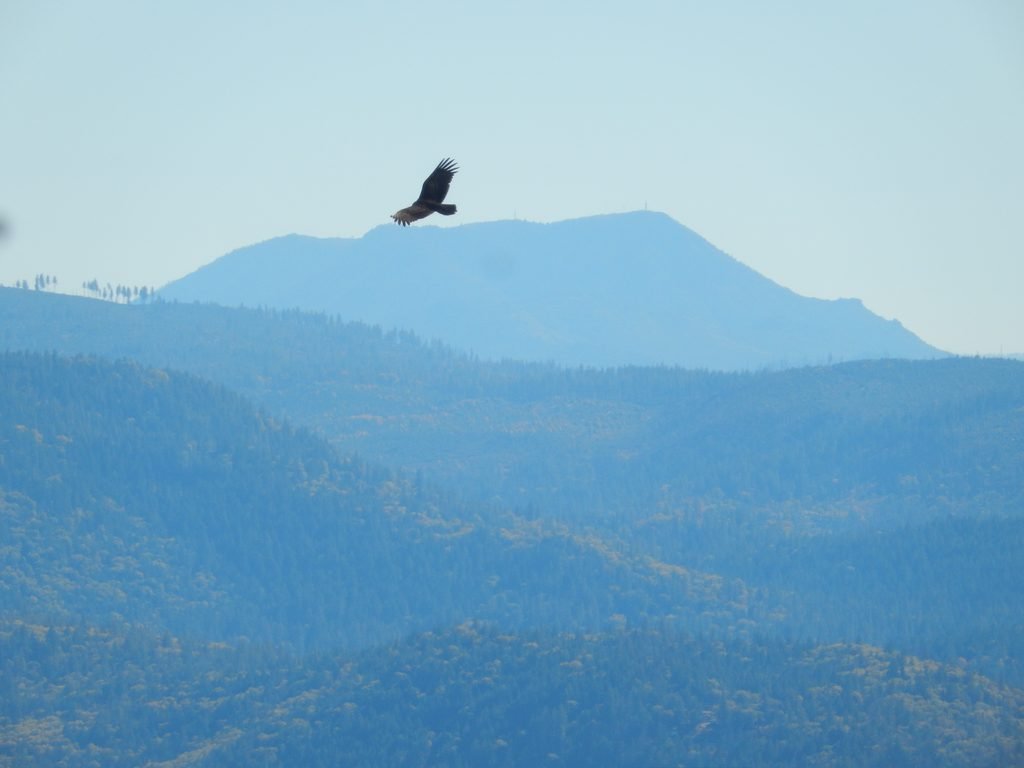
The prominence of animals in designs have complemented ideas that everything in the world is alive. Every being had a spirit, so animals and humans could fall in love with each other, even rattlesnakes. Some Pomo shared a legend of a girl who married a rattlesnake and had four children with him. Whenever they saw any people from the village, they told their mother, “We are going to bite them.” But she would say, “No, you must not do that. They are your relatives.” Pomo treated this story with a sense of humor because they felt that interchanging identities with animas was natural.
The natural environment also had human characteristics. Mt. Konocti is a volcano that rises about 3,000 feet above the shore. Its name means Mountain Woman (kno for mountain, and htai for woman). Local Pomo still consider it sacred, and they hold regular ceremonies there. The photo below is from the northeast,
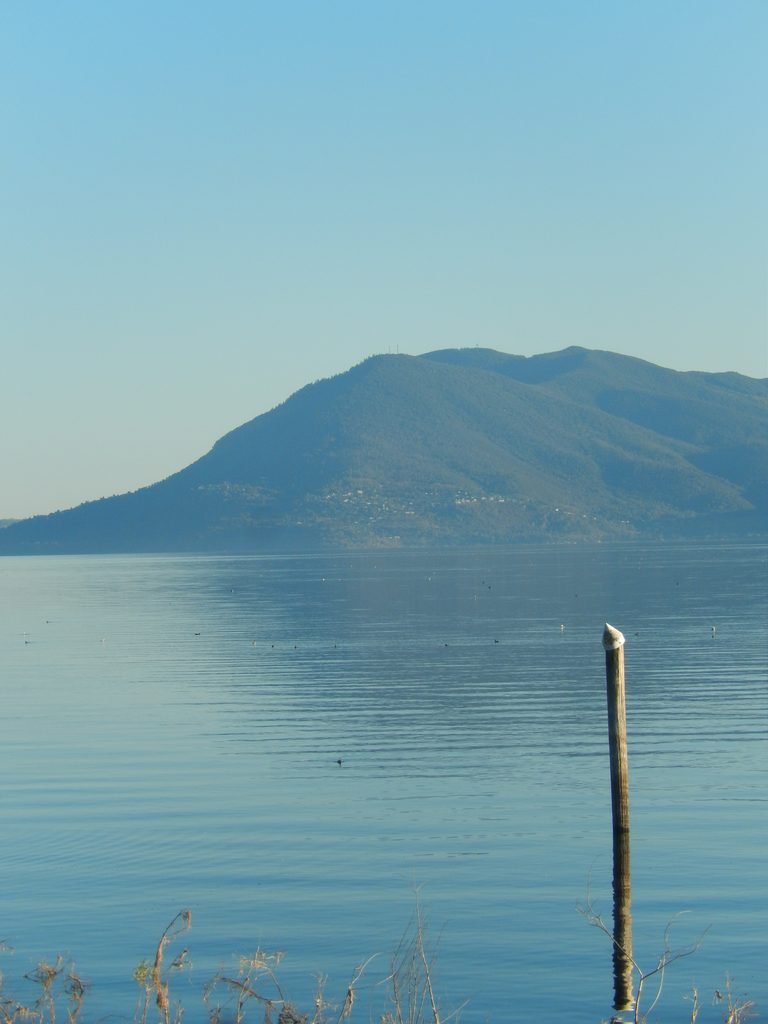
–and this one is from the southeast.
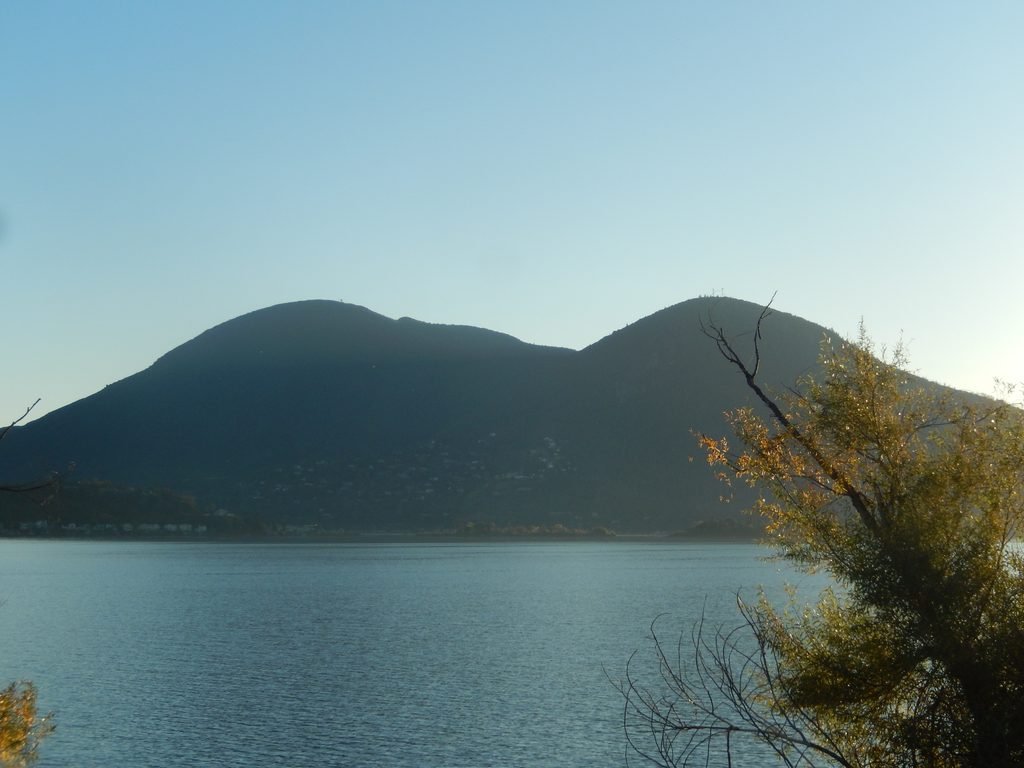
So the Pomo have shared a very intimate environment, as the Ohlone, Cherokee, and Navajo have.
In the 1870s Stephen Powers wrote that Pomo men paid a lot of attention to language studies and that leaders trained their sons to be polyglot diplomats. Malcom Margolin, in The Way We Lived, said that people had a rich ceremonial life, often dancing together. The man below was playing a bird-bone wistle.
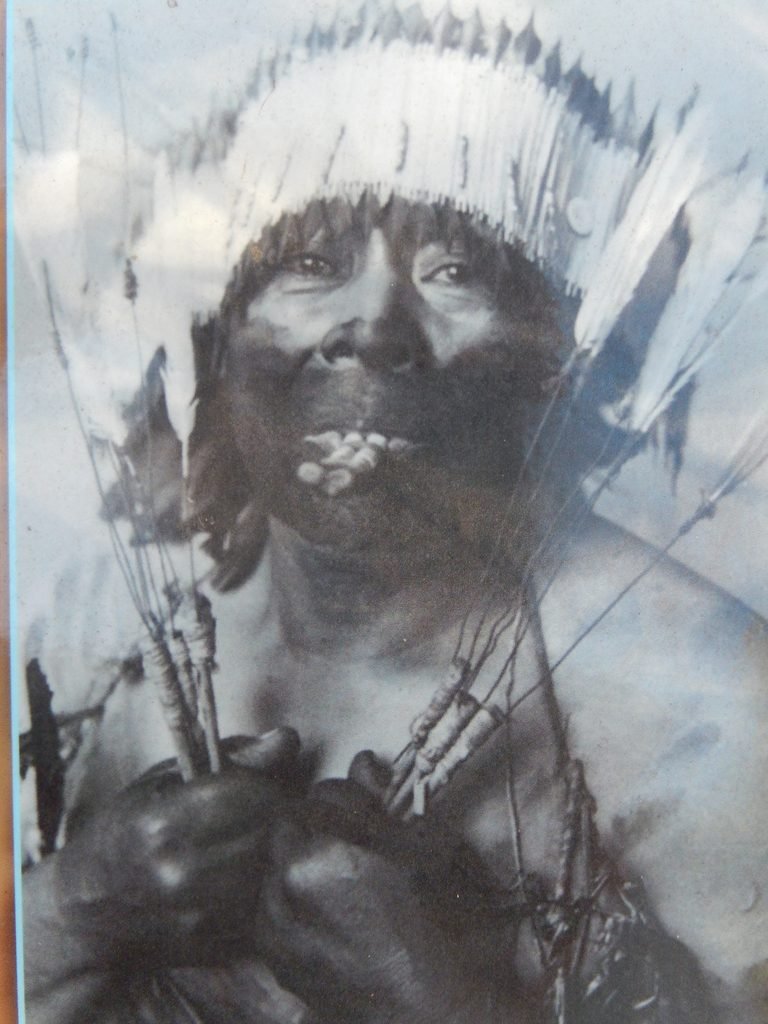
Initiation rites, secret societies, cult performances, seasonal festivals, and shamans suffused daily affairs with a strong sense of sacredness.
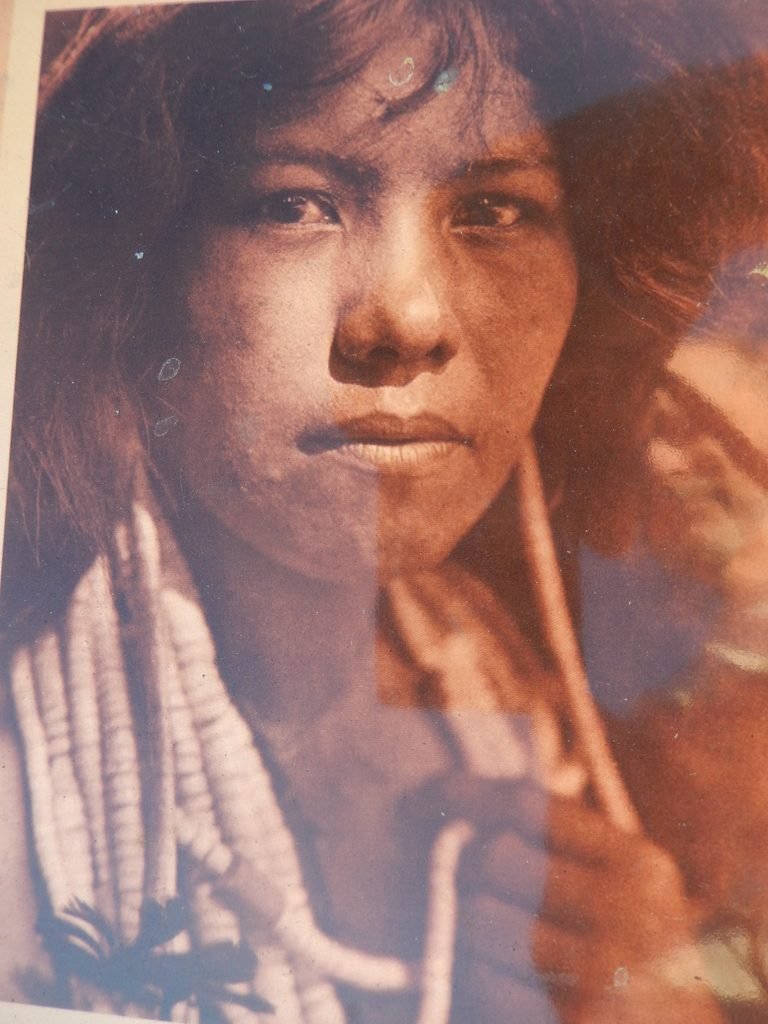
This woman proudly wears beads of shells, which Pomo used as currency.
People in Petra and Northern Thailand also created wealthy cultural landscapes in small, intimate places.