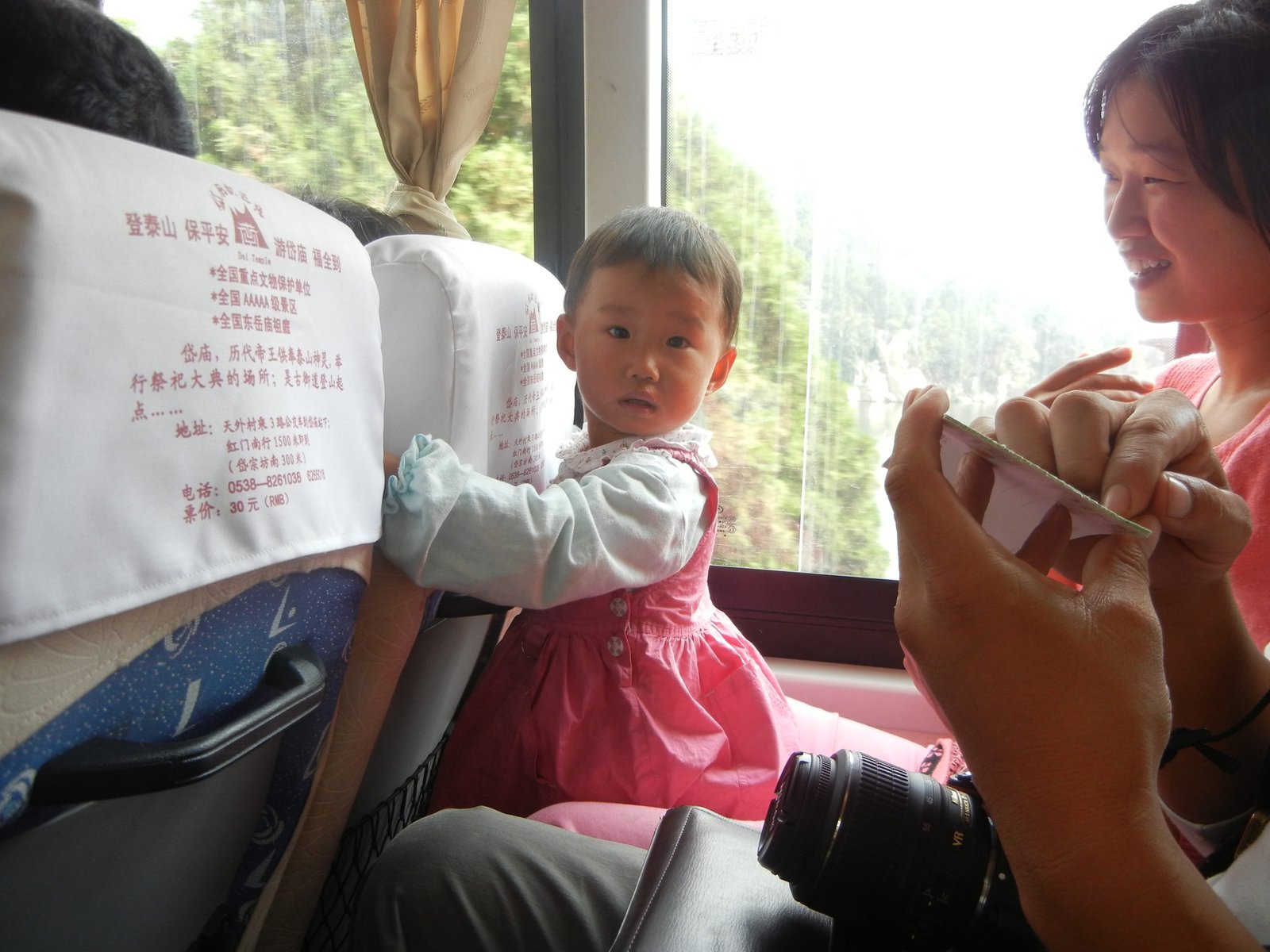
Although Qin Shihuang’s tomb is probably the largest that anyone in the world has ever constructed, he did a lot of other building while unifying China for the first time (in the third century BCE). He erected several royal palaces the size of a city. At the opposite end of China from the capital Xianyang, he made Mount Tai into a national monument, which the girl in the above photo is on her way to. He did a lot of other huge things on a pan-Chinese scale after the land was divided between warring states.
1. Creating a standardized writing system, which allowed all regions in the empire to communicate with each other and gave the bureaucracy a nationwide script. It featured more straight lines and was thus quicker for busy government officials to write.
2. Building a nation-wide system of roads that radiated from the Xianyang. It included rest houses and postal stations. The widths of axles were equalized so people could drive carts and chariots in the same ruts.
3. Creating a standard currency for the whole country. The new roads and coins could encourage prosperous towns to develop. A single scale of weights and measurements was also established.
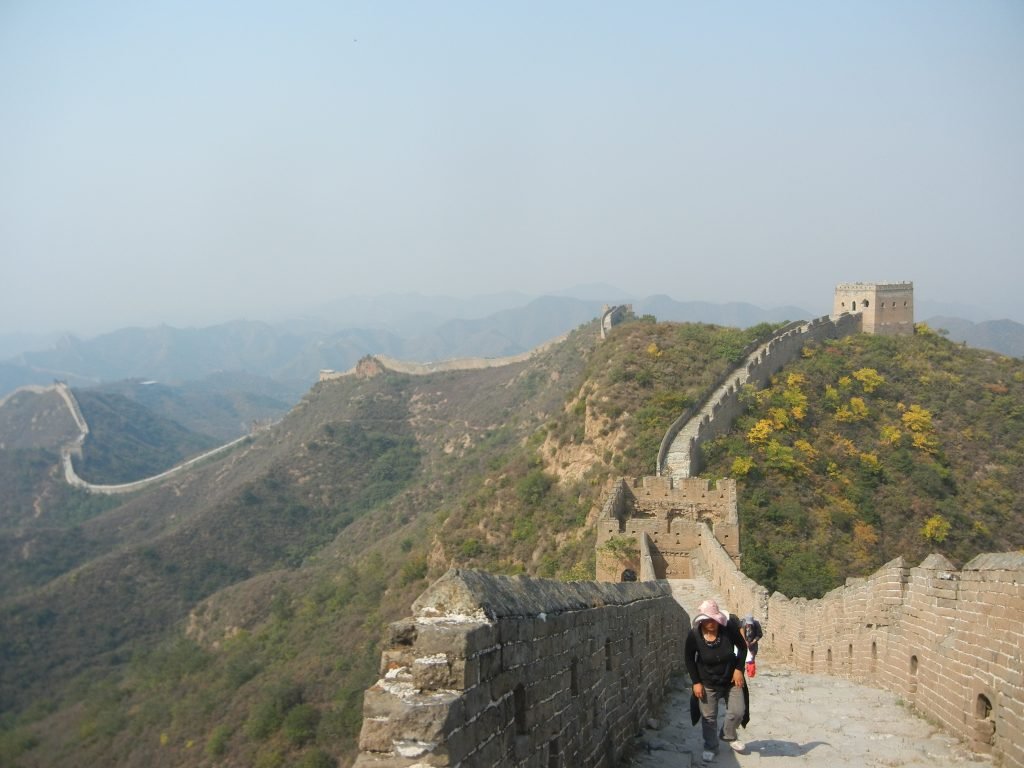
4. He also linked several of the walls that protected China. Though much of today’s Great Wall is from the Ming Dynasty (1368-1644) and some of the most popular tourist sites are modern reconstructions, Qin Shihuang spread the idea of the Great Wall as a single entity which distinguishes the Middle Kingdom from all other societies. He connected earlier walls on the northern frontier to hold back nomadic tribes (who continued to bedevil the next dynasty, the Han). The historian Sima Qian wrote that 300,000 people worked on the walls, which were mainly rammed earth.
5. Qin Shihuang used the network of roads to conduct royal inspection tours throughout the land. This helped spread his mystique and extend the concept of China as a whole.
6. He also built several canals in the south and helped establish the province of Sichuan as a rice bowl. Sichuan had unique cultures which blended with and enriched mainstream China. Its native art keenly appreciated nature, and it influenced Chinese landscape painting. Forms of popular Daoism also emerged there.
But Qin Shihuang’s unification of China had dark sides, which undermined his dynasty shortly after he died. Streets and villages during the Qin Dynasty must have been full of exhausted people.
The man who commissioned the terra-cotta army did everything he could to unify China. But he did too much.
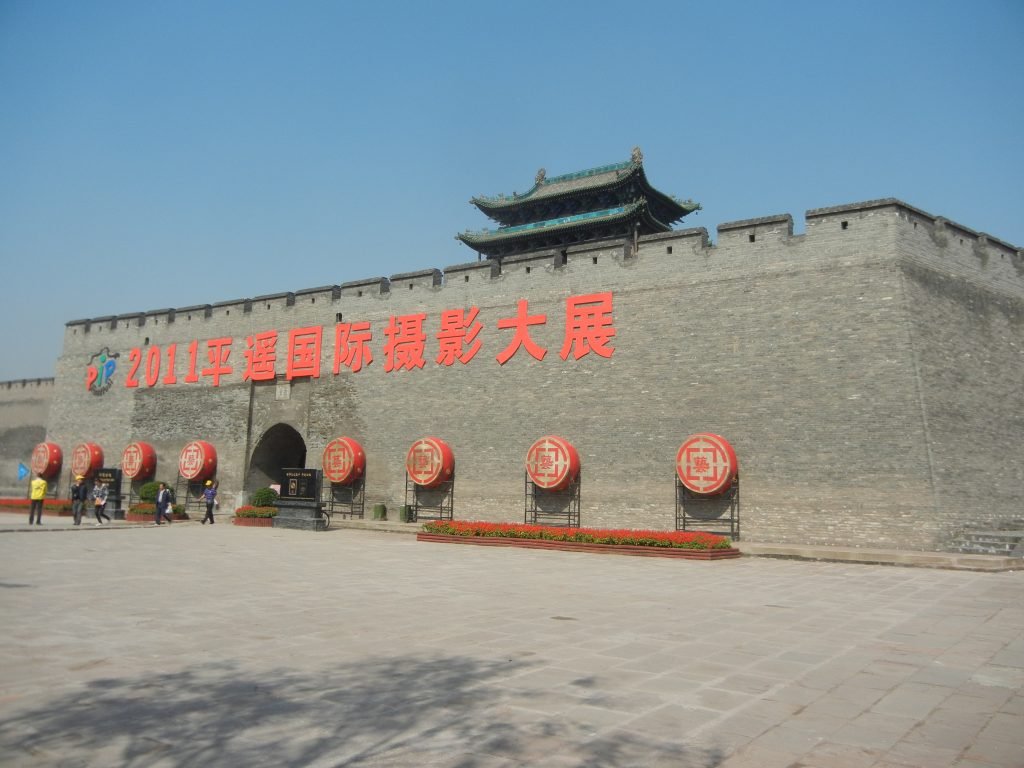
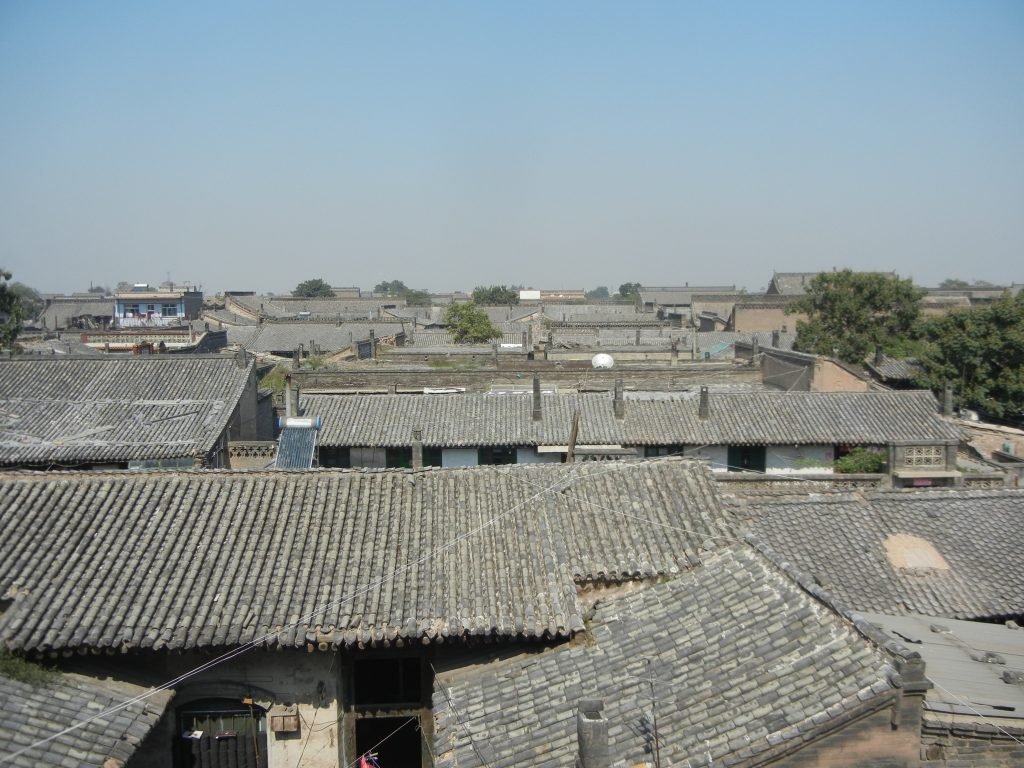
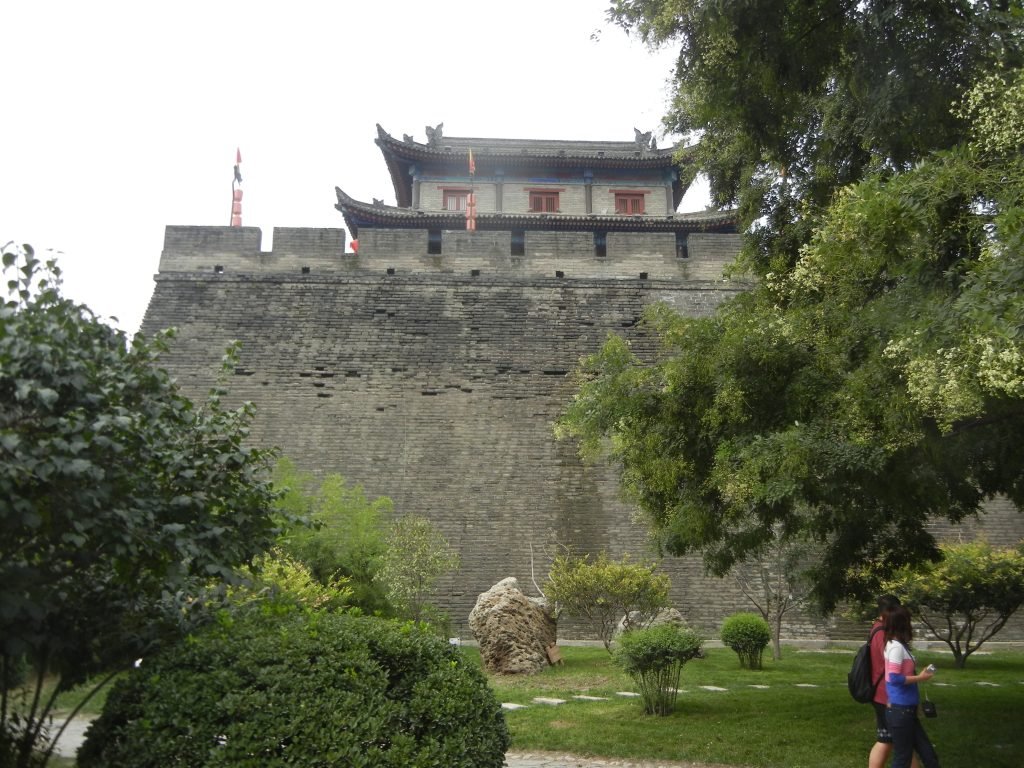
He constructed cities, palaces, and walls throughout his kingdom. Sights like Ping Yao’s imposing gate (above) became more common. Physical exhaustion and strained family finances probably did too. These huge construction projects meant a loss of farm labor.
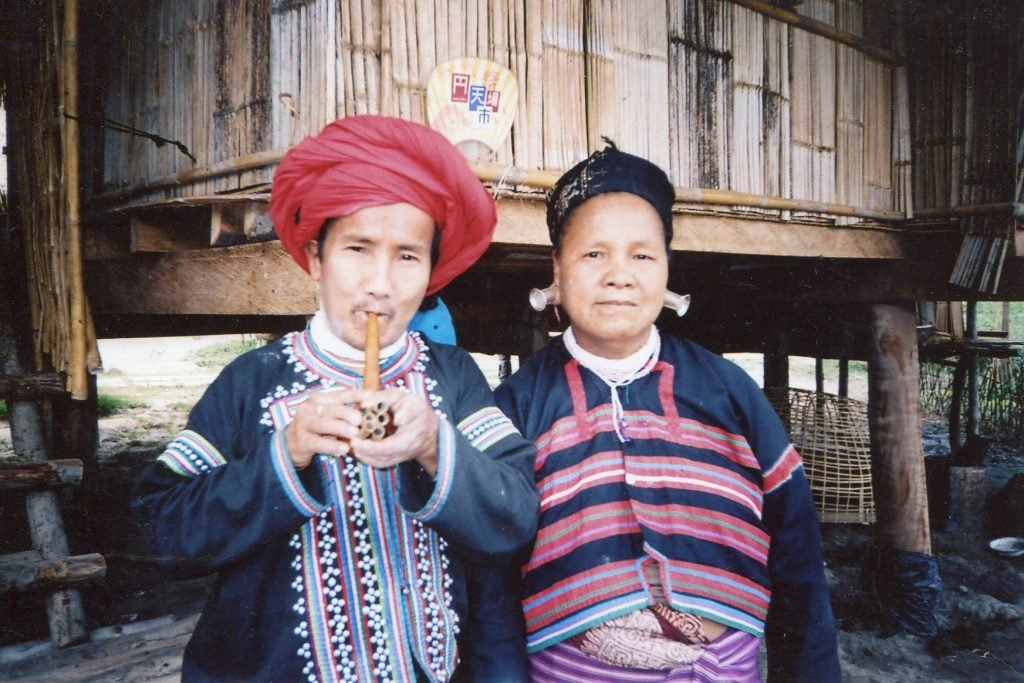
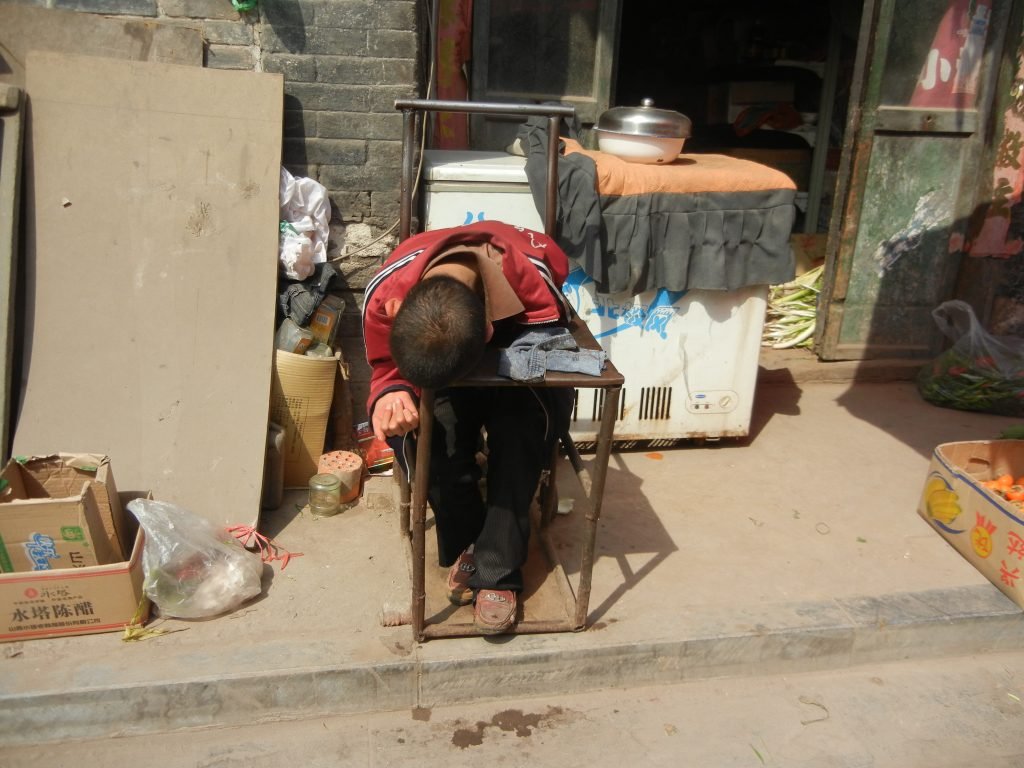
Qin Shihuang extended the empire’s boundaries by initiating military campaigns in Vietnam, southern China, and Korea. Chinese culture spread, but garrisons had to pacify people from diverse societies, which weren’t always as peaceful as the couple I met in the above photo. Military operations taxed more of the state’s resources and kept more young men away from the fields.
Qin Shihuang was obsessively frightened about death. His ministers were afraid to mention it around him. But he was convinced that he could find the elixir of life. People told him that in the middle of the sea, there are three supernatural mountains where immortals live, and he sailed along the coast of the Shandong Peninsula, hoping for a spiritual encounter with them.
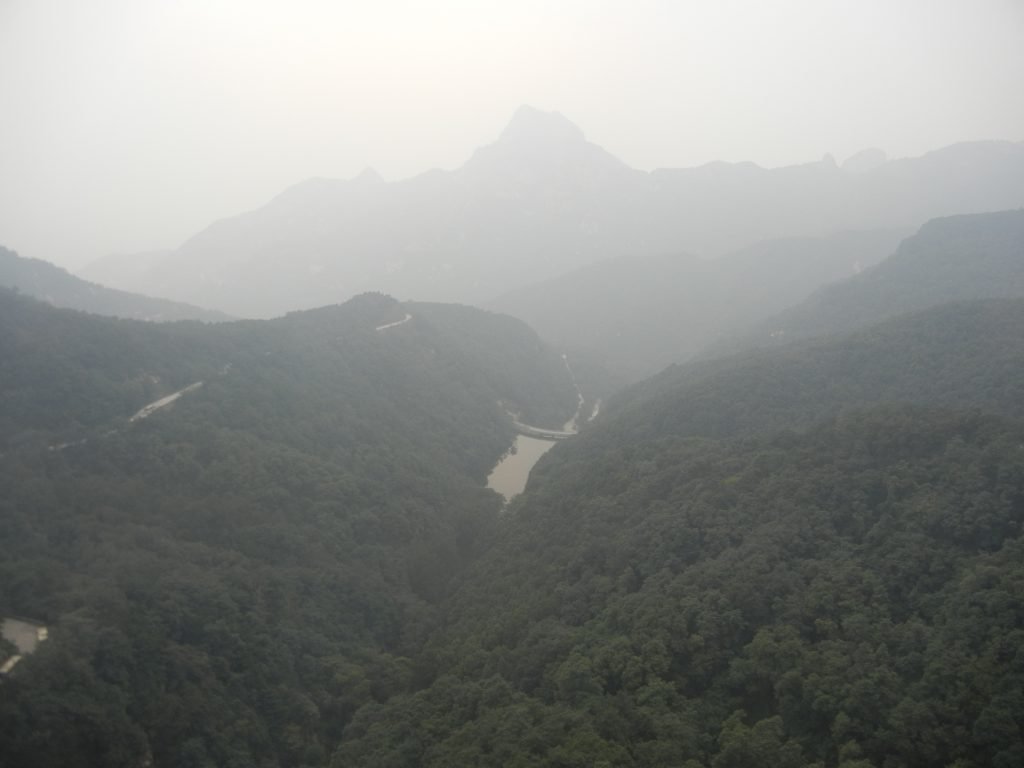
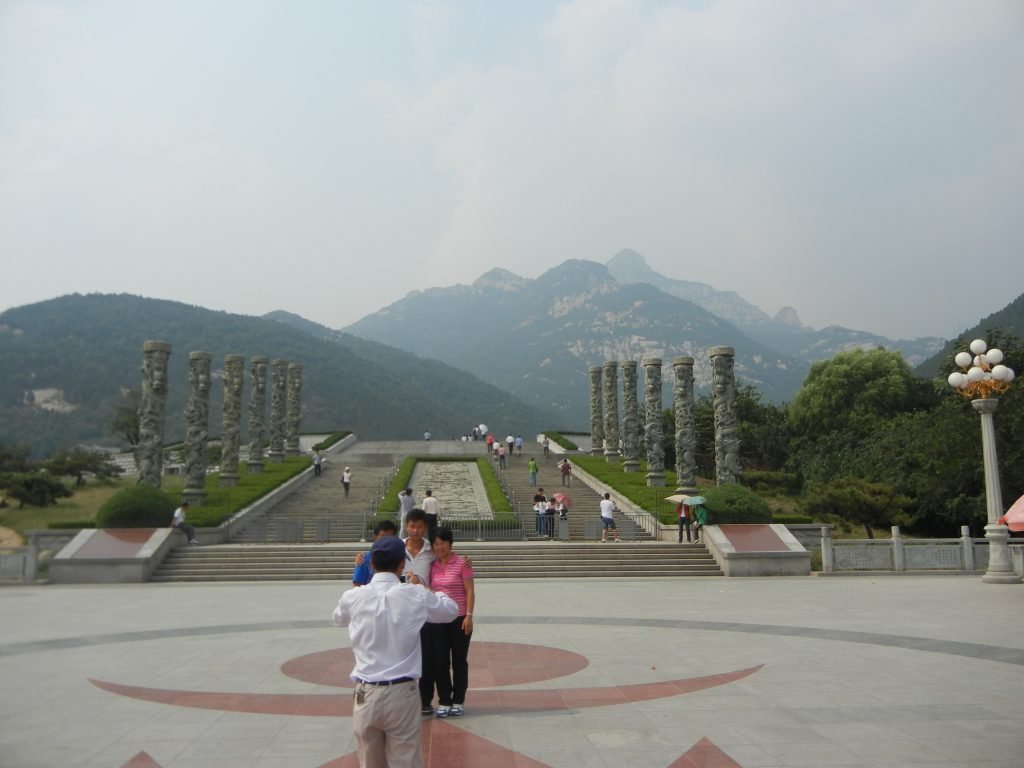
Though he didn’t find them, Qin Shihuang established the feng and shan sacrifices in which he ascended Mount Tai, in Shandong (in the two photos above). He thereby harmonized himself and the state with heaven and the most exalted gods.
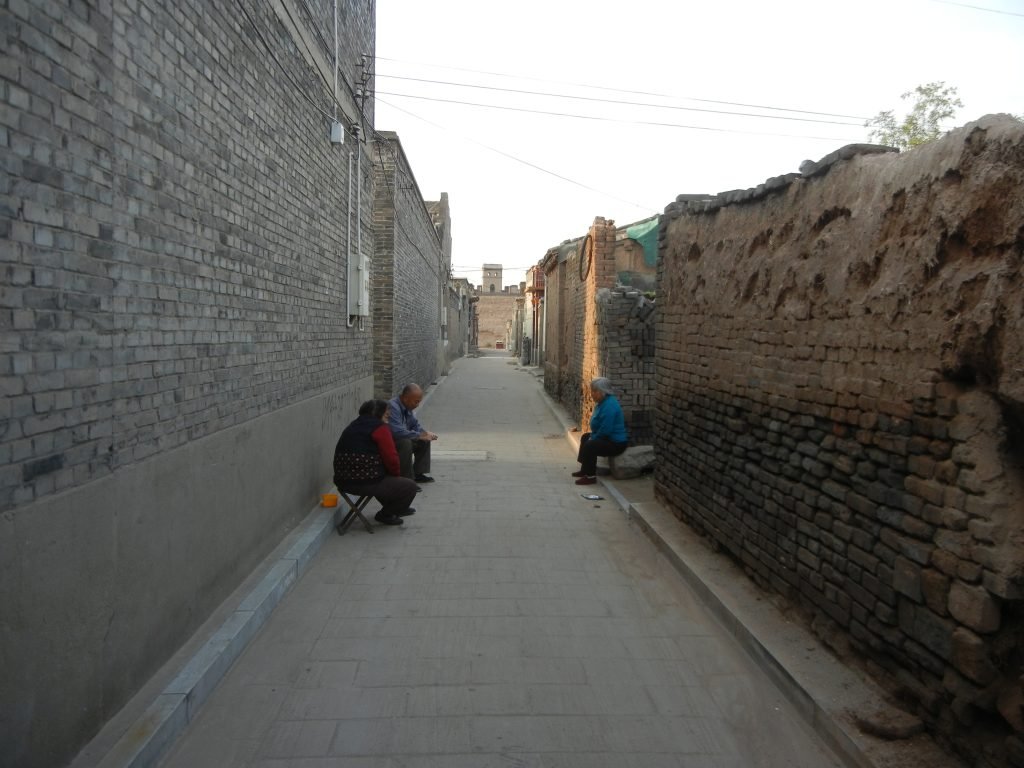
Meanwhile most people in China were living in humble conditions that greatly contrasted with Qin Shihuang’s extravagant schemes. He wanted to create a greater China, but was out of sympathy with its people.
He has been associated with the notorious burning of the books, but the historian Mark Edward Lewis wrote that there was actually no systematic destruction of texts during his reign. That happened in 206 BCE, when Xiang Yu tribes from the west sacked the Qin capital and torched the imperial library. But Qin Shihuang wanted to control thought by limiting access to texts, especially Confucian writings. He thus confiscated them and works from other philosophers from private people and transported them to the imperial library. Only government-appointed scholars could study them.
Writers in the Han Dynasty who spread its Confucian ideology said that Qin Shihuang was hostile to scholarship. He was not. He consulted scholars for his sacrifices on Mount Tai, but he wanted to control scholarship so it wouldn’t threaten his authority or compromise his ideas of a unified state.
By uniting China for the first time and expanding its borders, Qin Shihuang did what no one had previously accomplished. Perhaps this encouraged him to assume that he could do anything. He was from a distant western state with weaker connections to Confucian teachings, which say that a person’s achievements have limits–they must be in harmony with society. He was born in the capital of the state Zhao, which was frequently at war with Qin. His father was a political prisoner there, so the young prince grew up in a surroundings where he could never take safety for granted. Such an upbringing might have fueled his unchecked ambition and prevented the development of empathy with other people.
We can marvel at breadth of his work, but he died around the age of 50, and a rebellion toppled his dynasty a few years later (his son Hu Hai was just as extravagant). But the Han Dynasty which followed consolidated his work, and both dynasties reinforced assumptions about reality which were already ancient in China, and they form an interesting contrast with other cultures:
Reality is more of a holistic system than one that’s partitioned into distinct domains. This assumption is one of the foundations of Confucianism and Daoism, and it contrasts with much of ancient Greece’s thought.
There is one state which is centered on the capital city, rather than ancient Greece’s multitude of independent city-states.
The state is centered on the emperor’s personal dignity and his ancestral line’s legitimacy. According to the historian Li Feng, the concept of citizenship was never developed in China until modern times, and the pre-modern empire was identified with the dynasty. Ancient Rome endured as a political entity for many centuries as the imperial throne was passed from one family to another.
By being centered on the emperor and the capital city, reality wasn’t conceived as a vast space-time field as it was in India, and it was more bureaucratic and systematic than it has been in traditional Africa.
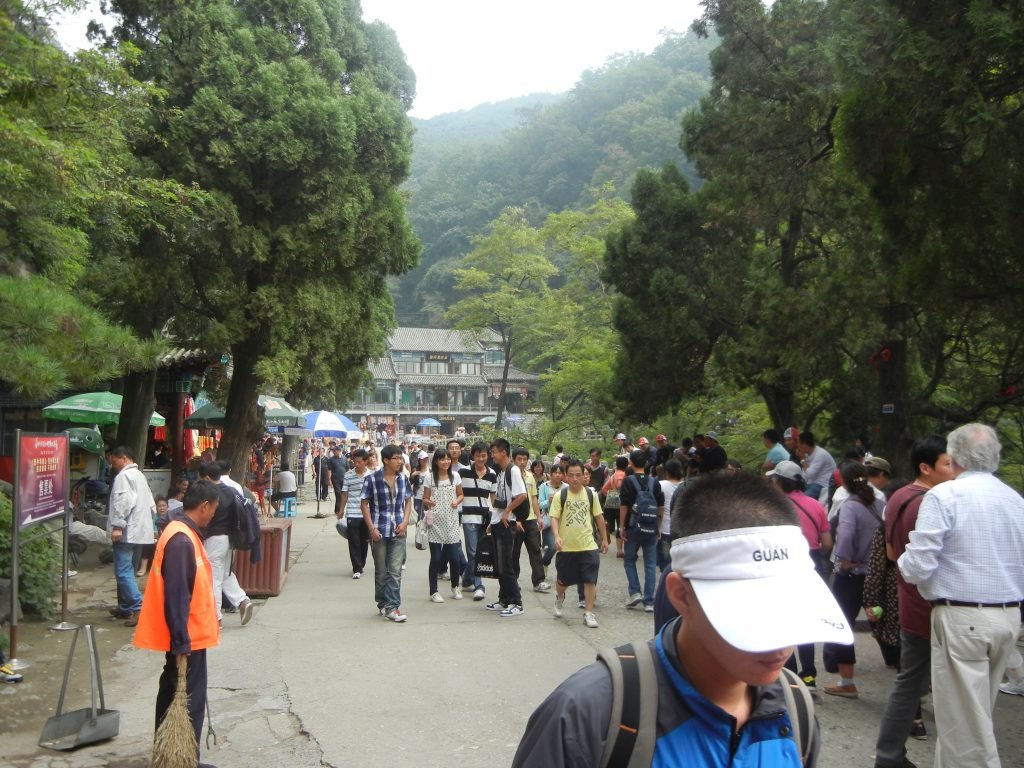
These people on their way to Mount Tai were experiencing a unique cultural heritage that converged from many experiences. It was already ancient when Qin Shihuang breathed, and he and the Han Dynasty strengthened them.