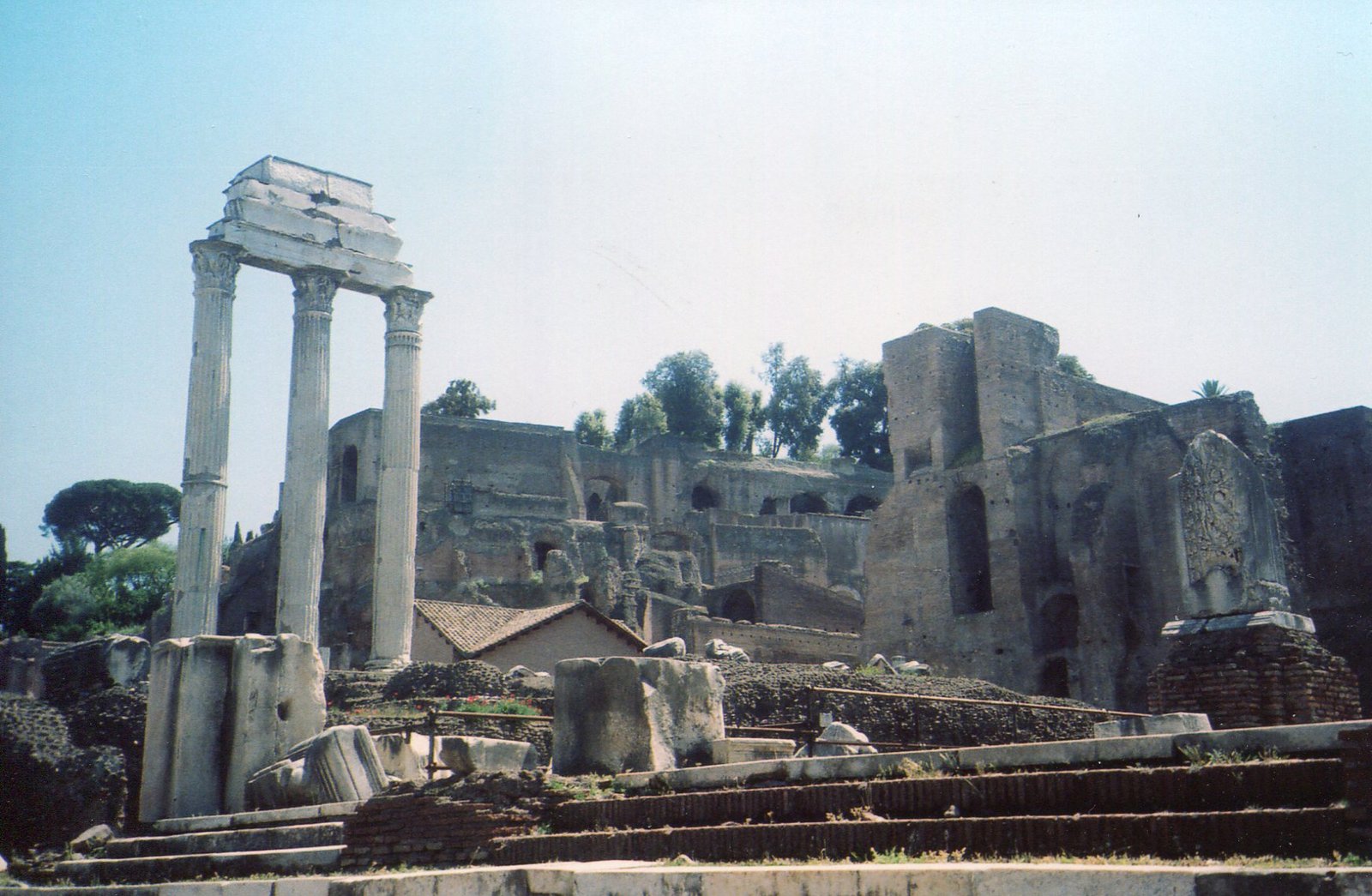
The development of ancient Rome forms an interesting contrast with China. The last two articles explored what was happening in the Roman Empire’s eastern counterpart when Rome was on the rise.
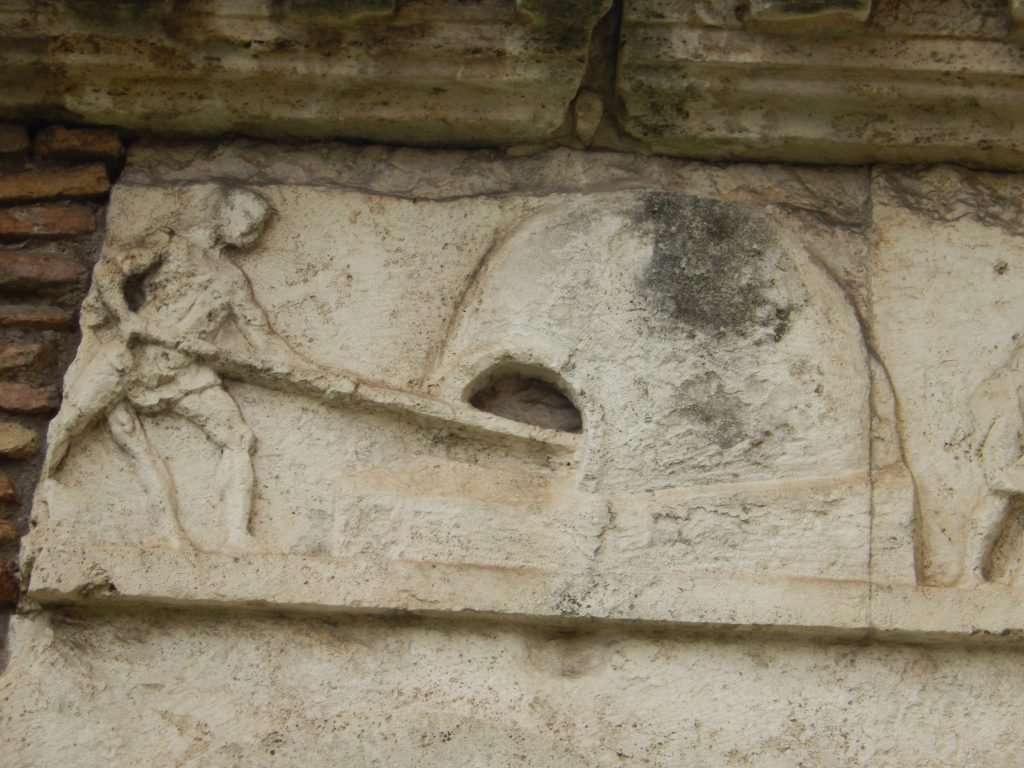
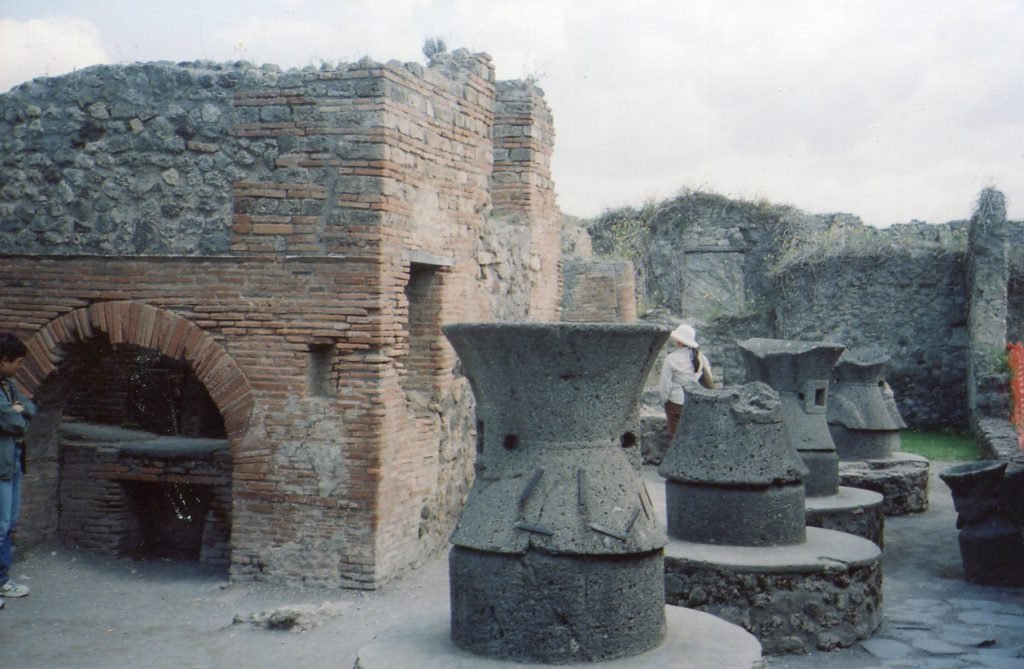
But it looked undistinguished in its first 500 years. Its coliseum, grand forums, chariot races in the Circus Maximus, sumptuous villas, and pools full of beautiful people became images of glory and brutality that Hollywood popularized, but they emerged later. Many ancient Romans thought their city was founded in the mid-eighth century BCE, though archeologists have found that communities on and around its hills had already existed for several centuries. In the seventh and sixth centuries BCE, people were constructing temples and public buildings in the forum. Building the forum into the city’s political nexus was one of ancient Rome’s most impressive feats because it was originally a marshy lowland between the hills, which was often flooded by the Tiber River and runoff from the uplands. People paved the area with gravel several times, constructed a drainage system, and erected lines of small shops. Some must have made bread there, like this fellow on the exterior of a tomb in Rome.
In the sixth century BCE, Romans crowned the forum’s area with the temple of Jupiter Optimus Maximus, Juno, and Minerva on top of the Capitoline Hill. Heavily influenced by Greek temples, its builders raised three rows of columns in front of the entrance. This house of three gods who projected Rome’s strength remained the most impressive building in the city for more than three centuries.
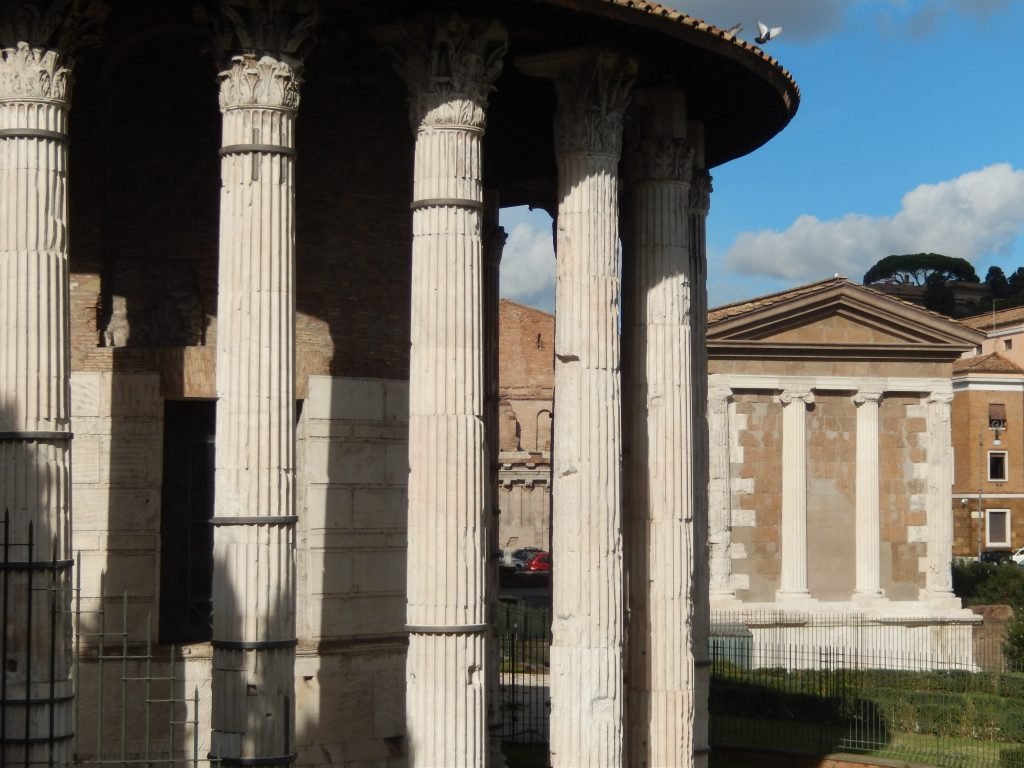
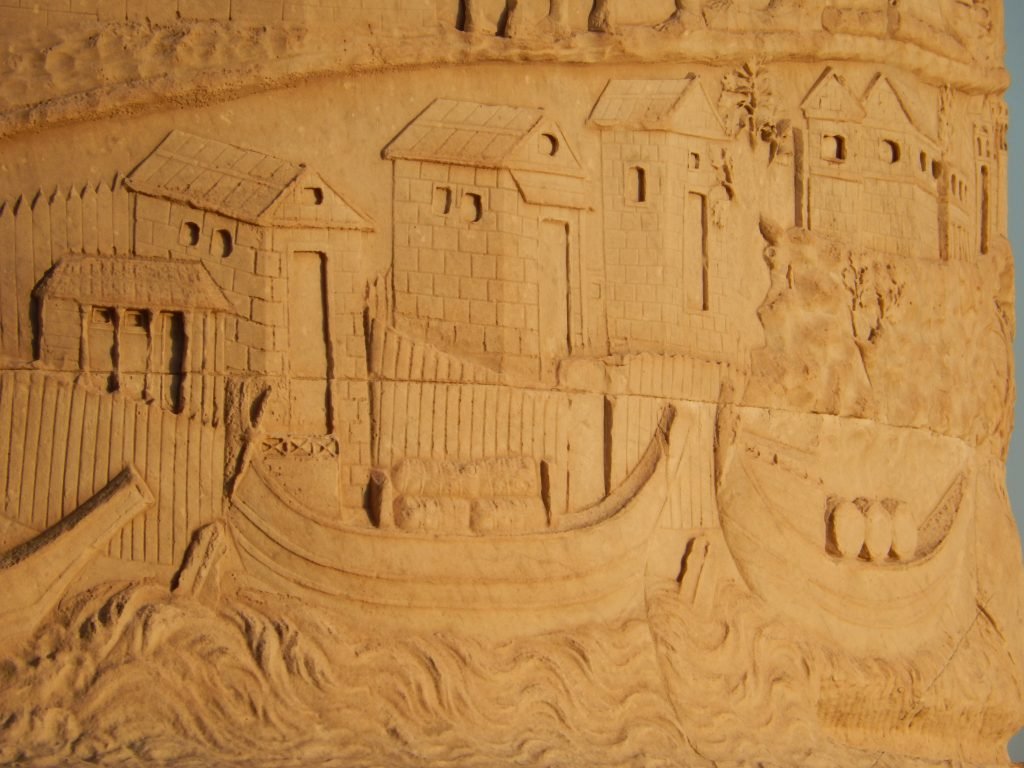
Another key center in early Rome was the Forum Boarium (the Cattle Market), which spread by the river, where people could load and unload boats with goods to trade. The Church of Santa Maria in Cosmedin and the ancient temple of Fortuna Virilis (above right) and the temple of Hercules Victor (above left) stand there today. Archaeologists have dug up fragments of Greek pottery from the eighth century BCE, so commerce was important in Rome from its inception.
Rome was a mongrel community compared with Athens. Beginning in the fifth century BCE, the latter only allowed men with native-born fathers and mothers to be citizens. The other residents had fewer rights. But Rome emerged in borderlands, where many societies mixed. Two cultures, called Latin and Sabine, rubbed elbows there. A little farther east and south, the Oscans ruled a large part of central and southern Italy. The Etruscans held much of the north. So the growing city between all those political groups was a natural melting pot and trading hub.
Romans were conscious of their multicultural origins. Their mythical founders, Romulus and Remus, governed a group of men, but they needed women to build a lasting society. They proposed to Sabines, who refused because they didn’t want another polity muscling into their territory, so Romans used their real muscles to abduct their women during a festival. They brought them into their homes and offered them the choice of marrying them and being treated decently or going back. They stayed and became content in their new community.
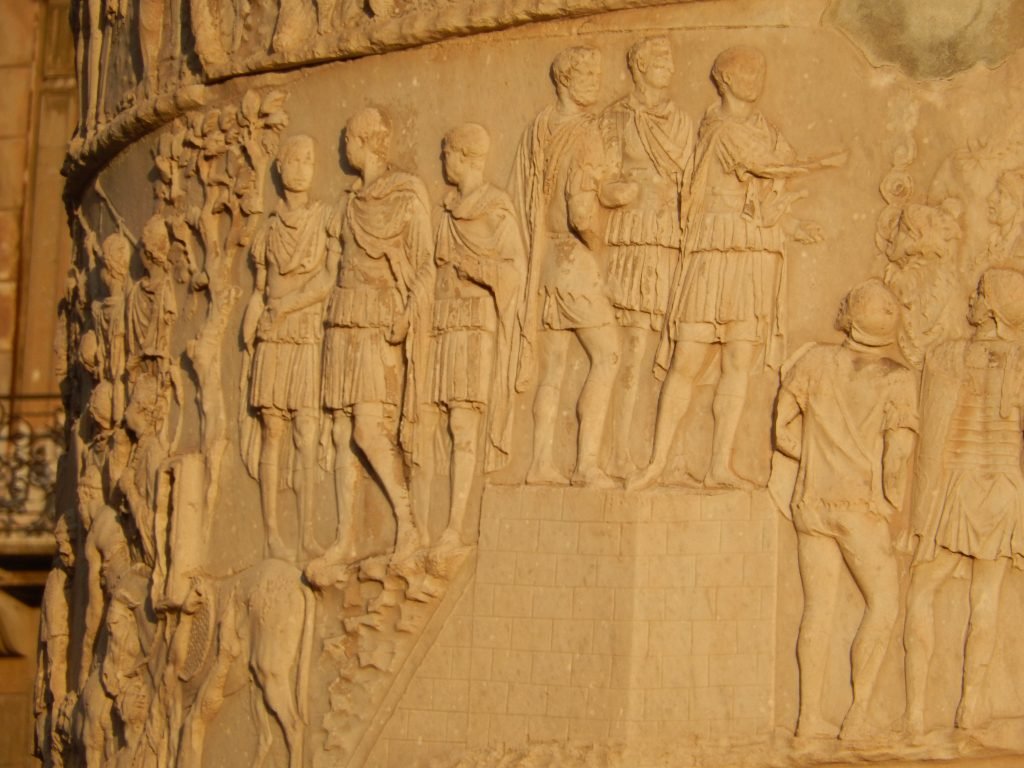
Rome’s early politics echoed Athens’s. Roman legends said that the city was ruled by kings in the sixth century BCE and that men from an elite circle of families advised them. But a son of the king raped a noble woman called Lucretia. She informed her father, husband, and husband’s friend Brutus, yanked a dagger from her robe, and stabbed herself to death. Brutus pulled it out and swore by her blood to drive out the king and his wicked family. His impassioned speaking inspired Rome’s population to rise up and expel the tyrant. The high-ranking families then formed a group that governed the growing city. So in its early days, Rome’s identity was infused with vivid stories that instilled disdain for autocrats, whereas the emperor was central in China’s politics and had been since the Shang Dynasty, which preceded Brutus by more than 500 years.
But Rome’s upper classes closed ranks. The Senate was dominated by clans that could trace their descents back to the families that supposedly advised the monarchs. However, the community was too dynamic to be ruled by one class without protests.
Romans needed to be coordinated and vigilant to defend their city, because it was in a highly desirable location which the neighboring societies wanted. It surrounded an easy crossing point on the Tiber River. It was also the central hub between the coast’s salt pans 19 miles downstream and central Italy’s mountainous interior. Salt was as important as semiconductors are today because everybody needed it for food preservation and livestock rearing.
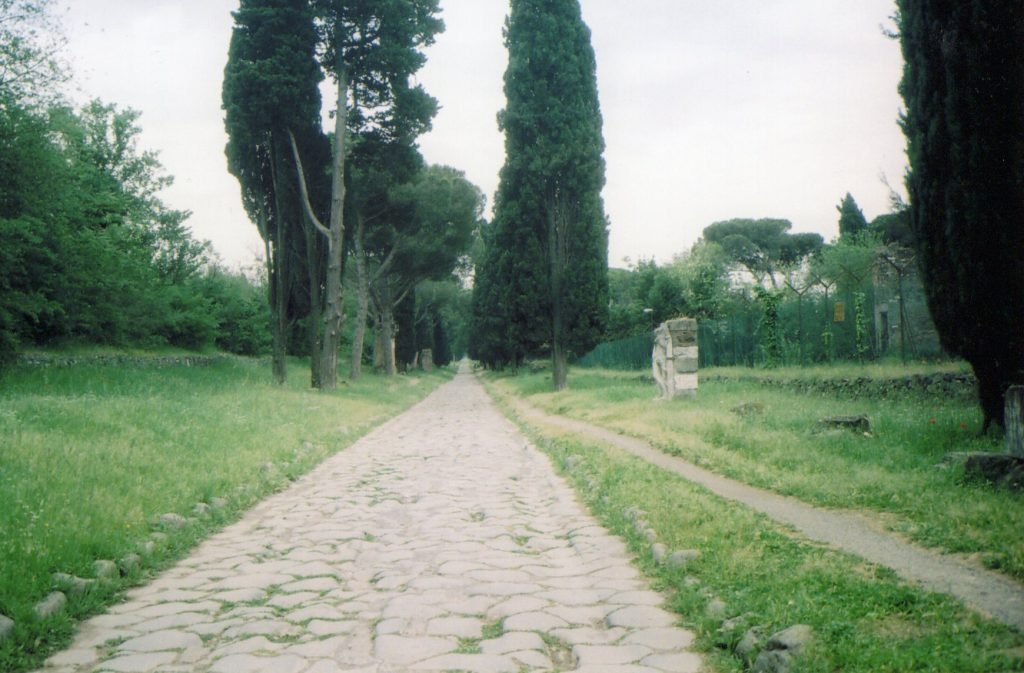
From the early days, Romans focused much more on building roads than the Greeks did. Traces of roads made from hard-packed clay agglomerates have been dated to the eighth century BCE on the Palatine Hill’s slopes and in an area near where the colosseum was later built. The growing network of roads made trade easier, but it also gave foreign armies easy access to the city.
Residents outside the elite circles were thus crucial for Rome’s survival. In addition to trading, they manned the army for defense as the city grew near the borders of several societies that wanted to control the river. Heavily armed infantry became the dominant military force by the fifth century BCE, so common landowners could self-equip without needing a horse. Rome’s ordinary folks thus took key initiatives and formed their own common identity. They organized their own assemblies and were proud of being Rome’s backbone. They were called plebeians, and they stood up to the upper classes (called patricians) by threatening to secede from the city when oppression became too stifling.
That would have been disastrous, so both classes worked out a series of compromises during the fifth century BCE. The plebeians were able to elect their own representatives (called tribunes) to defend them, and in the mid-fifth century BCE, Rome’s laws were written on 12 tablets. Before then, only patricians could interpret them. As in Athens, law became known to the public as an abstract system of norms and rules with its own authority apart from any person. Law in imperial China was called fa, and it was mainly focused on preserving the state’s order, often at the expense of the individual. But law in Rome enabled people to defend themselves from oppressive bullies.
Rome and Greece thus resonated with each other in several ways. Both grew in areas marked by small valleys, the prevalence of the sea, clear boundaries between different places, and the importance of independent farmers and traders who were proud of their freedom.
They didn’t emphasize a centralized royal court like China did. The early histories of both Rome and Athens were characterized by tensions between these regular folks and the upper classes, but their negotiations created the West’s most foundational legal system, which often safeguarded the individual’s rights, while ancient India’s and ancient China’s legal systems focused more on preserving the social hierarchy at the individual’s expense.
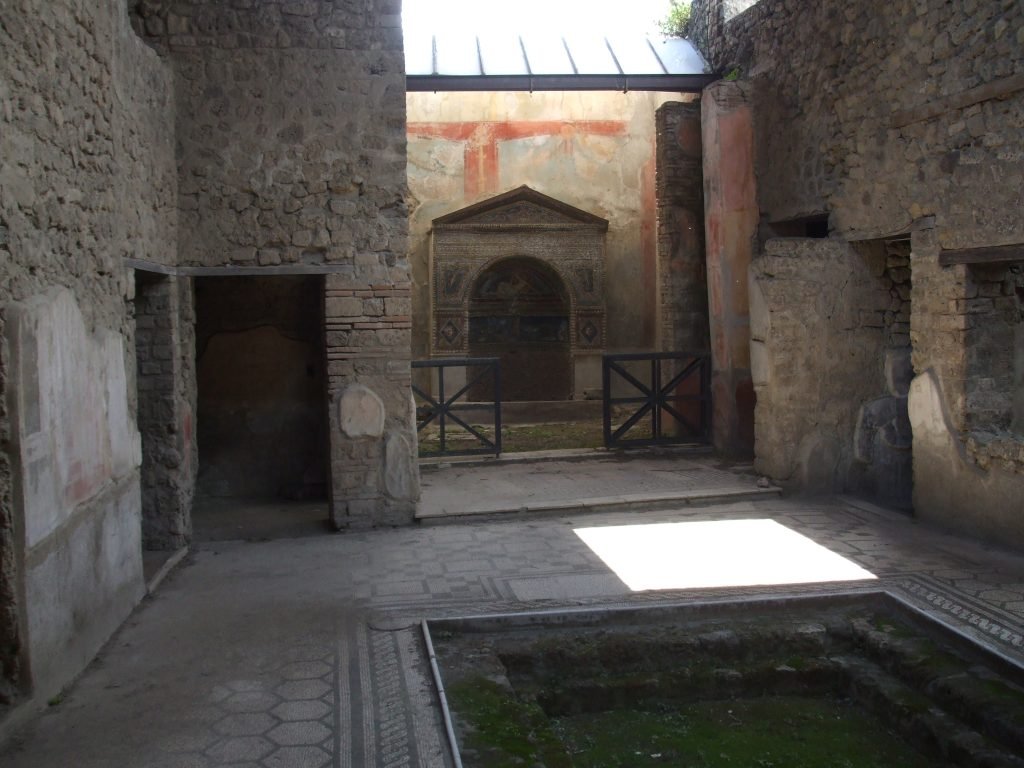
Home life in early Rome was closely tied to the farmland, as it was in Greece, and this enabled both societies to resonate with each other even more. Romans imagined unseen powers in nature and often located them in the house, the fields, and the community. Lares guarded the home and boundaries of fields, and people envisioned them as protective spirits and associated them with snakes and young men (Romans and Greeks saw snakes as guardians of residences and altars). Penates were spirits of the larder, where food was stored, and they later included all the gods worshipped at home. Householders made offerings to them as well as to lares. Each home had a unique assortment of little statues of penates, which could include Apollo, Venus, Mercury, Heracles, Jupiter, Fortuna, and others according to the head of the family’s preferences. Priapus was a god of fertility, and people imagined him with an enormous penis. Some mounted a large ceramic phallus by their front doors to attract his powers for bestowing prosperity and health. People also carved wooden statues of him and displayed them like scarecrows in fields, orchards, and gardens to protect crops from thieves. Paeon was a god of healing, and the peony was named after him. Concord was a numen of political harmony.
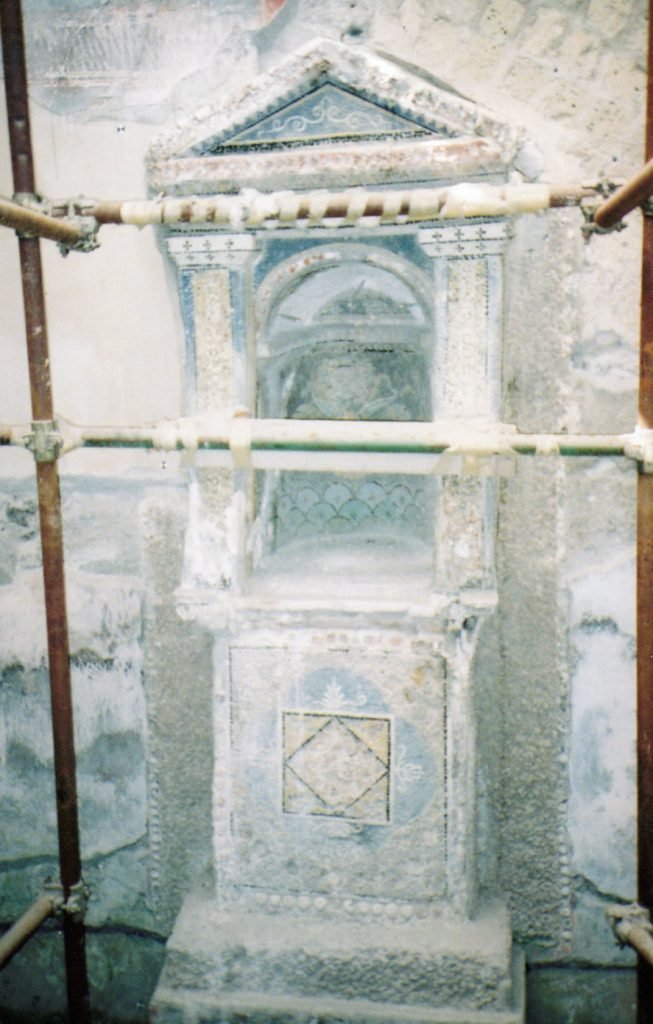
All these deities reflect mental horizons settled on the home and a community of farmers. I saw numerous houses in Pompeii and Herculaneum with stately little altars with porticoes in which people placed offerings for several of these spirits.
All these local gods needed rituals to honor them, but priests didn’t form an independent caste as they did in India. Although some organized into groups called colleges, many of their members had been prominent senators. They thus had fought in battles, legislated civic laws, and enjoyed the highest levels of monetary wealth and material display. The historians Mary Beard, John North, and Simon Price wrote that religious authority was located in interactions between priests, senators, and magistrates. Their functions overlapped, and rituals were centered on the city’s well-being. Priests consecrated buildings, decided on auspicious times for battles, officiated in the civic calendar’s festivals, and petitioned for gods’ blessings during agricultural rites. Even while approaching the gods, mental horizons were often close to politics in the here and now and relationships between individuals rather than the majesty of the emperor, as in China. These orientations to civic politics and the give and take between citizens also enabled Rome and Greece to resonate with each other as their interactions became regular.
Romans needed to be disciplined from their city’s beginning. Because several other societies coveted their land, they frequently had to put down their ploughs, pick up their spears and swords, gather in the Campus Martius, and march off to battle. They were so well-coordinated and resilient that they usually won. Romans were able to drive out the Celtic invaders in 390 BCE, and in the next century, they expanded their state over their neighbors in Italy. Dramatic changes followed, which we’ll explore in the next article.