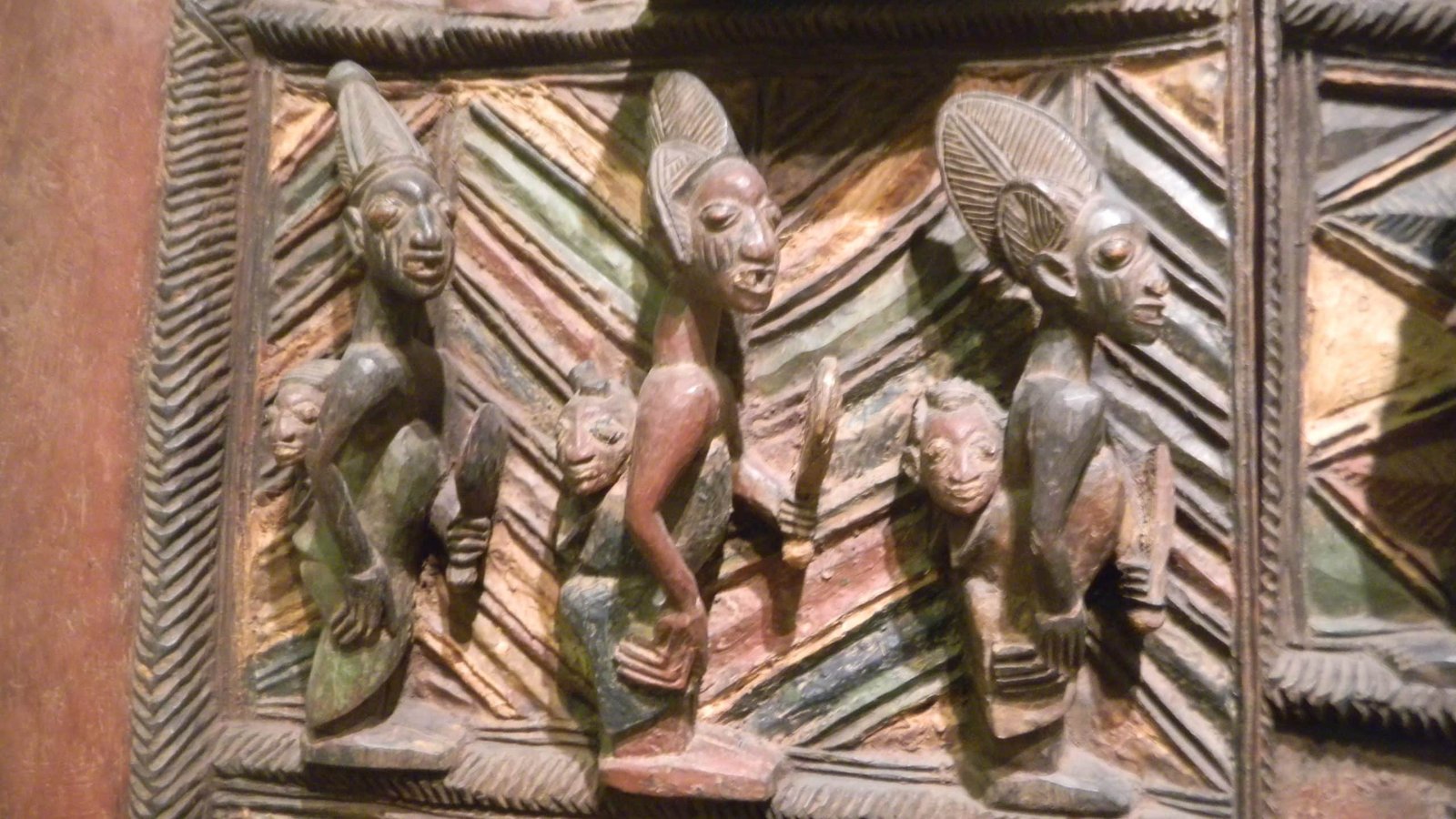
The Nok culture spread a seminal style of sculpture between 900 BCE and 300 CE as its people built over 500 agricultural settlements in Central Nigeria. By 500 BCE they had learned to smelt iron and were storing more goods and produce. Some of the most widespread African cultural traits can be found in their sculpture.
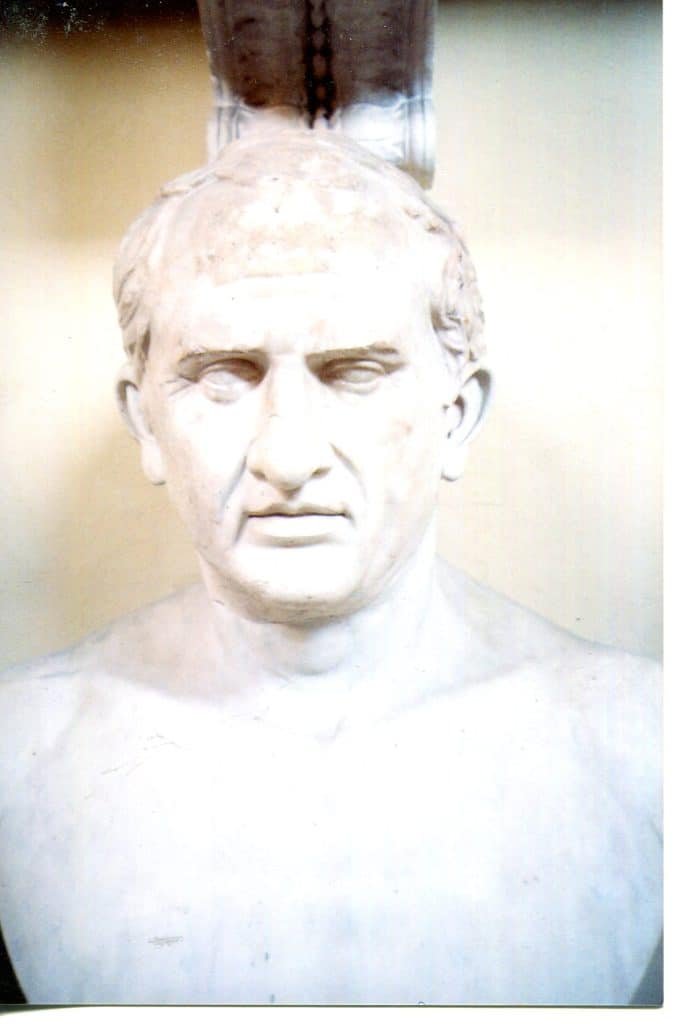
Nok sculpture is widely admired for its anthropomorphism (it focuses on people). Traditional societies throughout Africa have seen the universe in personal terms; it’s more of a community of personalities than a mechanical system of forces and distinct entities. African humanism has thus been different than Western. The Romans, who were fashioning sculptures at the same time as the Nok, followed the Greeks and made figures according to the body’s proportions, with details so precise that you can almost expect some to speak. A bust of Cicero in Rome’s Vatican Museum (pictured below) seemed so real that I stood in front of it for a while, eye to eye with one of ancient Rome’s most famous citizens.
But African humanism is less concerned with precise details of individuals. It has its own values.
Nok sculptures of people have unusually large heads. Bernard de Grunne, in The Birth of Art in Africa, noted that they are 1/3 to 1/4 of the body’s height, so they’re more than twice the size of a real human head. He wrote that this ratio has been common in the continent’s sculpture ever since. Many traditional African cultures emphasize the head, believing that it’s the seat of the personality and life force.
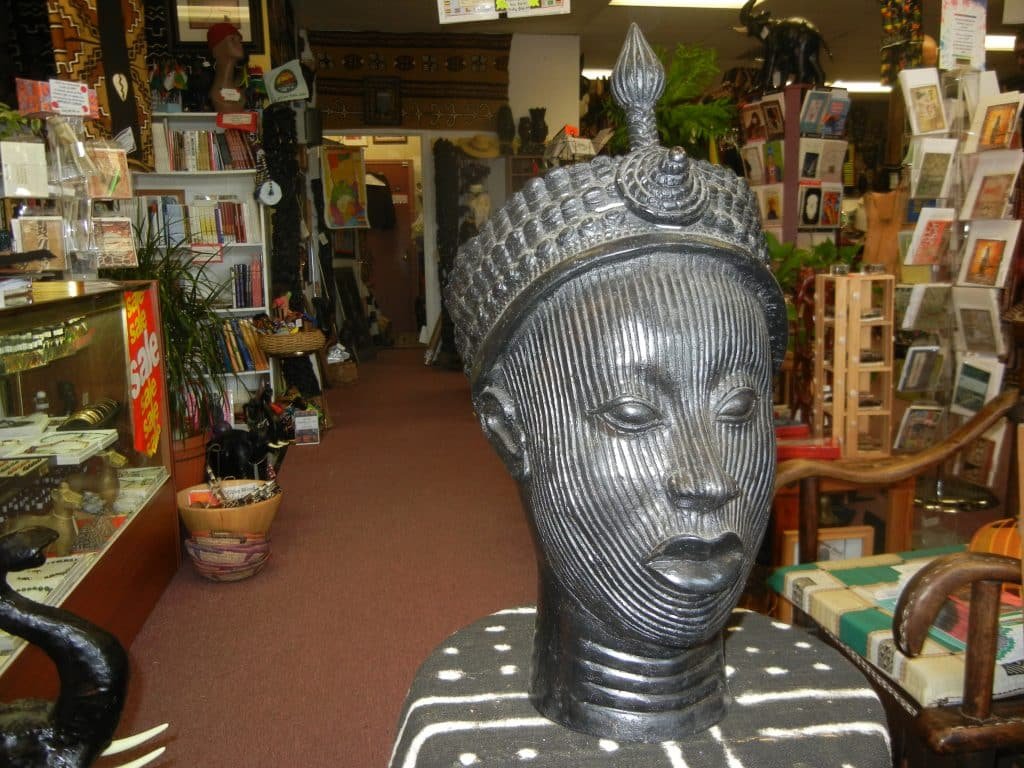
Yoruba sculpture, which especially flourished in Nigeria from 1300 CE to 1500, also emphasized the head and often made it extra large (above). Its sculpture descended from the Nok culture’s. The common Yoruba word for head (ori) has been associated with a fertile range of concepts, including power to make things happen (ase), personality (wu), character (iwa), and destiny (ori inu). Sculptors in Africa have often focused on the power and character of the personality—on making a sculpture that embodies and dignifies the soul of a community’s leader, an ancestor, or a god, and which maintains his effectiveness. This spirit thus remains involved with society and takes part in its rituals. A sculpture’s main purpose is not to let you analyze it from an objective distance (as in the West) or to help you merge with impersonal cosmic energies or gods that channel them (as in India), but to maintain the person’s spirit as an effective force in the community.
Each Nok figure is unique; it’s not a stock character like the Buddha or a Hindu god. Some Nok sculptures might have represented real people. They sport elaborate hairdos and wear jewelry as though they’re chiefs, priests, warriors, or other dignitaries dressed up for a special occasion. They are in full splendor, with proud expressions of leaders in their best attire. They don’t typically express Indian concepts of the universe’s energies before they condensed into the communities we live in. Rather than existing in idealized worlds, African sculptures are usually of souls that are emmeshed in relationships with other people and spirits.
Most traditional African religions have deeply honored ancestors. Departed relatives remain close to the community, and they can help or harm people depending on how much they’re respected and listened to. Members of traditional societies throughout sub-Saharan Africa have believed that human souls reincarnate, but they often transmute within the community, sometimes taking birth as a grandchild. Their range of possible rebirths is often seen on a personal scale rather than as intangibly long chains through all life forms and cosmic eras, as in India.
Cosmologies throughout Africa have seen the worlds of the living and the dead as closely interacting. Traditional Yoruba have envisioned the universe as gourd-shaped and divided into a bottom and top half. We live in the lower part, and gods and spirits preside in the upper. They watch us and send good and bad fortune; we pray to them, give them offerings, and conduct divination to discern their wills. Many artists in another old Nigerian culture with a proud history, called Benin (not to be confused with the modern nation), still believe that the world of spirits is the source of their designs, and they ask for their guidance and protection as they fashion their art works. Interactions between people and spirits are so constant in traditional Africa that they compose much of the fabric of reality—the traditional African Web.
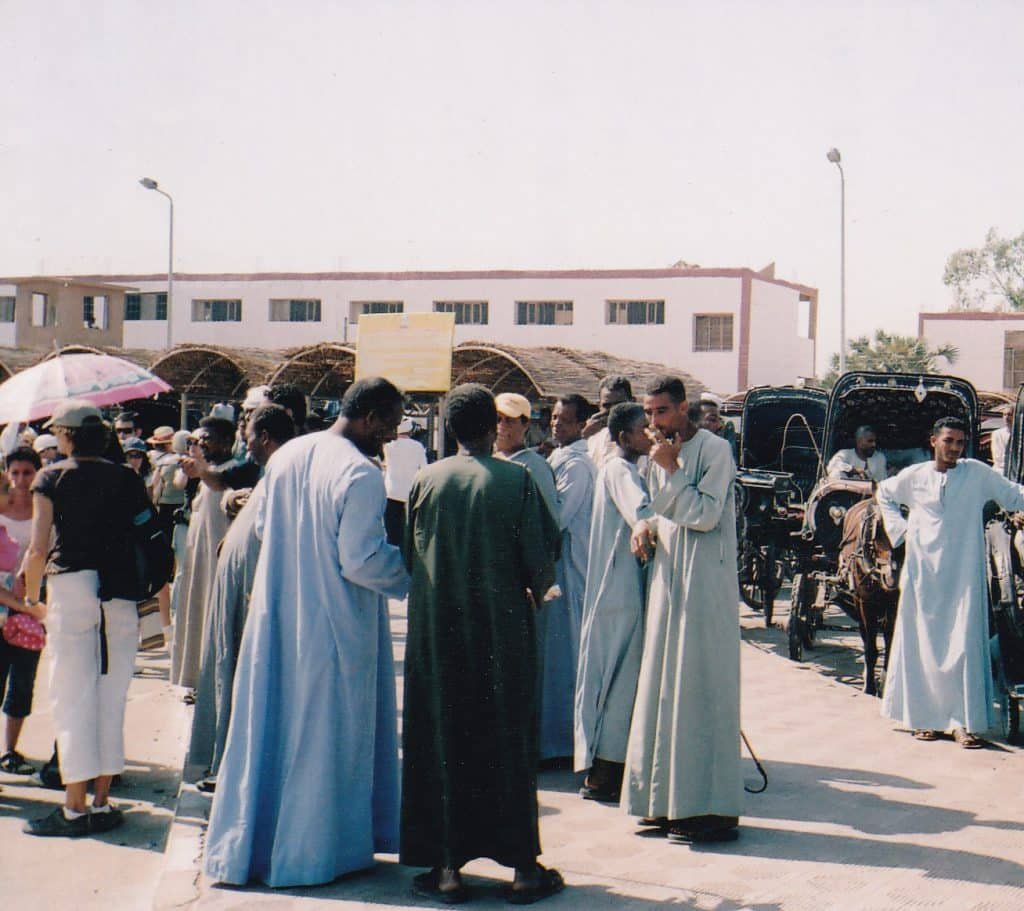
This close interconnection between spirits makes relationships between souls with intelligence primary. Most traditional African societies see nature as basically alive and full of vibrant beings rather than strictly based on mechanical forces and physical objects that they move. Many African cultures emphasize life force. All beings contain it, but some have more than others. A political leader who is athletic, brave, and persuasive as a speaker has more than a child or a frail old man. Ancestors and nature spirits also have lots of it. Rituals with dancing and drumming can concentrate it to benefit the community.
Life force is basically the ability to make things happen. Different cultures have their own words for it. Some Bantus call it ntu. Yoruba people call it ase. The Dinka in Southern Sudan have called it wei. The concept of life force is interwoven with music, dance, masks, the community, spirits, and ceremonies in many creative ways.
Janheinz Jahn, in Muntu, highlighted some of the richness of Bantus’ concepts of life force. Muntu means human being or spirit–any being with intelligence and the ability to speak. Bantu is the plural of muntu, so Bantu means The People (this word was actually coined by Western anthropologists in the late 19th century to refer to societies that speak languages in the Bantu family). Muntu also includes ancestors and nature spirits. It generally refers to spirits with will, intelligence, and feelings. This word is rooted in the word for life force, ntu.
Kintu means thing, and this word is also rooted in ntu/life force. So ntu is more primary than things (static objects). It’s reminiscent of Indian ideas of all things and beings emerging from the energies that the whole cosmos came from, but the Bantu ideas focus on the tangible community and its interpersonal relationships rather than brahman, which precedes communal relationships and is associated with the vast universe.
Another key Bantu philosophic concept is kuntu, which means modality (the patterns that things are manifested in). Rhythm is a modality. So is a person’s style, which includes her walk, gestures, dancing, favorite art forms, and tone of voice. Jahn wrote that kuntu is valued more than kintu. The styles in which things become known have traditionally meant at least as much as static definitions of things. Objects don’t have their most essential meanings according to abstract Platonic concepts. They’re meaningful within a community of souls with life force. People give them meaning when they interact, and kuntu pertains to the patterns of the interactions.
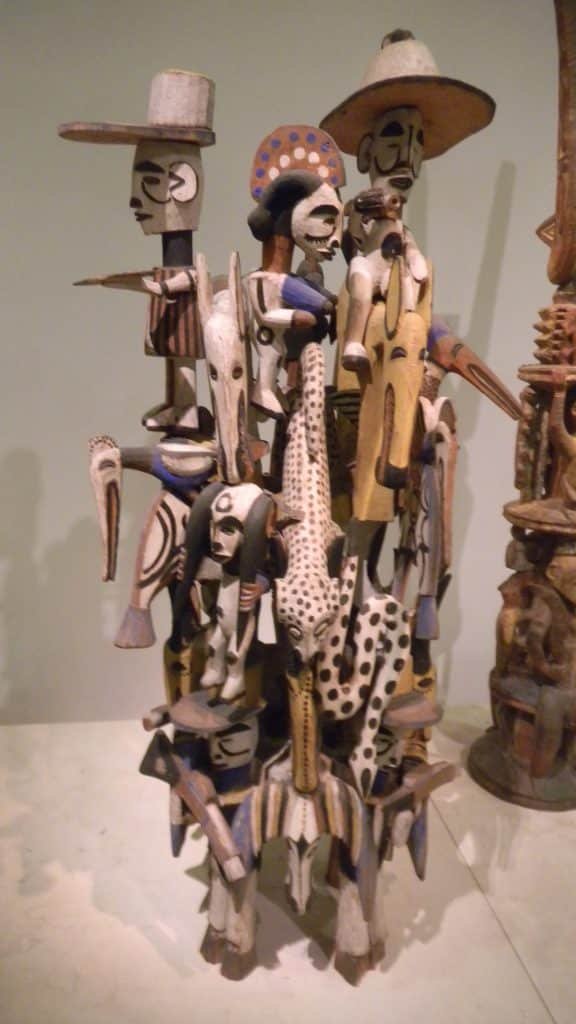
Peter Garlake wrote that for the Yoruba, energy is more basic in nature than static things. Life force (ase) infuses all objects. A person’s ase projects his character (iwa). Ase is concentrated in the mouth and the rest of the head, and it thus empowers speech. A king’s ase is so powerful that his face must often be concealed to protect people from it. Veils of beads have traditionally been hung from royal crowns.
Rhythm is often considered a primary manifestation of life force. Jahn noted that rhythm is a key aspect of kuntu. Leopold Sedar Senghor called rhythm the architecture of being and wrote that it is expressed through lines, surfaces, colors, and volumes in architecture, sculpture and painting. Rhythm is thus more important than abstract lines, planes, and solids. Aristotle and Euclid said that they’re basic in reality, but Bantus have felt that rhythm gives them life. Without it, they would have no meaning.
Rhythm is also a foundational aspect of the human body. Senghor wrote, “The chin and the knees, the buttocks and the calves are here equally fruits or breasts.” parts of the body are seen, not mainly as distinct objects, but as rhythmically related to each other.
Rhythm is also foundational in speech. Jahn wrote, “. . . rhythm is indispensable to the word: rhythm activates the word; it is its procreative component.” Senghor wrote, “Only rhythm gives it (the word) its effective fullness.” For Bantus, interaction between intelligent souls who can speak and think is primary. It’s more basic than abstract Euclidean shapes and distinct objects. Souls’ speech gives them their meaning, and rhythm gives speech much of its meaning. Repetition and accents make speech dramatic so that other intelligent souls are engaged and provoked to respond with their own words in a dialog. The exchanges in dialogs are rhythmic, as are the call and responses in musical performances.
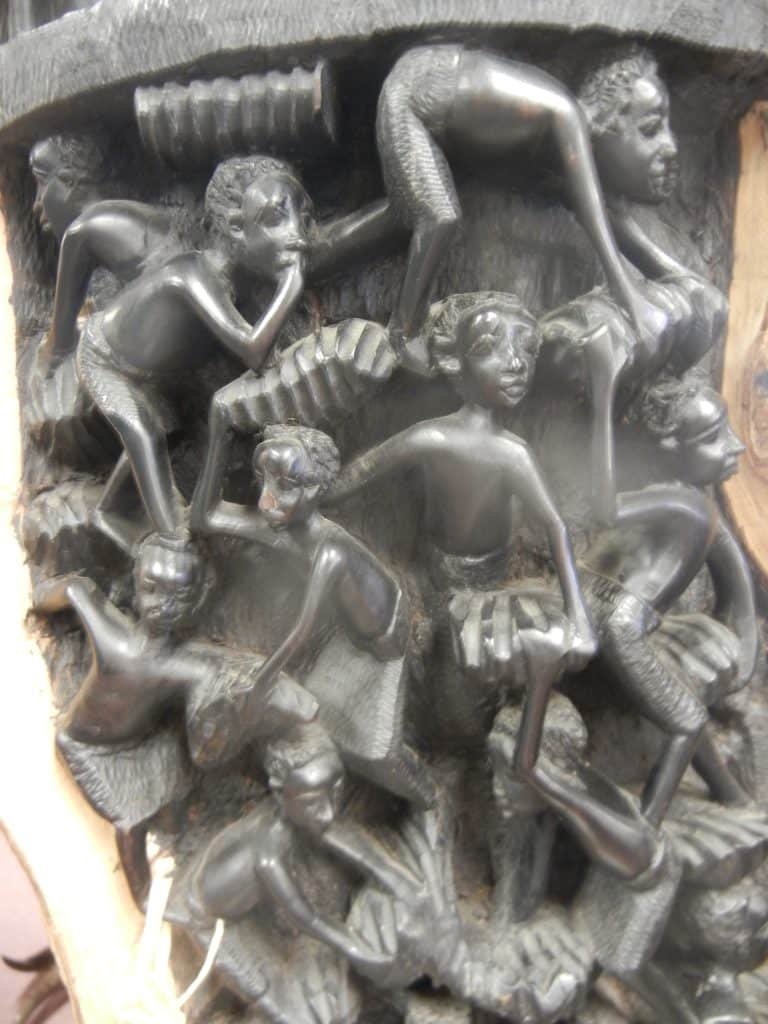
A woman from Ghana told me that God made both Adam and Eve, not just one person. She said that people were created to be in relationships with each other. Lynn Margulis found that the mitochondria in cells have their own DNA and concluded that mitochondria were originally independent organisms. The organisms merged and synched their rhythms into symbiotic relationships.
In a similar vein, the physicist Carl Rovelli emphasizes the basic importance of the interconnections between scientific experimenters, the instruments they use, and what they observe. He says that there is no separate universe and that there are no separate objects outside of these connections. Objects exist and have properties only when they interact.
Conscious beings, our relationships, and rhythm are very fruitful concepts to use in both science and the humanities.
You can explore another way to think about objects, in Southeast Asia and China.