
George Lakoff and Mark Johnson, in Philosophy in the Flesh; The Embodied Mind and its Challenge to Western Thought, wrote that many concepts that people treat as most basic are rooted in physical experiences. They said that people imagine categories by using spatial metaphors, “. . . . as if they were containers, with an interior, an exterior, and a boundary.” We place things within containers to apprehend them. This has seemed self-evident to many modern Westerners, but many people in ancient China saw categories in a different way, which reflected their cultural landscape.
Ancient Chinese used the word lei to refer to a group of things with shared characteristics, and thus placed in the same category. But lei had a different meaning than container. Westerners have typically assumed that categories pertain to objects and people as distinct entities. The Han Dynasty Confucian philosopher and politician Dong Zhongshu wrote, “If one uses lei to unite them, then Heaven and human are one.” He also said, “Looking at the oneness of human rituals, it is high beyond all things and is of a kind (lei) with heaven.” For him and most other traditional Chinese thinkers, lei wasn’t primarily about placing things in buckets, but harmonizing them with each other and with the whole field of connections all things exist in.
Robin R. Wang, in Yinyang; The Way of Heaven and Earth in Chinese Thought and Culture, wrote that the term lei is rooted in ritualized sacrifices in the Shang and Zhou dynasties. Lei was one of the five procedures followed to select materials for sacrifice in rituals. Bilei (comparing categories) was used to arrange the offerings by dividing them into groups for different kinds of ceremonies.
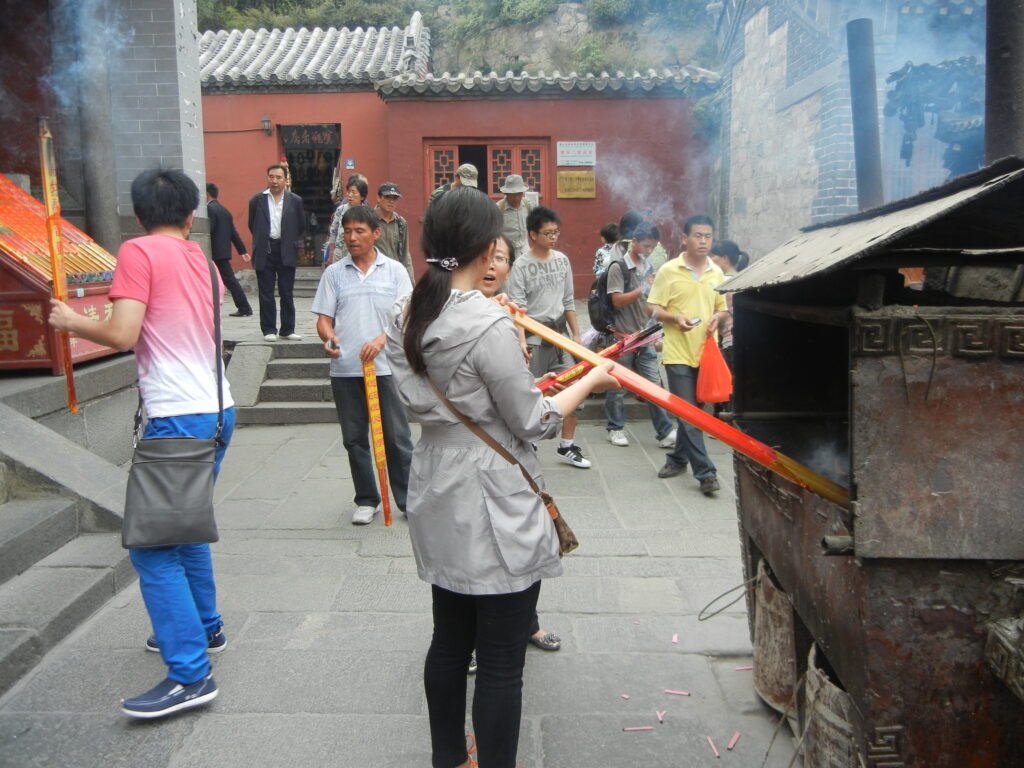
So lei was about putting things into relationships with each other in rituals to harmonize the kingdom. By the late first millennium BCE, lei was often closely connected with yin-yang patterns. In his commentary on the Han Dynasty historian Ban Gu’s Hanshu (Book of the Han), Yan Shigu wote, “Due to the interaction of yin-yang, the lei of things resonate.” Robin R. Wang wrote that yin-yang patterns are built on structures of relationships and dynamic tendencies instead of the individual characteristics of things. Lei mainly function through correlations and categories. All things categorized as yang thus share common characteristics in dynamic relations to other elements. The I Ching and ideas of the Five Elemental Energies have been based on correlations between things with the same traits.

Things of the same lei can influence each other. This happens because entities are mutually connected. The unity of heaven, earth, and human beings lies in their sharing patterns, structures, and movements. Everything is patterned on yin-yang, including the political structures, familial relationships, seasons, the body, emotions, musical notes, domestic architecture, city layout, and colors. Interactions occur at every level of nature and society.
Because of this, one must abide by the lei in all things. Our emotions influence our bodies. The political structure and our familial relationships shape our actions. Our families, architecture, and civic planning reflect the natural environment. Musical notes can elicit different emotions. Each thing is in a highly interconnected network rather than mainly existing as a distinct entity.

So lei has often had a strong moral component. Things are intimately related to each other rather than placed into abstract buckets and datasets. According to James A. Hart’s essay in Henry Rosemont Jr.’s book Explorations in Early Chinese Cosmology, lei has been closely related to xiang (imitate). Nature has categories such as yin and yang, and people should imitate them in their own conduct. This will maintain social order.
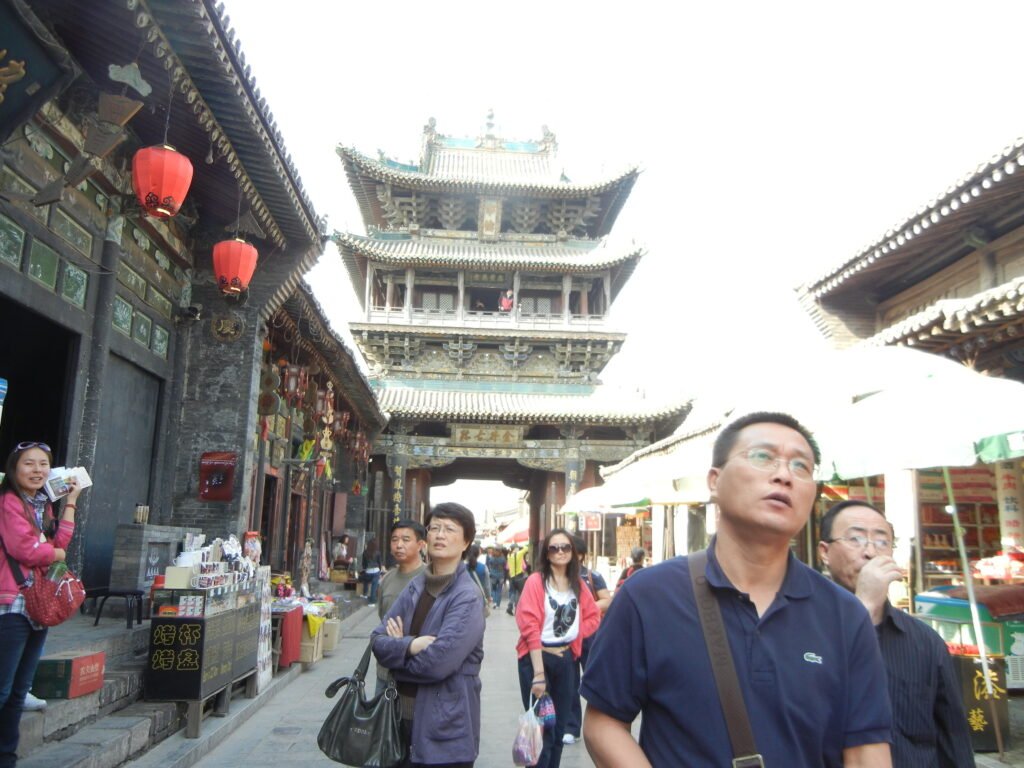
Hart wrote that a related concept has been tse (principle). The legendary ancient king Yu the Great followed the 100 tse while creating archetypal patterns of rulership, including principles of living things, principles of the people, principles of excellent virtue, and principles of heaven, earth, the seasons, and the spirits. Tse and lei related to relationships of things to their whole field of connections and to harmony within it.
By contrast, Aristotle’s categories (kategoriai) mainly apprehend things as distinct entities. These are the most general ways in which a subject may be described. He listed substance (ousia), quantity (poson), quality (poion), relation (pros ti), place (pou), time (pote), position (keisthai), state (echein), action/what the object is doing (poien), and affection/what is being done to the object (paschein).

Immanuel Kant followed this focus on distinguishing objects from each other when he enumerated the 12 fundamental ways in which the mind structures raw sensory data:
Quantity:
- Unity: Perceiving a single object.
- Multiplicity: Perceiving several objects.
- Totality: Perceiving the complete sum of objects
Quality (that attributes of what is experienced):
- Reality: Positive affirmation of a thing’s property.
- Negation: The absence of a property.
- Limitation: Restrictions on the object. A dog cannot be a cat.
Relation (how we relate different objects or events to each other):
- Substance versus accident: Perceiving the underlying and enduring nature of an object, which holds all of its properties together.
- Causality and dependence: Seeing cause and effect relationships between objects.
- Community and reciprocity: Perceiving simultaneous interaction and influence between several objects.
Modality:
- Possibility versus impossibility: Whether something can or can’t happen.
- Existence versus nonexistence: The actual presence of an object.
- Necessity versus contingency: Whether an object or event must necessarily exist or not.
So some of the most influential Western thinkers have assumed that classifying things means treating them as distinct objects whose most defining characteristics distinguish them as such, while traditional Chinese thinkers usually related things on the basis of correlation of characteristics that resonate with each other, as well as on the whole field of connections in which they resonate.
Each way of thinking about categories converged from many types of experiences, including language, music, architecture, and Confucianism in China and politics, theater, cities, and colonization in ancient Greece. Our ways of thinking about categories are thus always open to being reimagined, since there is a lot of scope for cultural variation. .