
Westerners have often assumed that language is mainly about meanings of words and statements. But other cultures have assumed that language has other functions.
Ideas of the primacy of resonance throughout society and nature have often characterized Chinese assumptions about language. In Hidden Meanings in Chinese Art, Terese Tse Battholomew detailed rich wordplay in popular Chinese painting genres, which people have displayed in their homes. For example, the Mandarin word for deer, lu, also means the salary of a government official. It is thus not cashflow from the bare-knuckled business world; it’s a stable income that comes from an established rank in the political system. This revenue stream was supposed to be set for life in imperial times. Parents back then thus wanted their sons to attain high-ranking positions in the government, so they and other elders gave art with deer motifs to a young man starting out in the world.
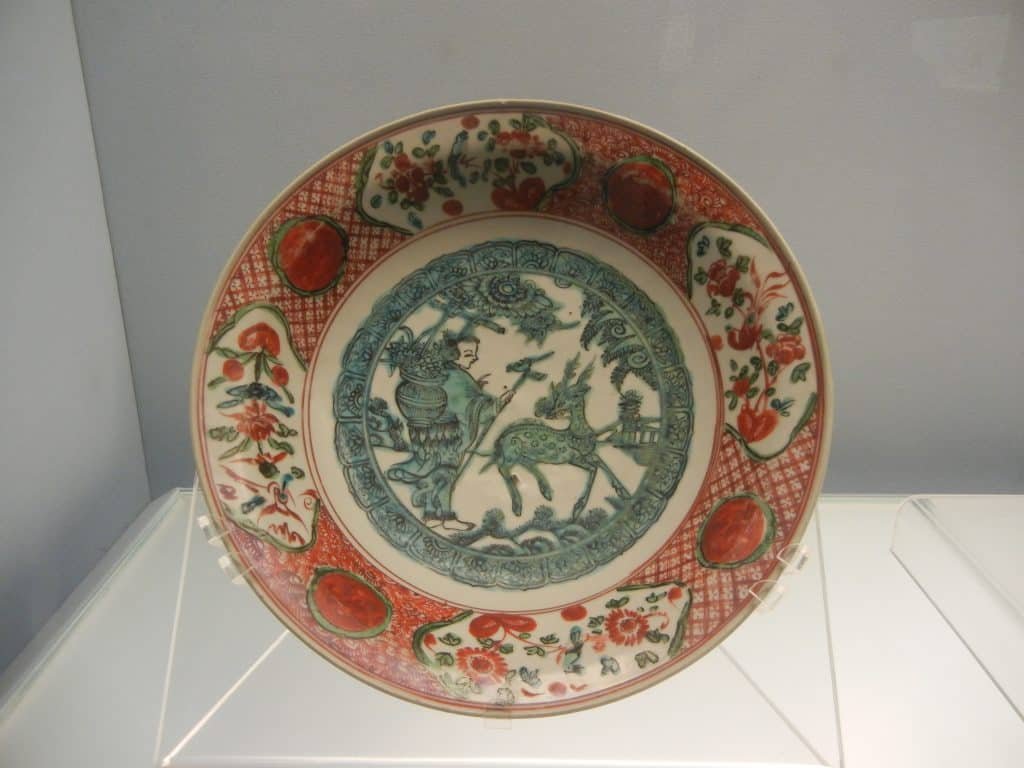
Some ceramic vases portrayed cypress-family trees painted around the deer. These trees are called bai, and bai also means 100. The vases thus say, May you receive 100 salaries.
The Mandarin word for bat, fu, also means blessings. The most popular motif with bats has five of them, which stand for the five blessings: a long life, wealth, health, love of virtue, and a peaceful death. So five bats combine in a common image in Chinese folk art. I saw renditions of them in several traditional homes. They grace each of the four sides of a home’s courtyard in the below photo.
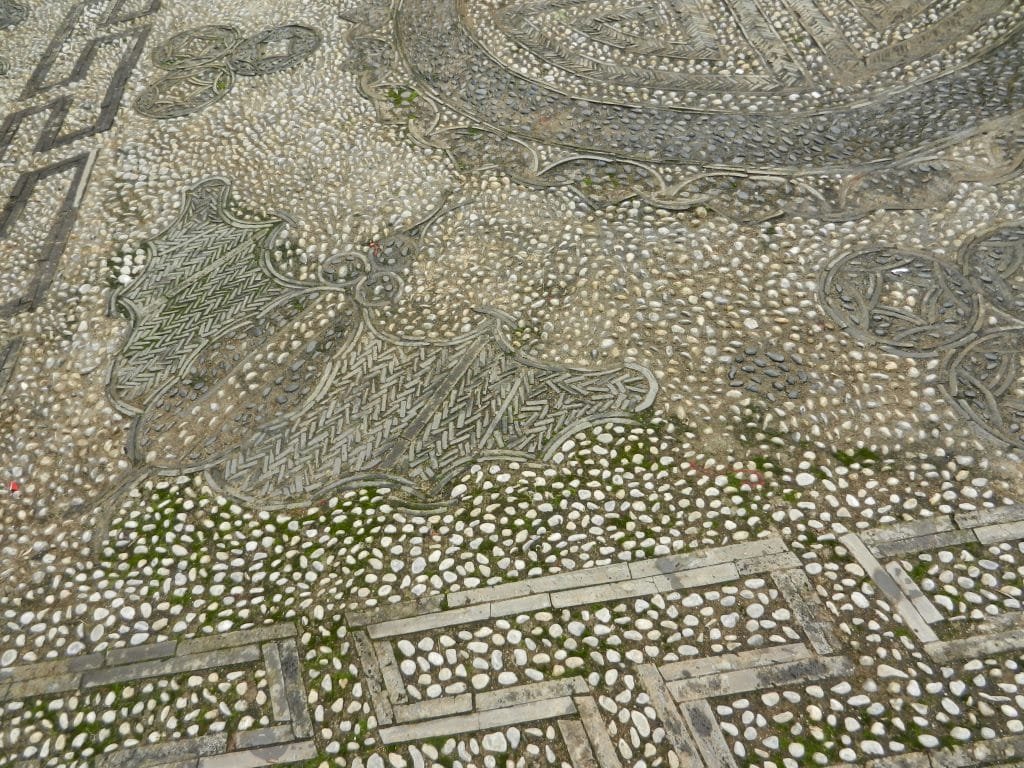
A Mandarin word for cloud, yun, also means good fortune. So a painting of bats flying in the clouds means, May you have blessings and good luck.
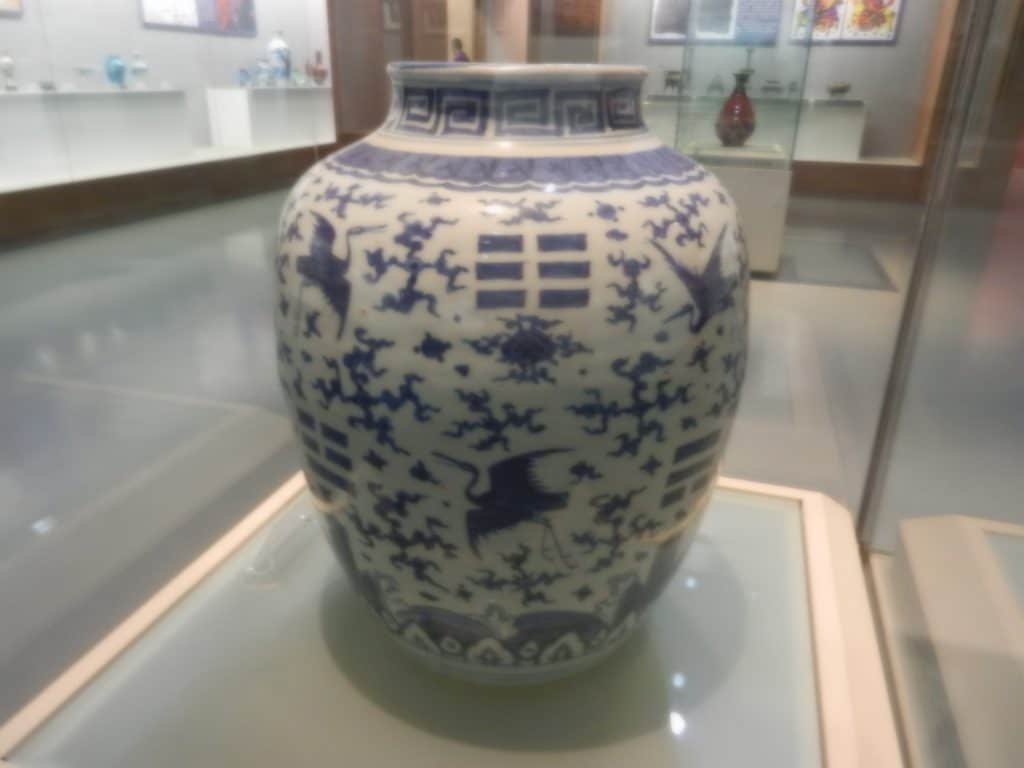
A word for crane (he) also means togetherness. So its image can stand for long-lasting personal relationships, including marriage. Since some are white, they have been associated with old age, so a painting of a crane can mean the survival of a marriage well into seniority.
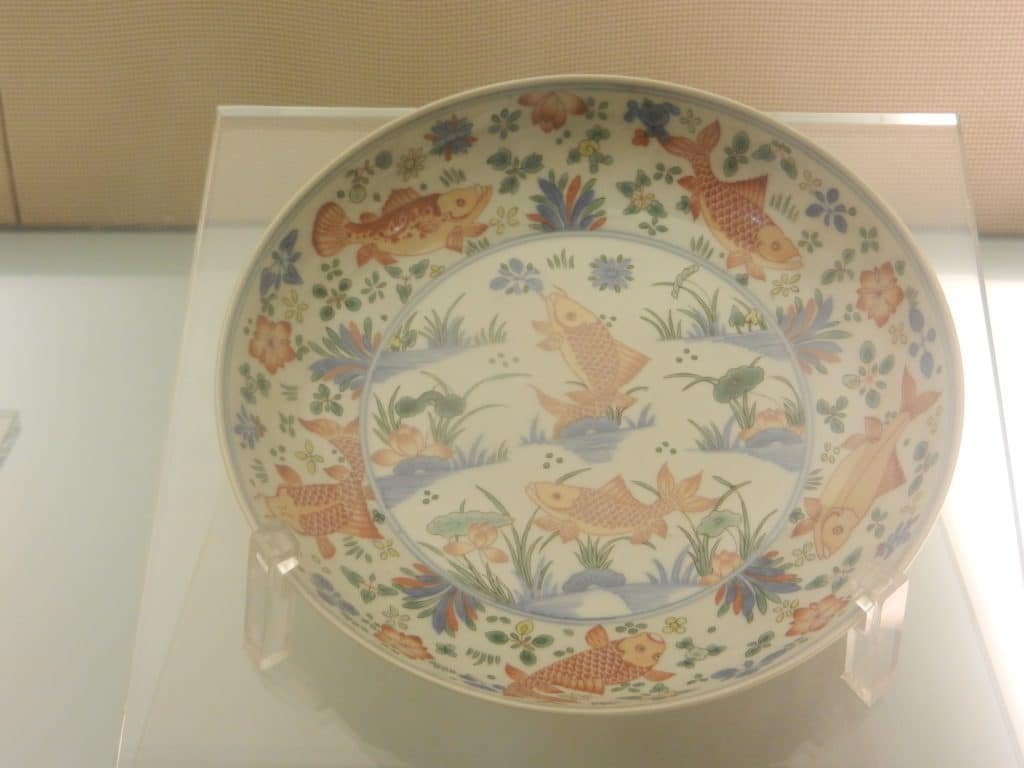
The collective word for fish (yu) also means abundance.
Shoutao means both peach and longevity, so peaches are popular in Chinese art. They’re sometimes paired with a bat to say, May you have blessings and a long life. A charming pavilion near Beijing’s Temple of Heaven is constructed on two peach-shaped foundations. Emperor Qianlong (r. 1735–1796) had it built for his mother’s birthday.
There are thus many combinations of images with symbolic meanings in traditional Chinese culture. Mandarin doesn’t just describe distinct objects and make precise statements. Many Western philosophers have assumed that these are the main purposes of language, but Mandarin evokes a world of poetic resonances in which things are intimately related. Things are not entirely distinct; they resonate with each other when they’re constituted by the same patterns.
In traditional Chinese culture, meanings of the same word can resonate with each other. Many people thus avoid giving gifts in fours because the word for four (si) also means death. A term for giving a clock to someone (songzhong) also means making arrangements to bury a parent. Thus presenting a friend with a clock can be interpreted as, “I hope one of your parents dies soon.” The Mandarin words for eight and to get rich are the same, so many people consider 8 an especially lucky number.
The predominance of monosyllabic Mandarin words enables a lot of brief expressions. Many have only four syllables, but they convey a lot of meaning. Yipin gaosheng means May you rise high and become an official of the first rank. Yilu liansheng means May you have continuous promotions throughout your career. Wufu Linmen means May the five blessings descend upon this home. Bingdi tongxin means May you have a harmonious marriage and share the same outlook and feelings. The brevity of so many prayers for all good things makes it seem that their words reverberate throughout nature. Meaning is holistic; sentences often get their meanings from resonating with the whole natural and social environment rather than just corresponding with an object.
Many traditional Chinese people have assumed that language extends beyond describing things. It also includes amplifying ways that things resonate and harmonizing oneself with society and nature. These assumptions are reflected in other aspects of life, including architecture and experiences with common objects. These assumptions about resonance throughout nature are very ancient, going back at least to the Shang Dynasty.
Language is far more than what Steven Pinker called words and rules. It also expresses assumptions about the basic workings of the universe and humanity’s connections with them, and there’s a magnificent amount of cultural variety. You can see another example in Sanskrit.