Unlike strictly monotheistic faiths like Christianity and Islam, traditional Chinese religions have allowed many gods to rub shoulders. Having lived in India, I was already familiar with spiritual imaginations creating an immensely populated heaven. But China’s city god temples reflect uniquely Chinese ideas about heaven and earth and how they’re linked.
Governments in imperial China’s dynasties (before 1912) relied on district magistrates who oversaw local tax collection, managed legal affairs, and relayed information back to the capital city. They also presided over rituals and other social activities in their cities. They were like mini-emperors in their locales. The city god duplicated these functions in heaven; many Chinese saw the world above as a bureaucracy that reflected the central government.
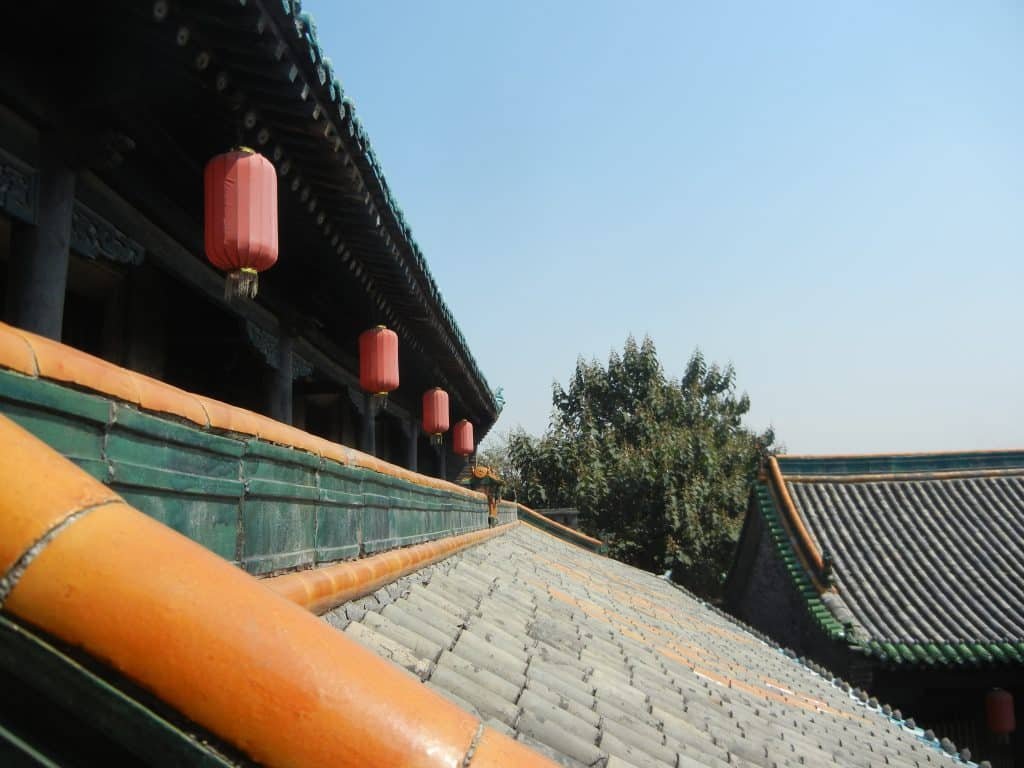
The city god collaborated with the district magistrate. He ruled invisible realms and his earthly counterpart governed the local visible world. Their mutual cooperation was considered necessary for a stable and prosperous community. They reflected each other, so gods’ temples were often designed like earthly palaces. They had spacious courtyards, commanding great halls, and sleeping quarters that looked like the magistrates’ bedrooms.
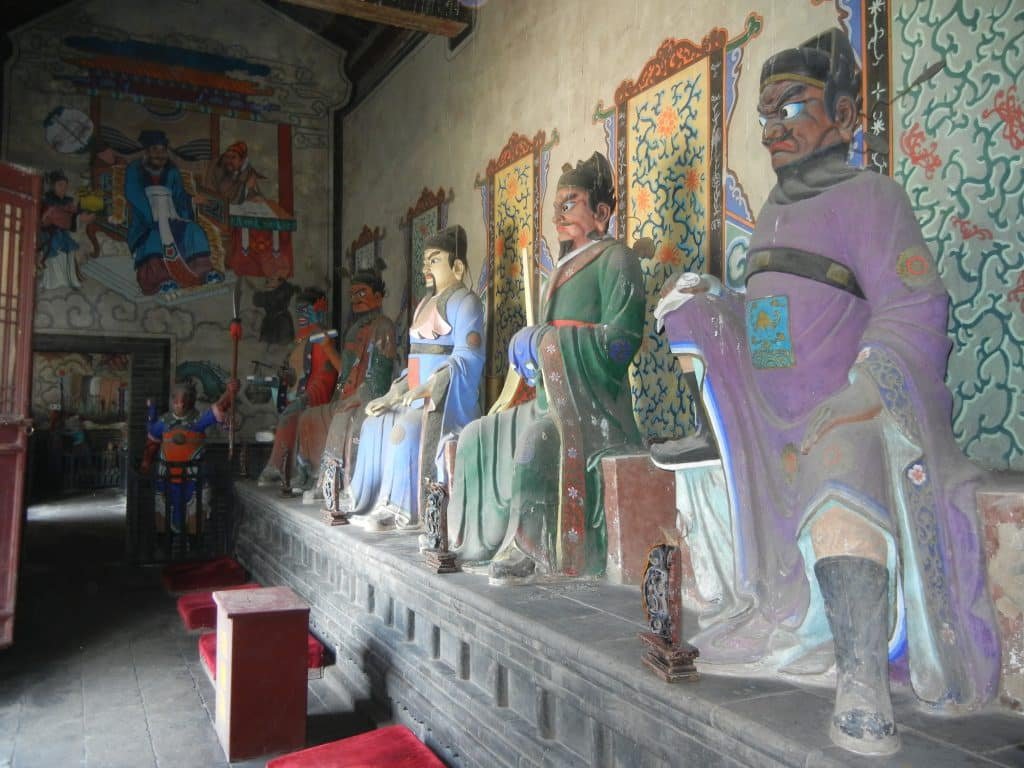
Gods rode on the same types of sedan chairs as their human counterparts and had subordinates with the same duties and ranks. Some divine officials oversaw judiciary functions. The stern faces that many of their statues projected encouraged everyone to remain orderly.
When a magistrate assumed his new post, he visited the city god’s temple to obtain his support. Folks celebrated the deity’s birthday with vibrant festivals that rollicked through the town, and all turned to him for aid after natural disasters. Officials sacrificed to him to encourage his continuing benevolence.
People also performed plays to entertain their city god. They assumed that the heavenly and earthly realms interpenetrated so that the god understood performances’ meanings and enjoyed their aesthetics.
The town Pingyao grew as a trading hub about half-way between Beijing and Xi’an during the Ming Dynasty (1368–1644) and Qing Dynasty (1644–1911). Wealthy businesspeople established banks there and lent money to Mongolians trekking from the north (and ruined many of them by charging exorbitant interest rates which Mongolians couldn’t pay until their livestock gave birth in the following year). Pingyao’s city god temple looks like a larger version of the courtyard homes that the banking families built. A theater for Caishen (God of Good Fortune) stands on its western side. According to wu xing ideas, metal (the element associated with the west) generates water, and water has been associated with good fortune.
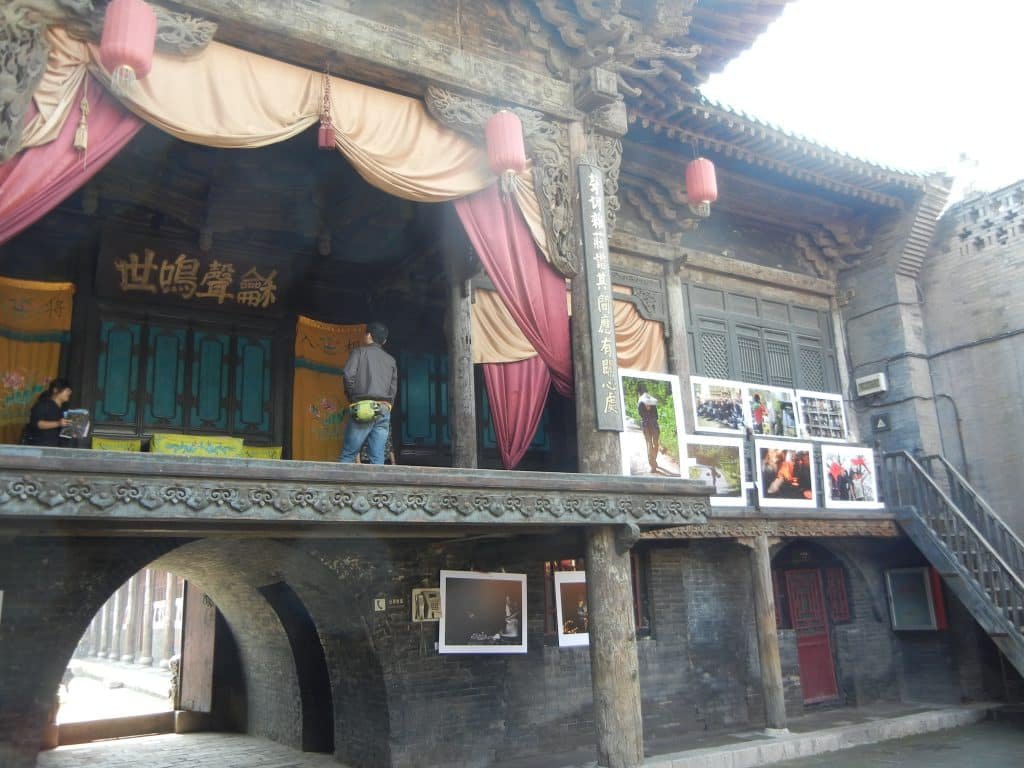
An elevated stage rises about ten feet at one end of a narrow rectangular courtyard with a wooden two-story audience gallery on each long side. The entire area is much smaller than an ancient Greek city’s amphitheater; it wasn’t built for all the residents of Pingyao. It had an intimate atmosphere, which small groups of viewers shared as they watched performances that pleased a god who could bring their town prosperity.
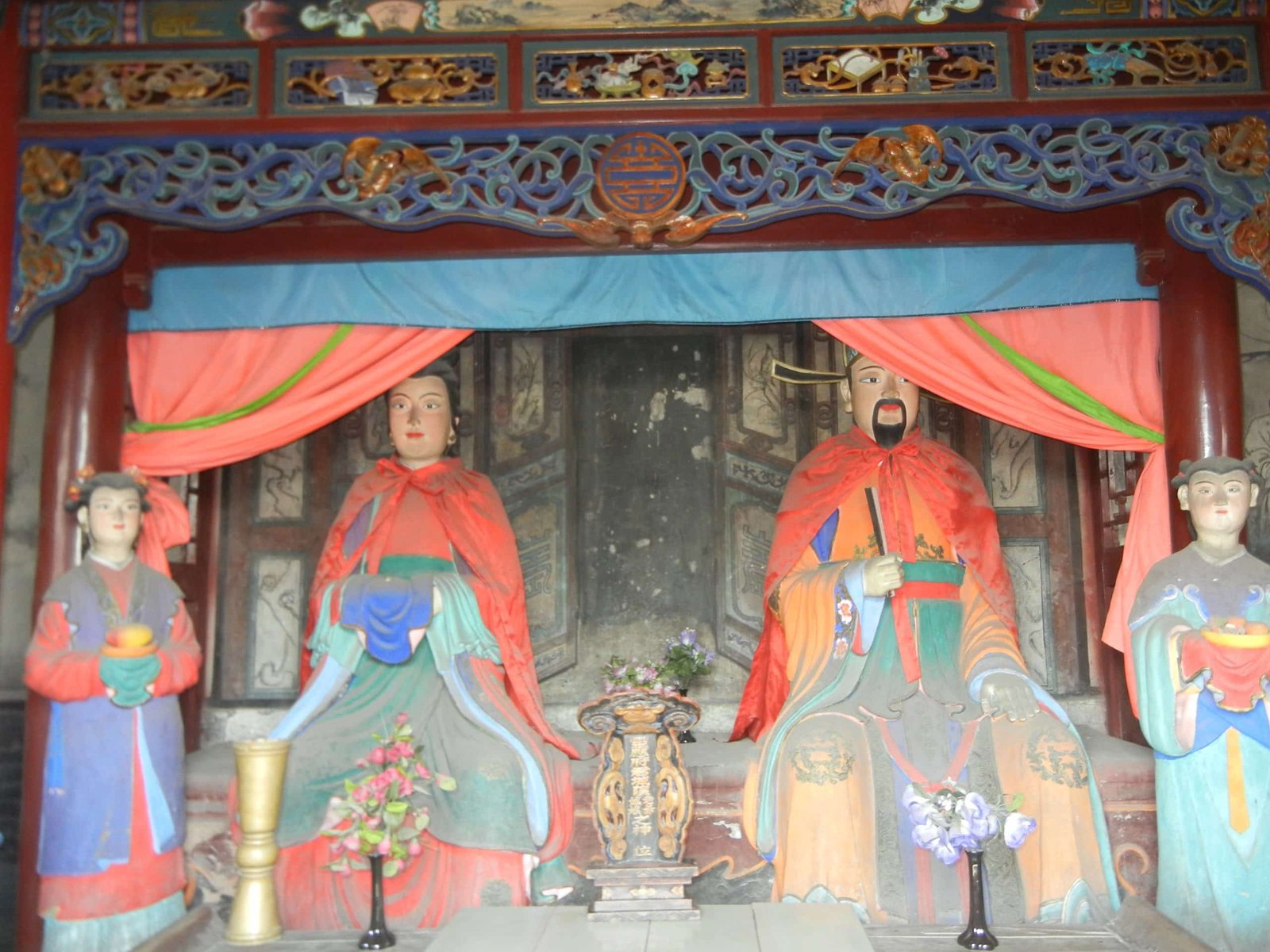
The great hall for Pingyao’s city god presided in the temple’s center. Statues of his secretaries and soldiers surrounded him. His sleeping quarters were built over the hall, where his and his wife’s statues sat surrounded by statues of pretty, young female servants.
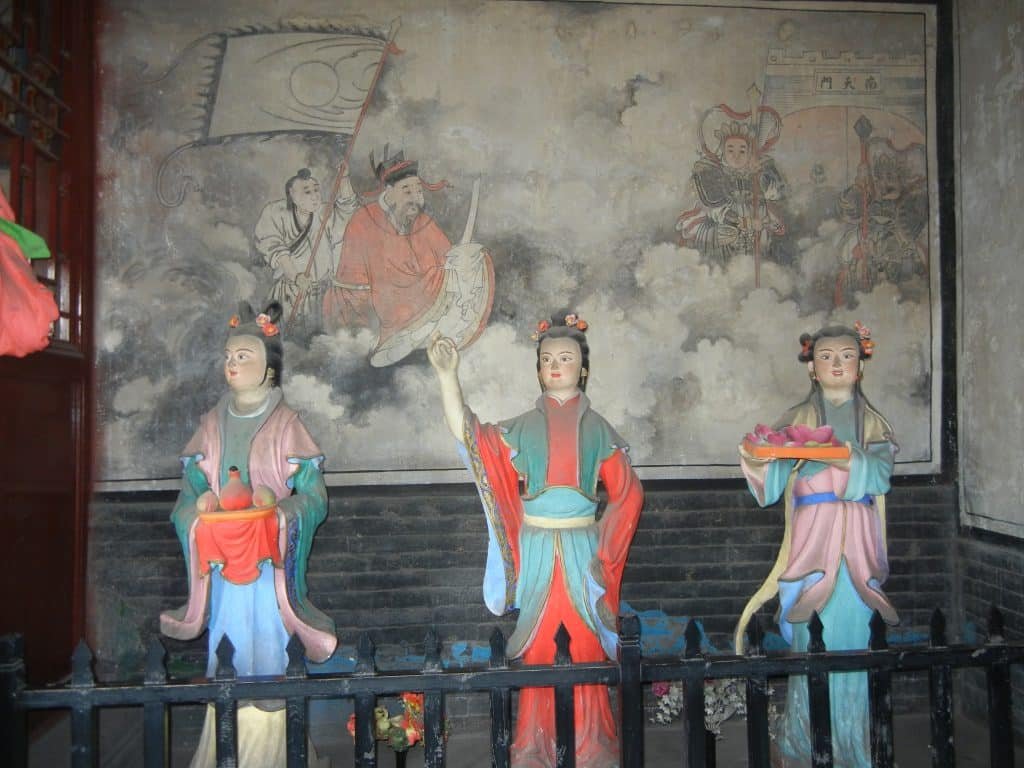
Was this a male fantasy? However one interprets it, the hall-and-sleeping-quarters arrangement resembled the hall-and-upper-story-master bedroom combination at the far end from the entrances of wealthy people’s homes. Their residents could have felt that they shared the city god’s structures of daily life.
City god temples express a harmonious universe in which heaven and earth mirror each other, and this heaven is worldly. A single god who is too distant for humans to comprehend isn’t emphasized as much as a community of spirits that resembles ours. Like yin and yang, both realms work together and their patterns influence each other, though the heavenly realm is typically more powerful, since it’s associated with yang and earth is characterized by yin.