
Some technologists say that human cultures are increasingly being uploaded into the digital world, and they justify this claim by stating that the information in it is growing at an exponential rate. Ray Kurzweil and Kevin Kelly are two of the best-known, and they cite Moore’s Law, which has usually accurately predicted that computing chips shrink by one half in size and cost every 18 to 24 months. Kelly also says that this law of accelerating returns applies to other aspects of digital technology, including the amount of information that can be stored and the bandwidth for transmitting it.
But the world is much more than information because people also think about larger meanings and contexts, as well as canonical artworks, values, and concepts that integrate experiences. These aspects of thought and life become ever more rewarding as you study and compare more times and cultures that preceded the internet. Homer, Dante, Shakespeare, Italian Renaissance artists, and the builders of Egyptian pyramids, Gothic cathedrals, Angkor Wat, Petra, and Sukhothai were poor in information from today’s digital world’s standpoint because they lacked the technologies to store, process, and transmit as much of it.

But they were so rich in meaning and context that their works have resonated with people in every subsequent era. So were the Indian priests, monks, and artists who brought their heritage to Southeast Asia. So was everybody else who created artworks, literature, and philosophies that have influenced people over many centuries.
Humanity’s field of connections has been integrated in many ways besides information over the previous several thousand years, including:
Stories. Jerome Bruner, in Acts of Meaning, wrote that people largely think in terms of stories, and that this is so from early childhood on. Stories are more than bits of information because many of the ones that people find most engaging have several meanings. The Gospels have been so influential partly because Jesus is portrayed as both divine and human. He is not reducible to bits of information because he also represents integrating ideas, including God, the Trinity, spirit becoming flesh, the salvation of humanity, and the dawning of a new historical era. He is also meaningful in terms of values, such as love, mercy, and steadfastness. Ancient Greeks treated the Homeric epics as their Bible by referring to them for values and perspectives. These texts portrayed gods and warriors as both magnificent and petty, and they depicted them as physically lustrous.

Their stories raised questions about the world and provided ways to debate them. The ambiguity of many canonical stories, the integrating ideas and human experiences they address, and the memorable personalities of their main characters give them depth and make them engaging enough for people to remember and discuss throughout their lives. They also allow people to identify with the characters. The combination of all these aspects of narratives gives them a central place in cultures.
Shared histories. Societies use them to cohere. The Gospels were part of the West’s in 15th century Florence, and the Chiang Mai chronicles detailed Lan Na’s collective history. Shared histories are more than bits of information because they’re meaningful as a whole process in which the past has unfolded into the present, and because people associate their individual and communal identities with them. The collective past is meaningful as it pertains to the whole person and the entire community.
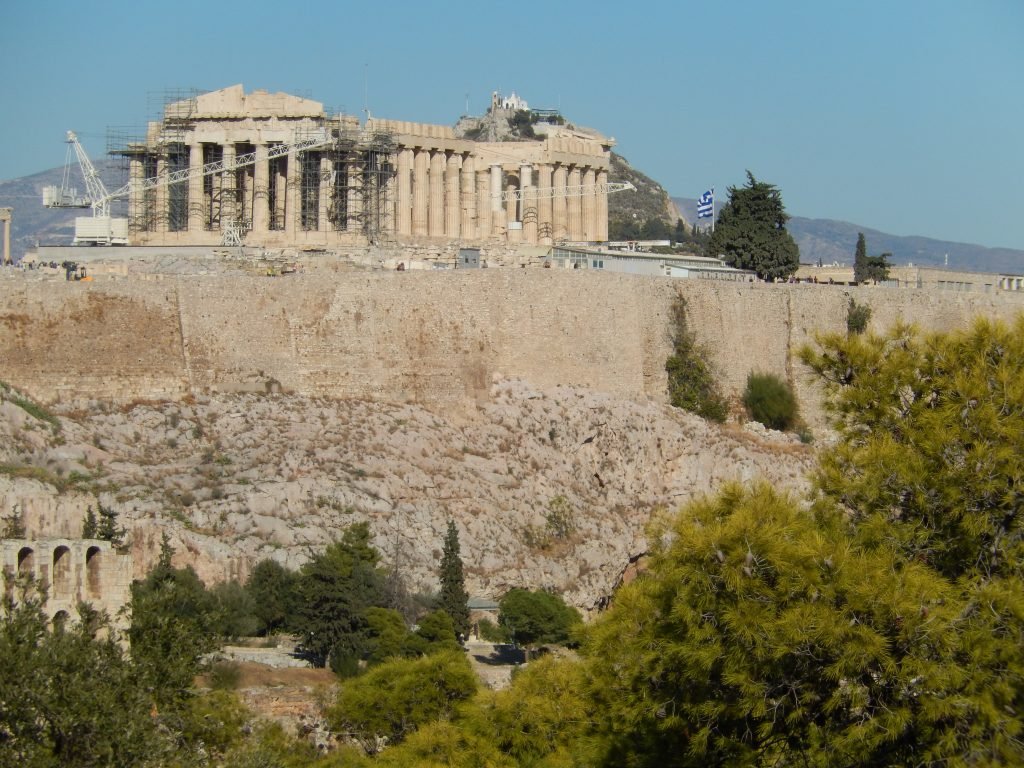
This meaningfulness determines what people decide to store as information. Thus the Chiang Mai chronicles detail genealogies that link royalty with the Buddha and then switch to the doings of Thai kings, but they exclude stories about monarchs in Cambodia.
Religion. People share a tradition of ways to connect with the unknown. Like shared histories, religion helps societies to cohere. Religious texts and ceremonies contain bits of information, but people’s faith in them as bridges to the unknown and keepers of communal harmony enables them to endure in a culture. This is why the information in them is considered important enough to preserve. As with stories and shared histories, the context makes the information relevant, and the whole cultural landscape creates much of the context.

Canonical artworks and art forms. Like stories, they often have many meanings, and new interpretations of them emerge as times change.
Ceremonies. Births, weddings, funerals, and religious celebrations like Christmas and New Year also help societies to cohere. They form memories that people share, and artists produce works for them.

Music. From Christmas songs to Indian ragas to classical Chinese music to traditional African music, music is often a key part of ceremonies. People don’t just process it as information; they collectively perform it, emotionally respond to it, and incorporate it into their lives. They dance to it, woo each other with it, and use it to remember the good old days when they age.
Bodily experience. Movement is central in many arts, including dance and rituals, and it deepens collective experience. Hugging, sex, and other types of affection are also central in most societies.
Common objects. Family Bibles, 16th century dinnerware in the Louvre, Sukhothai ceramic figurines, and Thai cuisine are examples of things that people live with on a daily basis, which impart their cultures’ aesthetics and values. They’re more than objects and bits of information because they convey meanings that reflect the whole cultural environment.
Values. Thai etiquette and 15th century Florentine commerce helped shape their societies. From ancient Greeks to today’s Americans, many Westerners have been proud of their freedom.
Integrating ideas. Westerners have often held permanent ratios and geometric shapes as fundamental. Stately late 19th century classical buildings housed the great collections of art in Berlin’s museum quarter (below) to enable Bismarck to make a statement that Germany can compete with England and France as a leading carrier of the Greco-Roman heritage.

Medieval Europeans often treated the great chain of being as an integrating idea. Many Southeast Asian societies have integrated their worlds with ideas of religious and political centers that both project and tame animated energies.
Purpose. People have ideas of what the goal of life is, whether it is to achieve a higher birth or nirvana, as many Buddhists feel, or to forge their places in the world as individuals. A culture helps shape these goals and people teach their children to strive for them.
Families. We’re not separate nodes that merely process information; we grew up in families. The bond between parent and infant characterizes the environment in which people first become conscious, and Jerome Bruner noted that infants imbibe many of their cultures’ traditions from their parents. Relationships with siblings, grandparents, aunts, and uncles are also important in many people’s lives. Affection and feelings of belonging are usually first experienced in families, and psychologists say that both needs profoundly influence personality development.

Childhood. People don’t begin life by being booted up as fully grown adults. The psychologist Erik Erikson wrote that childhood is a key part of personality development and culture. Children see parents and other elders as role models, and relationships with these elders have strong formative effects on the personality. So do many childhood friendships.
Relationships between genders are also fundamental, and many stories, ceremonies, and popular songs dramatize them. Romance, sexuality, marriage, and gender-based roles are key aspects of human experience and cultures’ values.
Humor and play are common in cultures all over the world. Not all meanings that people share are literal and factual. Fun often involves bending or temporarily suspending rules, and it strengthens human relationships. Many of people’s most cherished memories are of good times they had with others.

Physical meeting places. Southeast Asian markets, Thai wats, and Italian piazzas are places where people learn about their cultures. Children go to them, first with their parents, and they see examples of how to behave. Canonical artworks are often displayed in these places, including Michelangelo’s David and Buddha statues from Sukhothai and Lan Na.
The natural environment. This has helped shape cultures’ shared experiences since homo sapiens emerged.
Cuisine. Eating together is one of the most common ways in which people bond. It’s often a central part of weddings, business relationships, and many religious ceremonies. And cuisine often reflects the cultural landscape that it originated in.
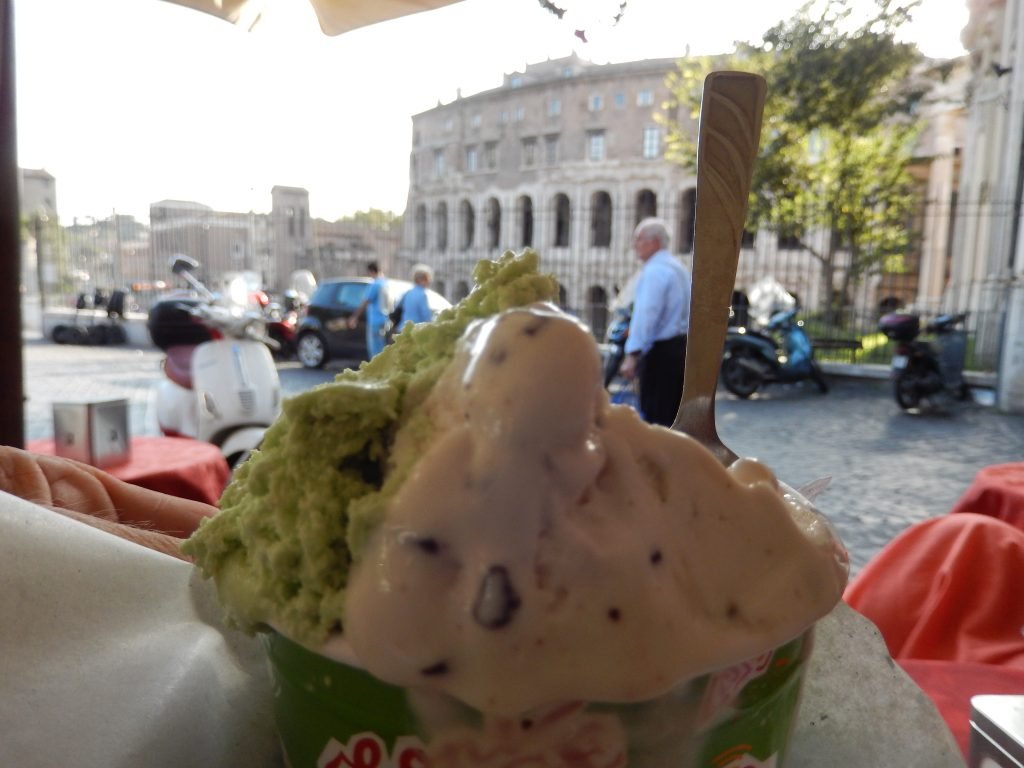
The key thing about human life over the last several thousand years is: People have used all of these experiences to integrate their perspectives, societies, and personalities. All facets together have characterized our lives. This wholeness, with its multitude of facets, has always been our shared humanity.
But digital platforms’ speed can make it hard to take time to reflect on meanings of experiences and ideas, so it’s easy to see only one facet of them and downgrade them to information. Claude E. Shannon’s and Warren Weaver’s seminal study The Mathematical Theory of Communication treated information as a bit (a single either/or choice). Information theory focuses on the number of bits in a message. Information is quantified by a series of binary choices. There is thus one bit of information in a coin toss because “heads or tails” is one binary choice. Before the toss, we do not know what side will face upwards. After the toss, we have one bit of information. If we know what space holds a pawn on a 64-square chessboard, we have six bits of information. Two multiplied by itself six times (six binary choices) equals 64 (in other words, Log2 64 = 6). Specifying a word in an unabridged Oxford English dictionary conveys about 19 bits of information because it takes that many binary choices to narrow its roughly 500,000 entries down to one. I find this way of treating words shallow, since brahman, rasa, and dao emerged in unique cultures with ancient histories, and understanding them requires a deep background in those societies. But the exponential growth of the amount of information that’s online and digital medias’ speed combine to encourage people to think that information is the most fundamental and comprehensive kind of meaning.
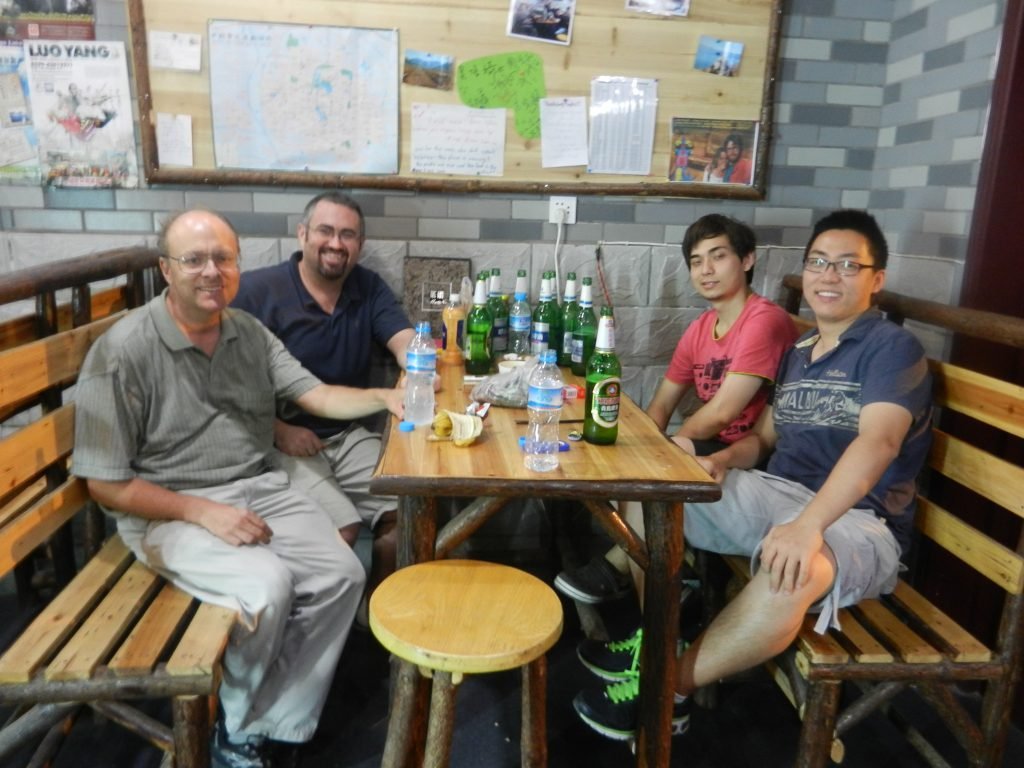
However, some technologists have recently spoken about computers and human minds in the same way, as though the mind is strictly an information processor. But people’s memories are often tied to experiences with the above facets. Most of the memories of my trips include the cultural contexts that I was immersed in, the highly nuanced art that I enjoyed, the walks in the natural environment, savory meals (often in highly textured places, including Southeast Asian street cafes and markets, Italian piazzas, and French outdoor cafes), after-dinner jogs through neighborhoods, experiences of sharing music with people, romantic encounters, and long conversations with others about their lives.
I’ve forgotten most of the experiences that were strictly focused on information. Looking at the departure schedule in the station in Vienna to see when my train was going to leave for Regensburg had little meaning once I boarded, so I don’t recall the departure time, but I still remember the experience of being in a crowded train station in a great European city. I have many more memories of a lot of other buildings, including the cathedral. The photo below is from its tower. It makes me wonder about the conversations that took place in the apartments, cafes, and streets of this culturally diverse city that housed so many great intellectuals and artists.

My earlier memories also have many facets besides information. As I remember boyhood walks along Northern Californian beaches with my father, I think of his gentle voice and our sense of wonder as we looked out to the ocean, imagining how people on the other side of the Pacific lived. I also remember the cool breezes, the misty air, the calls of seagulls, and the hot chocolate we drank upon returning to the car.
Information is usually used to look At. Looking At/With/Beyond entails more reflection, and it’s hard to have time for that when 100 unread emails from your clients and colleagues glimmer in your inbox and your smartphone continuously receives messages. It’s also difficult to take time to reflect or to discover little known cultures when the increasing amount of information online requires people to specialize in fields and spend most of their time keeping up with developments in them. But the abilities to reflect on meanings, enjoy continuity with pasts, and discover differences between cultures have been some of the most universally human characteristics for thousands of years, and these reflections have inspired humanity’s most influential art and thought for several millennia.
But we can retain rich and independent human identities, be in command of our technologies, and use both to soar to ever higher levels of creativity by spending equal amounts of time offline and online. We can read books about societies that thrived before the internet and then go back online and share what we’ve discovered. Take a little time for nature walks, or a dance class, or to explore different cultures’ music. Sit in a local Thai, Vietnamese, or Hindu temple and watch the flow of colors and forms. We can apply looking At, With, and Beyond to the digital world—use it (looking At), reflect on how you’re using it (looking With), step outside of it and appreciate other types of experiences (looking Beyond), and then return to it and share what you’ve learned. This will increase the variety and overall quality of the material that’s online.
Another way to look With and Beyond is to regularly search cultures you’re not familiar with. Search engines won’t automatically suggest that we explore the Malay world or Native American traditions. We need to make a daily effort to look beyond the conventional uses of search engines. By regularly shifting between these three ways of looking, our perspectives will always be fresh and increasingly deep.
Instead, looking At/With/Beyond is a joint venture—it’s positive about using technology, but in a reflective way which allows us to improve its uses by adding more variety and nuance to them. We can enhance the online world by discussing a bigger range of ideas, cultures, and experiences. If enough people regularly share their explorations, we can make the digital world even more dynamic than it is now, and we’ll make it easier for other people to discover the richness of our human heritage. It will be win-win because perspectives of both the digital and analog world will keep getting better.