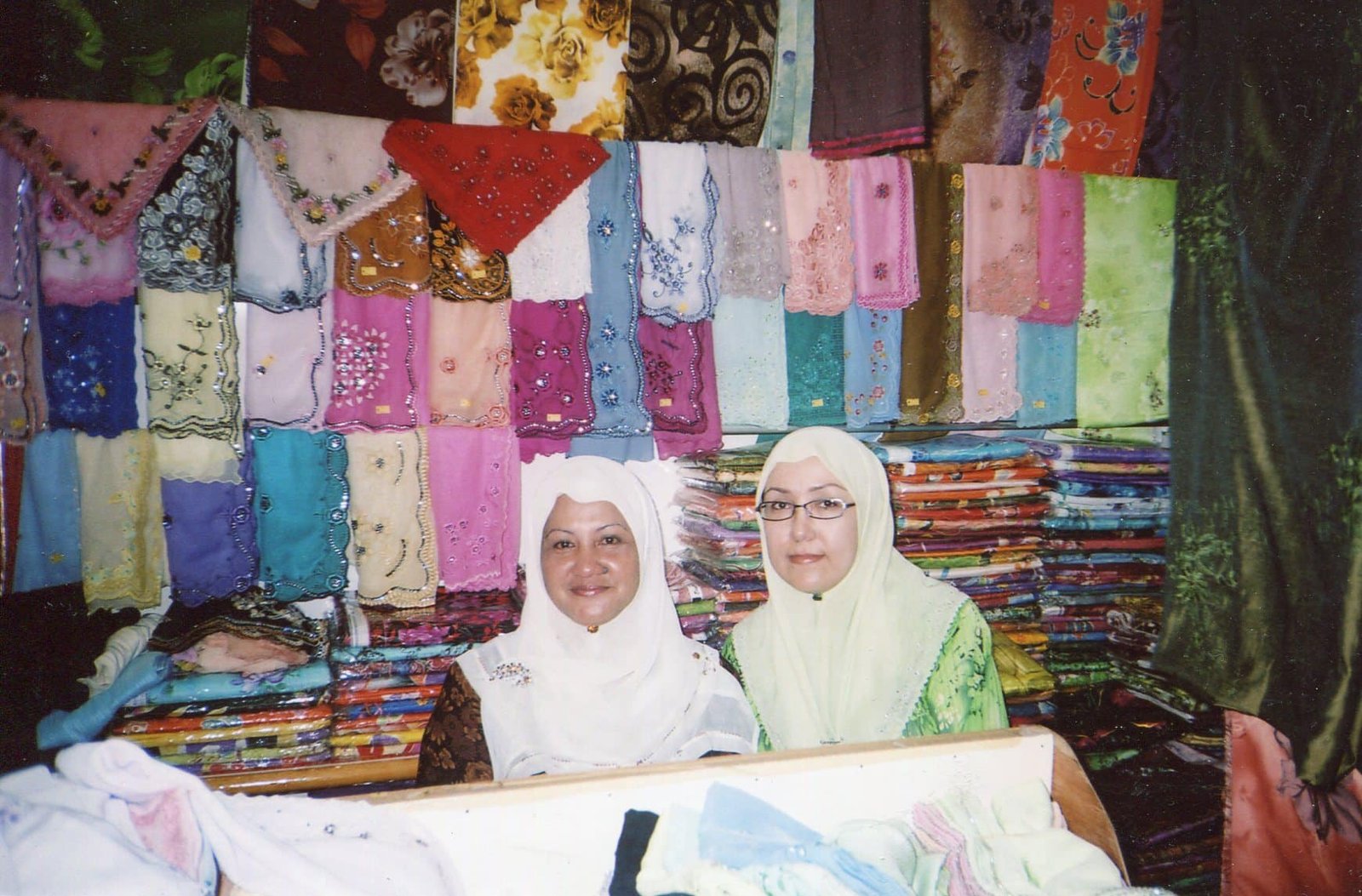
We’ll get back to ancient Greece shortly, but after taking a long voyage to the Malay world. Both cultures were oriented to the sea and trade, so we will explore some of their similarities and differences.
Malays’ ancestors migrated through much of Southeast Asia in a long series of movements, which began from southern China to Taiwan 5,000–6,000 years ago, when rice growing communities were spreading farther beyond the Yangtze River. Between 3,500 and 4,500 years ago, they sailed all the way to Melanesia and established communities there. A reconstructed Proto-Austronesian vocabulary indicates people who grew rice and millet; raised pigs, dogs, and maybe chickens; decorated themselves with tattoos; and used canoes, bows, and arrows. By 2000 BCE many built timber houses on stilts, made pottery, attached sails and outriggers to canoes, chewed betel, and used looms for weaving. Their descendants transplanted their lifestyles to islands from Madagascar to the eastern Pacific.
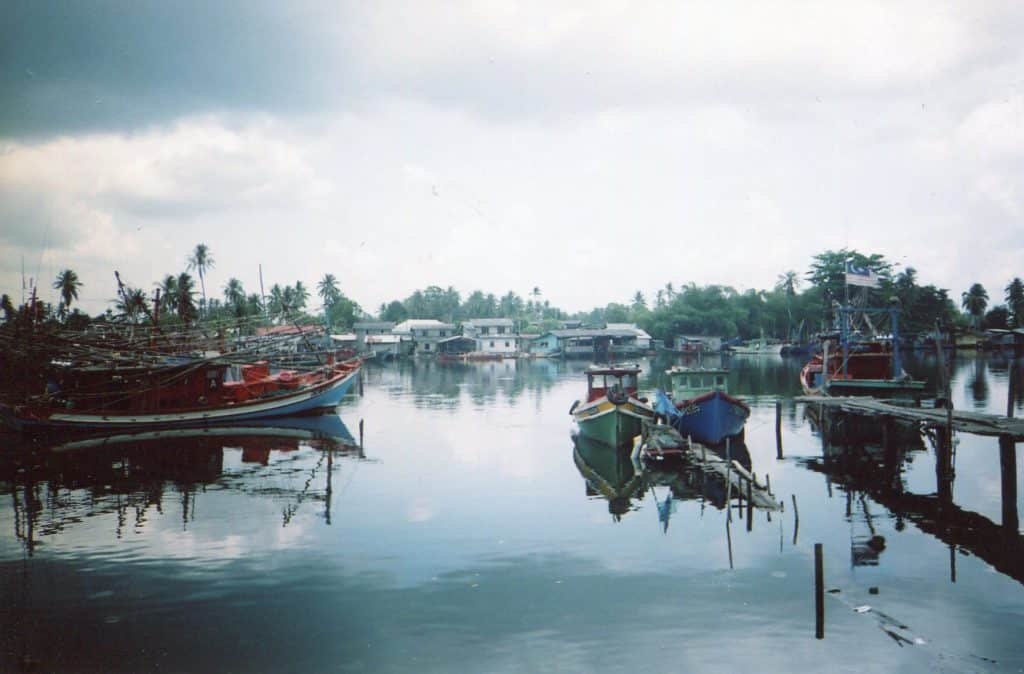
They spread over half the earth’s circumference and became the world’s most widespread ethno-linguistic population before modern Europeans colonized much of the world.
Most Malay speakers today live in Indonesia and Malaysia. Their culture is less centralized than the Thai and Khmer worlds. Like the Chams, Malays have lacked long rivers and large plains to unify their lands, so many states have coexisted—pluralism is strong in Malay societies.

These states have usually been hierarchical, with elite families at the top projecting magical auras with flamboyant clothing and ceremonies. Malays had a special language for speaking to and about royalty. Sultans didn’t eat (makan) like regular folks do; they feasted (santap). Only royalty could wear gold and yellow clothing, and rulers traveled under a white umbrella. The aristocracy also donned gold jewelry and kings sported a belt buckle covered with precious gems. High-ranking men traditionally swaggered with a kris (a small ornately carved dagger), and each kris is supposed to contain spiritual power which must be respected. Many are in the form of a blade that is crooked, as though it embodies the animated forces that its owner claimed to control.
Since Malays settled on many islands, the sea became prominent in their views of the world. When Indian traders arrived and brought their Hindu faiths, Malays adapted their Ramayana and shadow puppetry, but they developed their own versions. According to Professor Singaravelu Sachithanantham, in The Ramayana Tradition in Southeast Asia, Malay elites focused on themes in the epic that fit their own ideals, including contests of military and athletic prowess, unswerving loyalty to the king, righteous warfare, and fidelity to the family. Malay versions also include tales about seafaring that the Indian texts don’t contain.
The Malay chronicles were written by court historians in the 17th century from earlier stories from Malacca’s apogee in the 15th century, and they describe many political envoys sailing to other royal courts in ravishing terms. A fleet leaving Palembang contained so many vessels that they almost filled the sea. Their varied prows were too numerous to count. The masts looked like a forest and the standards seemed like floating clouds. They all sailed south for six days and nights until they reached a place called Tanjongpura, whose king and 1,000 of his ministers took them to his throne hall. Many tales in the chronicles alternate between sea voyages and royal pomp.
Like many other seagoing people, including ancient Greeks, Malays have stressed limberness and emotional control. Two of the most popular traditional Malay contests are kite flying and top spinning, and both test these skills. In the latter, tops are tethered to a rope and men launch theirs at others (which are already in motion) to knock them over.
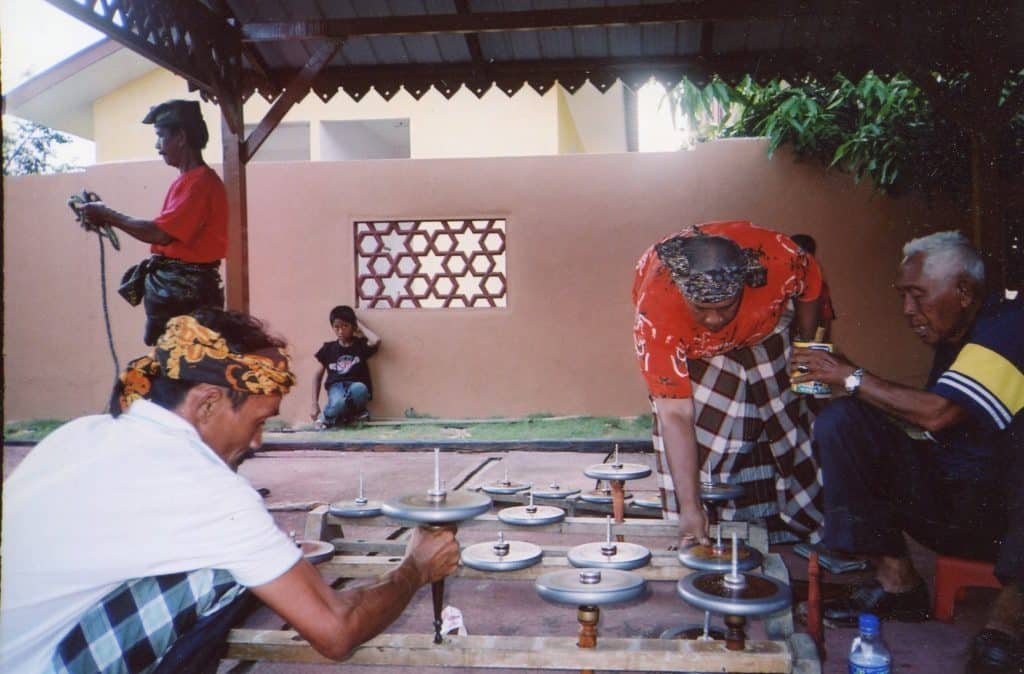
Locals in a town in northeastern Malaysia called Kota Bharu invited me to one of these matches. My hosts let me try—over, and over, and over. They remained polite, but if there’s a Malay word for uncoordinated wimp, they must have been thinking of it.
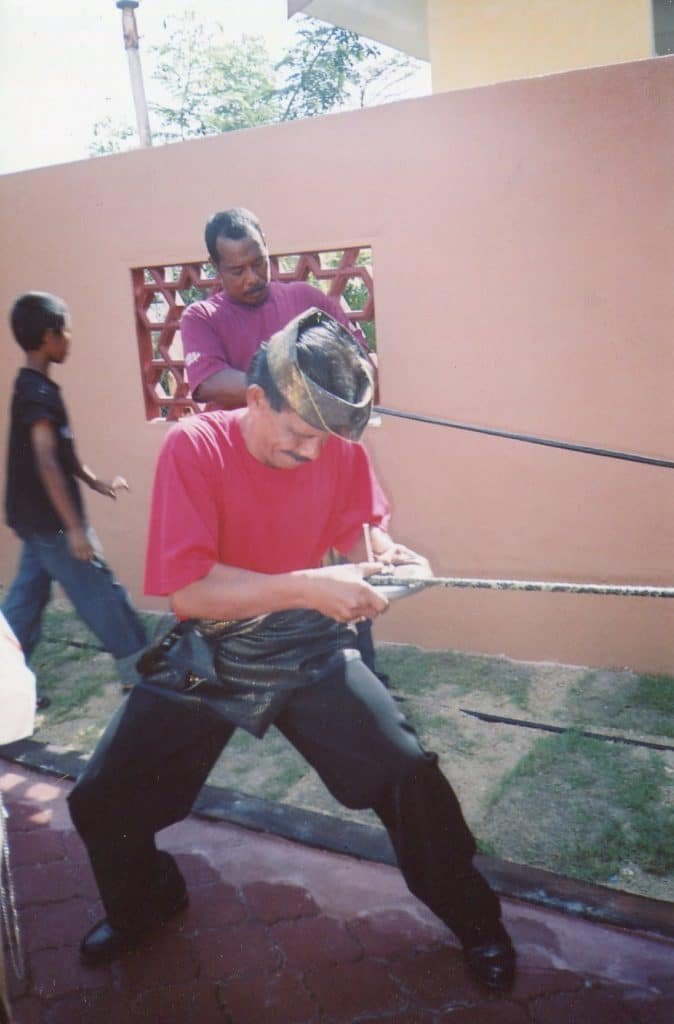
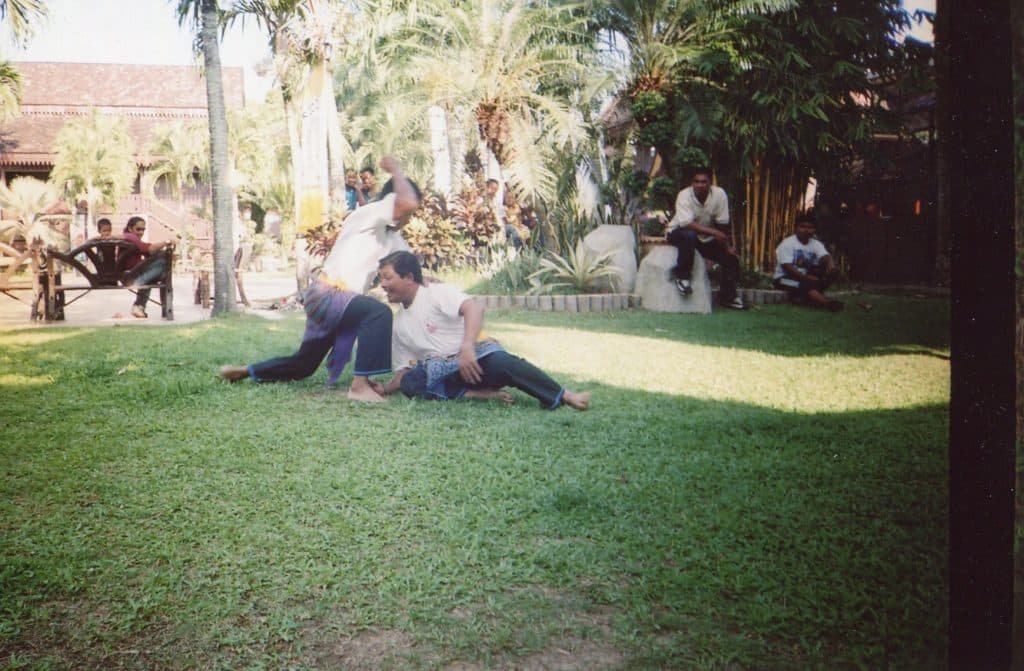
A traditional Malay art form called silat emphasizes control and agility by combining dance and martial arts (below). Its footwork is likened to the movements of tigers, monkeys, snakes, birds, and crocodiles. I watched two men practice and they blended grace and force like this combination of animals does.
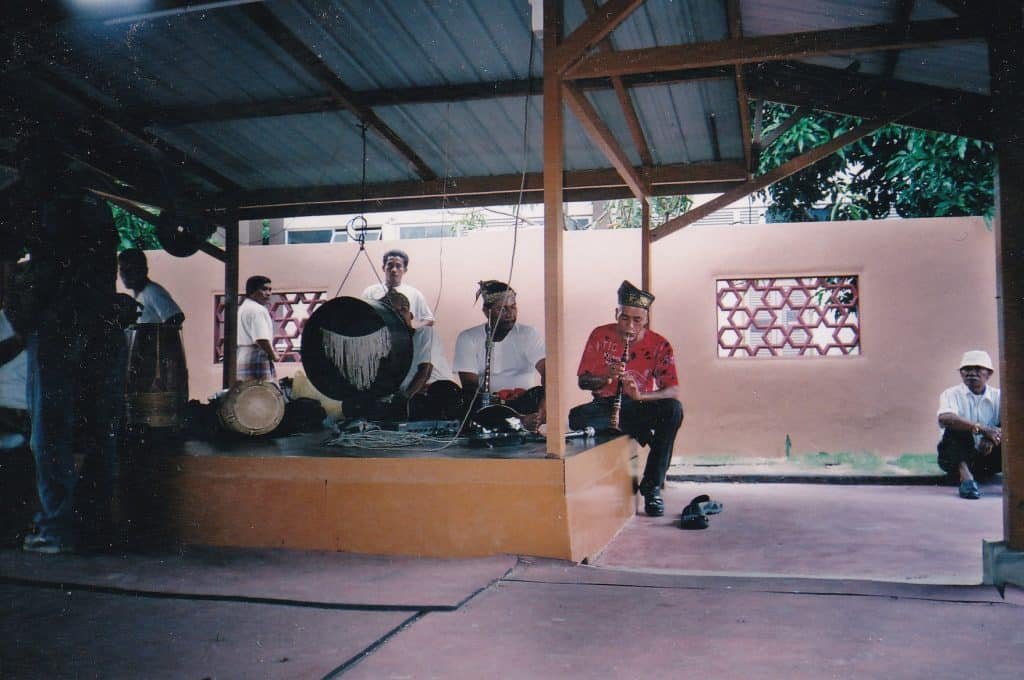
Musicians often accompany performers, and drummers and players of loud reed instruments backed up the two men.
Both dancers began slowly, with stylized hand and foot movements that reminded me of Thai court dances. But the tempo slowly increased and they became more aggressive until the beat was manic and one threw the other to the ground. Because silat fuses elegance and power, it has had many meanings in Malay society, and people have performed different forms of it at functions that include royal ceremonies, receptions for special guests in villages, and even weddings. It’s yet another Southeast Asian art form that incorporates nature’s power and tames it so that the community is strengthened.
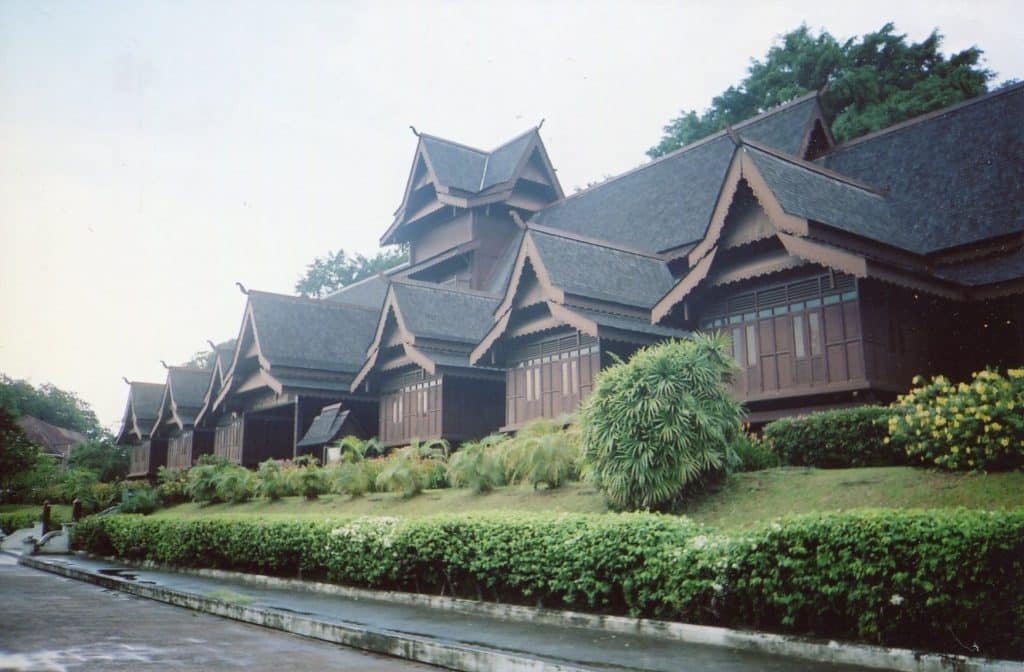
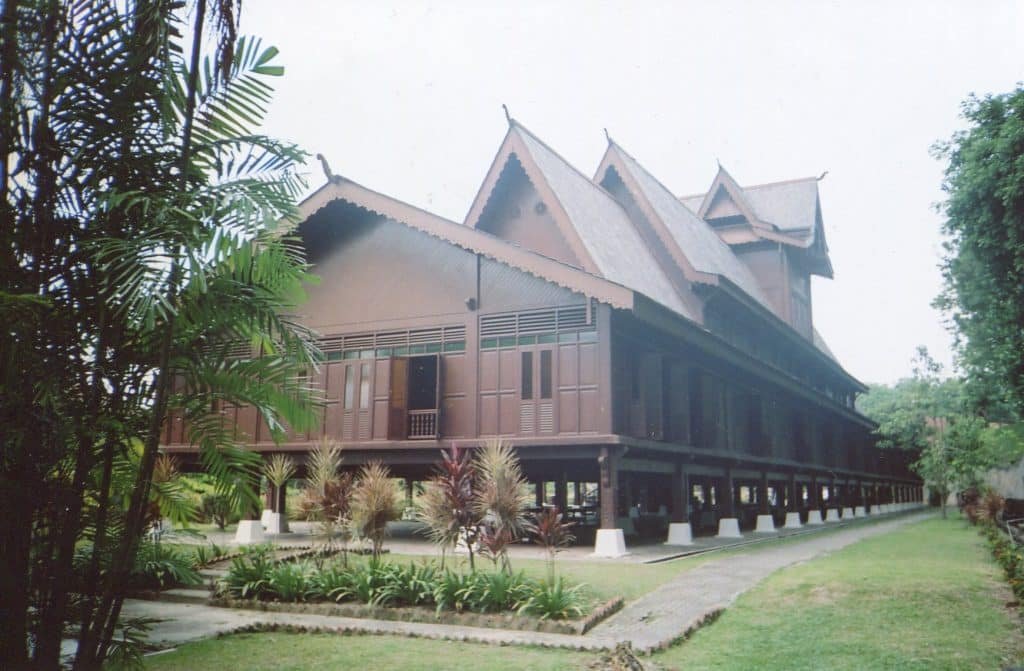
Malacca was founded on the peninsula’s southwestern coast at the beginning of the 15th century, and it quickly became Southeast Asia’s main commercial hub. The Chinese learned about its rise and granted it a monopoly of their goods in the region, and this attracted even more international traders. Malacca dominated trade in the straits until the Portuguese conquered it in 1511. Merchants from China, India, the Middle East, East Africa, Japan, and other Southeast Asian states unloaded their ships at its warehouses and then waited for the next monsoon to return home. In addition to buying each other’s goods, they acquired products from the interior forests, including rattan, canes, gums, and resins. Malacca’s rulers provided standardized weights and measures, taxed the trade, and enjoyed sumptuous lives (the reconstruction of their palace is shown below).
The Malay chronicles give glimpses of mindsets in this lively state. Their most famous story is of a courtier called Hang Tuah. Malays gave the title Hang to a great warrior, and he was the best. People all over the known world admired him, and they thought it was impossible to defeat him because of his bravery and magic kris.
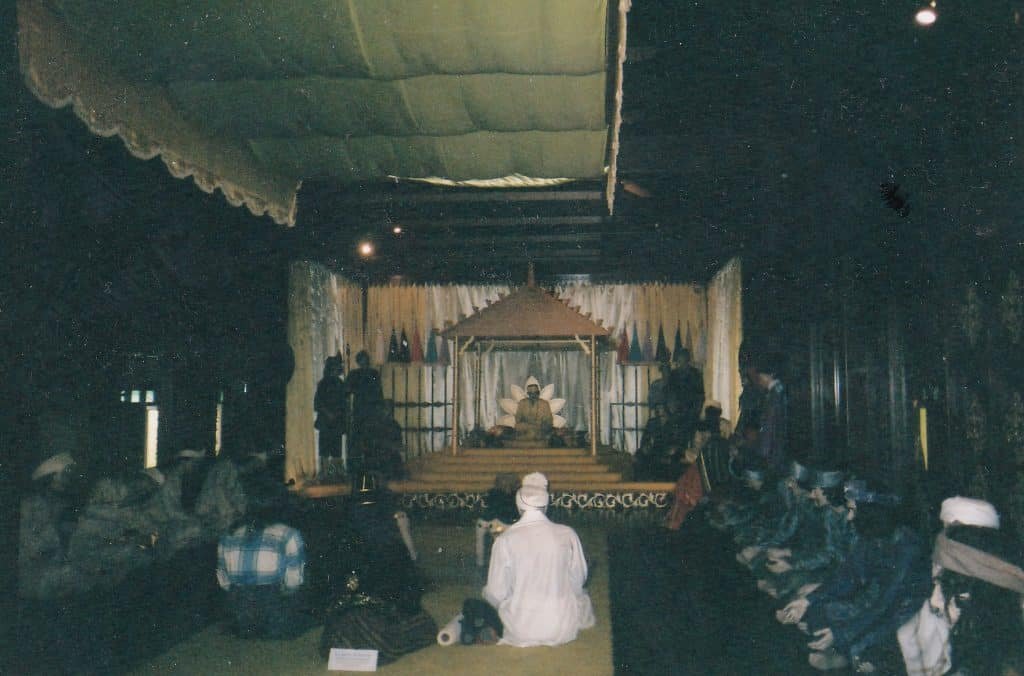
The sultan, Mansur Shah (conjecturally shown holding court below), valued him so highly that he let him move through the royal palace as though it had no doors, but one of the state’s senior ministers became jealous of his prestige and accused him of sleeping with one of the sultan’s concubines. Enraged, Mansur Shah ordered a minister to put him to death.
Fortunately, the minister realized that Hang Tuah’s guilt wasn’t established and that he was too valuable to the state to be hastily killed. He thus hid him in a village (in another version, he hid him in the mountains) and told the sultan that he was dead.
Hang Casturi had been a close friend of Hang Tuah’s since childhood. When they were about ten, they attacked pirates off the coast and defeated them. The sultan gave him Hang Tuah’s old position at court, but the honor soon went to Hang Casturi’s head. He took liberties with one of the concubines, locked all the palace’s doors, and spread the brass platters and basins over the floor so that nobody could ram his spear at him through the bamboo. Now completely drunk with power, he slew his lover with his own kris and stripped her.
The sultan ordered his warriors to attack, but no one dared because of Hang Casturi’s might. The minister who was hiding Hang Tuah realized that it was time to tell the sultan that their greatest hero was still alive. Mansur Shah and Hang Tuah met and reconciled in a solemn ceremony.
Hang Tuah marched to the palace and both men insulted each other’s honor. Figuring that they were an even match, Hang Casturi let him into the palace and the ensuing fight is one of Malay literature’s most famous episodes. Both clashed for a long time in the stately wooden halls, trying to plunge their daggers into each other. Hang Casturi let Hang Tuah free his kris after he accidentally stuck it into a wall and asked, “Is it manly to kill an unarmed opponent?” But Hang Tuah didn’t return the favor when Casturi’s kris got lodged in a door, and he stabbed him in the heart all the way through the back. Hang Casturi asked him how a real man could be so dishonorable, and Tuah coldly replied, “What use is honesty to a wicked man like you?” He stabbed him again, killing him instantly.
This tale has resonated with Malays because it highlights conflicting values in their society. Was Hang Tuah right or mean-spirited to slay his friend, particularly in such a disrespectful way? Because Malays value loyalty to superiors, many have felt that Hang Tuah did the right thing because he was serving the sultan. But bonds between friends are also core Malay values. Malays stress collective life, and their adat law has focused on village traditions of cooperation.
It has often emphasized reparation over punishment, so a murderer often became the bonded servant of his victim’s family instead of being incarcerated. He could thus help the grieving relatives and remain an asset to his community.
The friendship between Tuah and Casturi since childhood represents this close communal life in which people take care of each other. But societies that make livings from the sea often need to be competitive and sometimes must place martial values above friendship. Like Homer’s Iliad, the Malay chronicles deal with tensions between cooperation and violent conflict, and they bring them to life with royal pageantry, heroic warriors, engrossing battles, and enchanted natural surroundings. The chronicles portray a vigorous society before the Portuguese colonized it.
Malay traditions still thrive. The town Kota Bharu’s daily bazaar spread through its center, and it occupied a central pavilion and several old wooden buildings.

Three young Malay men who ran little T-shirt shops in the upper floor of one of the wooden structures were sitting on stools in an aisle, and one was playing a guitar.

I stopped to listen. They noticed me and I excused myself by saying that I play too. The magic kris’s owner handed it to me. I stopped playing when I heard the call to prayer from the central mosque, but none of them reacted. They seemed entirely interested in playing music. My new friends soon asked me if I wanted to jam with a local rock band in the evening.
We entered a small studio on the second floor of an apartment building downtown. The studio was operated by a drummer who was wiry and taciturn. His hair hung four inches below his shoulders, and it framed a soft-featured face that made him look almost like a beautiful woman. His outer delicacy masked an inner restlessness—a rock drummer’s soul. Let’s jam, dude!
His playing was machinegun-fast and pinpoint-accurate, and he had great ears. On the spur of the moment, he repeated melodies I played during solos. The other two wanted to be bluesy but he wanted to rock, so I ripped into a fast Metallica song and a huge grin erupted on his face. I then tore into an even faster song by Megadeth and he gleefully banged away. The other two stood by the wall with ear-to-ear smiles. Right after our jam, one took me to a country fair with his wife and son to watch a shadow puppet performance (below).
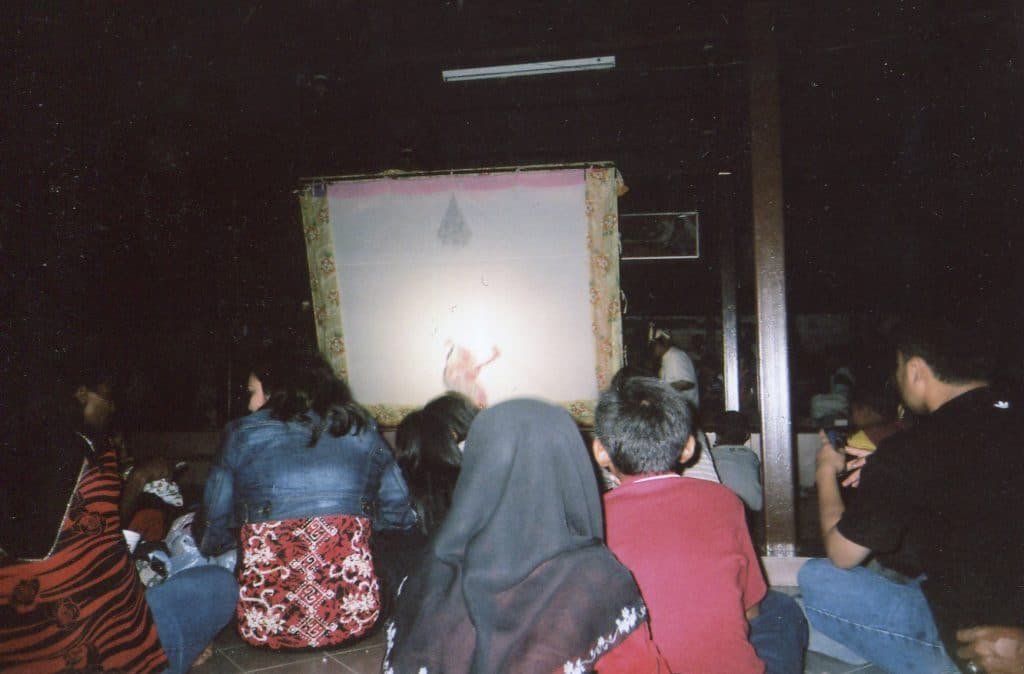
I enjoyed metal and wayang kulit in one night—Malay love of diversity in its full splendor!

Even Malaysia’s capital, Kuala Lumpur, has traditional Malay houses around its modern skyscrapers.
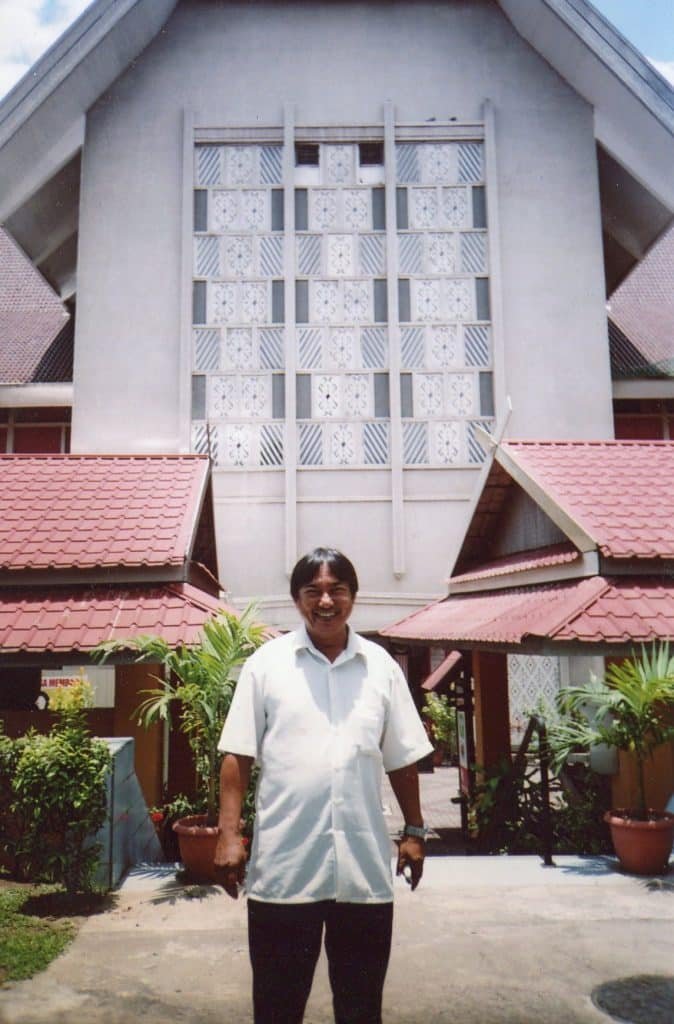
And ethnically Malay people are quick to extend their traditional hospitality to visitors who are interested in their culture, including this gentleman working in Kuala Lumpur’s national museum.
The next article here will explore adoption of Islam in the Malay world. This fascinating cultural fusion is little known outside the region.