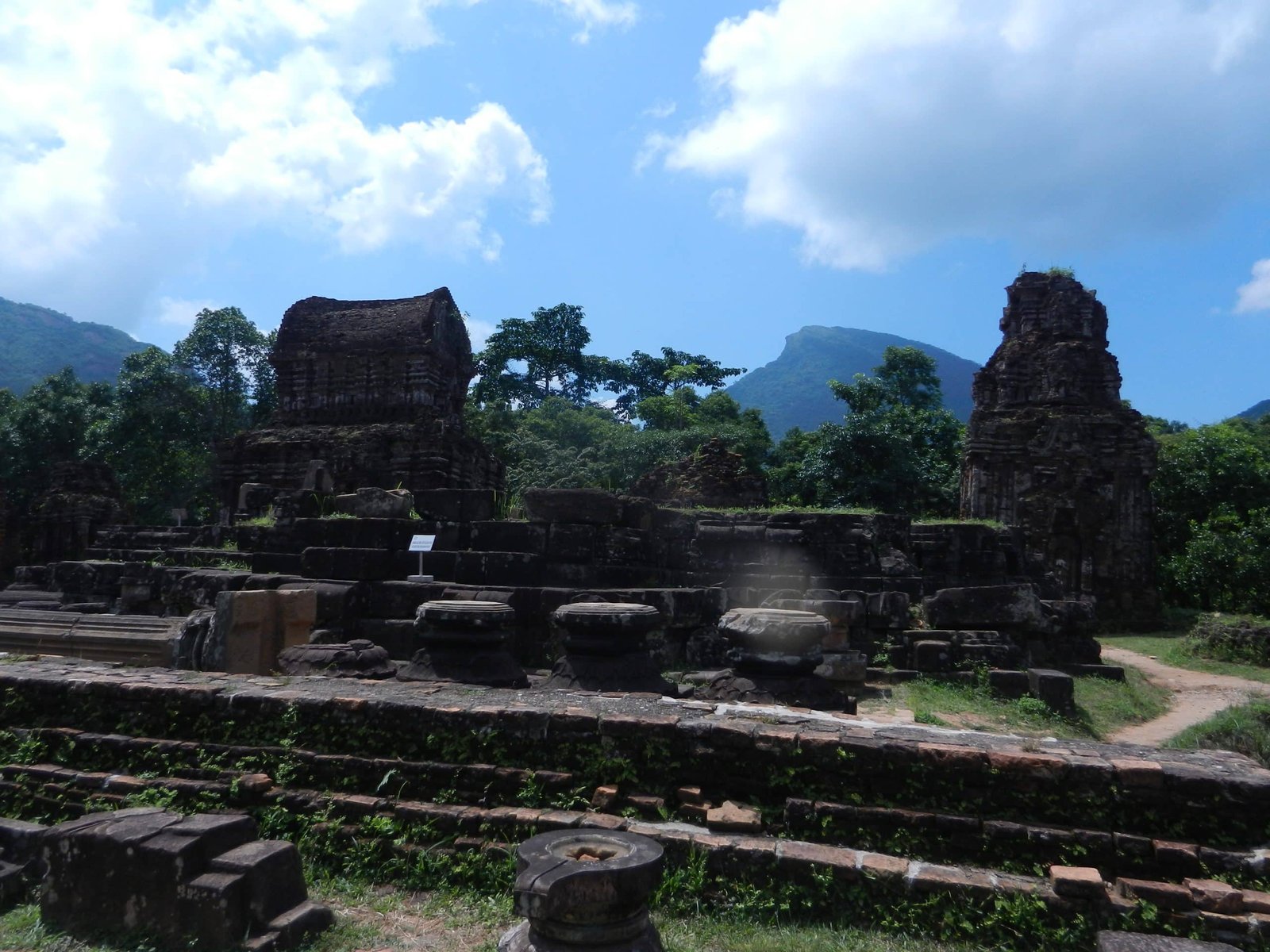
They built a civilization that lasted longer than ancient Rome did. They defeated the mighty Khmers and ruled Angkor shortly after Angkor Wat was built. They created some of the finest art in Asian history.
I got hooked on Cham art when I saw a drawing of an ancient temple 20 years ago–it was one of the most entrancing buildings I ever saw. So the Cham legacy was at the top of my list of things to explore in my recent trip to Vietnam.
Here are some facts about the Cham:
1. They thrived in southern and central Vietnam from about 500 CE.
2. Their homeland was south of the Red River area, where ancient Vietnamese culture emerged.
3. They spoke a very different language than Vietnamese. The Cham language was in the Austronesian family, which is spoken by people over a large area of the Pacific Islands. Vietnamese is Austro-Asiatic, like Khmer. Anne-Valerie Schweyer, in Ancient Vietnam, writes that they probably came to Vietnam from the sea.
4. The Chams and the Vietnamese didn’t get along too well. The Vietnamese population expanded in the 11th century and began one of Vietnamese history’s major themes, the march to the south. Champa was in the way and it didn’t have enough people to counter the Vietnamese onslaught. They conquered the Cham political center, Vijaya, in 1471.
5. Champa entered a long period of decline as the Vietnamese kept coming and founded Saigon (Ho Chi Minh City). Champa ceased to exist as a state in 1832. Its descendants still live in southwestern Vietnam, and across the border in Cambodia. They’re ethnic minorities in both countries.
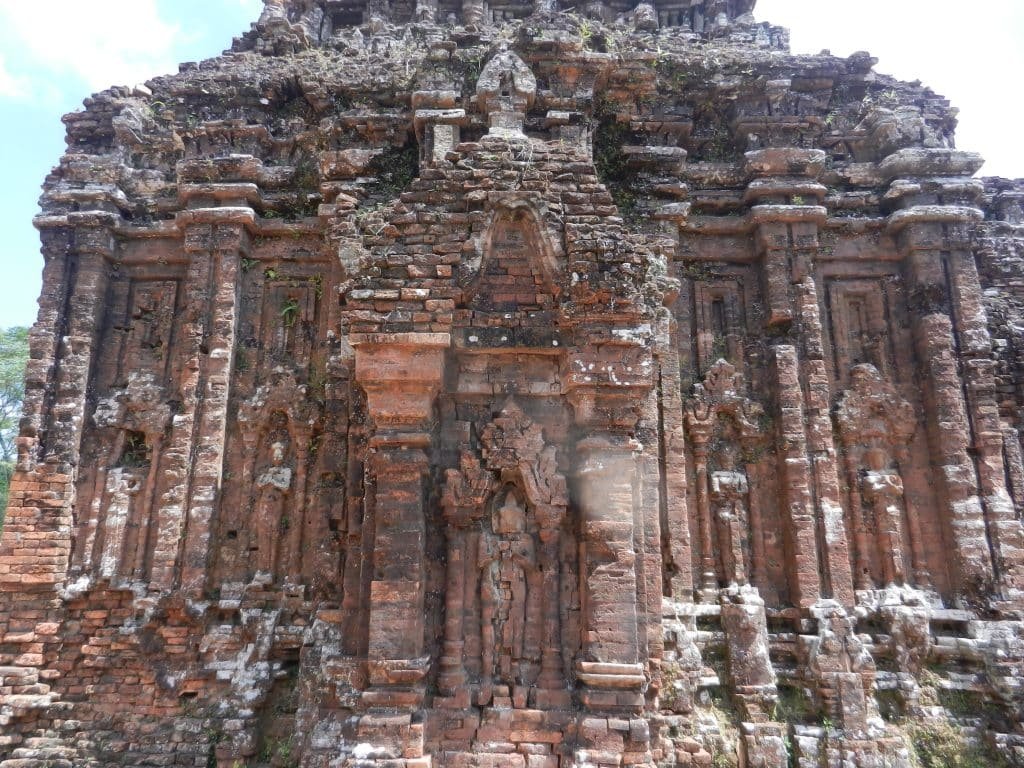
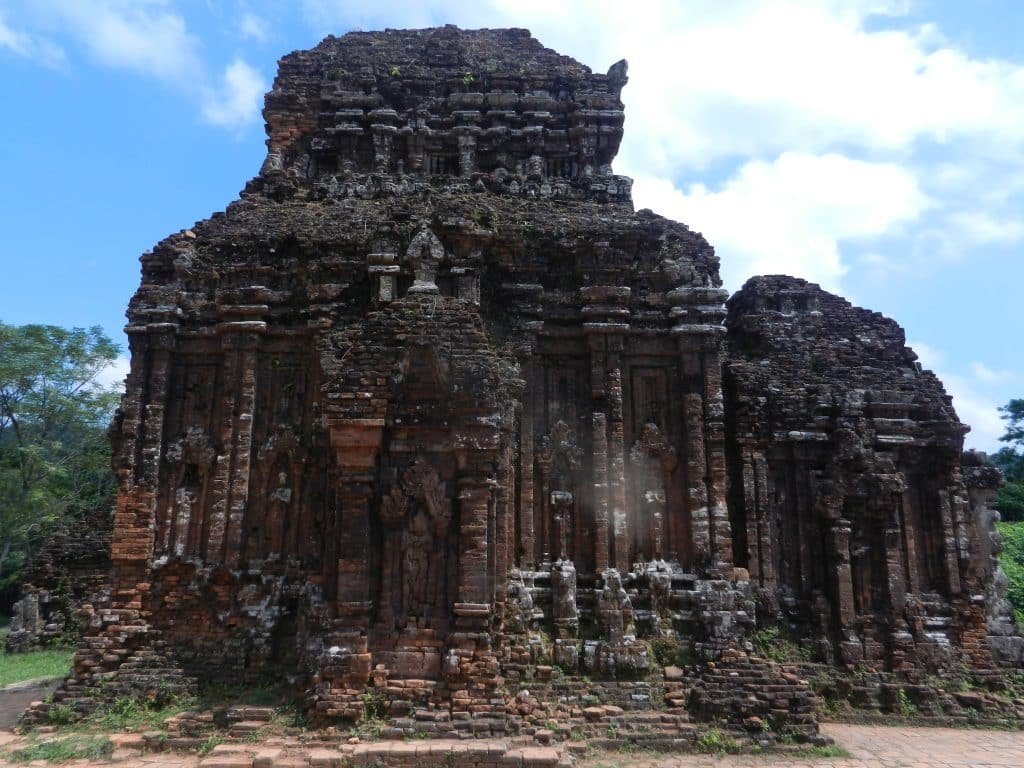
So Champa existed for well over 1,000 years. While it thrived, it created art with a combo of symmetry and elegance that can compete with any other culture’s.
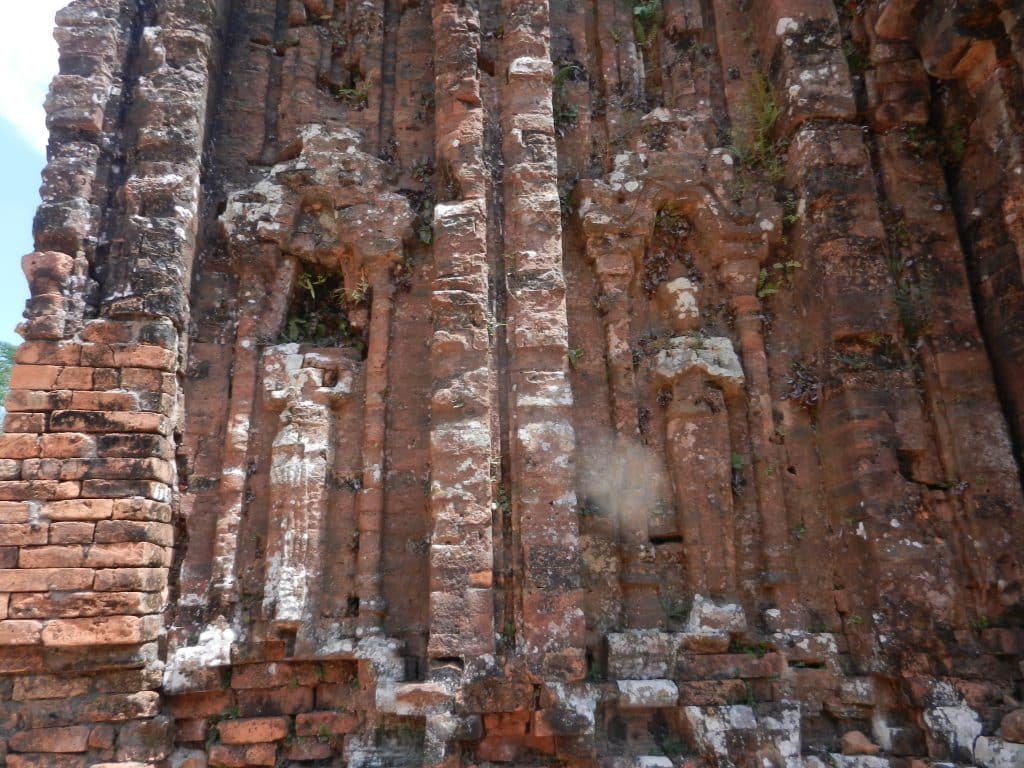
The above three shots are from just one temple. It’s at My Son, which was the main ritual center in Champa. Less peaceful shots have been taken at it. The Americans heavily bombed My Son, and there’s still a huge bomb crater just in front of this building. But its stately proportions and refined forms still reign supreme.
These warriors with helmets that look like inverted flowers are up to no good.
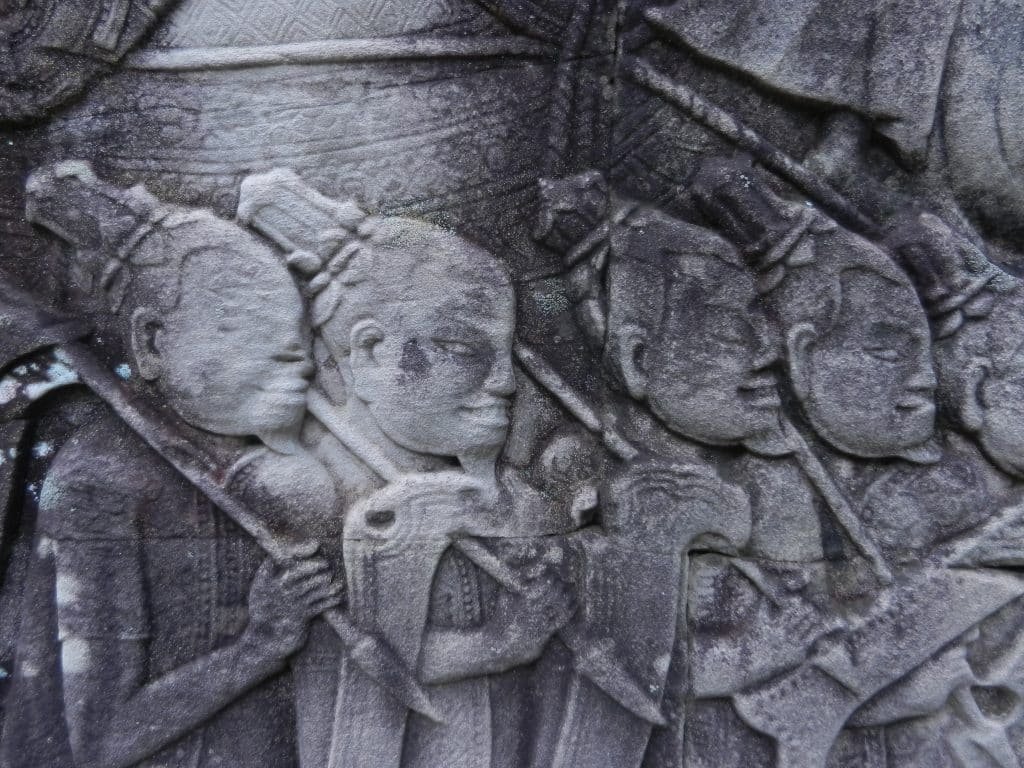
Many carvings of them energize the walls of the Bayon, a great temple at Angkor built about 50 years after Angkor Wat.
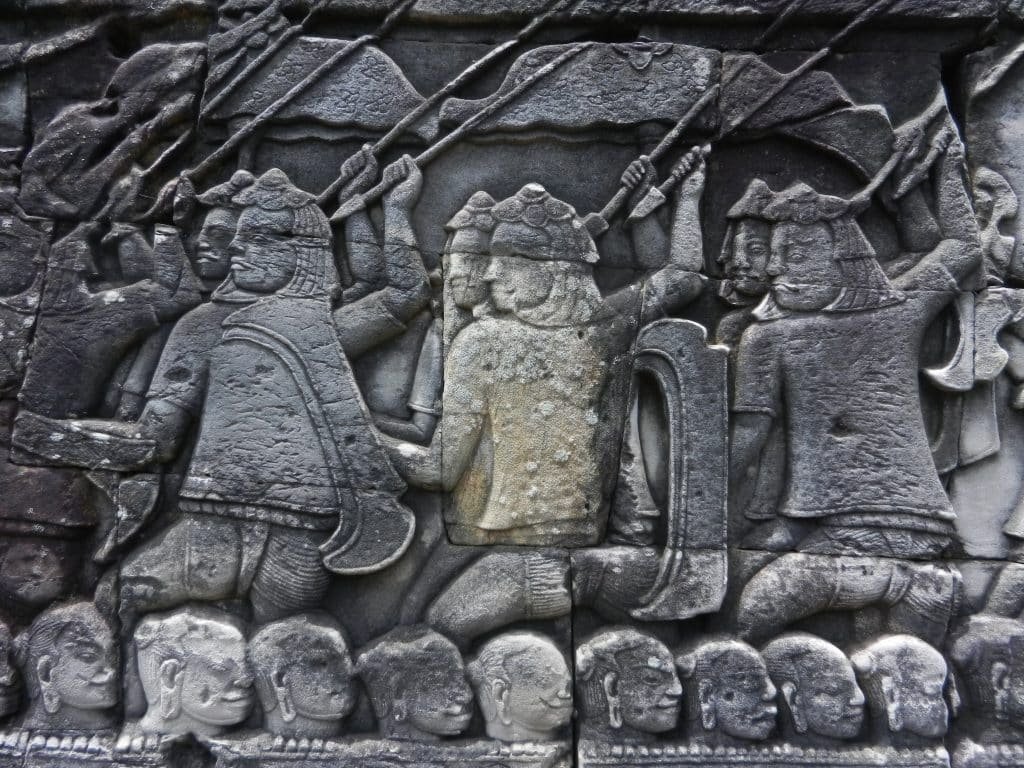
Many scholars of the Khmers think that they were Cham soldiers. Between the construction of these two temples, they invaded and took over Angkor. King Jayavarman VII might have been dramatizing his victory over the Cham on his royal cult temple.
So the Cham were seen as “The Other” by the two civilizations that bordered them, Angkor and Vietnam. Champa existed for well over 1,000 years, but it didn’t have the population to battle both. It fought them very hard and well, but it was doomed. People are only now discovering what a great culture it was.
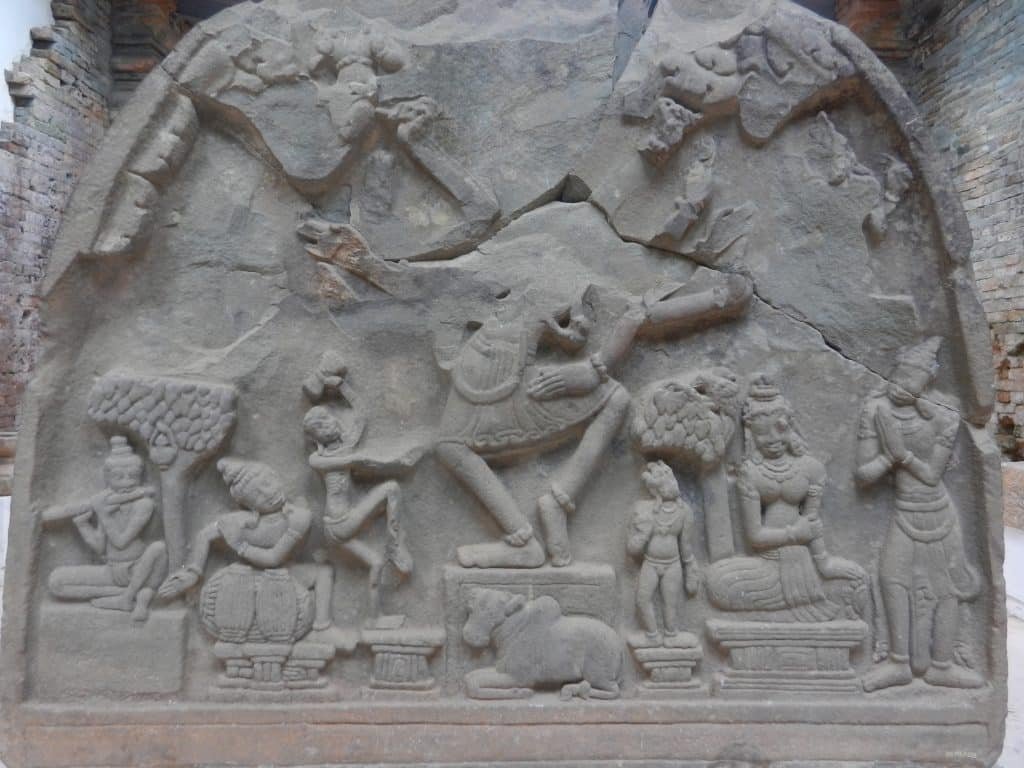
The Cham were Hindus for most of their history. They embraced Buddhism in the 10th and 11th centuries and made some great art for that faith. But the Hindu god Shiva was usually their most honored deity.
In the above shot from My Son, Shiva’s in one of his most popular poses, as Nataraja (the King of Dancers).
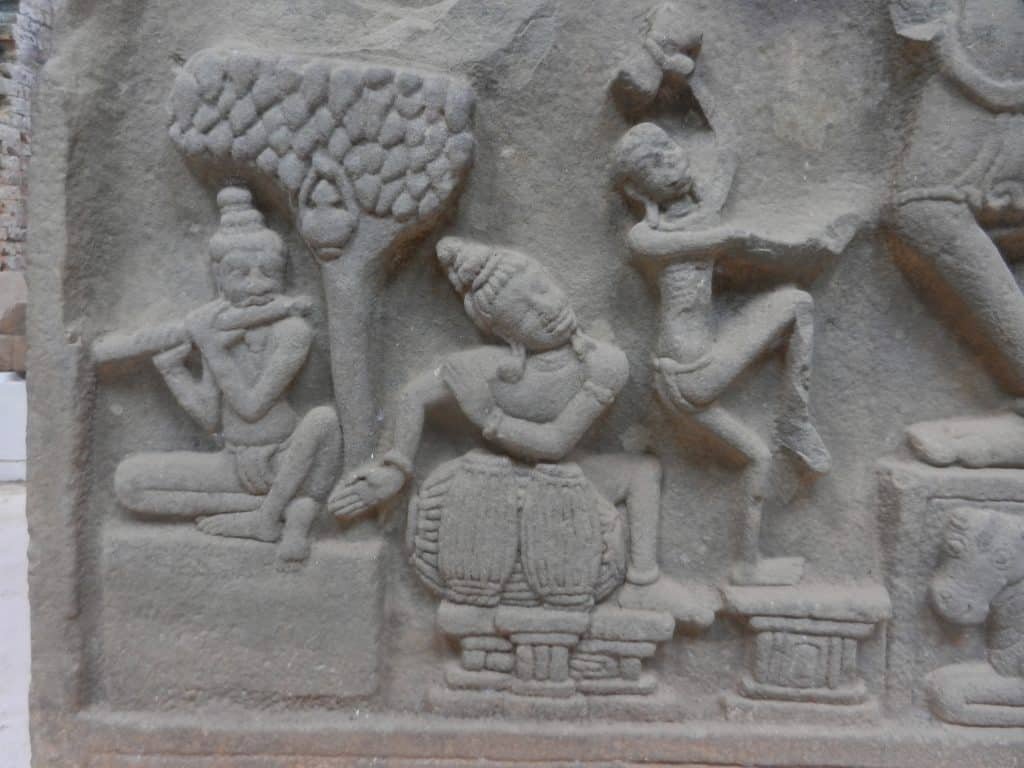
These folks grooving to the rhythms seem like more pleasant company than the stereotypes that Khmers held when they were crossing spears.
But Cham Hinduism had more depth than partying out. An early Cham king, Bhadravarman (5th century), identified himself with one of the gods that Shiva manifested as, Bhadreshvara.
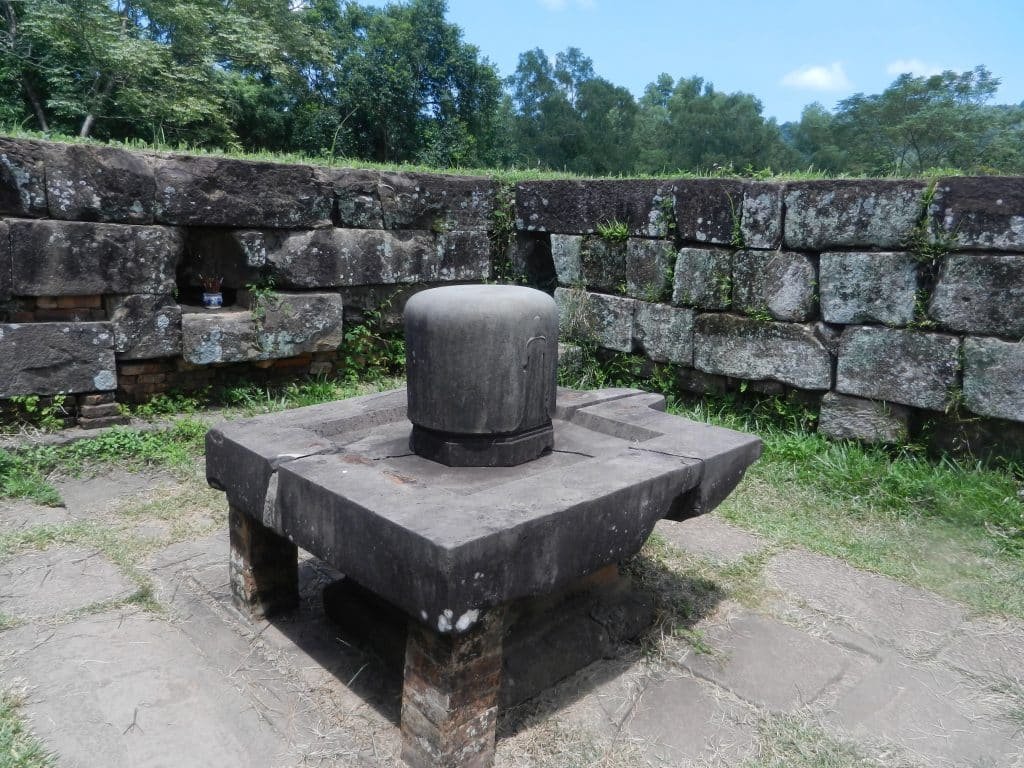
Cham kings erected temples that housed Shiva lingas. These symbols embodied ideas of the great god’s power to create and destroy–as Nataraja, he creates and destroys the universe–don’t shimmy too close to him! The linga also resonated with Southeast Asians’ own ideas about the land’s power to generate life. So this easily replicated art form fused both cultures’ ideas of nature’s powers.
Khmer kings also worshiped Shiva with temples that housed lingas early in their history. But Khmers built temples with whopping size. Champa’s people kept theirs small and exquisitely proportioned and decorated (see yesterday’s post on Champa). The pic above is from the ruins of Temple B1 in My Son. It was built in the 11th century and bombed in the last century (humans wield the most destructive forces). Its single room with an altar in the middle is the most common Cham temple form–a huge contrast with Angkor Wat.
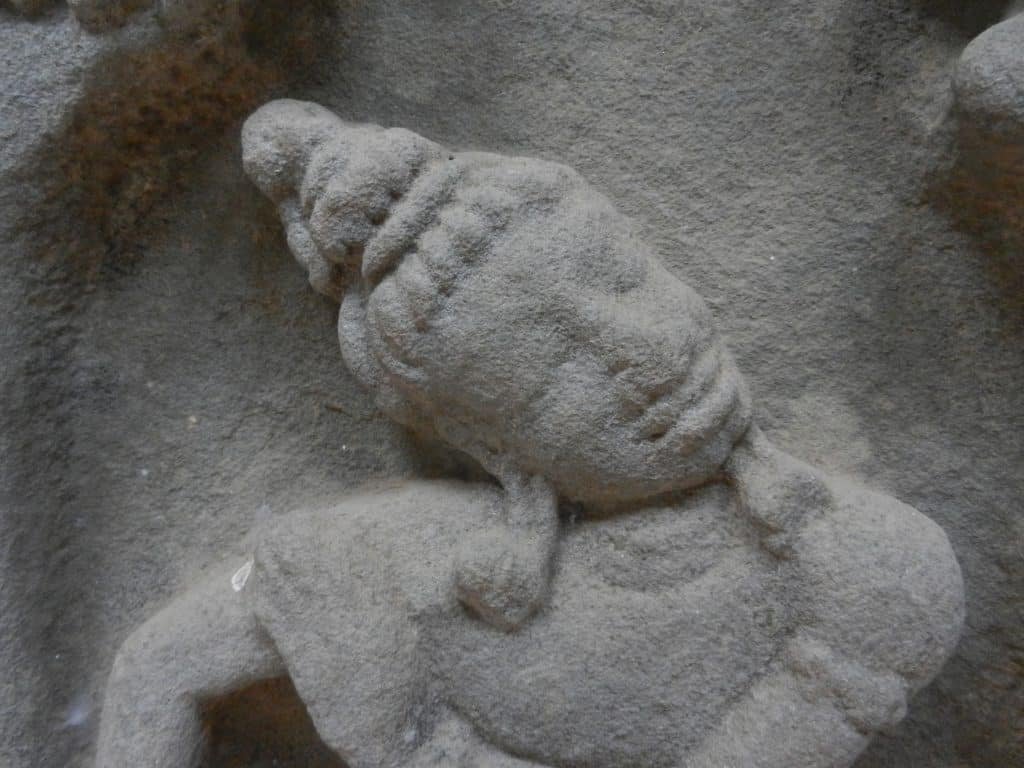
Many Cham sculptures also show a lot of humanity.
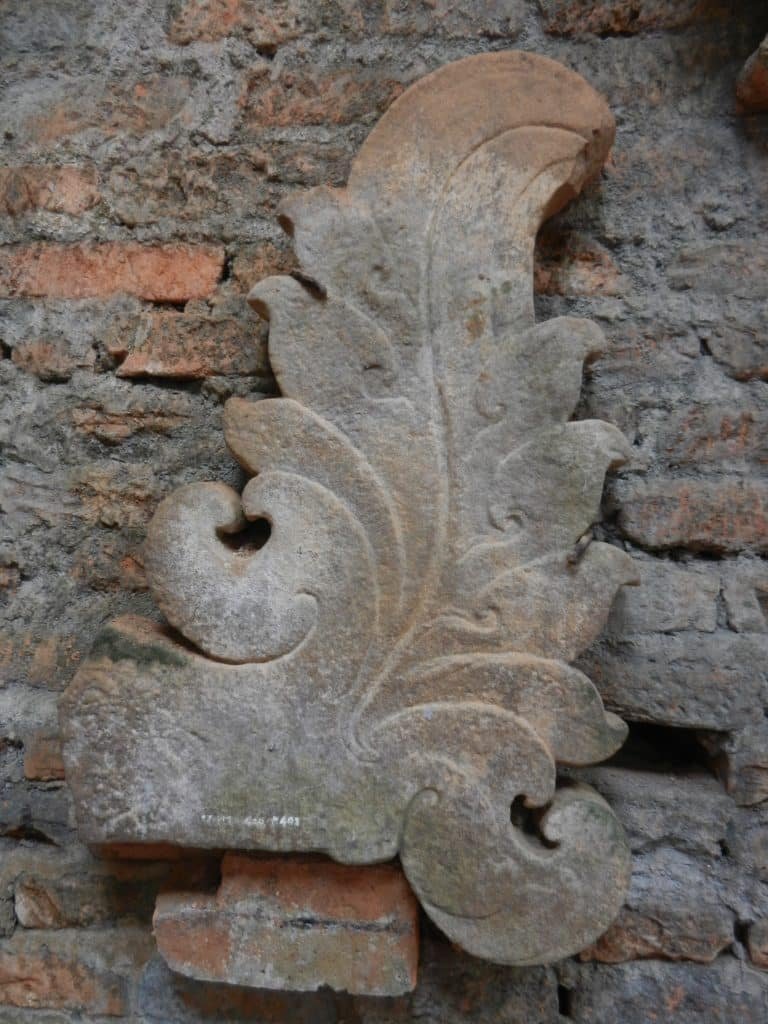
And many of their art works that depict nature also favor elegant and humanized forms over sensationalism, including the building decoration above which imitates foliage.
Champa imported a huge religion from a huge land–it used fusions of Shiva’s cosmic power with the king’s authority to unify itself. But it created forms to express this blend that were more down-to-earth and soft. I find it hard not to like these people.
The Cham didn’t build anything colossal. No Angkor Wat, no Great Wall, no Forbidden City, no Gothic cathedral. But many people find their art just as appealing.
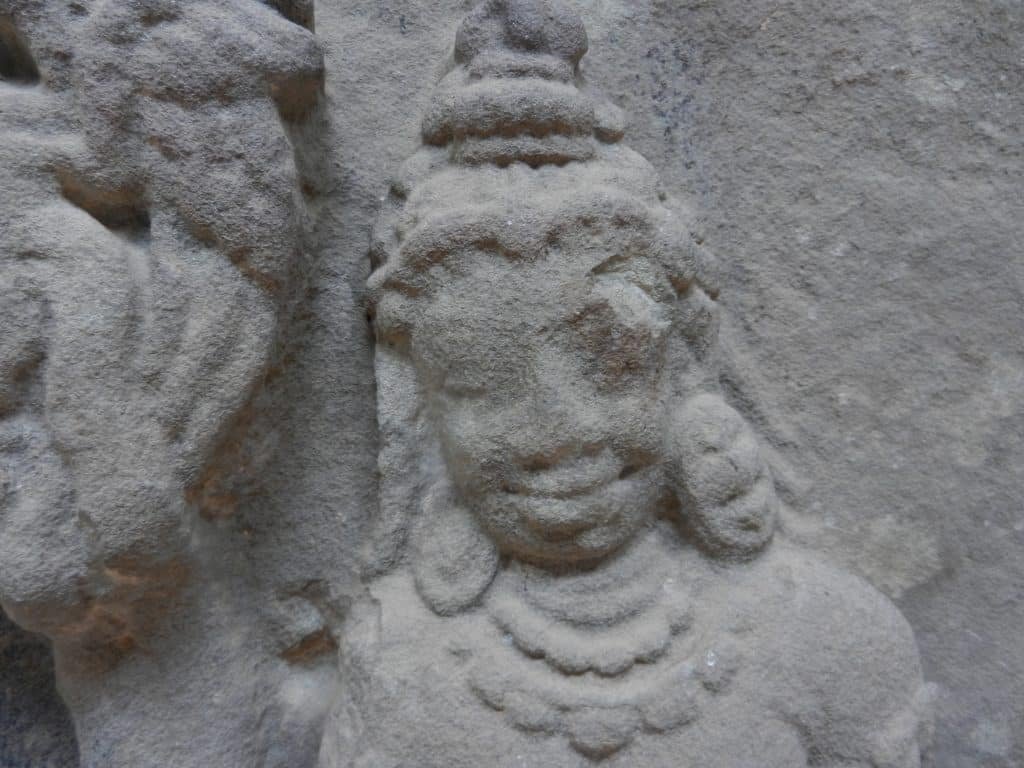
I do too. What inspired them to make some of Asia’s best kept secrets? We can look at a few facts about their lives and natural landscape.
1. Champa wasn’t one empire. Several kings usually divided the area into their own territories.
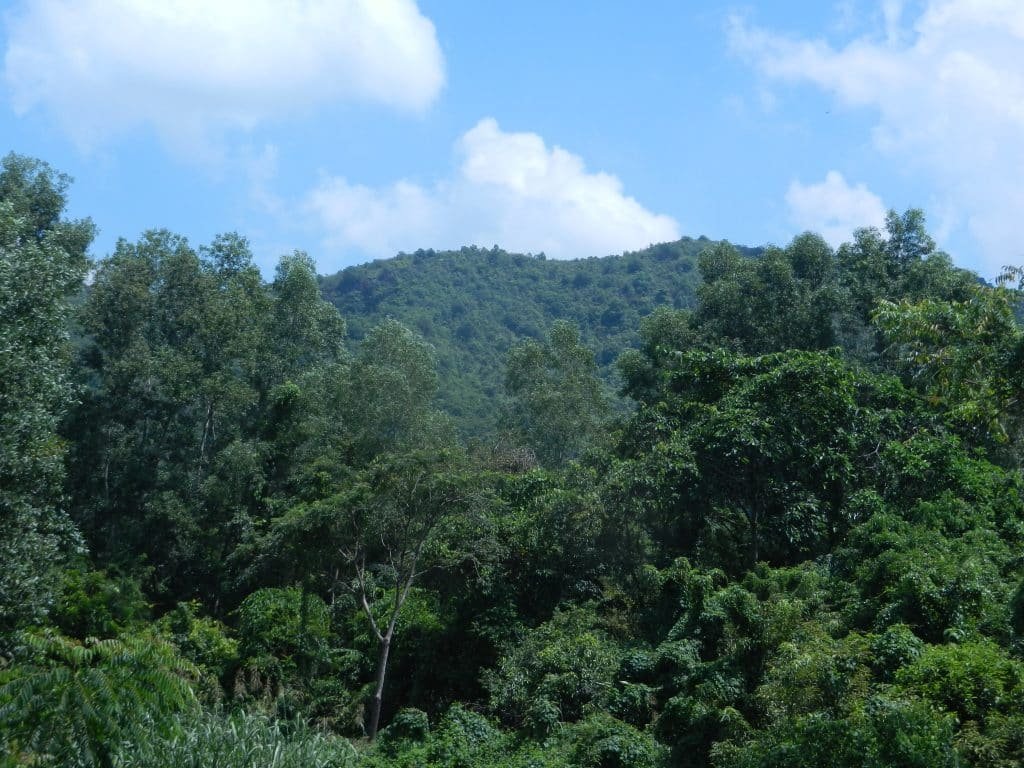
2. These states weren’t like Angkor or the Red River. They didn’t have extensive flat lands for growing rice. The Cham were excellent farmers, and they developed a crop that matured within 100 days. But they didn’t have the land to grow huge surpluses, like Angkor did. Much of their land to the west was mountainous, and tribes of many ethnicities lived there. Cham kings’ representatives and the mountain people traded with each other and were often on peaceful terms.
Vietnam’s central area is too mountainous for one kingdom to impose a single ideology on all people. It’s diverse, and people with different mindsets needed to coexist to thrive.

3. The Cham rulers governed from the lowlands, and they were oriented to the sea. Their subjects were great traders and sailors. They were thus open to exchanges of goods and ideas with the Indian world–they imported both Hinduism and Buddhism. They also traded extensively with many states in maritime Southeast Asia.
The above picture is of Building B5 at My Son, one of the main Cham ritual centers. This building was a key storehouse for ritual implements like texts, vestments, and staffs. Some fans of Cham art have seen its roof as an imitation of a boat, as though the form that integrated the Cham economy was also important in dealings with the gods.
4. The Cham probably came from Malaysia, Indonesia, or Borneo (according to Anne-Valerie Schweyer), and they traded with people who lived there. The maritime empire of Srivijaya that dominated the Malay Peninsula and western Java and relied on international trade, and kingdoms in eastern Java made a lot of elegant art with balanced forms. So did the Dvaravati towns in Thailand. The Cham traded with all of these lands.
So the Cham were in the thick of influences between many states which all stressed refined art over the big bang. All these cultures’ art is little known–I’ll write posts on them within a few months.
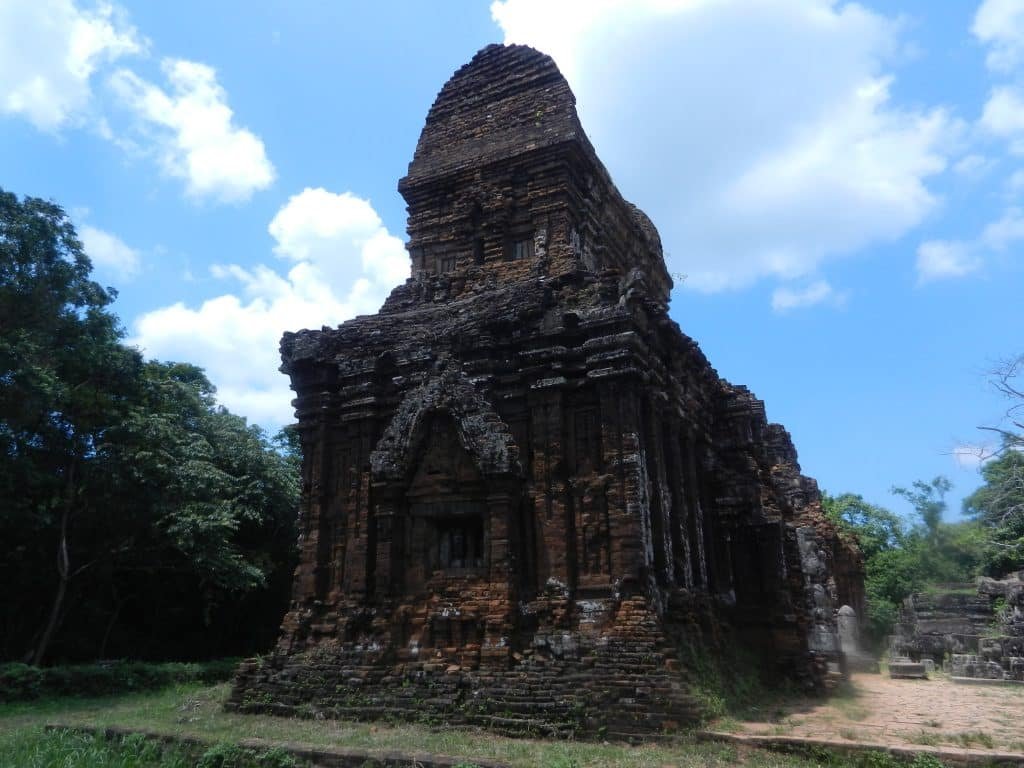
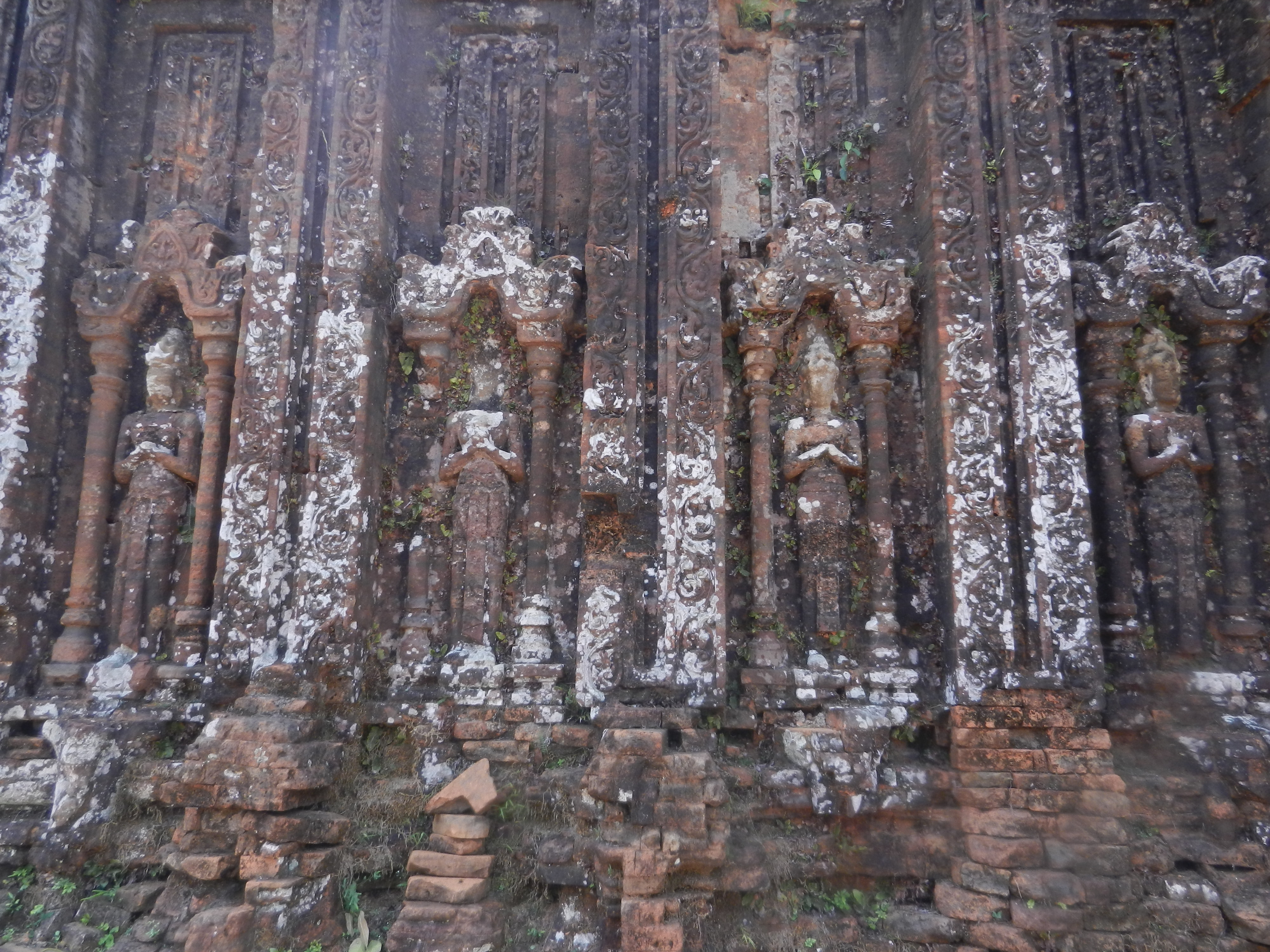
The above two shots are also of Building B5. Though people used it as a storehouse, its balanced forms, fine vertical lines and elegant statues are sheer eye-candy.
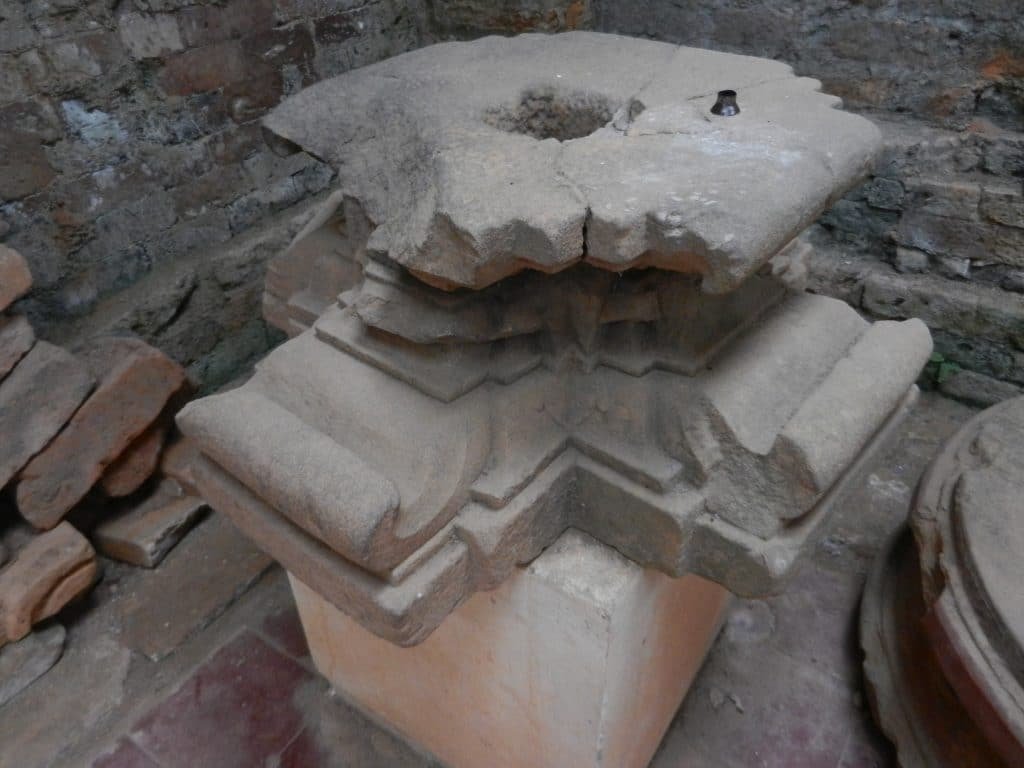
Ditto for this pedestal from My Son.
So, many things converged to encourage the Cham to emphasize taste over bombast. Vietnam’s geographic and ethnic diversity, and trade with many other states that also made tasteful art inspired the Cham to create fine art over many centuries.
The Cham fought devastating wars with Angkor in the 12th and 13th centuries, and the Vietnamese expanded into their lands and pushed them southwards. Emmanuel Guillon, in Hindu-Buddhist Art of Vietnam, thinks that these traumas shook Cham faith in Hindu deities. Many embraced Islam after the fall of Vijaya in 1471, and they still follow this faith, which teaches that all are equal under God. As ethnic minorities in Vietnam and Cambodia (two governments with stinking human rights records), they now turn to the spiritual realm for an equitable universe.
But their art forms are great models of diversity and tolerance in today’s globalized world, and they deserve much more attention.
You can check out early Cham art and see that it was already special.