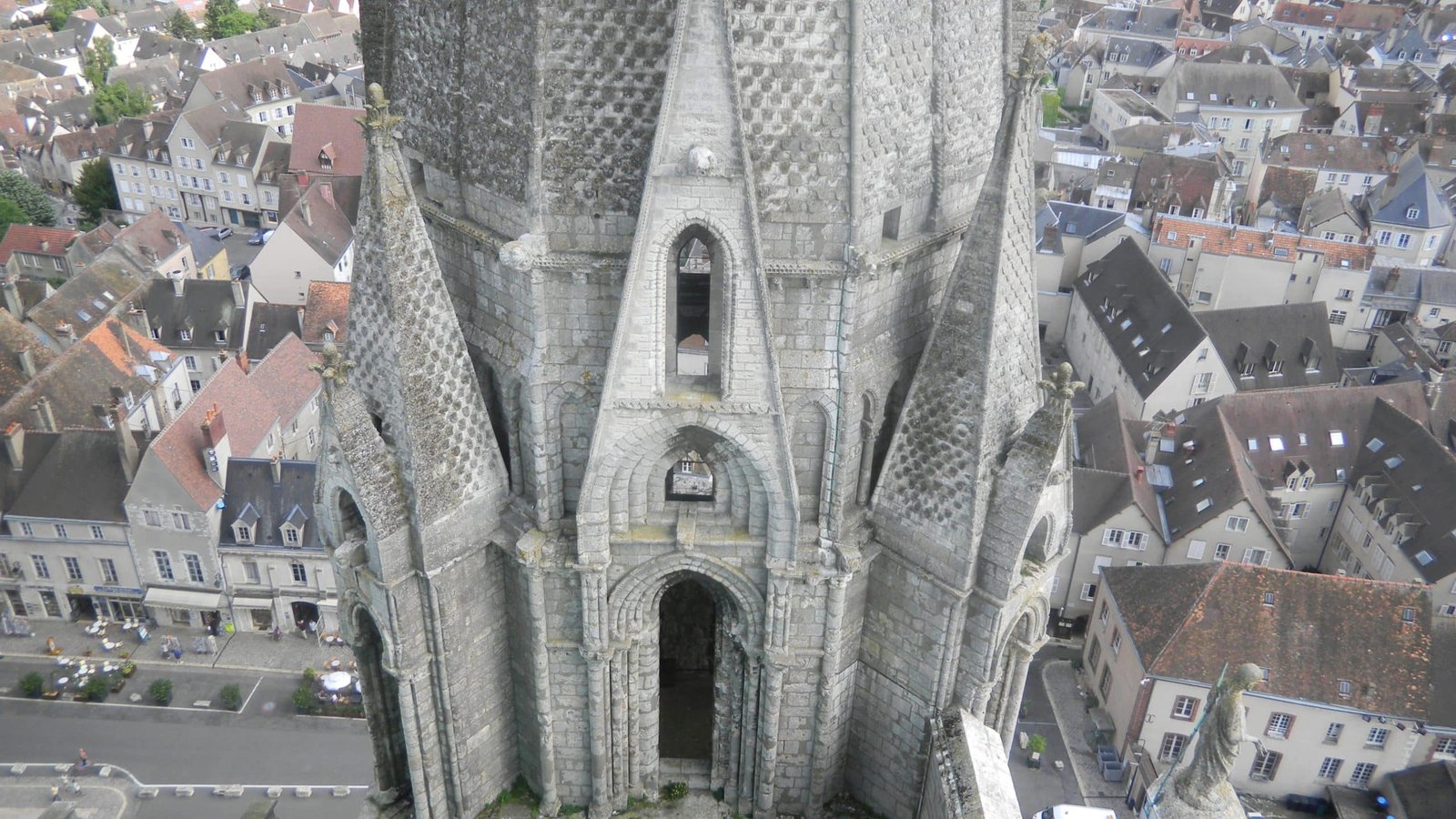
It was the worst disaster imaginable. In 1194 a fire ravaged the city of Chartres, and all of its cathedral except the west facade burned to the ground.
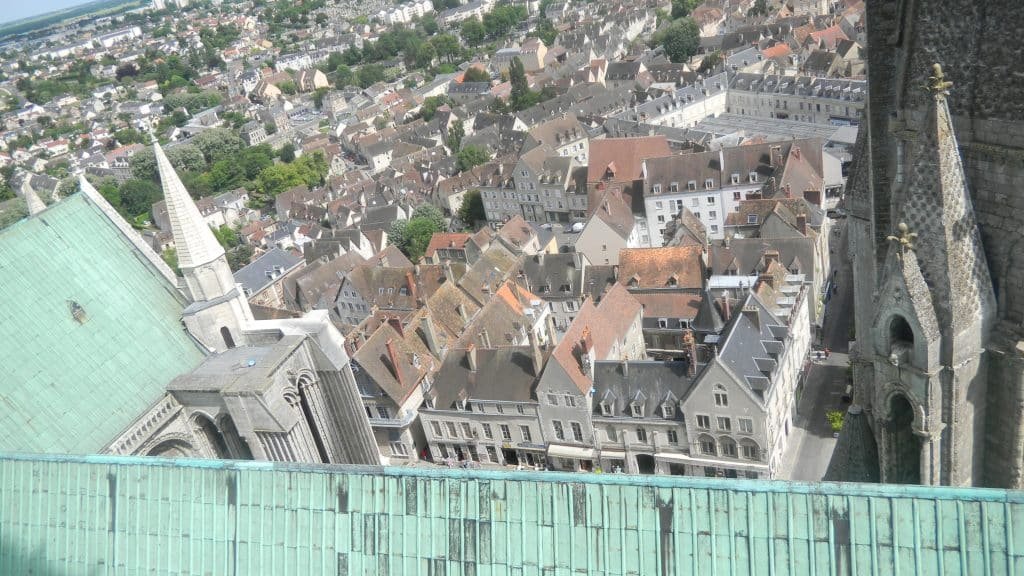
Chartres was a key center of the cult of the Virgin Mary. People at first thought that the fire was a sign that she had forsaken her sanctuary because of humanity’s sins. But Chartres in 1194 was a special town in a special time.
The sacred tunic that Mary wore when Jesus was born was saved. Emperor Charles The Bald had given it to the city of Chartres in 876. Many miracles, including the repulsion of a Norman invasion in 911, were attributed to it. Mary’s cult grew in the 12th century, and so did the position of women. Contact with the Middle East via the Crusades and pilgrimages and new urbanization in Europe opened people’s horizons beyond a strictly alpha-male world dominated by kings, knights, and bishops. A humane side of Christianity was developing that was balancing earlier Romanesque views of Christ as the king and final judge.
But Chartres had a worldly side that was just as inspiring as its faith.
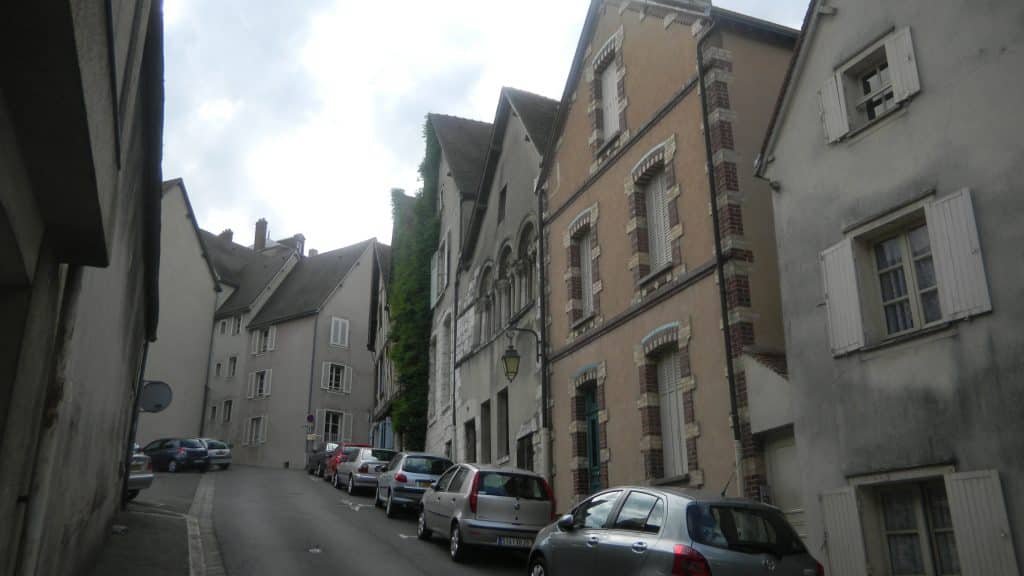
Chartres was a center of Europe’s cloth trade. Its industrious people hosted trade fairs that connected merchants all over Western Europe, and they built homes like the ones in the above picture. Since Chartres’s cloth trade was associated with Mary’s tunic, people’s economic and spiritual lives were tightly interwoven. The four commercial fairs coincided with the four great feasts for the Virgin, which attracted many pilgrims to the cathedral. The fairs spread next to the cathedral, and many ordinances were passed to prevent boisterous market life from spilling into the sanctuary. Chartres’s economic and spiritual life was too vital for its people to be in despair for long.
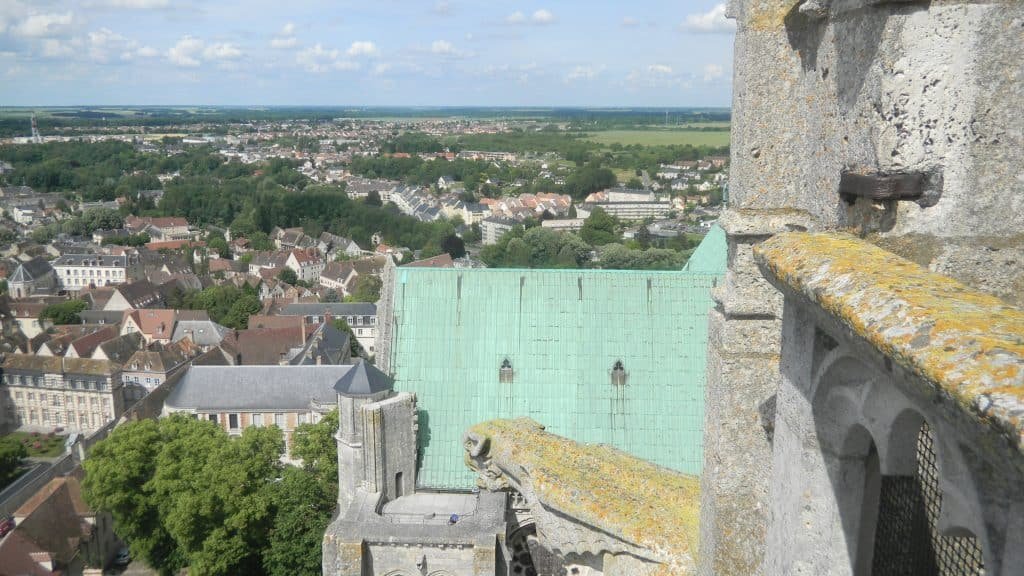
They soon concluded that the Virgin allowed the cathedral to be destroyed, not because she was abandoning the town, but because she wanted a better home in it. Chartres was one of France’s richest dioceses, and her people donated money to build a new cathedral in a burst of religious zeal. At the same time, the king of the Khmer Empire was building a newer and bigger home. Both of these construction projects were two of the greatest achievements in world cultural history.
The fire that destroyed all of the old cathedral at Chartres (except the west entrance) was a blessing in disguise.
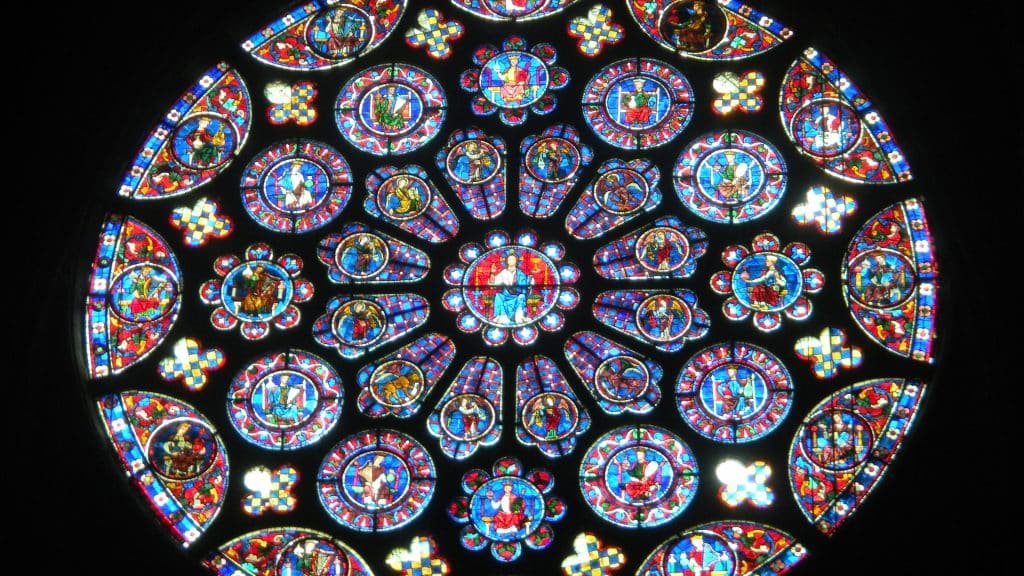
People could build a new church from scratch and synthesize features from earlier Gothic cathedrals into something new. They also employed new technologies that allowed them to raise Gothic style to one of the high points of Western culture. Chartres Cathedral became a model for High Gothic architecture all over Europe.
One of the greatest innovations at Chartres Cathedral is the use of flying buttresses.
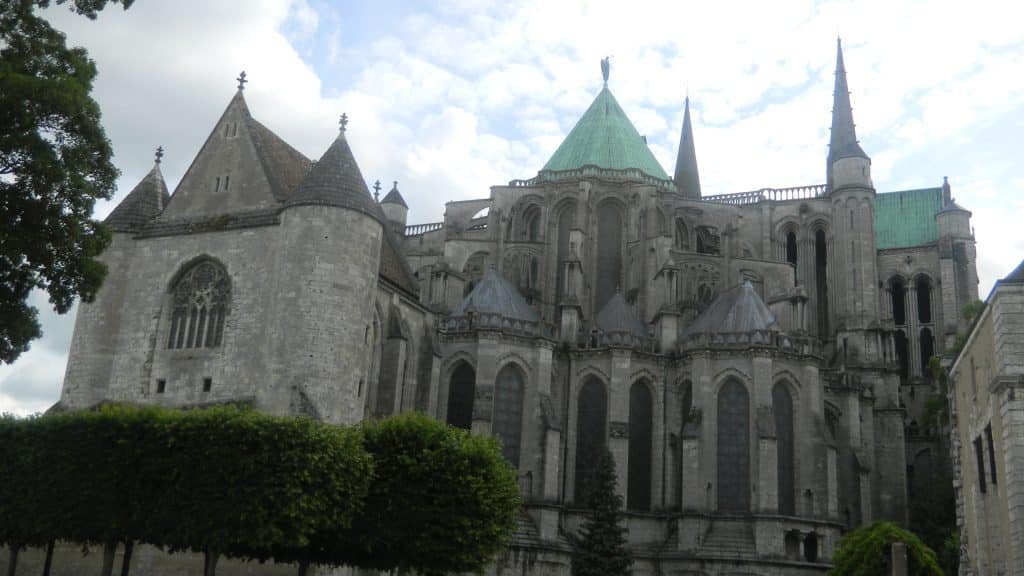
You can see them in the above photo of the east end. They rise up to the green roof line and apply horizontal pressure to support the high walls. The picture below shows the revolution more closely.
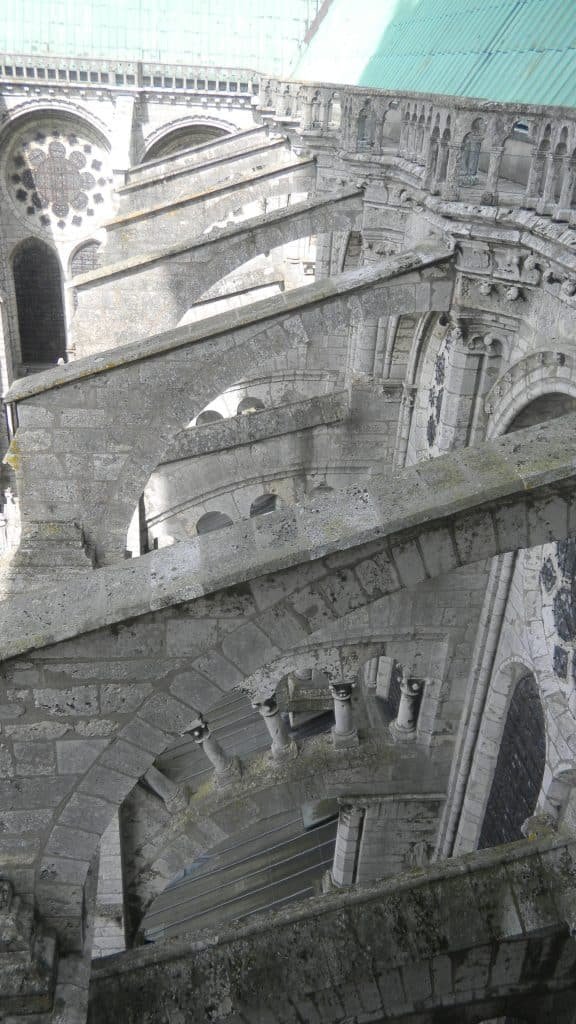
Here, flying buttresses support the northern wall of the nave. You can see two levels of them. For the first time, flying buttresses supported the entire cathedral. This allowed some of the greatest flowerings of art in world history.
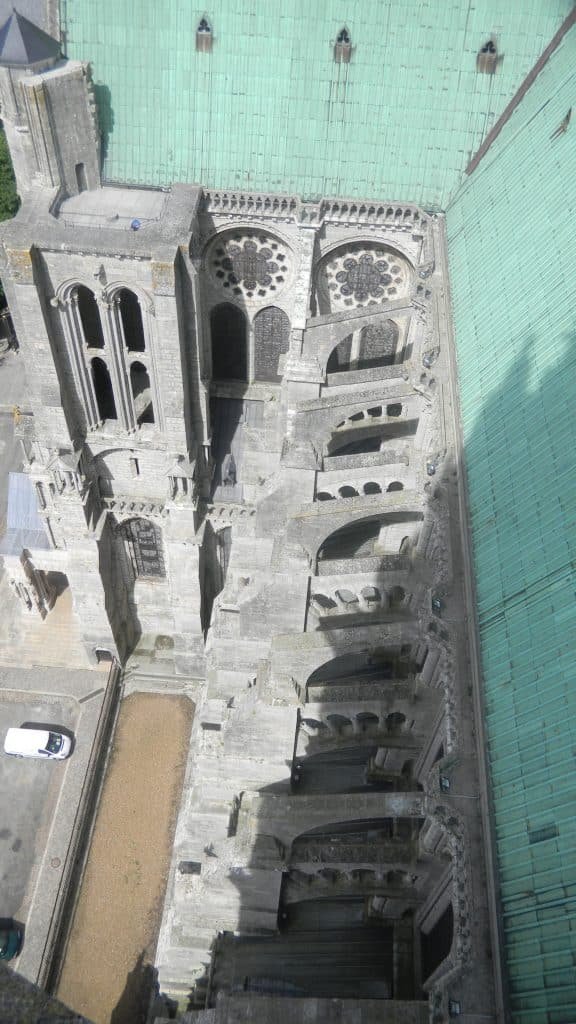
Here’s the line of graceful buttresses from a higher elevation. No other culture did anything like this. Khmers were building their grandest monuments at the same time–their king was building a huge royal city called Angkor Thom. It’s magnificent in its own way, but Gothic style is also unique:
1. The flying buttresses allowed people to greatly increase the nave’s height. Gothic style’s expansion in the vertical dimension expressed people’s desires for spiritual transcendence. Khmers achieved height either by building a monument on a hill (like Phnom Bakheng), or erecting a high central tower (like Angkor Wat). But the entire Gothic nave rises over 100 feet, and towers have soared to over 500 feet (Lincoln Cathedral’s central spire rose to 524 feet until a windstorm ripped it down in 1549).
2. Flying buttresses allowed windows to take up most of the wall space. People in Romanesque churches were enclosed by two-dimensional walls. Folks were now surrounded by light shows that nobody in the world had seen before. People in the height of the Middle Ages, with all that new space and height, created one of the world’s greatest art forms. We’ll bask in the glory of Chartres’ stained glass windows in the next article, on Gothic style’s heart.