While artists in Florence developed three-dimensional perspective and France’s King Francois I imported the Italian Renaissance to beef up his image, Thais perfected their own art forms. These works expressed a different way of seeing the world than the linear relationships between distinct objects, which Westerners are used to. Many Westerners who go to Thailand decide that they’ll never leave, so explore this temple at your own risk.
As Europe’s meaty kings were projecting the images of their courts to govern their growing cities and states, the northern Thai kingdom of Lan Na created art forms that emphasize energy flows that are balanced between vibrancy and grace rather than massive bodies and straight lines that control your gaze.
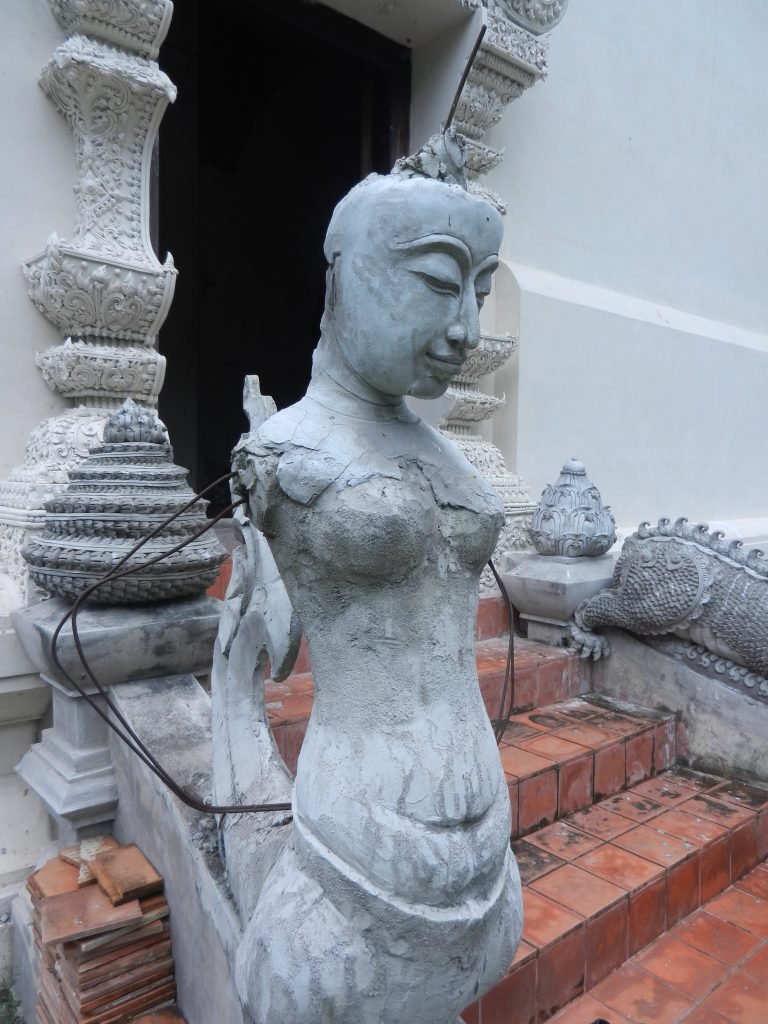
All the pictures in this article are of a wat in Nan called Wat Phaya Wat. Statues that welcome you to the public assembly hall (above) have forms as graceful and sinuous as the Sukhothai Buddha.
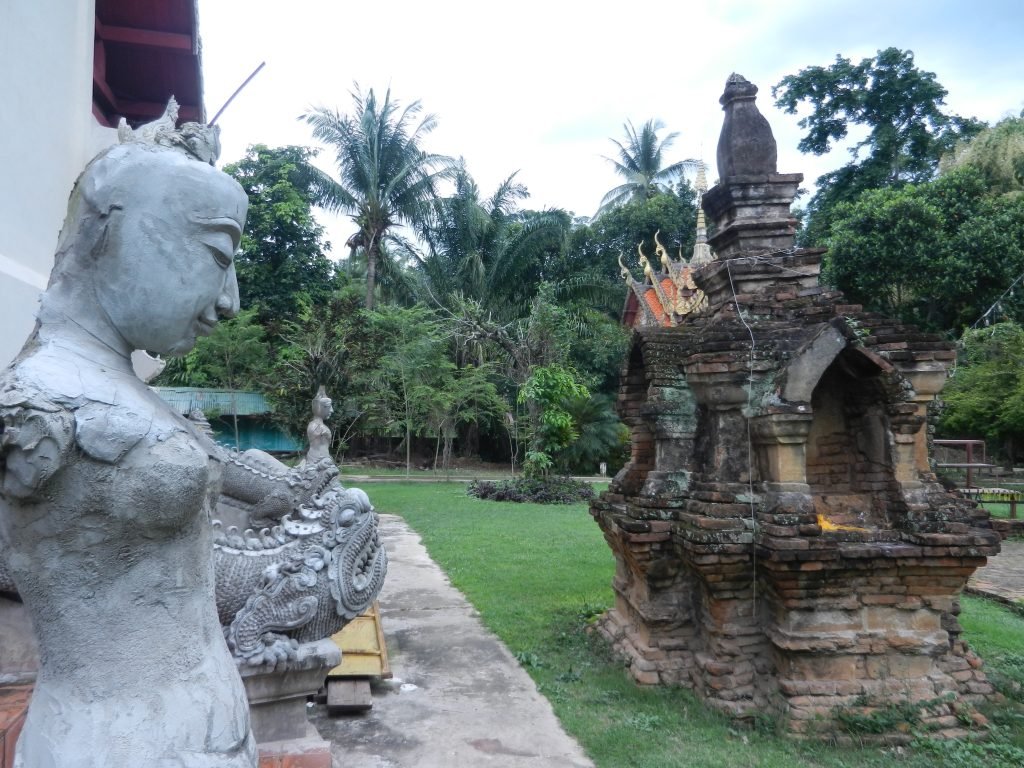
And the forms of many things flow together. The statue and the small shrine in the above shot complement each other. Their lilting surfaces seem to project graceful energies that blend, and they tame nature’s abundance in the background. Stroll a bit and–
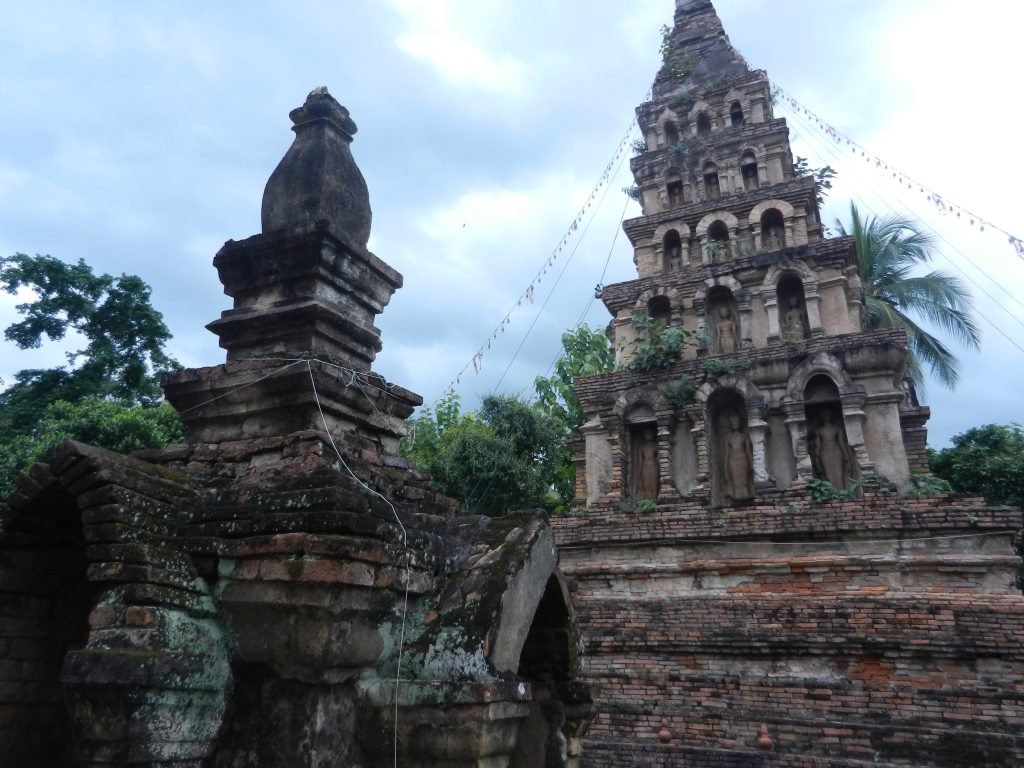
–the shrines’ forms slowly shift so that their energies seem to mesh even more. I thus felt embraced by the whole environment.
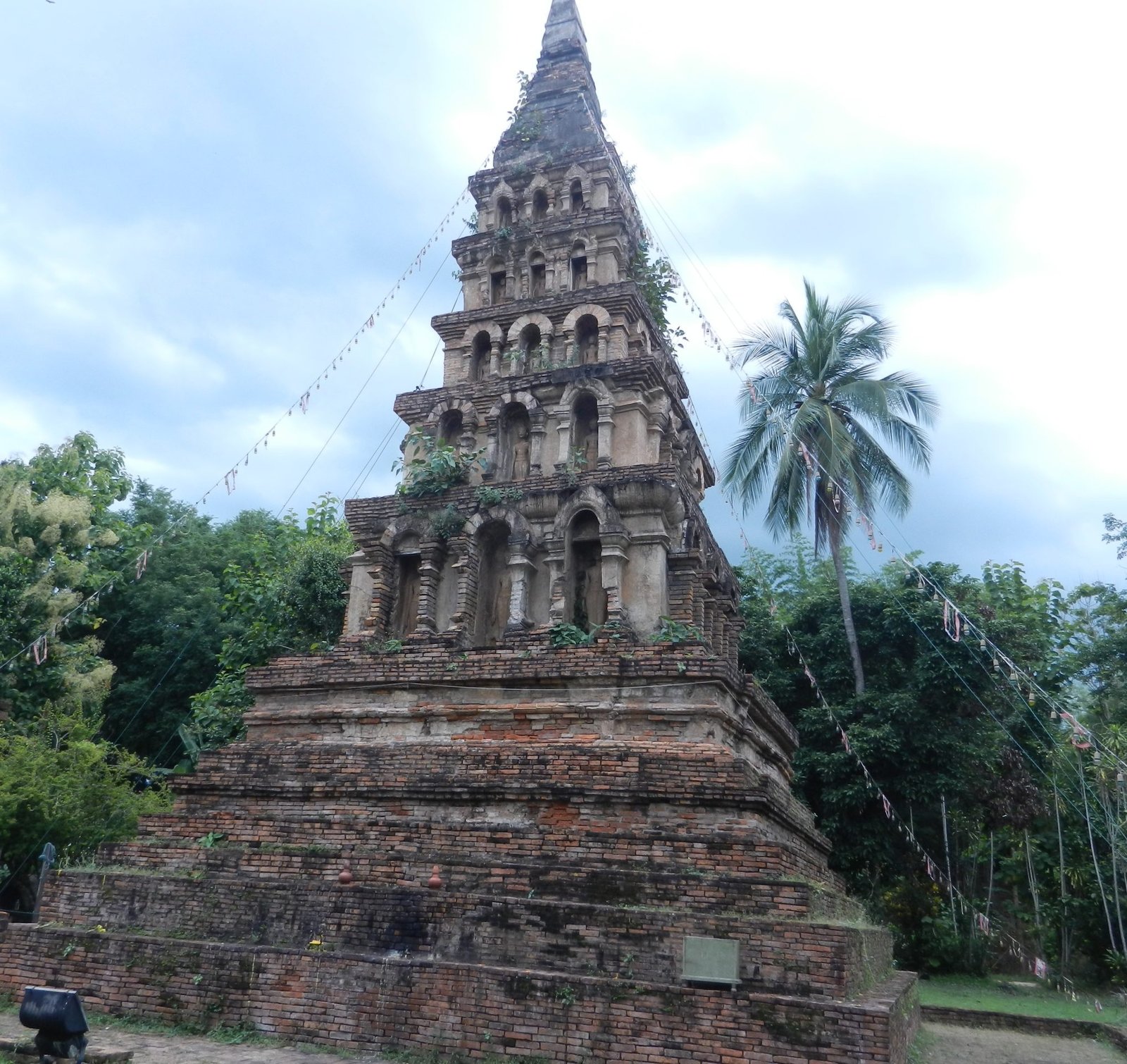
The tall building on the right is the stupa, and its thin pyramidal shape came from a kingdom called Haripunchai. It thrived before Lan Na took it over in the late 13th century. Builders of several northern Thai wats’ stupas incorporated this form.
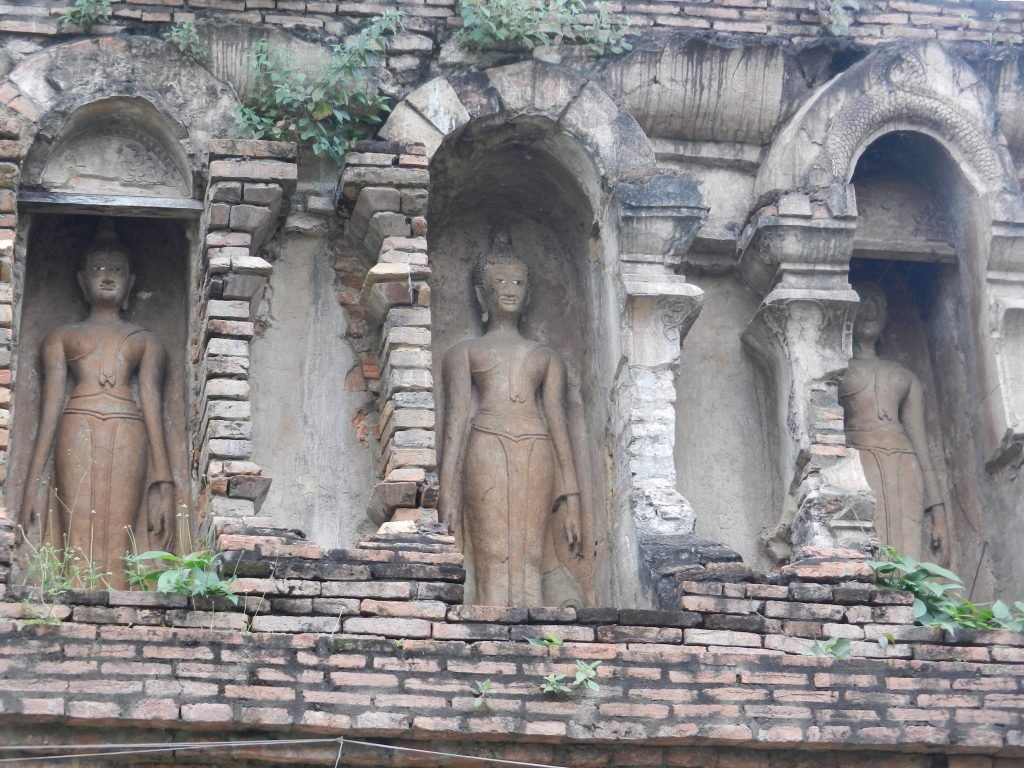
The stupa has five levels of niches (three on each side). Each holds a slender Buddha statue.
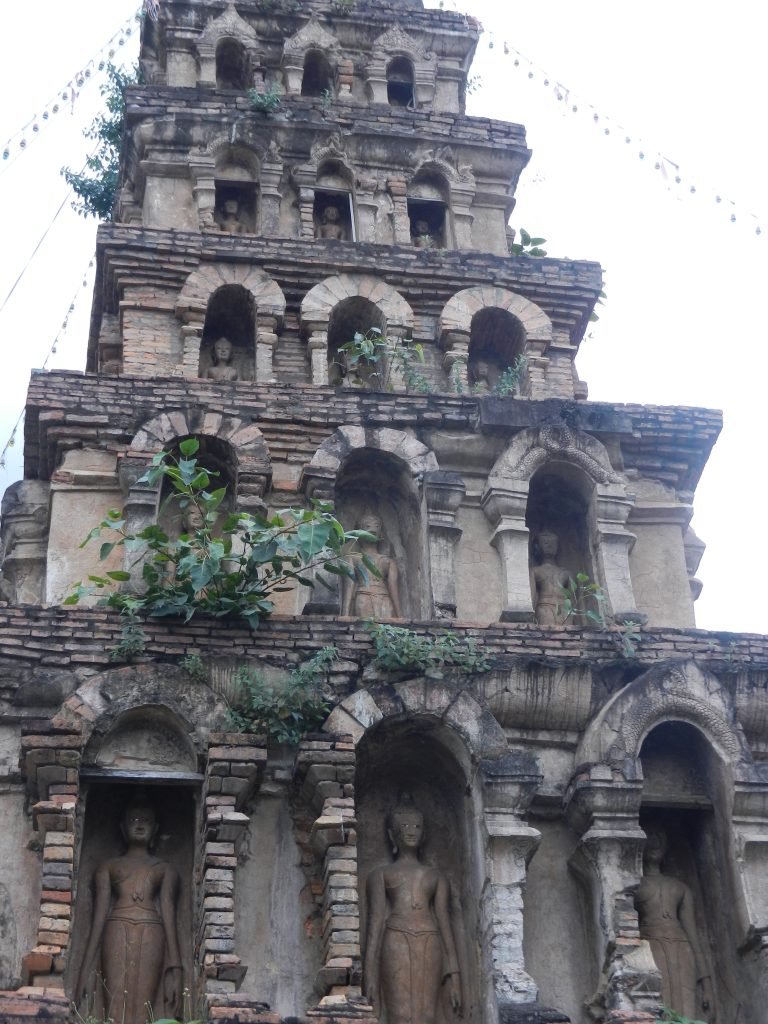
All the statues bestow grace on the whole temple compound’s art forms, natural scenery, and worshipers.
In Thailand, little things are as impressive as the largest monuments.

Tourists quickly walk around a temple’s main tower/stupa and public assembly hall and miss the other enchantments. But these little things have a lot of influence on how Thais see the world.
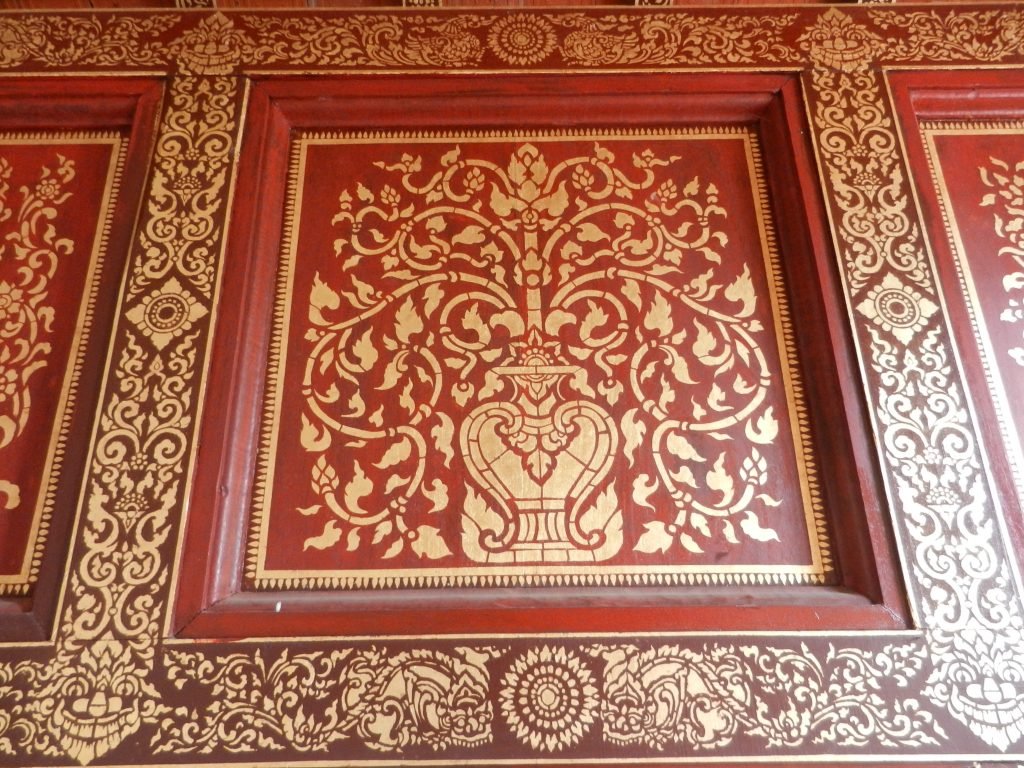
The above two panels are inside the public assembly hall. The human form in the first shot and the pot in the second blend with leaves. The leaves’ forms seem both animated and graceful. They look a bit like flames, and their golden color make them appear full of energy. But this energy is more subtle than a fire’s–it doesn’t burn, it glows. The powers that animate nature are thus more spiritual and benevolent than destructive.
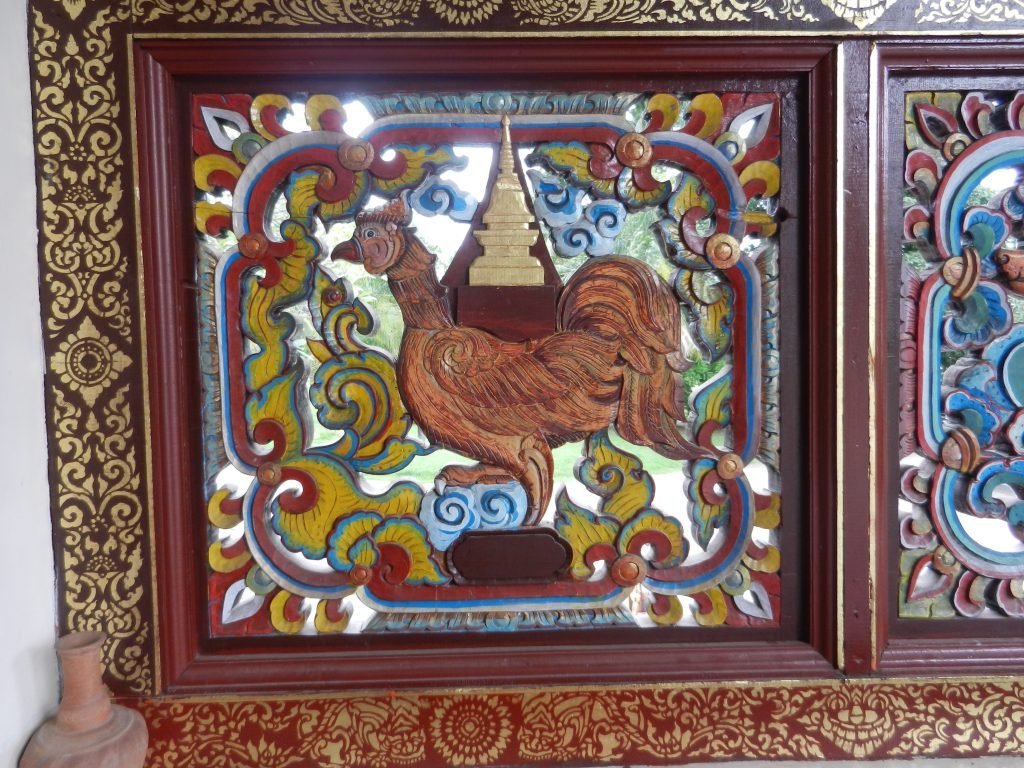
Like a lot of Thai art, the wat has many folksy touches. Zodiacal animals like the rooster (above), proudly strut under the balustrades in front of the assembly hall. Like the figures in the first photos, they blend with floral patterns that are both flame-shaped and graceful.
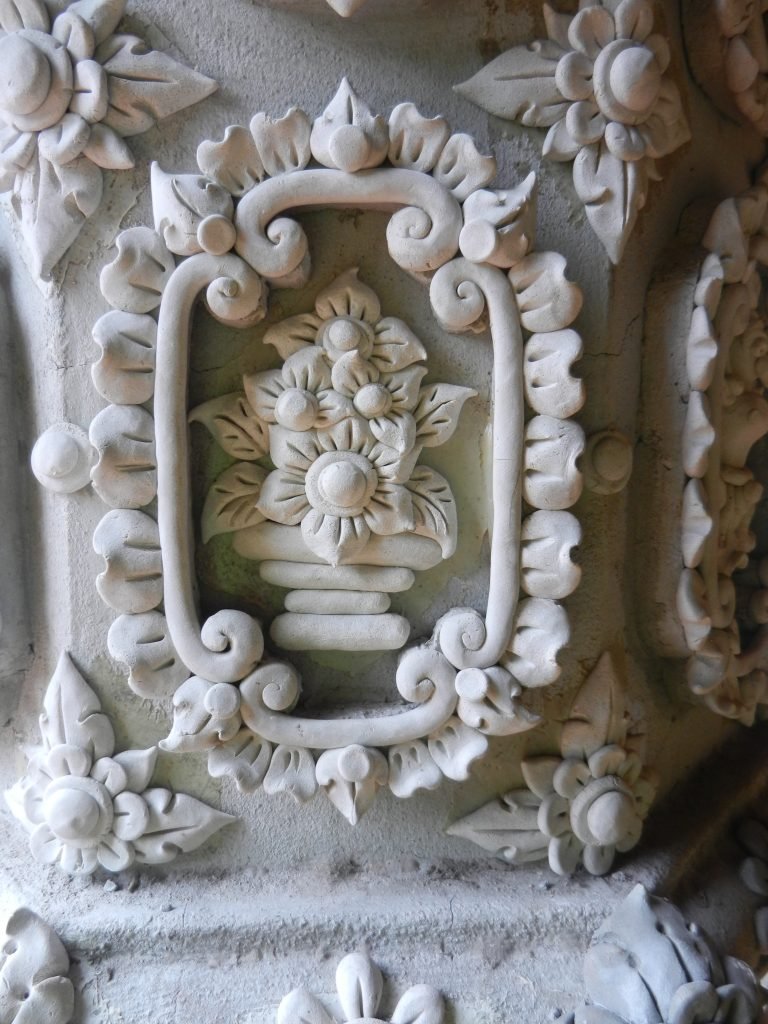
Artisans recently added plaster decorations to pillars on the outside of the assembly hall. The flowers and leaves in the above shot also project graceful flame patterns.
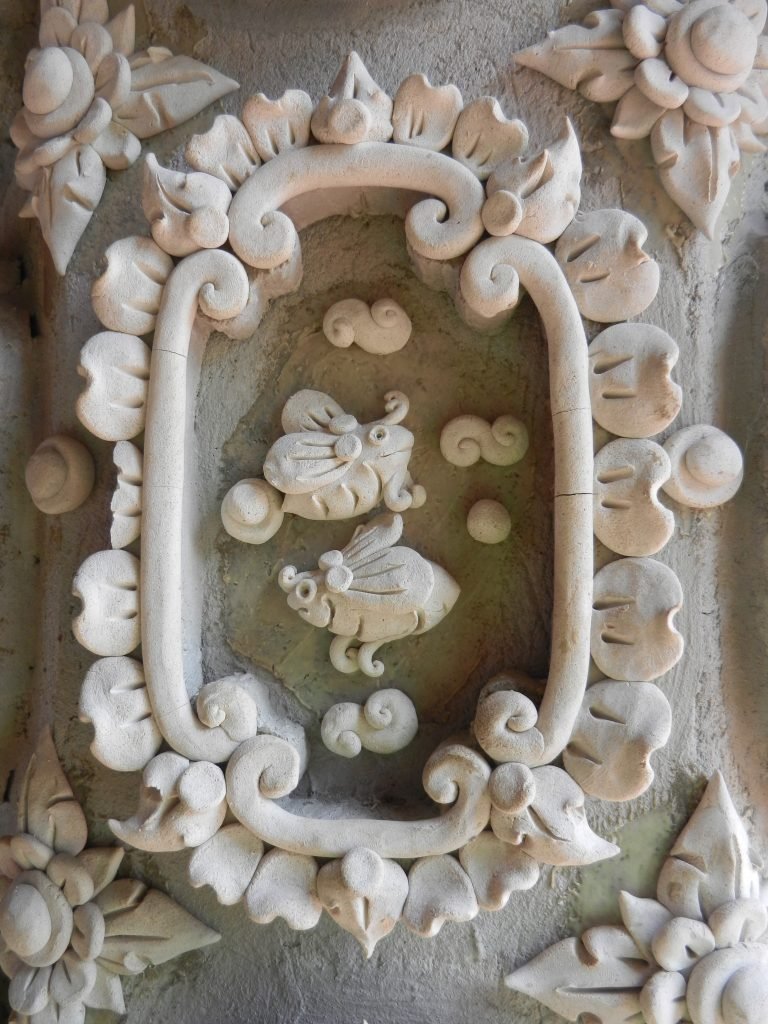
Even the happy bees above sport the same patterns. Nature’s power animates even the smallest creatures. And they add humor to the landscape so people can relate to them.
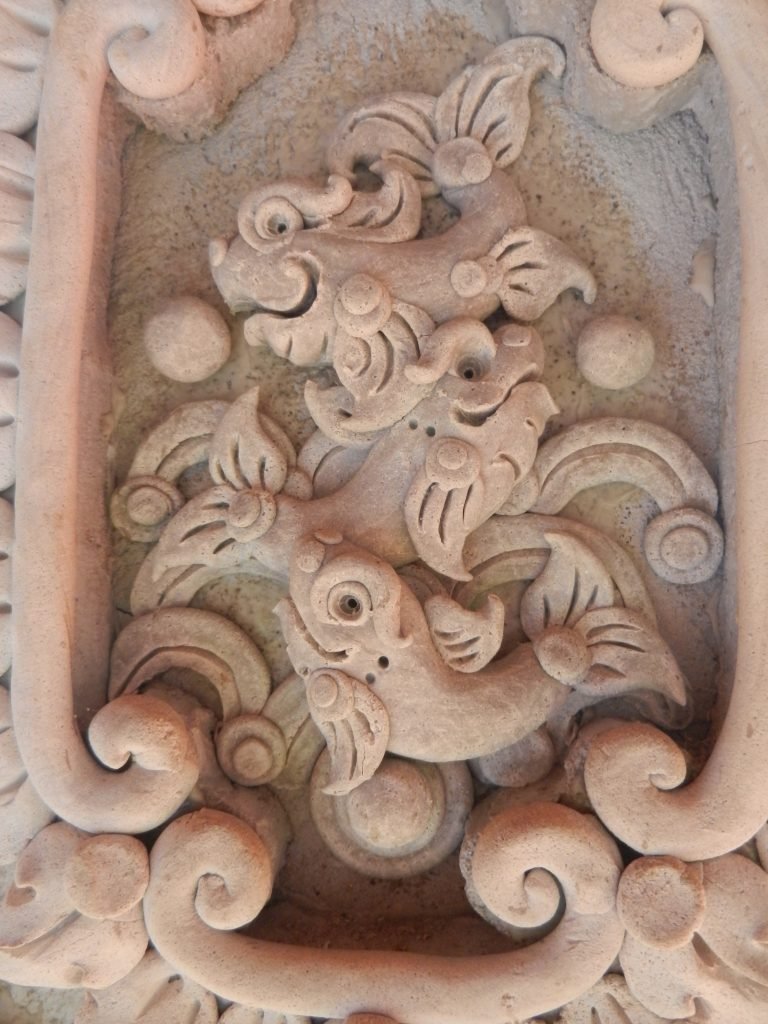
All the fish in the above shot are smiling. Everyone is happy in the air and under water.
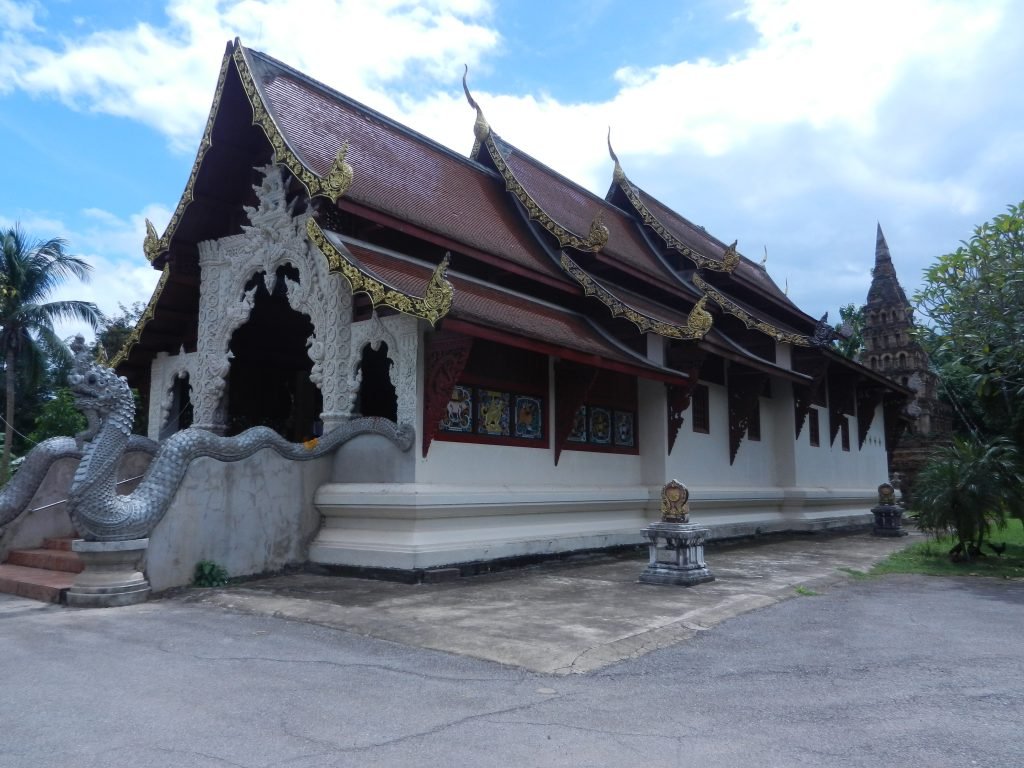
The assembly hall is in the most common northern Thai form, with stacks of roofs cascading from the middle.
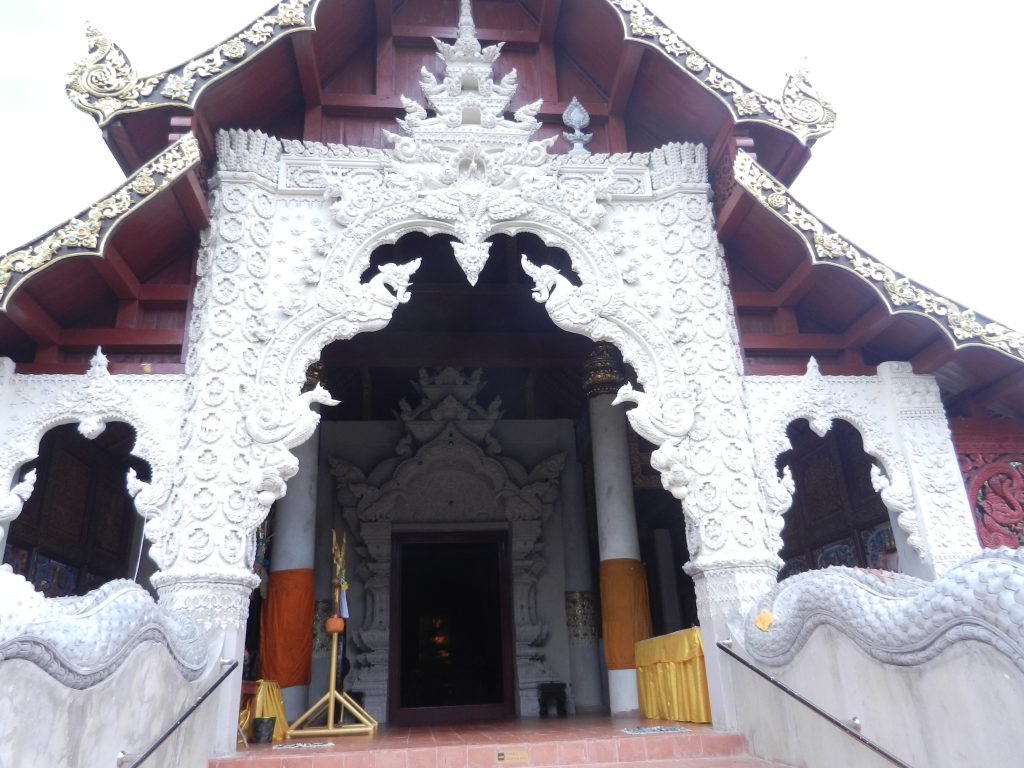
Some wats now add modern kitsch to their blends of forms. It’s easy to wonder what the person who recently decided to add this facade to the assembly hall’s entrance was thinking.

But this facade needs to be seen through Thai eyes. It too is full of curves that are both animated and graceful. And its hue also softy glows.
All of the wat’s decorations mix and flow together as you walk through it. The experience blends categories. This is why you rarely see universities cover Thai studies well, and why AI and Google’s search box are no better. Multiple ideas blend so playfully that you can’t categorize the experience:
1. Animated power and graceful flow
2. Seriousness and humor
3. Bright flickering colors and soft hues
4. Dignity and flash
The wat’s main buildings’ and little decorations’ forms and colors mix in infinite ways as you amble around, and they immerse you in a different world. Nature’s abundant energies are spiritualized rather than dense. They allow your perspective to playfully meander rather than pull it in one direction, like many Gothic cathedrals do (Bourges Cathedral is a marvelous exception). These patterns of energy radiate benevolence through the community. When you enter a wat, you can wander through it and never run out of things to enjoy. You can then go home and give your children a big smile and hug. Thai patterns will happily live into the next generation.