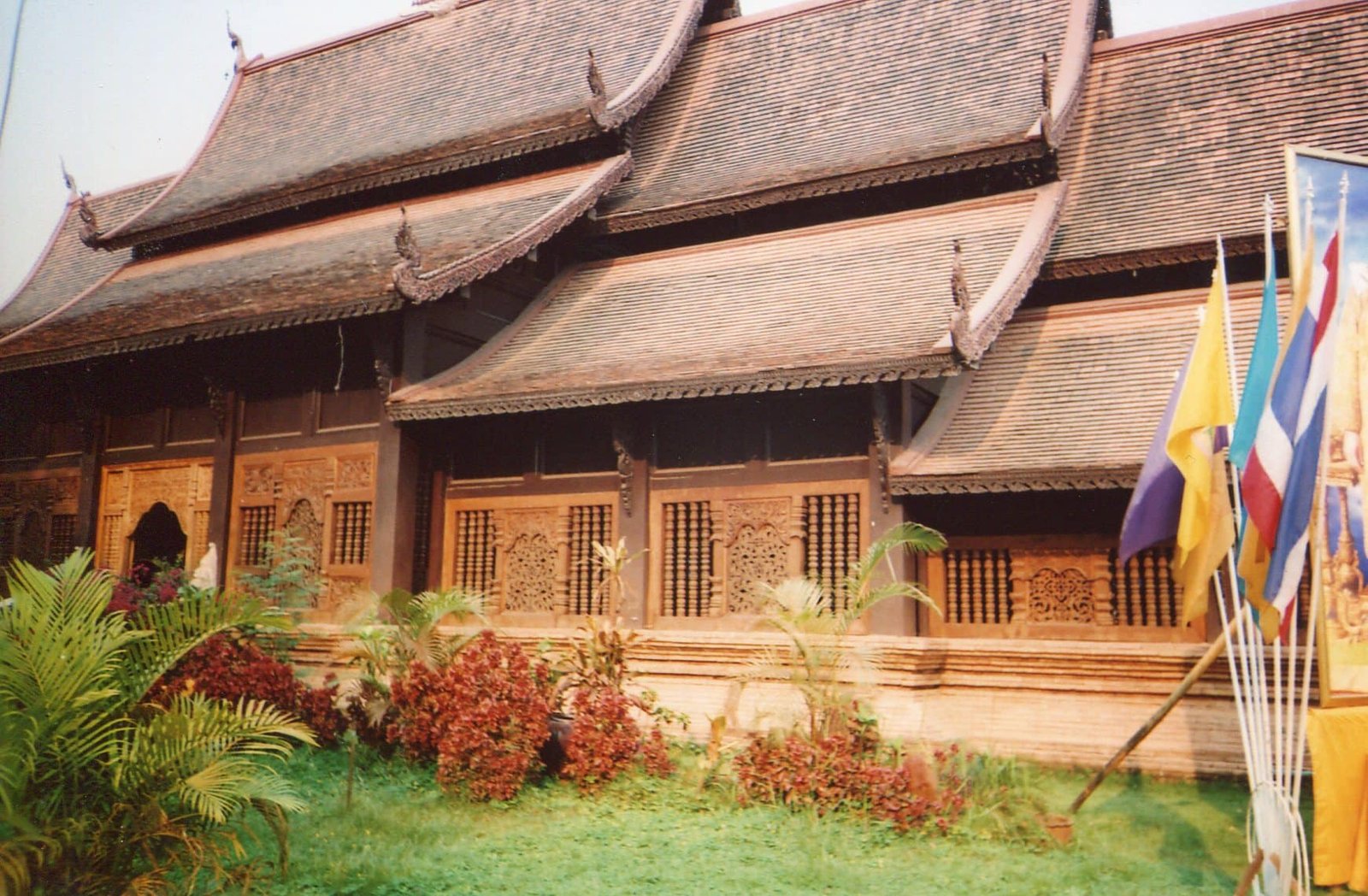
My favorite regional variety of Thai art is from the north. After the Thais threw off the Khmer yoke in the 13th century, a king called Mangrai established a state called Lanna. He moved it to Chiang Mai in the 1290s.
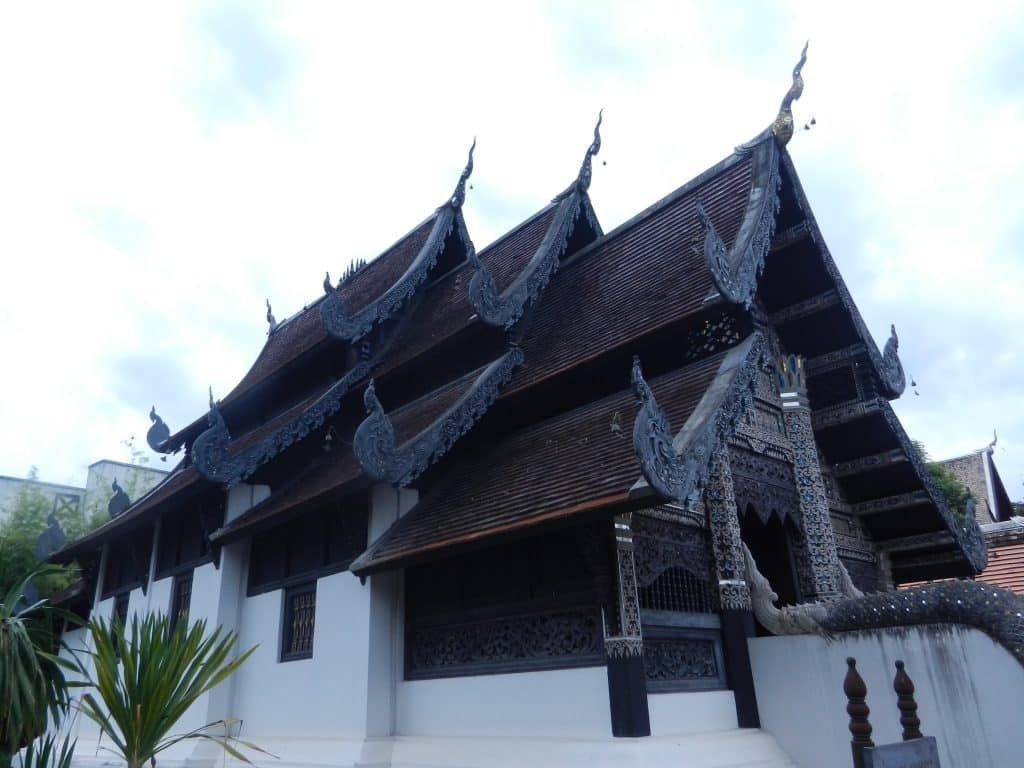
This kingdom reached its heyday in the 15th century. Its geography helped make it special. It’s mountainous. Four riverine valleys run from north to south, and they’re separated by steep hills. Lanna was thus not like the flat plains that Angkor dominated. You can’t impose a single cult on diverse mountain people too rigidly. So, many regional artistic varieties emerged. All are human-scale. They compose one of the world’s most pleasant cultural landscapes.
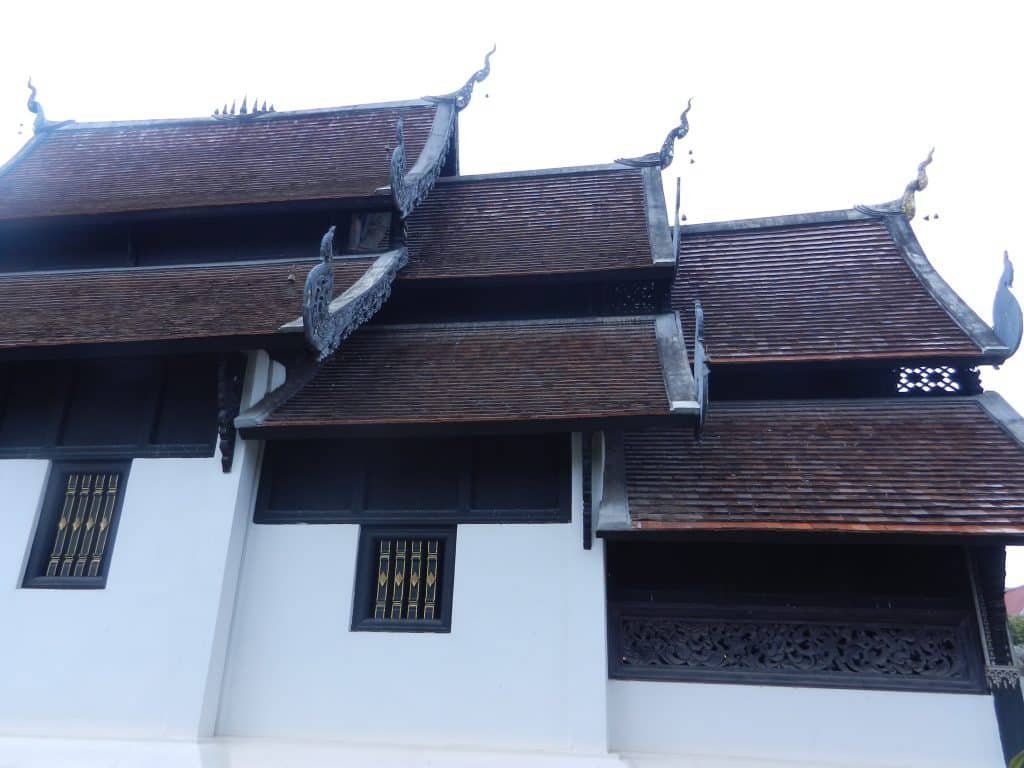
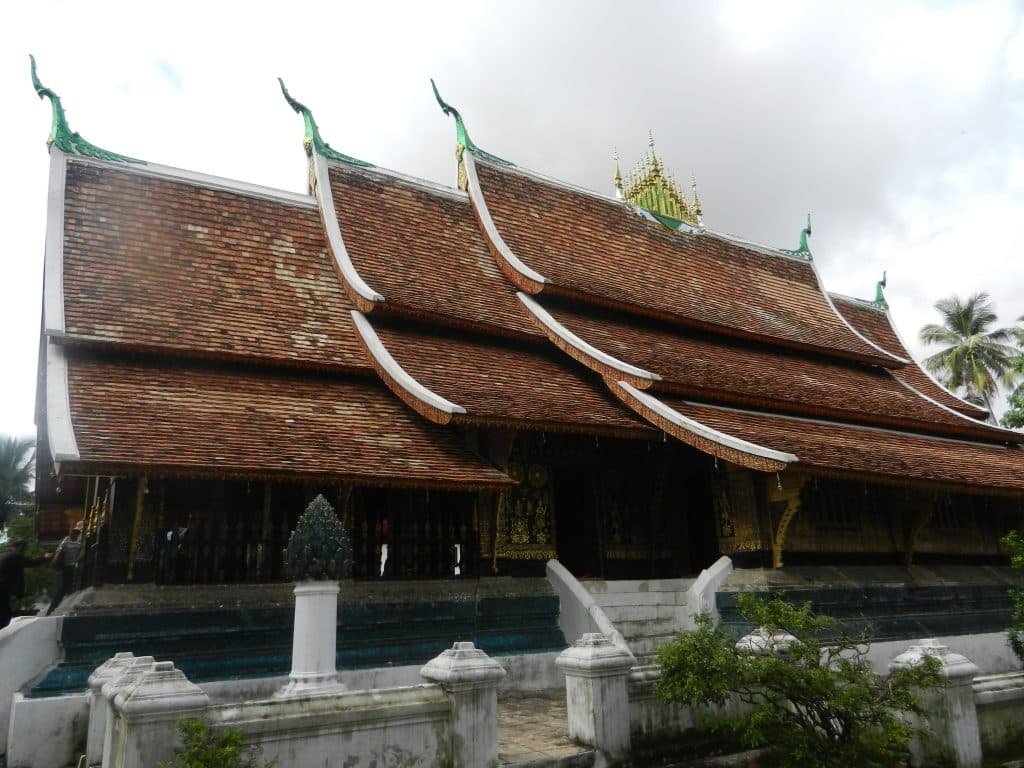
One of Lanna architecture’s most distinctive traits is the roof of the vihara (the public assembly hall), and it’s one of my all-time favorite art forms. There are usually three or five sets of them–one in the middle, and one or two radiating from each end. The middle stack is the highest, and the ends are the lowest. The above picture is a common example.
The whole set of roofs cascades like a waterfall flowing in two opposite directions. The bottom of the lowest stacks is often near the ground. It’s sometimes close enough to be touched. The loftiest part of the temple comes down to us. The entire roof set flows from the sky like a shower of grace.
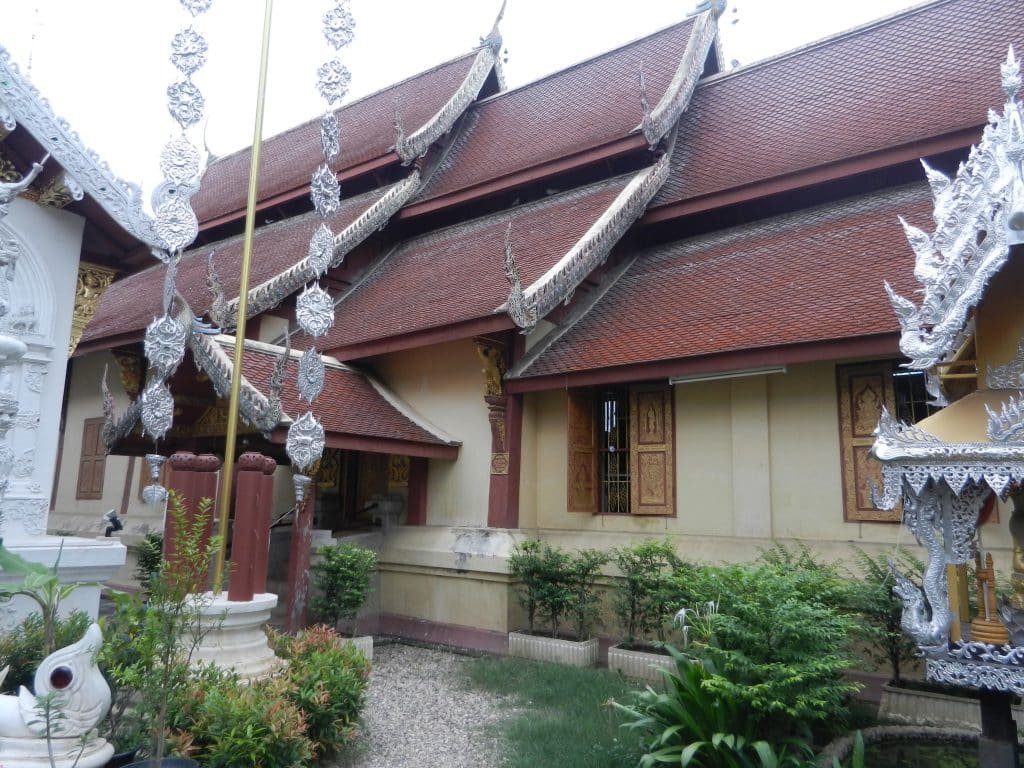
But the bottom corners of roofs add zest to the shower. Long sinuous guardian figures curve steeply upwards and end in sharp points. They’re often mythical figures that are so fanciful that they’re hard to recognize.
Intricate wood carvings in the upper triangle of the front gable add even more tang. They’re in bright colors, and they usually curve in flowing lines. Many represent the forest–vines, flowers and animals intertwine. On some panels, inlaid colored glass adds shimmering reds, greens and blues to the carvings.
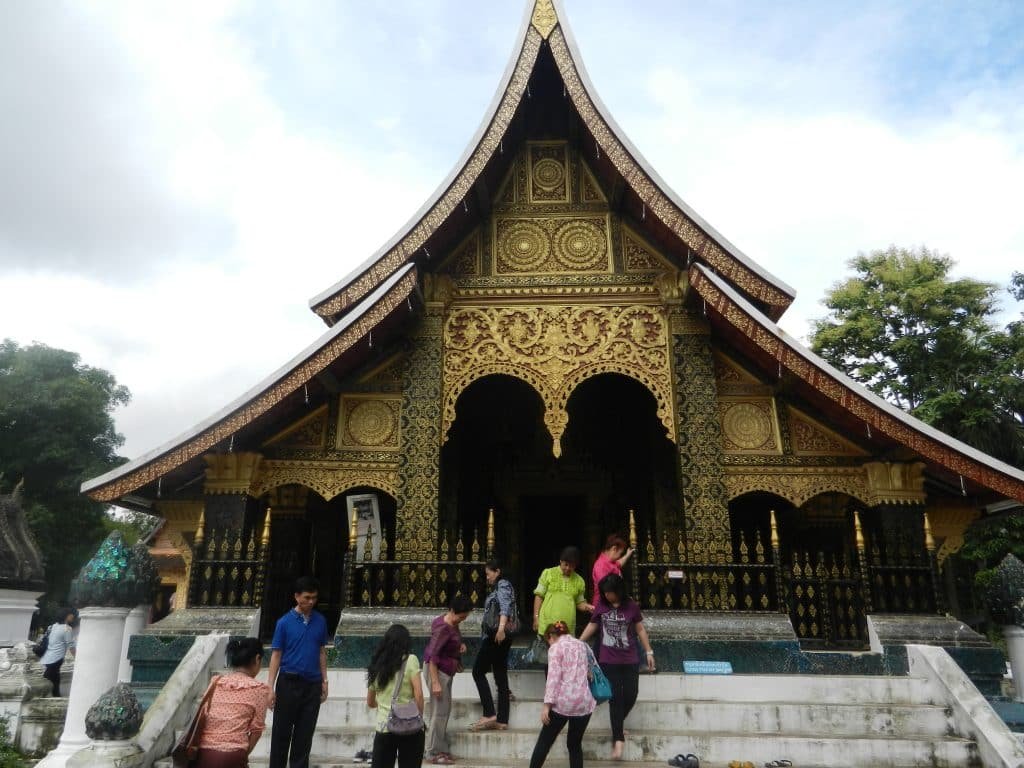
So the whole roof balances heavenly grace and earthiness, and it’s an irresistible invitation to come inside. It often made me feel that I was about to get a friendly version of spirituality.
This art form is so ingrained in northern Thailand and in Laos that it has assumed many modern variations, like the one in the below photo.
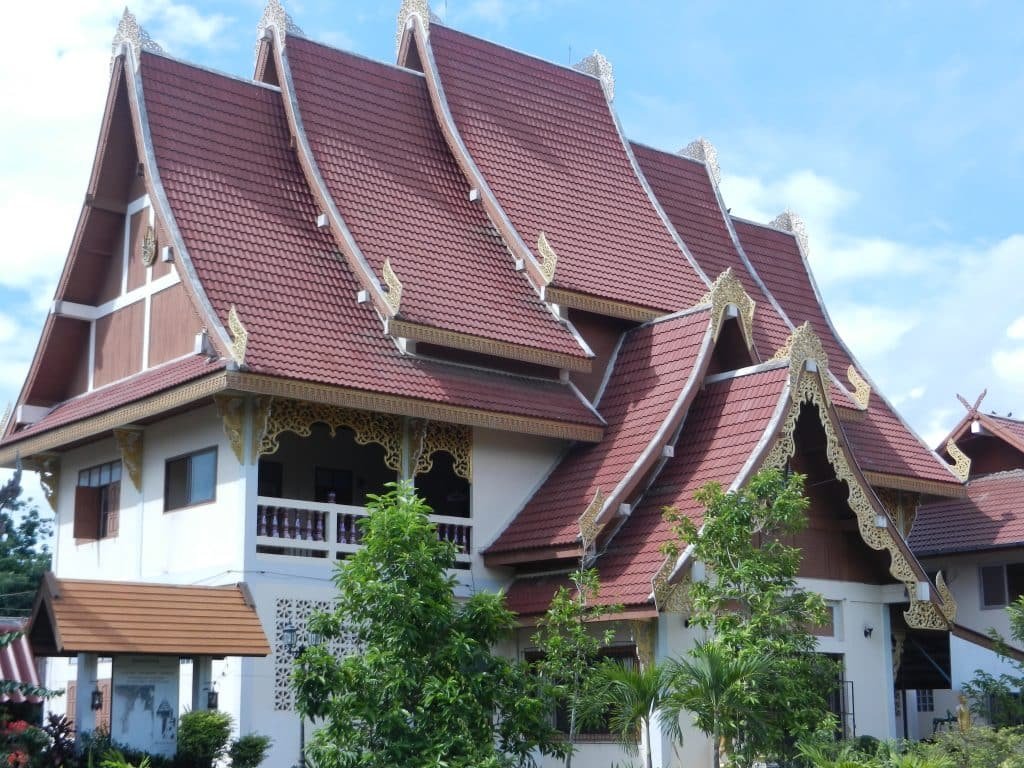
So this a living tradition which will repay people who keep up with it.
Lanna is an especially rewarding place to explore for many reasons, including its people’s ideas of history.