The Canadian scholar and founder of The Age of Culture Project D. Paul Schafer has written several books about transforming from the age in which economics dominates people’s lifestyles and political policies into an age in which culture plays the leading role. He sees Adam Smith’s book The Wealth of Nations as the first famous publication that claimed that qualitative increases can be achieved in the production, distribution, and consumption of goods and services and the creation of monetary wealth.
Material life in America in the early 19th century reinforced this focus. New York State’s Governor DeWitt Clinton spearheaded the building of the Erie Canal in the 1810s. A lot of people back then thought he was daffy for thinking he could dig a 300-mile canal through Upstate New York, from Albany to Buffalo, without help from machines. But it was so successful that it was widened a few years later. So many boats lined up at some of the 80+ locks that raise the water level over 600 feet that entrepreneurs built inns and taverns to accommodate them. Towns like Buffalo and Rochester grew, and inland cities such as Cleveland, Detroit, and Chicago expanded more quickly so that the North Midwest became more integrated with the East Coast.
I sometimes try to image what folks in those sleeping and eating establishments by the canal discussed. They must have been eager to share info about their enterprises, sell each other goods and services, and form business partnerships. The way the two E flat major chords at the beginning of Beethoven’s 3rd Symphony immediately whisk listeners into the dynamic world of a political revolution or ideas of artistic aesthetics from Kant’s Critique of Judgement were probably way down on folks’ lists of interests. They focused much more on the business at hand and the next economic ventures. This is how people in the US have usually talked since then.
Schafer sees Karl Marx’s conclusion that the past can be mainly interpreted in economic and materialistic terms as another major step in the age of economics’ emergence. Marx placed the priority squarely on the material side of life. Then in 1890, Alfred Marshall’s book Principles of Economics was published. He felt that the ideal economic system functions best when people maximize satisfaction as consumers and as corporations compete as vigorously as possible as producers and maximize their profits.
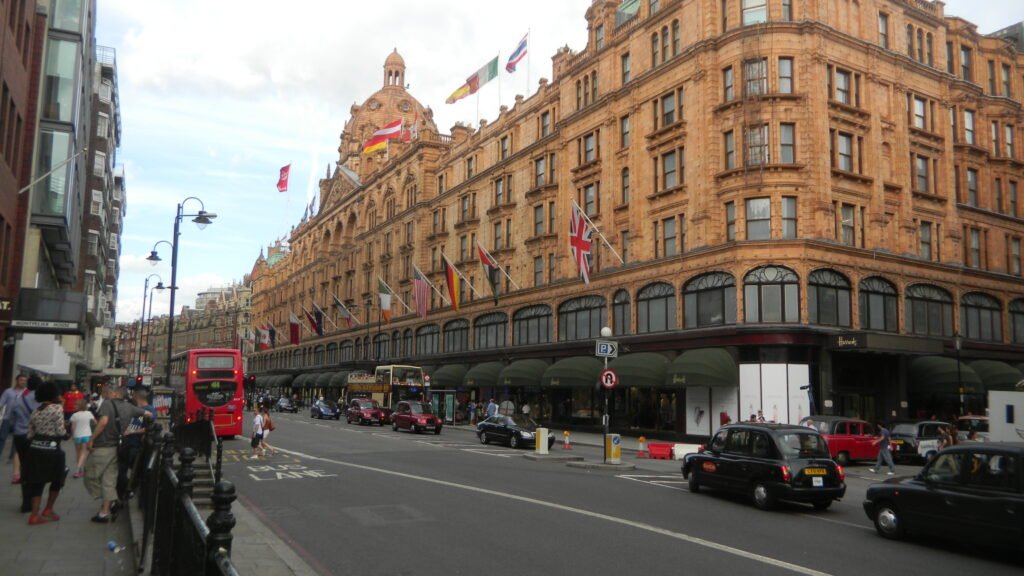
Harrods in London (above) became one of the world’s greatest temples of consumerism, and cities throughout the US boasted their own. J. L. Hudson in Detroit had 32 floors (counting the basements and the management offices) dedicated to selling everything from furniture to jewelry to toys. In Chicago, Sears and Montgomery Ward created their famous mail-order catalogs so that people all over the country without access to cities could enjoy the same goods.

Rising skylines confirmed material culture’s domination. In the 1910s, a minister said that looking up at Lower Manhattan’s Woolworth Tower inspired a feeling “too deep for tears.” An American tourist in the mid-20th century said, “I’ve had more inspiring thoughts in an American bathroom than in a European cathedral.”
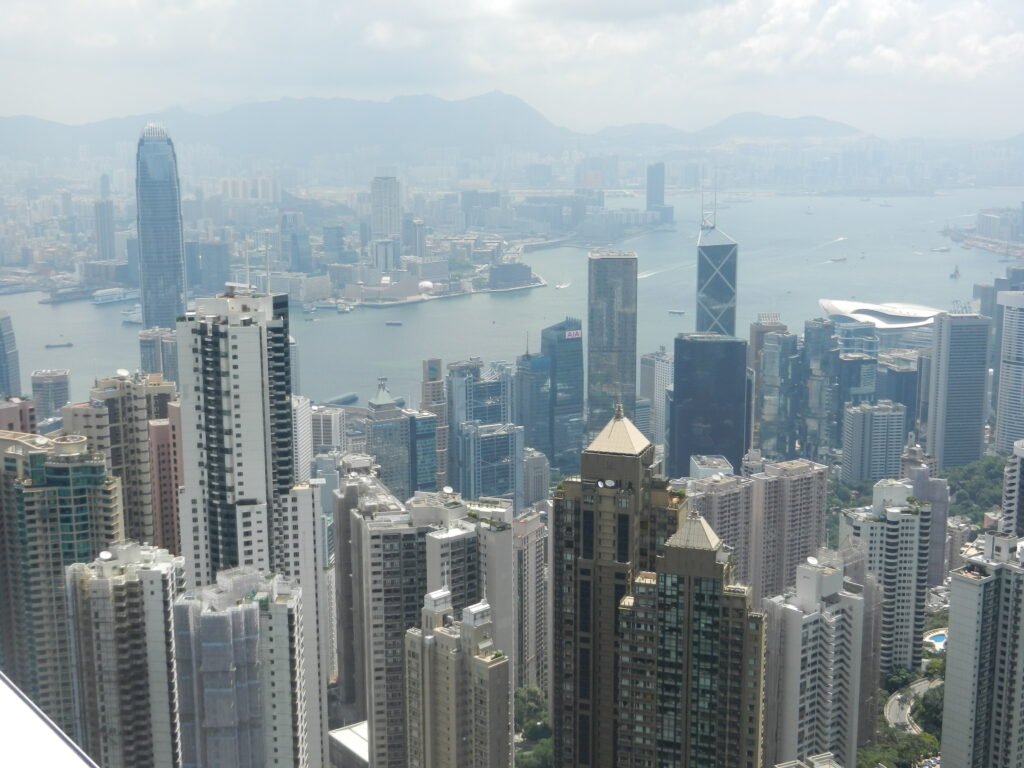
Business districts have since reached into the heavens on other continents. Hong Kong’s competes with the surrounding mountains. Skyscrapers in Dubai, Doha, and Riyadh dwarf all local mosques’ minarets.
Business districts and department stores are dazzling to look at, but Schafer feels that the modern world’s one-dimensional focus on economics is destructive. He notes that an economically dominated view of the world breaks it into parts and quantifies them according to production and monetary value. He also says that cultures are holistic; they encompass all experiences, including arts, ideas, language, literature, spirituality, sports, family, historical patterns, cuisine, and experiences with the natural environment. All influence each other. He quotes the Dutch historian Johan Huizinga, “A culture which no longer can integrate the diverse pursuits of men (people) into a whole, which cannot restrain men (people) through a guiding set of norms, has lost its center. . . . It is threatened by the exuberant overgrowth of its separate components.” So a strictly economic view of the world is inadequate for solving today’s problems, including ecological abuse, political conflicts, non-renewable energy, and unregulated AI. Schafer also notes that people seek non-material wealth as well, including rich personal identities, deep experiences, fulfilling interpersonal relationships, supportive communities, and spiritual growth.
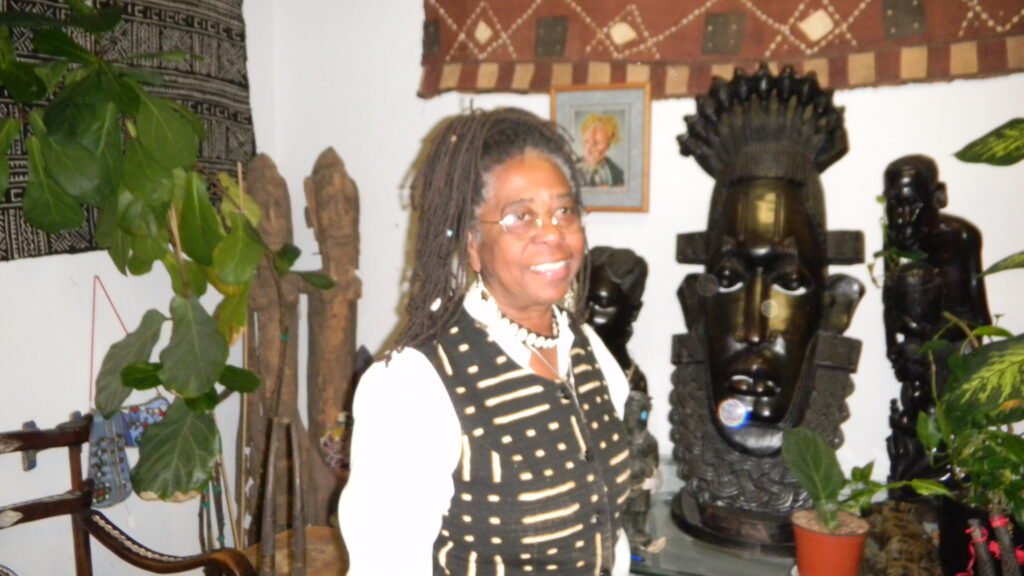
Culture influences all areas of life, including material. An age of culture is thus not a substitution of one way of seeing the world for another, but an expansion so that all areas are appreciated, balanced, and mutually nourishing.

Schafer sees several benefits of an age of culture. People can have more ways to be happy, since they won’t depend on consuming as many things as they can get their hands on. It can reduce the demands we make on the natural environment. Instead of burning energy all the time, people can have conversations at home, meditate, take walks in the country or an urban park, listen to music, play sports, and visit museums and galleries. And different countries can appreciate each other’s cultures more, bring more balance into their dialogs, and be less inclined to initiate wars.
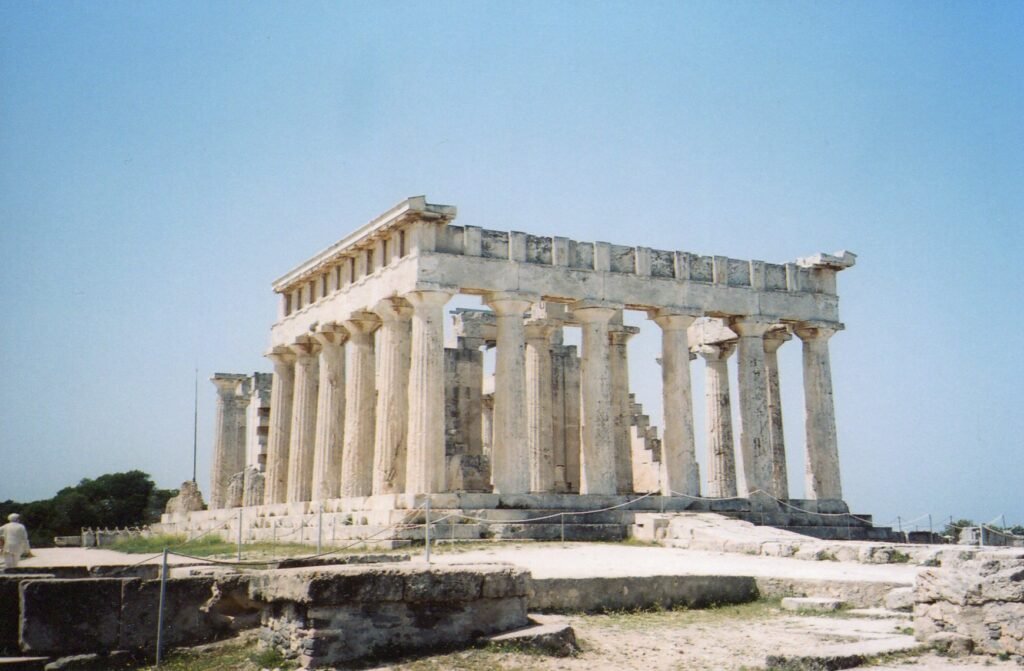
Looking At/With/Beyond can help usher in an age of culture. Most people usually look At by perceiving and thinking according to their cultures’ and their own basic assumptions without questioning them. But perceiving and thinking in the same way is mechanical. It can continue to reinforce the Age of Economics by encouraging people to reduce things to one category, assign numerical values to them, and assume that they can be completely comprehended in this way. But they can see assumptions more objectively by looking With, and at the same time, appreciate how rich the culture they emerged in has been. The Temple of Aphaia on Aegina (below) is an excellent example of ancient Greek roots of the West’s emphasis on linear forms.
Looking Beyond then expands the horizon to other cultures, such as India. The Keshava temple at Somnathpur (below) expresses a view of the universe as a vast space-time field of subtle energies rather one that’s dominated by proportioned linear relationships.

People can keep looking At/With/Beyond in a circle and extend their horizons to one culture after another, including Chinese, African, Southeast Asian, Middle Eastern, and Native American. As this simple method is repeated, different ways of perceiving and thinking about the world can reflect and enrich each other in ever more ways.
This ever-enlarging circle will give us so many new sources of pleasure that focusing on material positions and monetary values can seem as trivial as a fishbowl in the ocean. It will also give us more control over our thoughts as we gain ever more freedom to choose the next world-view we appreciate. We can select our concepts and shift them at will instead of following the same one mechanically.
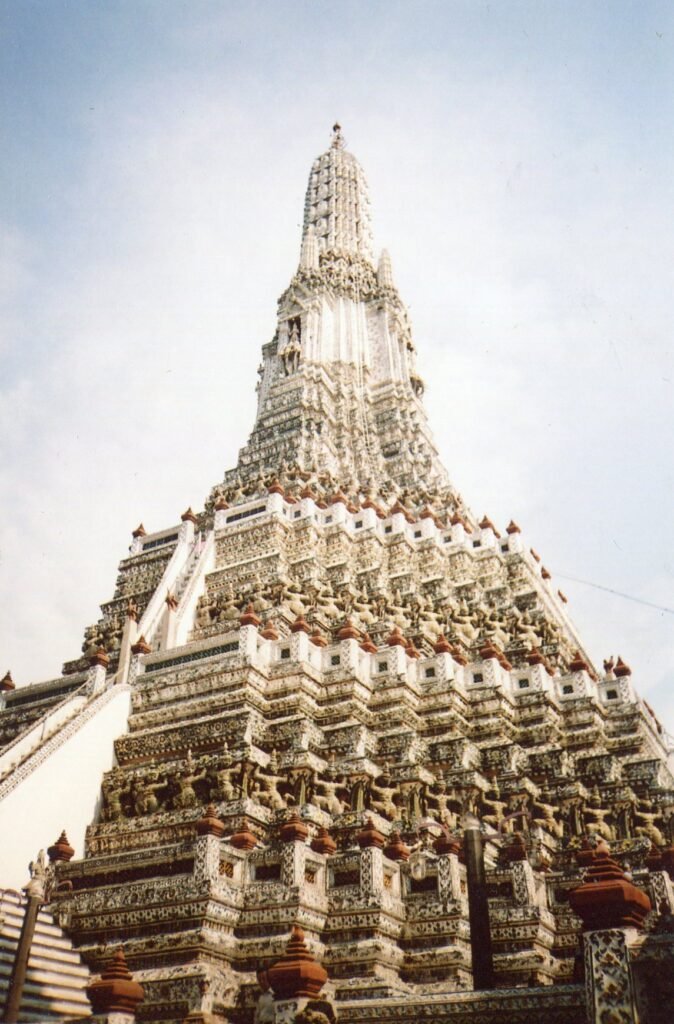
The ways that different cultures’ products reflect each other can grow ever more multidimensional, inclusive, and refined. Our views of the world can rival dreams of paradise that people in different societies have had. The cultural resources for creating such an age are already here. We can all begin today by learning about different people’s views of the world and sharing our discoveries.