Shigehisa Kuriyama, in The Expressiveness of the Body and the Divergence of Greek and Chinese Medicine, wrote that ancient Greeks appreciated bodies that had a certain look. They had clear forms and divisions that separated distinct areas. They identified this look with vitality. A strong character manifests itself in feet, ankles, and legs that are well-jointed and sinewy (neurodes) and well-articulated (arthroi).
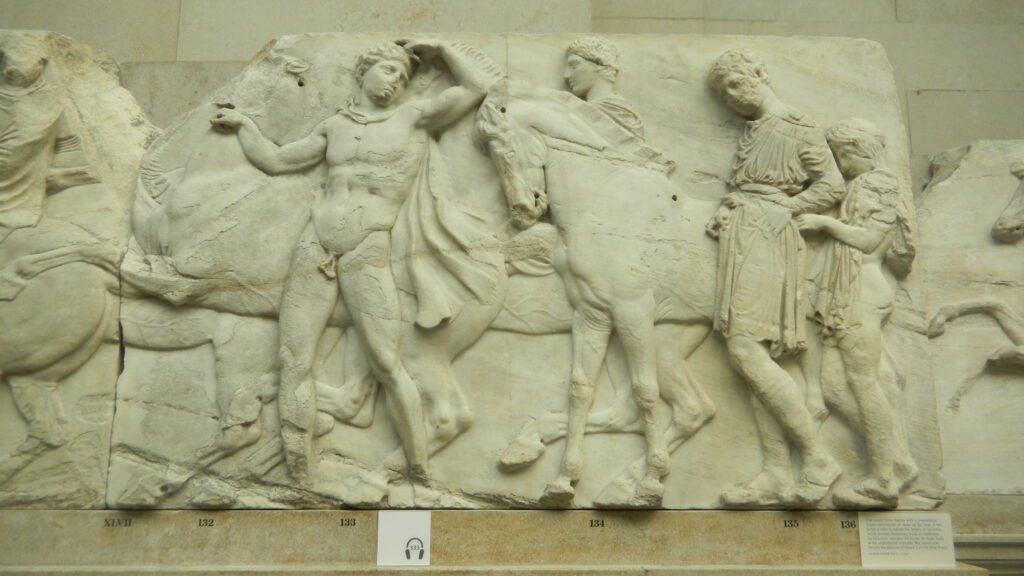
Jointedness is a recurring theme in Greek writers’ appreciations of people. In Sophocles’ Women of Trachis, Heracles is borne on a litter, wracked in pain, exhausted, and anarthros (without visible bodily divisions). Euripides depicted Orestes in the same way as he lay prostrate, devastated by the experience of killing his own mother. To be anarthros was to be thoroughly debilitated, slumped in impotent shapelessness. This was the exact opposite of bodies on the Parthenon, with sharply articulated limbs and torsos of heroes in their prime, rippling with power.
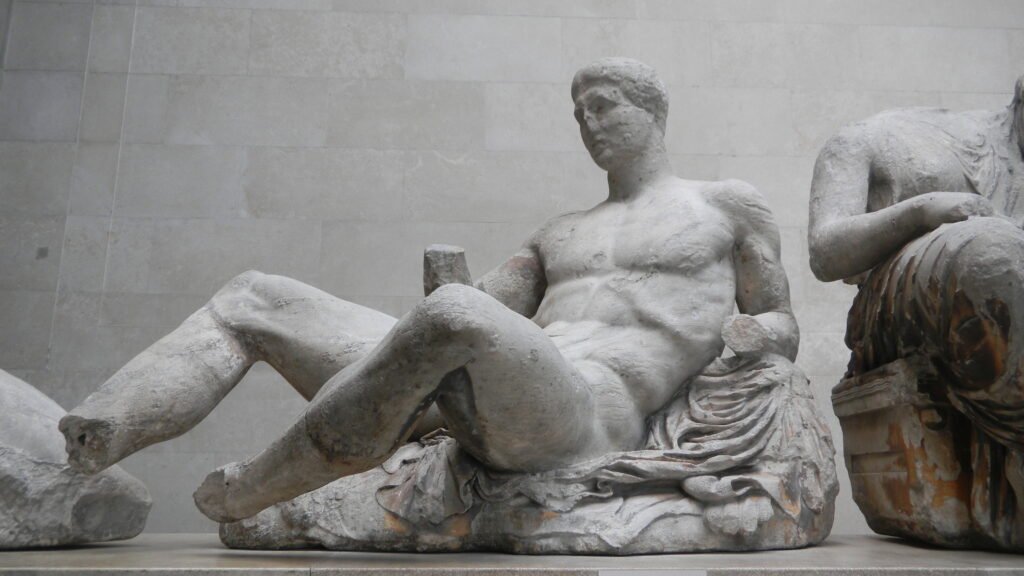
Arthroi weren’t just joints in the modern sense, but the divisions and differentiations that gave the body its distinct form. They expressed a person’s autonomy and capacity for action and political influence.
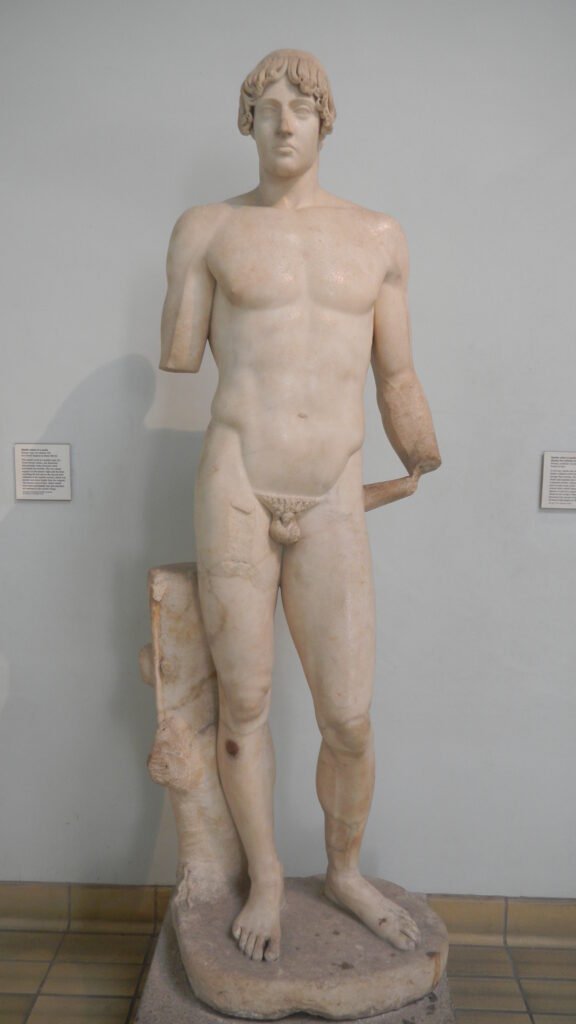
Many Westerners still assume that the greatest sign of health is an athletic, well-muscled body.
But people in ancient China didn’t emphasize clear divisions of visible outer areas nearly as much as circulation of energies throughout the whole organism. Instead of visible outer divisions, circulatory pathways were focused on.
One of the most important concepts was mo. Mo holds and nourishes qi (vital energy). The Suwen says, “Mo is the abode of the blood. When it is long, then the qi is settled. When it is short, then the qi is ailing. When it is rapid, the heart is troubled. When it is large, then the ailment is progressing. When its upper part predominates, then the qi has risen. When its lower part predominates, then the qi is swollen. When it is intermittent, then the qi is debilitated. When it is thin, then qi is deficient. When it is rough, the heart aches.” Mo thus isn’t a single organ or part of the body that can be clearly partitioned; it characterizes the flow of energies throughout the body. Mo can be full or empty, quiet or moving, slippery or rough. Kuriyama noted that it wasn’t characterized by crisp categories that ancient Greeks often favored such as abstract shape and size.
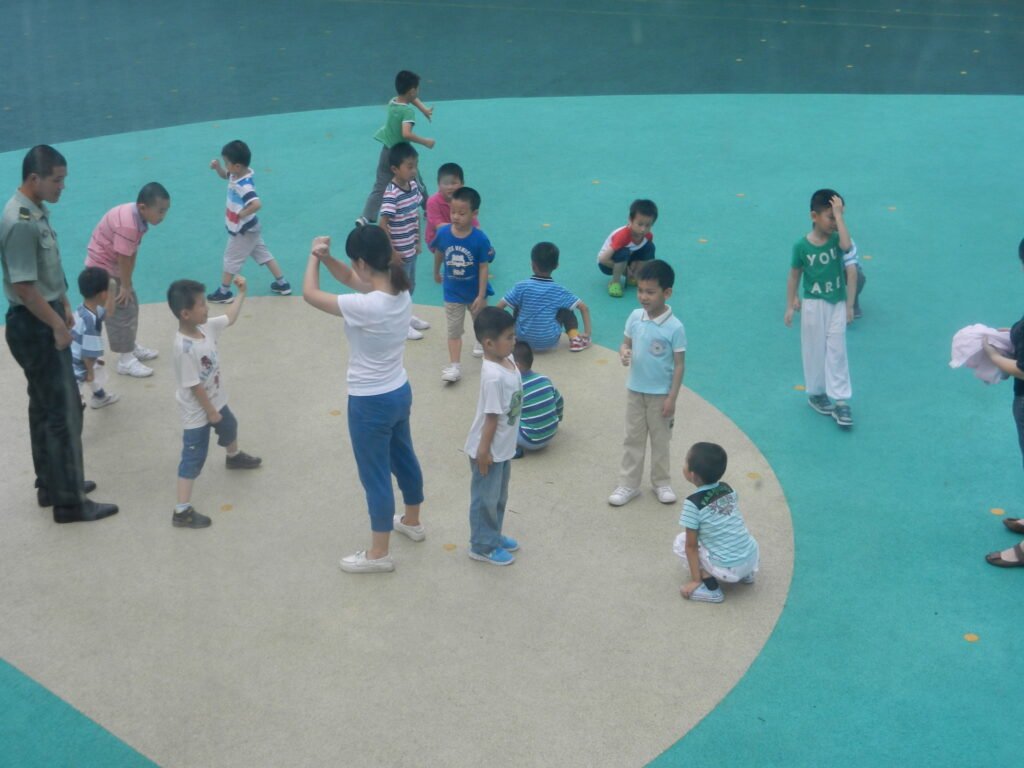
And unlike arthroi and sinews, the mo formed a circle with no controlling source. Their palpations gave equal insight into all viscera; there was no central power source, no prime mover. But Greek reflections on the body often highlighted the question, Where is the ruling principle (arche), its controller (hegemonikon)? Plato and Galen thought the brain is the primary organ; Aristotle thought it’s the heart. This question didn’t concern a lot of ancient Chinese thinkers. For them, even flow of energy throughout the organism was primary.
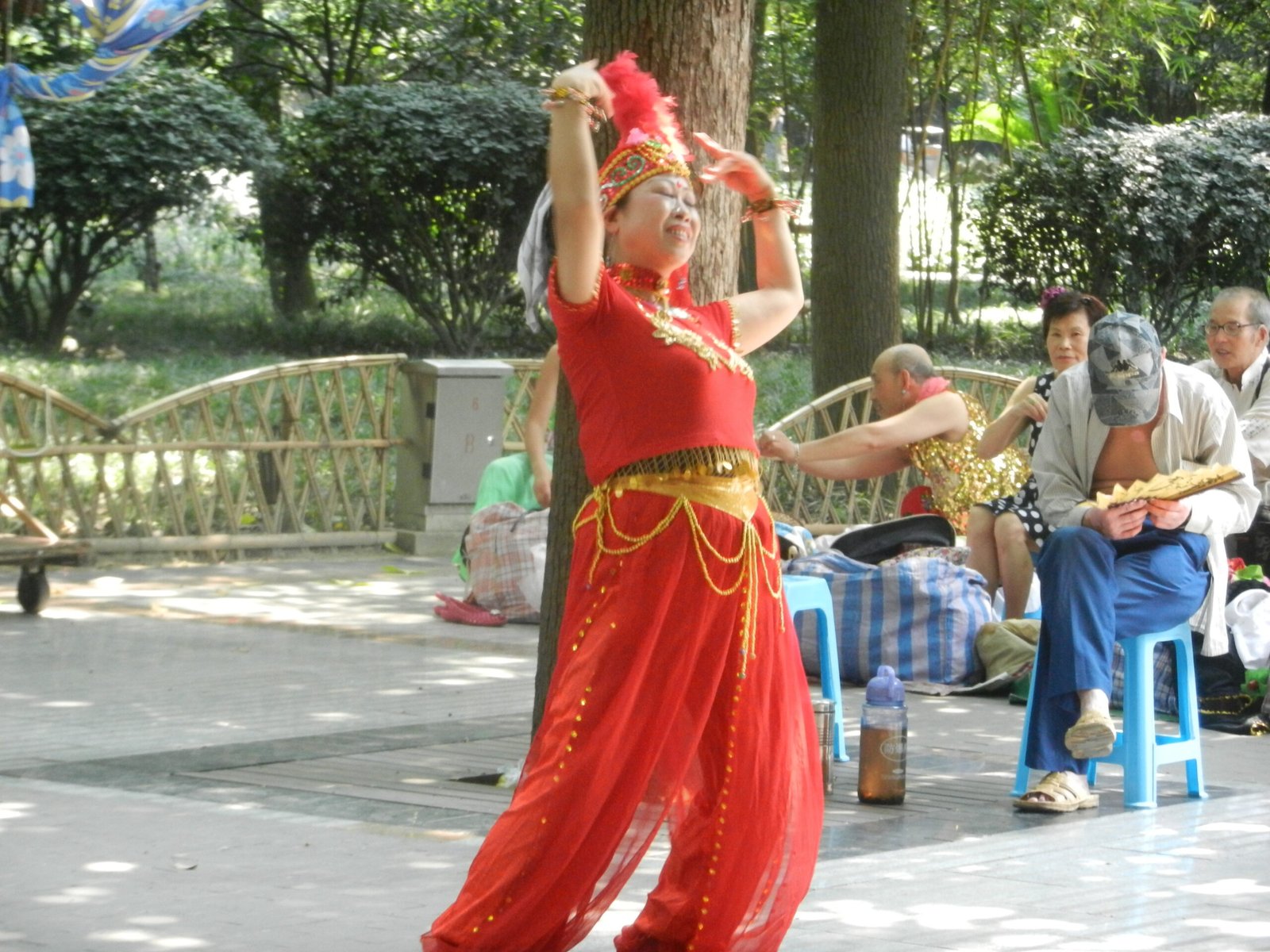
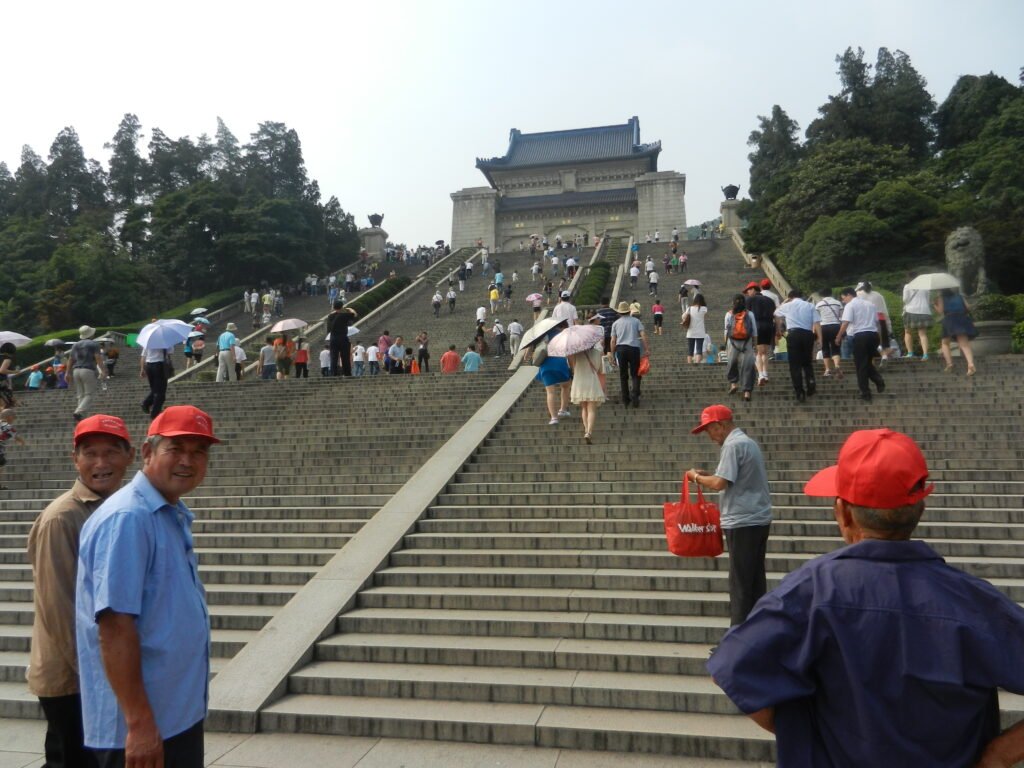
Complementing ancient Greeks’ emphasis on a well articulated and muscled physique was the assumption that exercise is synonymous with strenuous physical labor (ponos). Between 750 and 650 BCE, Hesiod had already said that hard work is man’s lot. But ancient Chinese often valued agility and flexibility more than raw strength. A group of young men were racing up to Sun Yat Sen’s tomb in Nanjing (below), one step at a time. Their lower legs moved so quickly that I couldn’t come close to keeping up with them.
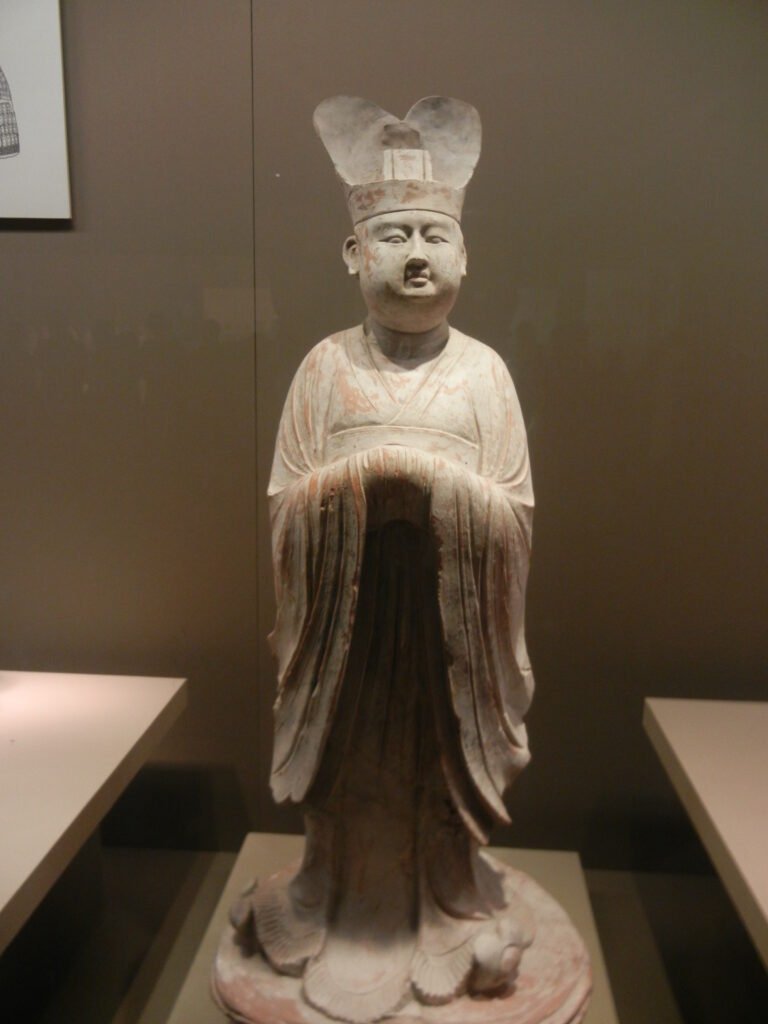
Instead of emphasizing the body’s external divisions, Chinese sculptors and painters represented the body as fully clothed. Confucians emphasized the importance of people’s roles in their relationships with each other, and attire expressed their standing.
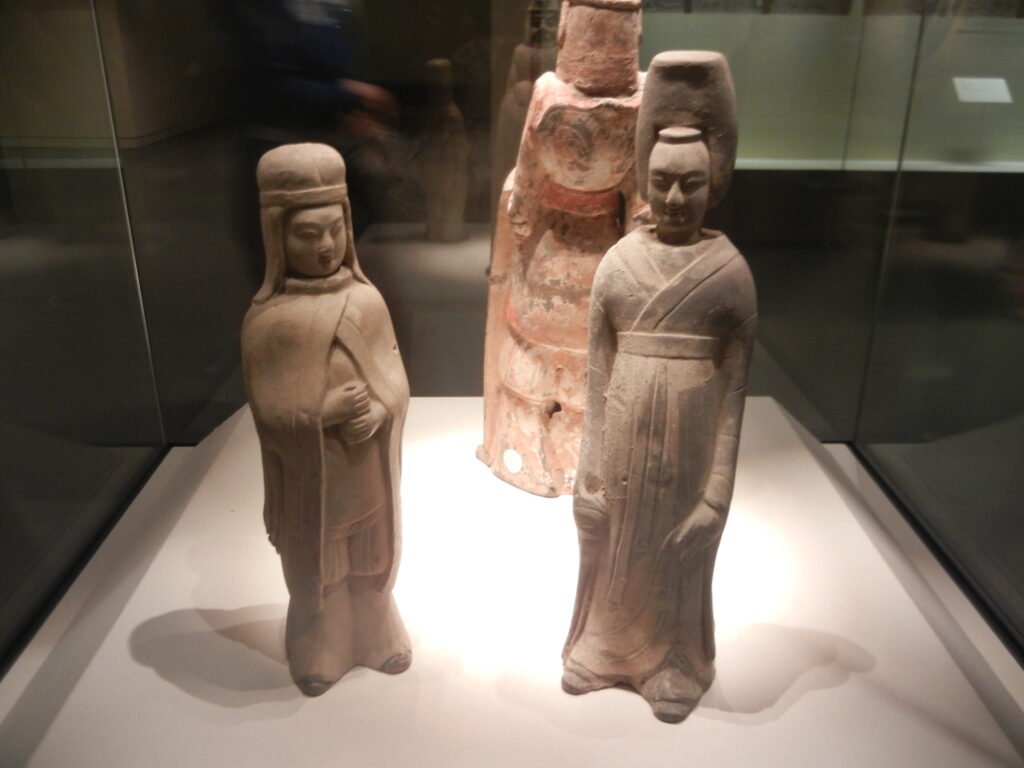
Upper-class people proudly displayed their place in society.
Qin Shi Huang’s terra-cotta soldiers and officers were also dressed according to rank.
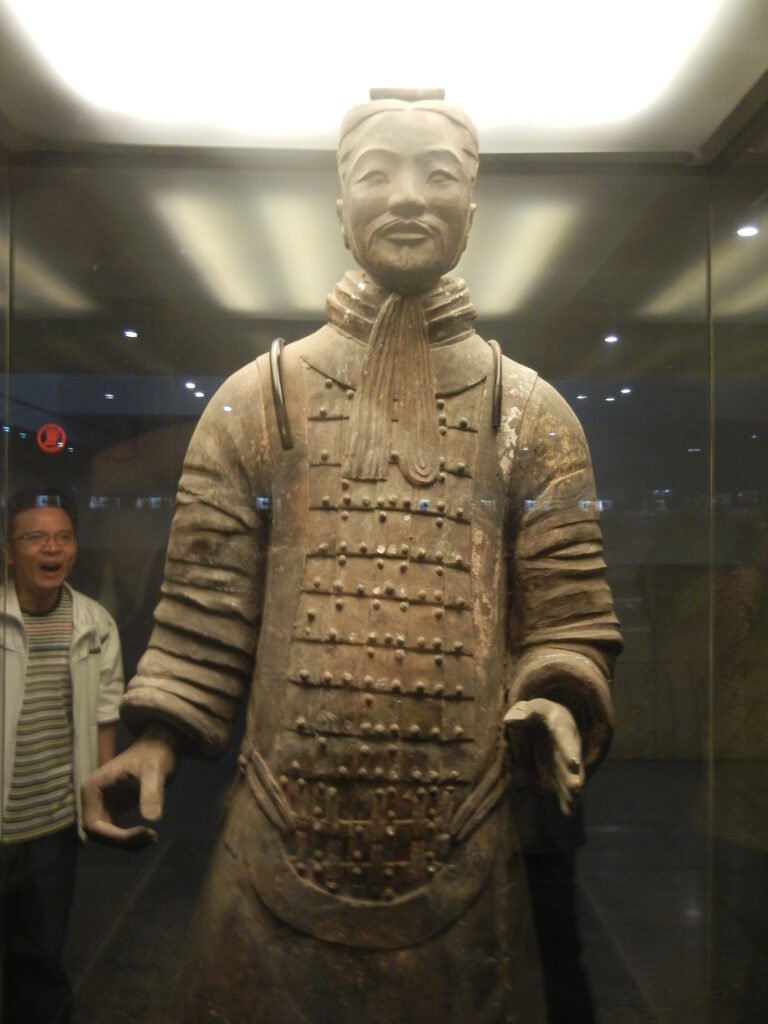
Chinese sculptors portrayed people according to their relationships with others rather than their physical strength.
As on earth, so in heaven. Celestial beings, like this dragon in Datung, were often portrayed as flowing rather than as muscled Greek gods.
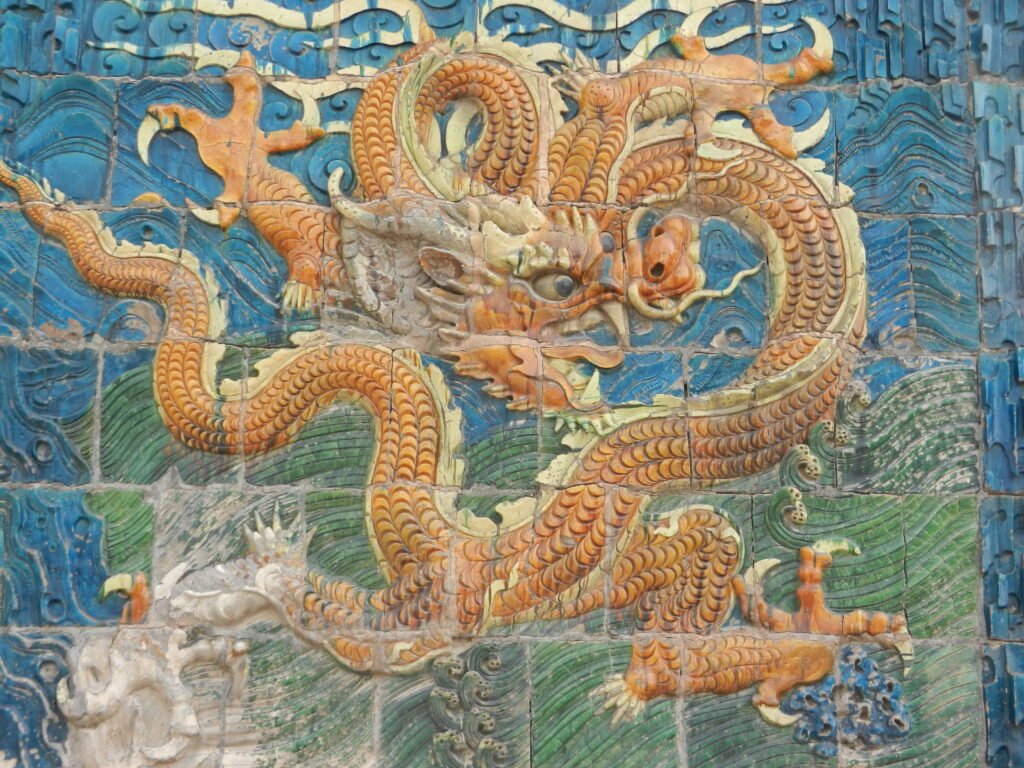
Chinese assumptions about the primacy of holistic flows of vital energies and Greek assumptions about the fundamental importance of distinctions between domains influenced what they looked for in their surroundings, how they perceived them, what physicians were trained to perceive, and what artists depicted.
Arthur Kleinman, in Patients and Healers in the Context of Chinese Culture, also wrote that perceptions of the body are shaped by the whole cultural environment. There are several Mandarin words for perceptions of the body which English lacks. One is huo qi. Huo is the common Mandarin word for fire, and qi is an ancient term for vital energy that circulates throughout the body and in its surroundings. Huo qi refers to a pathological excess of hot energy rising in the body. It also means fires of what some Chinese medical traditions have called the five internal organs: liver, heart, spleen, lung, and kidney. But huo qi also rises above the chest and into the mouth, where it produces a sense of gums swelling, bad taste, foul odor, and throat irritation.
Kleinman noted that his Chinese patients in Taiwan not infrequently referred to a somatic complaint of suan (literally sourness) in limbs, joints, and other bodily locations. When he questioned them, they denied that it meant ache, pain, or soreness. They stressed the quality of sourness as the essential characteristic.
Kleinman noted that the written character for the term men (feeling depressed) includes the heart radical enclosed within a doorway radical, and that patients pictured this character when they used the term. Their hearts felt “locked in,” “closed off,” or “suffocating behind a door.” He said that to them men meant this physical sensation and its associated psychological state.
The whole cultural landscape influences people’s perceptions and emotions. Many types of experience influence them, including language, music, architecture, ideas about nature, and how people think of categories. All of these influence each other. They’re multisensory, emotionally engaging, and integrated with the natural environment. This will make it extremely hard for AI world models to duplicate.
Each culture is unique, including African, Navajo, and Laotian. AI has a long way to go before catching up with human diversity and creativity.