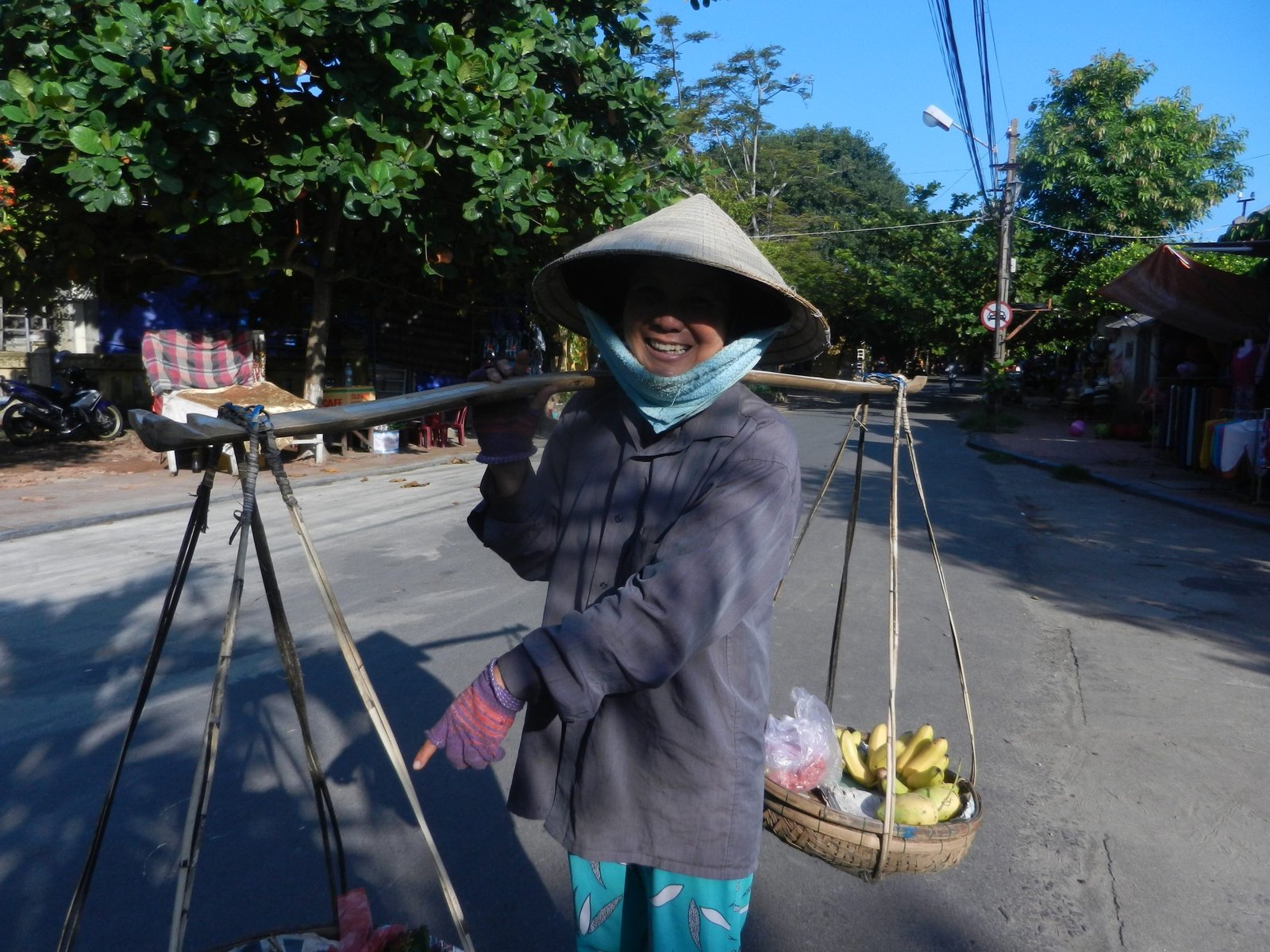
Confucians from the royal court in Hue probably would have found Hoi An chaotic if they had ventured there. Although the Nguyen Dynasty’s kings tried to create an elegant world of courtly protocols in a dreamlike natural landscape around the Perfume River, Vietnam was much more diverse and complex.
Vietnamese had migrated into the area around Hoi An since the 14th century. The Cham previously ruled it, and the newcomers adopted some of their customs. Some venerated the Cham deity Po Nagar and took up a form of Shiva worship. Many lived in Malay-style stilt homes, traveled in Cham-style boats, tilled with Cham plows, and buried their dead in Cham-style graves.
In the late 16th century, Nguyen Hoang created a new state in the central and southern regions of Vietnam and based its economy on international trade. Foreign merchants responded to the newly stabilized political order and economic prosperity there by frequenting Hoi An’s guest quarter. They took over old trading patterns from the Cham states, exchanging goods with forest tribes in the mountains to the west. The latter harvested cinnamon, areca, pepper, incense, and construction woods, and hunted for ivory, rhino horns, and deerskins. The foreign traders loaded them onto their ships and took them to their own shores.
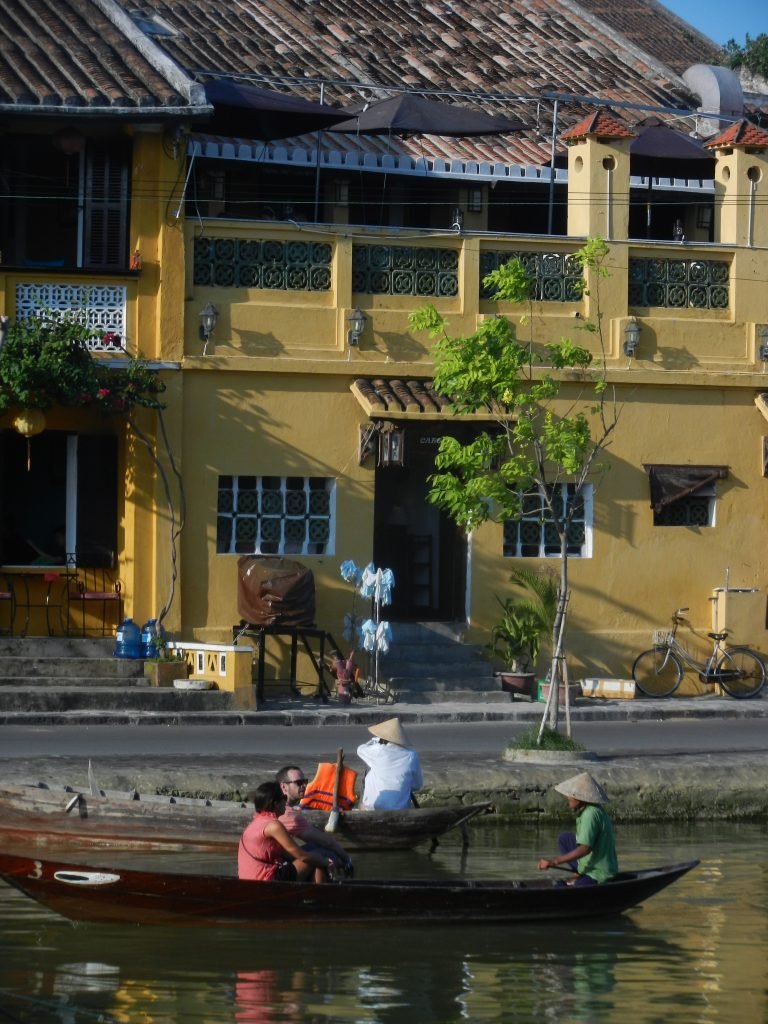
Merchants from China, Japan, and more distant places established their own communities in Hoi An. After 1639, when Japan implemented its Sakuku policy, which restricted international commerce and contact with foreigners, most visiting merchants were from the coasts of China. As August’s monsoon arrived, they transported goods from Vietnam to markets in their homelands.
People from the same region built communal centers for mutual support. The Hainan assembly hall (below), constructed in the 1870s, continued this tradition.
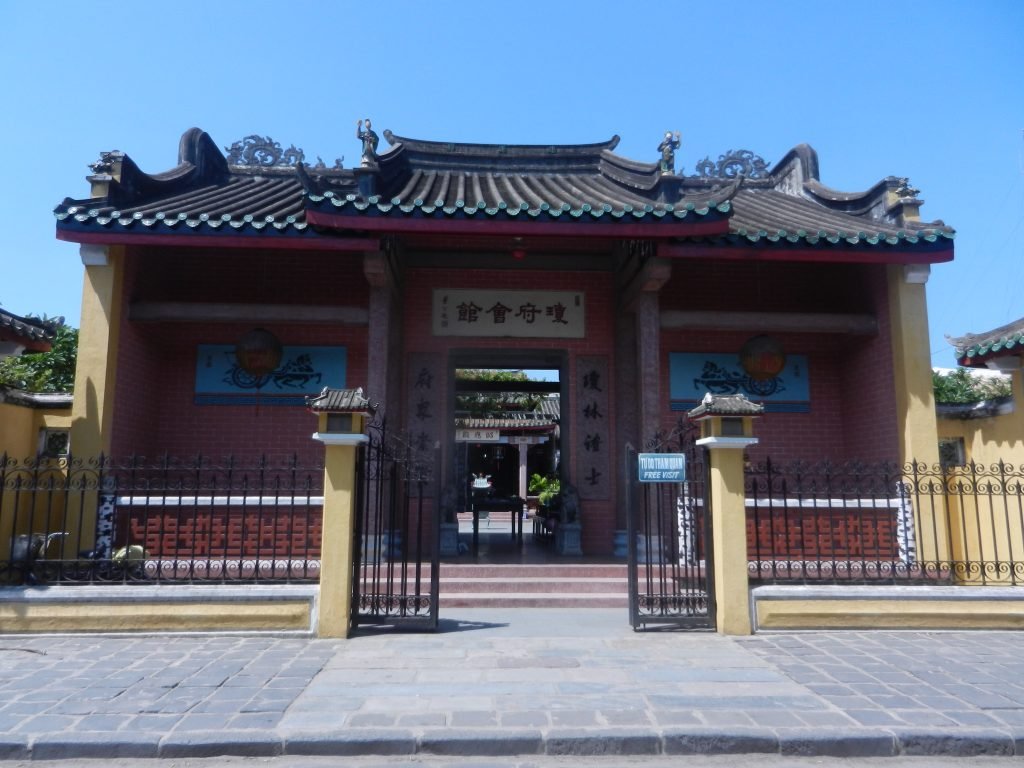
Community members bonded by gathering in its assembly hall to honor 108 Chinese merchants who were killed when they were mistaken for pirates.
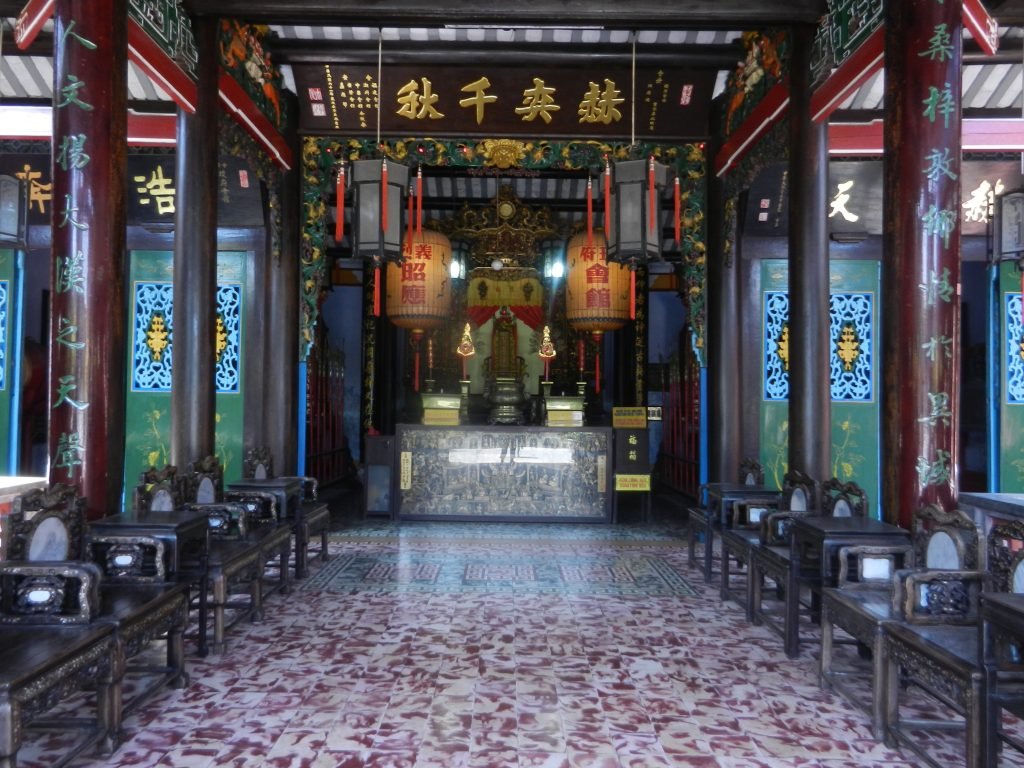
They were later vindicated and given the name deities by King Tu Duc.
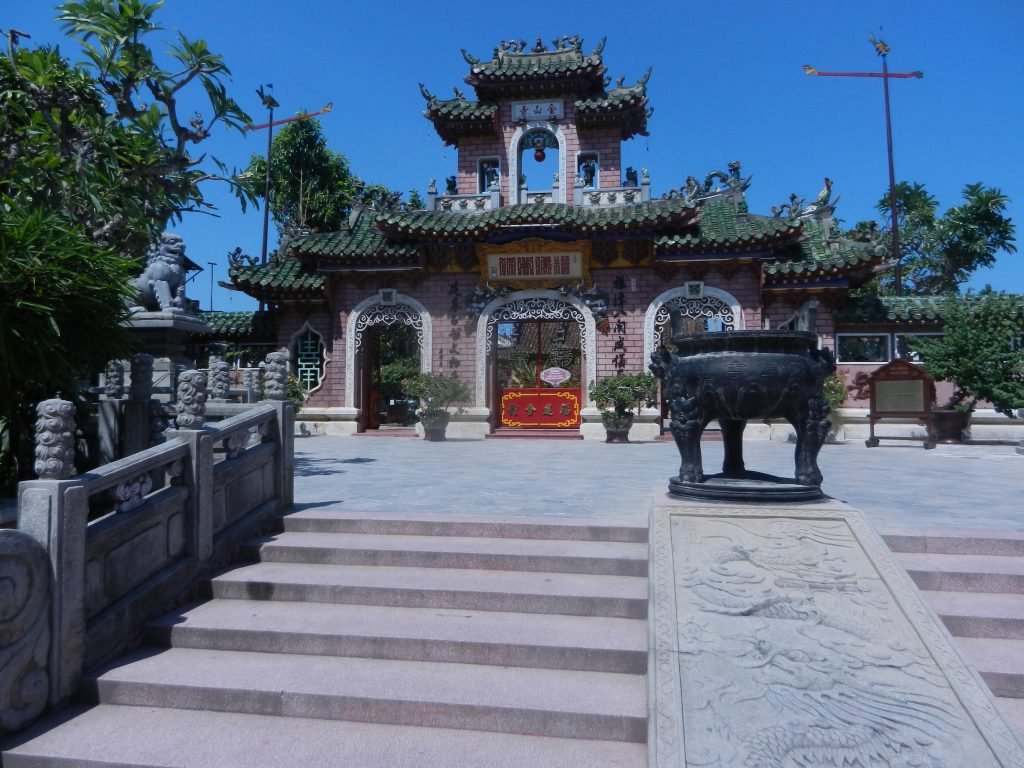
The communal house of traders from Fujian dates to the 17th century, though its entrance (below) was built much later.
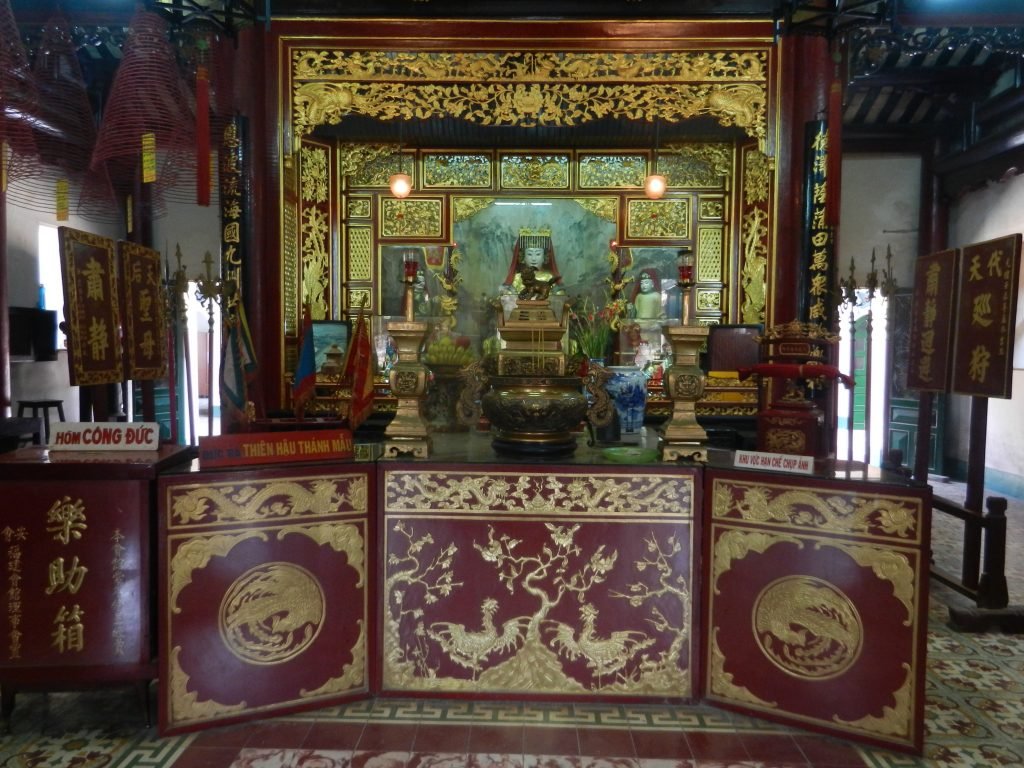
People met there to venerate the sea goddess and protector of sailors, Thien Hau (in the center of the photo below). On each side of her is a deity who locates ships in distress and warns her so she can save them. She has also been a popular deity among Cantonese, who call her Tin Hou. Several temples in Hong Kong are dedicated to her.
Another room in Hoi An’s communal house contains an altar with seated statues of founding heads of six leading families of Fujian.
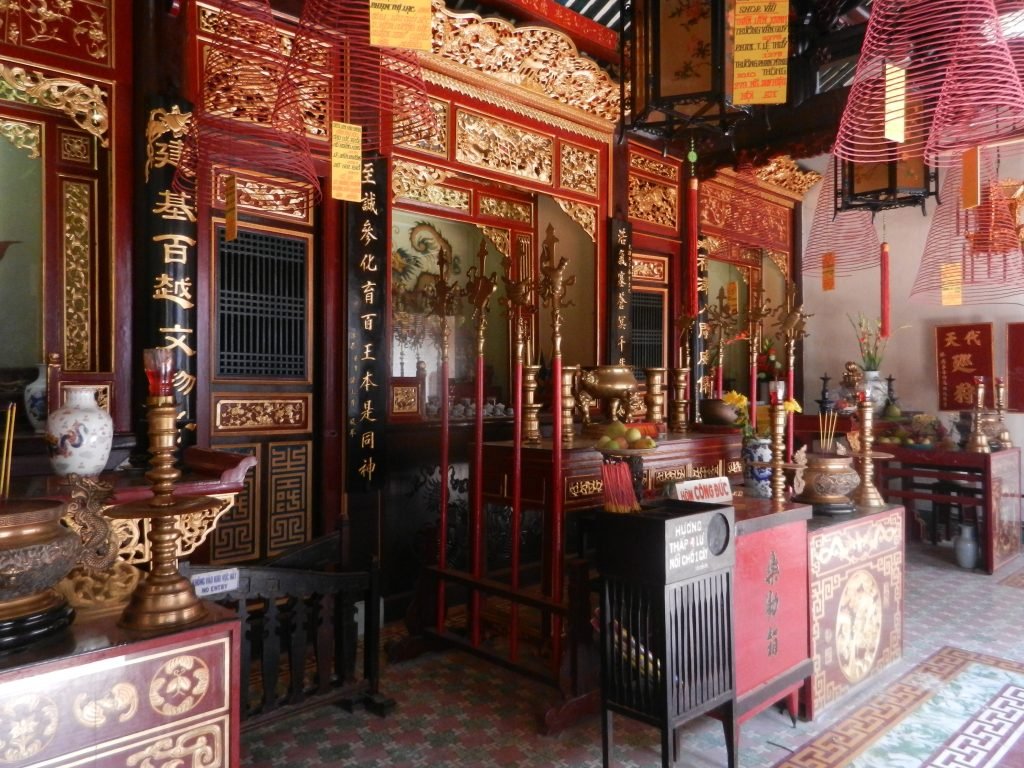
They’re behind the glass case (above). Smaller statues represent their successors as leaders of the community. All are surrounded by elegant carvings and offerings that give them reason to feel proud.
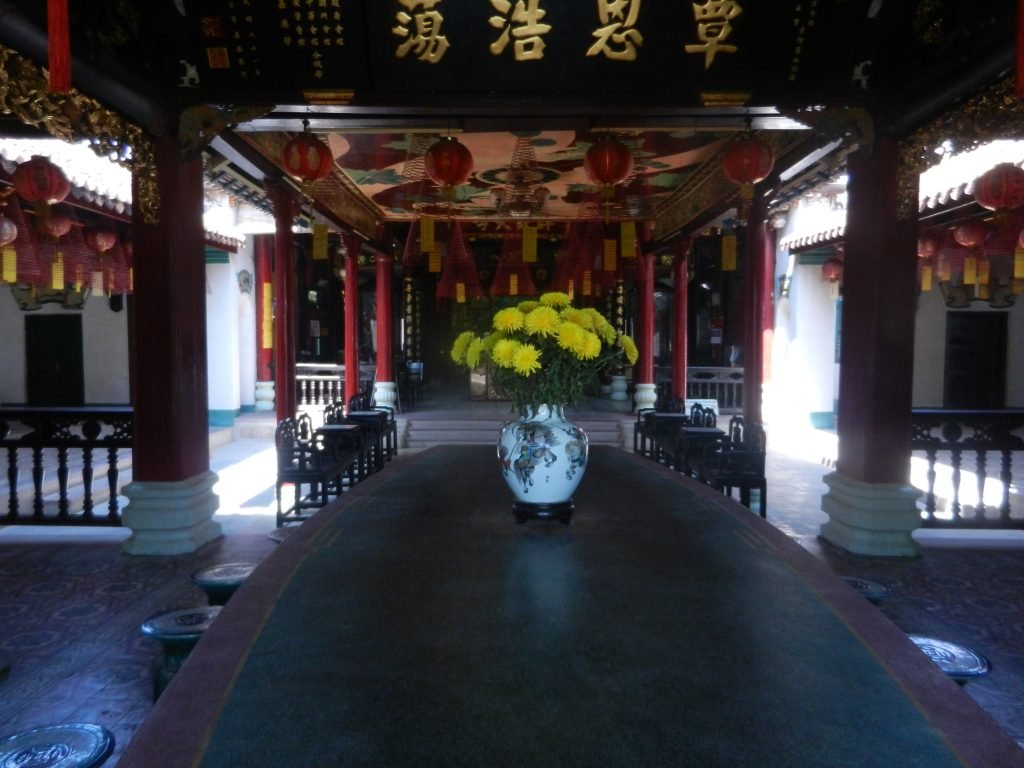
Divinities, human ancestors, and living merchants made up a complete world that people could prosper and feel safe within.
The covered Japanese bridge was built at the end of the 16th century, and it linked the Japanese and Chinese quarters of town.
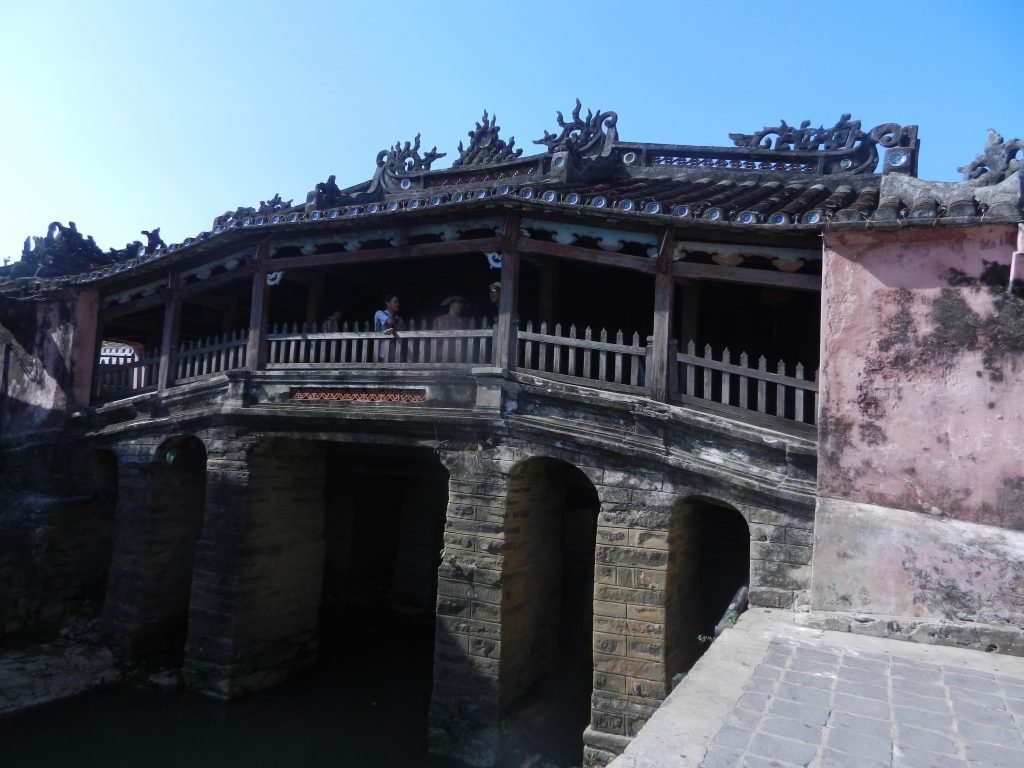
But it’s much more than a structure for connecting points A and B.
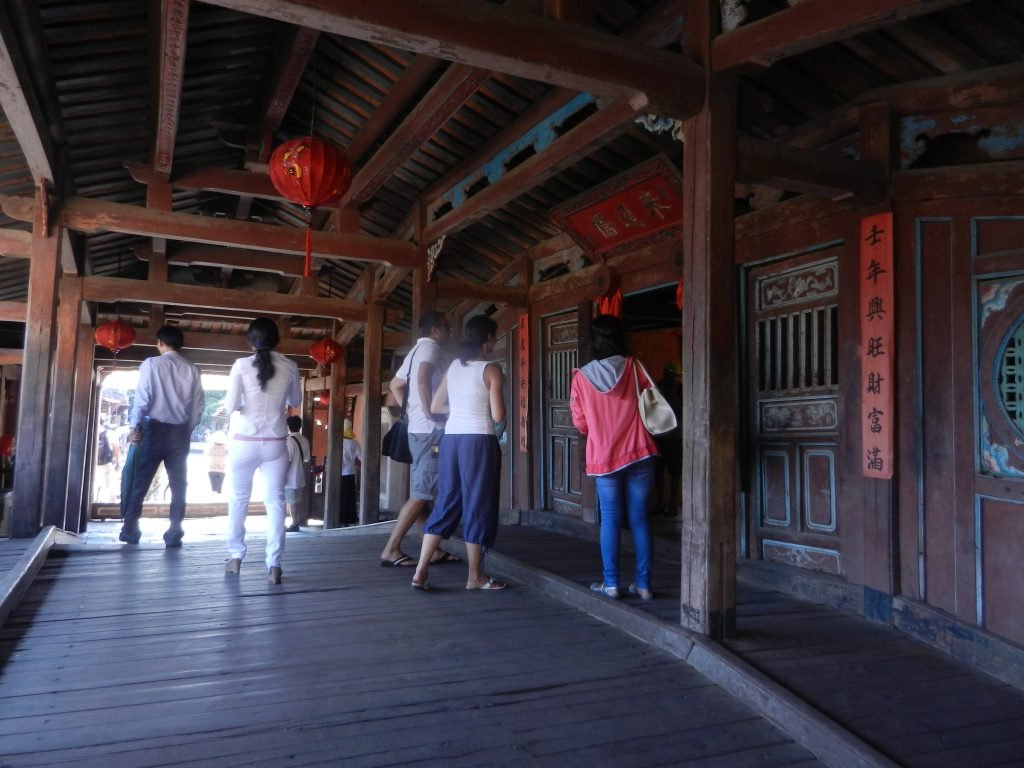
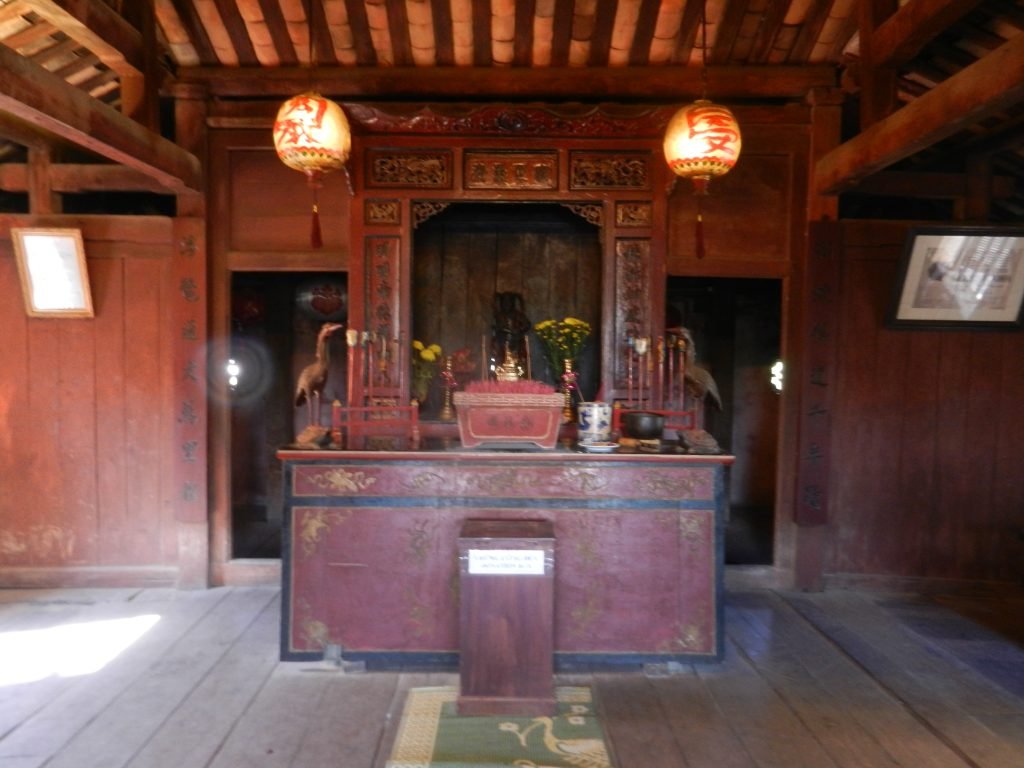
To the right in the above shot (the opposite side of the bridge from where I took the first photo) is a temple for Tran Vu, the Guardian of the North.
The bridge’s west entrance is adorned with a statue of a monkey, and the east contains a statue of a dog. Some locals have said that this is because several Japanese emperors were born in those animals’ years, while others have thought that it’s because the bridge was begun in the year of the monkey and finished in the year of the dog.
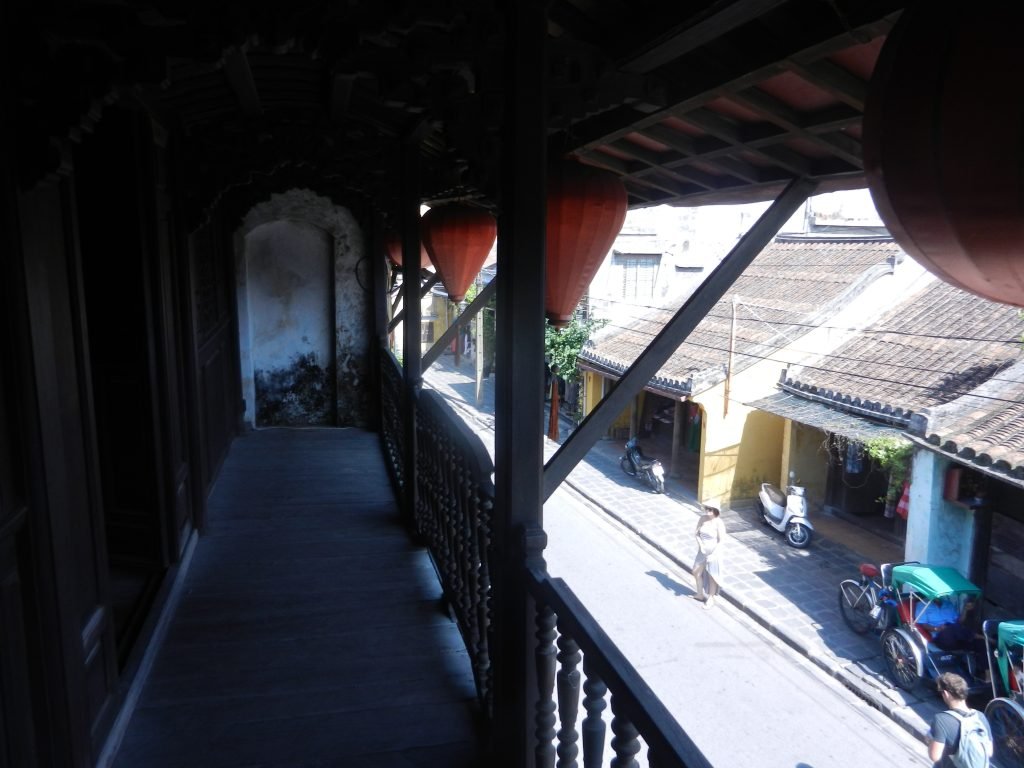
The homes in Hoi An have also been self-sufficient worlds that have integrated all domains. Family members and guests in the one below could gather in the upstairs area around the courtyard–
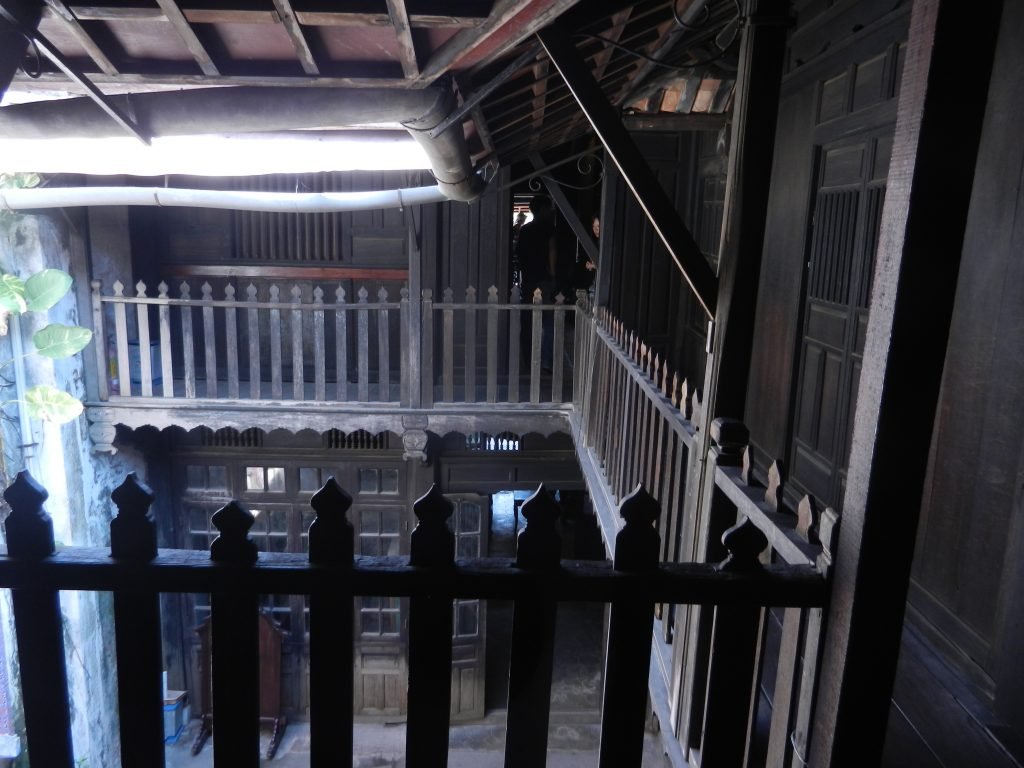
–or gossip about neighbors from the comfort of the shaded balcony.
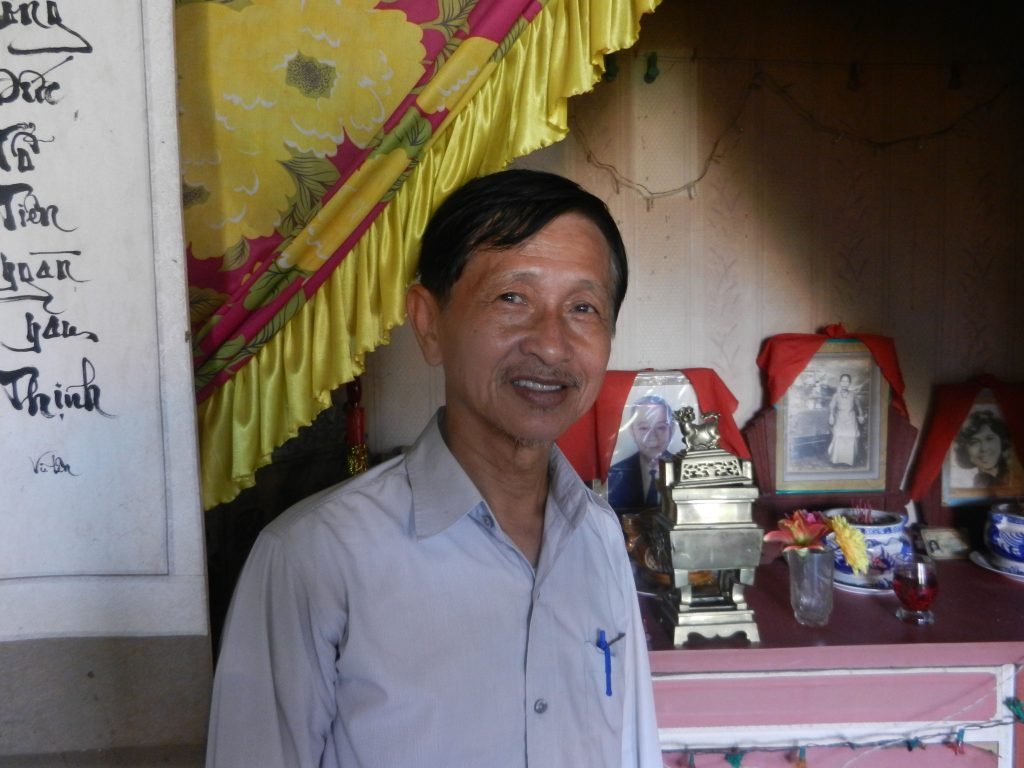
This gentleman owns and lives in one of the old homes. He has an altar in a back corner of his living room, where he honors past family members. The pretty woman on the right was his sister and a nurse who was killed in the war in the early 1970s.
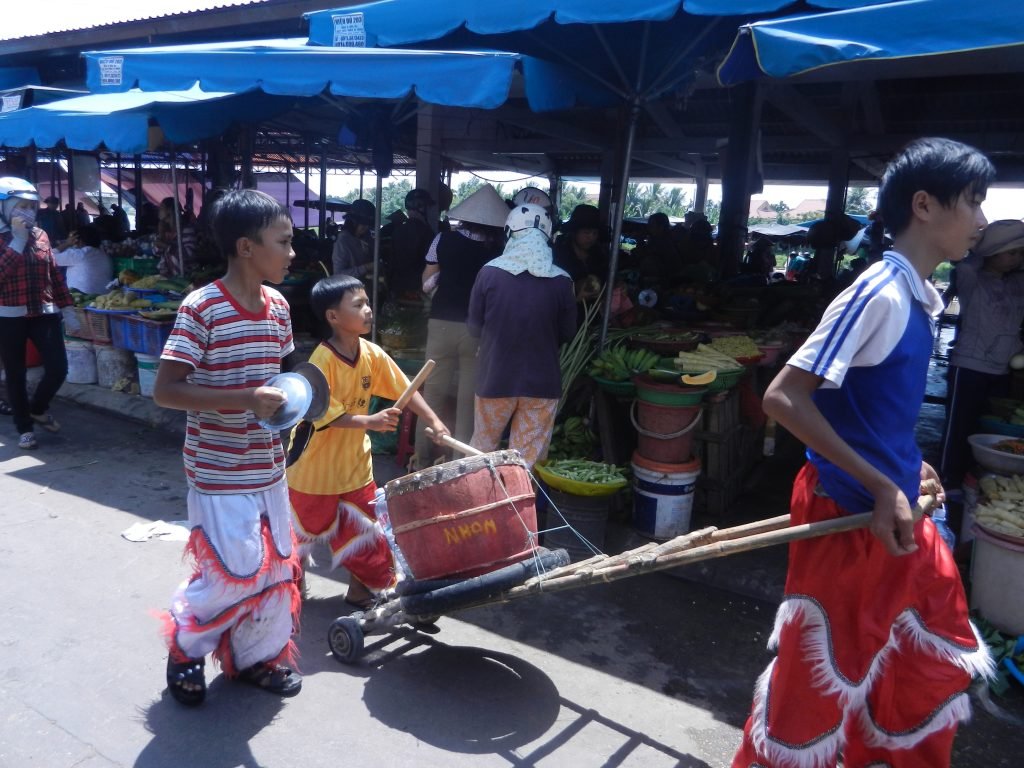
Spaces in Hoi An have not been abstract. They’re fully lived as holistic worlds that integrate people with divinities, multiple cultures’ traditions with each other, and the present with the past. A lot of these spaces are multisensory. Festivals are common in Hoi An.
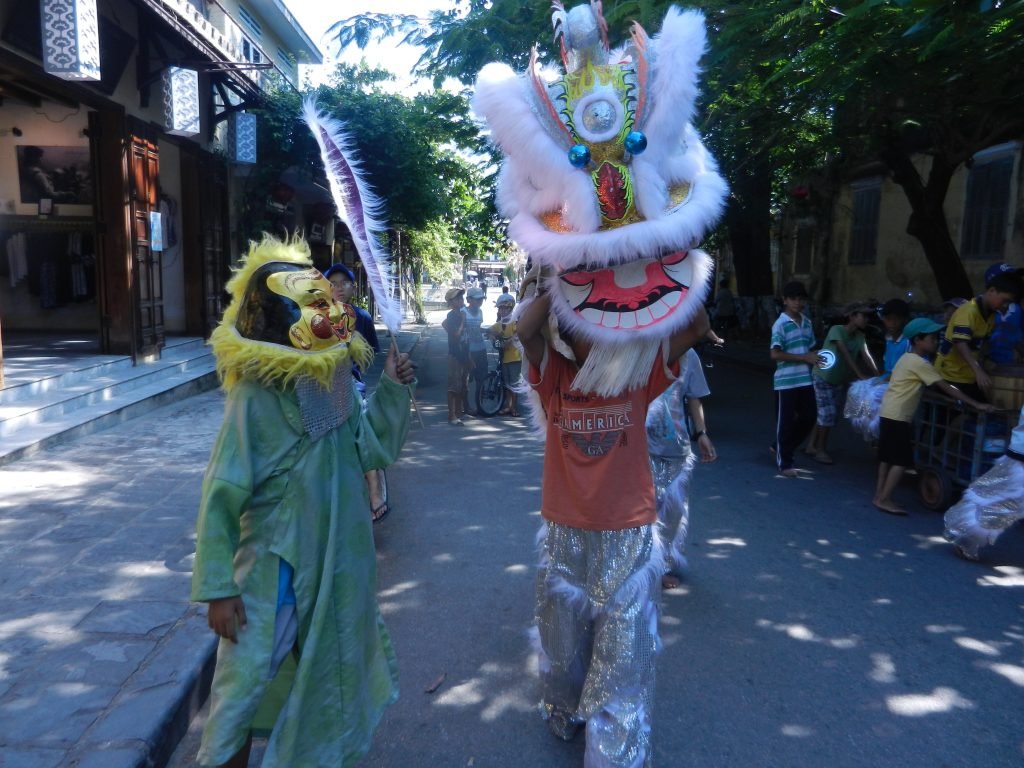
They add a lot of sounds and motions to the surroundings.
It will be extremely hard to incorporate all these aspects of space in AI’s large language models, since its meanings:
1. Include several senses besides vision.
2. Extend through many centuries and cultures’ traditions.
3. Extend into people’s prolific spiritual imaginations.
A lot of other cultures’ ideas of space are also too multifaceted to be captured by current LLMs, including African, Native American, and Thai. The three-dimensional spaces that many Westerners have treated as most exemplary have been equally multifaceted. T.S. Eliot once said that the best way to see another country is to smell it. The world is still much too rich for AI to completely grasp.