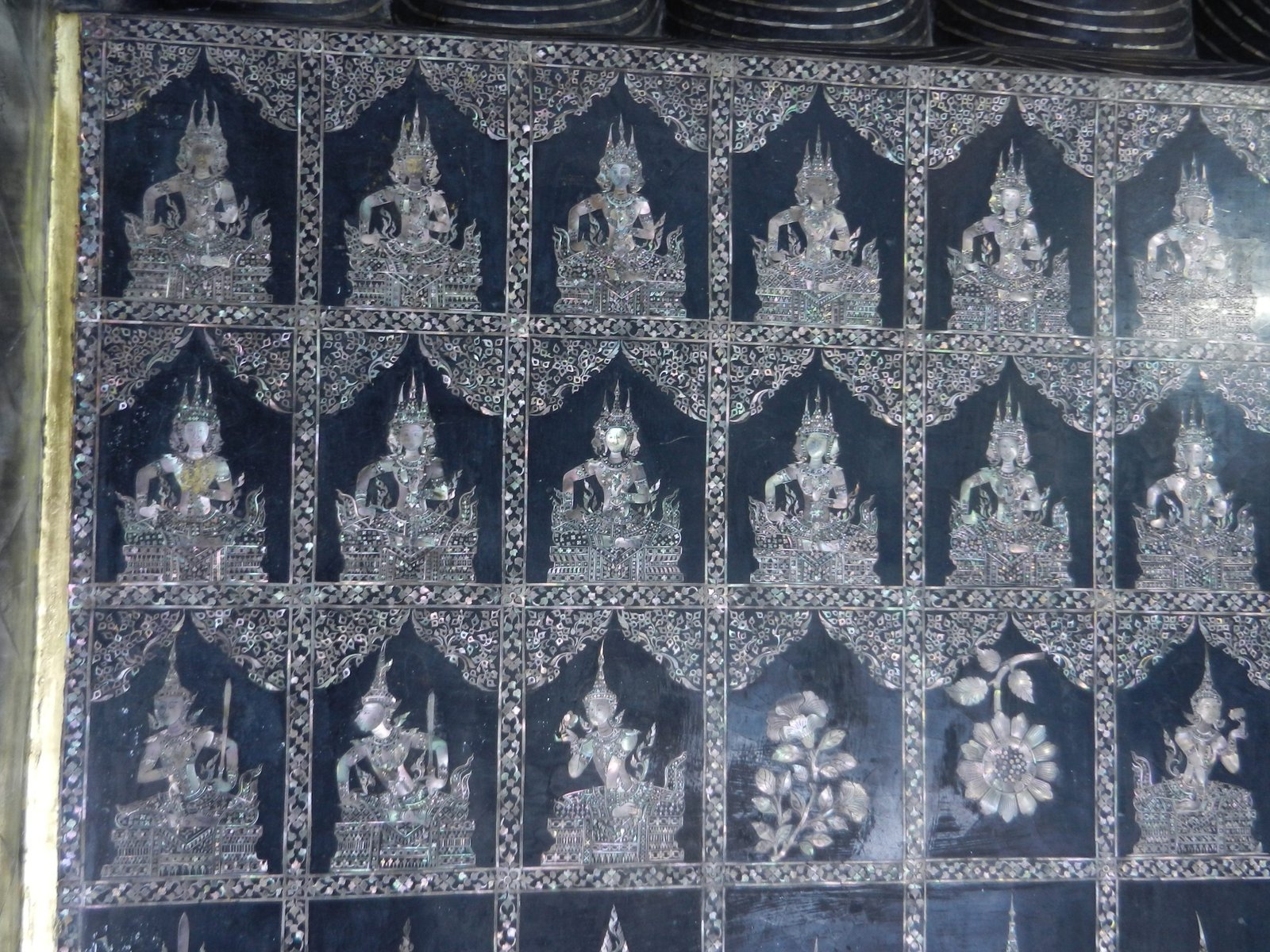
Greek gods and Indian concepts of the universe’s vastness never cease to wow, but-
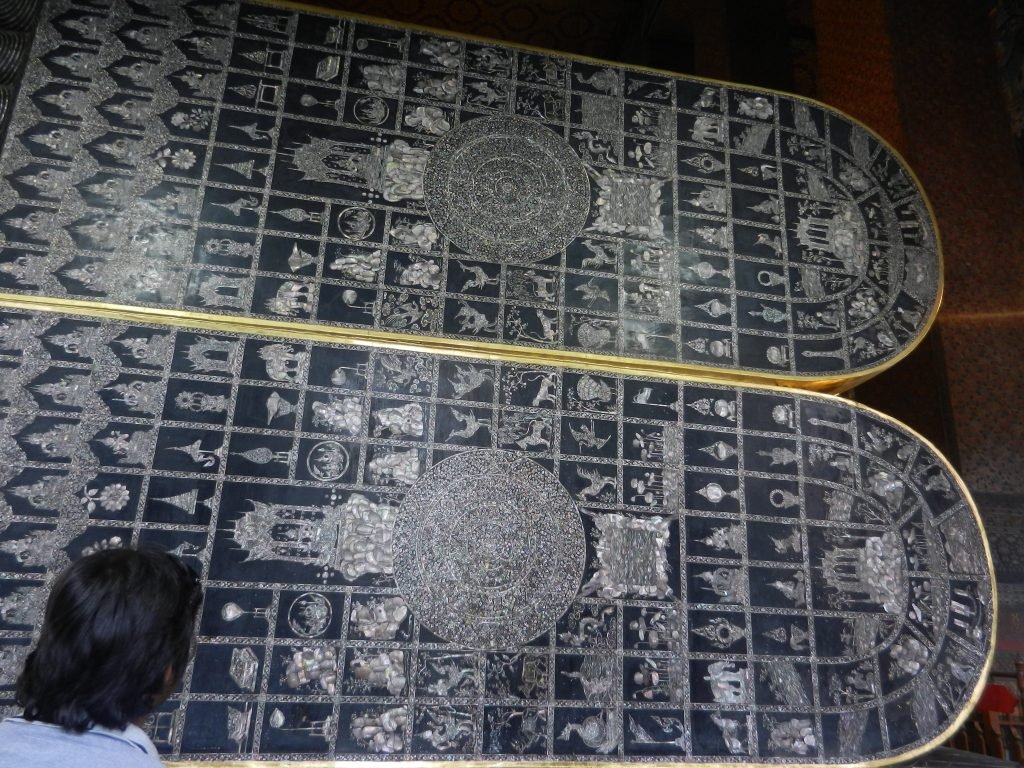
-a look at the Buddha’s footprints in Wat Pho reveals some of the most elegant art anyone on the planet ever created. Thais turned ideas from India into its own way of processing reality. In contrast with builders of the largest Khmer temples, Thai culture usually avoids monumental things and focuses on the human scale. But I find its creations as magnificent as anything Cambodians, Westerners, Indians, or Chinese ever made.
The soles of the statue’s feet contain a treasured art form in Thailand. Legend says that the Buddha traveled to Sri Lanka and left his footprint on a mountain called Adam’s Peak to show that the island is important for spreading his teachings. Ancient Indians fashioned the Buddha’s footprint, which often symbolized him before they began to depict his images about 2,000 years ago. Thais later added their own aesthetics to this art form. The footprints in Wat Pho are full of mother-of-pearl inlay, which shines silver, rose, and light green hues against a black background. The designs include gossamer images of trees, plants, birds, Mt. Meru, Indra’s palace, and intricate temples. Thais circulated stories about the Buddha wandering through their land, leaving his footprint in different places, and they produced it in wats where they thought he had taught. These artworks thus unify the country in a geography of benevolence, as the Emerald Buddha does.
Images in Wat Pho’s Buddha’s footprints include the 108 auspicious signs, the wheel of Dharma (you can see it in the center of the feet in the above photo), and Mt. Meru with a palace on top (in the heel). Thais used mother of pearl inlay to make all this symbolism both shimmering and dainty.
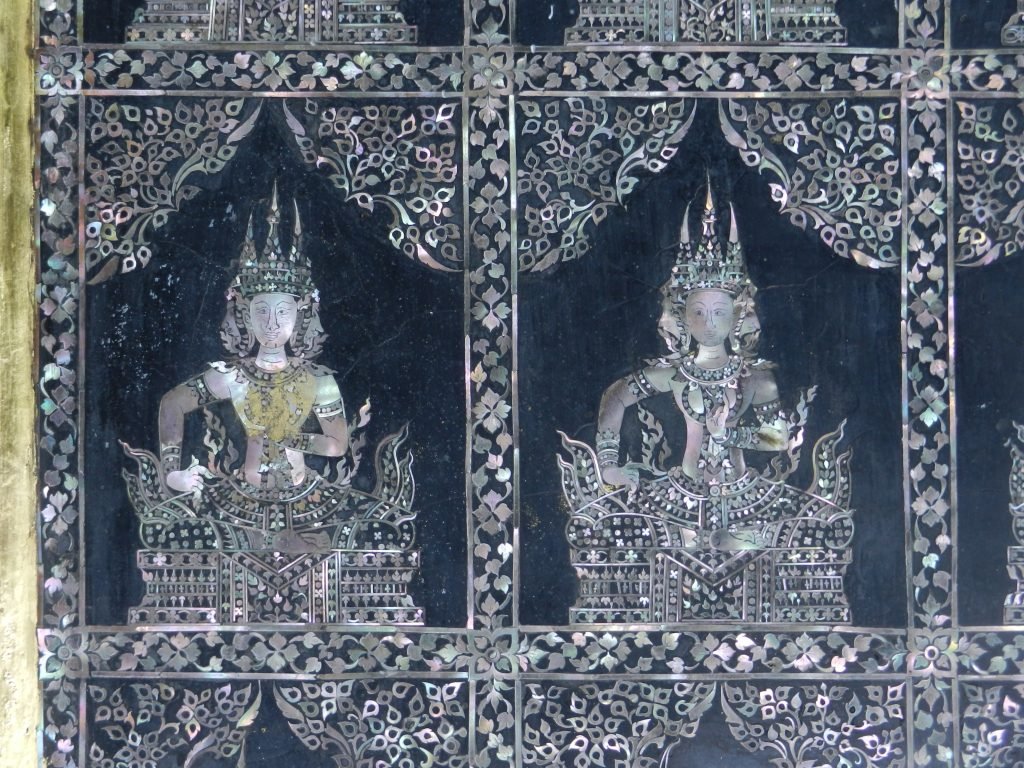
Many divinities surround the wheel of Dharma. The ones above are frontal and stately like meditating Buddhas.

But these are more animated. Like a lot of Thai art, heaven is both stately and fun.

And it gets even more fun. These half bird-half human figures are called kinnari. They’re celestial musicians and lovers.
These images translate the huge Indian cosmos into elegant lines and soft shimmers.

The animal kingdom is also elegant in the Buddha’s footprints at Wat Pho. Beasts are as luminous as the celestial beings. Thai art makes everything enchanting. The more you explore it, the more wondrous it becomes.
Thai art isn’t based on the three-dimensional perspective that developed in the West. It’s not as analytical. Instead, it allows everything to be equally focused on as the viewer’s gaze meanders over the scene.

This applies to real critters, and-
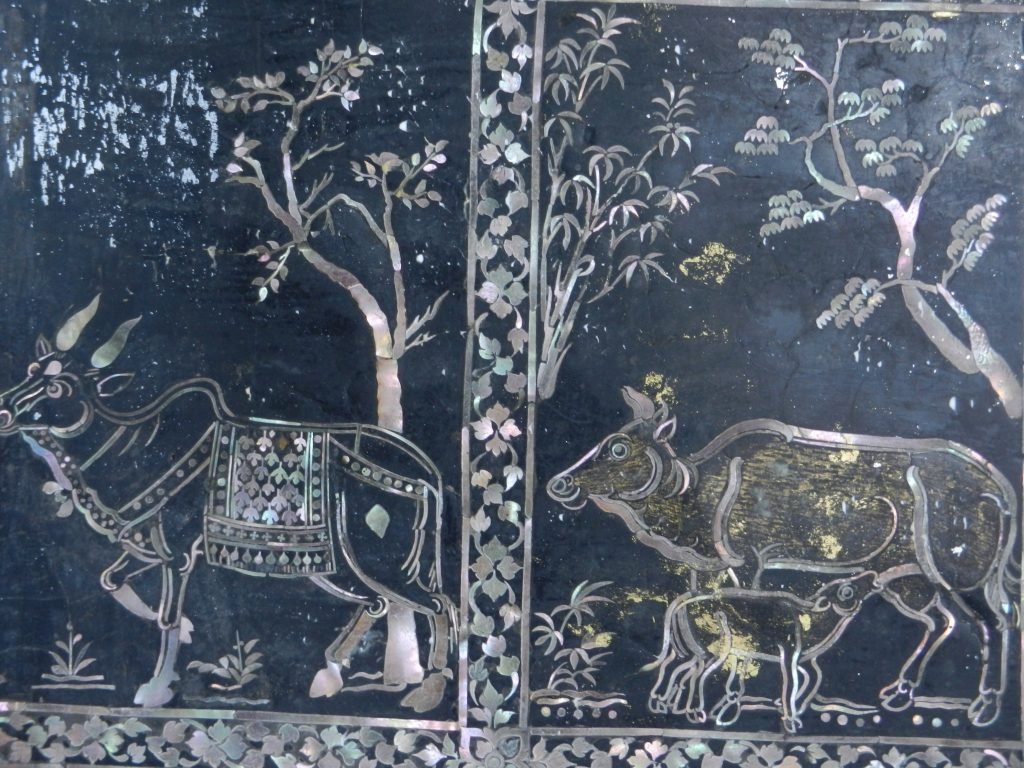
-imaginary ones.

It also applies to the natural environment.
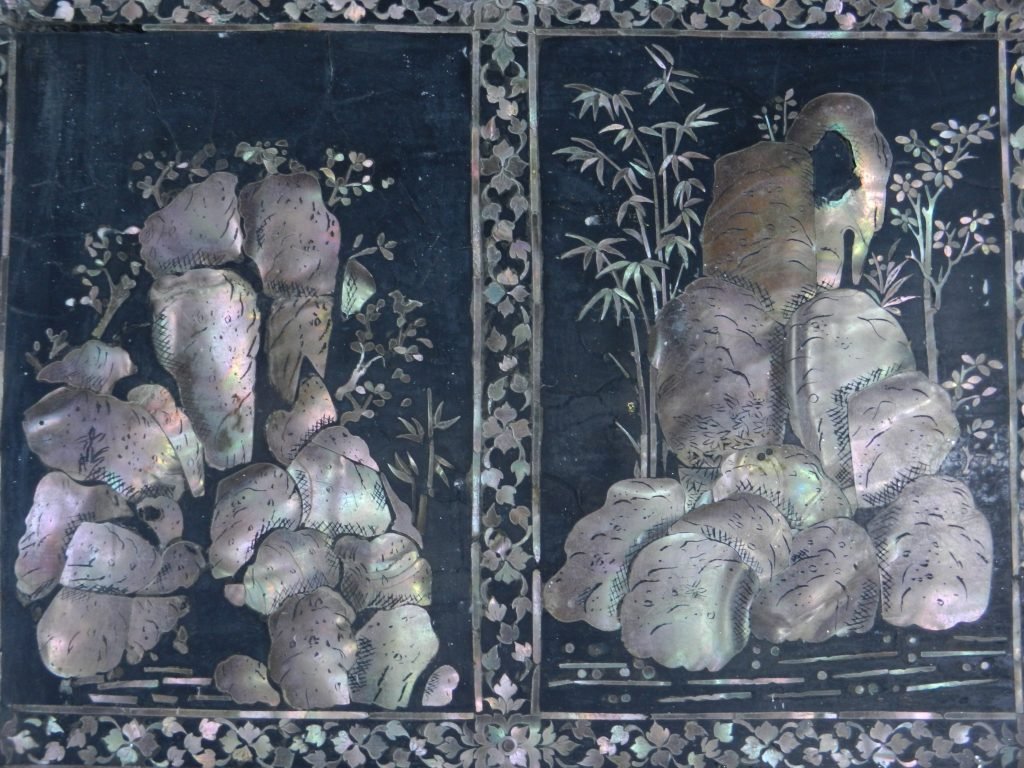
Stones in Wat Pho’s Buddha footprints glitter as though they’re alive.

And vegetation shines so much that it seems as permanent as the stones.
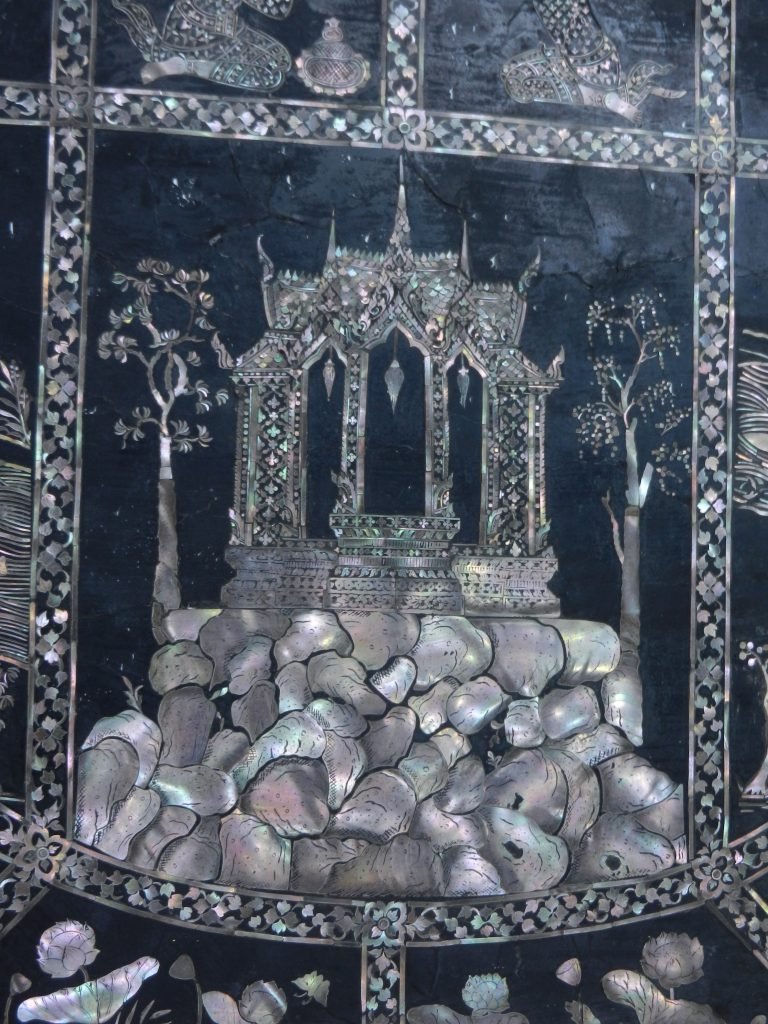
And the stones of Mt. Meru are as radiant as the palace they support. Mt. Meru in Indian mythology is as almost incalculably vast, but Thais made it pretty and elegant.
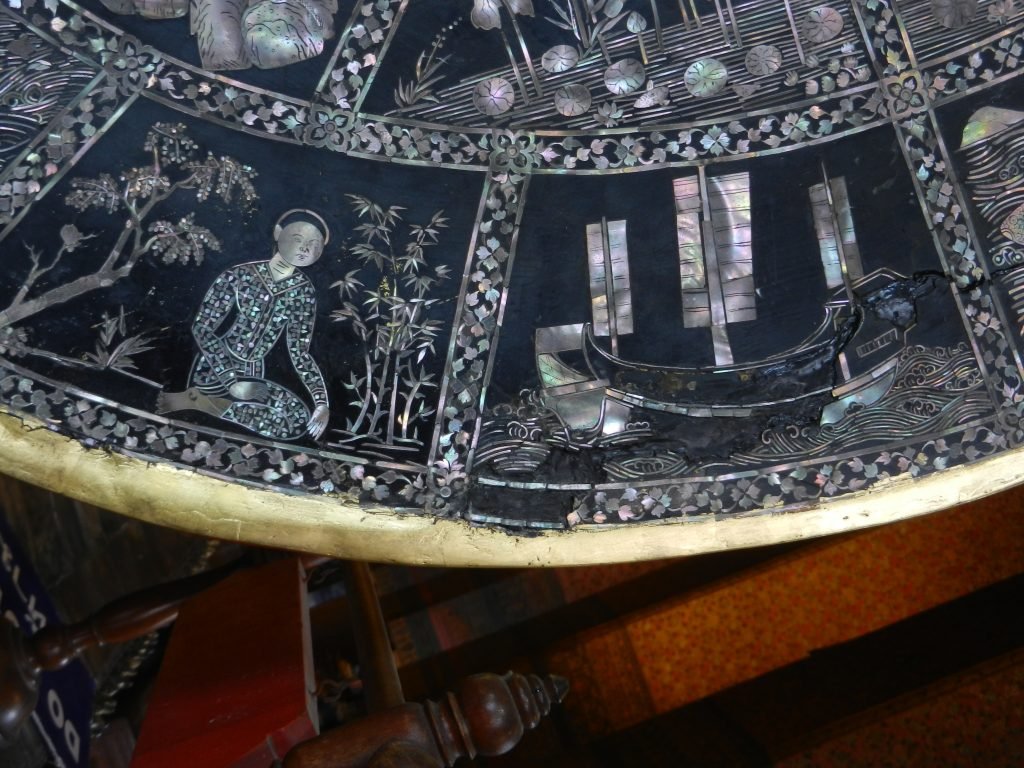
A lot of Thai art makes everything it touches enchanting, from the vastest panoramas Indian imaginations could whip up to the most ordinary settings. This trait is very deep, going back to origins of Thai culture. It can be found in many other media, including literature, architecture, and sculpture.
You can also explore perspectives from other underappreciated cultures, including Vietnamese, Malay, African, Islamic, and Native American. The more you look At/With/Beyond different perspectives, the more they shine on each other and expand into an infinitely luminous world.