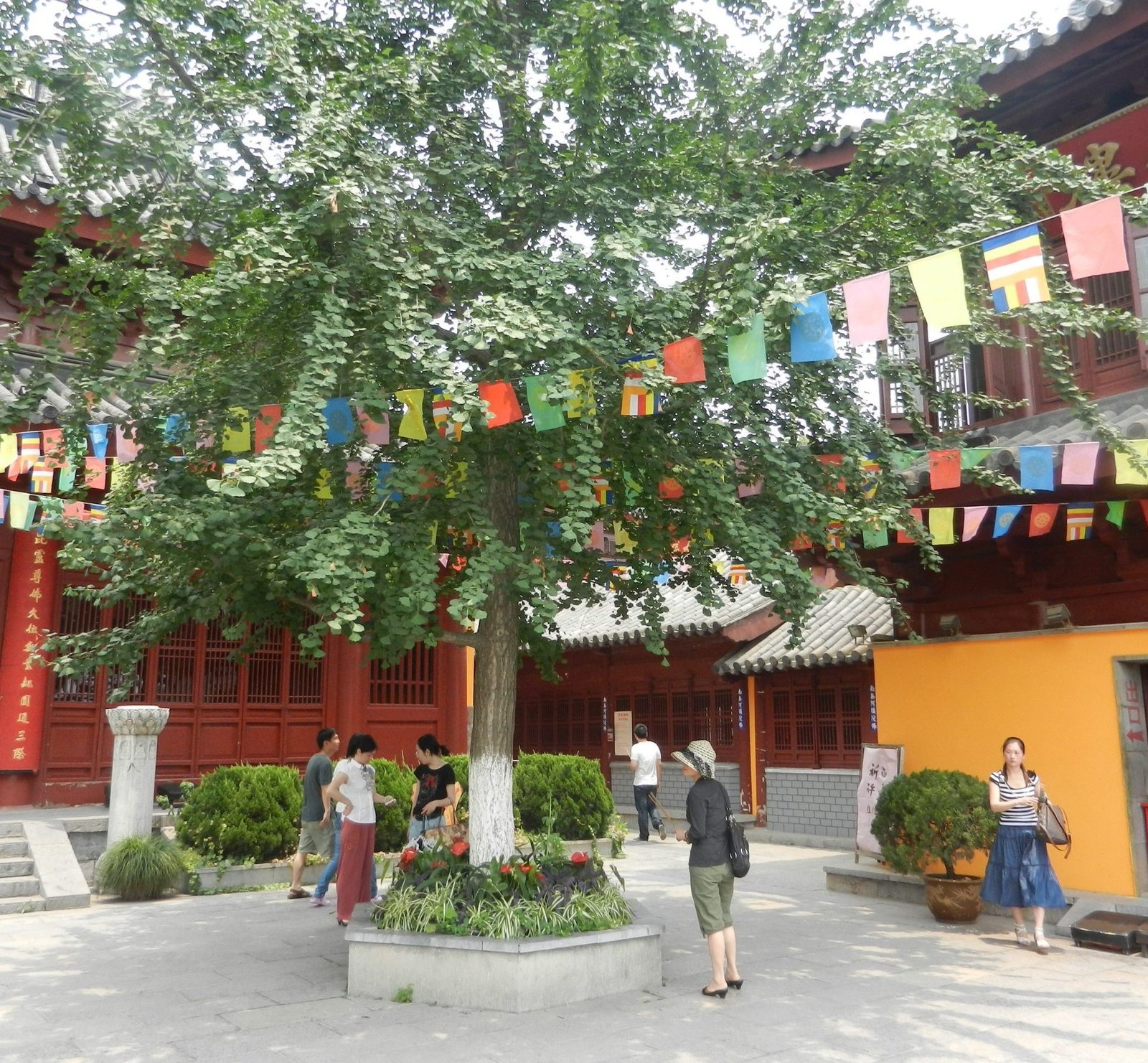
A lot of people have heard of Nanjing because of the massacre in 1937-8.

But the city has a rich history that goes back to antiquity. Several prehistoric sites have been found around it, and it grew into an administrative hub when the Qin Dynasty unified China in the third century BCE. It had a lot of influence on Chinese culture, so it was high on my list of places to explore.
Nanjing is in the eastern part of the Yangtze basin, near modern Shanghai. This area has been a major trading hub.

Merchants in the cities around the Lower Yangtze made a bundle while trading with each other and the rest of Asia. The economy in the region became increasingly based on money, and merchants competed with the older aristocratic families for prestige. They spent lavishly and commissioned lots of art. But these were no parvenues buying pink Cadillacs. Nanjing’s natural environment provided high standards of refined beauty.
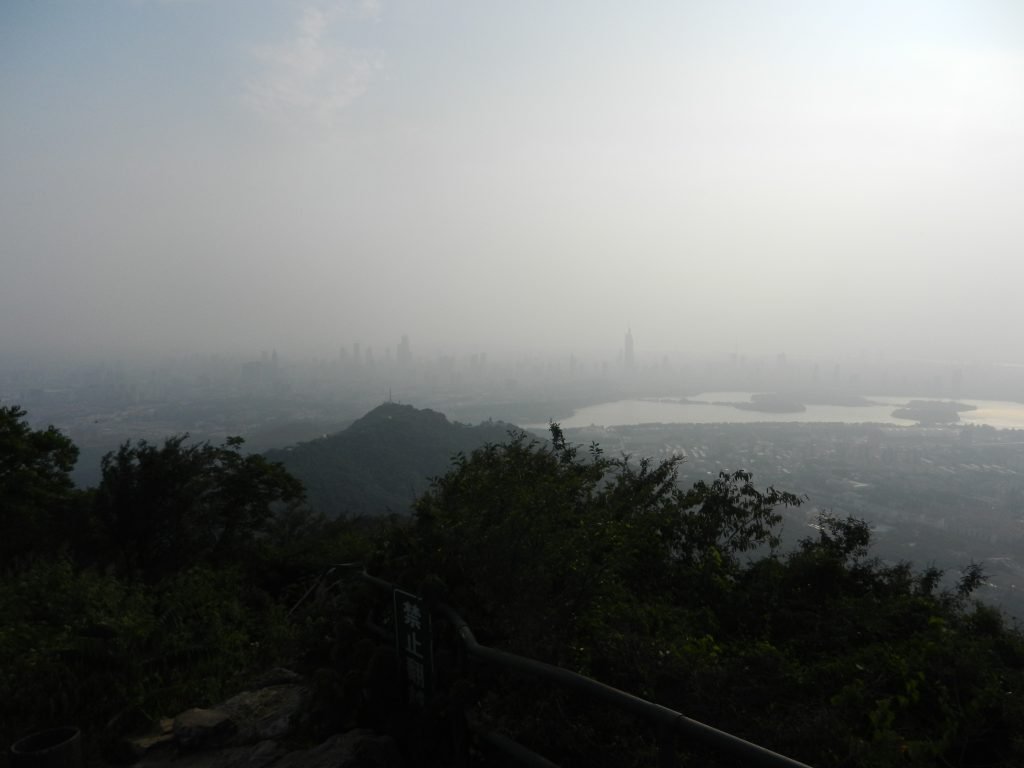
Purple Mountain (Zijin Shan) rises near the city’s center. It’s often enveloped in mists, as it was when I shot the above photo. Small lakes also grace it.
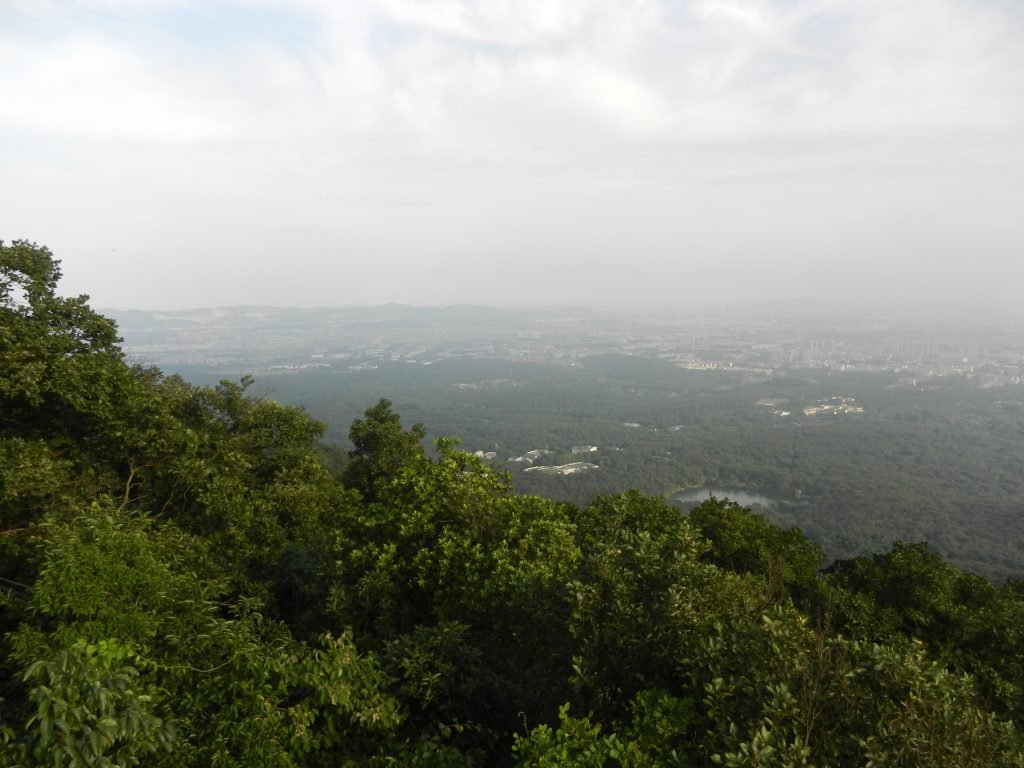
Purple Mountain is only 1,467 feet high, so it’s on a human-scale. Its mists, lakes, and rolling slopes blend with the city and reinforce Chinese artistic traditions that integrate nature, worldly life, and spirit. A hike to its summit is an easy day-trip from the center of town. Buddhist and Daoist temples were built on its sides, and people could go to them for retreats.

So residents of Nanjing and other cities on the Lower Yangtse developed ways to express views of reality that treat nature, culture, politics, and spirit within an integrated whole. This view of reality was already old then–very old, going back to the Yangshao Culture. But new ways of expressing it emerged as Nanjing thrived, and it added to the richness of Chinese civilization.
When the Han Dynasty disintegrated, a lot of people migrated from the northern cities to the Lower Yangtse. Merchants made up for their loss of the Silk Road in the west by developing maritime trade with Southeast Asian states, including Funan in what is now southern Cambodia and southern Vietnam. Books were written that detailed the places they ventured to, and these texts were so influential that the Chinese emissary Zhou Daguan described the same topics and largely put them in the same sequence nearly 1,000 later when he visited the Khmer capital in 1296-7.
The novelties that Chinese encountered in Southeast Asia between the Han and Sui dynasties challenged models of the universe that were based on correlations between different aspects of reality, including directions, seasons, colors, geometric shapes, and musical notes. The goods that merchants were bringing back to the Lower Yangtze were too varied to be placed into a static system of categories.
In the mid-sixth century CE, rebels toppled the Liang Dynasty. It had been riding the crest of the Lower Yangtze’s prosperity, but the wealth was unevenly distributed. China’s political center shifted to the west under the following Sui and Tang dynasties–to Xi’an and Luoyang. But art from Nanjing and other cities in the area set standards for integrating all domains into a harmonious whole before the great Tang and Song artists took their first breaths.

I learned to carry a guitar at all times in China because the people appreciated music deeply, and it was a great way to make friends.

And having a jam in some of China’s most scenic places felt ambrosial, especially when people stopped to listen. The good vibes in Nanjing created one of my favorite “rockin’ with the immortals” moments.
Nanjing felt different as soon as I arrived. It felt more like Beijing after exploring several old cities that were less developed. Glitzy office towers, modern stores, and neon signs lined both sides of the street during the taxi ride from the train station. I had mixed feelings because I enjoyed being immersed in the quieter towns. But Nanjing quickly grew on me.

Many of its streets wind, and lots of trees line them. They also bustle with a lot of students. These three characteristics reminded me of Berkeley. Nanjing is a university town, and its students give it a cosmopolitan and optimistic air.

I met a family from Tanzania at Emperor Hongwu’s tomb. The parents were visiting their daughter, who had studied at Nanjing University for four years and was about to get a degree in international business. She beamed as they explored the grounds. People were coming to Nanjing from other continents to build their careers.

Nanjing can boast a large crop of skyscrapers near Purple Mountain. The Zifeng tower, at 1,476 feet, is nine feet higher.
But not everything was rosy when I was there. A large group of elderly people demonstrated in front of the government building, and several were yelling in the face of a policeman who stoically listened. The young and educated can have a good time, but seniors without marketable skills and migrants from the country are struggling to get by.

However, Nanjing has given China a lot of cultural wealth. Since the Lower Yangtze was far from Central Asian armies that bedeviled Europe in the fifth century CE, it was able to maintain high standards of literacy and urbanity as Rome’s literacy rate and economic output plummeted. Groups of poets congregated in royal palaces, and some opened up new perspectives. Cao Zhi made his own experiences central in his poetry. His failed political career made the tragic self he portrayed more poignant. Ruan Ji deepened lyric verse to make it seem universal, providing insights into the human condition throughout history through the prism of a distinct personality. Zhong Rong emphasized immediate reality over allusions to poems from the past.
This cultural creativity was bequeathed to the Sui, Tang, and later dynasties. It all converged into the idea that Chinese culture has been continuous since remote antiquity rather than dialectical, as Western culture has often been (e.g., the West’s popular contrast between reason and faith). Being in a central place temporally (between the Han and Sui dynasties) and spatially (on the Lower Yangtze), Nanjing has been a big part of this convergence. It will likely have a voice in Chinese culture for a long time.