It was one of the most reckless things I’ve ever done overseas. I had read that Kuala Lumpur, Malaysia has one of the world’s best Islamic art museums, but I had some trouble finding it. On the way, I saw a large crowd going into the national mosque, so I joined them. The penalty for a non-Muslim entering a mosque during services is death in some countries, but I knew the Shahadah (the two Arabic statements that a person says to “prove” that he’s one of the faithful). The experience was well worth the risk.
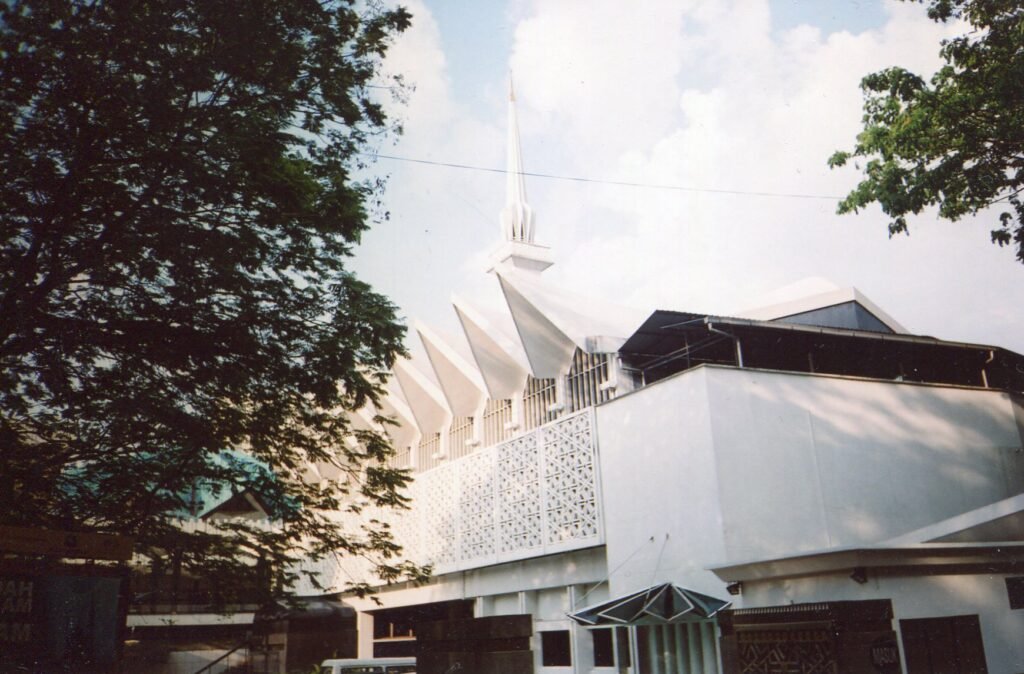
I loved the mosque’s architecture. Its exterior (above) blends traditional Malay community house architecture and Arabian forms. The interior is a large space open to the sky, with all the walls painted white and a white marble floor. The area seemed pure, as though we were all one under God. The man on my left extended his hand to me and then touched his heart with that hand after our shake.
The prayer leader then guided us through the sequences of bowing, kneeling, and standing upright. I didn’t know what to do next, but he sang slowly, so I was able to watch others out of the corner of my eye and keep up. He sang instead of speaking, so the experience was as musical as visual. Through multiple senses, we all seemed united under God. I felt blessed to be able to experience the heart of one of the world’s great religions.
I then felt equally blessed to immediately explore the museum. It lived up to its billing, with different rooms dedicated to Egyptian, Turkish, Persian, Indian, Chinese, and Southeast Asian Islamic art. You don’t see the latter two covered in museums in the Middle East, but each would make up an excellent book. All together enabled me to savor the varieties of Islamic art that people all over the world have created. It’s too bad that people in different cultures erect walls between each other, since we all have so much to share. I’ll treasure that day’s experiences for the rest of my life.
One of my favorite experiences in Cairo was my walk through one of the world’s most distinguished Islamic universities, al-Azhar.
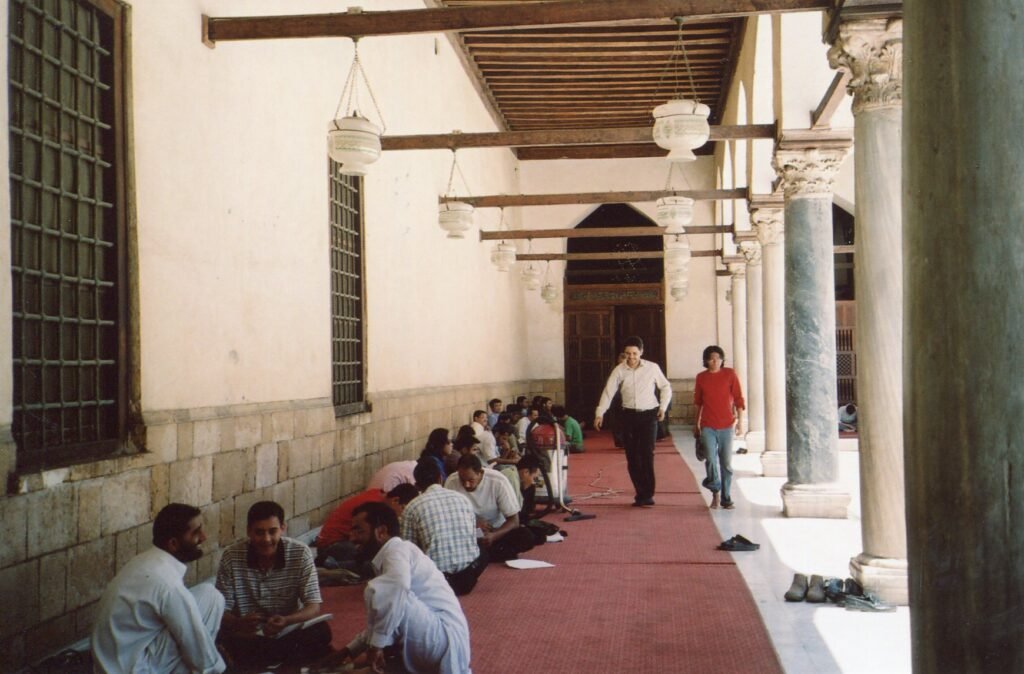
Al-Azhar means The Radiant, and it was named after Mohammed’s daughter, Fatima. It was a fitting name for more than one reason.
Egypt was conquered by the Fatimids in 969. They had broken from the caliph in Baghdad, and as Shi’ites they believed that they were descendants of the Prophet through his daughter and her husband, Ali. So, the name al-Azhar had spiritual and political meanings.
When Sunnis re-conquered Egypt in the 12th century, they turned al-Azhar into the center of Islamic orthodoxy. To this day, it’s the most prestigious institution for the study of Islamic thought. In the late 20th century, many secular subjects were added, including engineering, business and medicine. People come from all over the Islamic world to learn. Walking through al-Azhar was humbling at first.
I had never seen a large group of people studying more diligently. They hit the books harder than most students I’ve seen in American universities.
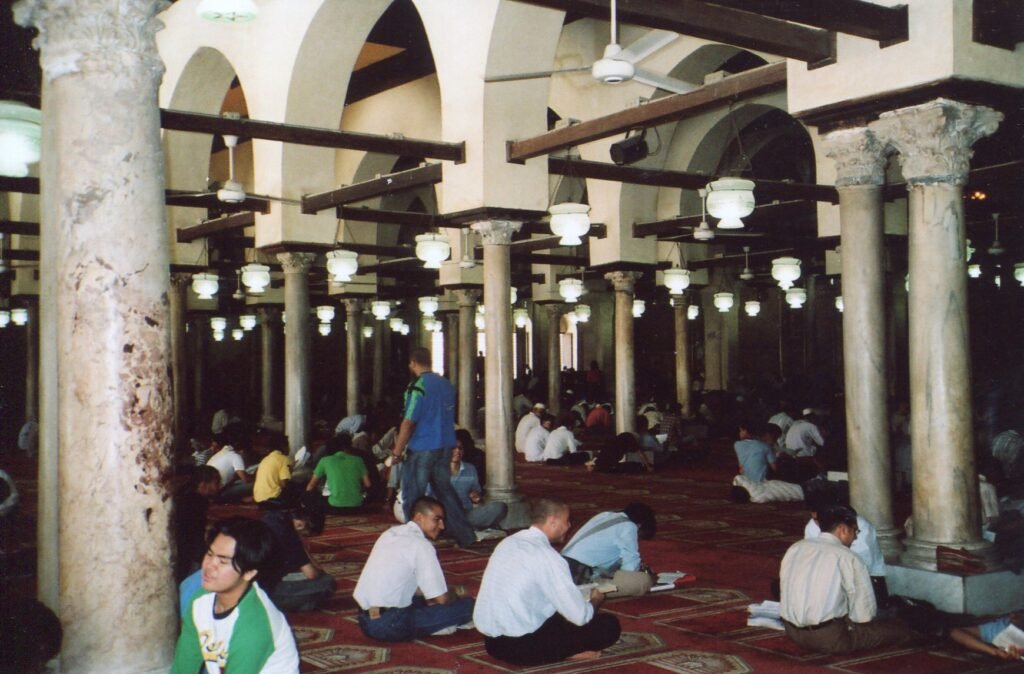
Some paced the courtyard, alternating between reading and looking into the sky and reciting. More students were engrossed in their studies in the corridor around the courtyard.
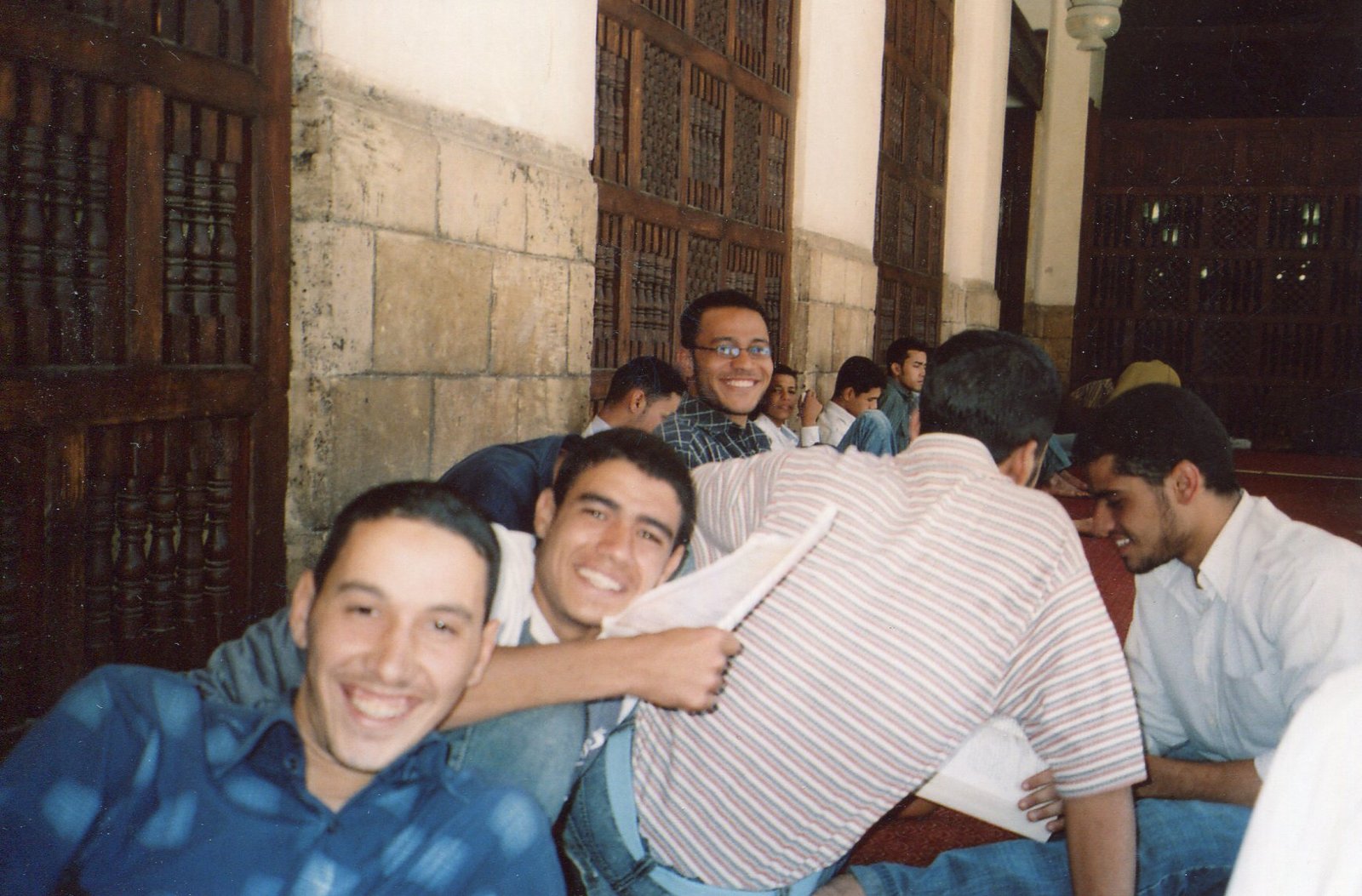
Three students invited me to sit with them. They couldn’t speak English. That’s unusual in Egyptian universities, so they were probably international students, perhaps Lebanese, Syrian or Iraqi. They exuded all of the warmth and freshness of college students all over the world. I felt a lot of affinity with the people around me and a whole lot of respect for them.

The historian of Islam Marshall G.S. Hodgson emphasized a few unique aspects of Islam:
- The Shahadah, which consists of two statements: There is no deity but God, and Muhammad is the messenger of God. They’re summed up in the word tawhid, the assertion of God’s unity. There is only one deity.
- God has one messenger. The messages of prophets who preceded Muhammad have been discounted. Only ones that he acknowledged are valuable. Others are dangerous because they can lead people astray.
- The Quran contains the messages God revealed to Mohammad. It is His direct message to humanity.
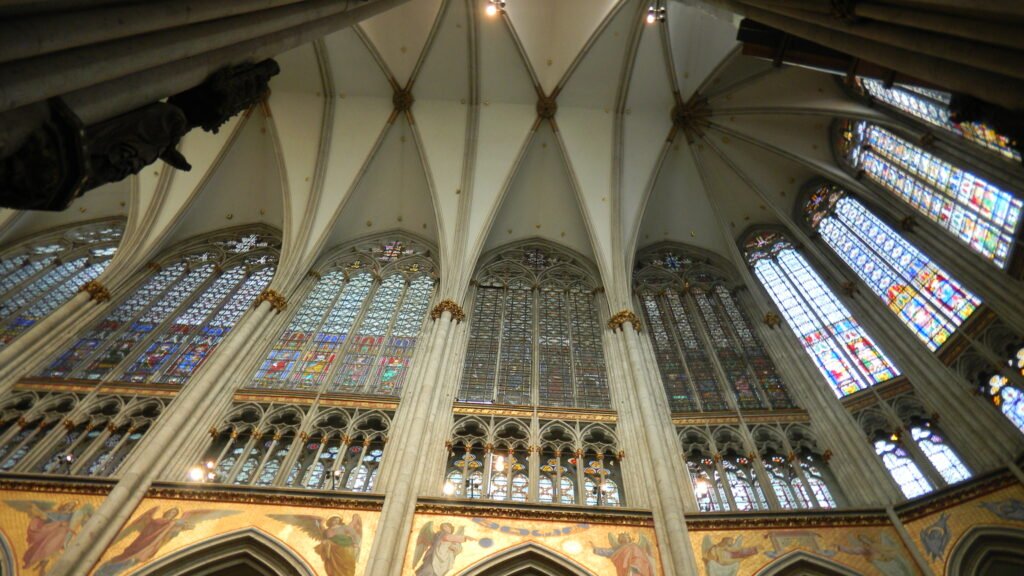
Other religions have their own ways of focusing the believer on its basic truths. The Imitation of Christ was written in the Netherlands in the early 15th century, and it encourages believers to meditate on the eucharist. Gothic cathedrals direct the perspective towards Jesus on the altar and up into the heavens. Cologne’s cathedral was straining my neck below.
Some people have ways outside organized religions to focus on divinity. The naturalist John Muir said, “I’d rather be in the mountains thinking of God, than in Church thinking about the mountains.” Islam has its own ways of helping people constantly remember humanity’s source and brotherhood. They also include the Five Pillars of Faith.
The Sunni tradition developed the 4 main schools of Islamic law. The Maliki is primarily observed in West Africa. The Hanafi School prevails across the Indian subcontinent and Central Asia. The Hanbali is the most traditionalist of the schools, and it dominates some countries with especially conservative approaches to religion, including Saudi Arabia. The Shafi’i School is widely followed in Southeast Asia. These began as informal gatherings of like-minded legalists in the 8th and 9th centuries and crystalized into legal institutions with the binding authority of God’s law by the 11th century. Sufism’s popularity grew at the same time, as many people found the authoritarianism cold.
The the people I met didn’t come across as wither rule-mongering or particularly mystical. The piety they showed was person-to-person, unassuming, and warm. Wherever they are now, I wish them a radiant future.