
Like thought in other cultures, ancient Greek thought converged from many aspects of life. Politics was one, and most ancient Athenians were obsessed with politics. In their tightknit city-state, people constantly competed with each other and other city-states. They even defined an emotion for this, zelos, which was a positive spirit of rivalry that spurred men into action.
Ancient Athens’s democracy had roots in its earlier aristocracy.
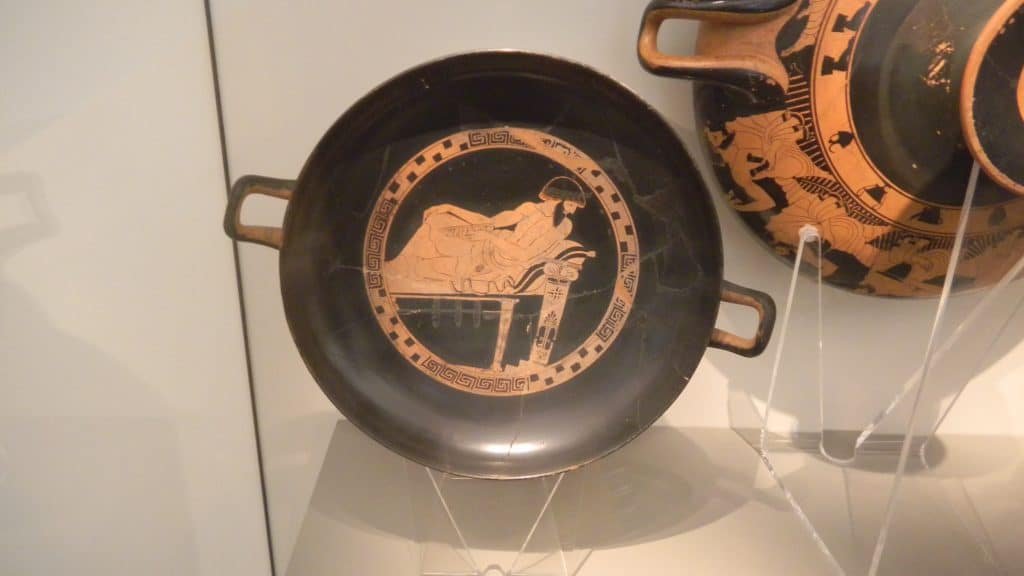
In the eighth century BCE, Athens was run by a small group of aristocrats. They supposedly replaced a monarchy in the 10th century, and they formed a tight network which elected three archons (officials) every 10 years:
1. The basileos, who assumed religious duties that Athenians imagined a king to have.
2. The polemarch, who led men in battle.
3. The eponymous archon, who held jurisdiction in civil matters. The decade in which he was in office was named after him.

Over the decades they limited the power of any single archon. In 683 BCE, an archon’s tenure was shortened to one year, and nine archons were now elected. Unlike ancient China, Athens wasn’t centered on a palace and the emperor’s cult and bureaucracy. Many people shared political power.
But in the seventh century, this sharing was still between aristocrats. After his year in office, an archon joined the Council of the Areopagus, which advised the presiding archons. Each member enjoyed his place in the Areopagus for life.
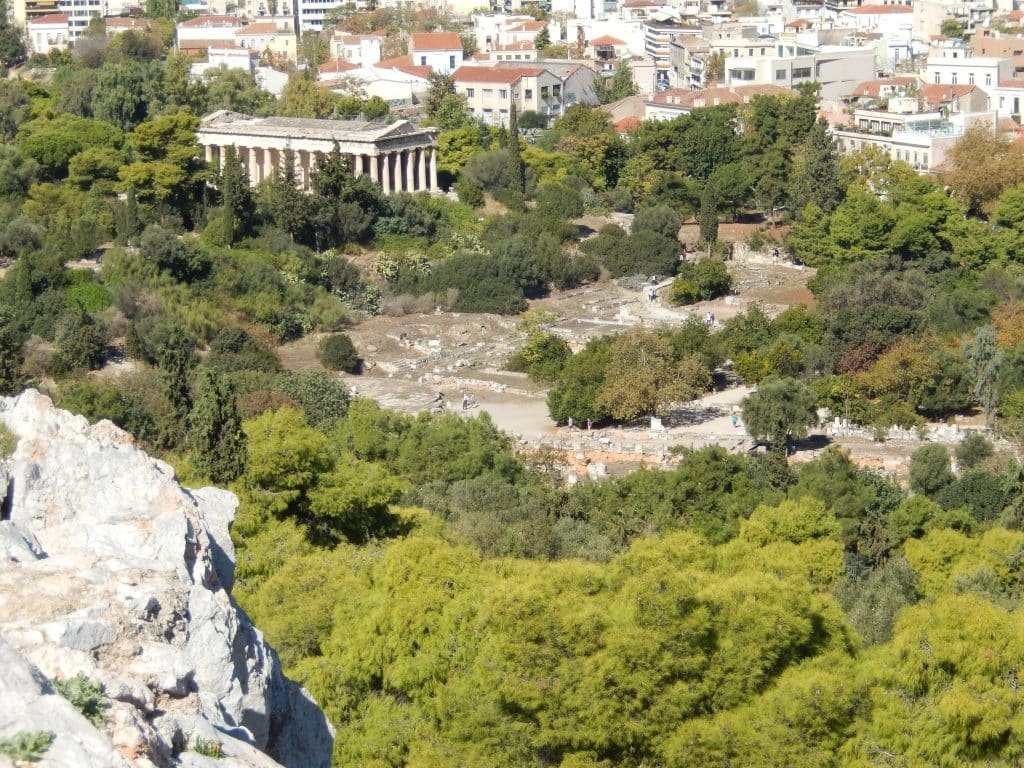
He also enjoyed a pretty good vista–the above shot is from the hill of the Areopagus. The large temple for Hephaistos wouldn’t be built for more than 200 years, but a former archon would still have a sweeping view of the city, and he would have looked down on the Agora between the temple’s future site and the Acropolis, which was off to the right.
The Areopagus was notoriously conservative, standing for its members’ privileges. But even under this system, life in Athens was a multiplicity of perspectives. No one man ran the show, and nobody built a palace close to the scale of ancient China’s. Most of the largest houses in ancient Greece were about the size of a modern upper middle-class home.

But changes were fermenting in the seventh century, which reinforced trends that made Western culture distinct. Elite families often tussled with each other, disputing inheritances and land boundaries, fighting over penalties for offenses, and staging competitive displays at funerals. Many peasant farmers were struggling then. Those that found that their harvests from the previous year would run out before the next season could borrow from wealthy landowners, but debts accumulated with each year’s poor harvest until the pauper needed to pledge himself or his land to his creditor.

Discontent rose as gaps between haves and have-nots increased. Raphael Sealey, in A History of the Greek City States, wrote that the lateral rivalries between elites grew increasingly dangerous because some families could exploit the plight of the poor and marshal gangs of men to fight for them.
But a man named Solon became Athens’s chief archon in the first half of the sixth century BCE, and according to Aristotle, he helped avert the potential crisis and did so in ways that still characterize Western thought:
- He boldly cancelled all debts for which land or personal freedom was the security. Loans on the security of a person’s body were now forbidden. This measure created later problems because the wealthy had to import more slaves to make up for the lost labor, but Solon avoided an immediate disaster and set a precedent for compromise between classes.
- He established the right of any citizen to initiate legal action, including bringing a third party to prosecute on an injured person’s behalf. This gave everyone more leverage against wealthy bullies.
- People could now appeal to a court of fellow citizens.
Solon also made it illegal for the family of a murdered person to slay the killer. Justice would be done in court. The civic community centered on the agora became more important than the older blood feuds between families.
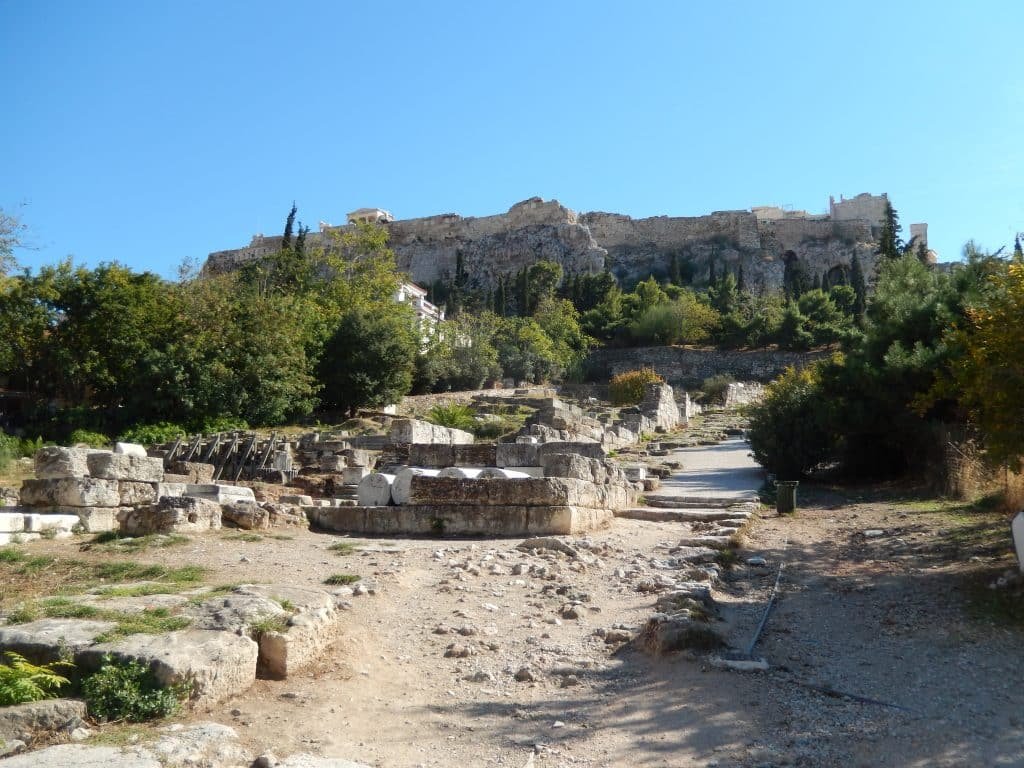
He also encouraged foreign craftsman (called metics) to settle in Athens. Though they couldn’t become citizens or own land, they enjoyed legal protection and payed only a modest tax. Solon realized trade’s central importance.
Solon’s laws were written on the sides of wooden tablets which were publicly displayed. He thereby reinforced ways of thinking that became foundational in the West:
- The individual taking his own initiatives and speaking his own mind has a prominent place in the world.
- The individual has rights that are safe from elites’ whims. A Greek would have found an Indian Brahmin declaring “The universe is unified, so obeying me because I am in its highest social rank is your sacred duty” preposterous enough to provoke a laugh or a punch.
- Limits were imposed on all individuals. No single one could overrun his boundaries and completely dominate the others.
Social stability doesn’t come from priests claiming to manipulate nature’s energies or an emperor pronouncing rules for all to obey, but from laws that are independent from any political class.
These laws are crafted by thoughtful citizens balancing different people’s interests. They are codified and publicly known. They are not priestly hymns in a metaphysically charged language, like the Rigveda. They’re written in a simple script that people from all classes can read and discuss. The historian C.M. Bowra said that Greek laws were not as concerned with religious rites as they were with public affairs. They also weren’t usually administered from royal palaces. They had their own existence apart from priests and kings. Many Greeks were proud of their freedom and contrasted their laws with dependence on monarchs.
Ancient writers say that Solon established a new council, the Boule. It’s not known for certain what its 400 members did, but Michael Grant, in The Rise of the Greeks, said that it worked with the Areopagus to keep society peaceful. Since the Areopagus was aristocratic and conservative, the Boule gave more Athenians a say in government and helped balance the needs of more people.
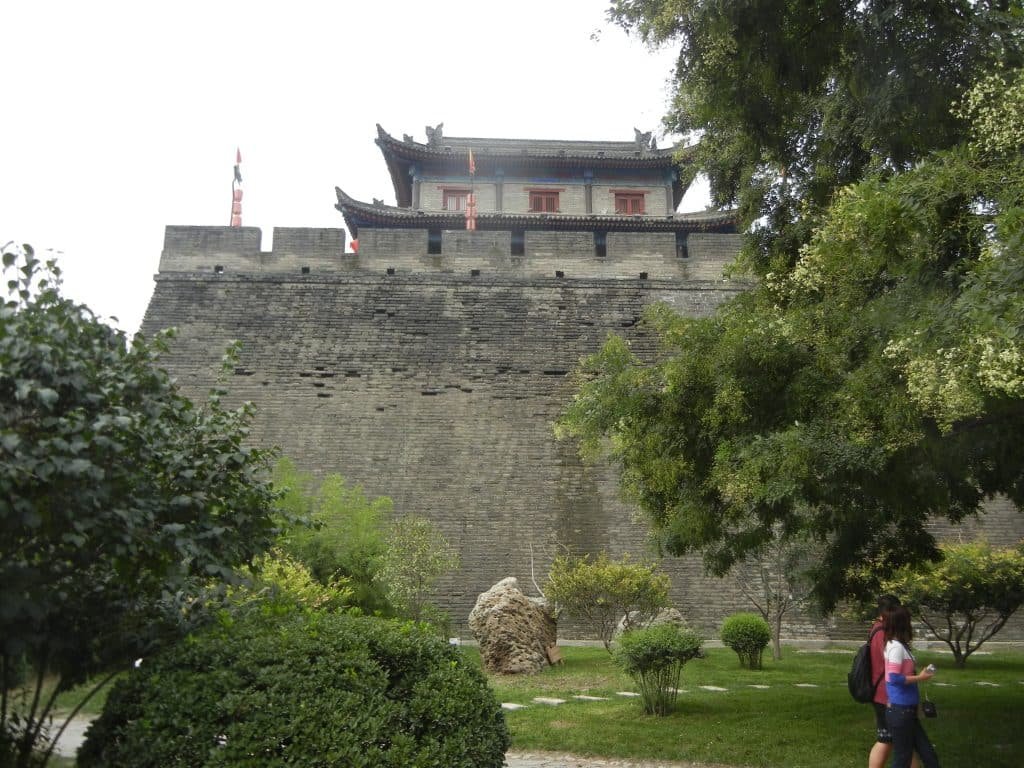
Most ancient Greeks saw reality as less of the unified field which most Chinese thinkers held as basic. It’s based more on distinct individuals with their own integrity. This Greek sense of the world already had deep roots. Solon’s reforms reinforced them at the beginning of the century when Greek philosophy emerged.
A lot of other experiences converged to make this sense of the world dominant in the West. We’ll explore some of them in the next few articles and see that a sense of the world emerges from many dimensions. China’s is as deep, as are India’s, the Islamic World’s, and cultures in Southeast Asia, Africa, and Native America. We can now extend democratic discourse to all the world’s cultures.