Many people in the Roman Empire by first century CE were looking to metaphysical realms for meaning and well-being. Its magnificent forums left a lot of folks feeling uncertain in a world that had grown beyond the human scale of ancient Greek cities.
The goddess Fortuna and mystery religions had become popular among people who were looking for transcendence, but the emerging Christian faith was different.
The Gospels portrayed Jesus with a mixture of reverence and realism that no other religion came close to. Mithras was associated with creation, the constellations, and the universe’s temporal cycles, but he was distant from daily life. Because Isis came from an exotic land that was already ancient, stories about her also often felt remote. Dionysos was good for a buzz, but he was too mutable and bizarre to be a reliable source of comfort. In contrast to them, Jesus ate bread with common people and healed the sick and lame, and the Gospels expressed his humanity with emotional immediacy. The downtrodden Mary Magdalene collapsed in front of him and he rebuked her accusers, “I came into your house, and you poured no water over my feet, but she has poured out her tears over my feet and wiped them away with her hair.” Jesus sat with sinners and the poor rather than on an elephant as the ancient Khmer king Suryavarman II did on Angkor Wat.
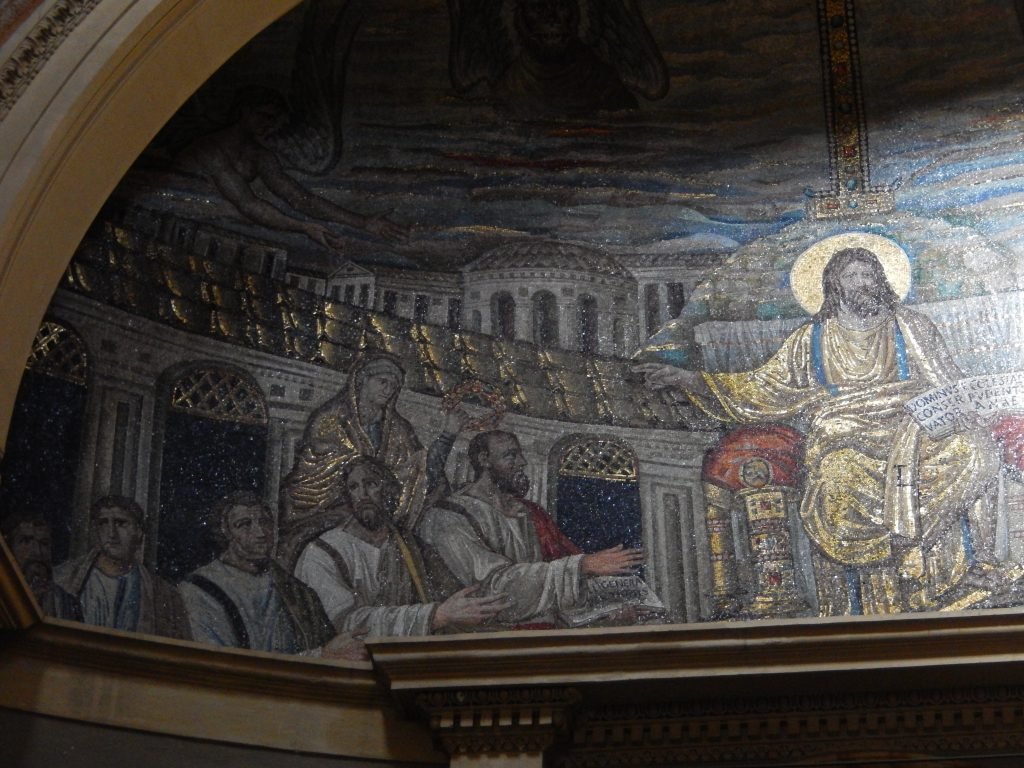
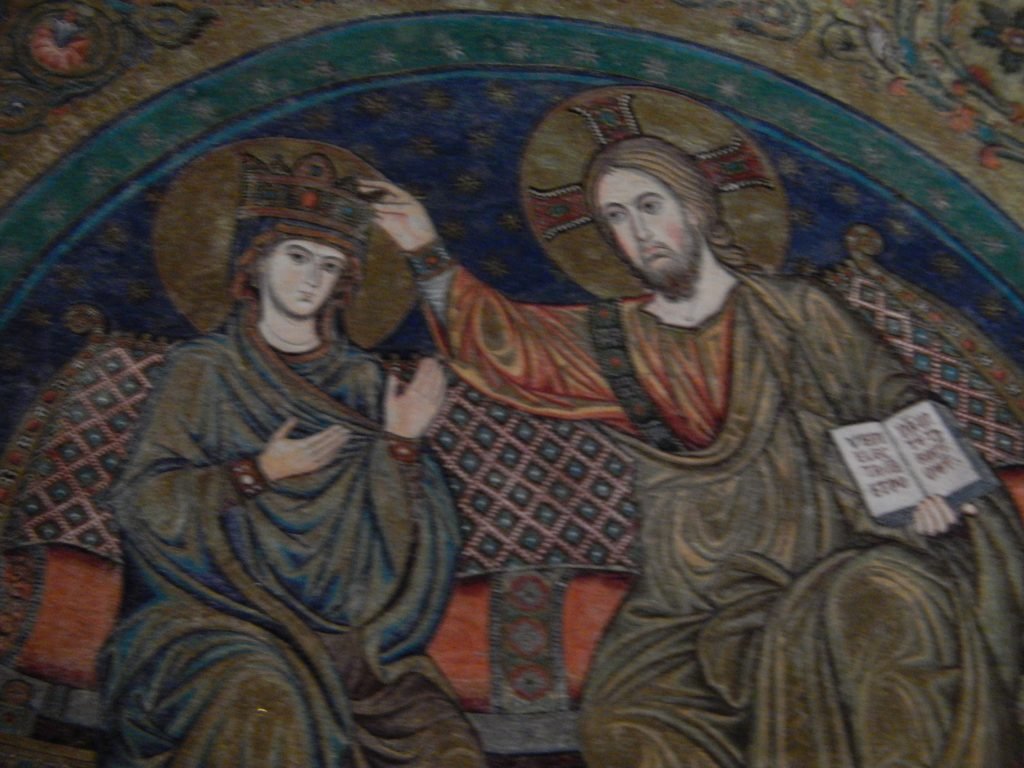
But he could also be rough. He upset the money changers’ tables in the Temple in Jerusalem. Of course he got violent for a good reason. Those scorpions were cheating impoverished people who were coming to worship. They were mocking religion and taking advantage of the faith of the weak. Jesus was gentle when he could be and tough when he needed to be, but he always behaved like the ideal human being. The Gospels portrayed the man who was inspired by God with details that people could relate to. He was both spirit and flesh. The mosaic over the altar in Rome’s Santa Prudenziana (below) shows him in a dignified urban setting. His followers look like senators.
Yet he was ultimately treated like the lowliest criminal. He was punched, spat on, whipped, and nailed to a cross. Passersby jeered, “If you are God’s son, come down from the cross!” Erich Auerbach noted that this mixture of high and low was unprecedented in Western literature. The son of God was portrayed with a common writing style rather than with the elevated tones of Homeric poetry, Greek tragedy, and the Roman histories of Livy and Tacitus. The West’s classical tradition taught that there should be unity of style, that each genre has its own style, and that different genres should be distinct. Tragedy, epic poetry, and national history must be dignified, with elevated language and poetic forms. Comedy and satire are about common affairs, so they’re in down-to-earth styles, in language that people speak in their markets and homes. Everything is in its place—very classical. But the Gospels combine loftiness and commonness. They also mix sublime power and gentleness. These combinations make them seem inspired by a force beyond the command of emperors and whims of Fortuna.
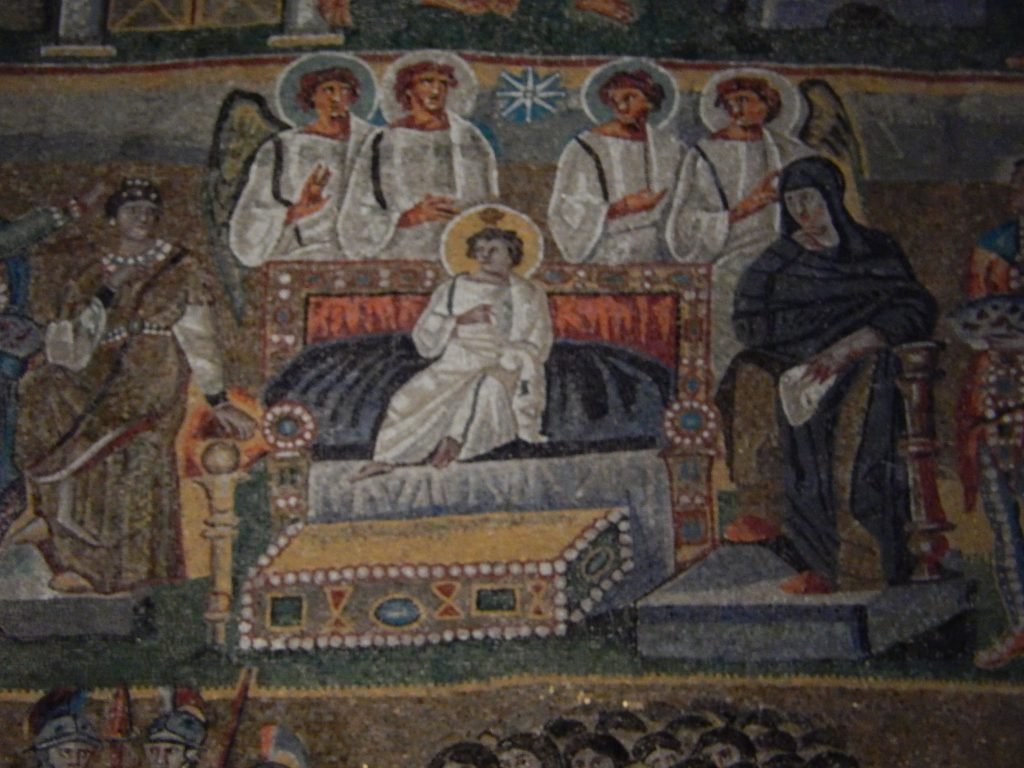
This power is the Holy Spirit. Christians believed that it guided the authors so that their portrayals of the savior would penetrate all hearts. A new force was spreading through the world to tell people that the kingdom of God is at hand. Mosaics in Rome’s Santa Maria Maggiore (above and below) provide perspectives that are centered on Christ.
St. Paul took advantage of the great highway system that the Romans built and visited most of the key towns in Greece and Turkey. He spread the Gospels to more lands beyond Palestine than any other person, and he said that people connect with God, not through classical balance or an emperor’s glory, but with faith. According to Paul, faith is much deeper than the respect that people showed traditional Greek and Roman gods—it’s not just dumping meat and wine at a temple and walking away as the same old scamp. The type of faith Paul described entails abandoning yourself and completely trusting the Lord. A man had asked Jesus what the greatest commandment is and he replied, “You must love the Lord your God with all your heart, with all your soul, and with all your mind.” He also said, “Anyone who finds his life will lose it; anyone who loses his life for my sake will find it.”
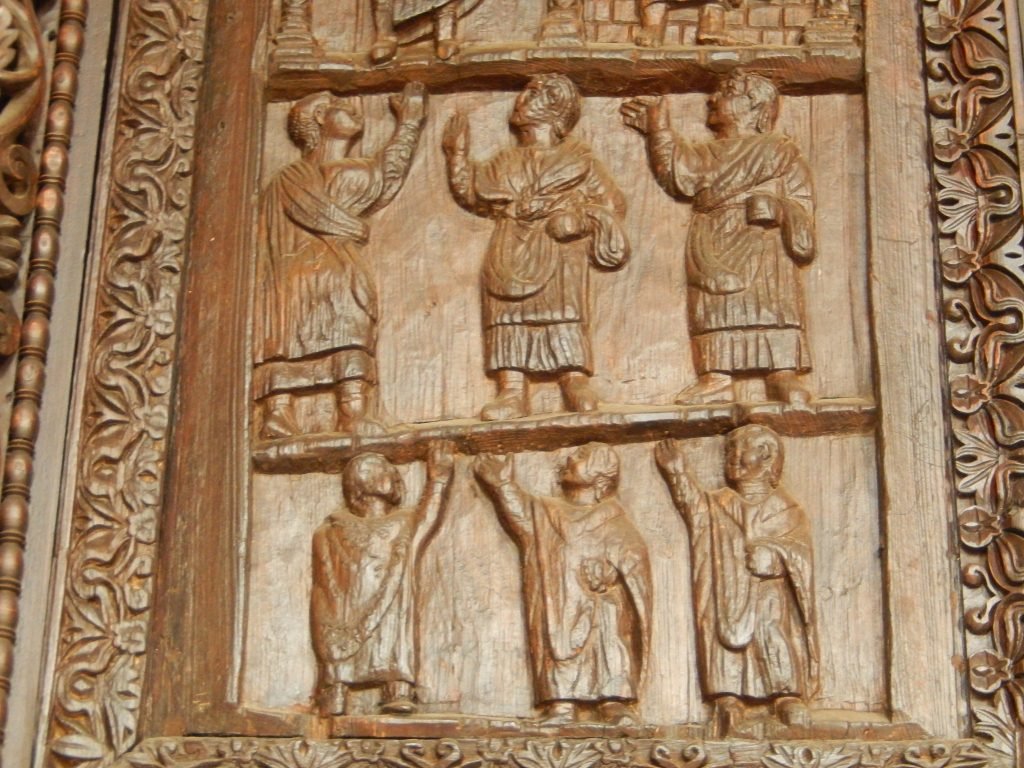
The classicist Peter Brown studied the growth of this concept of total personal commitment to divinity. Many saw it as a conversion in which a person threw away his old identity and was reborn. Some left their towns for the desert in Egypt and arid hills in Syria and Turkey for lives in monasteries or as hermits. St. Anthony was one of the most famous. This son of well-to-do Egyptian peasants attended church and heard that Jesus said, “Go, sell all you have and give to the poor and follow me.” Anthony took this literally and lived in the desert for many years, wearing a skin, refusing to bathe, and surviving on bread and water (a door carving on Rome’s Santa Sabina is pictured below).
Literature about holy men began to circulate, and writers made sure that their spiritual prowess compared well with the deeds of heroes in the old Homeric epics. Wearing, eating, and drinking little under the relentless sun, they mastered their bodies, drove out snakes, and vanquished demons as soundly as pagan warriors had routed their foes. Brown noted that many men in Rome followed athletes, charioteers, and gladiators. Discussing their bone-crushing competitions provided relief in those crowded streets and tenements. Writers now portrayed holy men in similar terms—they were spiritual jocks.
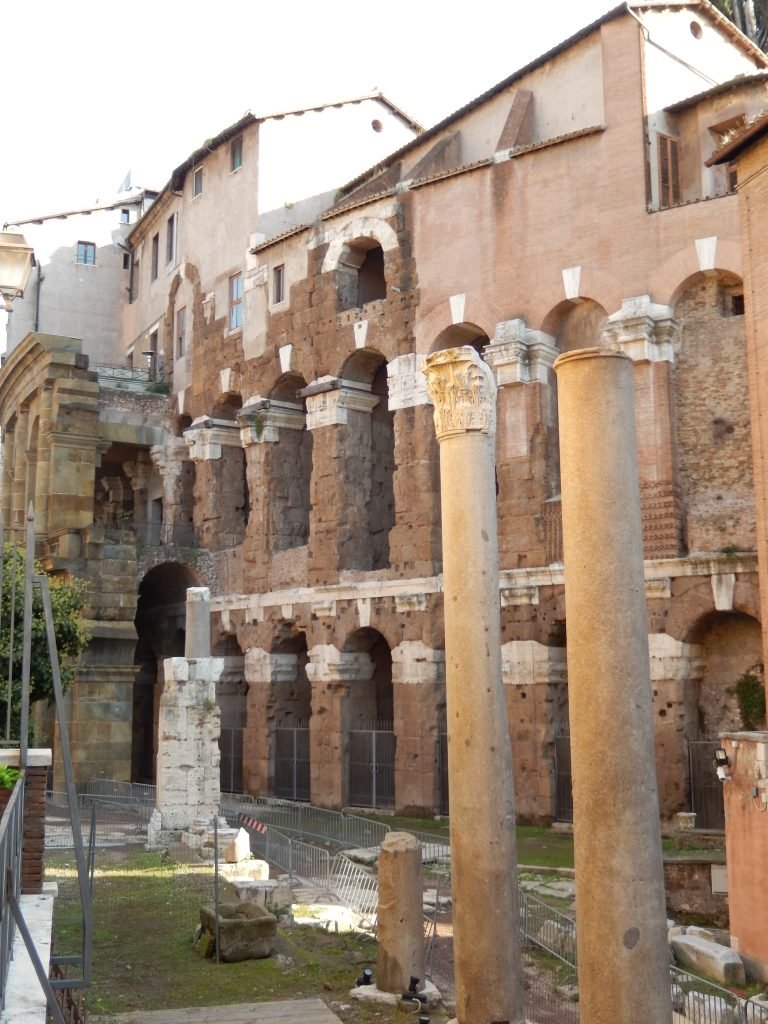
A blood-and-guts story from St. Augustine of Hippo (354–430 CE) shows why the idea of the conversion of the whole person continued to spread. A young law student named Alypius detested the arena blood sports, but one night friends peer-pressured him into joining them. He protested, “You drag my body into that place, but you cannot force my mind into it!” He thought that old classical philosophies like Stoicism and Epicureanism, which expounded self-control and emotional balance, could keep him from getting swept into a crowd of louts, but he was in for a shock.
He took a seat and closed his eyes, but when a gladiator was struck down and the crowd roared its approval, he opened them. The audience’s energy and the sight of glistening blood stirred him into the same frenzy, and he cheered with everyone else. Augustine was teaching that the mobs, ruthlessness, and immoderate vices of his day were too powerful to be overcome by the rational self-discipline of the classical world. A person needed to go further inwards, to the core of his being, and give it to a higher power.
Brown noted that features of the landscape in Egypt, Palestine, and Syria became associated with this higher power in the third century CE. People associated places in deserts and mountains with the lives of saints who inhabited them and with Biblical stories. The idea of the holy person became ingrained in geography.
I experienced the power of this geography in Ephesus, on Turkey’s west coast. This had been one of the main ancient Greek cities, and it was renowned for an enormous temple for an Olympian goddess called Artemis, but Christianity gave it new landmarks. The Gospel of John says that Jesus addressed his mother and John from the cross: “Seeing his mother and the disciple he loved standing near her, Jesus said to his mother, ‘Woman, this is your son’. Then to the disciple he said, ‘This is your mother’.” A traditional belief then emerged that John brought her to Ephesus. I went to the building that she was supposed to have lived in (below).
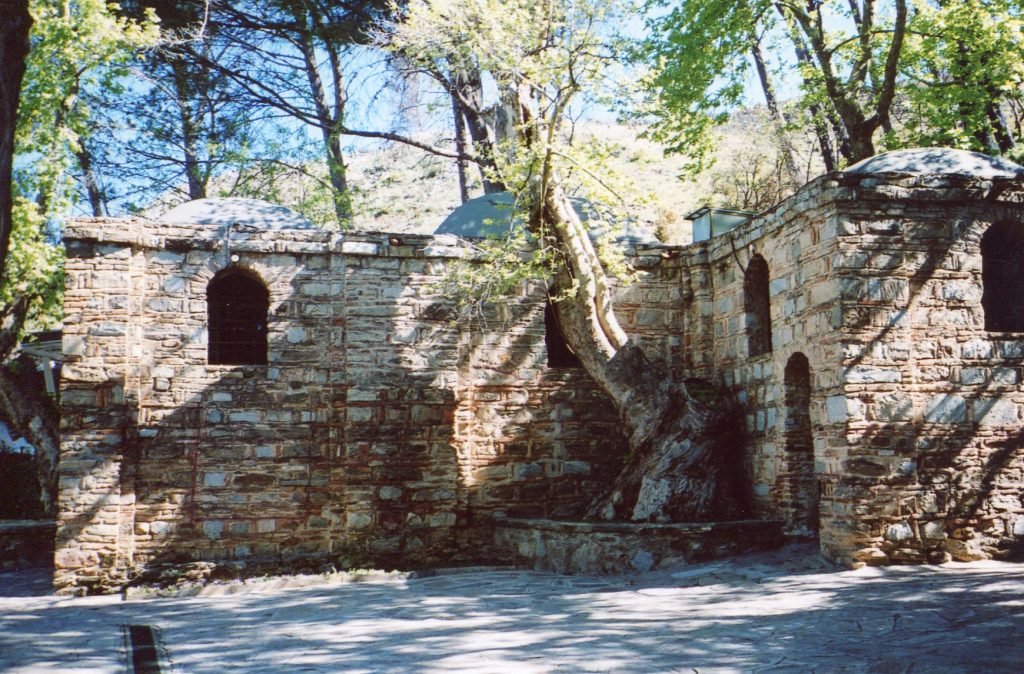
The claim that she resided there is controversial but it hasn’t been disproven, so there’s a chapel in it now. The house is stone and in the shape of a T. Most of the building has been dated to the sixth century CE, but parts of some walls might have been built when she lived. The house rests high above the once-noisy central streets, and evergreen trees shade the area, giving it a morning-fresh aroma. Branches rustle in the gentle breezes. Because my mom had recently passed away, I was sensitive to elderly women’s concerns for security and comfort. It felt good to think that Mary’s last years were comfortable if she did live there. My eyes moistened, as many people’s surely have over the past centuries. I felt that my heart was united with all those who had visited the place. The emerging Christian world embraced a geography of holy sites that stir deep feelings and inspire spiritual thoughts.
However, the new didn’t immediately replace the old. Ephesus’s center remained a busy cultural and commercial hub, and people invested a lot of money to beautify it. Its ruins are sometimes promoted as examples of timeless classical architecture, but many buildings and monuments were constructed from the late first century CE to the third century in a style that’s so flowery that it has been called Baroque. The Roman emperor Hadrian, who lived from 76 to 138 CE, was a classical buff, and a governor’s son during his reign built the town’s famous library to honor his own father and maintain Greek civic culture. So not everyone was into conversions. Many still honored the traditional city-centered past and added new styles to it to make urbane living even more sophisticated. Both mindsets thrived together, and they fused in ways that have comprised much of the West’s heritage.
Christianity spread in the cities where St. Paul had preached. The faithful initially met in homes and later built churches in their neighborhoods. The Gospels synthesized both views of the world. Supernatural portents bracket Christ’s life, from the star and the magi at his birth to the afternoon sky darkening during his crucifixion. But Jerusalem formed a classic urban setting, with a trial and a mob of shouting idiots—two things that Rome’s denizens knew well.

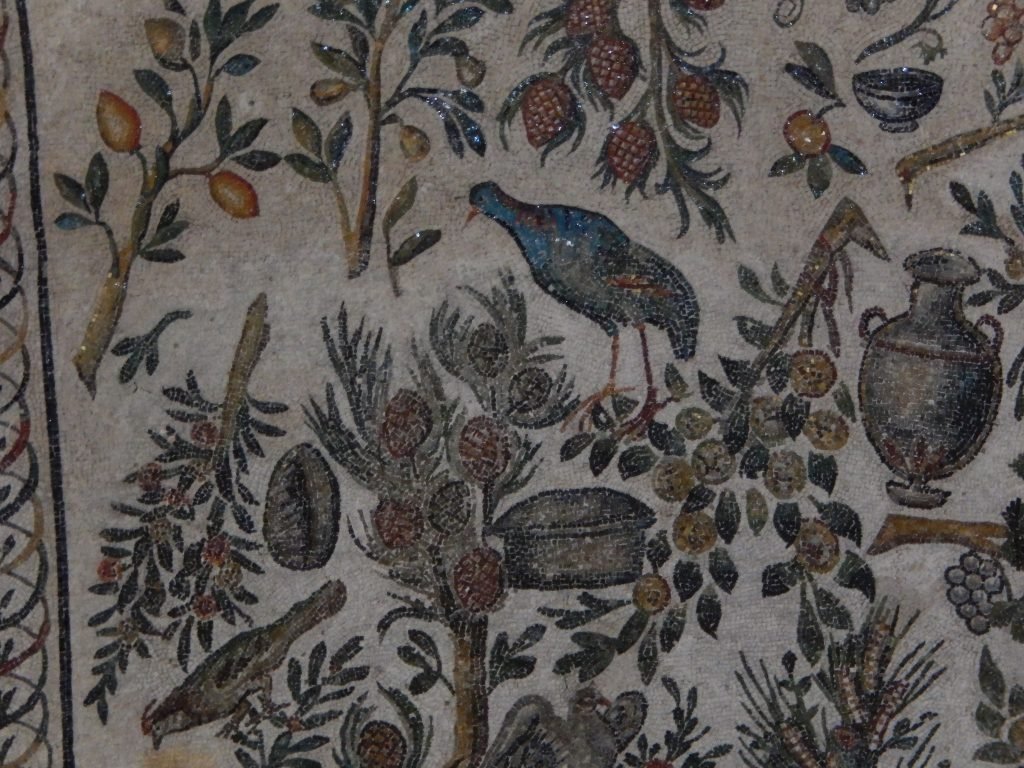
The above church, Santa Constanza, was built to honor one of Emperor Constantine’s daughters.
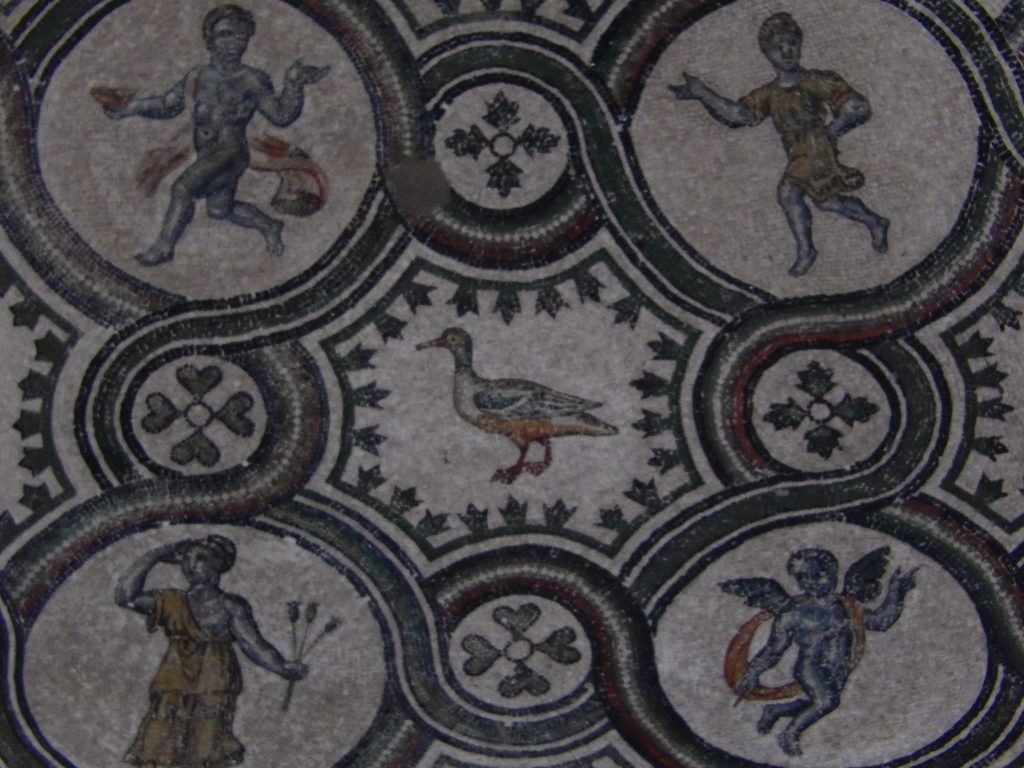
Mosaics cover the ceiling all around the church’s central altar. Pagan Roman mosaics were often lively and sometimes violent. But in her church the images tame nature’s abundance by showing classical balance.
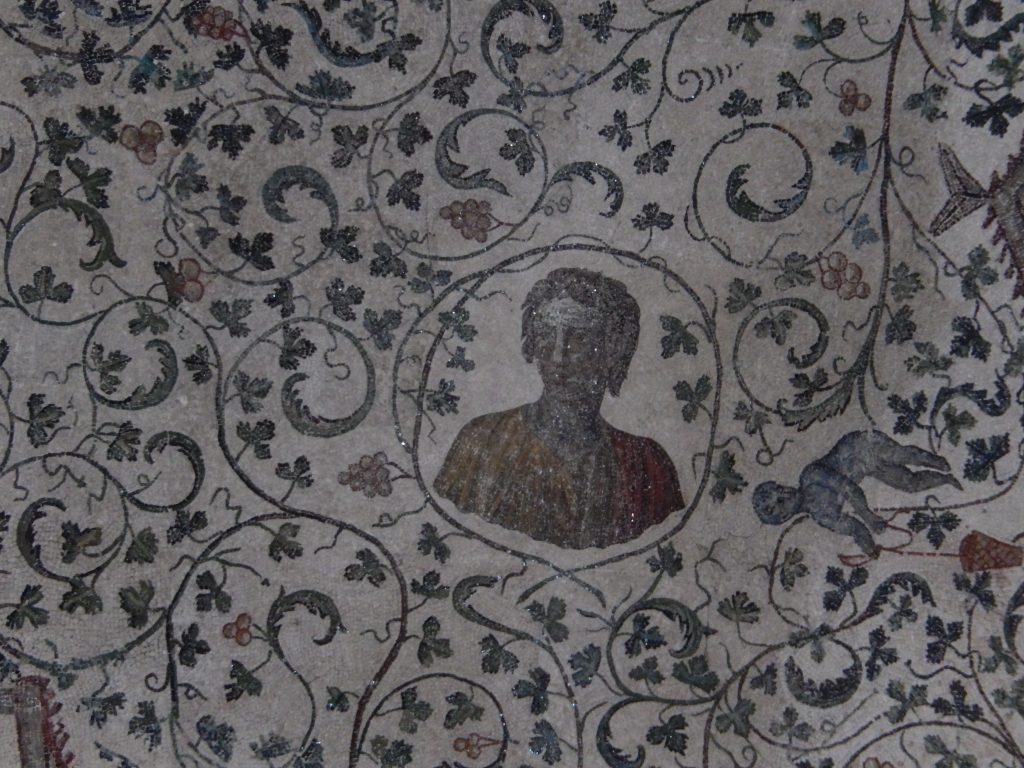
They portray profuse vegetal growth and make it platonic.
The Gospel of Luke also combines spirit with a classical perspective. It begins by depicting John the Baptist’s birth and the archangel Gabriel’s annunciation to Mary that she will become the mother of God’s son. These two events, which presaged Jesus’ birth, balance each other like the sides of a handsome picture frame. Luke then says that the savior was born during the reign of Augustus Caesar. By doing this he situates the greatest sign of God’s glory and love within the Roman Empire’s worldly framework.

Another central Christian mystery occurred within a classical setting. The Transubstantiation (bread becoming Christ’s body and wine turning into his blood) occurred during the Last Supper, when Jesus and the twelve apostles ate together in the dining room of a private home. Jesus took a cup of wine and said, “Take this and share it among you, because from now on, I tell you, I shall not drink wine until the kingdom of God comes.” Its transformation into his blood symbolized the new covenant between God and humanity (several Protestant sects that emerged in the 16th century rejected this idea, but it was central in the Christian world before then and still is in the Catholic faith). This sign of God’s glory appeared among men eating food and drinking wine—people in the old Greek city states considered symposia of men dining and sharing wine and conversation to be the apogee of civilized life. The Last Supper’s urbane setting encouraged new classical images when Italian Renaissance artists painted it. Leonardo da Vinci’s Last Supper shows the apostles in a line as straight as a Greek temple’s colonnade, within a room with equally measured lines on its walls and ceiling.
Many stories about the Buddha and Hindu gods took place in outdoor settings that were dramatically apart from urban life, including forests, mountains, and the field where the two armies slugged it out in the Mahabharata for the throne of India. Palaces were also common venues. All these places are ideal for zinging into cosmic realms because they lack civic settings that ground them in the world. They easily mesh with Indian ideas of a vast universe and of copious flows of energy that animate nature. These settings enliven Angkor Wat’s walls, fusing cosmic vistas with royal majesty. But the Gospels’ locations in common homes and urban streets have kept the West’s horizons on speaking terms with where they were in the ancient Greek city states.
The West has often blended worldly and metaphysical perspectives. This multitude of ways of seeing has inspired a lot of creativity over the centuries.
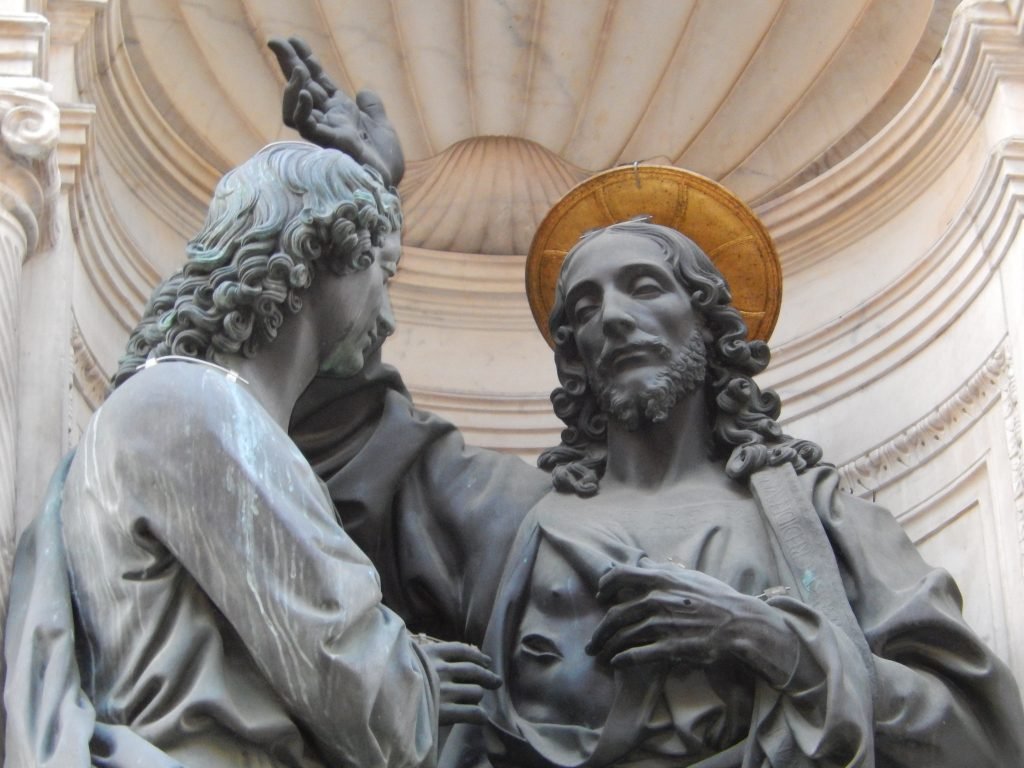
Andrea del Verrocchio was able to immaculately mix both perspectives when he created the sculpture of Jesus and doubting Thomas on Orsanmichele Church in Florence in the late 15th century.
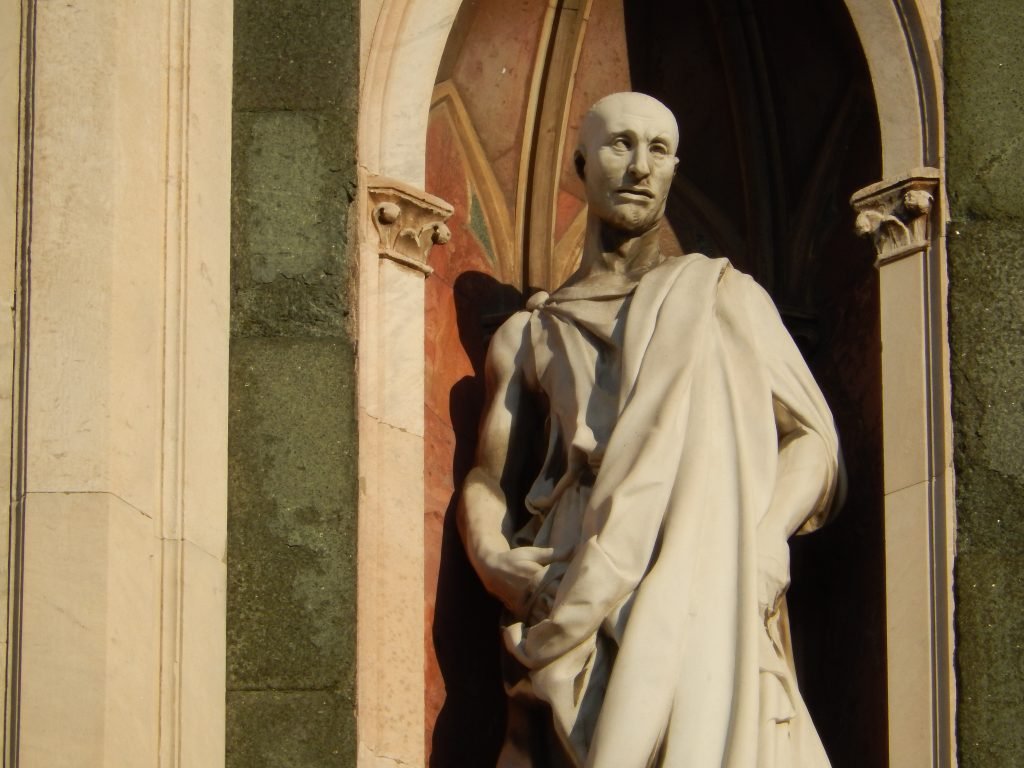
Donatello created the above sculpture, Zuccone (pumpkin), for Florence’s cathedral in the 1420s. The Biblical prophet Habakkuk is shown intensely absorbed in the spiritual realm, but he’s shown with the worldly realism of an ancient Roman senator’s portrait.
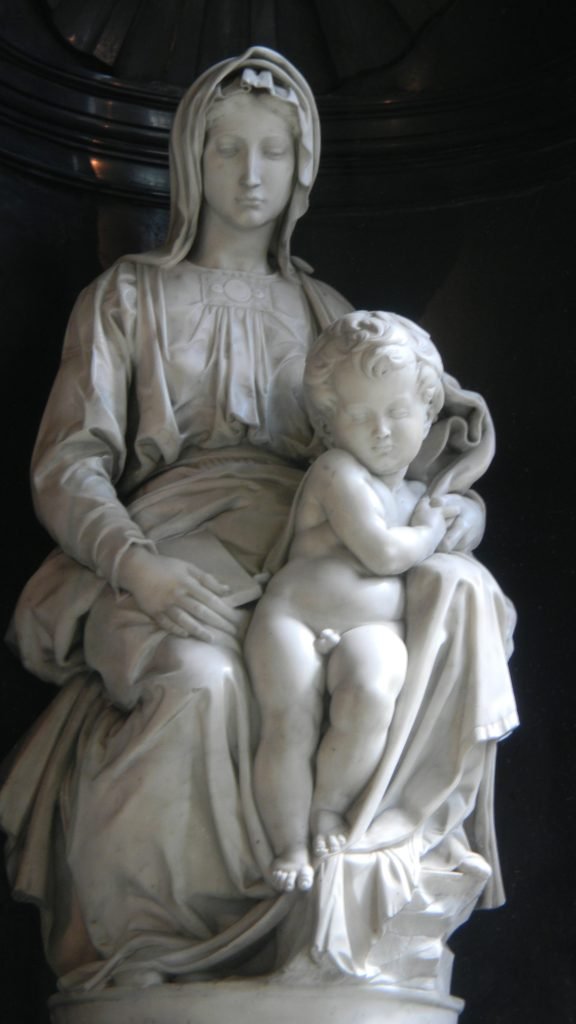
Michelangelo’s Madonna and Child (now in Bruges, Belgium) uses traditional Platonism to show an idealized spiritual world.
These images have been engaging for so many centuries because they converged from both spiritual and worldly perspectives that ancient Romans expressed. The dialectic between them contributed a lot to the development of three-dimensional perspective in Florence and the liveliness of Venetian art. Images that people take for granted as basic reality converge from many cultural currents. You can also explore images from India, China, Africa, Southeast Asia, and the Islamic world.