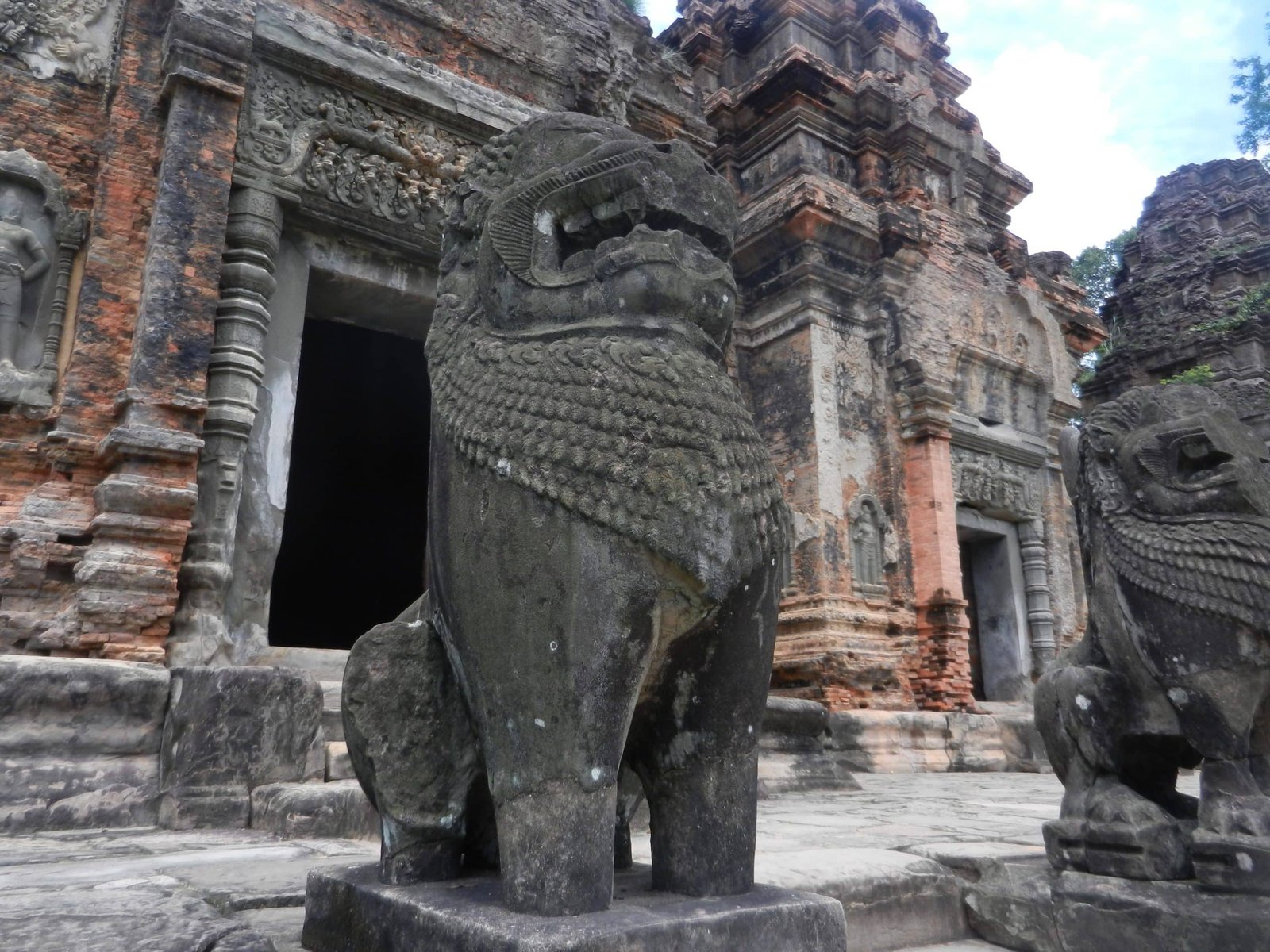
After last article’s introduction to Preah Ko, we’ll approach its central section and explore its mysteries.
Its shrines have many false doors made of stone, like this one.
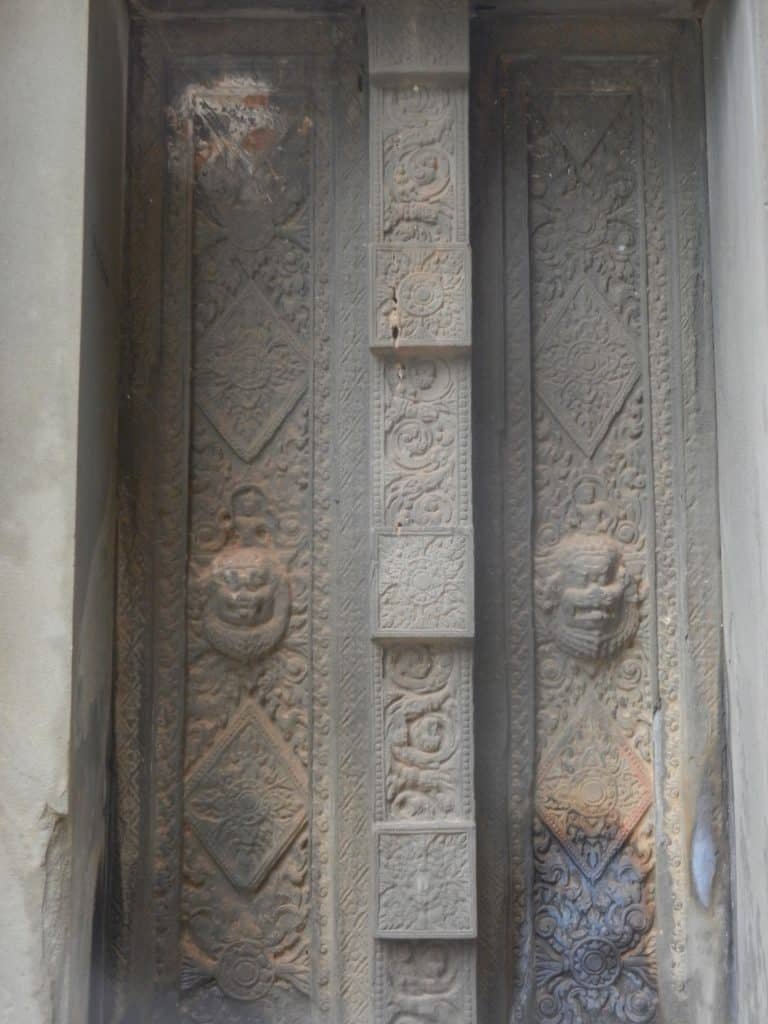
A very fancy design for a door. No Wall Street or Silicon Valley exec would dare attach one to his office. Where did the Khmers think it would lead?
Part of the answer lies in its details.
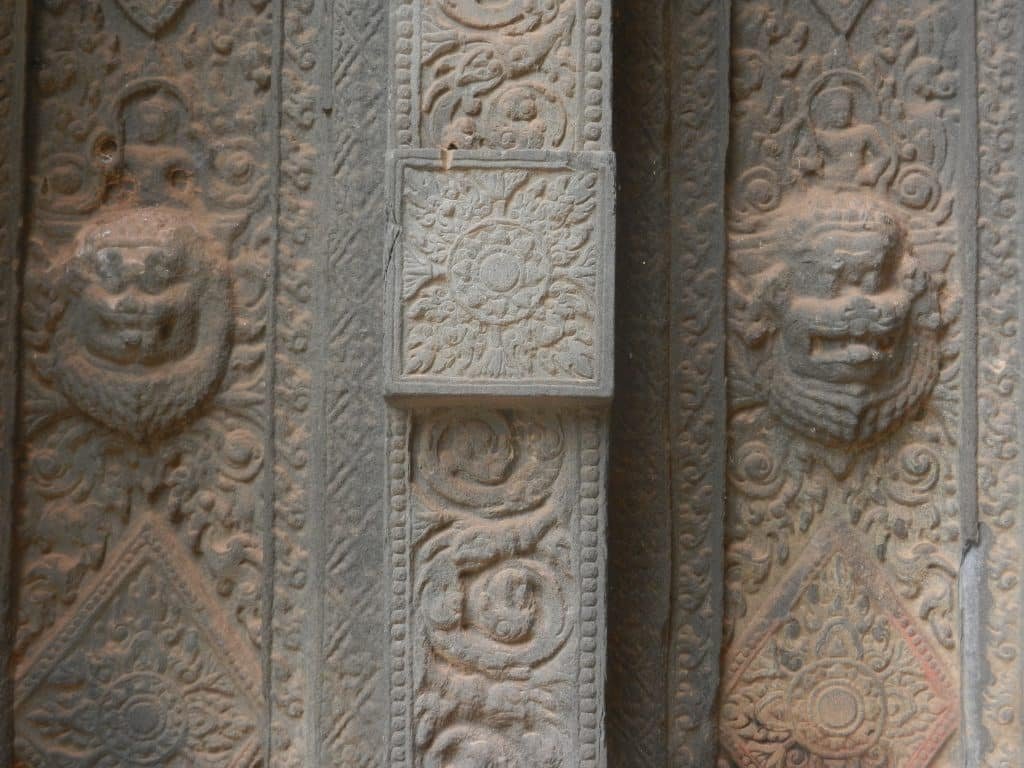
Every inch is densely carved–mostly with thick vegetal patterns, as the columns that flank Preah Ko’s doors are.
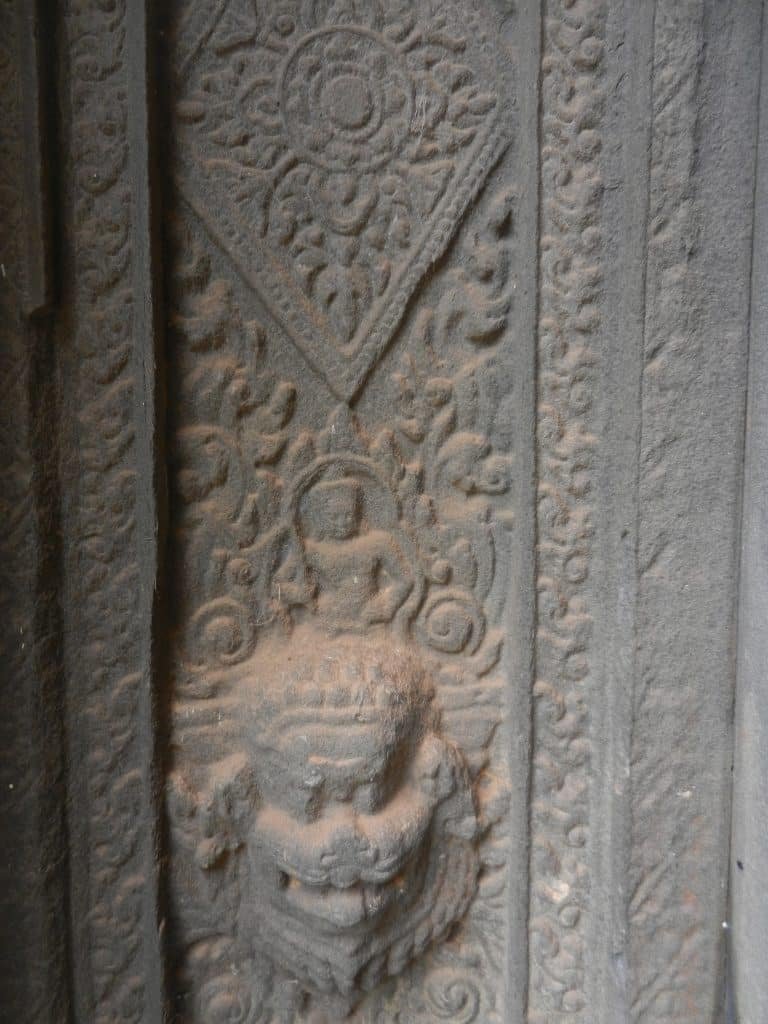
And as on the columns, gods and heroes are embedded in the vegetation.
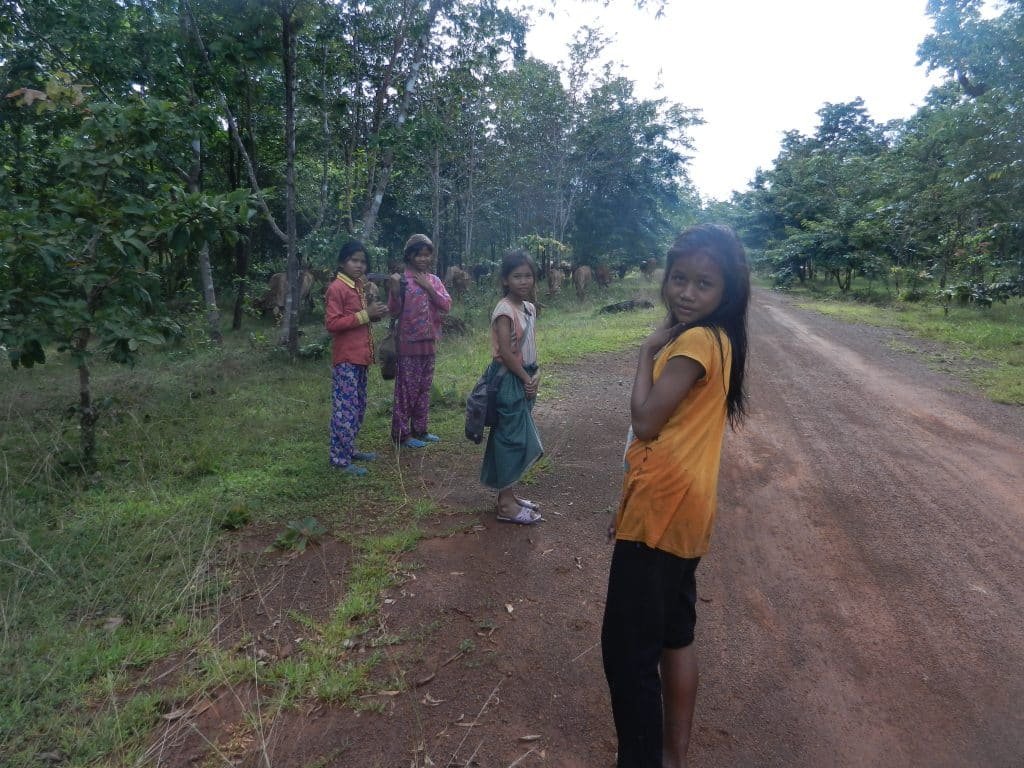
These images might seem fanciful to Westerners, but they reflect real life in Cambodia. When Preah Ko was built in the late ninth century, people were clearing jungles for the growing population’s rice crop. They wanted to keep wild vegetal growth at bay and foster enough crop growth for a large state to flourish.
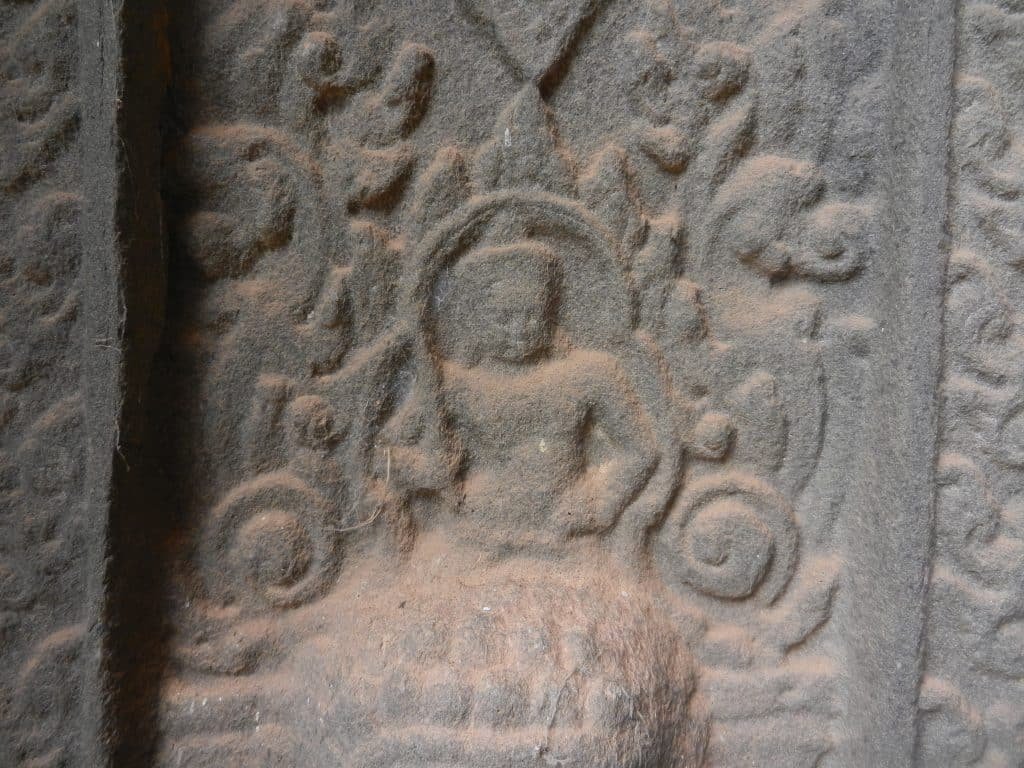
Here’s a close-up of the door. The carvings are dense and animated as though they have potency to bring the rains and to keep the Khmer political house in order. In other words, do what the king says because he’s linked with nature’s powers. But they’re also elegant.
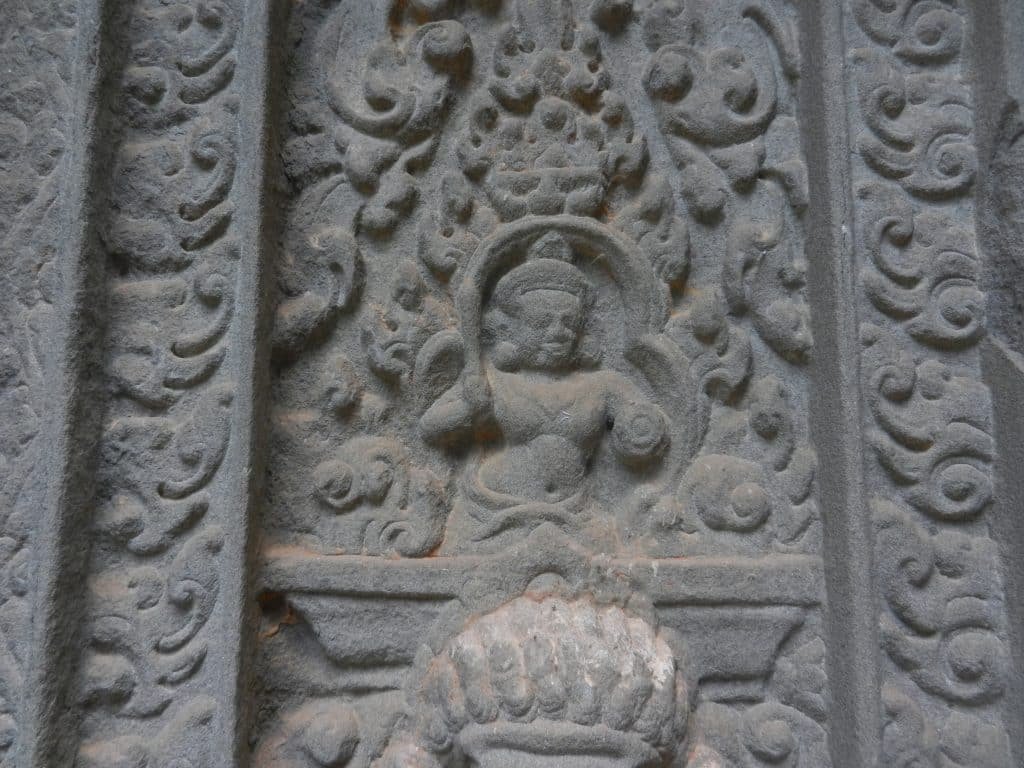
This other false door (reconstructed) at Preah Ko also has this balance between power and refinement.
The Khmers who built the first large Cambodian temples used dense and refined designs. They stuck–their followers carved them throughout Angkor’s history, and many Cambodian artists still do. They still captivate people in Cambodia and in many other countries. They blend strength and softness as well as any art I’ve ever seen.
Preah Ko’s central section is full of treasures that have inspired Cambodian artists since it was built in the late ninth century. But this guardian is trying to keep intruders out.
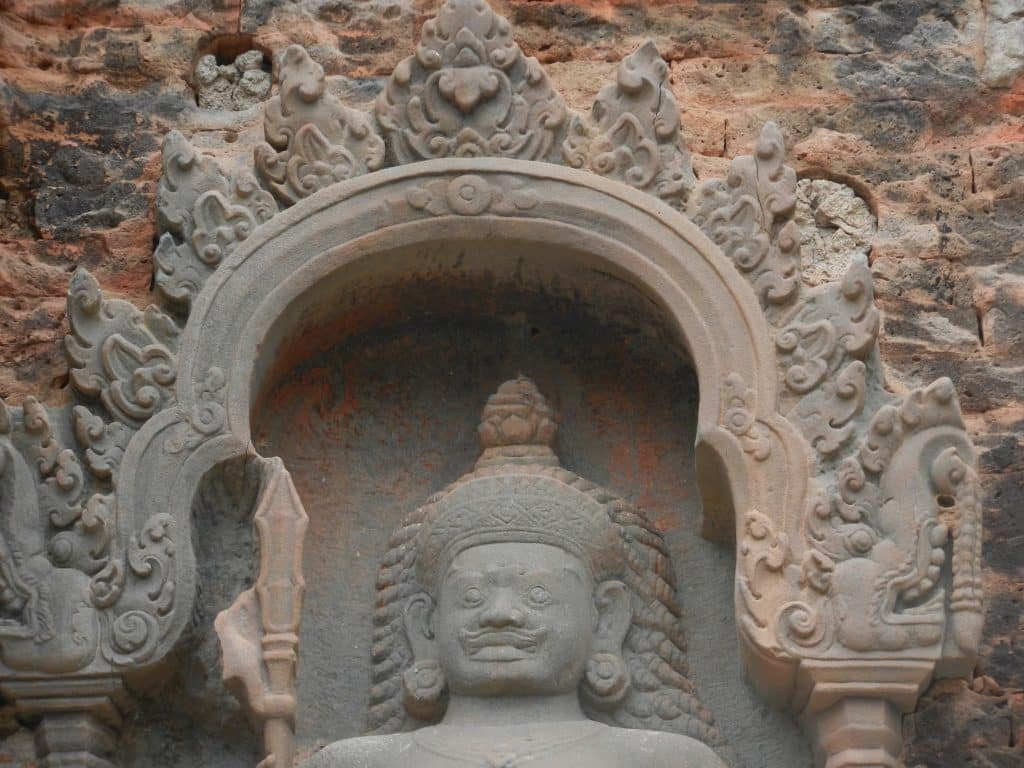
Let’s try to sneak past this dude and get to Preah Ko’s inner treasures.
But not so fast–he’s actually one of the treasures.
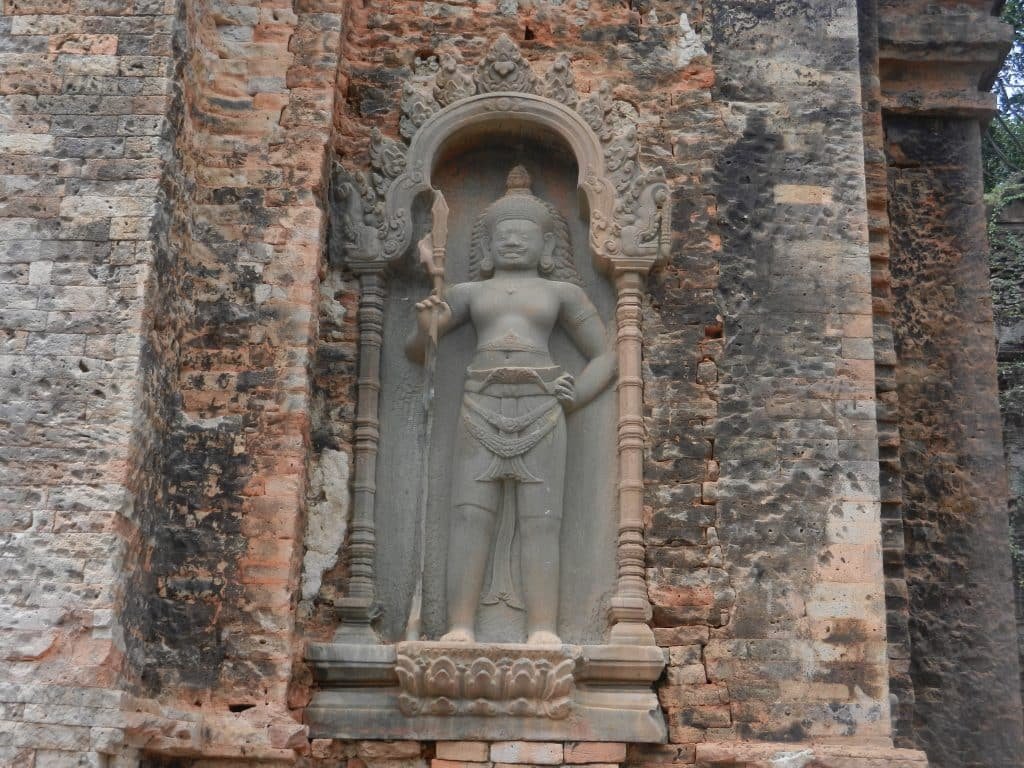
In Sanskrit, he’s called a dvarapala–a gate guard. Hindu and Buddhist temples all over Asia have them to keep out the riffraff. But he has features that are common in Khmer sculpture from Preah Ko’s time:
1. A body that’s both strong and gracefully proportioned.
2. A calm and aloof facial expression.
3. A dignified bearing. He’s not snarling or saber-rattling. He’s too confident for that. He knows that he can flatten anyone just by blowing on him.
Khmer society was elitist with a capital E. Its economy was based on rice farming–Angkor had no merchant class and it didn’t use money (although some merchants from China moved in by the 13th century). Kings, nobles, and elite priests marshaled peasant farmers and slaves to work in the fields. This guardian projects the aristocratic strength and confidence that the Khmer nobles saw in themselves.
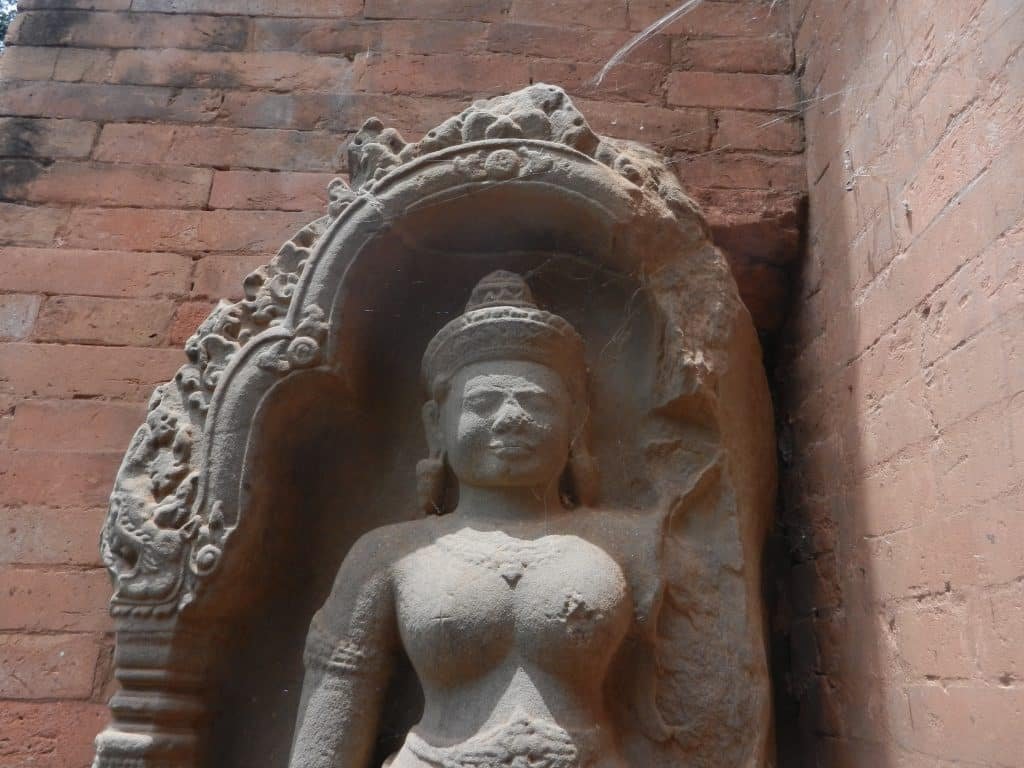
Preah Ko also has many female guardians, called Devata. They also mix strength, elegance, and aloofness.
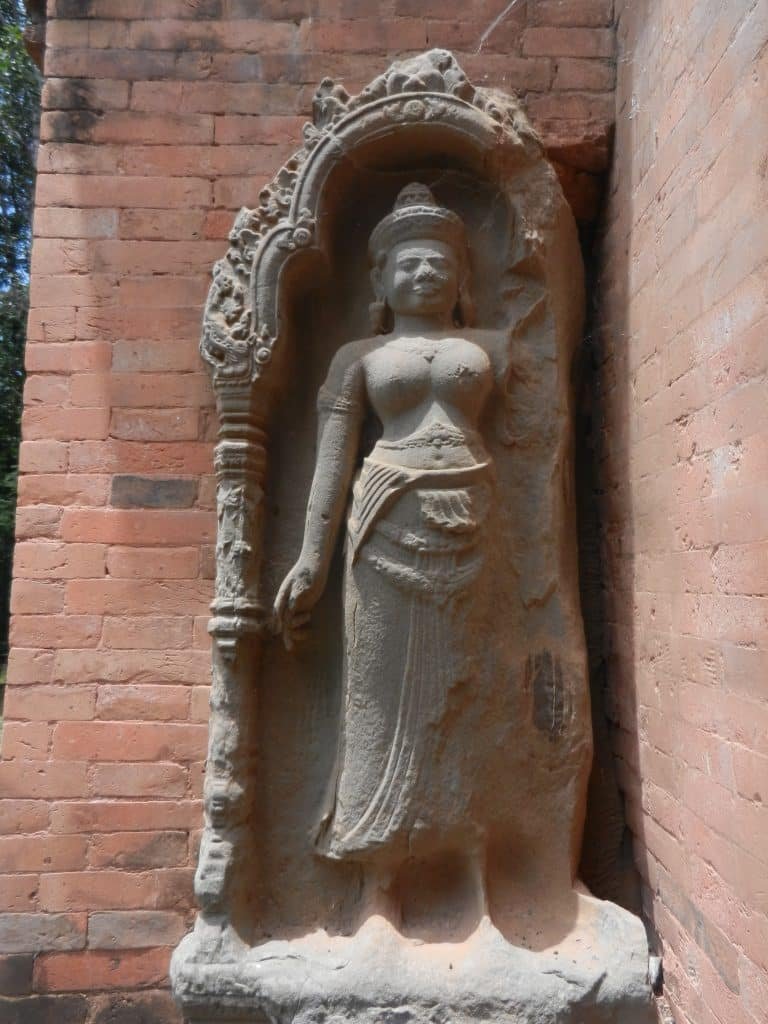
These guardians are arranged symmetrically–one on each side of a door:
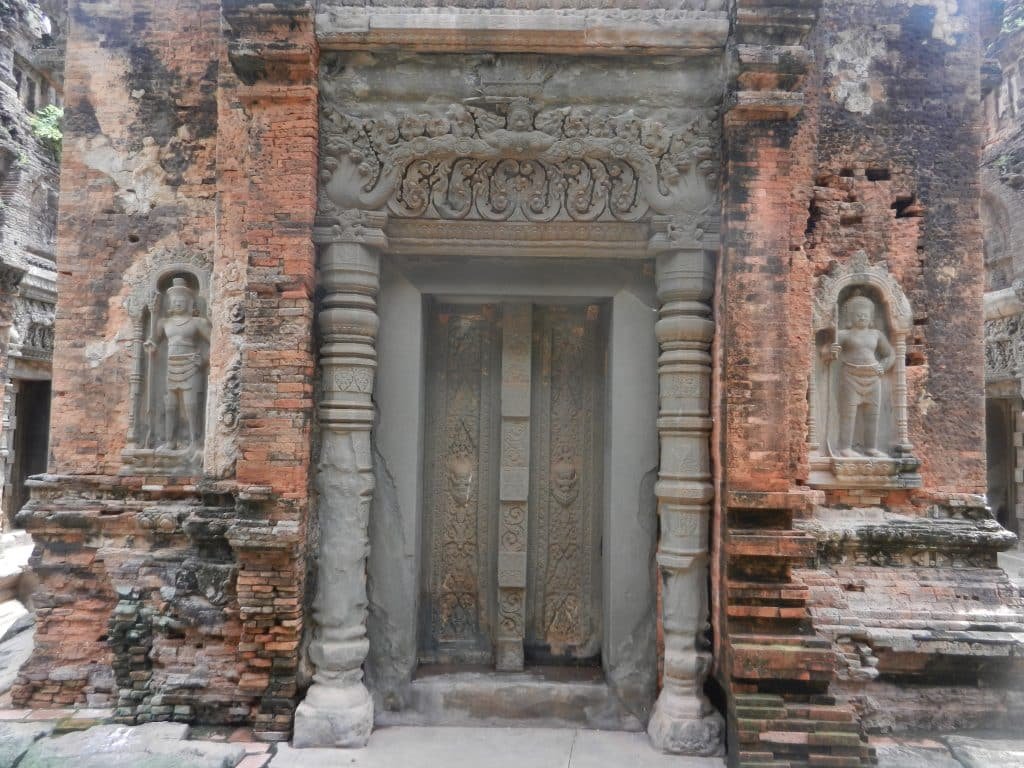
This symmetry makes them seem even stronger and more elegant.
Above the door guards, we can see the same mixture of dense animated vegetation and elegance.
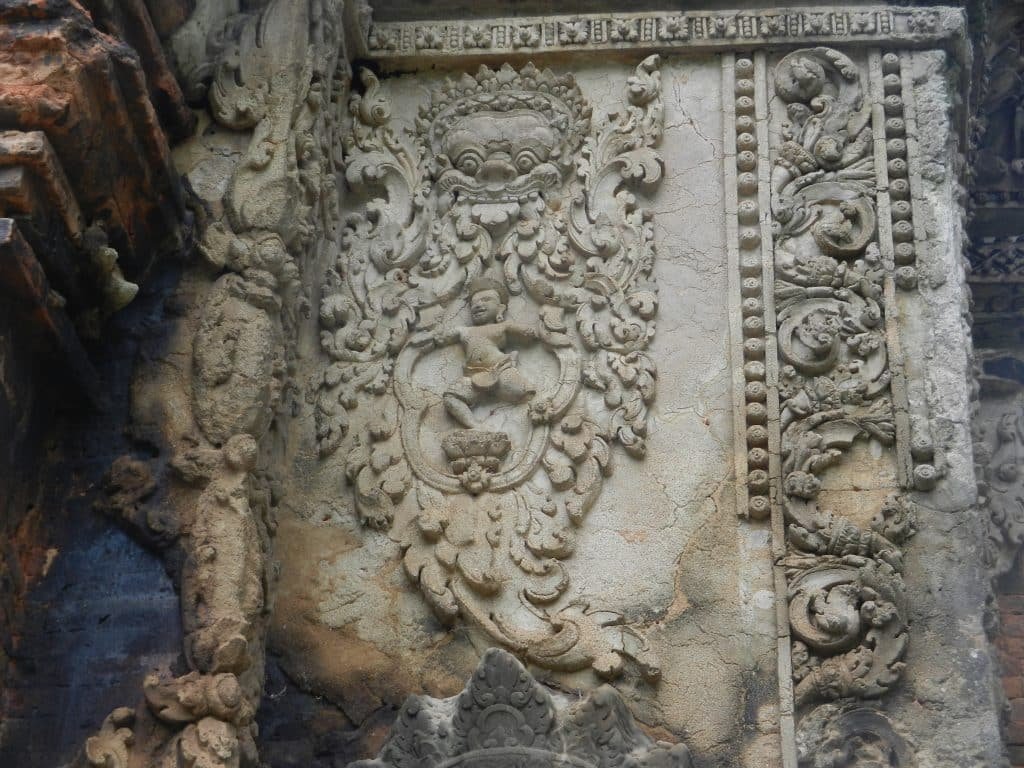
A monstrous figure called a kala vomits a garland, which surrounds a dancing male guardian. Yeah, kind of gross, but the dancer is very elegant. So this part of the towers conveys the same theme as the guardians below: power mixed with aristocratic refinement.
Lintels over doorways are decorated with imaginative vegetal patterns.
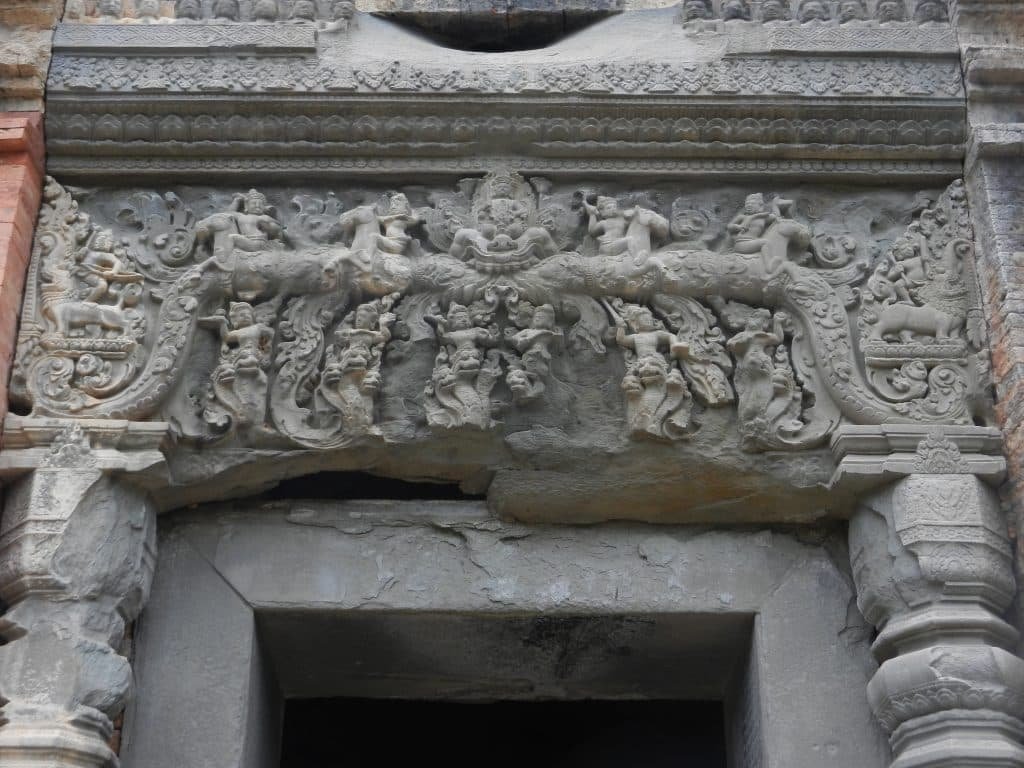
A thick garland emerges from each side of the mouth of a kala.
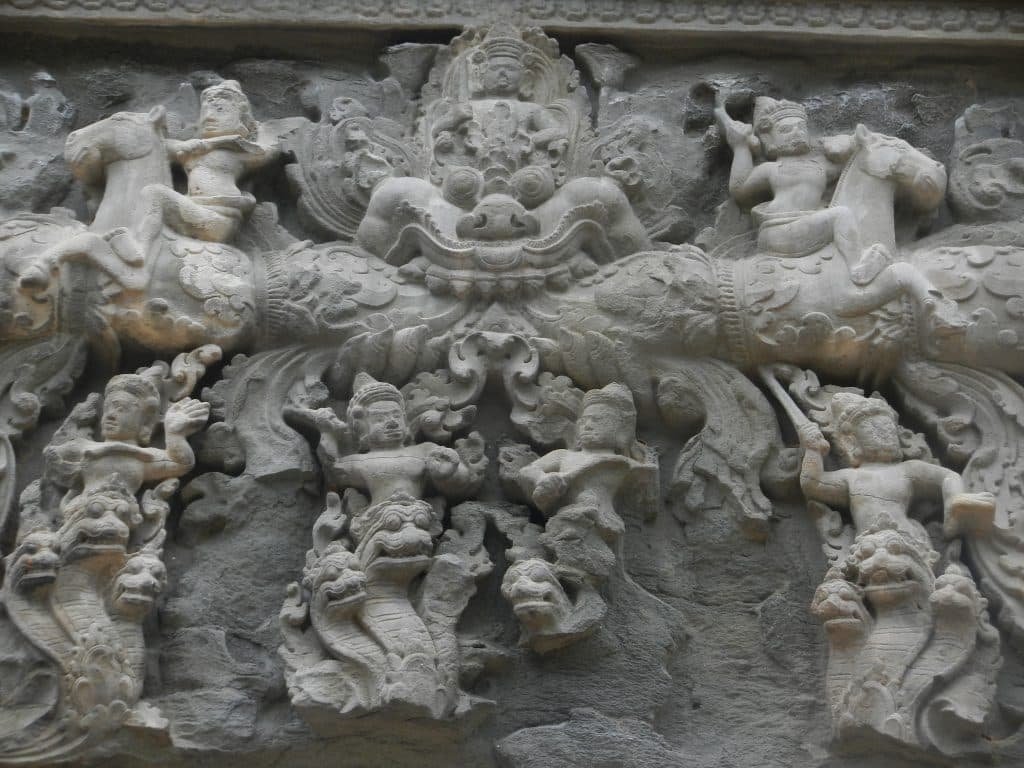
An imaginary beast with a lion’s head and an elephant’s body springs from each of the garland’s other sides.
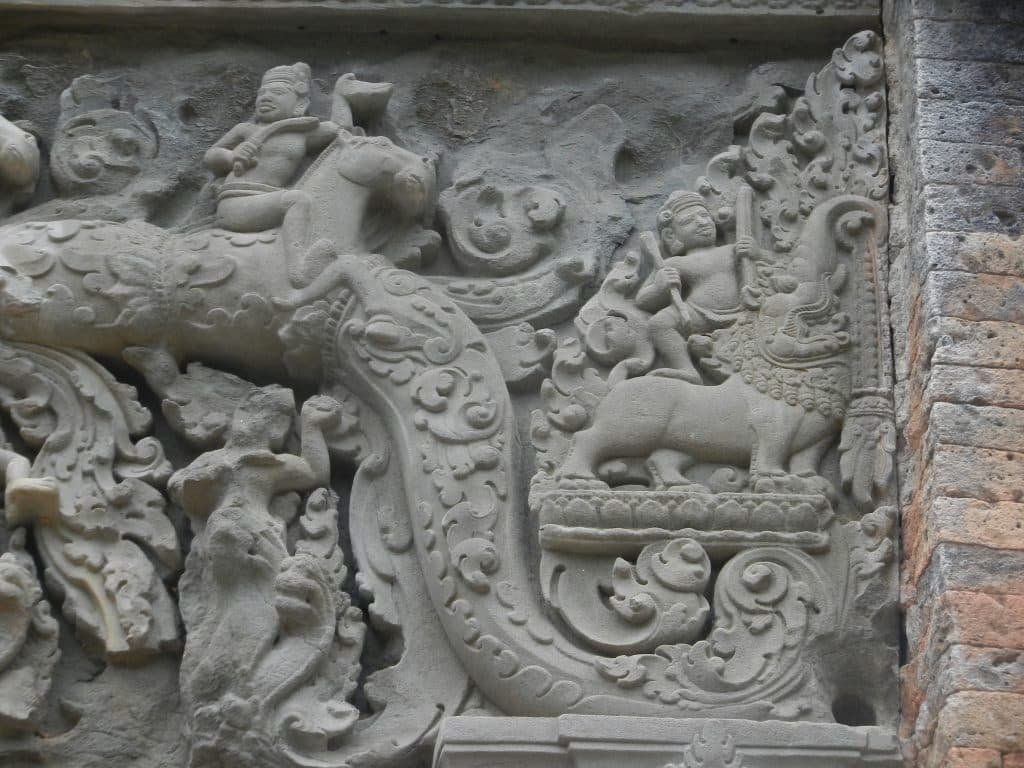
This design was already an ancient tradition with many variations, including Funan and Chenla. Khmer sculptors continued to use it for the next 500 years at Angkor.
These shrines’ carvings are special because:
1. The entire towers were carved so that their whole edifices radiated nature’s forces and civilized them.
2. The towers are multi-leveled, so when you look higher, you peer into more spiritual realms. Preah Ko’s shrines seem to embody a hierarchy of existences, and so far we’ve only explored the lowest and densest.
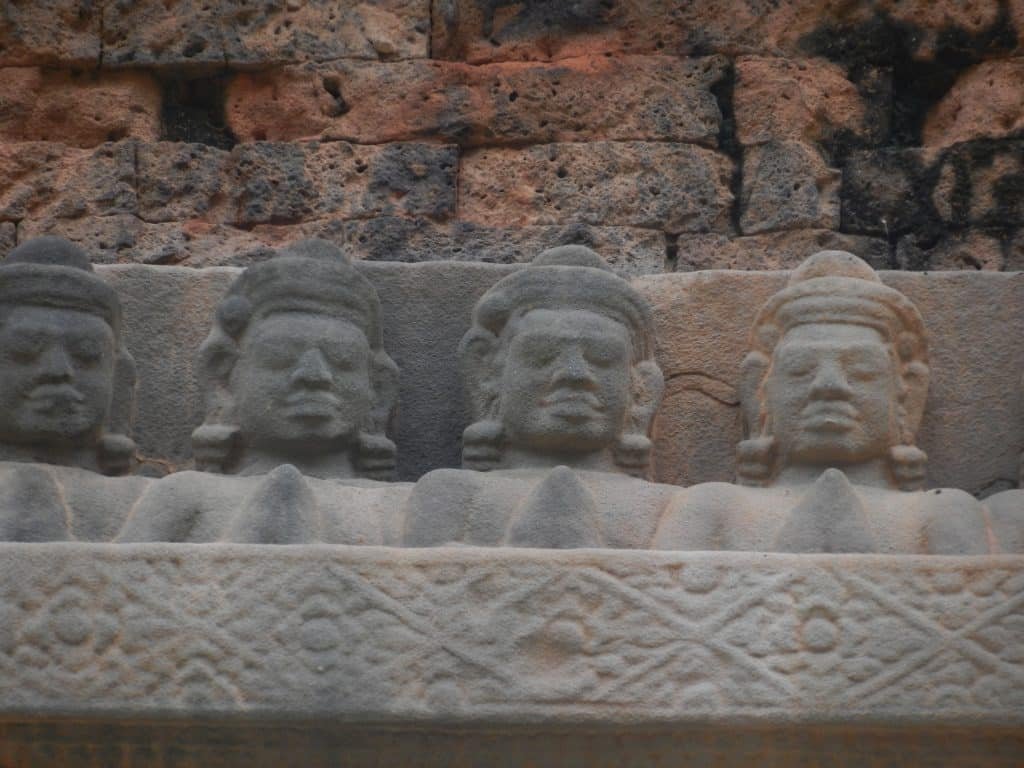
These figures pray over the lintel of one of Preah Ko’s doors. They mix elegance and strength as the door guards do, but they’re more spiritualized.
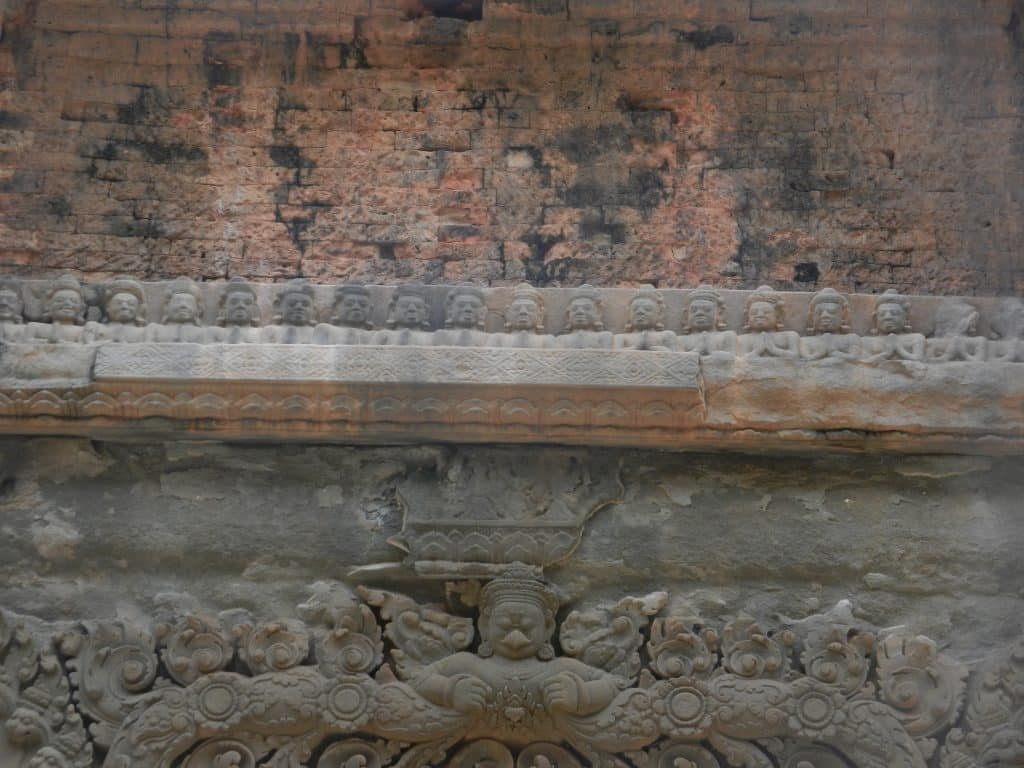
They’re not in your face or displaying their physiques. You actually have to squint to see them, and it took me a while to notice them. But we’re now in a more rarefied world.
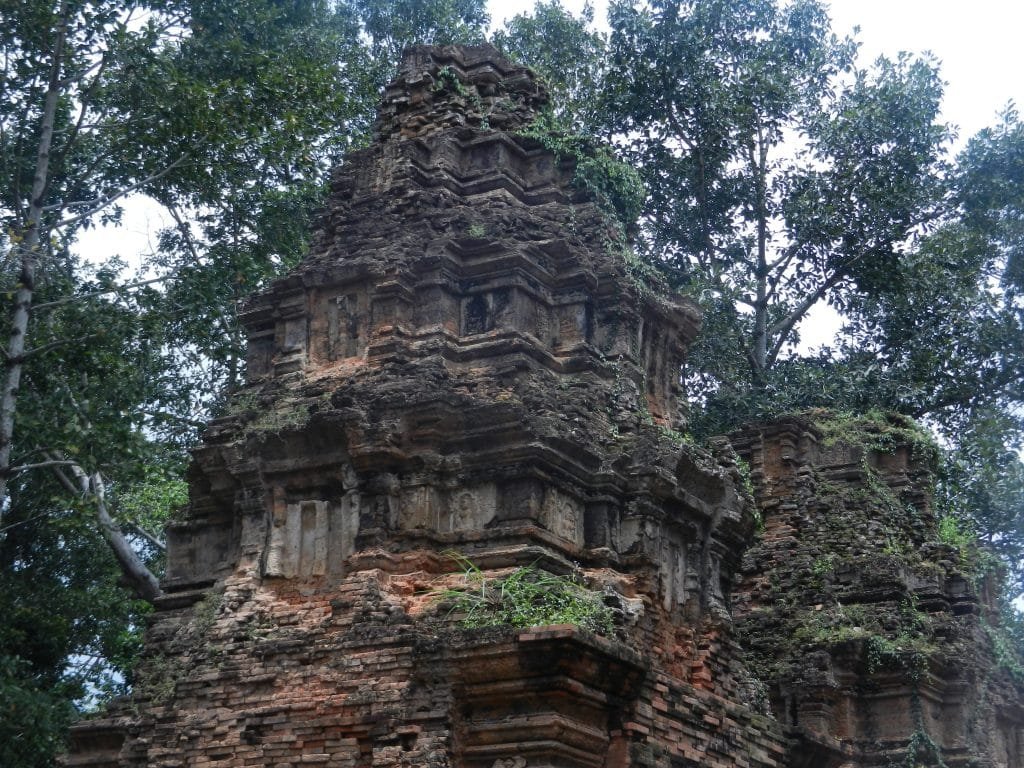
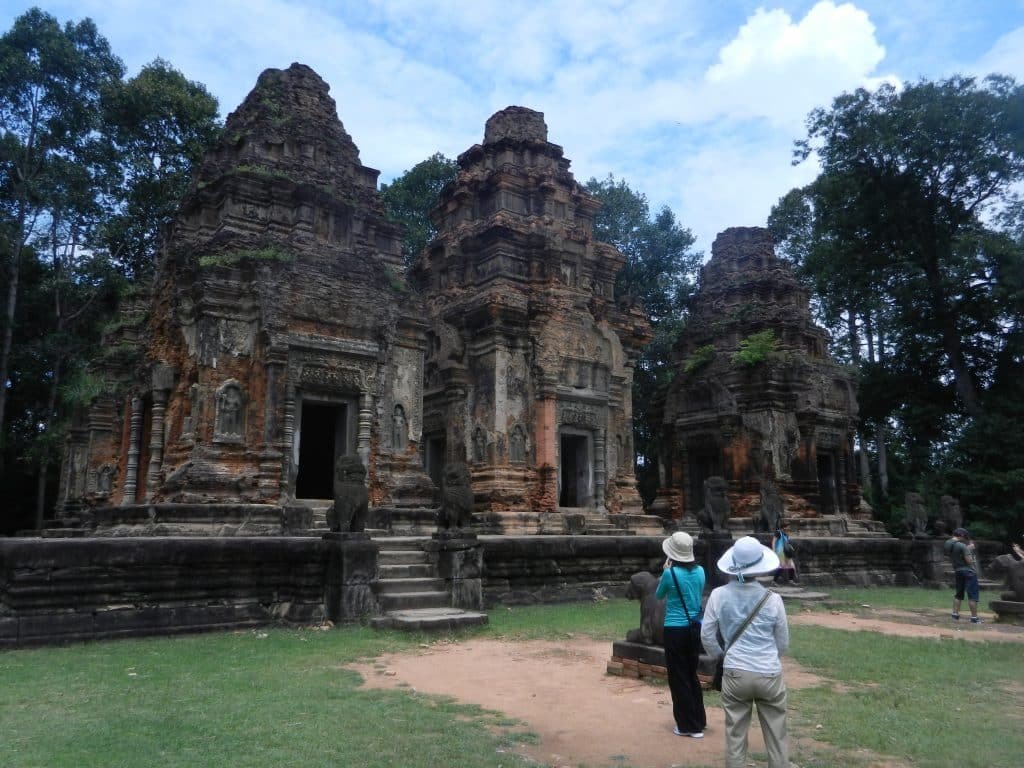
You can see several levels on the upper parts of Preah Ko’s shrines.
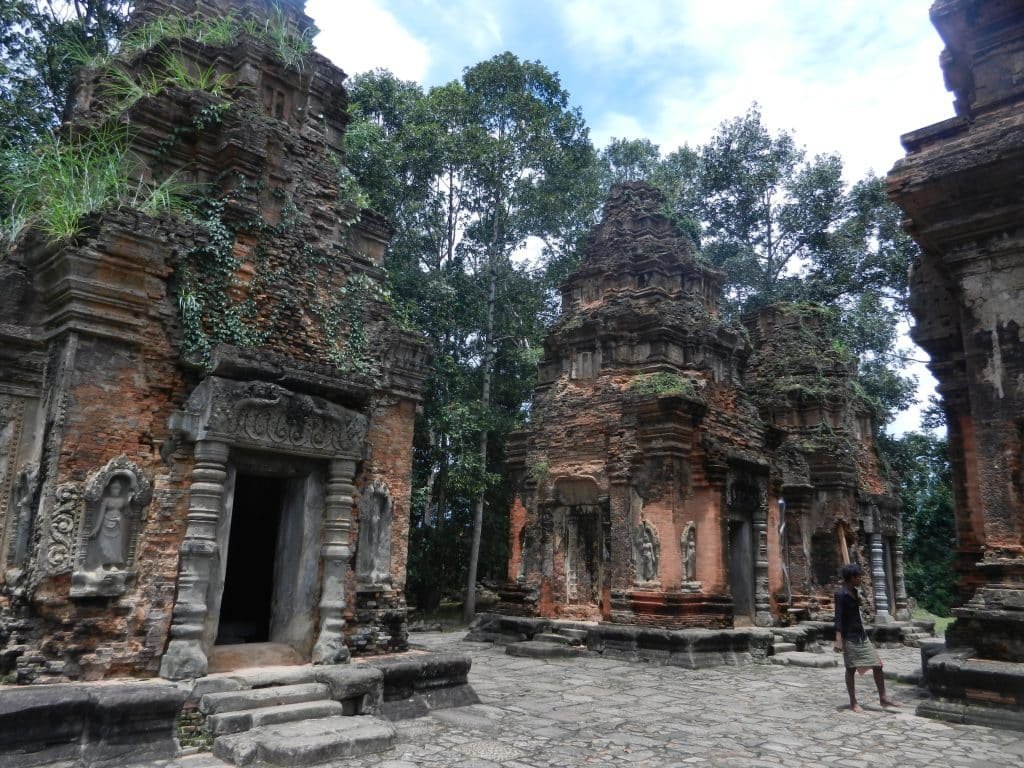
And the levels become smaller towards the top. This was already an old feature of Indian temples, which inspired the designs of Khmer temples, though Khmers put their own spins on them. Many devotees see the multi-leveled towers as a hierarchy of increasingly spiritual worlds.
Angkor Wat was also designed as multiple levels of reality that are increasingly spiritual.
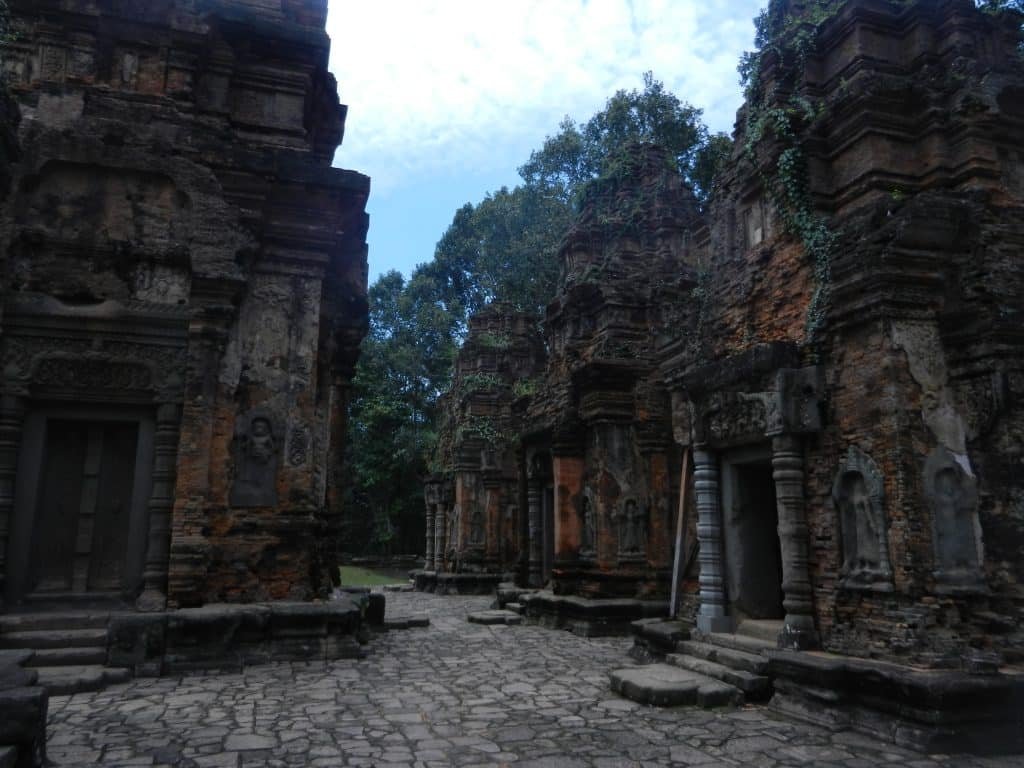
But Preah Ko mixes lofty aspirations with intimacy. Indravarman I honored his parents here, and the closeness and human scale of the six shrines were ideal for private devotions. The six shrines represent ancestors, including his parents. The males form the front row, and the queens line the back. The towers were smaller than I expected from photos in books. Like Chenla temples and unlike Angkor Wat, they didn’t make me feel as small as a dust mite. They’re so close to each other that walking between them felt like being in the midst of a family. Perhaps Indravarman I imagined his ancestors talking to each other when he paid his respects there.
Preah Ko was so influential in Khmer art because it blends all levels of meaning. Power and elegance, high aspirations and intimacy, and the material and spiritual worlds are in perfect balance. Khmers must have seen these as the ideal patterns that order nature, society, and the heavens. They built many huge temples after Preah Ko, but none blended all these domains better.