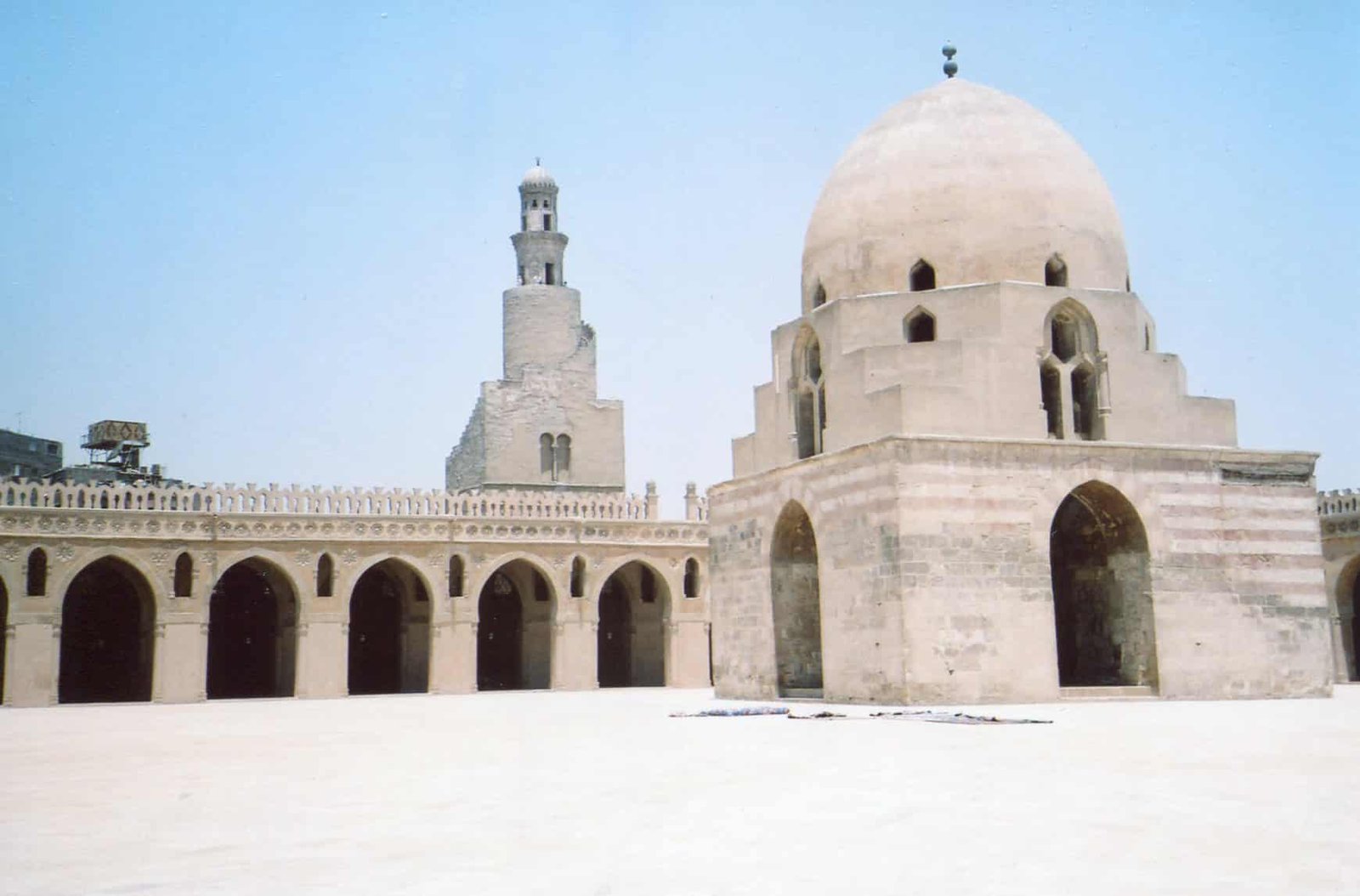
On the surface, nothing could seem simpler than an open courtyard.
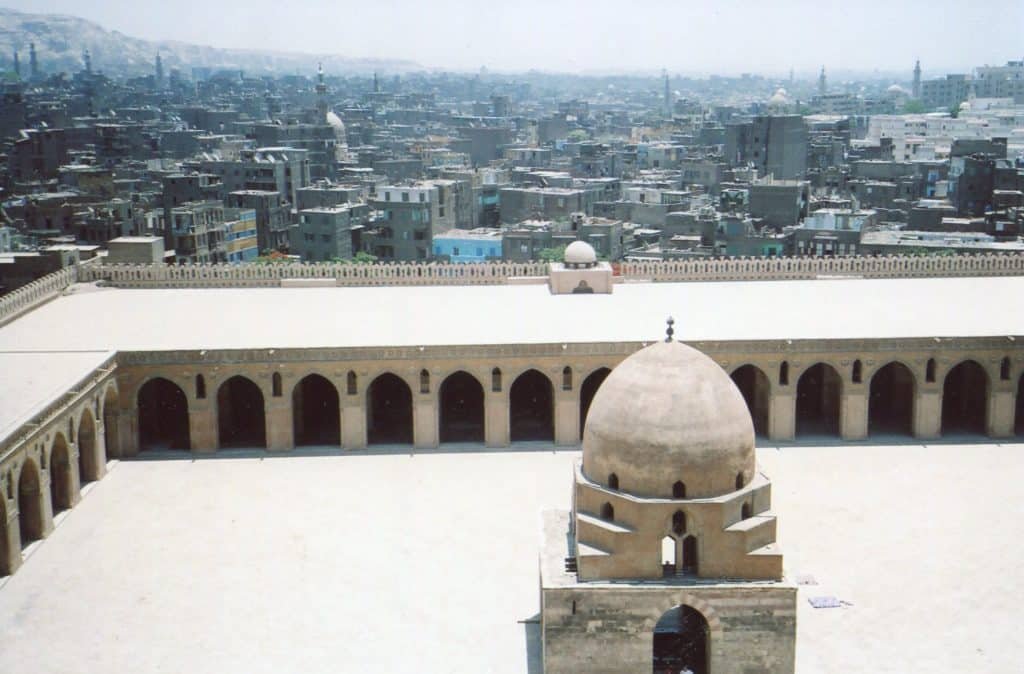
But even the mosque’s courtyard (the Ibn Tulun Mosque’s in the two above photos) has deep meanings that take you into the heart of Islam. They also show a different concept of geometry than the West’s focus on abstract and static lines and shapes.
The early development of mosque architecture was based on Mohammed’s house in Medina. The living quarters were lined on two sides of an enclosed courtyard. People gathered in the courtyard to hear the prophet speak. The courtyard became one of the basic features of mosques all over the world.
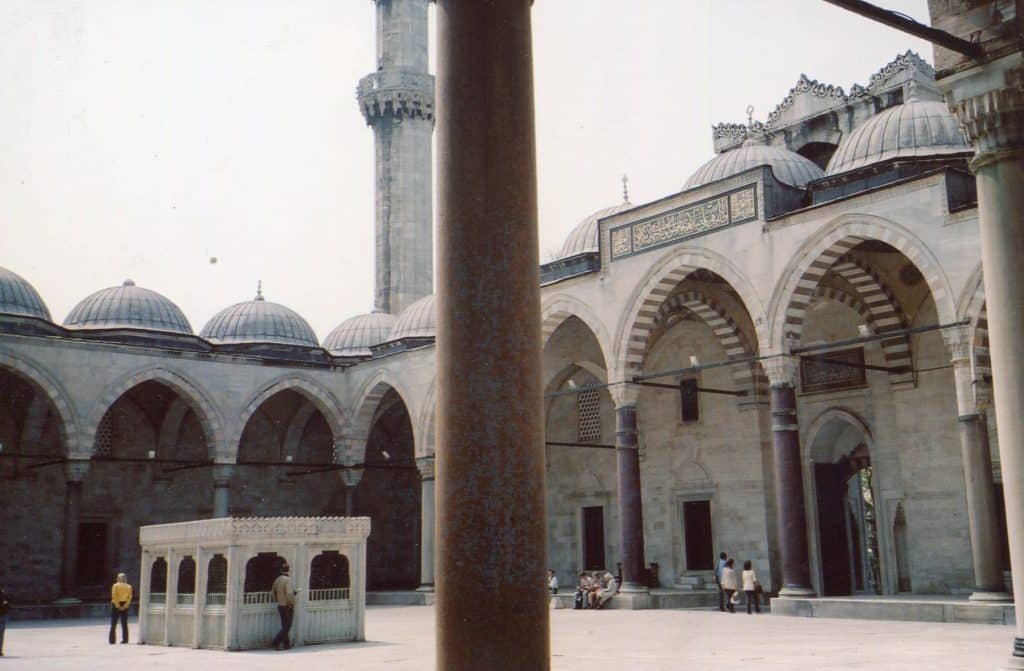
It’s a standard feature of Turkish mosques, including the majestic Suleymaniye Mosque in Istanbul (above).
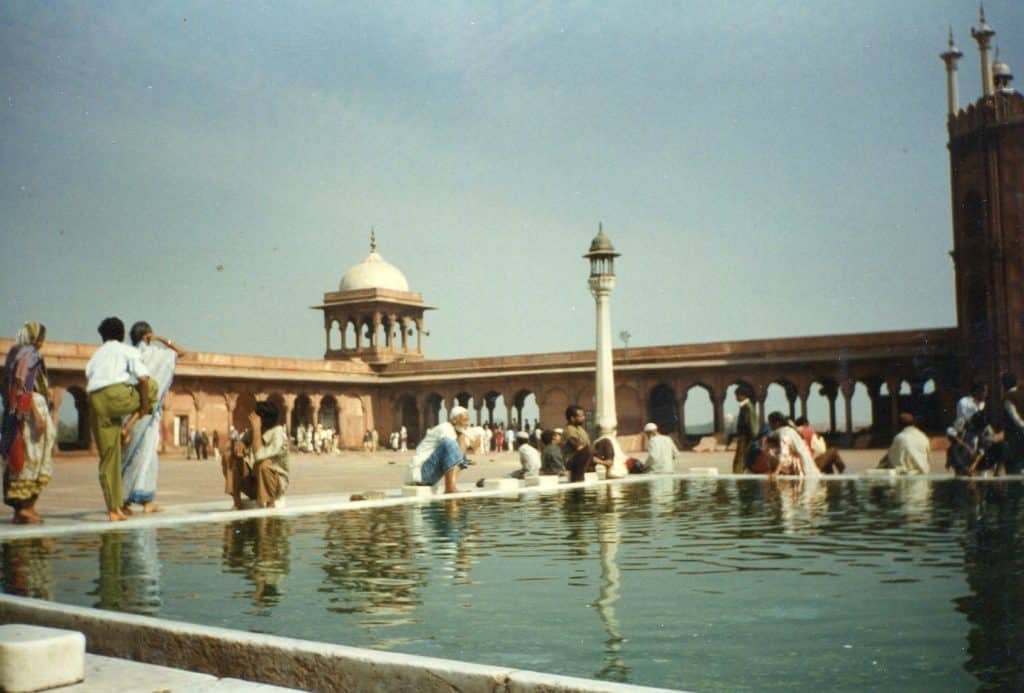
And mosques throughout India have one, including Delhi’s Jama Masjid. People are supposed to clean themselves before prayer, so mosques have an area where people can wash. A grand mosque like Jama Masjid has a large pool with elegant marble stools.
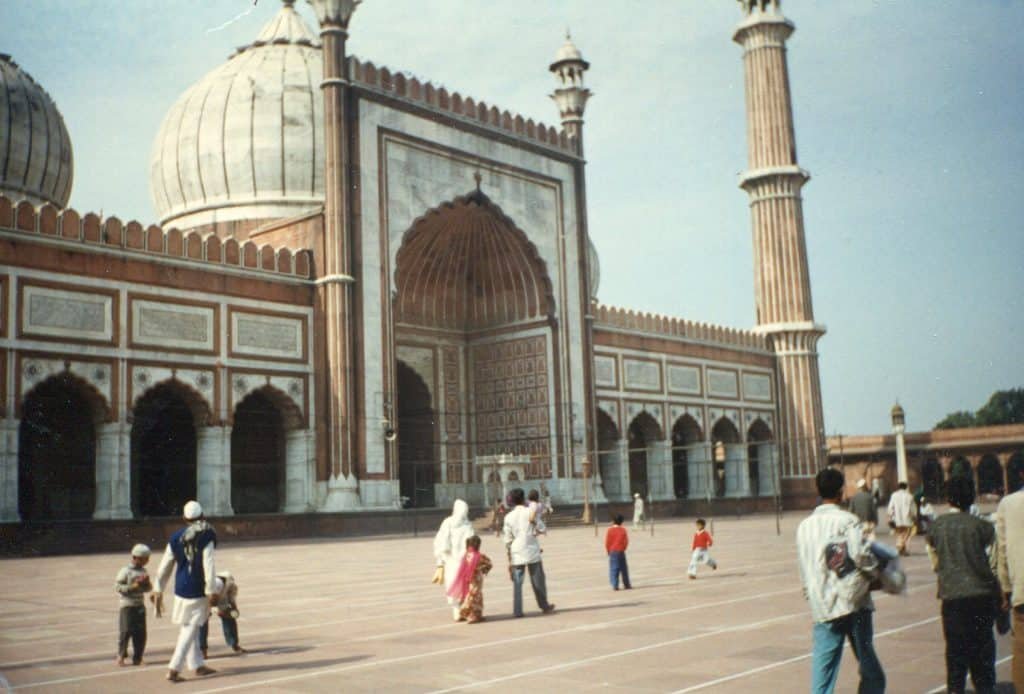
It faces the main building, which graces the above photo.
But the courtyard has deeper meanings than just being a place for rituals.
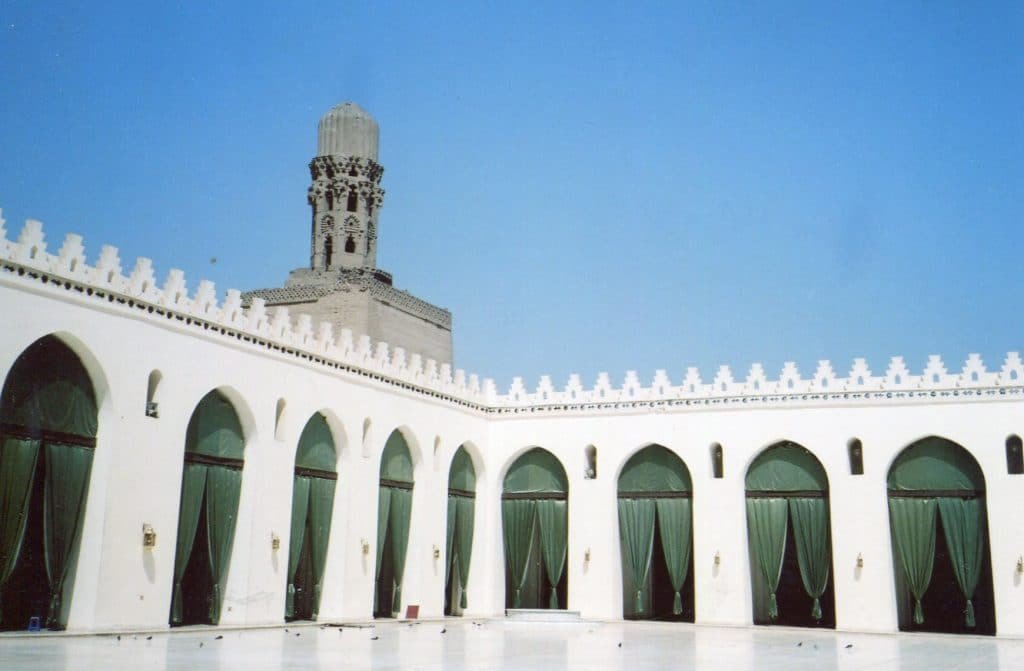
Islam focuses on one’s direct relationship with God–there should be no intermediaries. The linear plans of Christian churches often reflected the social hierarchy in the Middle Ages–elites sat closer to the altar and in upper galleries. But the mosque’s courtyard and prayer hall don’t have any fundamental divisions. All are equal under God. All face the mihrab, which points to Mecca, and all bow together to worship God. This act is one of the greatest expressions of Islamic thought, and the mosque’s courtyard reflects it perfectly.
Courtyard designs have subtle aspects that reinforce the feeling of the direct relationship with God:
1. Many, like the one in the mosque of al-Hakim in Cairo (above), have very simple designs. The plain forms and white hue impart purity.
2. You’re directly under the sky and sun. This was a common experience in ancient Middle Eastern religions. You feel the power of the Creator directly–and in most Islamic countries, the sun is very powerful.
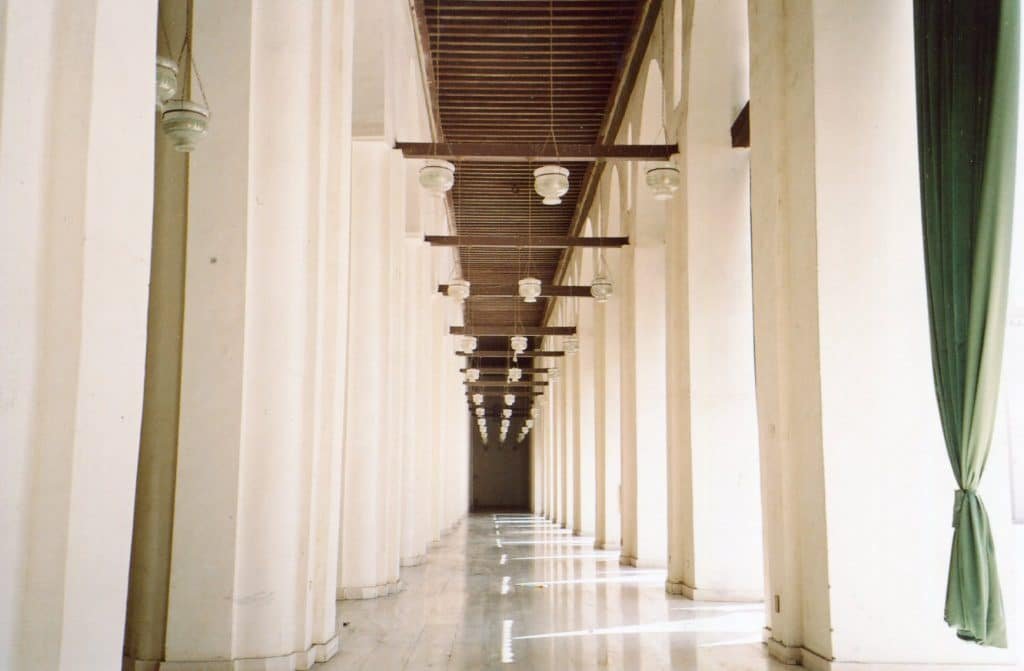
The prayer hall adjoins the courtyard. Mosques balance both with each other. The prayer hall has several rows of columns. There isn’t one central nave where processions of priests take place. Space is more egalitarian.
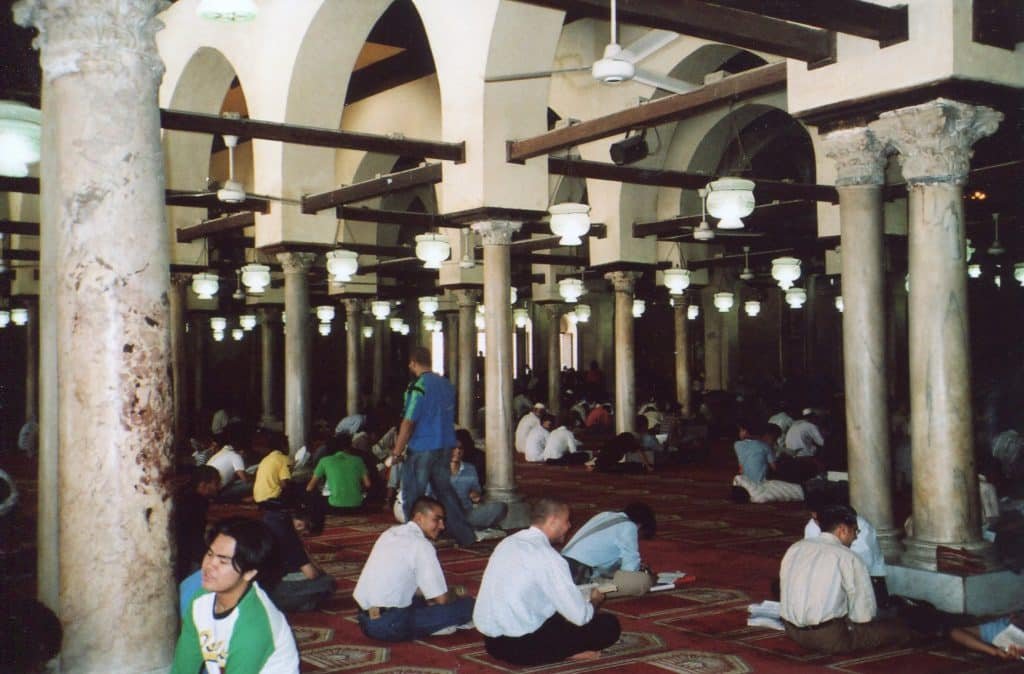
The faithful sit on prayer rugs between the rows of pillars, and out in the courtyard.
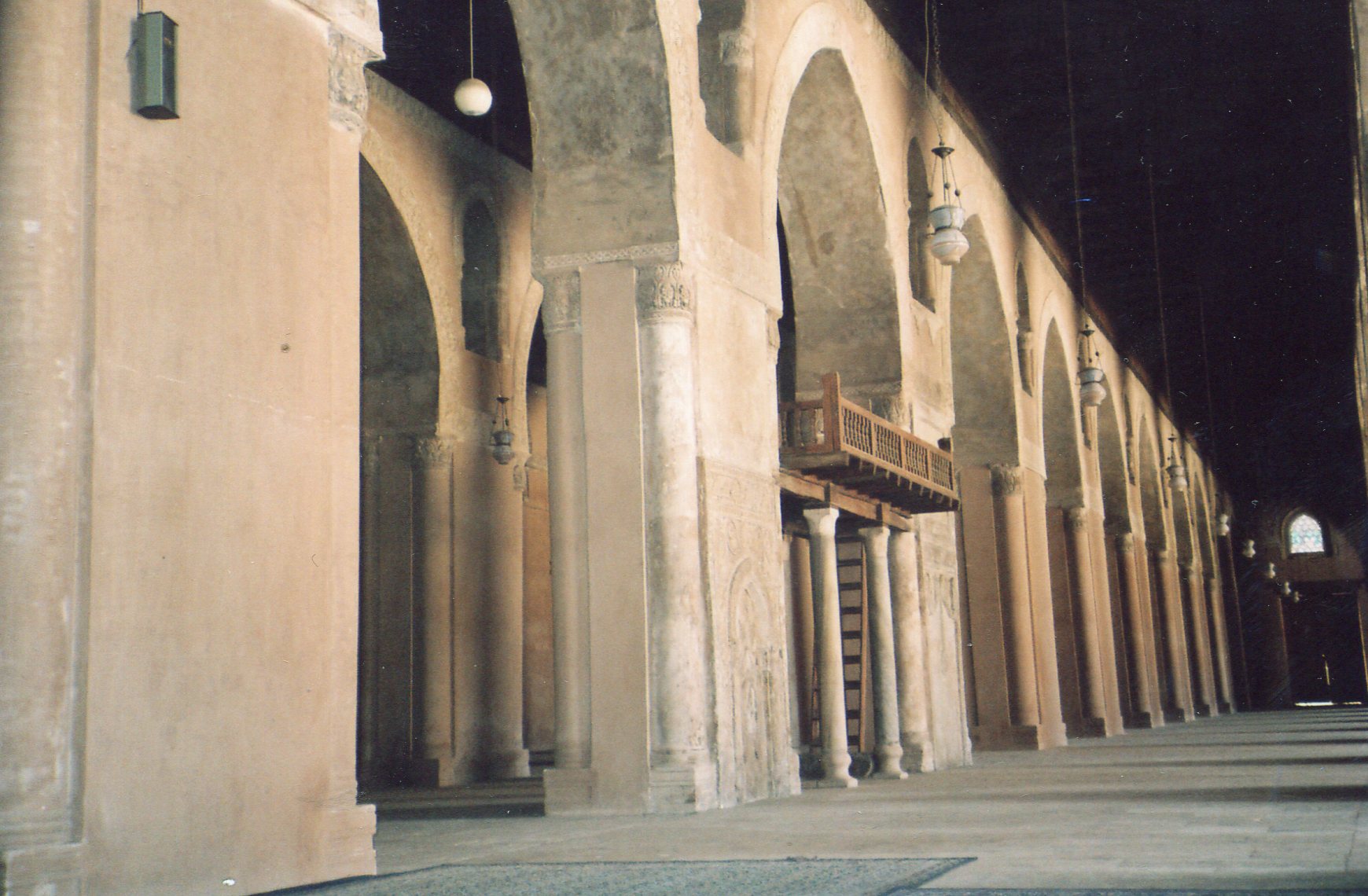
So the courtyard and prayer hall are designed to turn your focus directly to God. This simplicity is an interesting contrast with the opulence of ancient Khmer temples. Their complex geometries and sculptures reflect an equally rich cultural environment.
I had read that Kuala Lumpur, Malaysia has one of the world’s best Islamic art museums, but I had some trouble finding it. On the way, I saw a large crowd going into the national mosque, so I joined them. The interior is a large courtyard open to the sky, with all the walls painted white and a white marble floor. The area seemed pure, as though we were all one under God. The man on my left extended his hand to me and then touched his heart with that hand after our shake. The prayer leader then guided us through the sequences of bowing, kneeling, and standing upright. He sang instead of speaking, so the experience was as musical as visual. Through multiple senses, we all seemed united under God.
Some Westerners are surprised to hear that mosques are used for political pronouncements, and for rallies by oppositions. Why use a sacred space for bare-knuckle politics?
Islam doesn’t sharply distinguish religious and secular domains from each other–all domains were created by God. The political uses follow Mohammed’s tradition; he also directed public affairs in his courtyard. Islam is total–it encompasses all aspects of life. The mosque’s large open spaces for all the faithful reflects this holistic thinking.
You can see more depths of Islamic thought in concepts of the circle, and the Five Pillars of the faith. All these ideas reinforce each other as they comprise a very rich and under-appreciated world-view.