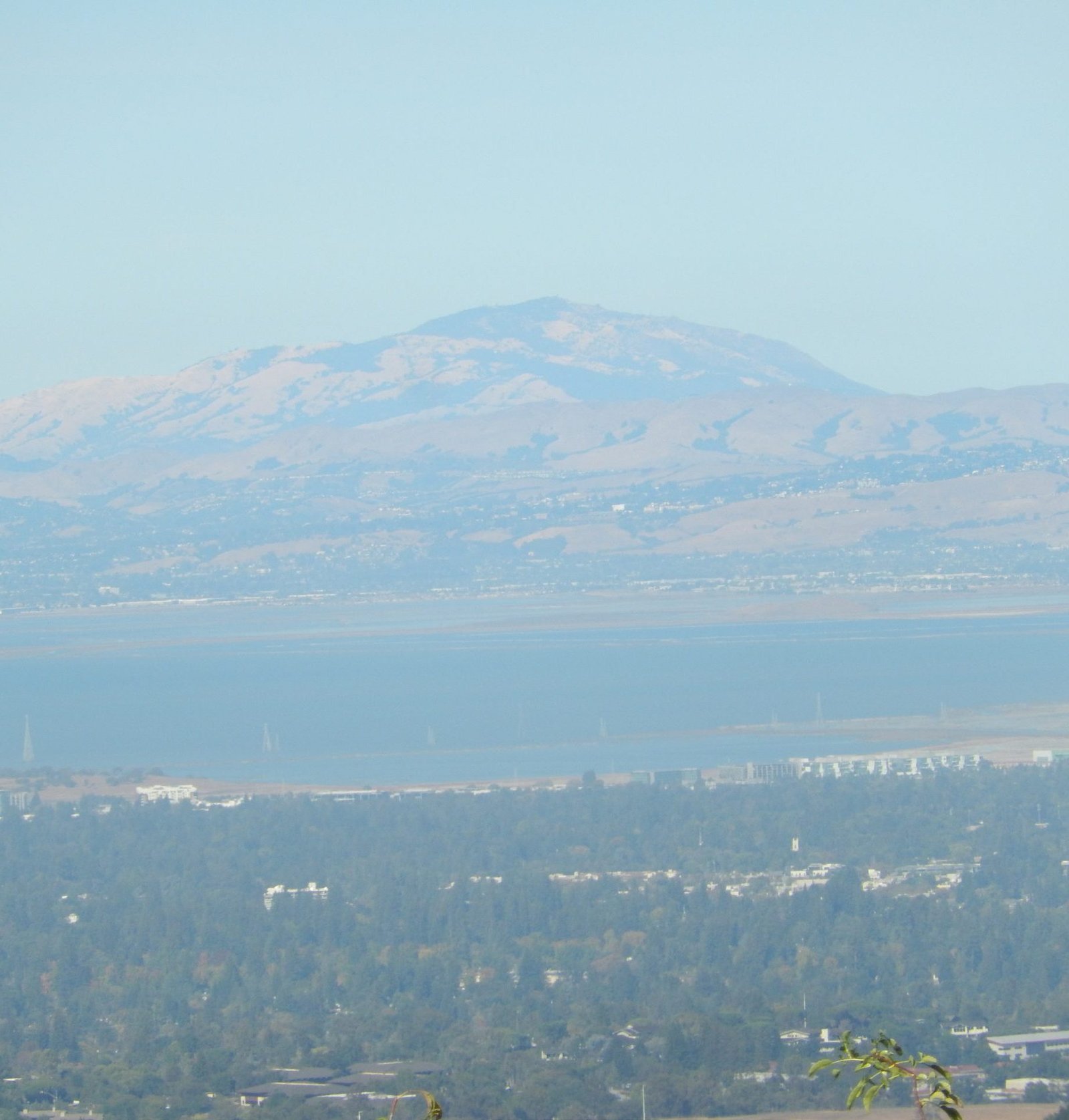
I hiked to Mt. Diablo’s summit two weeks ago, and it was one of the most spiritual hikes I’ve ever done in the SF Bay Area. I thought of the Ohlone, Miwok, and Yokut Indians who considered it to be the center of the world, where creation happened. Autumn is New Year for most of them, when the acorn harvest happens and the rains are about to begin. Indians gathered on Diablo’s slopes and traded. Yokut brought obsidian from the Sierras, Miwok carried abalone shells from the coast, and Ohlone brought red cinnabar from the Santa Clara Valley. They shared stories and ceremonies.
Many Native American languages immerse people in an intimate relationship with nature. Most are oriented to verbs rather than nouns, and many form complete sentences from one verb, attaching prefixes and suffixes according to context. You attach a certain prefix if you saw an event, a different one if it’s hearsay, and another if you inferred it. So you immediately have to state your relationship with the event–sentences aren’t abstract and from an objective distance.
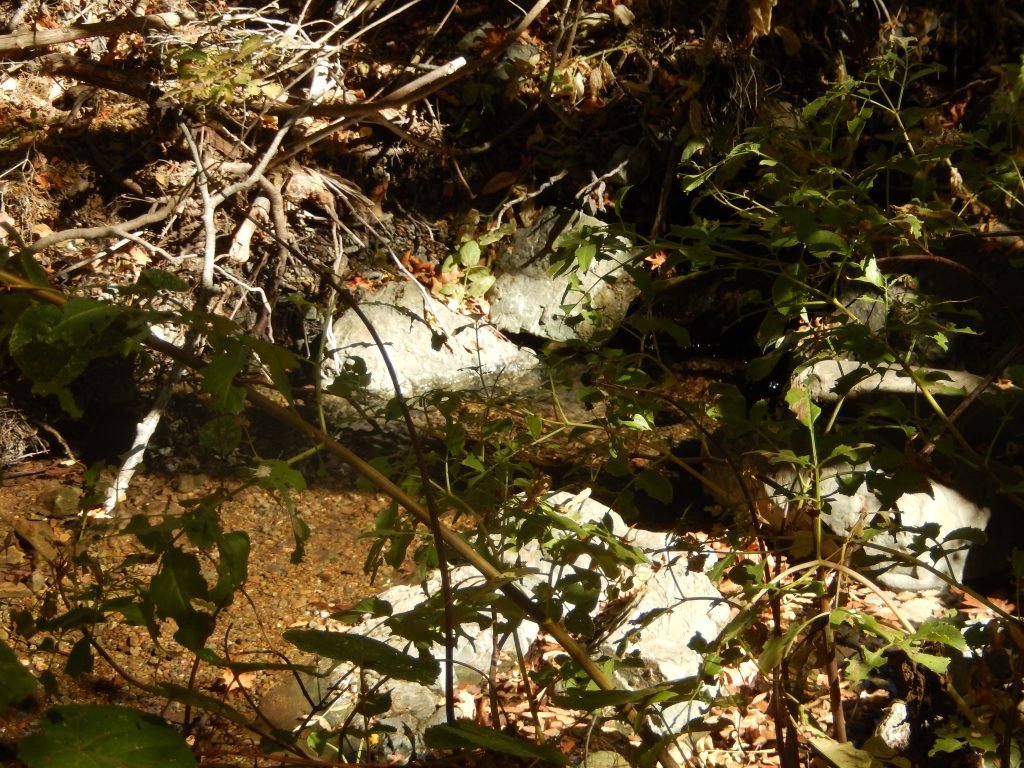
Ohlone gave proper names to many animals, trees, and stones. Many thought prominent stones carry memories of ancestors and mythic times, since they’re ancient and enduring.
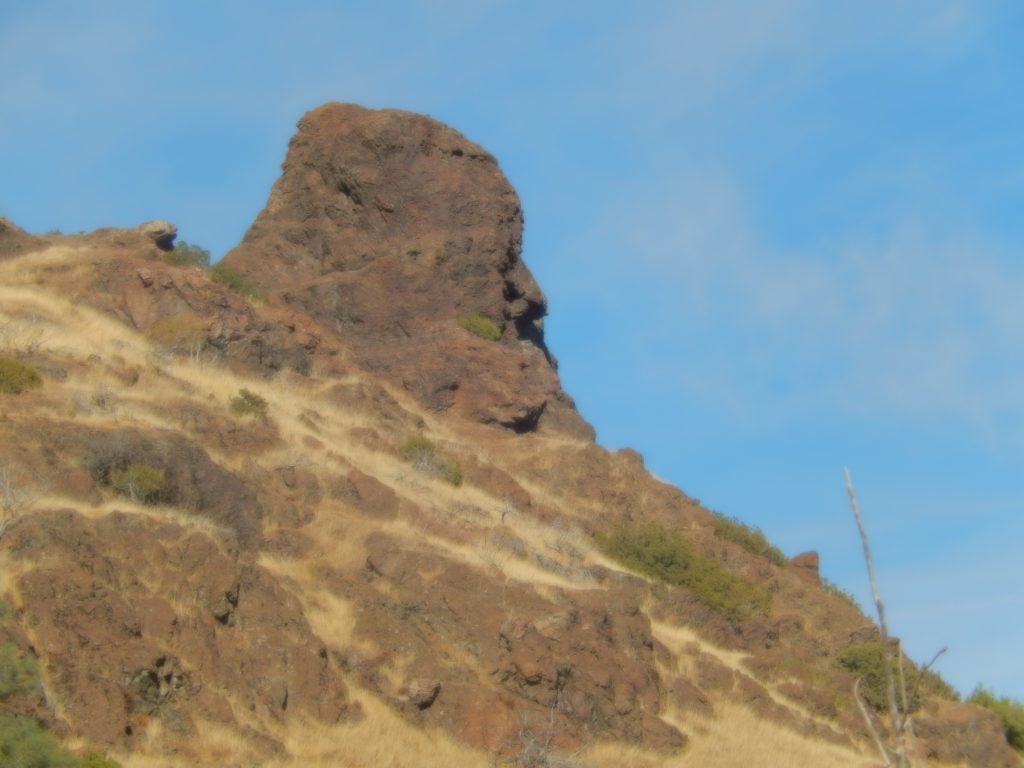
They also contain creative power, and some California Indians conducted rituals to harmonize themselves with it. Jeff Fentress, in “Prehistoric Rock Art of Alameda and Contra Costa Counties,” (in Lowell John Bean’s book The Ohlone Past and Present) wrote that cupule rocks (rocks with purposefully made depressions on their surfaces) were connected with fertility rituals, weather control, astronomy, fishing magic, and mourning. Prominent stones were treated as living entities.
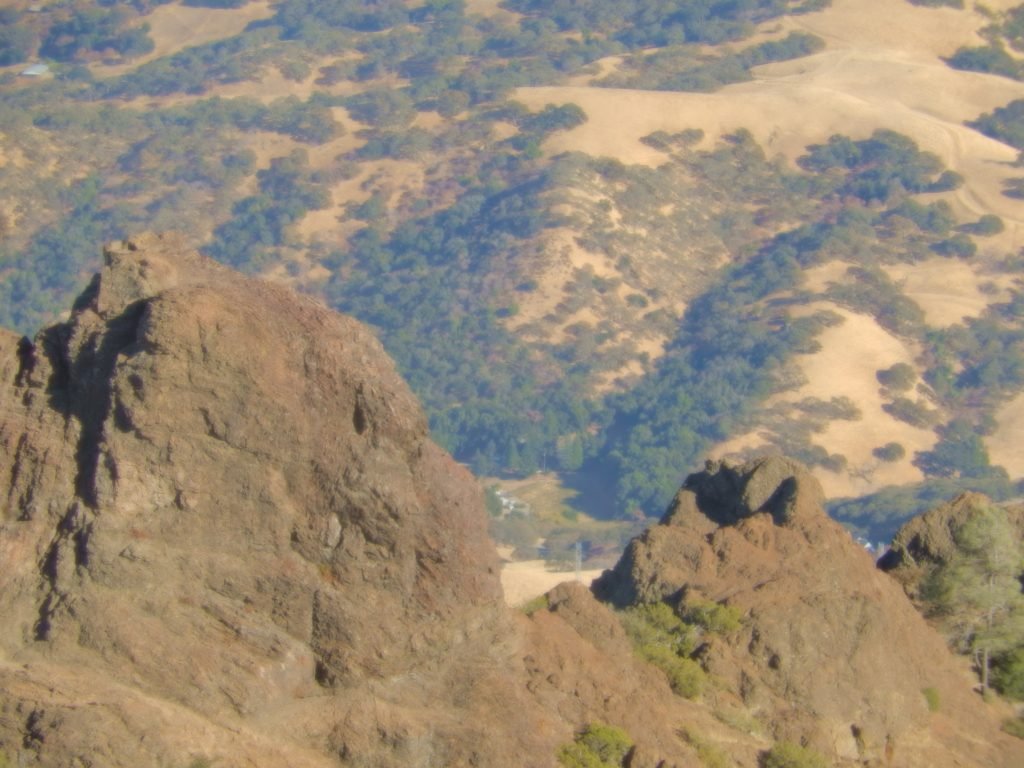
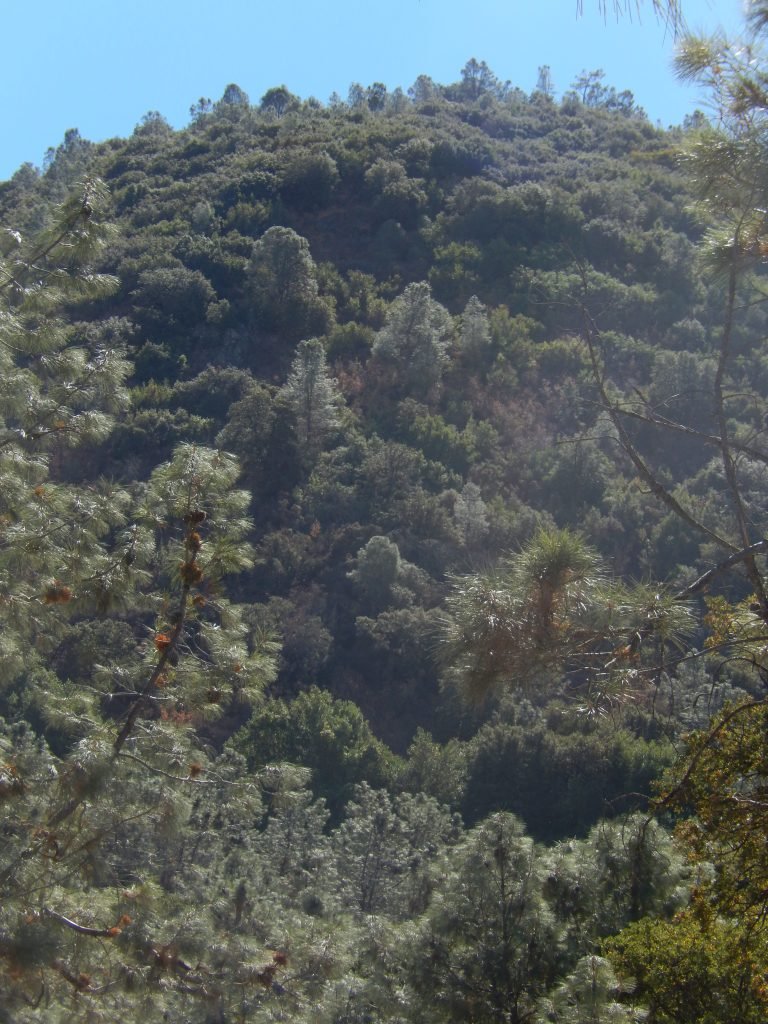
And they were in a balance with trees and scrub which is sometimes as exquisite as Raphael’s paintings.
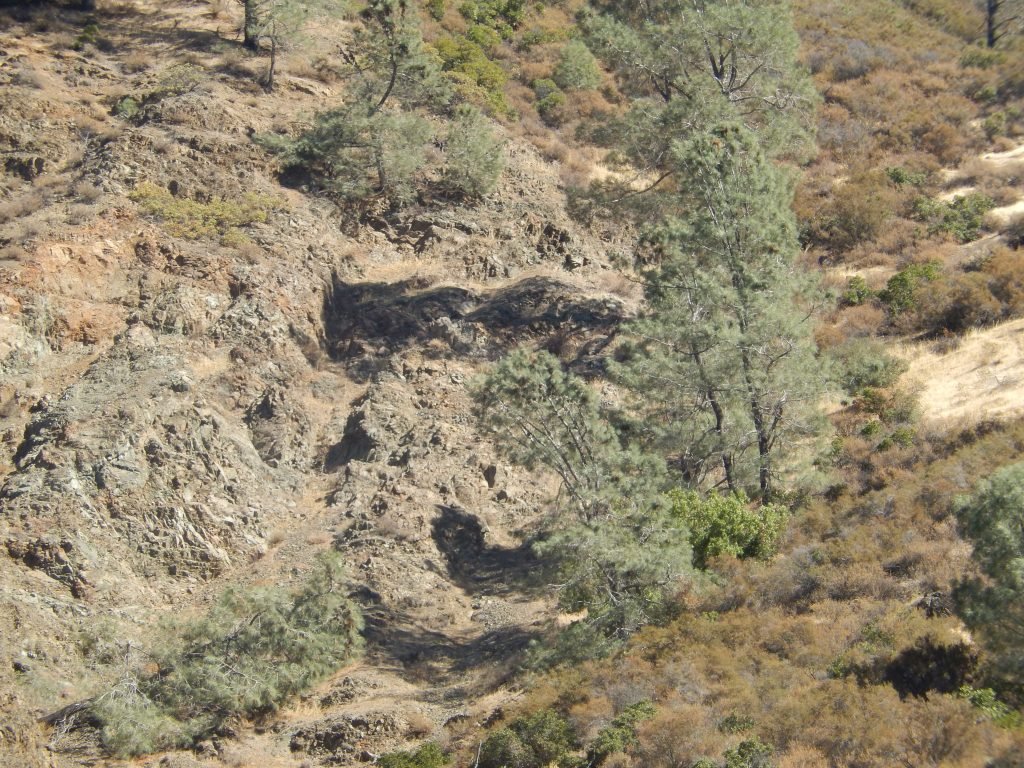
The objects that people lived with were not just separate things that were most fundamentally understood in terms of mechanical laws and elementary particles. They were alive, and people had deep relationships with them.
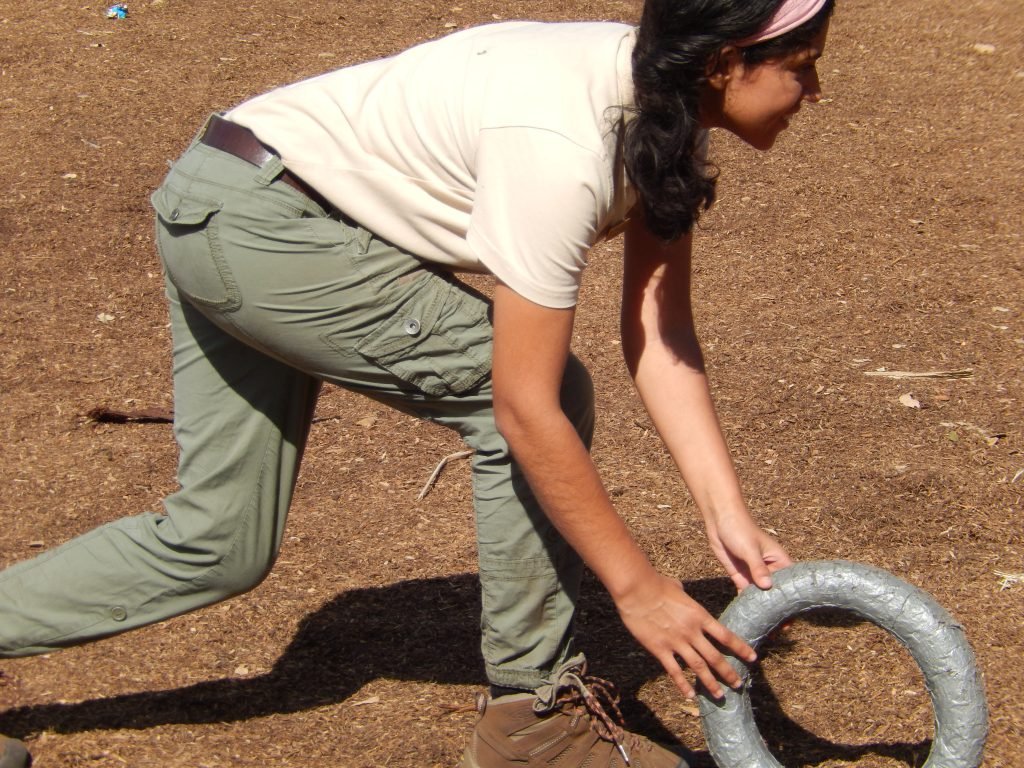
Christopher B. Teuton and Hastings Shade, in Cherokee Earth Dwellers, noted that teachings are not simply information; they’re most fundamentally about relationships and responsibility. Knowledge for Cherokees exists in living relationships. Verne F. Ray wrote that a Modoc (a Northern Californian tribe) woman said that when she was a girl her parents told her, “These mountains, these rivers hear what you say and if you are mean they will punish you.” (Below, an Ohlone woman is playing a traditional game with youngsters while teaching them about treating others fairly.)
A lot of sounds in Ohlone and many other Native American languages imitate aspects of the natural environment. The naturalist David Abrams, in The Spell of the Sensuous; Perception and Language in a More-Than-Human World, wrote that people in a lot of indigenous cultures have different assumptions about the use of language than modern Westerners do. The primary purpose of language is not to speak about things. It’s not mainly about conveying information about things we comprehend from an emotional distance. Instead, language is mainly about speaking with things (Chinese and Sanskrit writers have held other assumptions about the purpose of language).
The psychologist Iain McGilchrist, in The Master and His Emissary, wrote that the areas of the brain that are most centered on language are near zones that focus on pointing, music, and dancing, and that all these areas emerged together as our ancestors evolved. Language is deeply embedded in bodily experiences, and it’s integrated with several other mental functions. Their interactions construct meanings, and there is a lot of scope for cultural variation. Stephen T. Asma, in The Evolution of Imagination, also wrote that several creative abilities co-evolved with language, including music, dance, image making, and gesturing. Language, myths, songs, dances, and features of the natural landscape have been closely related for many traditional Native Americans. All are closely linked in a world that is intensely alive, and its vibrancy includes all senses. Many Native American cultures emphasize hearing, motion, and aroma as much as vision. All are ways to read and relate to nature.
This view of a relational world thus converged from many experiences. Most of the articles on this site are about exploring different places to expand our perspectives, but we can as well extend our horizons by deeply appreciating our own neck of the woods. Native Americans have lived here the longest by far, yet <1% of the people in this land greatly underappreciate how they have apprehended it. We and the large language models that AI uses only comprehend a sliver of what’s actually around us. But we’re immersed in a living and infinitely beautiful world that will never run out of wonders.
I had Native Americans in mind as I hiked up the mountain, but nothing I read prepared me for the summit.
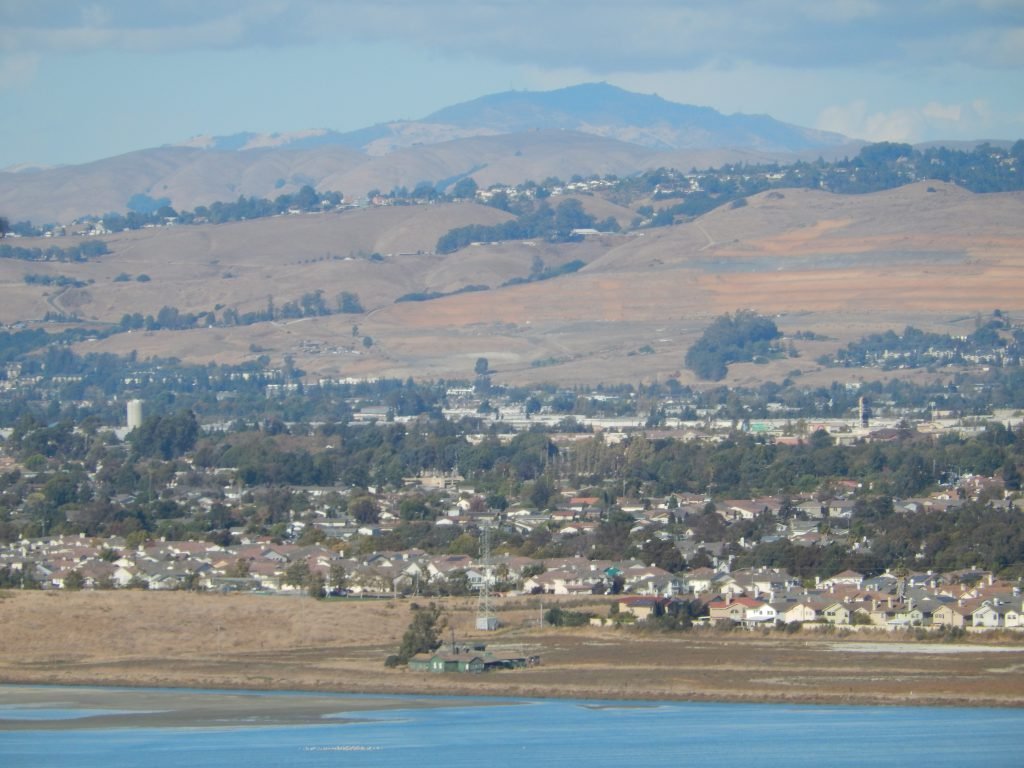
A much larger world soars above those East Bay suburban homes. We’ll explore it in the next article.