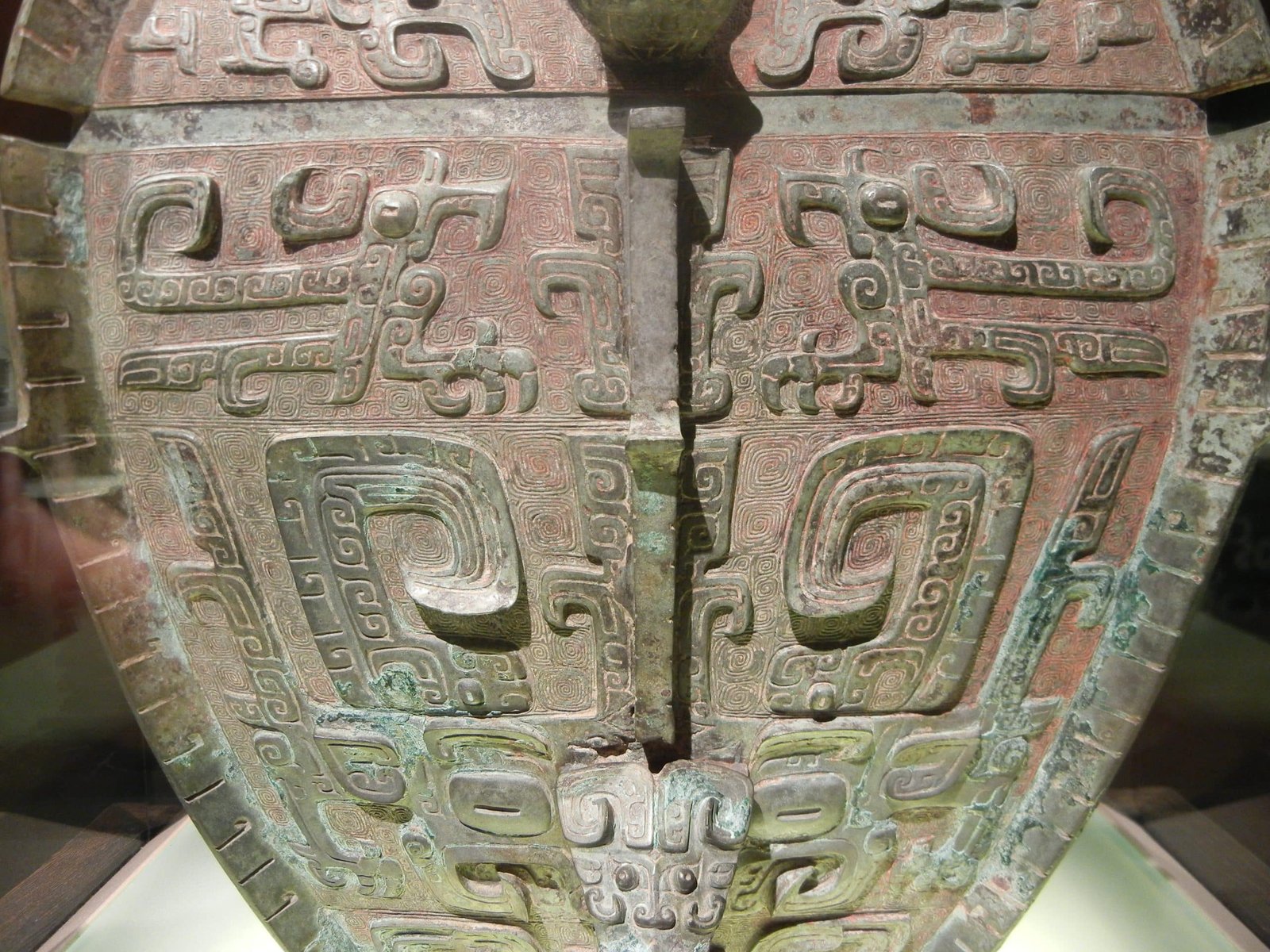
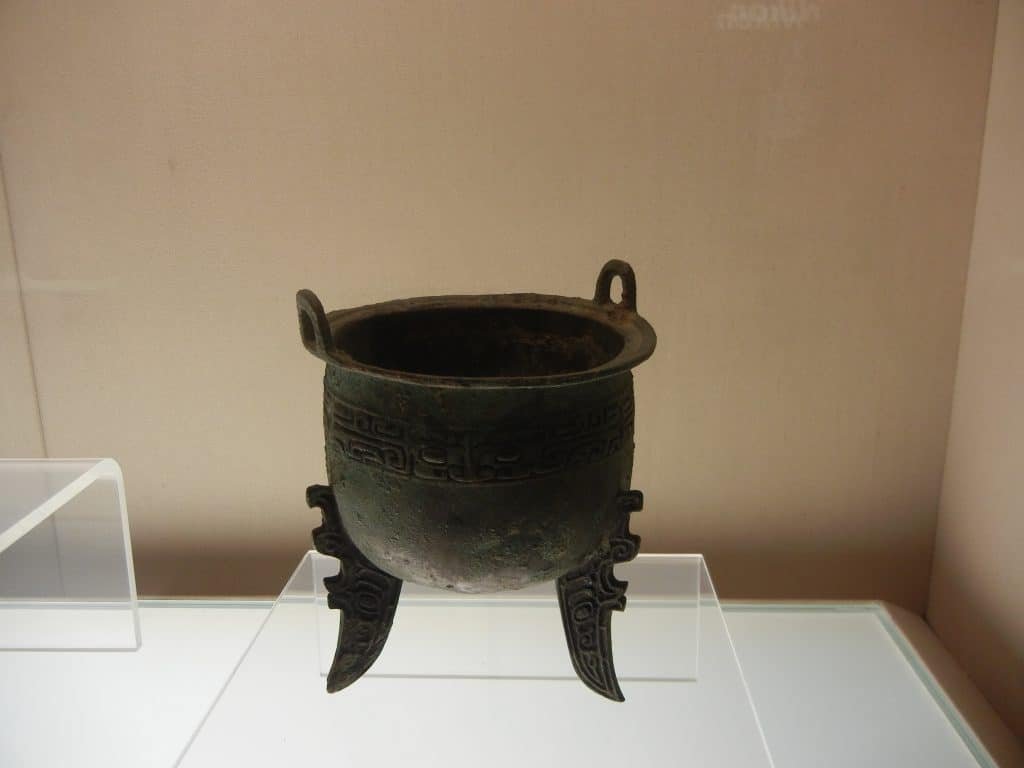
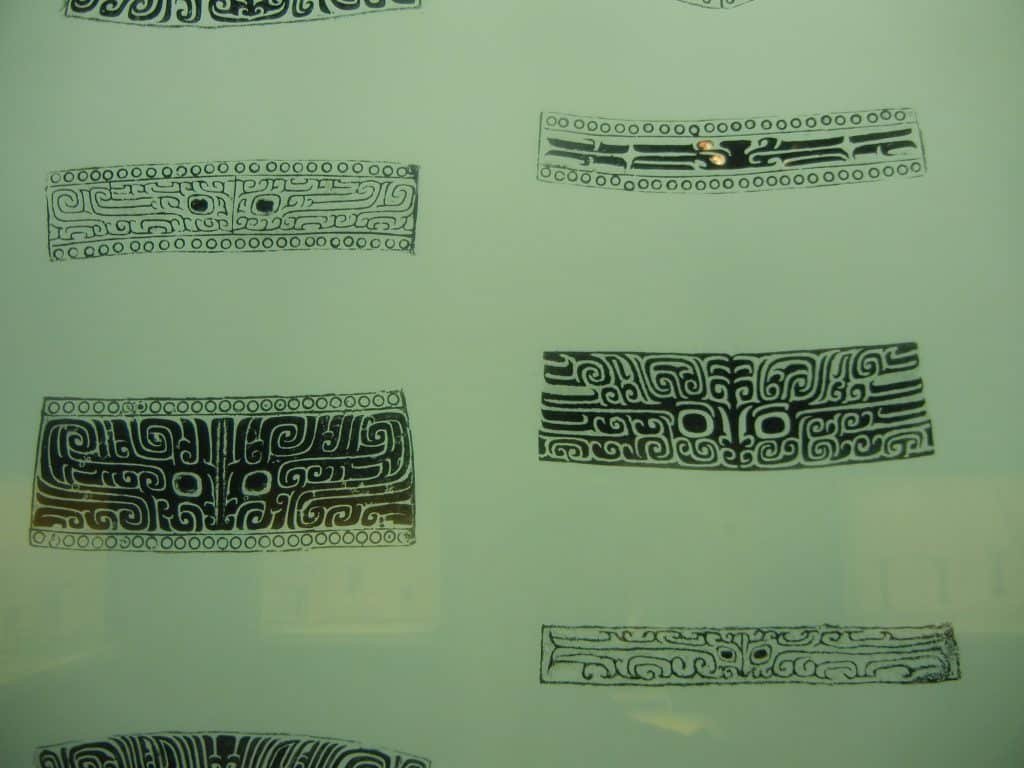
The Shang Dynasty’s royals used bronze ritual vessels to commune with their ancestors and help keep the state in order.: Their designs became increasingly dramatic to accomplish this. At first they were in a thin band around the vessel.
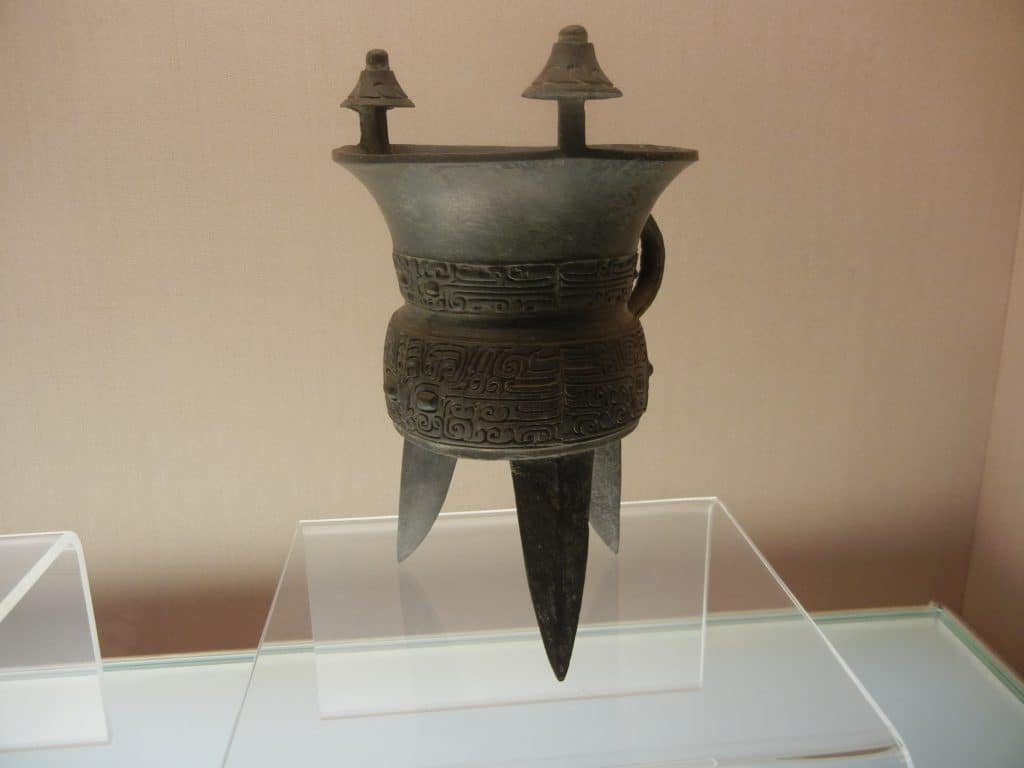
Then the lines’ thickness began to vary and become more expressive.
One of the most common patterns on Shang bronzes is the taotie. This is a fierce looking animal’s face seen from the front, but without the lower jaw. The eyes are emphasized.
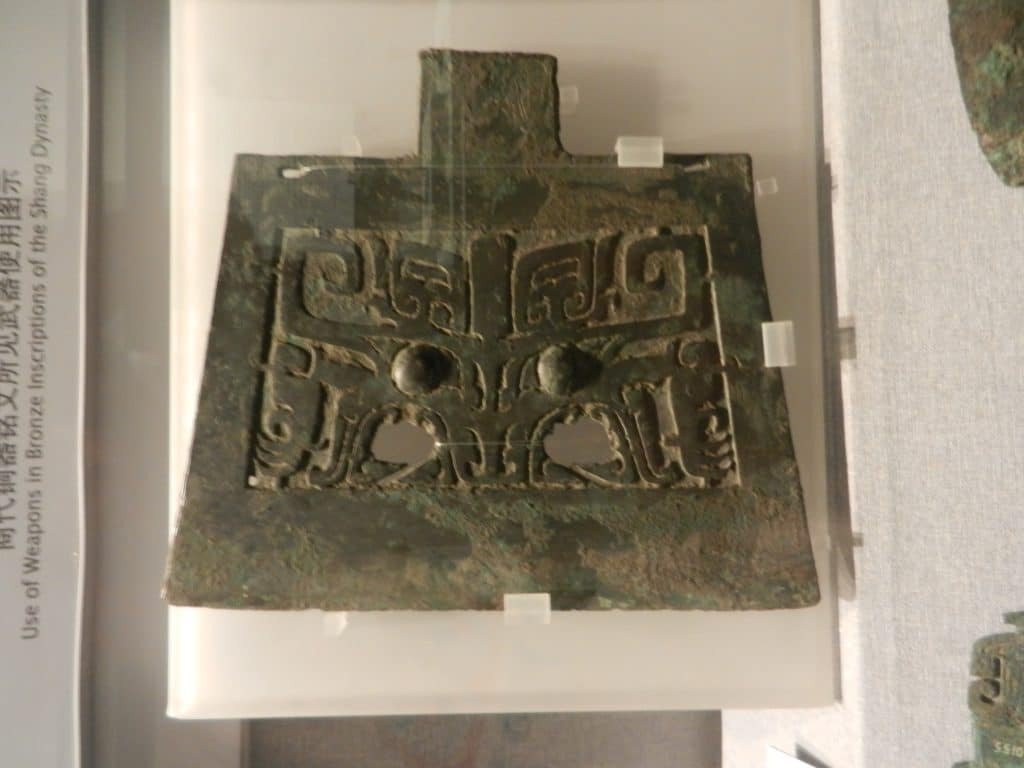
The ceremonial ax blade from the late Shang Dynasty in the above shot sports one. Historians haven’t agreed on what the taotie represented or if it was even supposed to represent anything. But it was symmetrical and animated.
The new variation of line thickness allowed the taotie patterns to become vivid. Artists started to combine dragon motifs with the taotie.
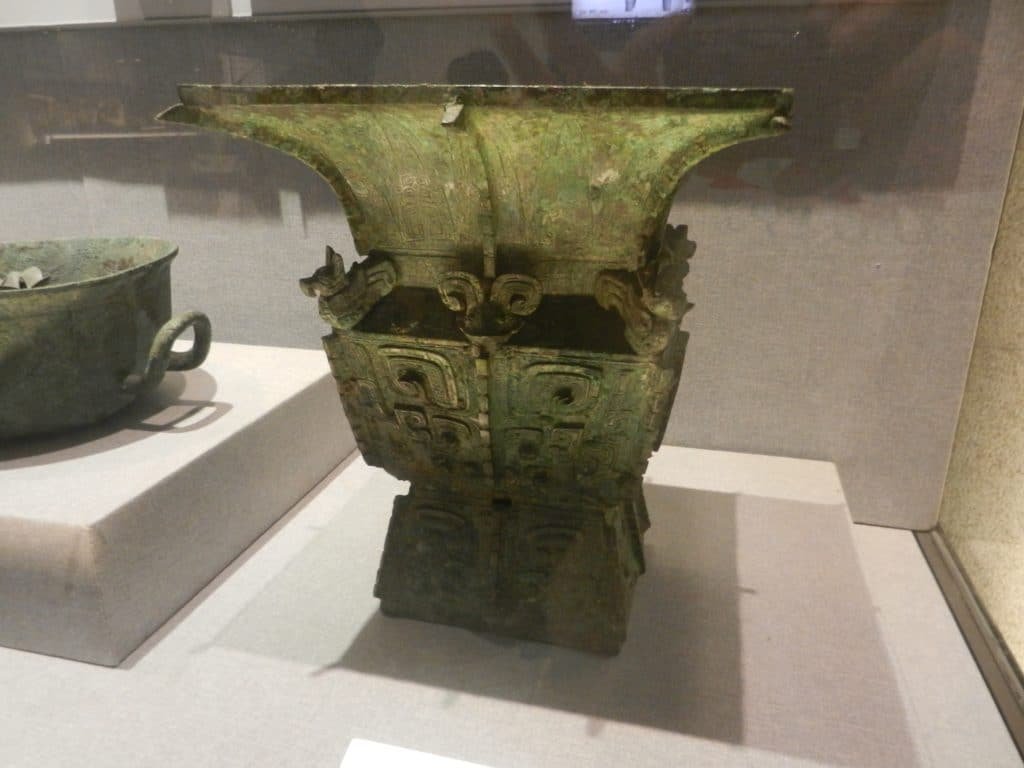
Marxist historians have seen the Shang Dynasty as a classic ancient society that used slaves for production. The Shang elites supposedly used shock and awe tactics to intimidate laborers into being docile. Thus the early Shang bronzes became increasingly animated, like the late Shang vessel in the above shot.
But things in the Shang Dynasty weren’t so simple. It established aesthetics that Chinese culture has emphasized ever since.
One thousand years before the Shang Dynasty’s capital, Zhengzhou, was bustling, the ancient Egyptians built the pyramids and the Sphinx at Giza.
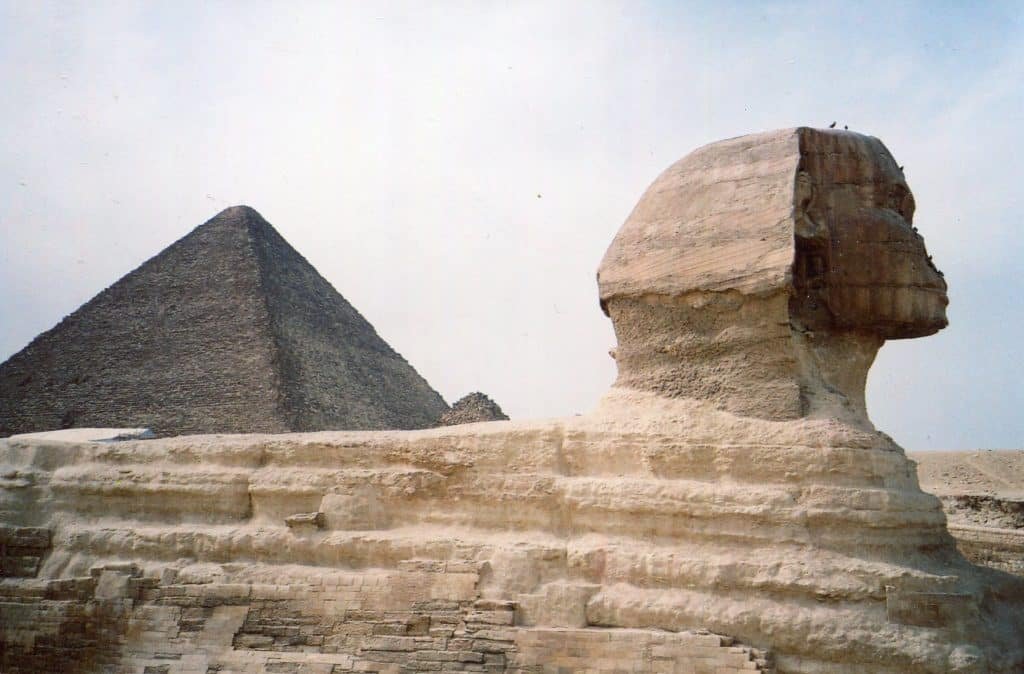
These monuments’ forms are so clear that all of the ties that order society seem concentrated in them.
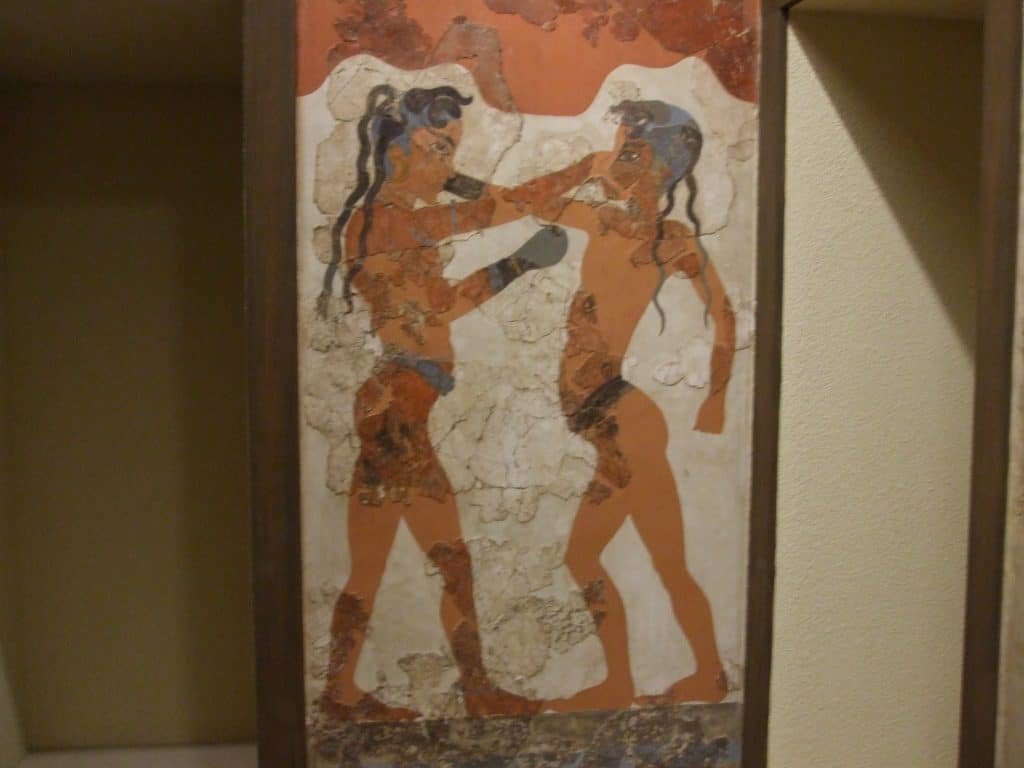
When the Shang Dynasty reigned from Zhengzhou 3,500 years ago, the Minoans on Crete and their colonies (the guys giving each other nose jobs are from Thera) painted realistic images of people and animals. Both of these civilizations developed art that keeps the perspective focused on individual objects that stand out from their surroundings. The existence of the object, its basic forms, and its beauty have been some of the most key ideas in Western thought ever since. I find it amazing that these ideas were emerging so long ago, and that they still shape our ideas of what truth is.
But China developed different ways of thinking and perceiving which are just as ancient and current. The Shang Dynasty did a lot to advance Chinese thought patterns.
The thin band around the bronze’s body is known as Style I. Then lines of decorations varied in their thickness. This is Style II, and they made bronzes more dramatic. The decorations then spread all over the surface.
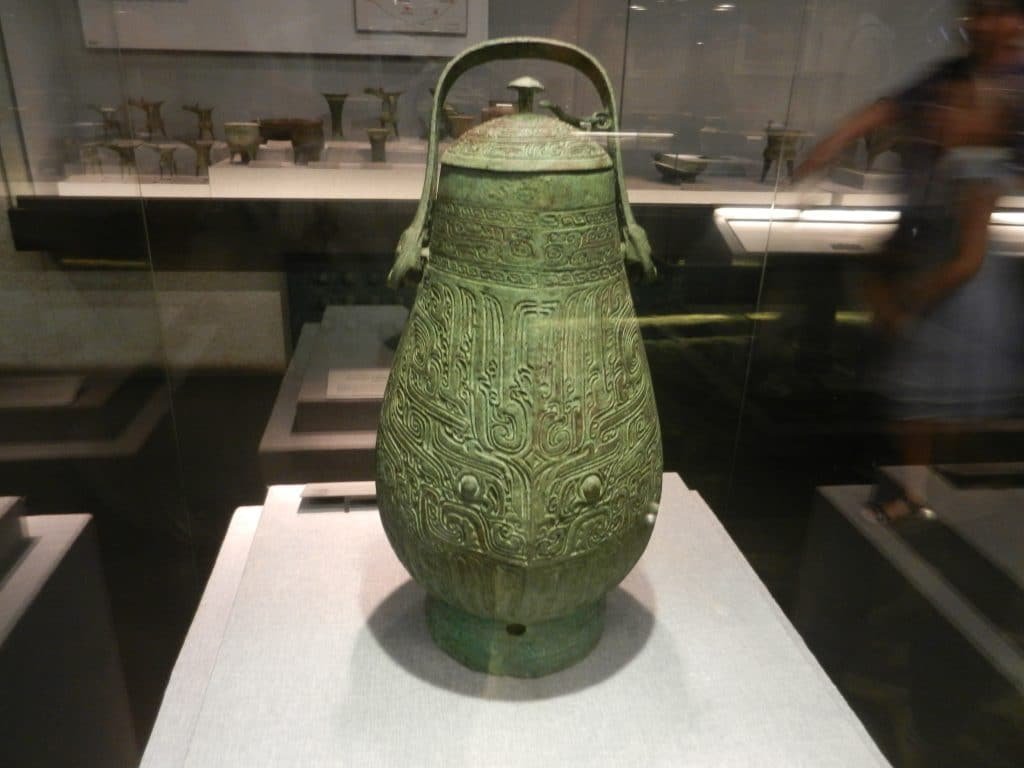
The designs cover the surface of the above you. This spreading of patterns is known as Style III.
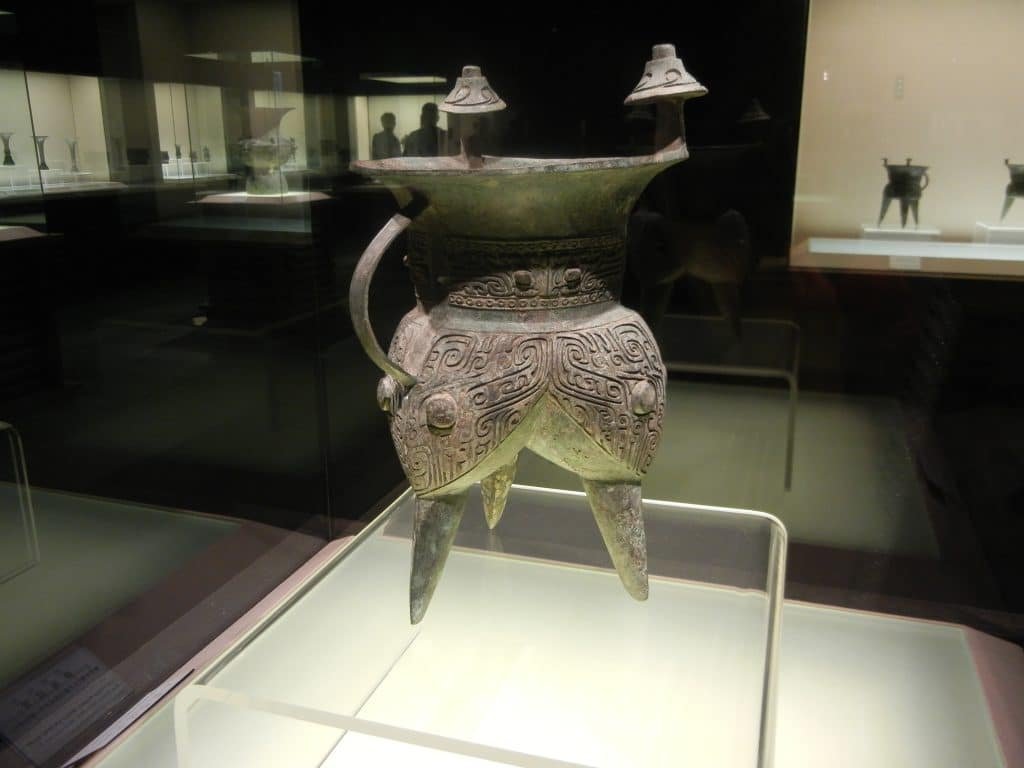
Some designs then became more pronounced than others.
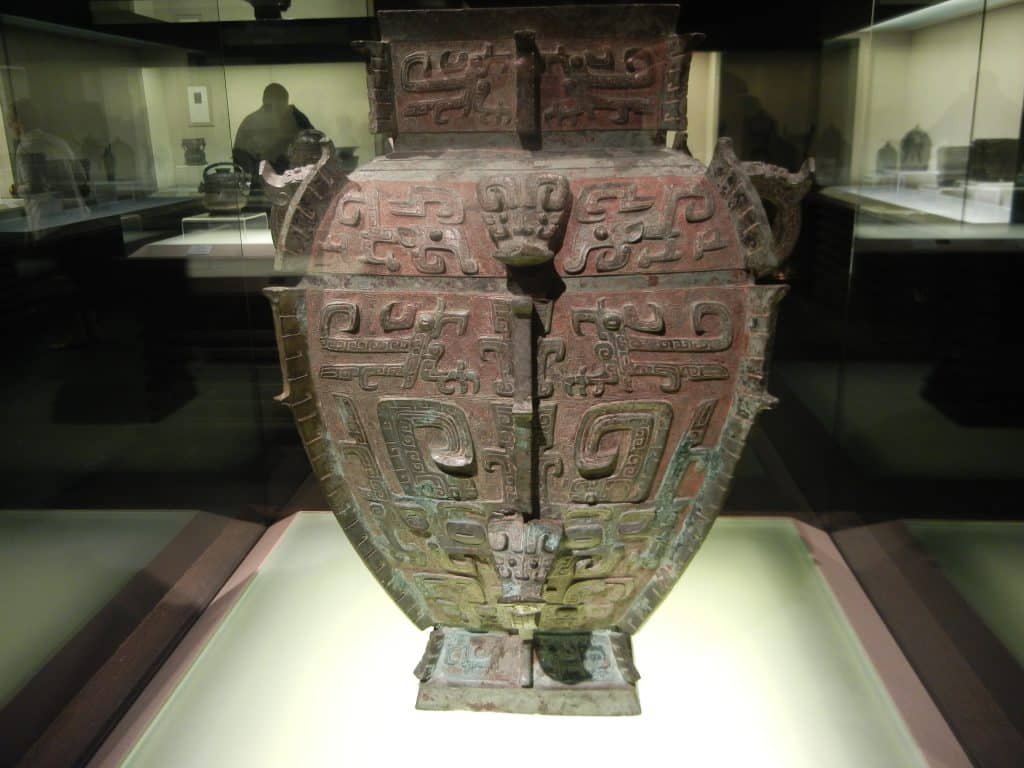
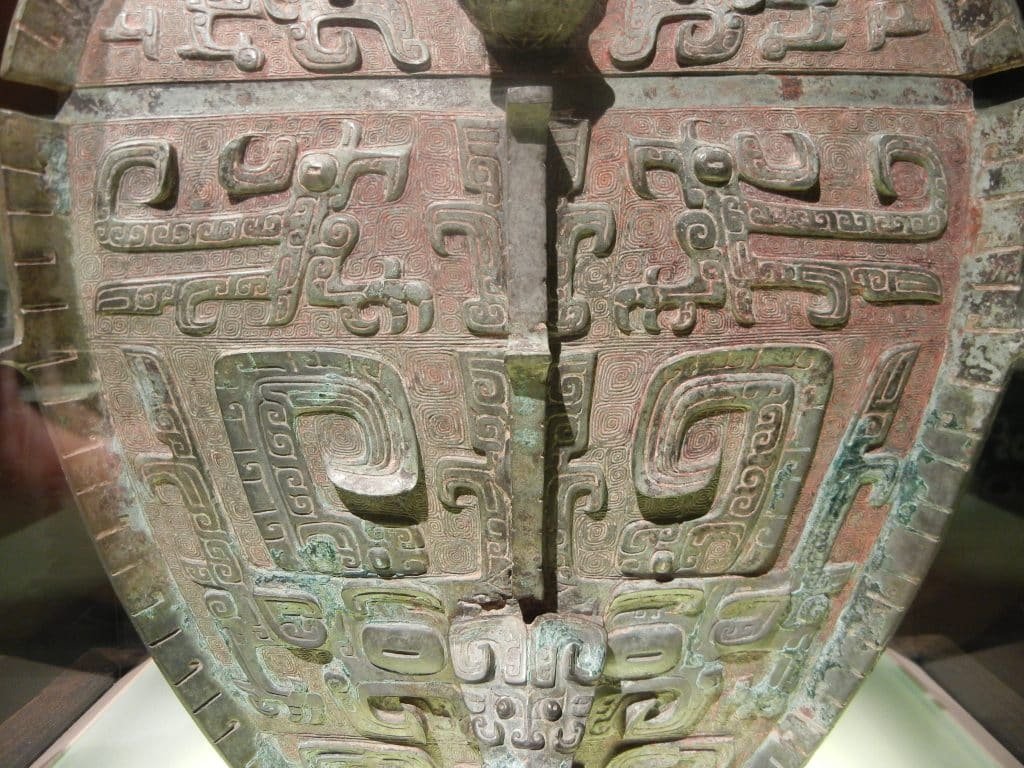
The different levels of indentation made the designs even more dramatic.
The Shanghai Museum displayed several common patterns of early Shang bronze decoration–
Shang bronzes lack things that ancient Egypt and Greece proudly represented: realistic portrayals of people and narrative scenes. Shang artisans seem more concerned with making the vessels look energized in holistic patterns as though that would keep links between rulers and ancestors vital, and perhaps highlight distinctions between classes.
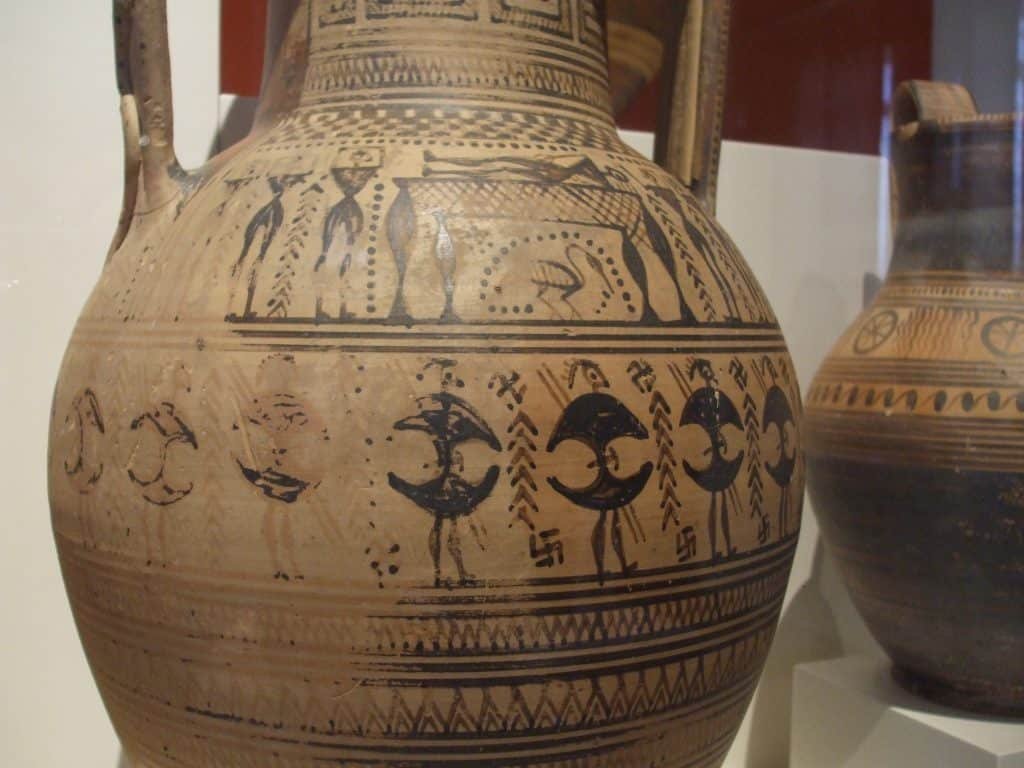
The above and two below Greek ceramic vessels were made around 700 BCE. Greeks were just beginning to paint people and narrative scenes on them after emerging from their Dark Ages. People were often reduced to abstract geometric shapes which made them distinct entities.
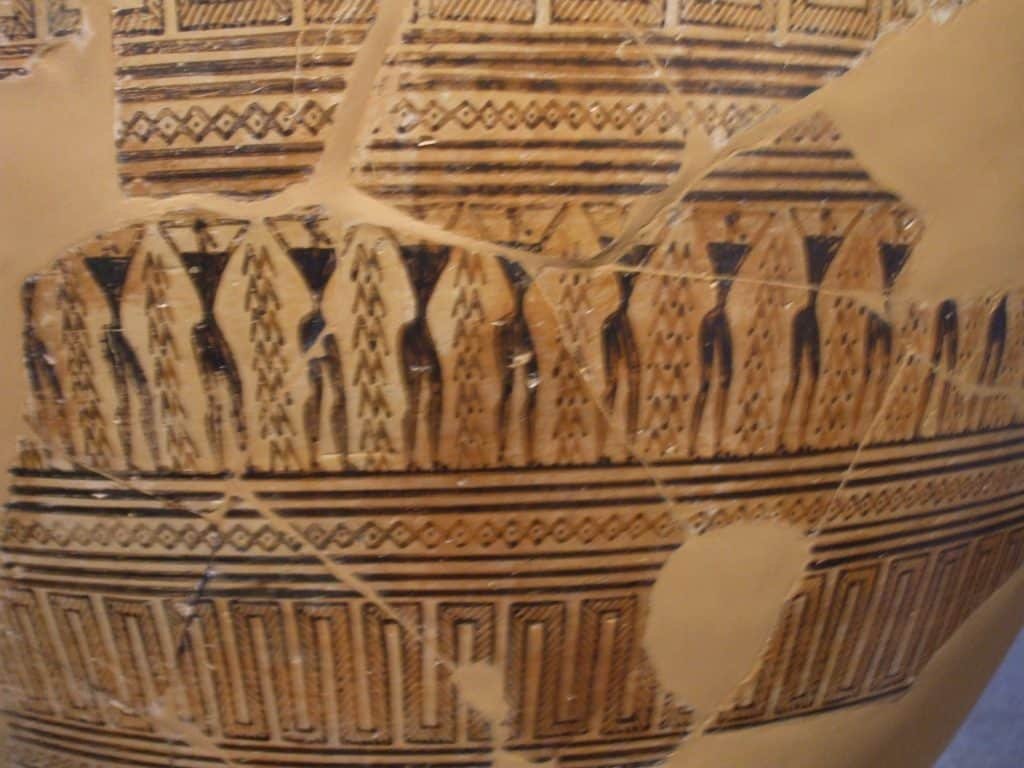
Scenes later became more realistic, but ceramics already emphasized abstract lines which distinguished areas on the vases.
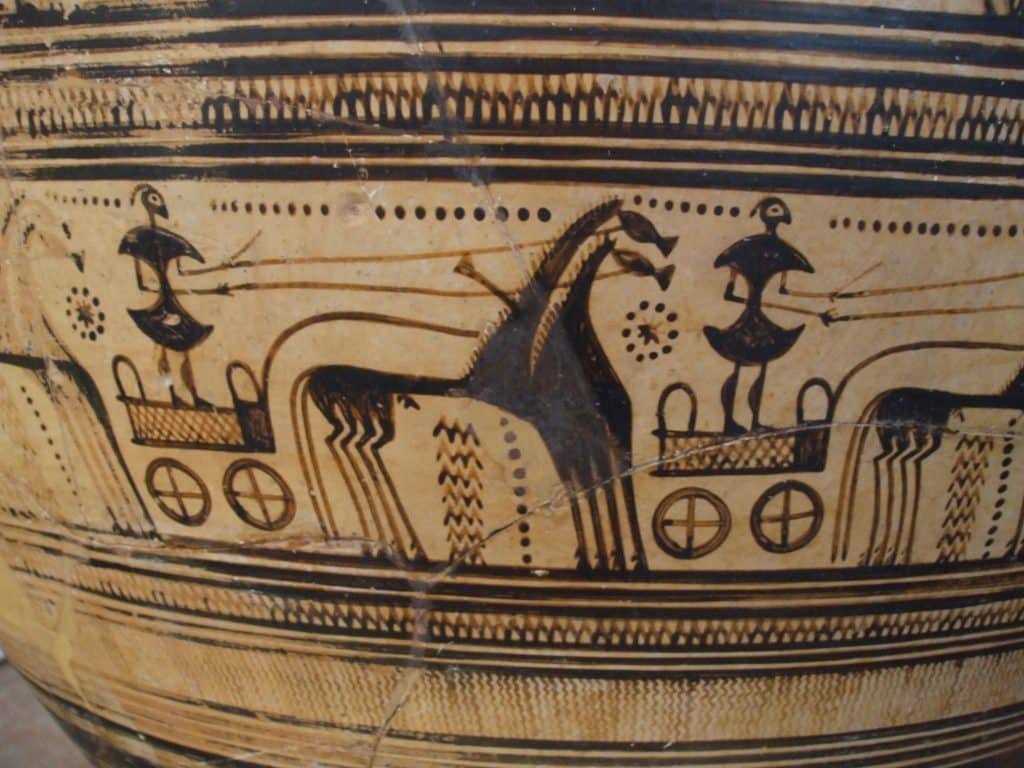
Painters partitioned ceramics into clear horizontal bands which covered the whole surface.
But Chinese designs didn’t emphasize lines or abstract geometric shapes.
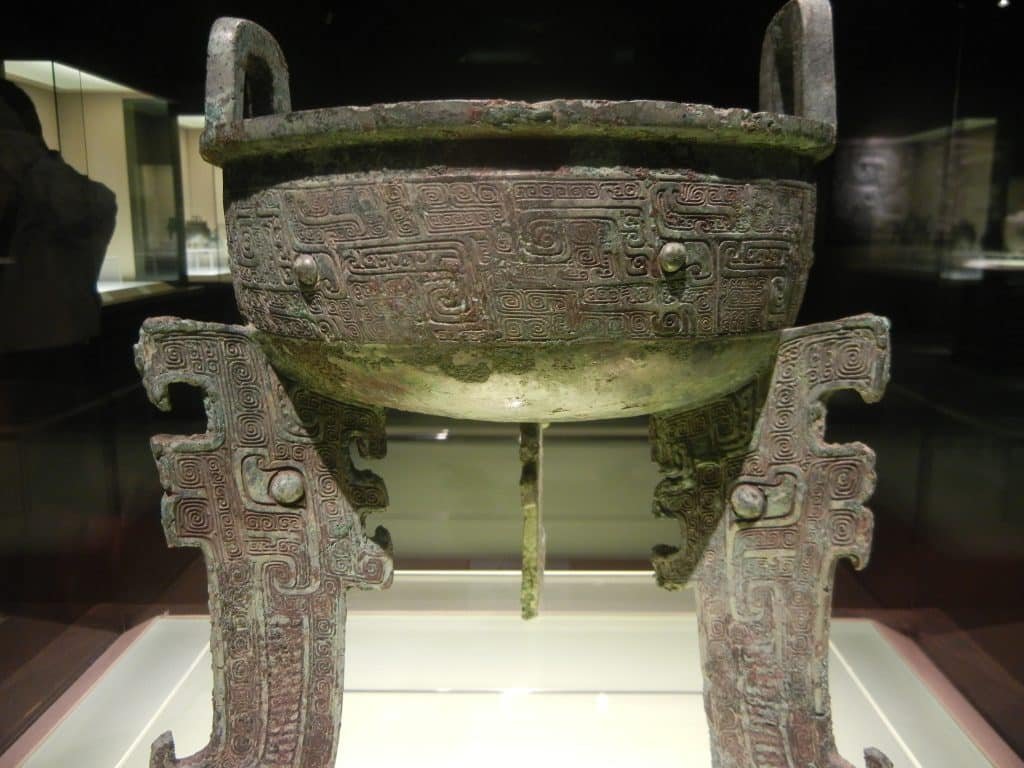
Patterns on Shang bronzes often flow over the whole surface.
Chinese thought has often emphasized the flow of energy through the whole system rather than the concentration of the perspective on objects that stand out from their surroundings and the ordering of perspectives by linear relationships.
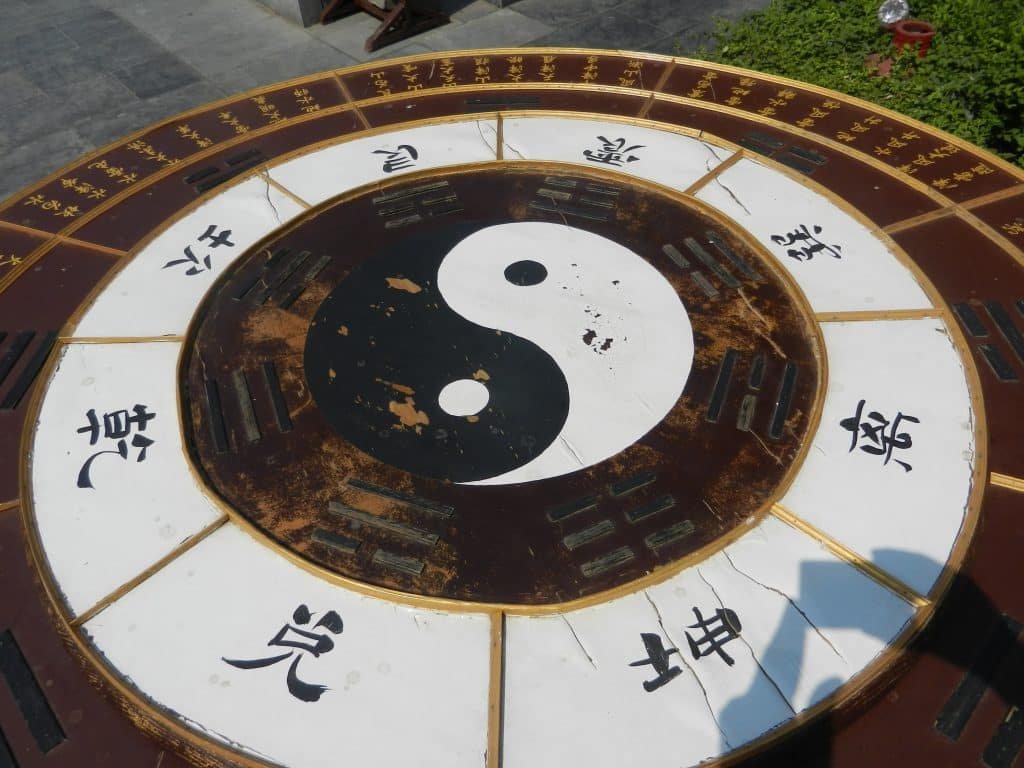
A thousand years after the Shang Dynasty, the famous yin-yang pattern emerged in art. Instead of lines and permanent geometric shapes, the emphasis is on harmonious flow throughout the whole. The two spots in the middle represent some yin being in yang and some yang being in yin. Yang is masculine and yin feminine. But all men have feminine sides, and all women have masculine aspects–nothing is completely distinct. All patterns are integrated in traditional Chinese thought.
David Keightley, in Heritage of China, noted that a lot of Shang designs have bilateral symmetry as though the kings were already thinking in terms of two animated patterns that complement each other.
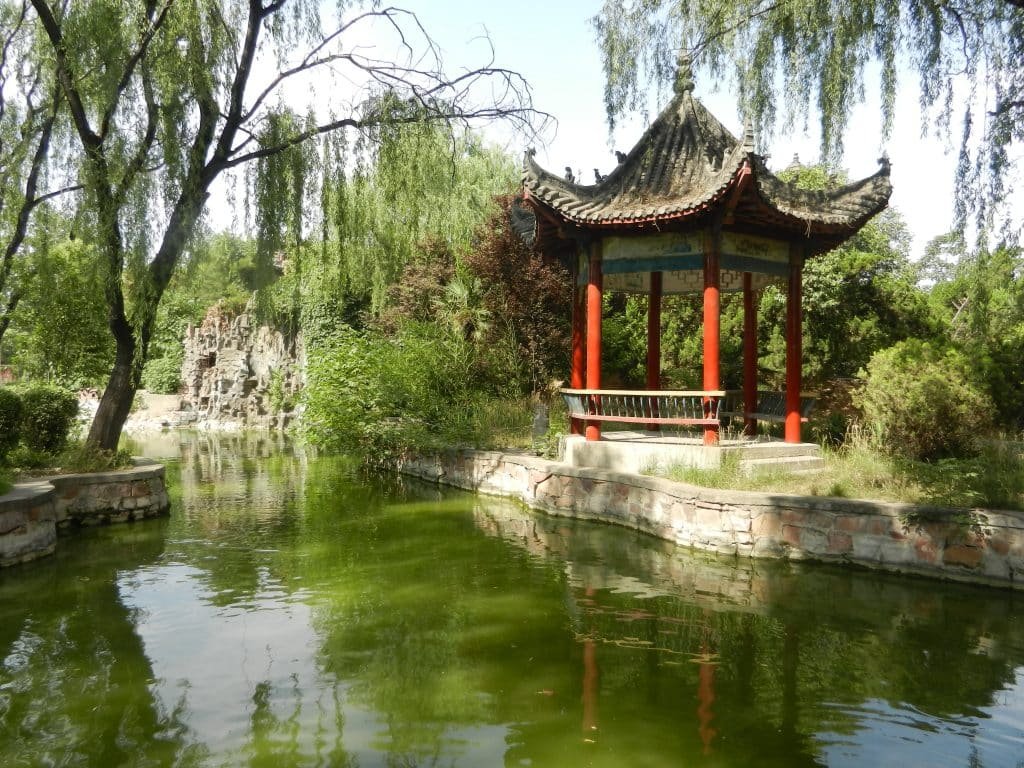
Chinese gardening landscape painting are also based on flows of holistic energies. The above shot (from the White Horse Temple in Luoyang) is very different from the picture from Giza. At Giza, power is concentrated in a small number of objects which stand out and command your perspective. But in Chinese gardens and landscape paintings, all domains are interwoven. Though the Shang bronze patterns don’t seem as refined today, they helped accustom people to thinking of nature in these terms, since they were circulated widely and used in rituals that supposedly kept the state in order.
Robert Bagley, in The Cambridge History of Ancient China, wrote that bronze vessels spread from the Shang kingdom when Style III had emerged. Rulers exchanged them as gifts. States as far away as Sichuan (Sanxingdui) and the Yangtze, (including Wucheng, Xin’gan, and Panlongcheng) developed their own bronze-making traditions. Most places incorporated holistic, energized, and flowing patterns.
Chinese architects didn’t use stone, as Egyptian and Greek builders did. They made buildings from wood, bricks, and rammed earth–products of the soil. Stone has been a hallmark of permanence in the West, and its use in pyramids and Greek temples has made their clear lines seem so enduring that they have often seemed like the basis of reality.
As the bronzes circulated in China, they helped give the land a shared way of seeing the world. Several ancient Chinese historians gave the Shang Dynasty a bad rap. Wine swilling kings supposedly oppressed the people without Confucian ethics to balance their power. But Confucianism also grew out of the sense of a holistic and harmonious society and universe.
Whether you like its kings or not, we all have to raise our wine glasses to the Shang Dynasty. It took ways of thinking and representing reality that the earlier Yangshao culture already established, made them more dramatic, and bequeathed them to later ages.