
Ancient Chinese thinkers developed ideas of a universe that’s holistic, highly resonant, politically centered, and within the human scale. Confucianism is an excellent example. But in the first century CE, dramatically different ideas from Buddhism were being imported from India and Central Asia, and they emphasized a space-time field that is so vast that it dwarfs the person and the political center. China’s encounter with ideas and art from these two regions was immensely creative.
A Buddhist temple was built in the imperial capital, Luoyang, in the first century CE (the White Horse Temple). Although many varieties of the faith were adopted in China, several were from the Mahayana tradition, and they have seen the cosmos in extremely vast terms. Visions of an immeasurable universe, with infinitely multiplied spaces and times (other articles here explore Indian ideas of infinite Mt. Merus and a huge number of cosmic temporal cycles), infinite emanations of the Buddha (which the Lotus Sutra emphasized around the beginning of the Common Era), and immense cycles of human rebirths were imported along trading routes. Some Chinese assimilated these ideas from India and Central Asia over the next centuries, and the contact between these three huge regions enriched China’s thought. Several occurrences made some of its people open to these ideas of vastness:
In the later half of the Han Dynasty (known as the Eastern Han, from 25 CE to 220), the power of the wealthiest families grew at the emperor’s expense. They increasingly ruled like independent lords on their own lands. This diminished the court’s luster as the center of social and cosmic harmony. Many commoners toiling under ruthless landlords felt the business end of the stick more often than Confucian ren (humanity and benevolence).
Writings from common people in the Eastern Han Dynasty often expressed misery.
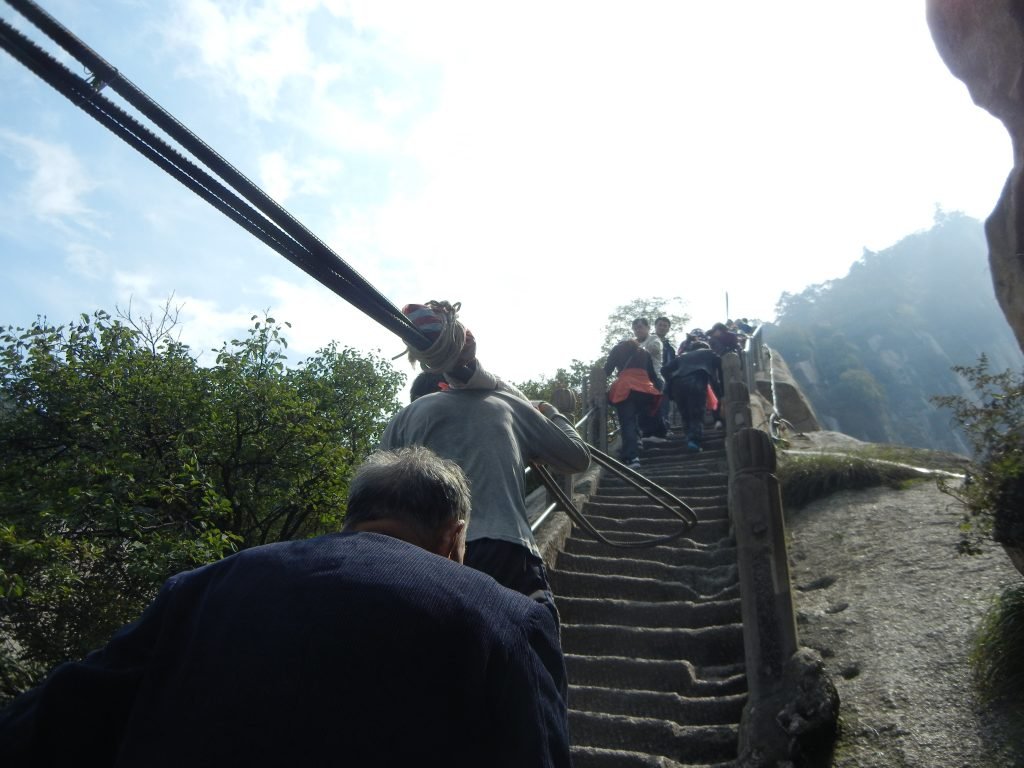
Gaps between rich and poor were widening, and many who could not afford Confucian fineries struggled to get by. Some must have found Buddhism’s inclusiveness more attractive than Confucianism’s social hierarchy, and they were probably happy to expand their horizons beyond the oppressive political centers.
The historian Mark Edward Lewis, in China between Empires, noted that the honoring of departed relatives extended into domains beyond the immediate family. Cemeteries were systematically laid out to allow members of different households of the same lineage to be together, and people who shared the lineage collectively honored early ancestors. This expansion of self-conscious kin groups included the writing of lineages over dozens of generations and instructions for members’ proper behavior. Lewis noted that lineage endowments and large groups of families emerged for self defense in times of disorder.
Buddhism and Confucianism shared deep concerns with morality. Followers of both believed that what goes around comes around. And most Chinese saw the cosmos as highly resonant. The Mahayana tradition has envisioned a vaster universe, but the belief that all things and all domains are connected made it easier to take steps into it.
Daoists were developing esoteric methods for deepening their connections with the universe and achieving immortality.
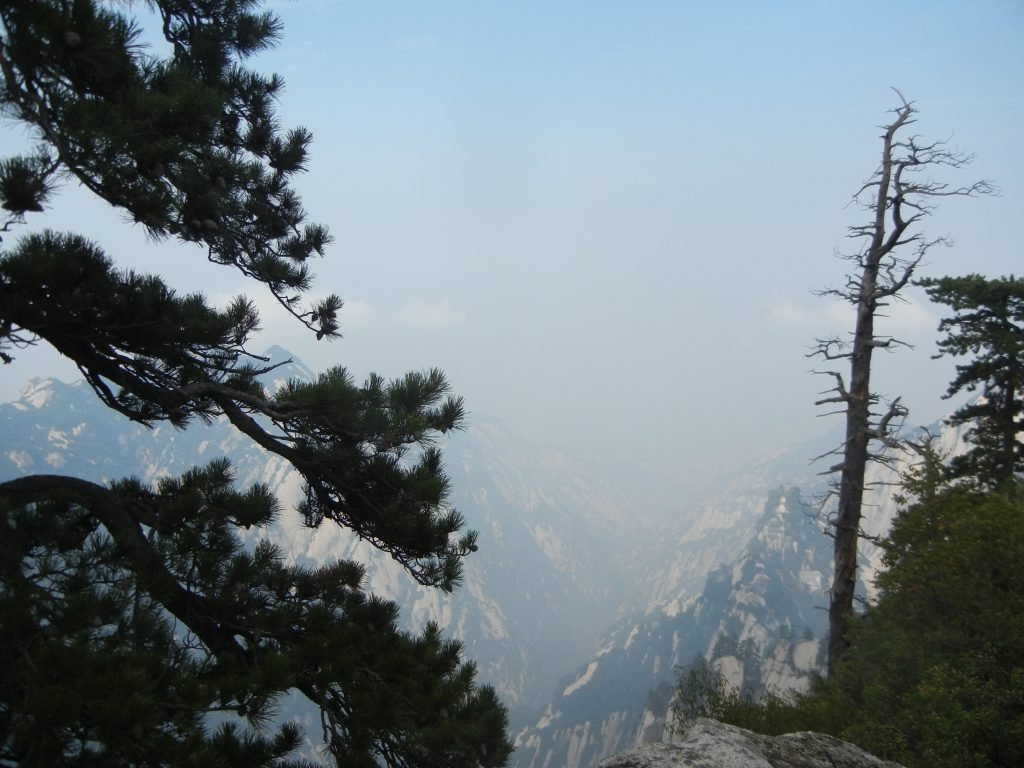
They were using breathing techniques, magical spells, and chants, as Indians had for centuries. Daoists and Mahayana Buddhists were now employing them to induce states of consciousness that expanded beyond the immediate surroundings. Kenneth Ch’en, in Buddhism in China; A Historical Survey, wrote that some early Buddhist writers in China used terms from Daoist texts. Christine Mollier, in Buddhism and Taoism Face to Face, wrote that both traditions mined each other’s texts for ideas.
After the breakup of the Han Dynasty, aesthetics in literature and other arts grew into areas that were distant from royal courts. In that time of distrust, murderous personal rivalries, and potential political persecution, mental spaces away from public life were opening up.

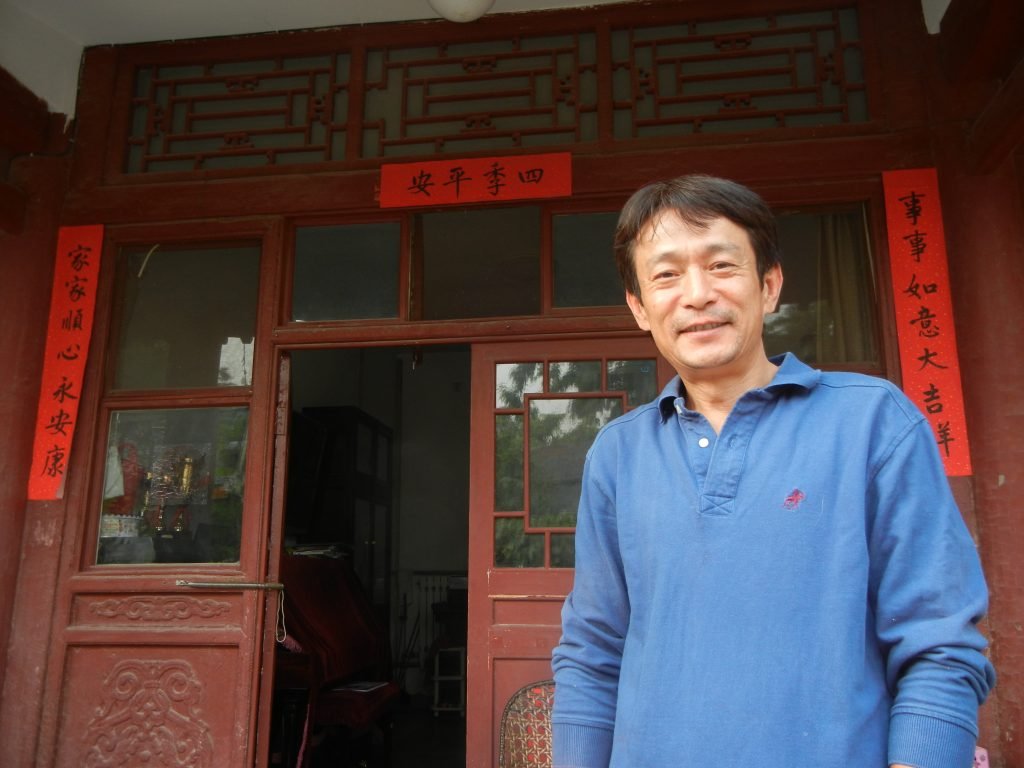
A literary movement called dark/mysterious studies (xuan xue) emerged, which drew inspiration from the Daodejing, the Zhuangzi, and the I Ching to express hidden depths that cannot be found in conventional word meanings. A movement called Pure Conversation (qing tan) also grew; literate people indulged in verbal displays of wit, poetic flair, otherworldly imaginative flights, and exceptional refinement with less concern for the practical effects of their discussions than traditional Confucians had. Aesthetics now often took center stage. That age produced some of the most influential theorists about art in Chinese history, including Xie He in painting and Liu Xie in literature. People like this artist at his home could enjoy their private spaces without needing the royal court for dignity.
Private gardens became more common and more conducive to contemplation. Earlier gardens from the Zhou, Qin, and Han dynasties had been constructed by emperors and nobles. Many imperial gardens spread over several square miles and were well stocked with rare animals, birds, and plants, as well as lavish palaces, running streams, bridges, fish ponds, hunting grounds, and pavilions. Rituals were conducted in them to maintain harmony between the emperor and heaven. But after the disintegration of the Han Dynasty, the aesthetics of gardens became more refined, emphasizing contemplation over grandiosity.
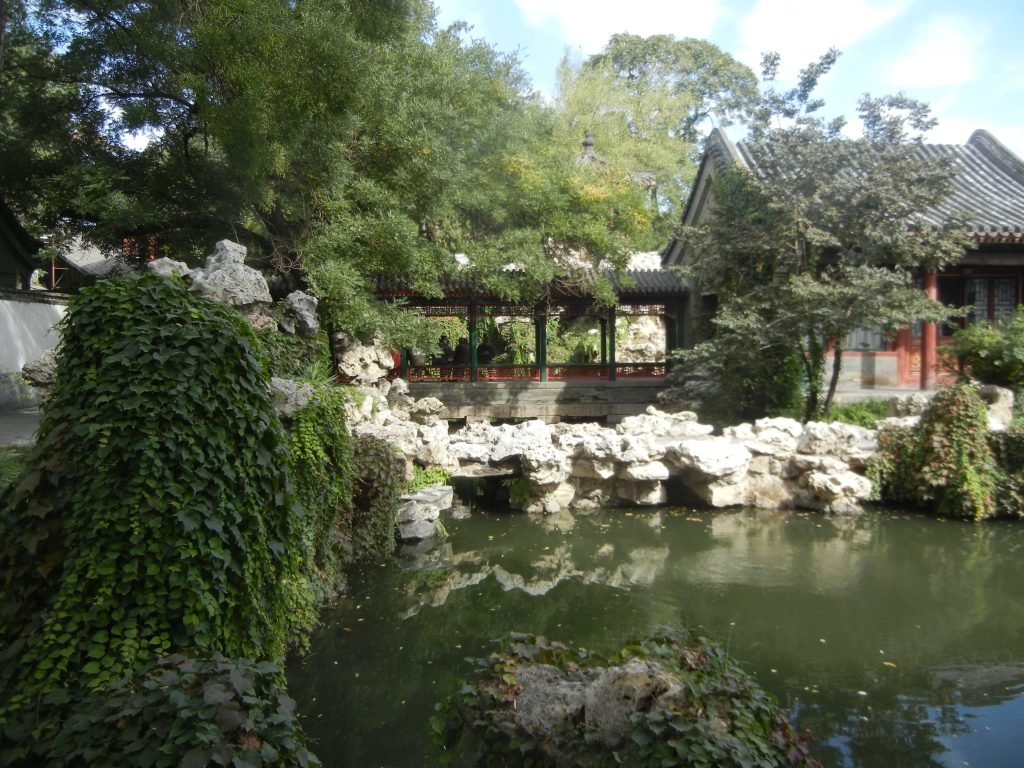
More people who could afford it were creating their own private gardens, which were much smaller and more intimate. They carefully integrated exotic plants and rocks, artificial hills, fish ponds, and pavilions within smaller and more intricate spaces which seemed unaffected by the world’s rough-and-tumble politics. They enjoyed retiring to these areas where they could have more emotional and conceptual distance from the world’s turbulence.
Millennial and messianic movements emerged as the Han Dynasty declined. Some became violent as desperate peasants banded together and rebelled against the government. The Yellow Turbans were especially destructive, and they waged a civil war in the 180s CE. They were a Daoist sect that believed that a golden age will be established after the current social order is overturned. Pure Land sects were more peaceful. Many of their followers believed that Daoist deities and other spirits will transform the world in a gentler way. Whether violent or irenic, groups that saw society as corrupt were forming, and they were looking beyond it to a world that was freer from past limits that Confucianism had imposed. Rebirth in the Pure Land became one of the most popular ideas in Chinese Buddhism.
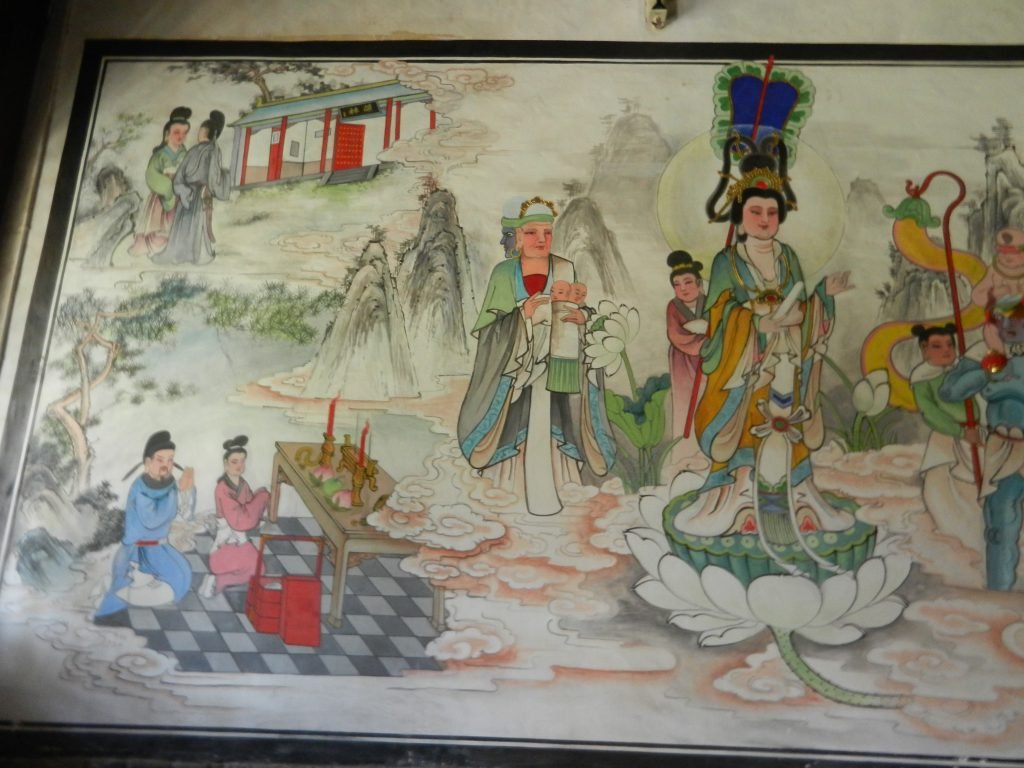
Other new social spaces were gaining prestige as the royal court’s was diminishing, including monasteries. They became economically powerful institutions with their own land, and impoverished peasants were seeking refuge in them. A lot of social activity was redistributed to monasteries, hermitages, and places of pilgrimage (as in Europe in the early Middle Ages), while the royal court lost much of its power as a conceptual center of gravity.
But ideas of cosmic vastness periodically met strong negative reactions in China. As centralized government strengthened again during the Tang, Song, and Ming dynasties, many officials and writers called them fanciful and immoral. They lead people away from family, ancestors, and society. Monasteries take over valuable land, do not pay taxes, and harbor lazy and devious people. Their residents can avoid military service, corvée labor, and taxation. They thus attract draft dodgers, free-loaders, and outlaws.
In addition, the late Tang Dynasty writer Han Yü (768–824) emphasized the importance of bringing literature back to its Confucian simplicity and cleaning esoterica and excessive floweriness from it. Confucianism’s pull grew even stronger in the Song Dynasty, when the official examination system was extended and more writers followed Han Yü by looking back to ancient Confucian writers as literary models.
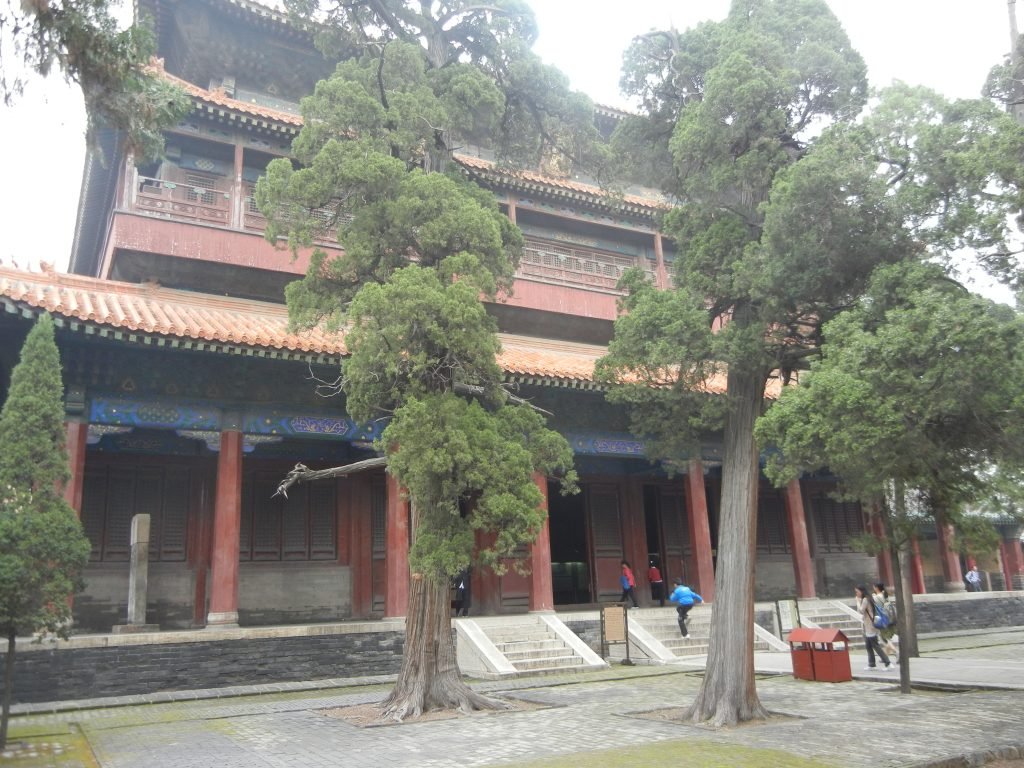
Buddhism became less prominent in China after the Tang Dynasty. Since then it has usually been limited by the government, Confucian traditions, and long-held assumptions that the world hangs together through political and familial relationships. Emperor Hongwu, who founded the Ming dynasty in 1368, provided an excellent example of how Buddhism has often been assimilated in his country. Early in his reign, he led a procession from the Forbidden City in Nanjing to a local monastery, presented ten thousand ounces of silver to its master, entered the Great Buddha Hall, and kneeled. This was an extraordinary gesture, since emperors kneeled only to heaven. The faith had a lot of popular appeal in the area, so Hongwu linked himself with it to strengthen the new dynasty. But he later distanced himself from Buddhism and imposed severe restrictions on it. He consolidated China’s enormous number of monasteries into a few in each county, banned the founding of new ones, and ordered monks to stay inside them and avoid mingling with the public. Some emperors in the Tang, Song, and Qing dynasties also imposed limits on Buddhism. They found the faith useful for increasing their popular support, but its emphasis on impermanence is dangerous because it can diminish people’s respect for the royal court and their own ancestors.
Historians have noted that many people in China have been attracted to Buddhism for reasons that are more tangible than speculations about infinite vastness. Kenneth Ch’en wrote that the faith’s fundamental idea that life is full of suffering is dramatically different in spirit from traditional China’s positive views of the world, with assumptions about harmony throughout nature and the central importance of the family and the political center. The cheerful art photo is in the White Horse Temple in Nanjing.
People in China have usually assimilated the faith in ways that fit their own perspectives:
Buddhist inscriptions from the mid-first millennium CE expressed Confucian filial piety by containing prayers for departed ancestors, and secular people employed monks to conduct funerals. Many in China were attracted to Buddhism in end-of-life situations, when they or their parents were passing away from conventional society.
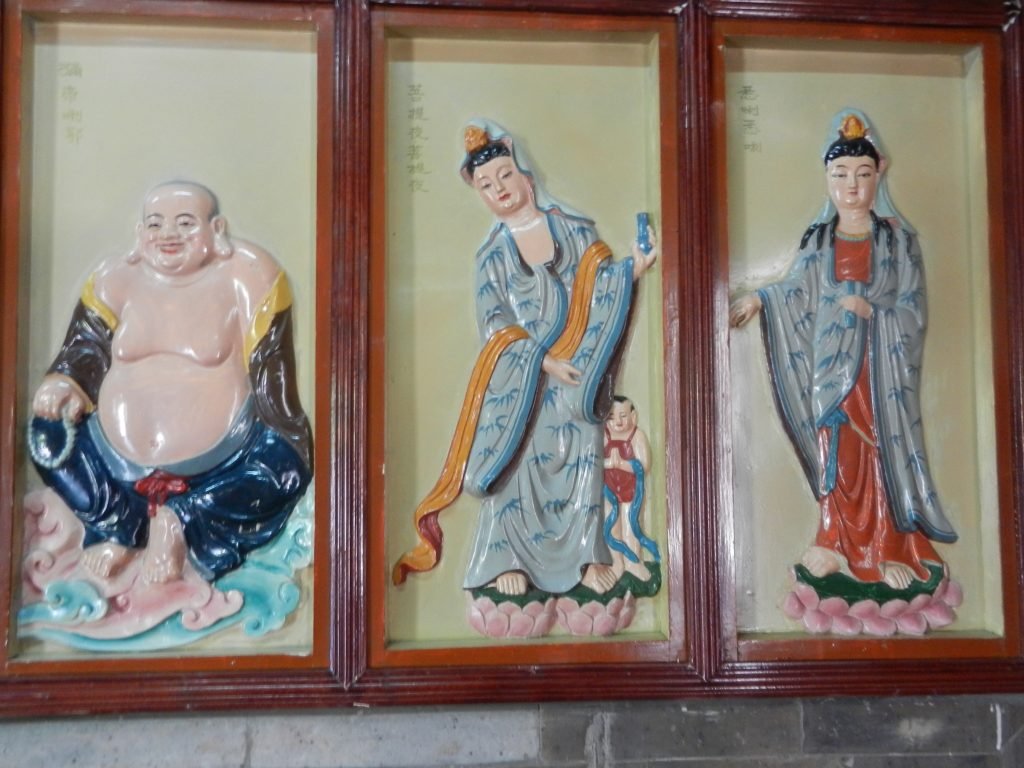
Some Mahayana deities were transformed into Chinese sensibilities. The male bodhisattva Avalokitesvara was changed into a gentle female named Quan Yin, who meets souls after death and transports them to a paradise in the West. She was thus associated with the Pure Land. Maitreya was originally the Buddha’s future incarnation waiting to be reborn to purify the world and usher in a glorious new era. Many Chinese incorporated him into messianic beliefs after the Han Dynasty disintegrated, but he was later transformed into Milefo, the Laughing Buddha. With an enormous belly and a joyful smile, he has represented prosperity and a large family, and statues of him are still common in Buddhist temples.
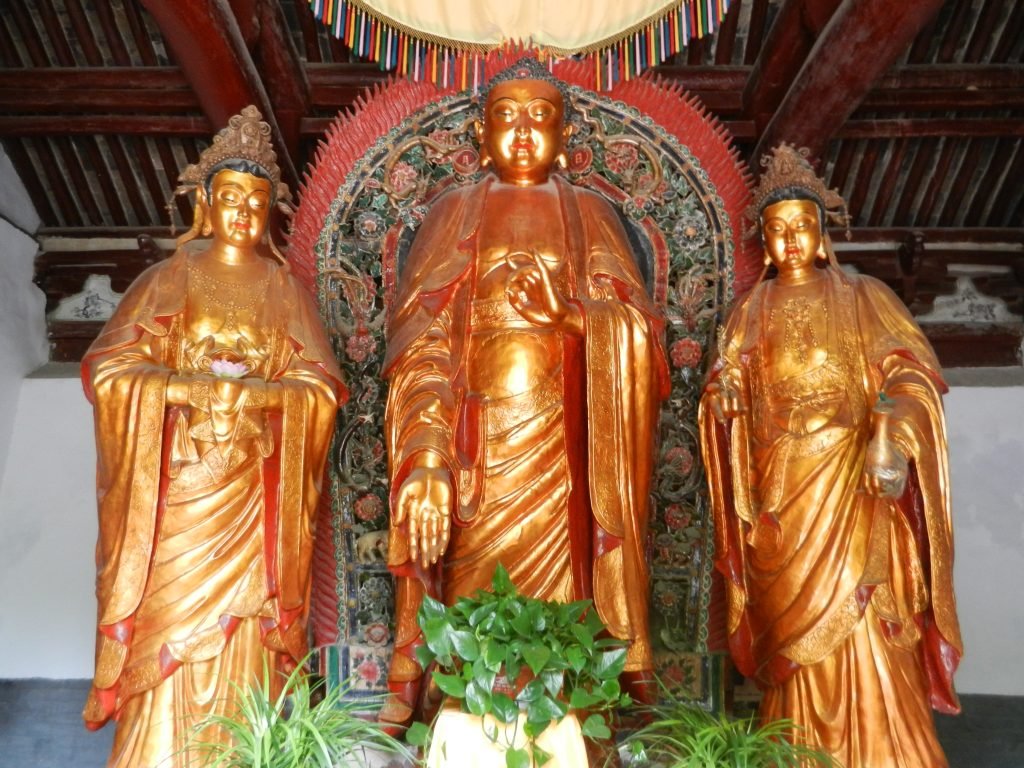
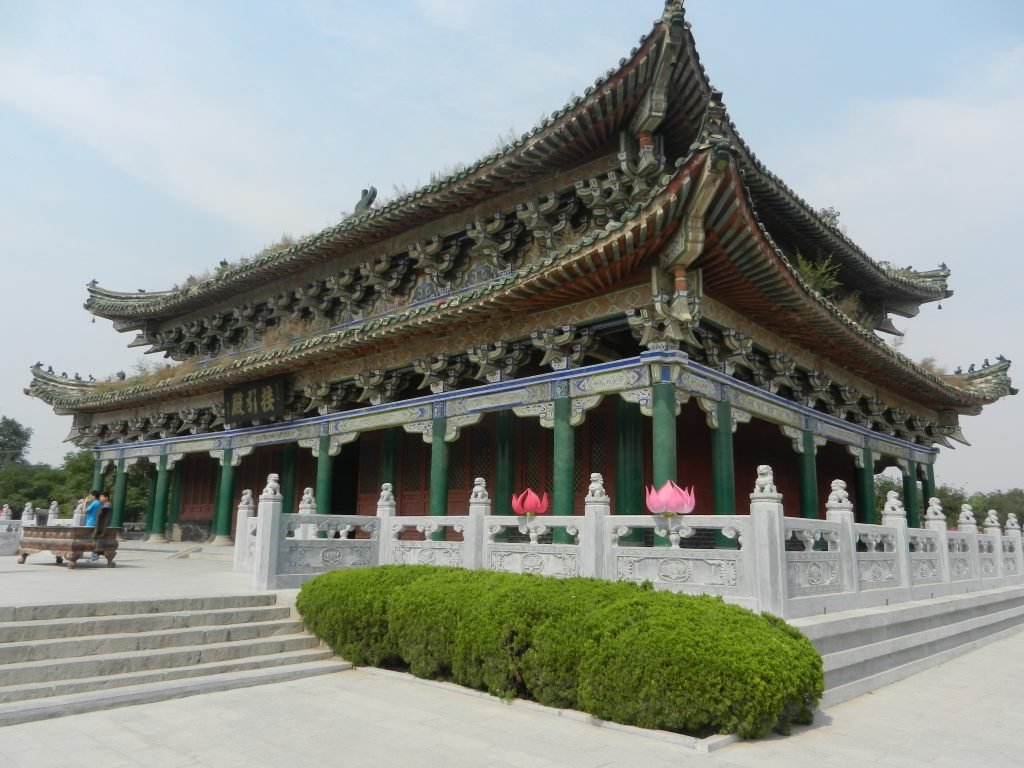
Sculptors often depicted the Buddha in elegant robes as though he was a nobleman from the Tang Dynasty rather than an Indian aesthetic.
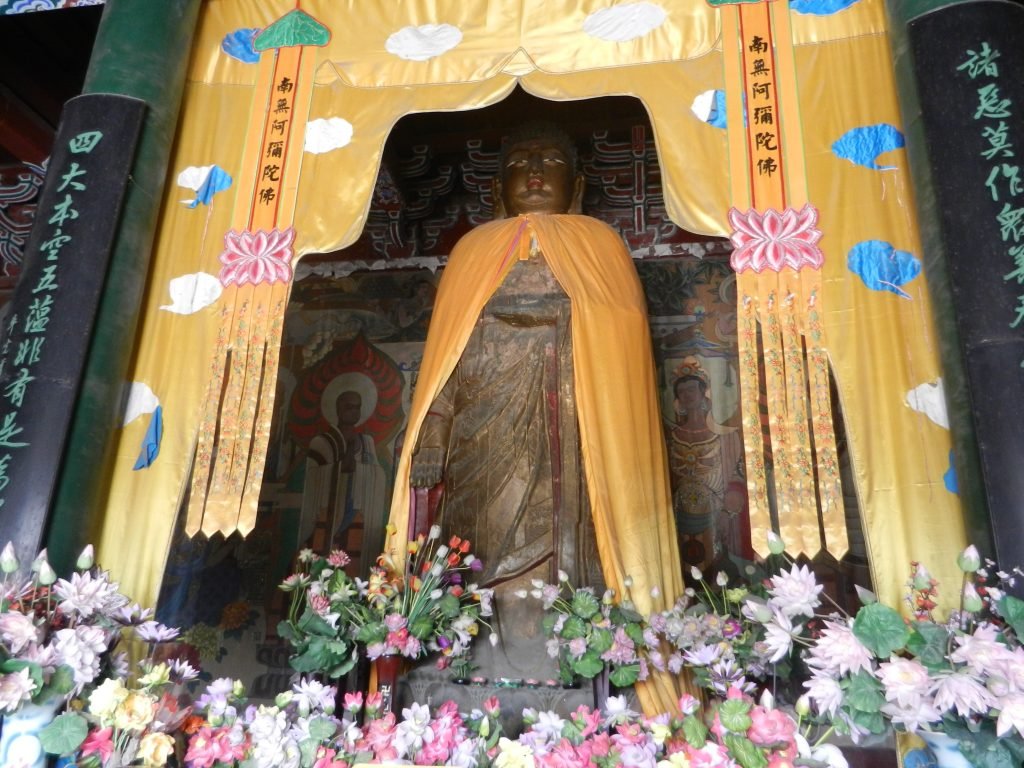
Above, he presides at the Northern Song Dynasty capital, Kaifeng. The building that houses him (below) is as grand as an emperor’s hall.
Buddhism in China developed a major school based on ideas of the Pure Land, and Chün-Fang Yü, in Chinese Buddhism; A Thematic History, said that the majority of Chinese Buddhists have practiced it. Its followers have believed that, by the grace of Amitabha (the Buddha of universal love, who resides in the West and works for the enlightenment of all beings), they will be reborn in paradise in the West if they have faith in him. Pure Land sutras contain enchanting descriptions of what they can look forward to. The ground is made of gold. Trees, pools, and pavilions glimmer with the seven precious gems. Gentle breezes carry celestial music. A converted classical scholar named Hui-Yüan prolifically promoted this faith. In 402 CE he assembled his community of monks and lay-people in front of an image of Amitabha, and they collectively vowed to be reborn in the western paradise.
The Chan tradition grew in the middle of the first millennium CE, and Chün-Fang Yü said that most Chinese Buddhist monasteries today identify themselves with it. It spread to Japan, where it has been called Zen. The Chan approach doesn’t emphasize following teachings from ancient texts that are habitually honored, but instead focuses on tranquilizing the mind, liberating it from intellectual conventions, and gaining insights into one’s own consciousness. Kenneth Ch’en wrote that people in China were initially fascinated by grand concepts and elaborate imagery from India, but then gravitated to the practical features of Buddhism when the novelty wore off. They focused on dhyana (exercises in concentration; Chan is the Chinese translation of this word) to strip the mind of accumulated ideas and sensory impressions that block deeper insights about reality. A person disciplined in dhyana can maintain serenity and cheerfulness in a turbulent and noisy world. Hui-Yüan and his mentor, Dao’an, went to great lengths to collect sutras on dhyana and teach people about it.
Buddhist festivals and pilgrimage sites have given families and friends occasions for coming together and enjoying each other’s company.
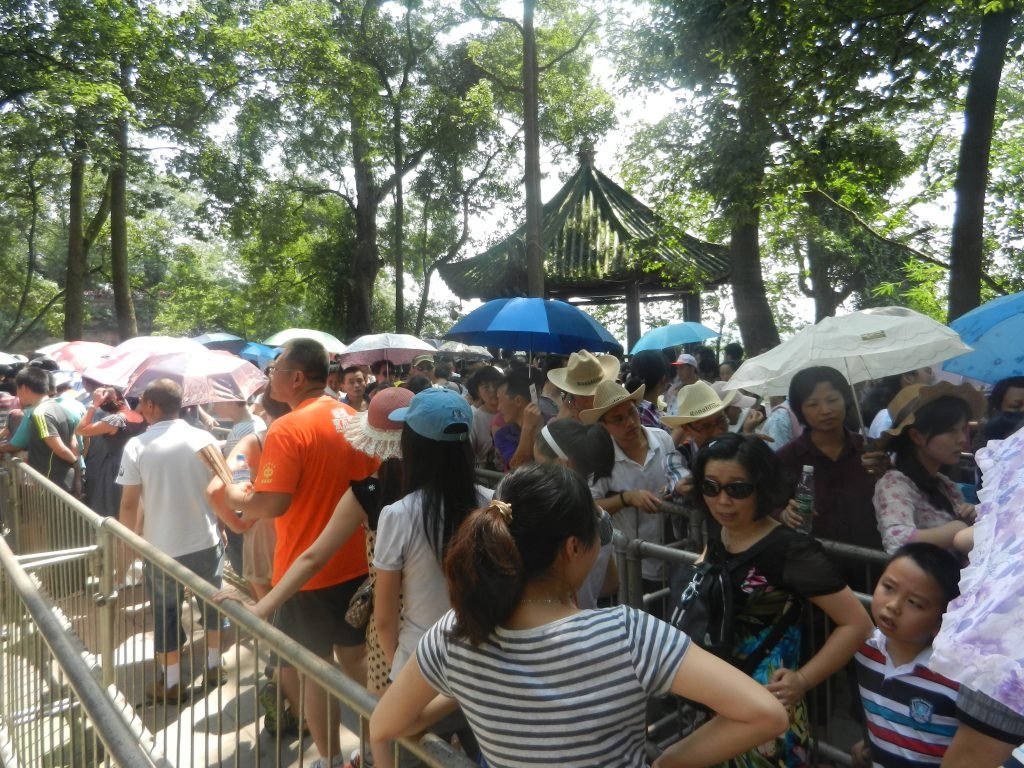
Most people I saw at famous Buddhist sites behaved like tourists, chatting with each other and snapping photos rather than meditating. Above, the crowd at Leshan is making a toasty day feel even hotter.
The Buddhist faith originally brought ideas of vastness to China, but it has usually been assimilated to local views of the world, which have emphasized family and political authority.
But concepts of a vast universe enriched Chinese philosophies in the Song Dynasty. Zhou Dunyi (1017 CE–1073) felt that nature’s evolution and humanity’s moral development are closely interrelated. A contemporary, Zhang Zai (1020 CE–1077), focused on the universe’s vital energy’s (qi) omnipresence. He began his Western Inscription by saying, “Heaven is my father and earth is my mother, and even a small being like myself finds a central abode in their midst. Therefore, that which fills the universe I regard as my body, and that which directs the universe I consider to be my nature.” Cheng Hao (1032 CE–1085) also emphasized a holistic universe. He felt that humanity forms one body with all things. To him, the Heavenly Principle (Tian Li) pervades all things, including human nature.
The most influential Confucian thinker after Zhu Xi, Wang Yang Ming (1472–1529), focused on moral education, which he felt is grounded in the “original substance of the mind.” He called it “good conscience” (liang chih), which is a primordial moral awareness that every person has. He also called it the Heavenly Principle, which underlies all things from the most spiritually rarefied to grass, wood, bricks, and stones. Because the universe consists of vital energy guided by good conscience, it’s a dynamic process. As part of this energy, humans must regard all things as one organism and expand their own good conscience into an ever-growing network of relationships.
After being influenced by Indian and Central Asian ideas of a vast cosmos, Chinese intellectual and political leaders often reaffirmed their traditions of a more human-sized universe. These traditions were already ancient, going way back to the Yangshao Culture, which emerged around 5000 BCE. This way of seeing reality was thus deeply entrenched. But ideas of vastness enriched Chinese thought and enabled the Song, Ming, and Qing dynasties to innovate.