I put off going to Vietnam for a long time.
Many other Southeast Asian cultures were heavily influenced by India about 2,000 years ago, and they imported their Hindu and Buddhist religions, myths, artistic traditions, and alphabets. But China invaded Vietnam then and ruled it for about 1,000 years. Vietnam’s cultural patterns are thus unique. I wanted to explore China before going to Vietnam so I could distinguish what’s uniquely Vietnamese from its foreign influences. But Vietnam was worth the wait. It’s full of cultural treasures that most people don’t know about yet.
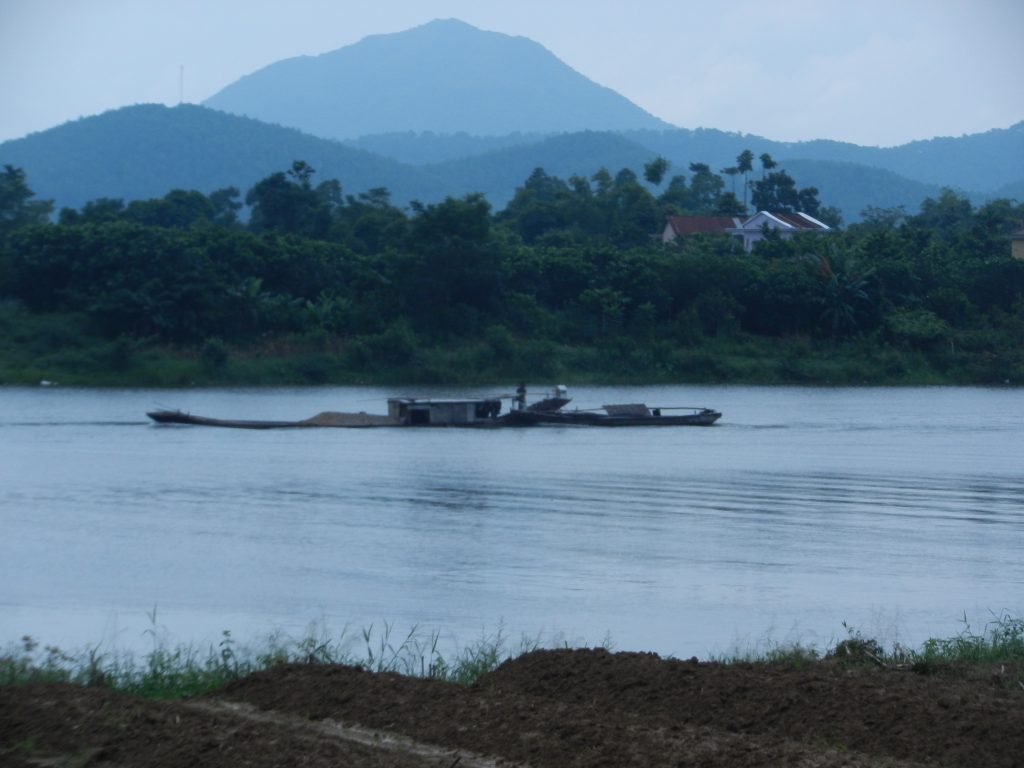
Vietnam has some of the most beautiful scenery I’ve ever been emerged in. Towering mountains, lush rice fields, white beaches, and dense jungles–you won’t mistake the place for Kansas.
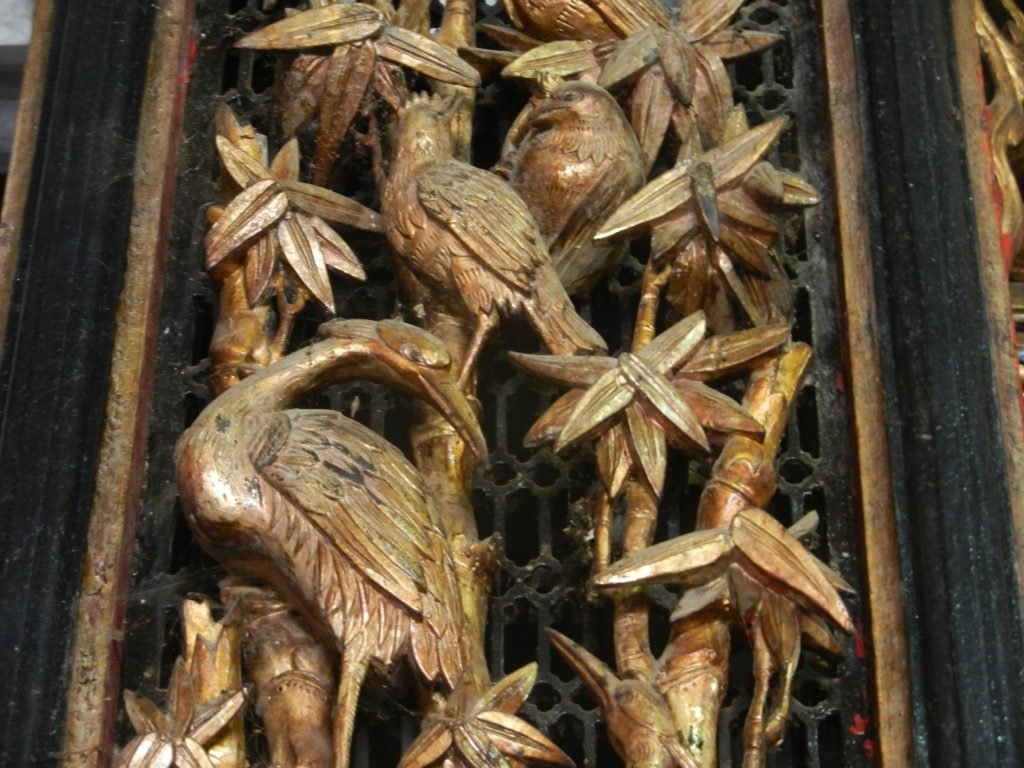
Vietnam’s land has inspired a lot of delicate feelings for nature, and artists have expressed them well for many centuries.
Vietnam curves in a very long and thin S pattern. It has much more coast relative to land than California.
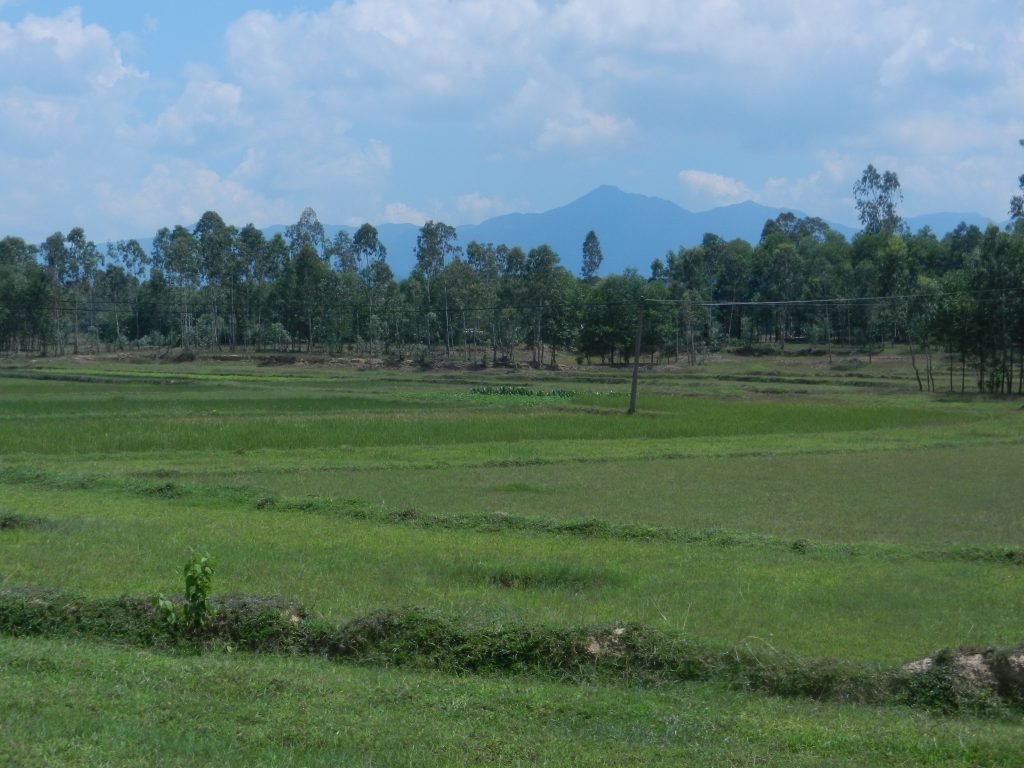
Each end has a broad flood plain with lots of rice fields. The Red River basin is up north, and the land around Ho Chi Minh City is down south.
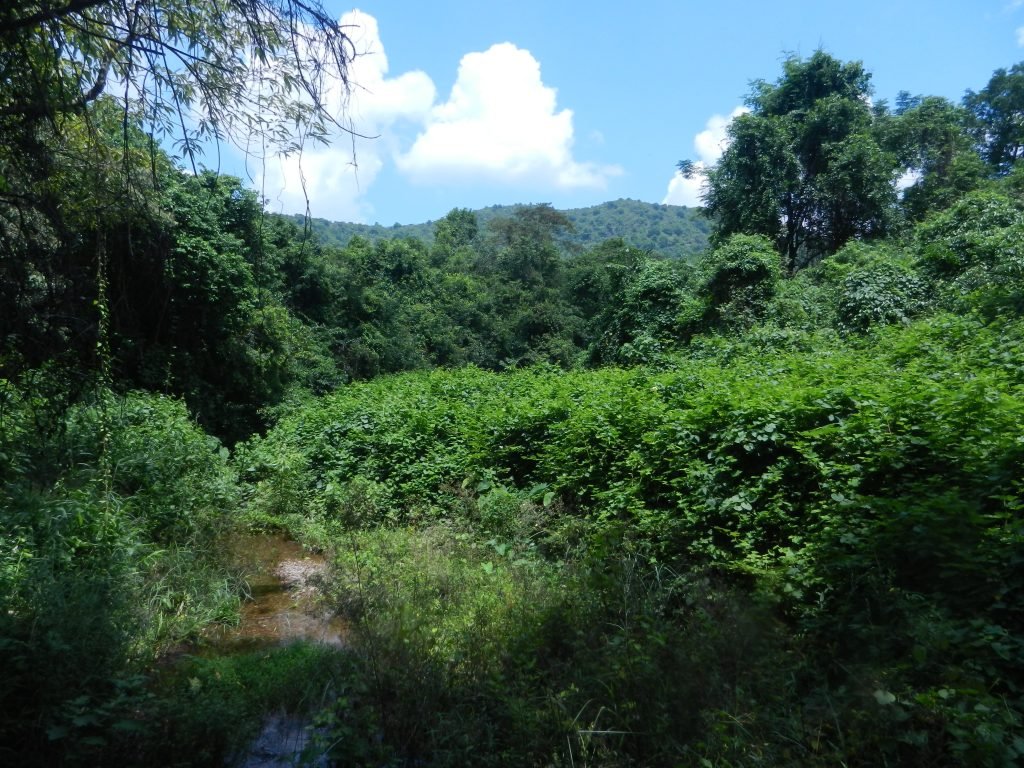
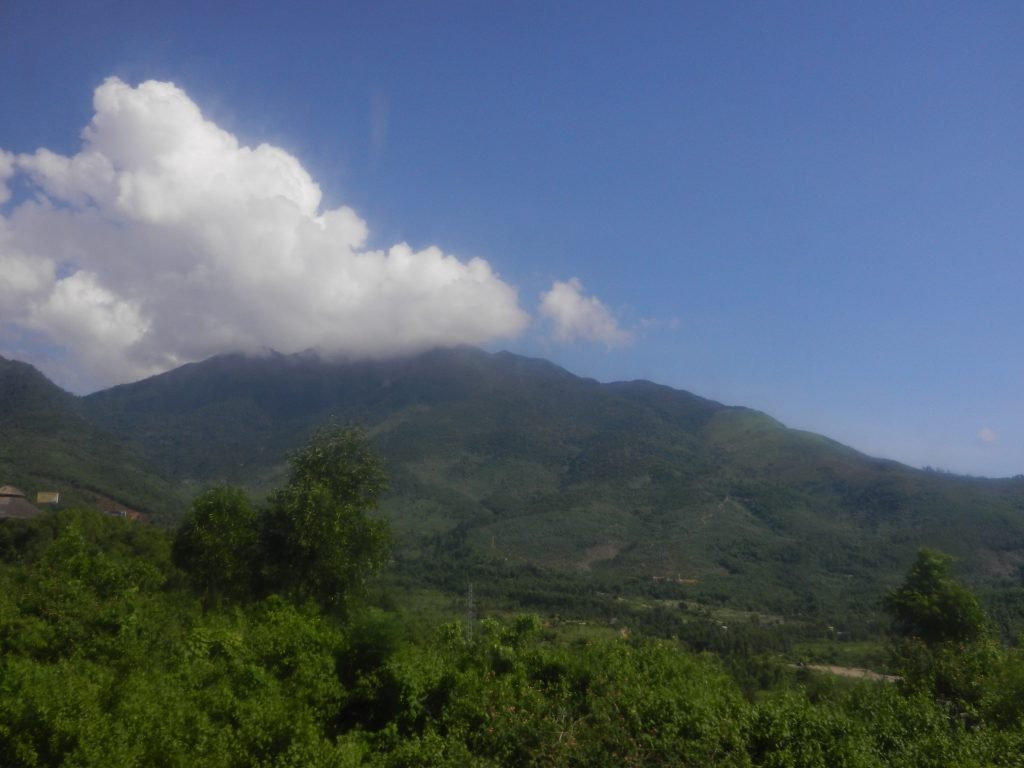
The land in between is full of jungles and mountains (above).
Vietnam has thus been an especially hard place to unify politically. Chinese, French, and Americans tried to control it, and all went back home with their tails between their legs, but only after causing a lot of misery which toughened Vietnamese will to keep fighting for their land.
So two contrary themes have been intertwined in Vietnamese culture for 2,000 years: ethereal beauty and political conflict. They’re still unresolved. Vietnam’s economy has grown quickly. The country was noticeably much better off than Cambodia as soon as I crossed the border. But the wealth is unevenly distributed, and the government is very corrupt and repressive. But over the centuries these two themes have blended into some of Asia’s most interesting cultural wealth.
Waters of the South China Sea receded after 2000 BCE, exposing the Red River plain. People came down from the uplands and foothills to settle in the delta. Unlike the highlands and Cambodia, the fertile alluvial Red River plain enjoyed two annual monsoons. This region was especially suitable for agriculture.
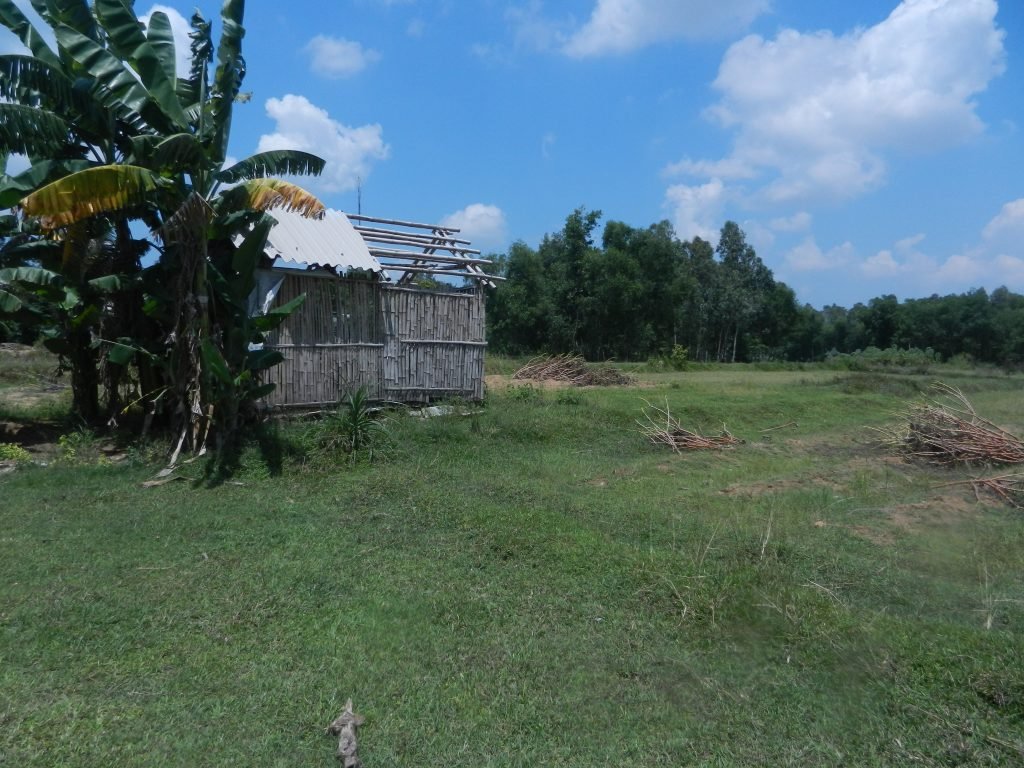
Speakers of the linguistic ancestor of Vietnamese migrated from highlands in central Vietnam and western Laos (linguists have found the most languages that are closely related to Vietnamese there). They arrived around the Red River and joined speakers of other Mon-Khmer languages (Vietnamese is in the same family) and Tai around the mid-first millennium BCE. They blended cultures and intensively practiced wet-rice agriculture (proto-Vietnamese speakers might have learned this from Tai neighbors). Vietnamese culture has always been diverse.
All these societies created a vibrant culture called Dong Son.
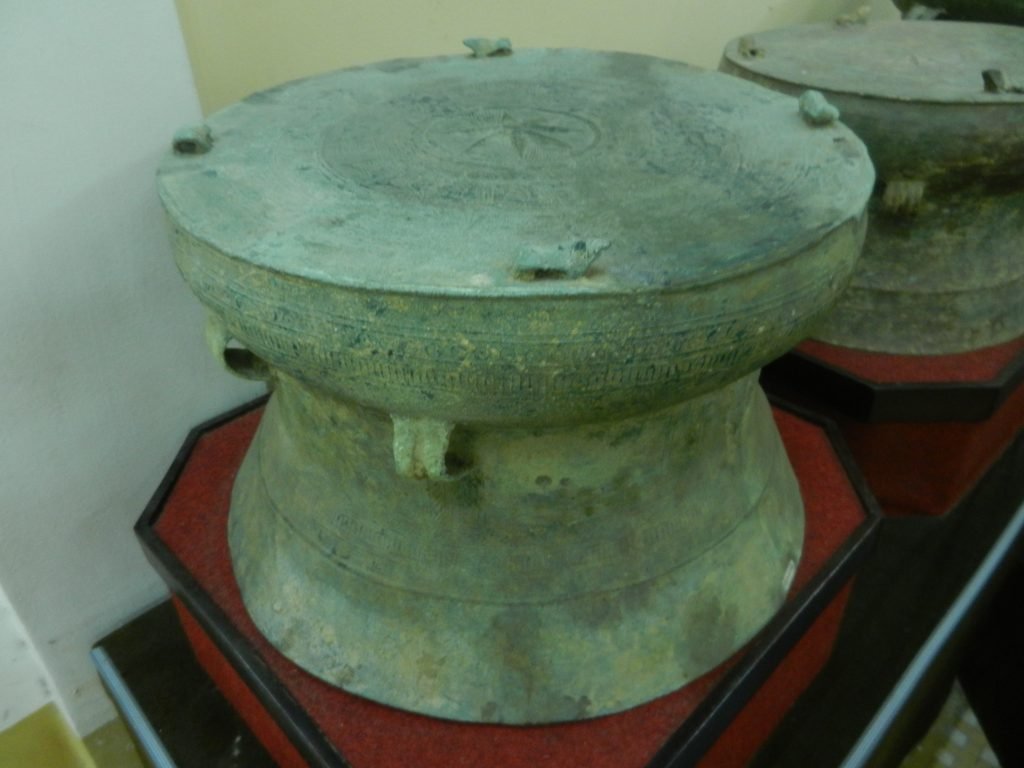
The Dong Son’s ruling class buried buried a lot of bronze goods in graves, so its members were much wealthier than the common farmers. Bronze drums like the ones in the above and below shots are its most famous artifacts. These drums were produced from about 500 BCE to the first century CE, and some were transported upriver into southwestern China, to what are now Cambodia, Thailand, Burma, and Indonesia, and even as far as New Guinea.
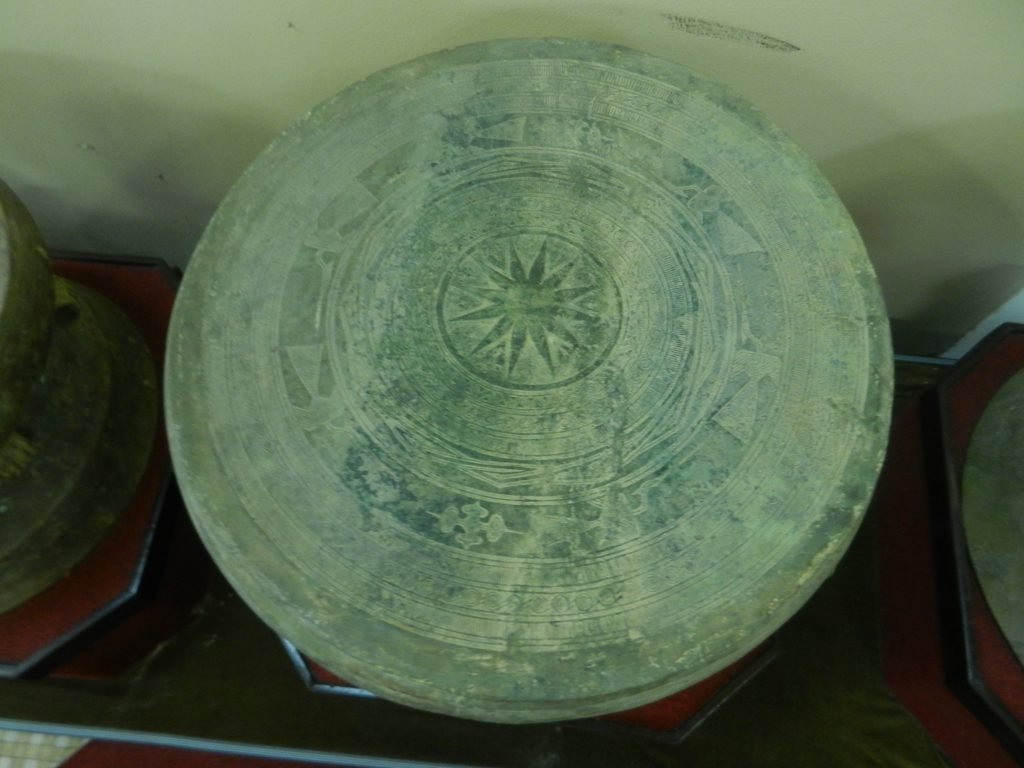
The historian Keith Taylor said that lords carried these drums in boats to announce their presence and summon people to give them tribute. Others have felt that priests might have used them to communicate with ancestors and nature spirits. Others have surmised that they were used for rain-making and were associated with thunder, dragons, crocodiles, and frogs. Whatever kings, lords, or priests used them for, their ornate designs show that they were special. The Dong-Son elites ruled with flash.
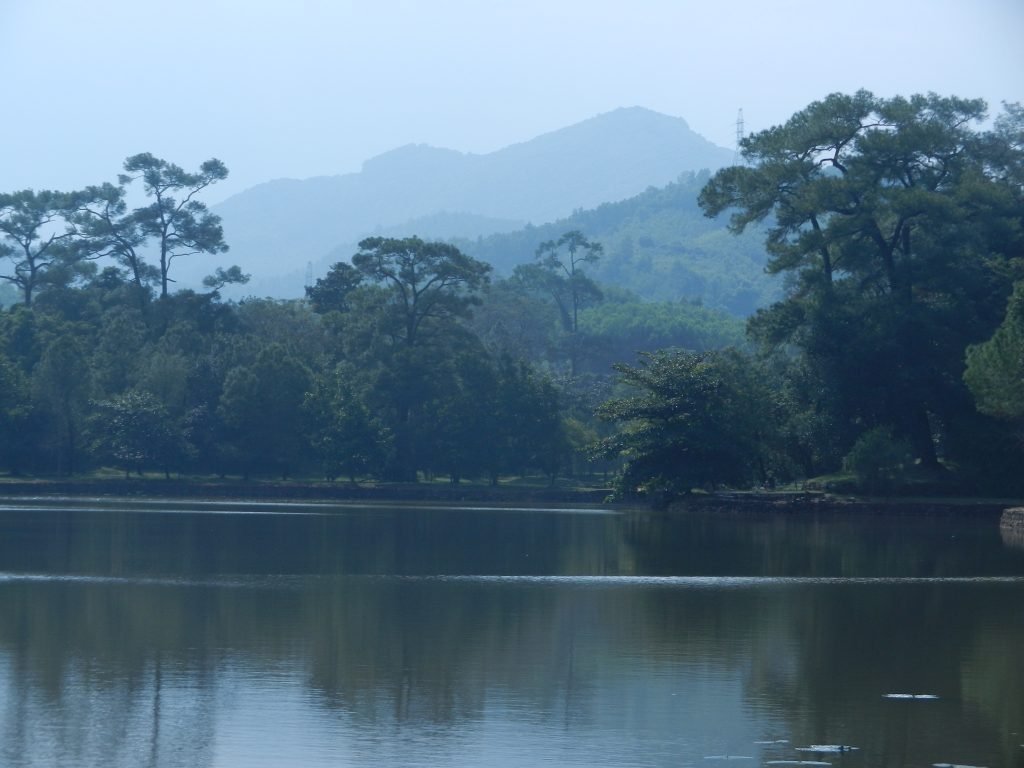
They presided over a large area which included mountains to the west and sea to the east. Though they lived in low-elevation rice farming lands, they had to unify many tribes in the mountains who hunted and gathered for livings. Their flamboyance awed a lot of diverse people.
But the Dong-Son culture had to deal with two especially tough challenges.
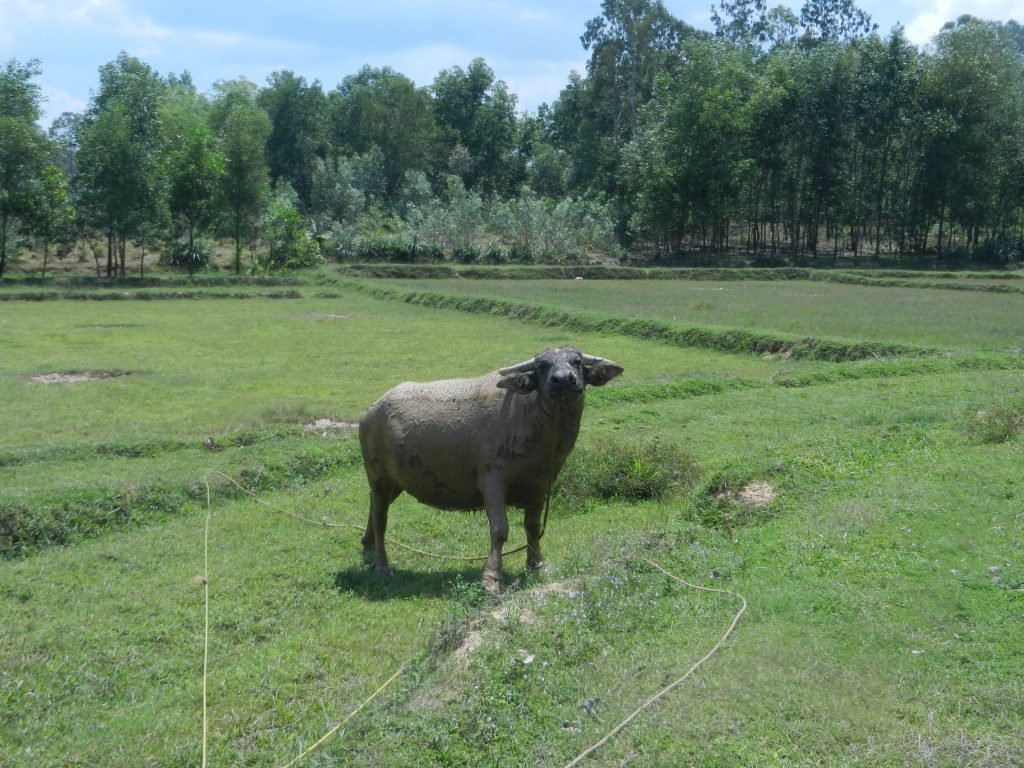
1. Their much-prized farmlands around the Red River were in the only lowland corridor between Tibetan highlands and the sea. They thus faced challenges from other people who moved through their turf, and they had to arm themselves well. Axes, daggers, swords, arrowheads, javelin points and crossbow triggers have been found at their sites.
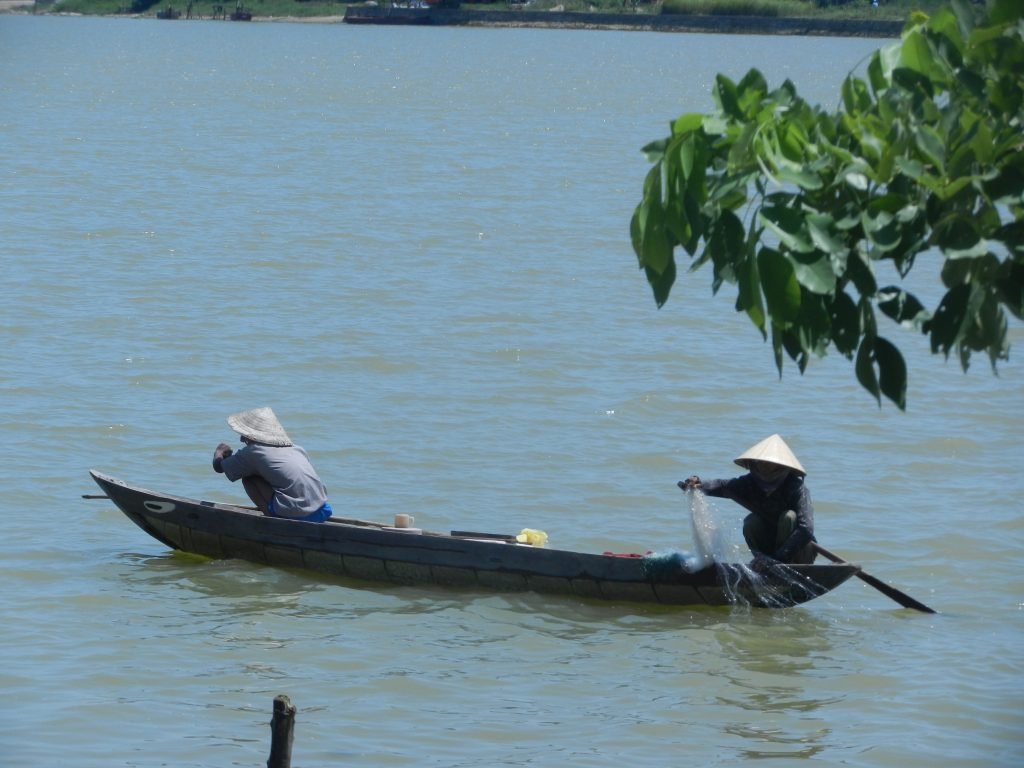
2. Many of northern Vietnam’s plains were swampy, especially those close to the sea. The Dong Son culture cleared the marshes and constructed irrigation ditches to extend farmlands to grow rice. This was back-breaking work, and it was prone to the river’s floods and storms from the sea.
People in the Dong Son culture needed a lot of discipline to flourish, but they forged a civilization that lasted for 500 years. They created vast farmlands, their elites lived exuberantly at court, and many relics at Dong Son sites suggest trade with Austronesian societies out to sea.

They shared lively ideas about the world and themselves. The earliest recorded name for the Vietnamese people is Lac, which meant an aquatic otter-like animal. It’s included in the name of the mythical hero Lac Long Quan (Otter Dragon Lord). He came from the sea and introduced the Vietnamese to agriculture. Chinese visitors noted that Vietnamese were highly oriented to water, frequently traveling in boats.
Oracle bone inscriptions from the Shang Dynasty mention people in southeastern China which scholars of ancient China have reconstructed as ywet, which is pronounced as Yue in modern Mandarin and Viet in Vietnamese. Between 2000 and 300 BCE, a non-Sinitic culture thrived in this area (largely in Zhejiang Province), which was crisscrossed by waterways as the Red River delta was. By the seventh century BCE, it consolidated into an autonomous kingdom. The historian Ben Kiernan has noted common traits that people there and around the Red River shared, including stilt houses, tattooing, the use of bronze drums to increase rituals’ fertility, relatively high status of women, and a preference for boats. A Chinese text said that Yue people “used boats as their carriages and oars as their horses.” Other neighboring societies also shared these characteristics, including Funan, in the southernmost area of Vietnam and Cambodia. Vietnamese were also in constant contact with the Cham civilization in central Vietnam. All these cultures traded with each other.
But expanding Han China annexed northern Vietnam in 111 BCE. As usual when invaded, the Vietnamese refused to be integrated into the foreigners’ empire. The two Trung sisters spearheaded a rebellion among local chiefs. In 43 BCE, troops allied with the Chinese defeated them, and the valiant women committed suicide. The Chinese came in, administered Vietnam as an imperial province, and spread their own culture. Two ancient and equally rich cultures converged to make Vietnam unique. We’ll see how they blended in future articles.