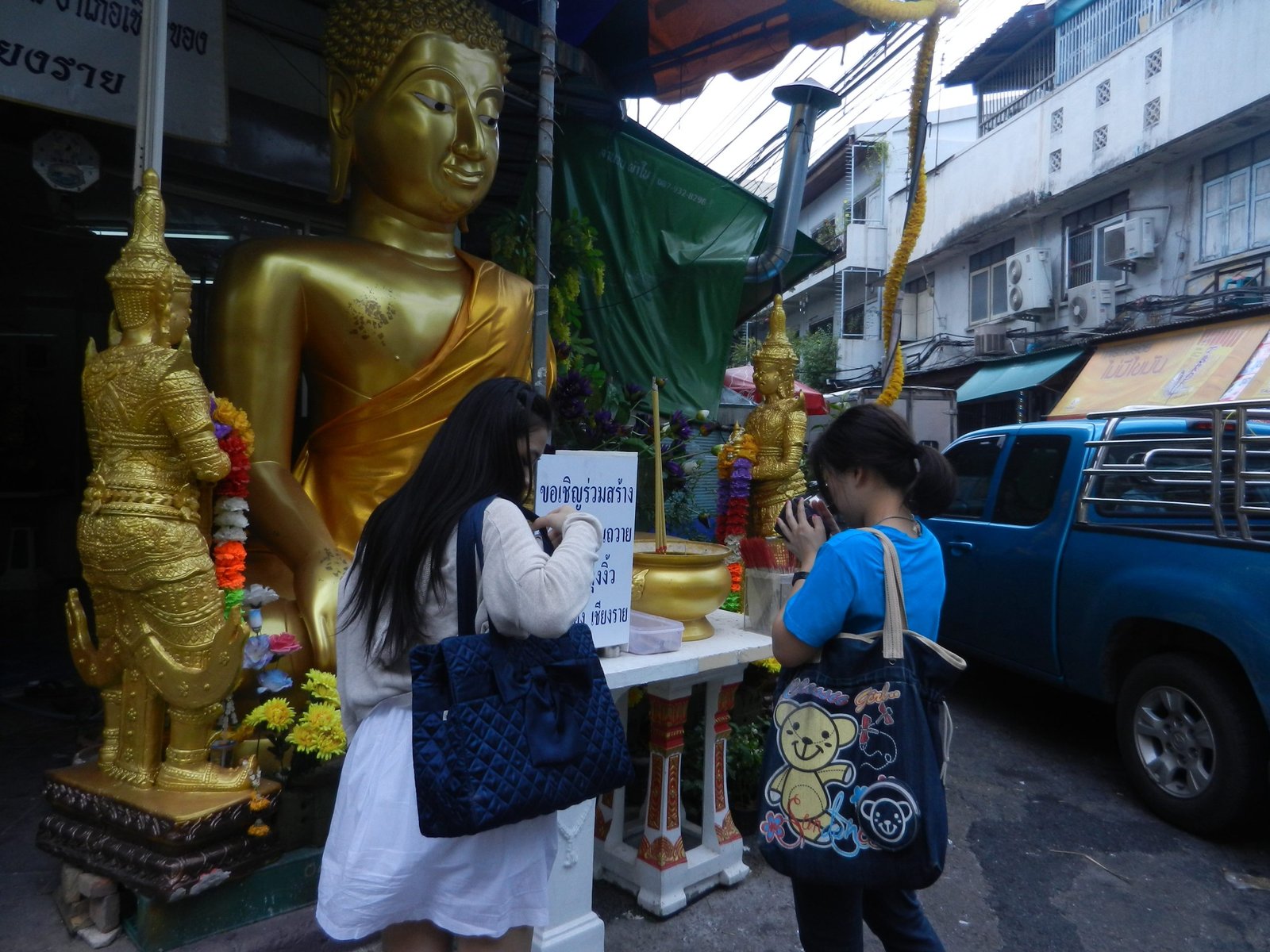
Bangkok quickly grew after it was founded by the new Chakri Dynasty in 1782, but it never developed into a grid pattern like Chicago or much of San Francisco. It has always retained traditional Thai perspectives. On the surface, it’s chaotic and crowded, with an apparent lack of zoning laws. But while meandering through its bump and grind, you suddenly find sacred places that open the perspective into magical landscapes.
Chinatown grew a little south of the royal palace area. Chinese traders played a big part in building Bangkok’s economy in the 19the century. Their neighborhood was the most crowded place I found in the city.

But I suddenly came to a little known wat called Khanika Phon.
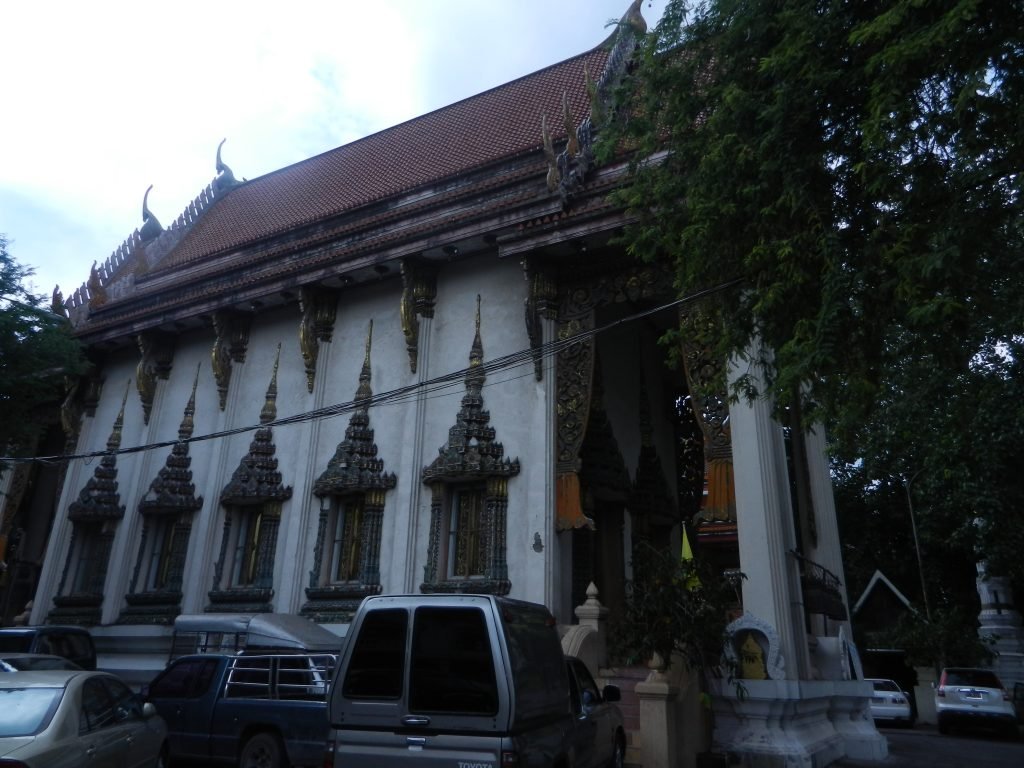
Grace and cash merge in its public assembly hall, where offerings were placed before the main altar.

Many pretty forms and colors blend in Thai temples, so why not include some money?
A lot of statues blended their gentle forms and energies.
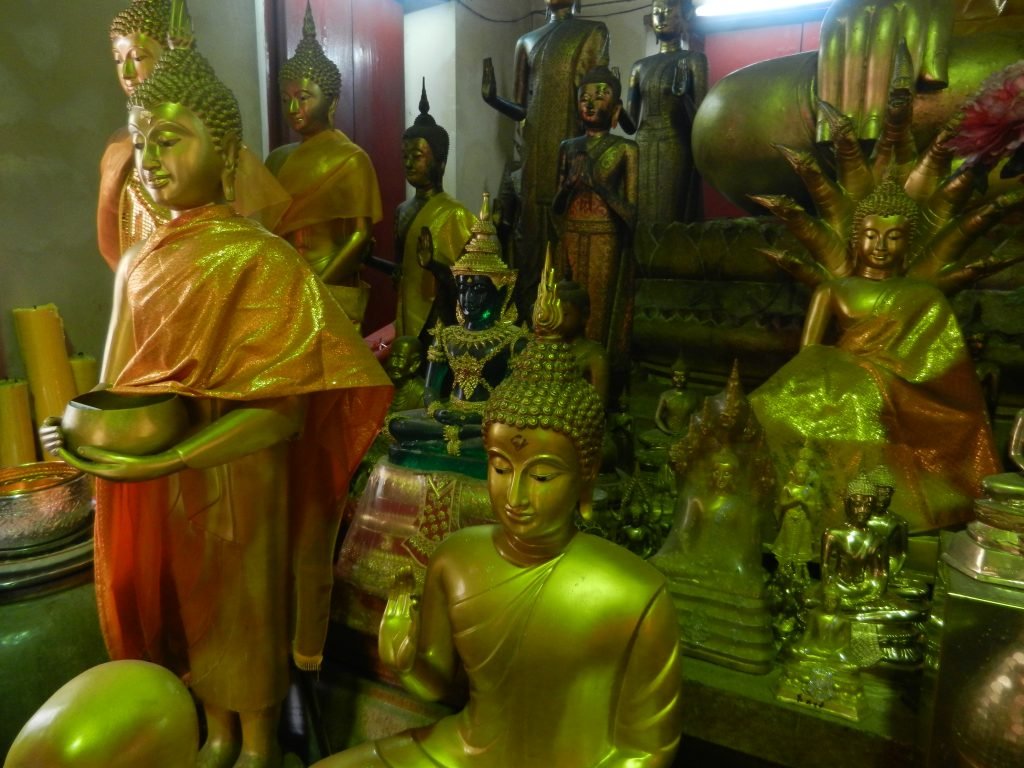
Although Buddha statues take center stage in Thai temples, many other shiny objects mix with them. This wat has a money tree whose crisp foliage shines with the statues.

Is this a tacky use of spirituality for materialistic ends?
This is Thailand–harmony is more important than identifying contradictions. In the top photo, King Bhumibol’s face graces the notes. He was on every denomination while alive. Though he was 85 years old and often living in a hospital when I took the photos, we see him as a dapper young man (he loved jazz and was an accomplished saxophonist). Thais considered him to be a battery of grace. “King, Buddha, and Thailand” was a slogan that King Vajiravudh spread a little more than 100 years ago. So Bhumibol’s benevolent energies blend with the Buddha statues.
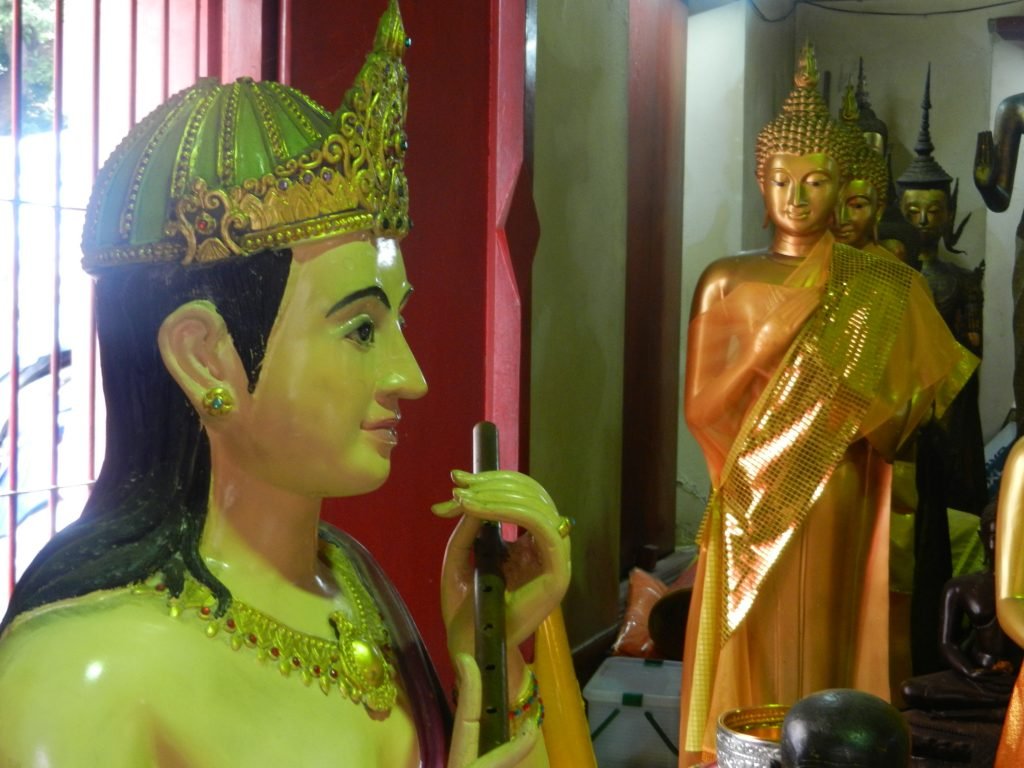
Though Wat Khanika Phon is a Buddhist temple, Krishna joins the flow. But he’s not in the form of the charioteer in the Indian Bhagavad Gita, who drives the warrior Arjuna to battle. Instead, he follows Thai tastes and takes a peaceful form as the flute player. In Indian mythology he performed for beautiful young women called gopis. But in Wat Khanika Phon, he adds his pretty notes to the Buddha statues’ grace.
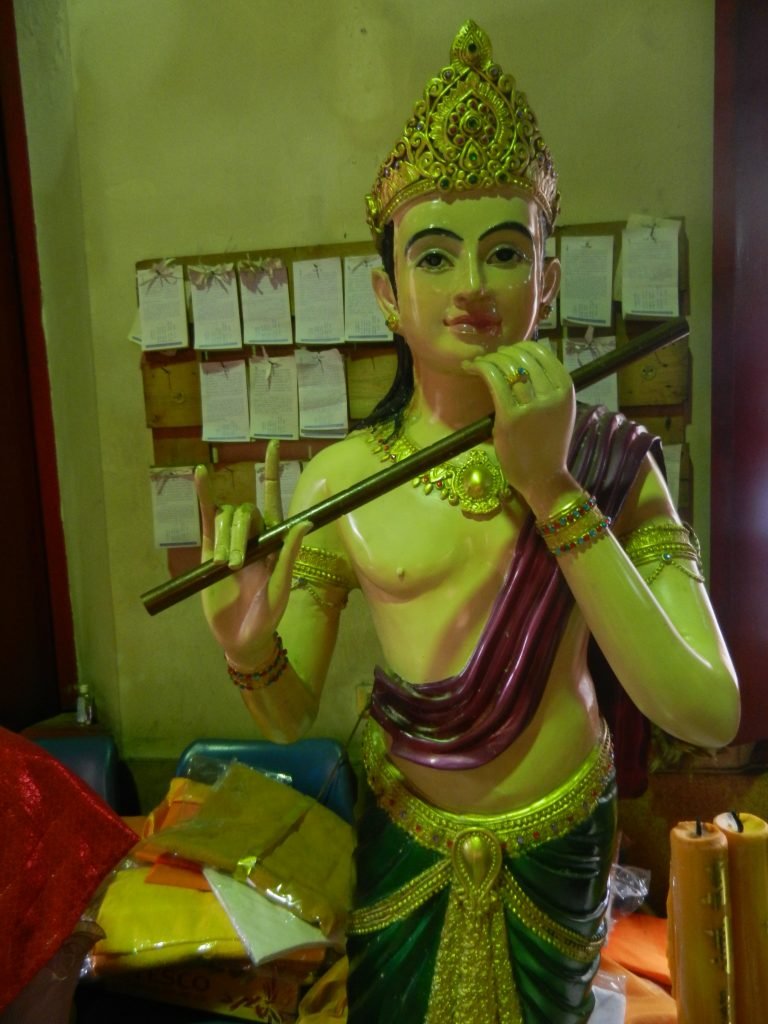
And he wears a gentle Sukhothai smile at the same time. The most soothing images from both countries mesh.
So the benevolent energy that flows from Buddha statues mix with other honored spirits and pretty objects. The blend was different in each of the hundreds of wats I explored in Thailand. They take on limitless varieties, so you can spend your whole life enjoying them. They’re not reducible to abstract grids, but they make up a key aspect of Thai perspectives.
You can explore other cultures’ perspectives here, including African, Indian, Chinese, and Islamic.