Rome started as an undistinguished looking city, but events began to happen on a larger scale in the third century BCE, when Qin Shihuang built the first pan-Chinese empire. Romans fought three wars with Carthage between 264 and 146 BCE. The latter was based in Tunisia, and both states tussled for control over trade and land around the central and western Mediterranean. These contests had profound psychological effects on Roman society.
The first war with Carthage was fought over Sicily. Greeks had founded several cities there, built them into prosperous communities, and erected Doric temples, colonnaded agoras, and semi-circular theaters. Romans could look to this Hellenic splendor as a prize for victory and a standard for displaying their own prestige. At the same time, fighting over an island reinforced the traditional Greek view of the world as a place dominated by sea and coasts. Rome’s power and geographic horizons thus expanded in a way that made it easy to adopt Greek perspectives and further transmit them.

Rome grew much more in the second century BCE, when several eastern societies (including Greece) asked its rulers to lend military strength to settle their own political quarrels. Rome at first demanded enormous amounts of money. Soon afterwards, a new prince or a popular leader would rebel, and Rome would quell the effort and take over the whole state. Three things then happened that dramatically changed Rome’s character from its humble roots:
- A Greek historian named Polybius reflected on Rome’s meteoric rise and noticed a profound transformation in history. The known world was now one integrated political and economic system. Greek society had been a multitude of independent states for so long that this view of the world as separate domains became ingrained in Westerners’ shared consciousness. But one empire was now supreme.
- Sacks of money and boatloads of goods flowed into Rome from all over the known world, and people developed tastes for luxury to an extent that many Greeks had disdained. Cato the Elder served as a censor (an official guardian of public morals and state finances) and ardently defended traditional Roman values. He decried newfangled customs imported from the East and policed the city, cutting pipes that some residents had attached to the public water supply to divert to their private gardens. He meant well, but controlling people’s love of luxury and public display was a battle that even the stoutest Roman could never win.
- Generals now commanded huge armies, and they became so powerful that no one could stop them from overthrowing an unpopular government and becoming dictators. Sulla assumed the throne in 82 BCE as Rome’s first. Julius Caesar thrust his way to the top a generation later.
The great orator, writer, and statesman Cicero favored the older form of Roman government, which allowed debate between multiple parties. He also journeyed to Athens, studied at Plato’s academy, and translated Greek philosophic works into Latin. Caesar was ruthless in his quest for power, but he admired the older man and dearly wanted his approval. He wrote him a letter that said, “You would be wise to respect me now that things are going my way.” Caesar maintained his restraint with Cicero, but things stopped going his way when Marcus Junius Brutus and his cohorts plunged their daggers into him.
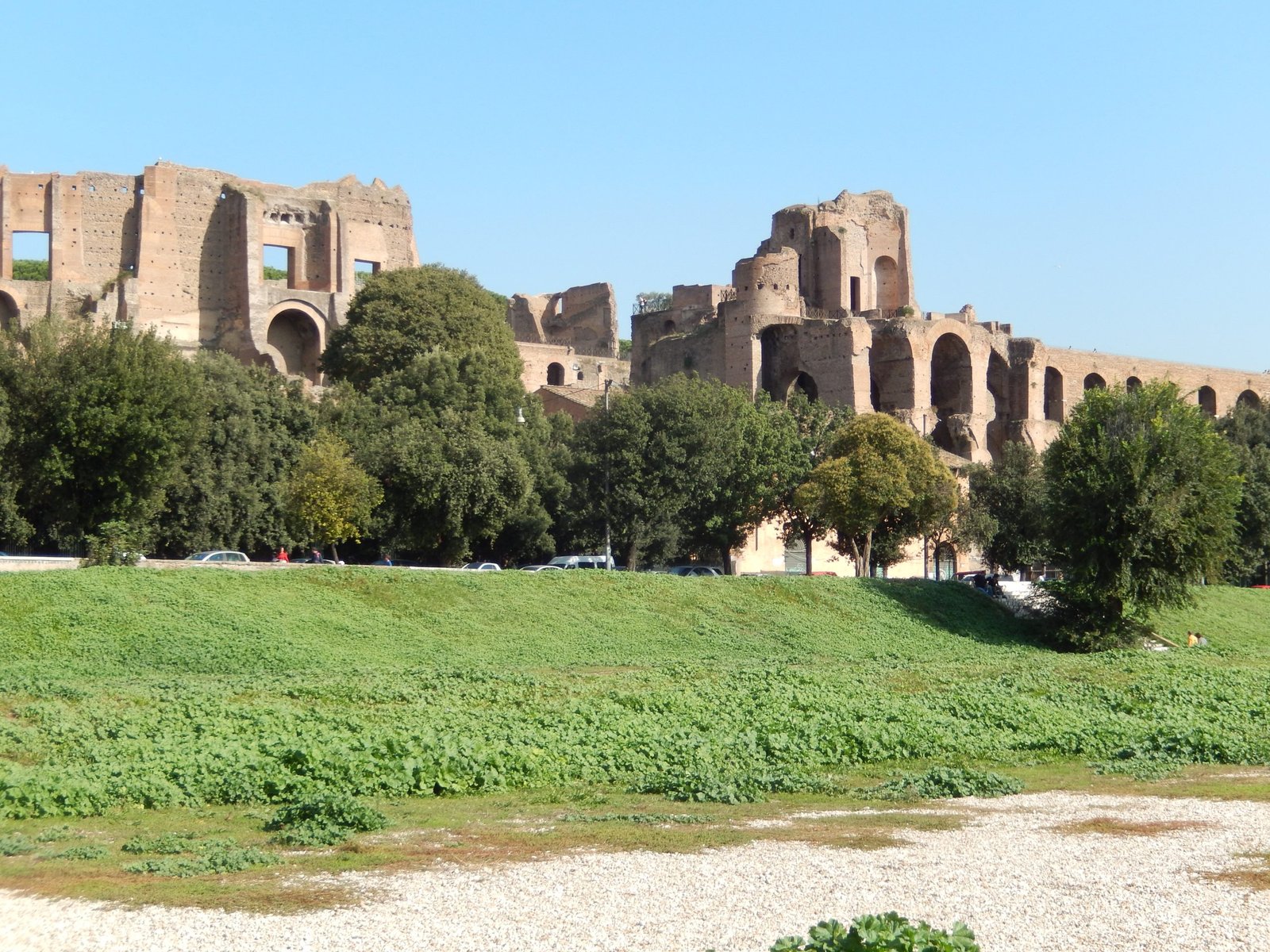
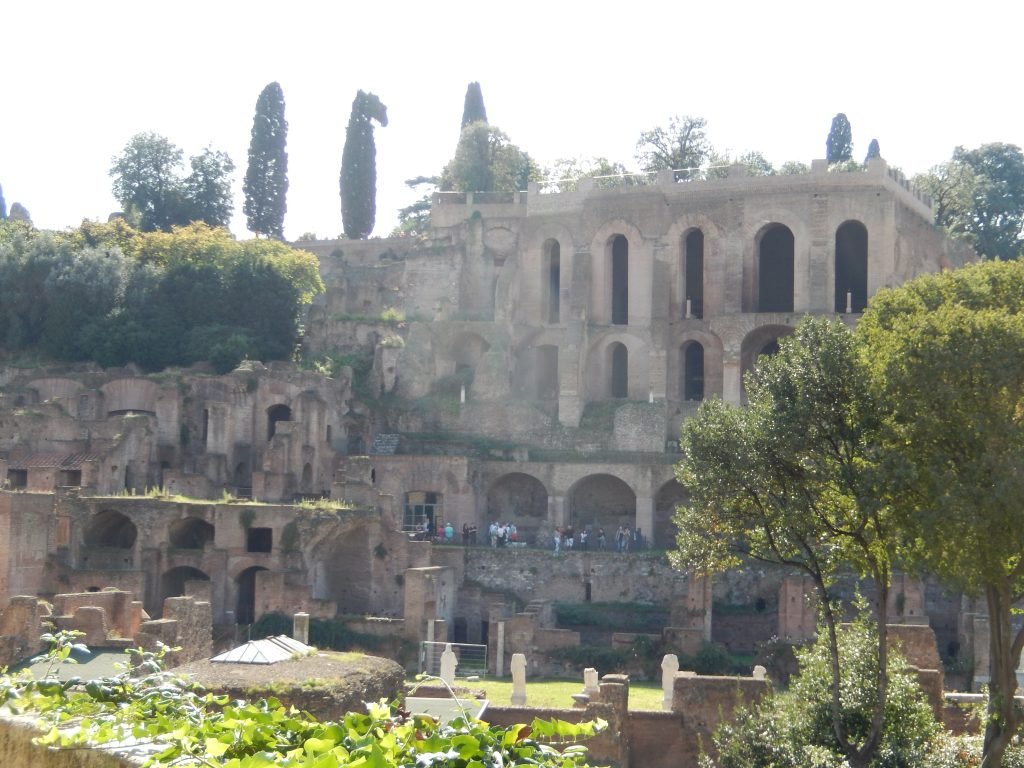
The dictator was toppled, but Rome’s political climate had irreversibly changed. Emperors would now rule it, and the senators and representatives of the plebeians lost leverage to take political initiatives. The emperor’s palace (below) ultimately loomed over the forum.
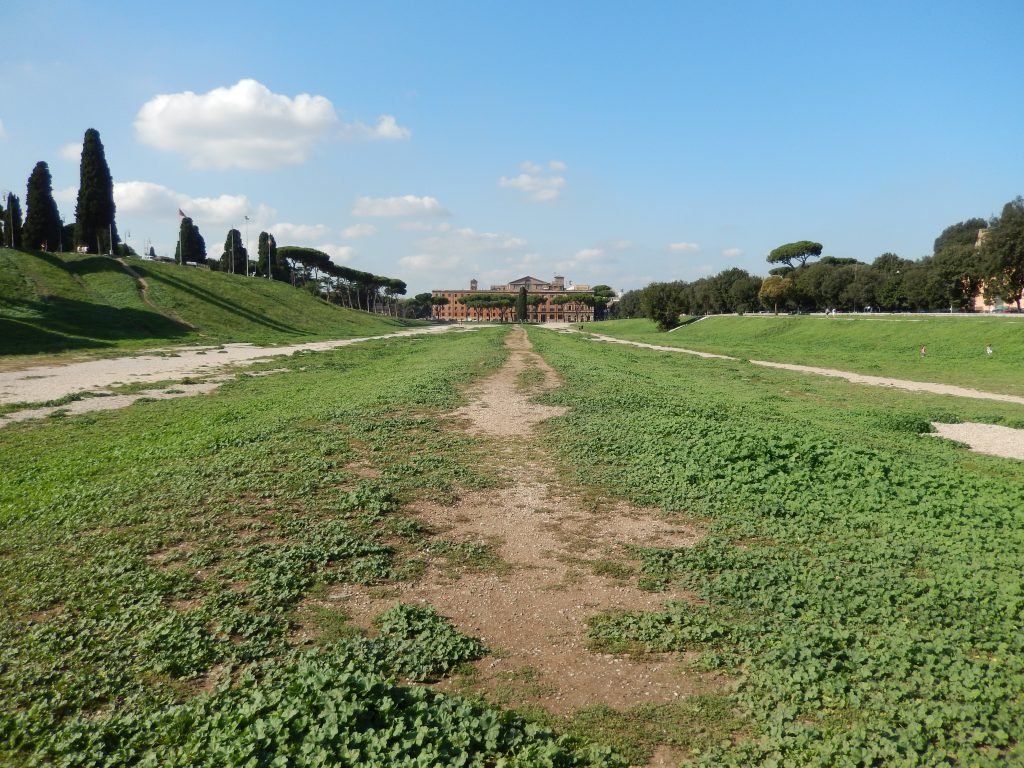
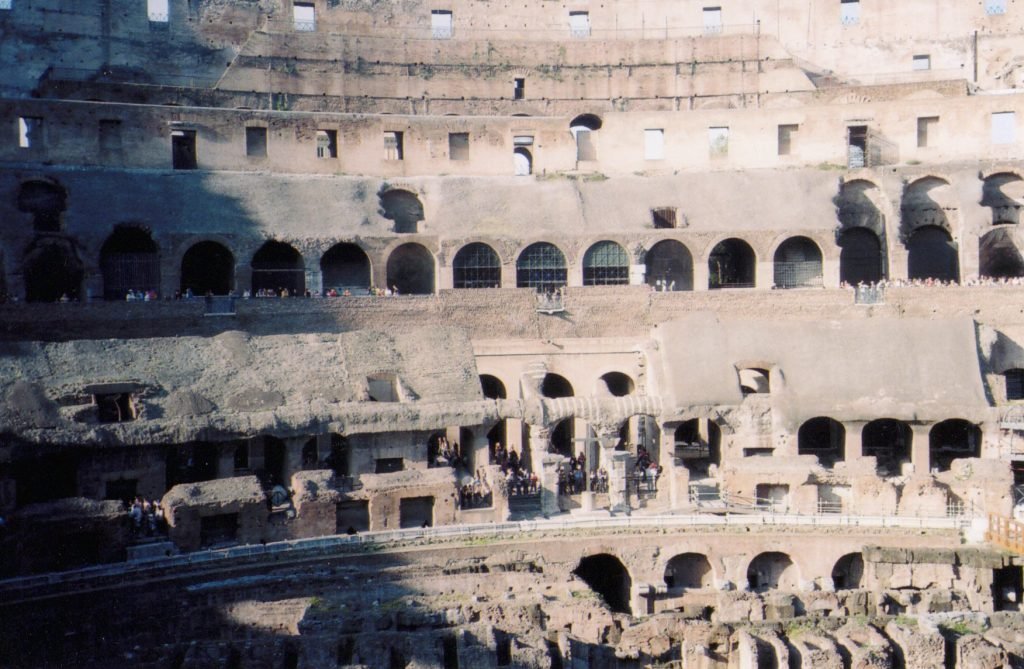
Intelligent debate between classes and abilities of the lower to speak for themselves greatly diminished, and ordinary Romans became more passive. The number of gladiatorial combats increased severalfold, and the phrase “bread and circuses” became a political slogan for emperors (Rome’s circus maximus is below).
The city of Rome’s population had mushroomed to about one million people, and more than half lived in slums. A lot of free men were unemployed, since slaves performed much of the labor. Emperors learned that it was crucial to dole out bread and stage gladiatorial fights and chariot races to pacify the masses and keep them from forming mobs. Sensationalism replaced thoughtful discourse.
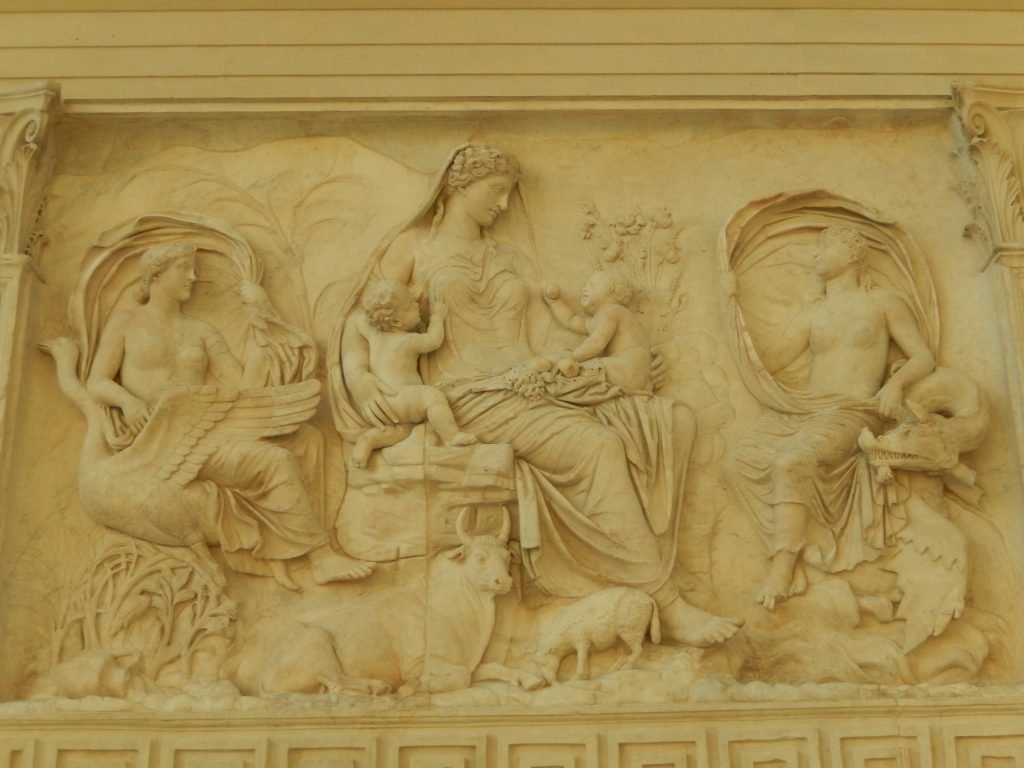
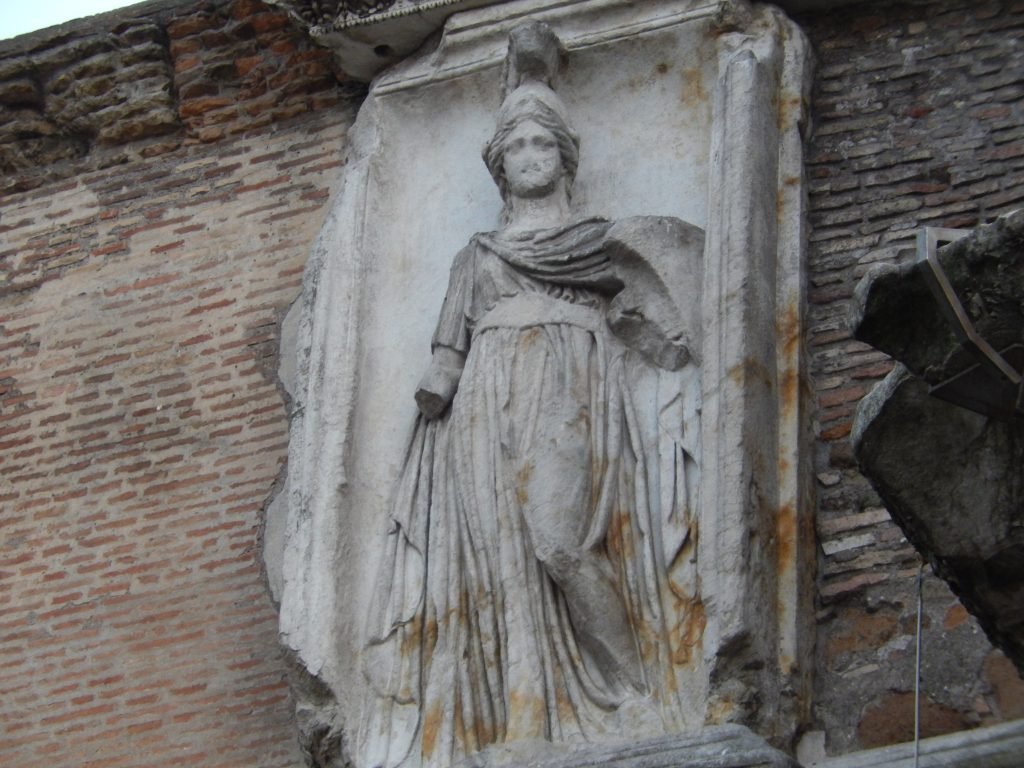
Julius Caesar’s nephew Octavian took the throne as Augustus Caesar, and he resolved to restore harmony in the empire after several traumatic civil wars. People were so exhausted after the fighting that many were now willing to accept the emperor as a fact of life. Augustus, eager to further encourage this, wanted a writer to compose an epic about Rome’s origins and history leading to his own reign as the fulfillment of the city’s greatness. His altar of peace (Ara Pacis), by the Tiber River, shows the benefits of his reign. Pax, the goddess of peace (below) is surrounded by symbols of fertility.
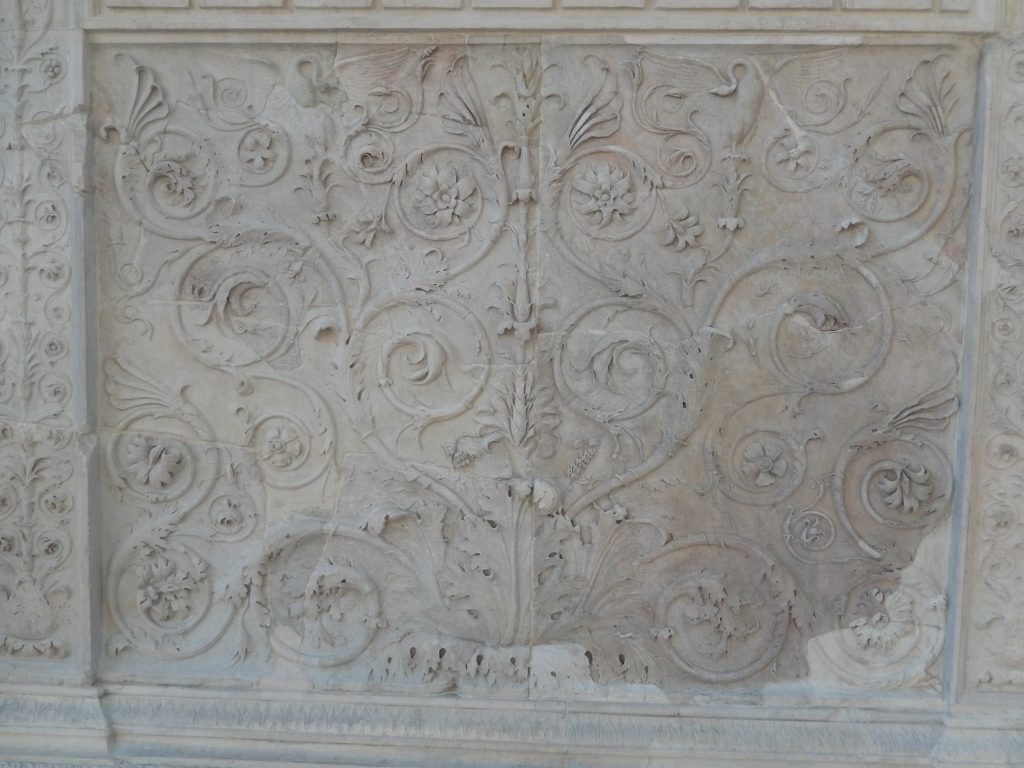
Vine clusters reinforce this theme and make nature’s abundance symmetrical.
Virgil labored over his Aeneid for ten years, and he wrote it as a sequel to the Trojan War which the Homeric epics sang about. By using the Iliad’s focus on Troy, he strengthened foundational Western ideas about geography and history and spread them through more of Europe. The Trojan War was reinforced as society’s geographic framework and temporal horizon (the past that humanity came from).
As in the Iliad, interactions between people, between gods, and between people and gods were central, and many battle scenes with one-to-one combats enlivened the verses. But the Aeneid also had traits that showed that things had changed since the Greeks ruled their own world.
Romans had already believed that Trojans escaping the sacking of their city migrated west. The Iliad described Aeneas carrying his father on his back while fleeing the carnage, and this image resonated with Romans as a model of filial piety. Jupiter had ordained that Aeneas would found a colony that Rome would later grow from. He built his city in a nearby place called Lavinium, and his son, Ascanius, then transferred the community to Alba Longa, where their descendants ruled for 300 years. Romulus and Remus later founded the city of Rome. Virgil thus fused the Trojan War with Rome’s traditional foundation myth.
But as in the Homeric poems, some gods in the Aeneid didn’t get along with each other. Jupiter’s wife, Juno, was still fuming that the Trojan prince, Paris, had judged against her in a beauty contest, giving the prize to Venus. She patronized Rome’s traditional enemy, Carthage, so she tried to thwart her husband’s plan when Aeneas stopped there on his way to Italy by stirring up a torrid romance between its queen, Dido, and him. His lover entreated him to stay, but he invoked Jupiter’s plan and sailed away. She then cursed him with eternal hostility between her city and Rome and killed herself. This gave readers a justification for the three earlier wars with Carthage.
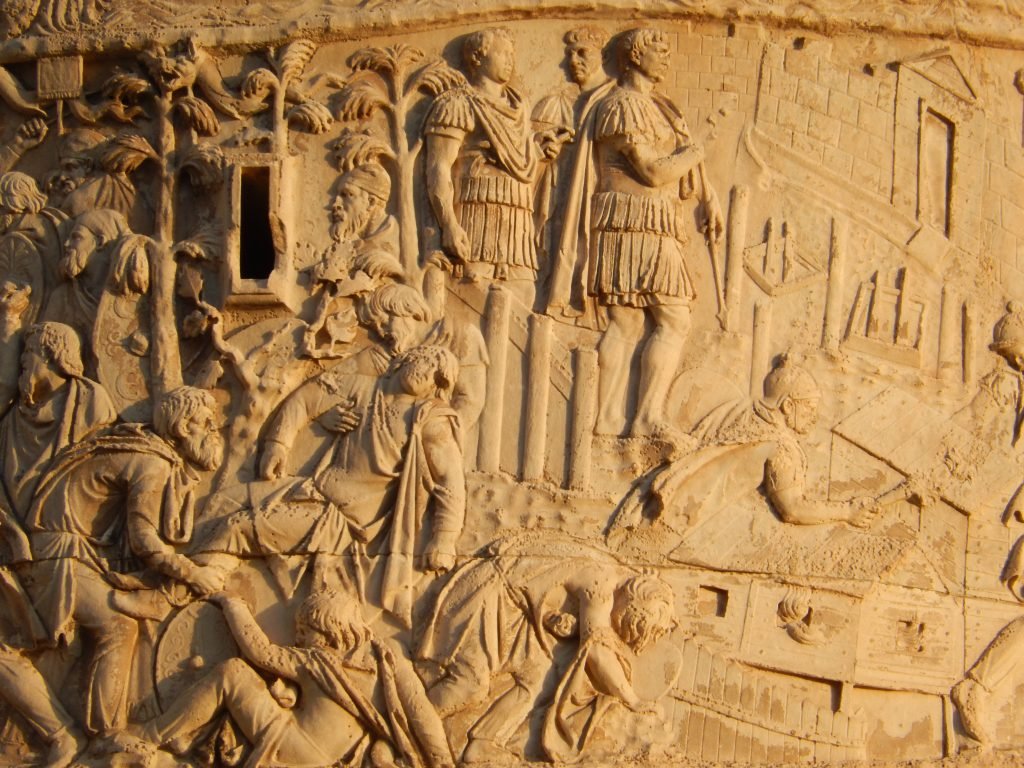
Much more suffering ensued when Aeneas landed in Italy. Juno ignited a horrific war with a federation of Italian people, and Virgil described several wrenching combats. An elderly king named Evander allied with him and entrusted his son Pallas to him, but the young man was slain. More senseless killing followed. Turnus led the most powerful forces against Aeneas, but was fated to lose his promised bride, Lavinia, to him and die by his hand. Turnus admitted that the Fates were too strong for him. Aeneas wounded him and then slew him as he begged for mercy.
In contrast with the Iliad, events occurred within a larger cosmic historical narrative which climaxed in Rome’s greatness. The enormity of events often overshadowed the characters so that the warriors often lacked the individuality of Homer’s. Aeneas was more passive than the often hot-tempered and vain Achilles and the wily Odysseus. Instead of having a strong and distinct personality, Aeneas seems like a cog in the cosmic system. The classicist Jasper Griffin didn’t think he came off too well when he left Dido. Although he obeyed his father and fulfilled his wish that Rome be founded, he turned his back on someone who loved him.
Griffin felt that Virgil was saying that all the suffering in the poem was the price of imperialism. It’s a hard destiny: The conqueror must extinguish much of the life he holds dear. This conflict between perspectives gives the Aeneid much of its emotional power. Things happen on a grander scale than in cozier Greek cities with citizens who could sit in the same amphitheater, recognize each other, and laugh when someone was the butt of a racy joke.
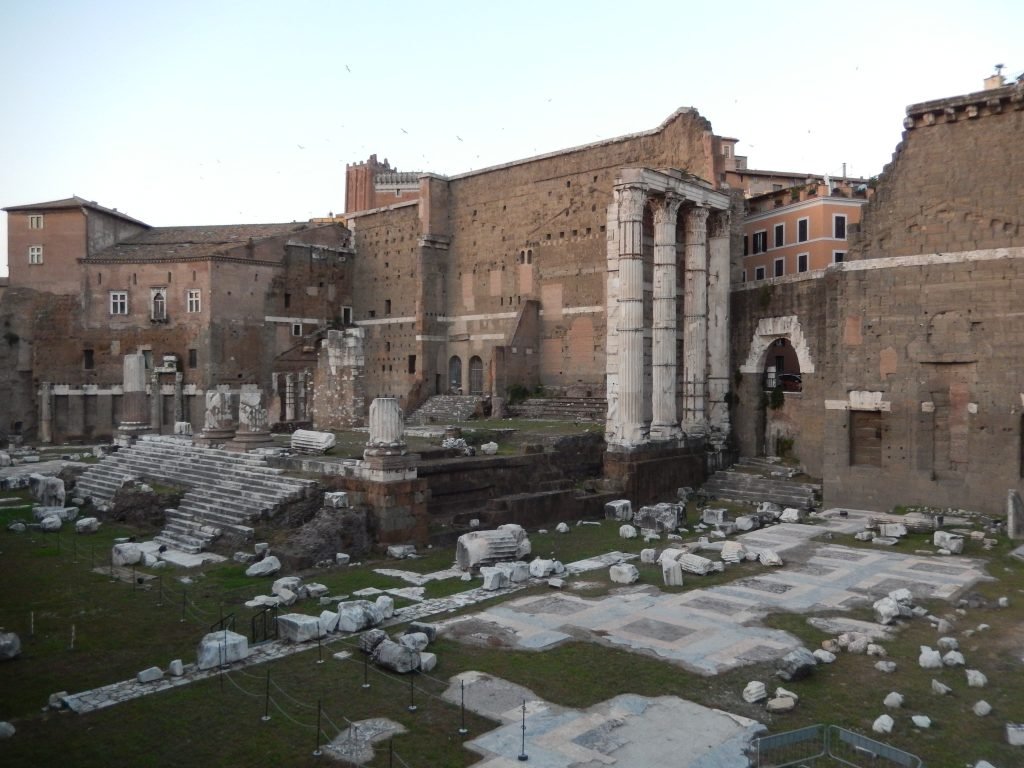
Augustus boasted that he transformed Rome from a city of bricks into a city of marble. He built his forum (above) next to Julius Caesar’s. Both branched off from Rome’s main forum, thereby creating several monumental centers and expanding Rome beyond its original human scale. The far end of Augustus’s courtyard had a huge temple that was mainly devoted to Mars. The poet Ovid said, “Mars, strong in armor, looks upon the temple’s pediment and rejoices that unvanquished gods occupy the places of honor. . . . On one side he sees Aeneas with his precious burden and about him the many ancestors of the Julian house.” Mars could look at Aeneas because a large semicircular wing was just to the left of the god’s temple (above). A matching semicircle on its right was dedicated to Romulus, Rome’s legendary founder. The whole courtyard was lined with idealized sculptures (below).
The British classicist Michael Grant noted that Virgil portrayed Dido and Turnus as more human than Aeneas, and that the latter seems like a mere servant of fate. But he felt that thinking of them as better characters is a modern bias. For Virgil and his contemporaries, Aeneas represented the ideal Roman, who stoically pressed on despite the challenges he faced.
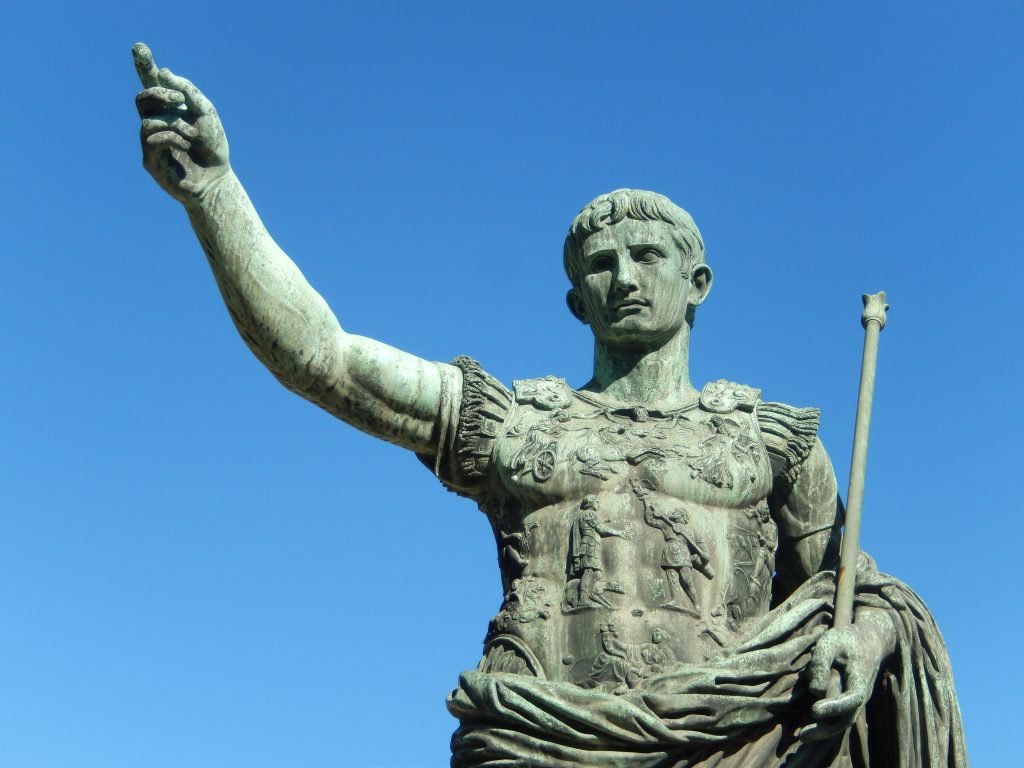
The classicist R.M. Ogilvie also admired Aeneas. In Roman Literature and Society, he wrote that he grew from an unsure youth who frequently asked his superiors for instructions into a resolute leader who fulfilled his duty to align his will with divine providence to found Rome’s society. He became a Roman role model and an exemplary practitioner of Stoicism, as Augustus is portrayed in the statue by his forum. This statue was reproduced all over the empire. His early portraits show a restless and nervous young man with bony and irregular features. He now looks confident, with a handsome and symmetrical face, and unaffected by events in the world. He’s now idealized as a man who’s in complete control of the world.
Aeneas also developed into an ideal person in a world that had grown far beyond the scale of ancient Greek city-states. But, as the classicist R.D. Williams noted, the government in such a world needed to be manipulative and often cruel. As a great poet, Virgil brought out both the majesty and brutality of the overwhelmingly large empire with equal vividness.
Virgil knew his society. Several historians have said that superstitions and beliefs in magic and astrology had increased by his time. Stoicism became one of the most popular philosophies, and it stressed knowing and quietly accepting one’s place in the order of things rather than Socrates’ exuberant self-questioning. Others were finding the epic size of events that dwarfed human-scale places which Westerners had been accustomed to cold and frightening and wanted to escape. Jesus was born 16 years after Virgil died, and he also knew people’s feelings well when he said, “The kingdom of heaven is at hand.”
Ancient Chinese literature didn’t emphasize dramatic conflicts between warriors like the Iliad and the Aeneid did. It focused on harmony within the state and the cultivation of Confucian virtues instead. But the Western epics encourage readers and listeners to sympathize with people on both sides. There is a clear winner, but everyone shares a common humanity. Although the Roman Empire dwarfed individuals, it inherited and strengthened the Greek tradition of dramatizing conflicts between them so that the focus is less on the harmony of the whole and more on the diverse agents and places within it.
Augustus cleverly played both sides of the contrast between empire and individual by sometimes portraying himself as a man of the people. His house on the Palatine Hill was smaller than many wealthy businessmen’s mansions.
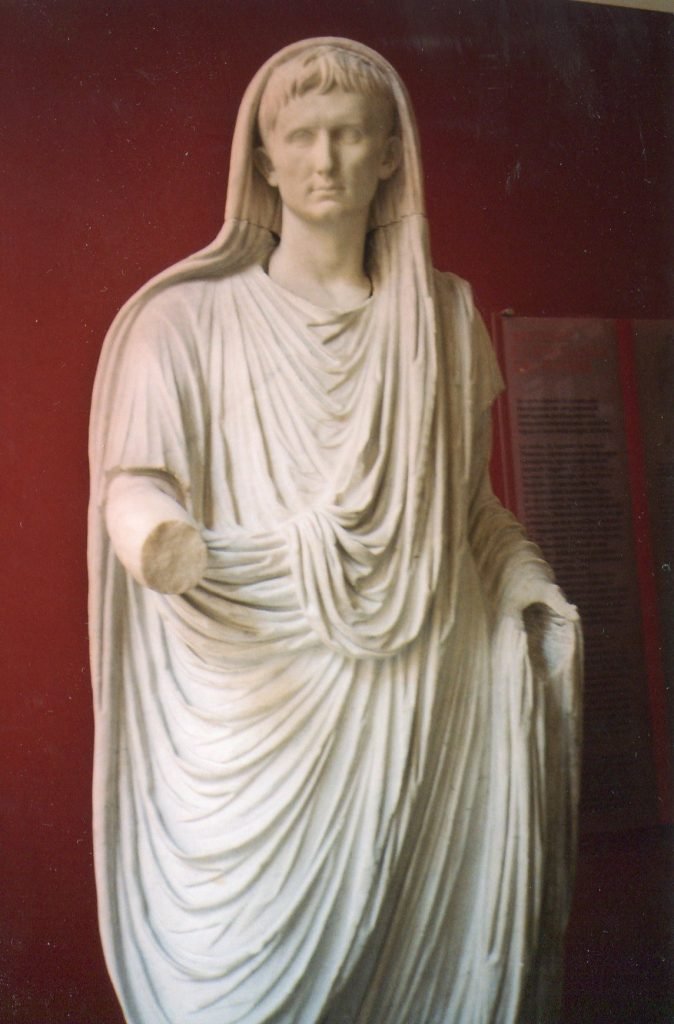
He also made the toga a Roman state dress. Although it was rather uncomfortable and its white hue made it easy to soil, it expressed purity and modesty.
People then and now have been ambivalent about Rome’s size, wealth, and power. Its artists and writers expressed its magnificence and human sides equally well.
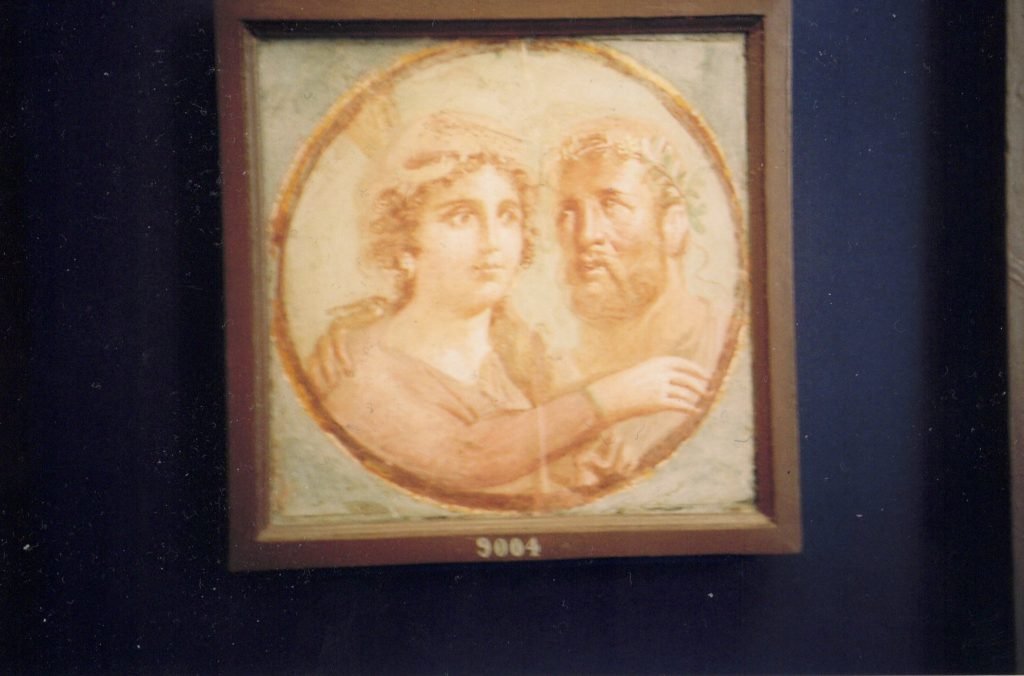
Romans masterfully expressed the grand and the common. They gave Western thinkers, writers, and artists a fertile heritage to be inspired by.