Conservatism and liberalism by themselves are self-contradictory. A Westerner who calls himself conservative supposedly honors the most time-tested values that have inspired people in Europe, North America, Australia, and New Zealand. But many of these values are about challenging conventions and taking risks:
Changing the political status quo for the common good. In the early sixth century BCE, Solon worked out a compromise between the upper and lower classes in Athens, giving the latter a voice when members of the former were oppressing them.
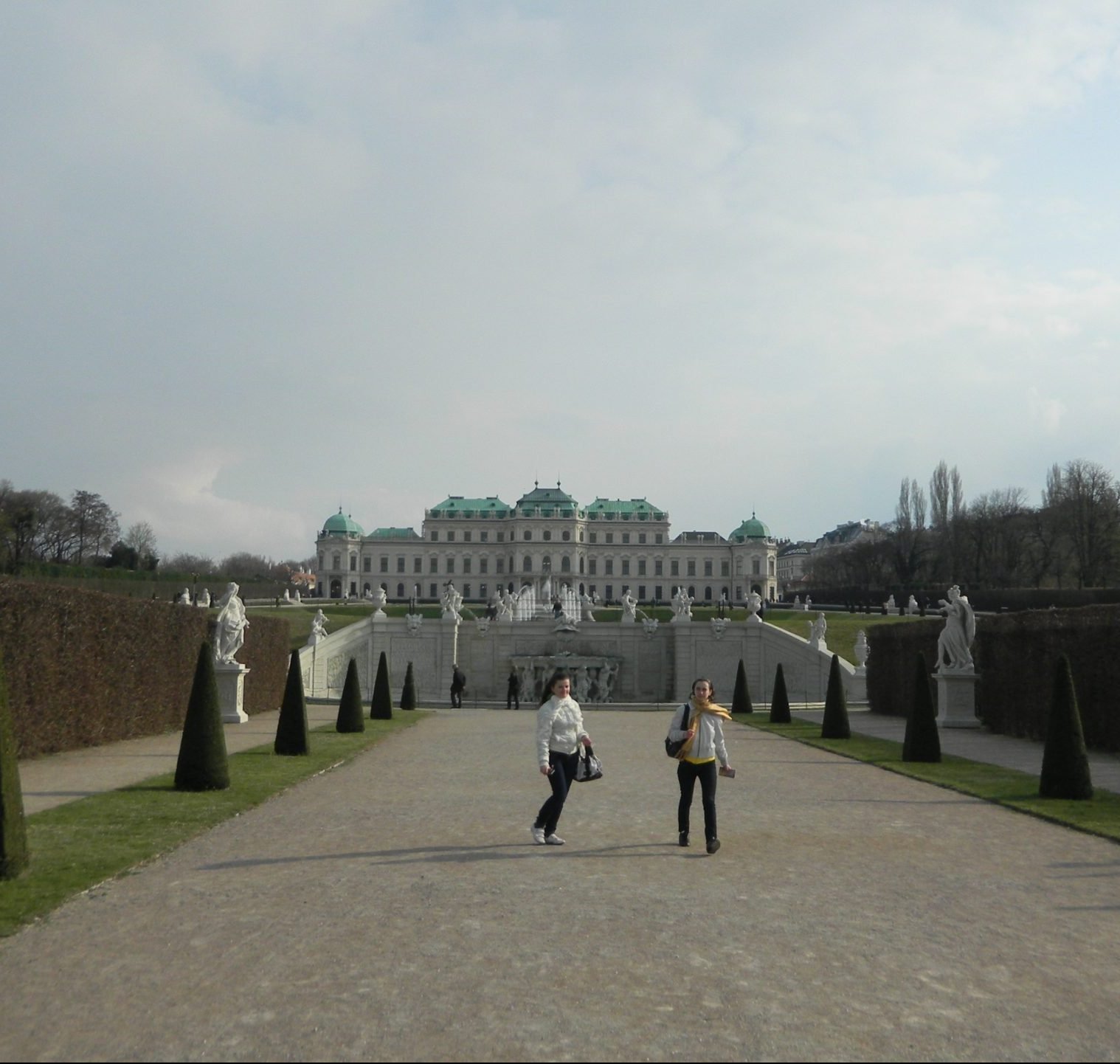
Freedom. Ancient Greeks were proud of being willing to resist anyone who insisted that they bow to them. They took on the mighty Persian Empire and won.
Socratic self-questioning—challenging one’s own assumptions and society’s conventions.
Objective exploration. Herodotus journeyed in much of the known world and interviewed locals and other travelers.

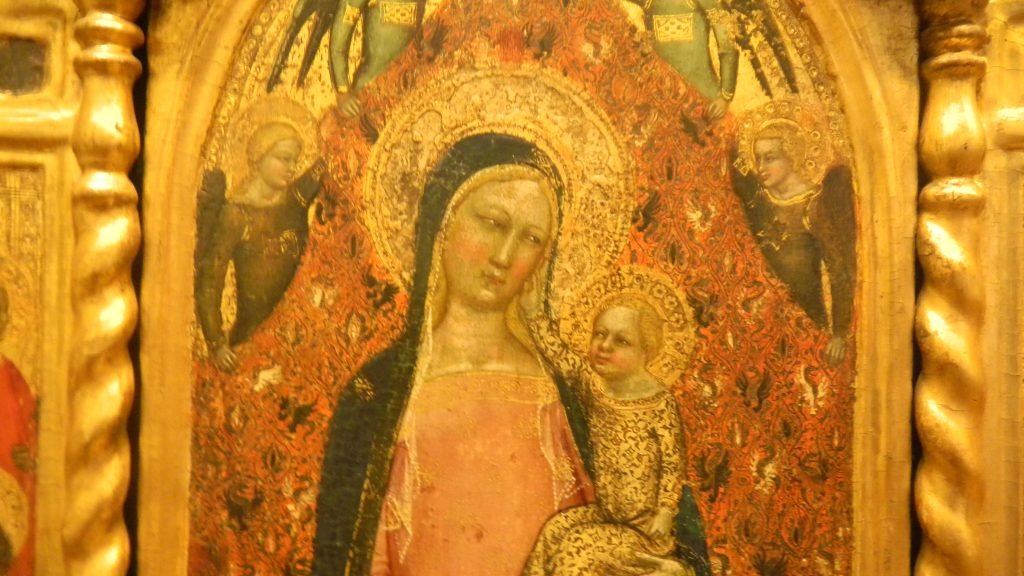
Jesus’ compassion and disregard for social hierarchy. He sat with the downtrodden in that highly class-conscious time, when it was common in the Roman Empire to think that might makes right. A thirty-something man I met in a Bible study class in San Jose admired him because “He was radical!” Matthew 25:40 states, “The King will reply, ‘Truly I tell you, whatever you did for one of the least of these brothers and sisters of mine, you did for me’.”
Scientific inquiry. Credible thinking examines evidence to test hypotheses and rejects cherished beliefs if the evidence doesn’t support them.
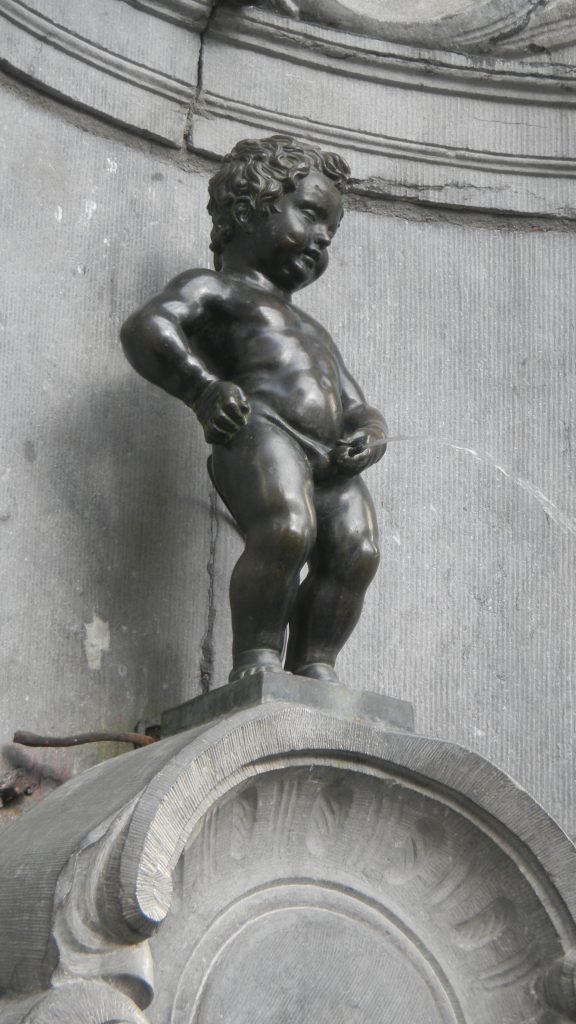
Irreverence. Archilochus made fun of some of the Iliad’s conventions, praising himself for throwing away his shield in battle. Aristophanes wrote plays that held nothing back as they lampooned his fellow citizens. Ovid, Martial, Chaucer, Shakespeare, Rabelais, Mark Twain, Oscar Wilde, and Ambrose Bierce strengthened this tradition. Bierce, an American writer, journalist, and wit, wrote The Devil’s Dictionary as a wickedly funny romp through the English language. He defined a critic as “A person who boasts himself hard to please because nobody tries to please him” and a Christian as “One who believes that the New Testament is a divinely inspired book admirably suited to the spiritual needs of his neighbor.” Mark Twain said that irreverence is one of the best ways to protect freedom.
So being conservative in the West means willingness to question the order of things. Without it one is adhering to a cardboard cutout of conservativism which mechanically promotes the status quo while being profoundly ignorant of the traditions he claims to conserve.
But being liberal also means embracing conservative values. Lionel Trilling, in The Liberal Imagination, wrote that liberalism is about full possibility and variety. But they require learning about and embracing all that’s positive from the past, otherwise they’re far from being full.
So each movement by itself quickly becomes quagmired in its own contradictions. But politics in America have become more divisive in the last 20 years. Both are now often treated as mutually exclusive so that you’re either conservative or liberal. However, both orientations can enhance each other when they’re equally balanced. We can be conservative by going back to Socrates’ self-questioning, Herodotus’ exploratory spirit, and Jesus’ open-minded compassion. We can be liberal by integrating these with values from other cultures and synthesizing larger views. By combining both orientations, we can uncover more facets of ideas and the cultures they emerged in.
My parents and most other people I’ve known from the World War Two generation adopted aspects of both mindsets. My mother was mainly conservative. Several times over the years she said, “I hate change; I always have.” I told her, “That’s the one thing that’s certain, so you’re guaranteeing unhappiness for yourself.” But as the oldest of four siblings during the Great Depression, she had to take care of the others while their family was so poor that they sometimes had to live in her aunt’s barn, which had its share of rats. Another time, she had to stay in the house of people who owned a distillery when it was illegal to make or sell alcoholic beverages in America. The police showed up at the front door, and one of the residents was frantically shoving parts of the still under her bed. She looks serious in a lot of photos from her teen years. Below, she’s standing with her mom, who was one of the most giving people I’ve known. As the family’s caretakers during hard times, they formed an especially deep bond.
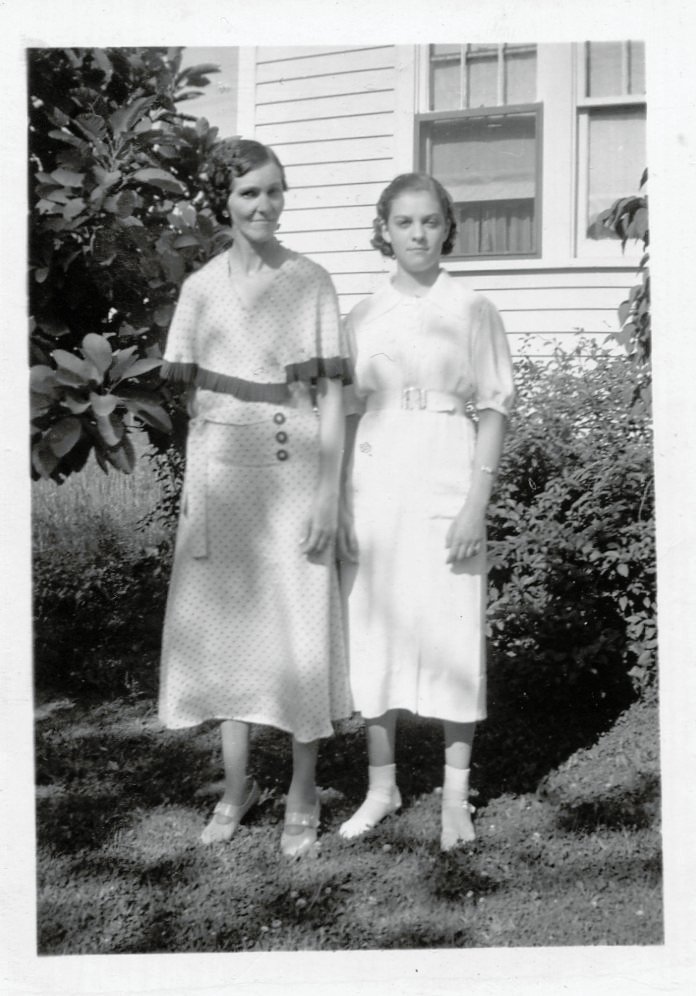
When my mom was young, novelty often meant bad news. Yet she always voted for democrats because she sympathized with the disadvantaged and disliked bullies.
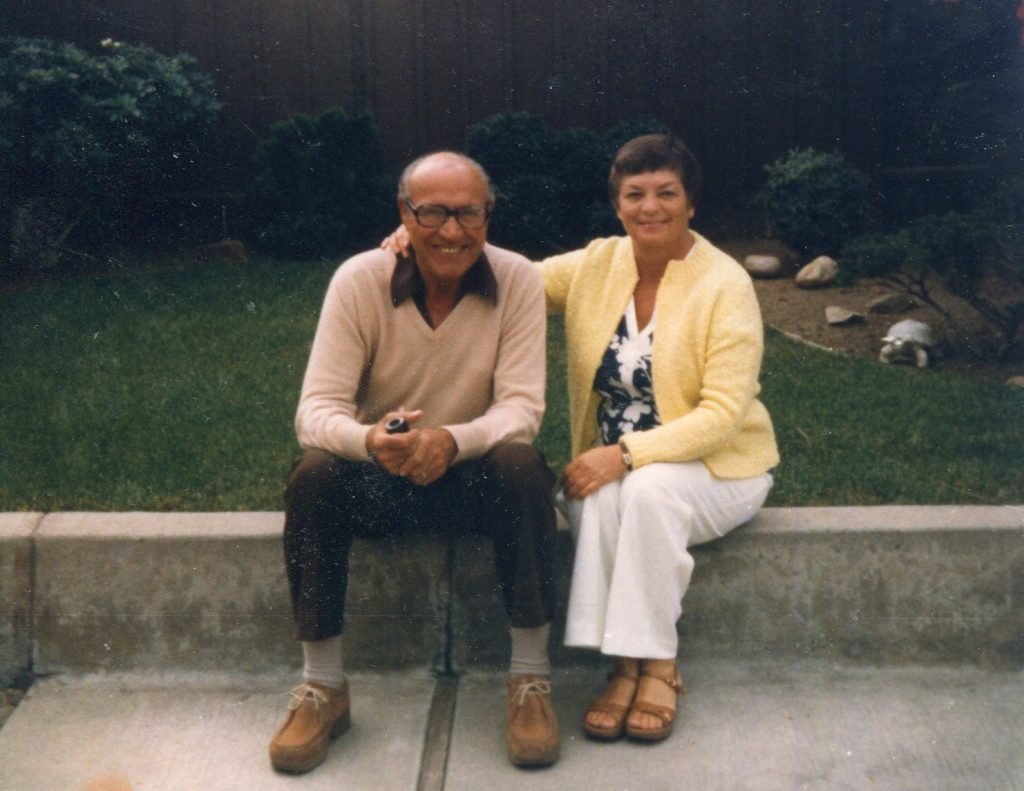
My father was mainly liberal, but he kept some of the World War Two era’s mores, including disdain for my generation’s more open sexuality. He said that he found the students making out in front of my high school disgusting, and yelled at me when I teased him about being priggish. He was normally good humored and rarely raised his voice at me when I made fun of him, but my wisecrack struck a nerve. He always felt that people should be decorous in public. Below, he’s with his older brothers on top of the apartment building in which they lived, on Detroit’s lower east side. All look dapper in their suits.
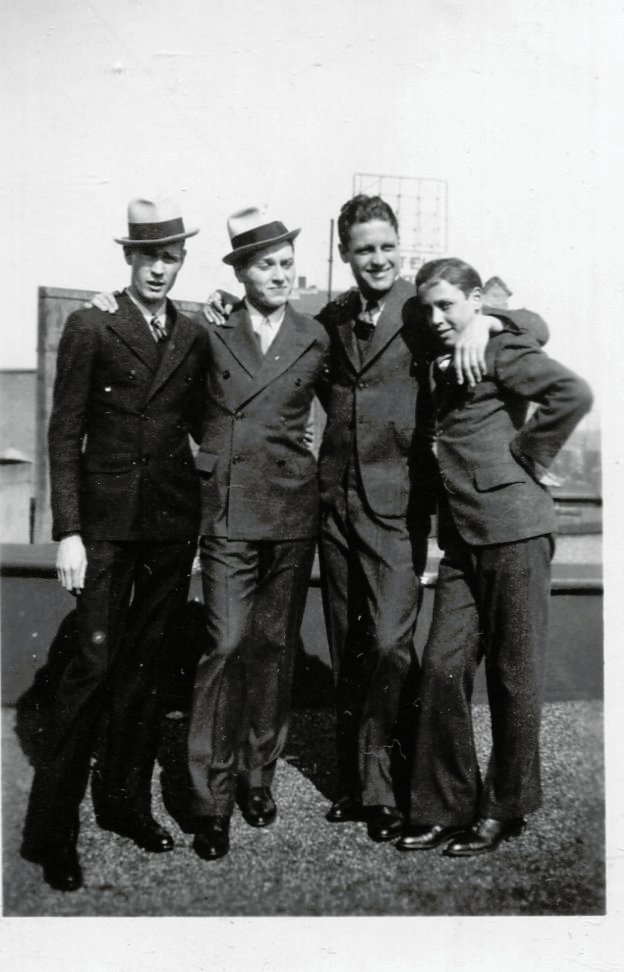
Nearly everyone I knew from their generation blended conservative and liberal thinking in their own ways, and that has made me appreciate them as individuals. Having grown up in hard times, they learned to tolerate each other’s differences and work together to survive.
But most people are now immersed in digital media, which more widely share posts that are provocative and simplistic, and which enable folks to form connections with others on the basis of quick comments. Azeem Azhar, in The Exponential Age; How Accelerating Technology is Transforming Business, Politics, and Society, wrote that Facebook and Twitter reward content that offends, shocks, or delights, and that digital platforms’ algorithms recommend content that is similar to what the user most frequently clicks on and responds to. Rather than being able to take the time to know the whole individual, people often immediately respond to the easily transmissible messages and quickly label others as conservative or liberal.
But we can see ourselves and others in broader ways than the categories that are convenient for digital media to spread. By embracing our full humanity, we can incorporate perspectives from both conservative and progressive mindsets, shift between them, and develop more nuanced and creative views of the world, which will always become richer as we keep learning about more cultures.
Continuing to look At, With, and Beyond can enable this. We can look With and appreciate the wealth in our own traditions, including ancient, medieval, the Renaissance, and modern. Each has so many facets that we can always find new meanings in it. Nietzsche once wrote that the past perhaps has yet to be discovered.
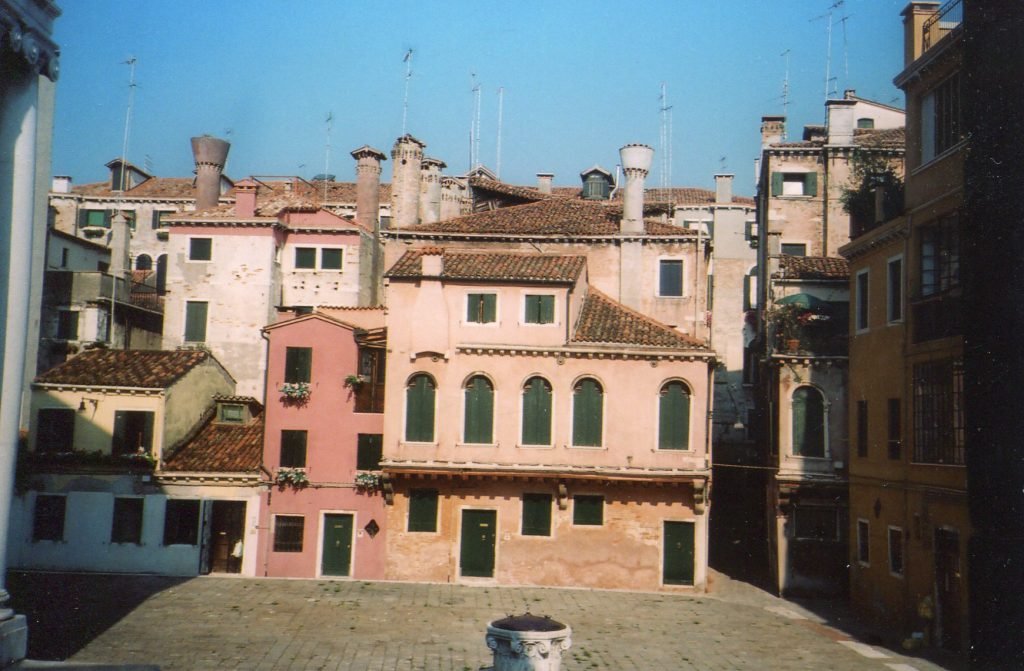
We can look Beyond and learn about other cultures, including Chinese, Indian, African, Southeast Asian, Middle Eastern, and Native American. Their facets can reflect our own traditions and current experiences.

So as we continue to look At, With, and Beyond in a circle that includes ever more cultures and historical periods, all places and times can reflect each other in ever more dimensions so that the field of connections that all people share seems increasingly luminous. As conservatives, we can appreciate and curate our full human heritage. As liberals, we can embrace ever more variety and possibility.