Yes, writing “Pho Of Faiths” is as imaginative as writing a blues song that begins with “Got busted for somethin’ I didn’t do.” But I think it conveys some truth.
Cao Dai was founded in the 1920s as a universal faith, but it also reveals interesting things about Vietnamese culture and Southeast Asian cultures in general.
Here are some facts about Vietnam’s Cao Dai religion:
1. In 1920 a provincial governor (of Phu Quoc) named Ngo Van Chieu (also known as Ngo Minh Chieu) intuited that all the world’s religions emerged from the same source and that they should realize their common well-spring. Followers of the faith believe that he received this message from the Supreme Being–the term Cao Dai means heavenly abode, and it’s the symbolic name for the Supreme Being.
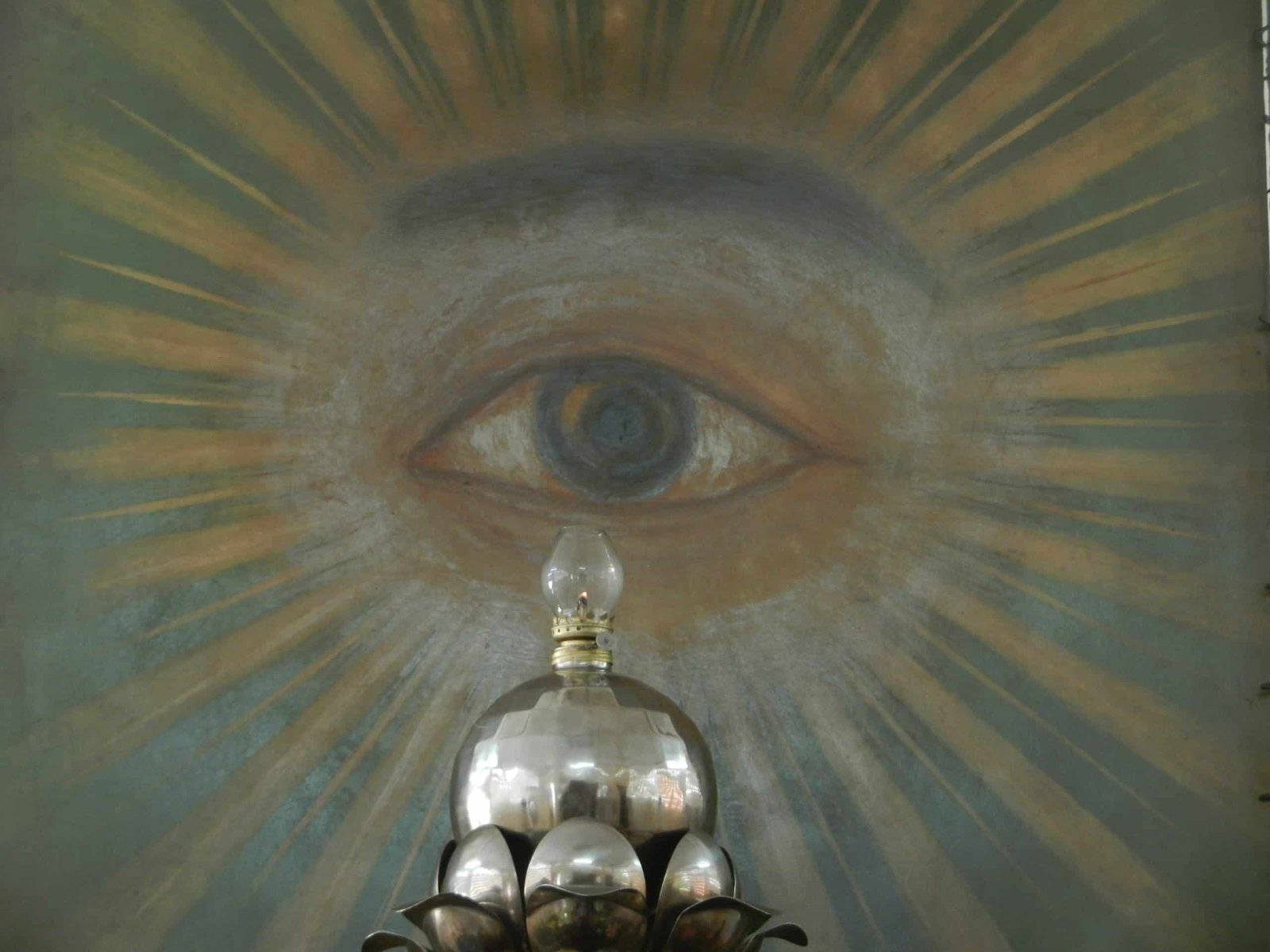
2. About a week later, Chieu was resting in his hammock and a huge eye emerged in front of him, shining like the sun, with a halo around it. He became convinced that this was the way God wanted to be symbolized–the all-seeing eye of universal consciousness and global harmony.
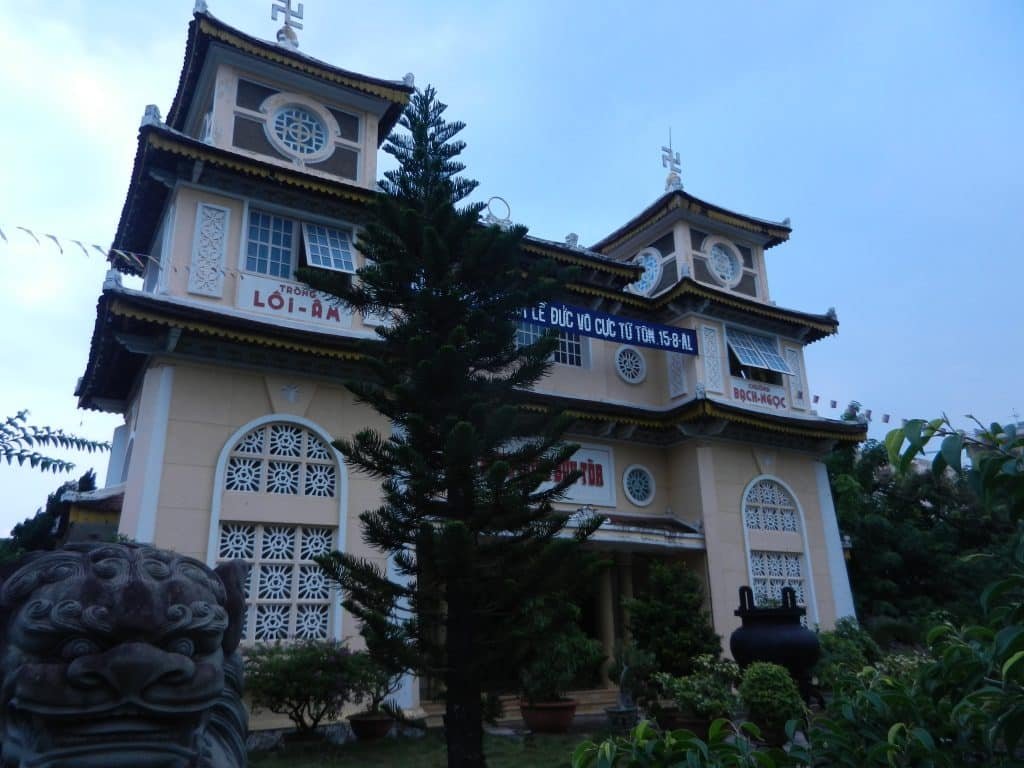
3. The Cao Dai religion was formally founded in 1926, and a governing body was put together that resembled the Catholic Church’s–a hierarchy of priests, higher officials responsible for districts and one person at the top (called Giao Tong) who leads the whole organization.
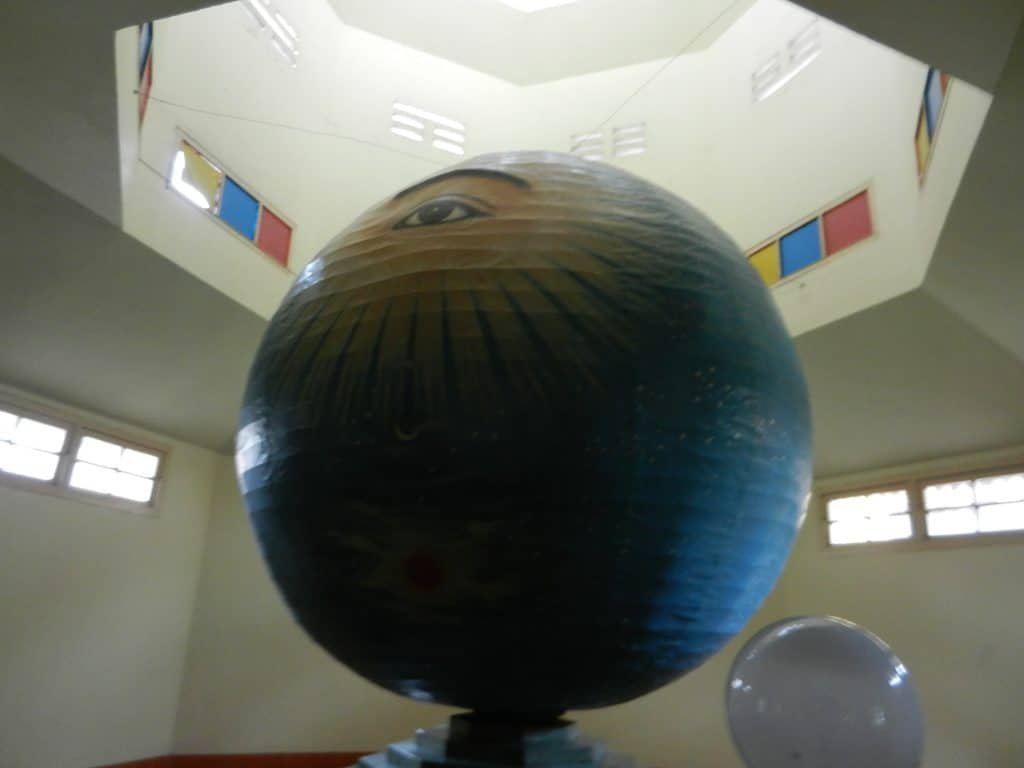
4. Caodaiism borrowed from many religions. It teaches that all religions are one, and that they were created by the Supreme Being in different times and places. It thus respects all beliefs in God and all cultures.
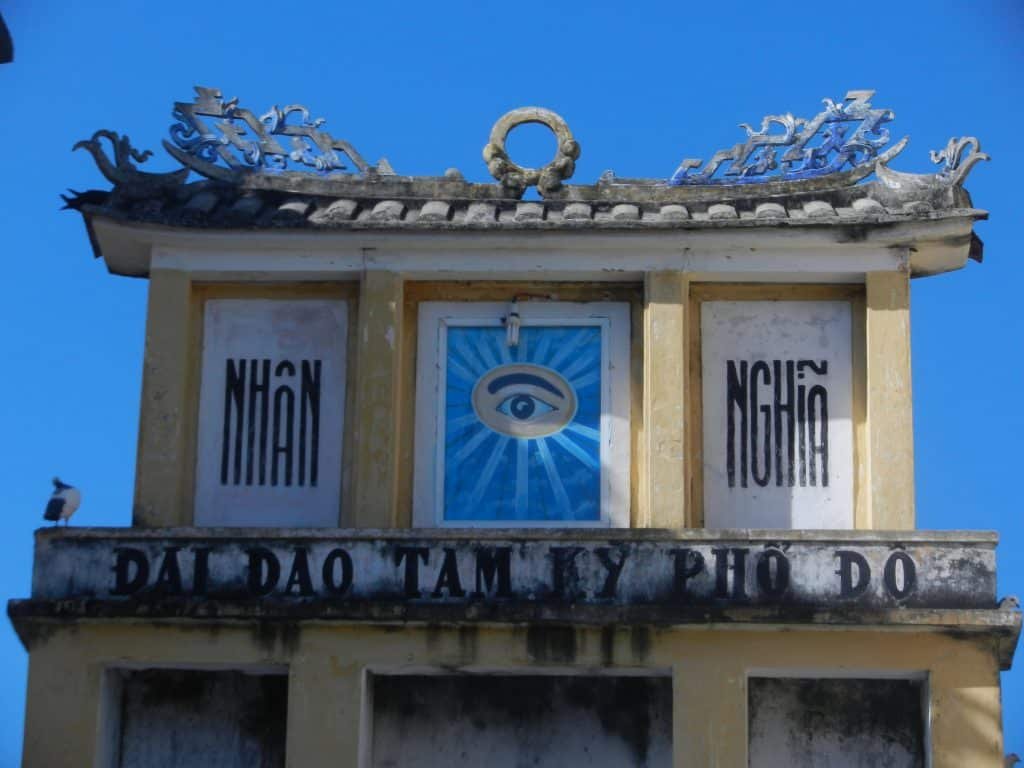
If you look closely at the above photo, you can see one of the eight trigrams in Daoism over each of the three colored slats around the Divine Eye. The Supreme Being emitted Yin and Yang patterns of energy. They differentiated into the eight trigrams which the I Ching systemized, and they became condensed into the material things in the universe.
But Caodaiism’s borrowing of ideas didn’t stop at this ancient Chinese view of the universe.
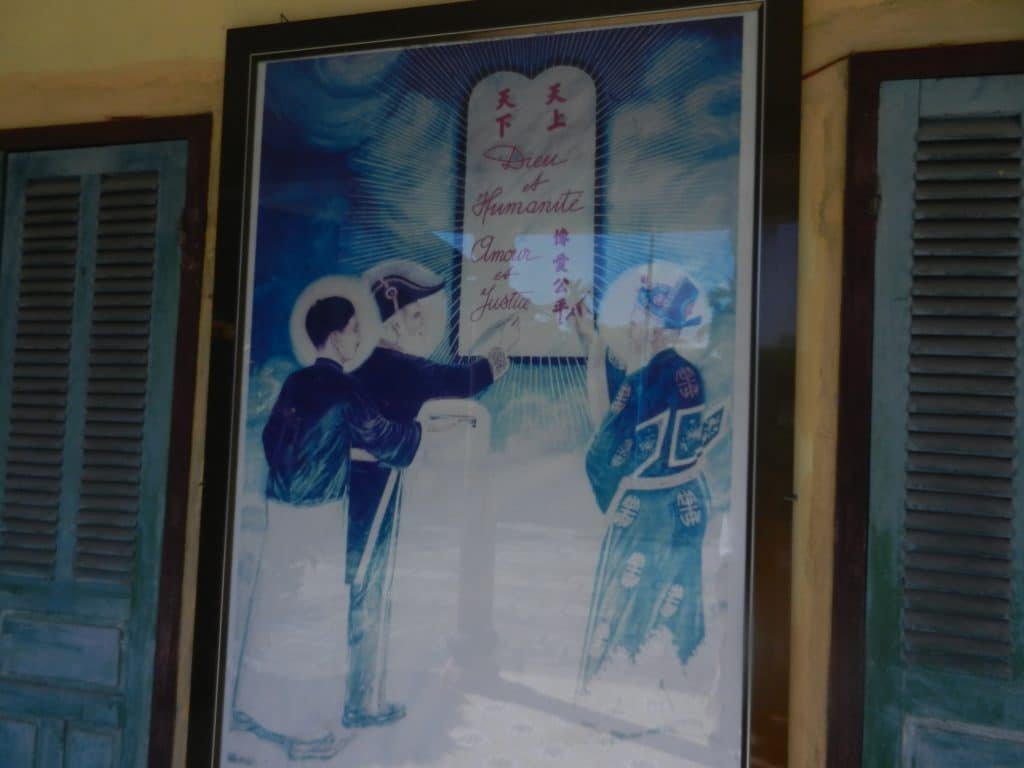
5. Cao Dai followers believe that there are elevated spirits in the heavens who communicate messages from the Supreme Being. The 19th century French poet Victor Hugo is one of the most highly honored–he’s in the middle of the above photo. On his left is Sun Yat Sen, the leader of the 1911 Chinese revolution which ended the last imperial dynasty. On Hugo’s left is a revered Vietnamese poet from the 16th century, Nguyen Binh Khiem (also called Trang Trinh.). All three are signing an alliance between God and humanity.
6. Cao Dai followers also believe that the Supreme Being taught the Buddha, Jesus, and Mohammed. Though their adherents have their own ways of approaching humanity’s spiritual goals, the Cao Dai faith tries to promote harmony between all religions.
7. Some historians have seen Cao Dai as a reaction to French colonialism. Some Cao Dai followers were patriots who tried to free Vietnam, and the French government suppressed the faith and exiled some of its leaders to Madagascar. But the Cao Dai faith promotes love and justice because all beings came from the same source and share its essence.
Many currents besides reactionary politics engendered Caodaiism. Like many other Southeast Asian cultural movements, it stresses harmony and blends ideas from many lands. At least 2 million people in Vietnam practice it (some estimates go up to 8 million).
Many followers of the Cao Dai religion see it as the great universal religion of today, which can bring harmony between all the world’s faiths. Others see it as a mishmash–it cuts and pastes pieces of several religions without saying anything original.
We’ll now look into inner workings of the faith and see what makes it unique. Here are some more facts about the Cao Dai religion:
1. Caodaiism believes that everyone’s soul came from the Supreme Being and that all living beings share the same inner spiritual nature. The goal of the faith is to realize our oneness with God and with all life on earth.
Nice, but isn’t this a New Age cliche? There’s the riddle: What did the Hindu mystic say to the hot dog vendor? Make me one with everything! And didn’t 1960s hippies say the same thing between bong hits? Maybe (I was too young back then to know), but the Cao Dai faith has more depth and discipline.
2. Ideally, people worship the Supreme Being at least once a day at home and twice a month at a local temple.
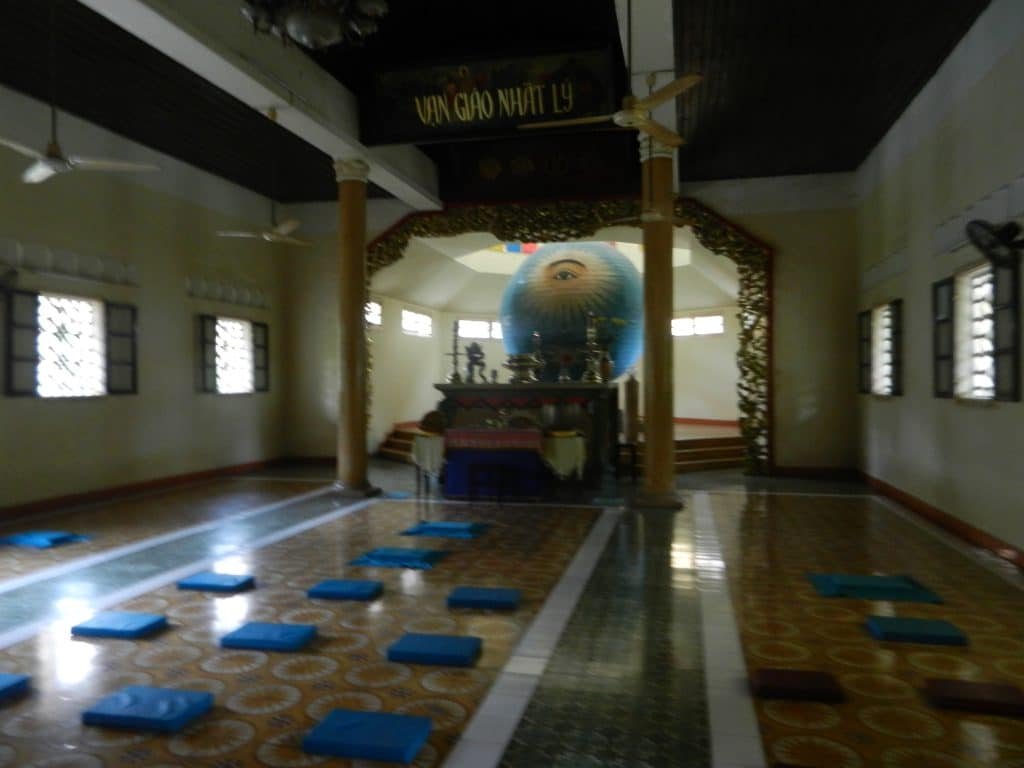
There are four daily ceremonies: 6:00 AM, noon, 6:00 PM and midnight.
3. According to Hum Dac Bui, in Cao Dai; Faith of Unity, Caodaists traditionally bring their hands together so that the left represents yang, the active energies in nature, and the right hand is yin, the receptive patterns in nature. The end of the left thumb touches the base of the left ring finger, and the other left fingers wrap around the thumb. The right hand wraps around the left hand so that the tip of the right thumb touches the base of the left index finger. So both hands join into a microcosm of the Cao Dai universe–all energies are balanced and they circulate smoothly within a unified cosmos. This idea was influenced by Daoist cosmology from China.
Worshipers thus embody universal harmony. They then proceed through a series of salutations to the altar and each other, and they pray to the Supreme Being.
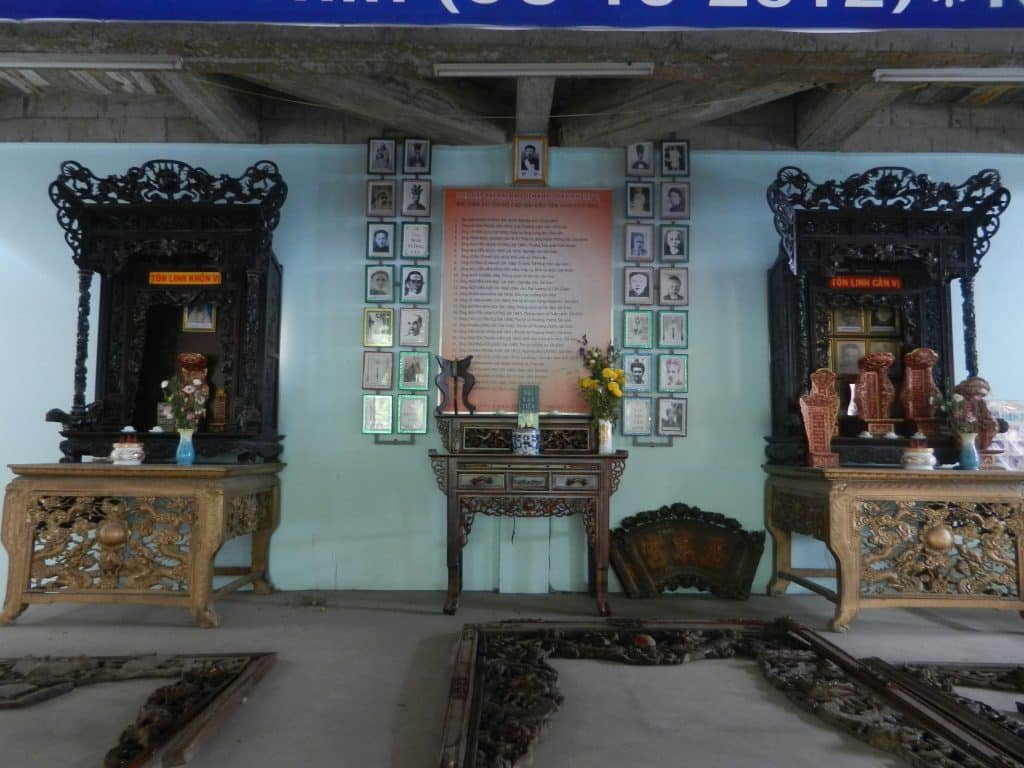
4. But Cao Dai is more than a ritual. It has esoteric aspects. Its followers believe that highly evolved spirits remain in contact with us when they leave this world, and that they stay in touch with the living to promote universal harmony. The Cao Dai temple I visited in Ho Chi Minh city had several altars, including the one in the above photo with pics of many of the faith’s founding fathers.
The altar in the below picture mixes many cultures’ forms and languages into a tolerant view of the world. The natural landscape at the bottom seems to unfold from God above.
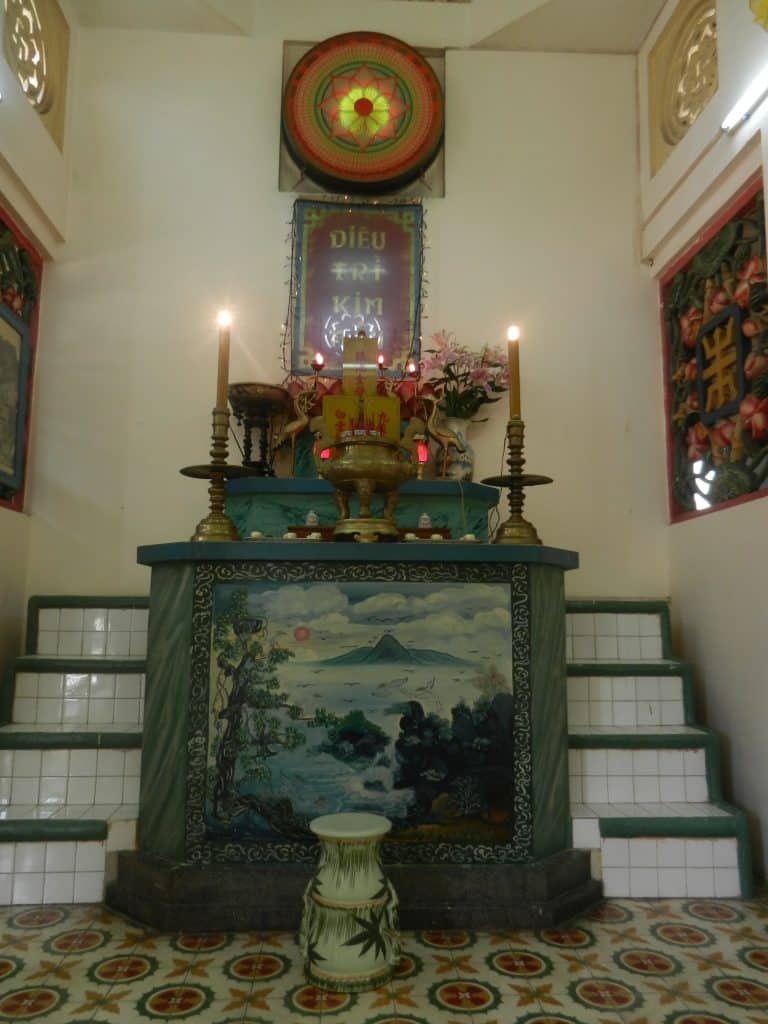
Since ancient times, Southeast Asian societies saw the spiritual landscape as pluralistic–ancestors and nature spirits populated a very lively universe. The Cao Dai faith accommodates this traditional world-view by allowing revered figures, even the 19th century French poet Victor Hugo, to mediate between us and the Supreme Being.
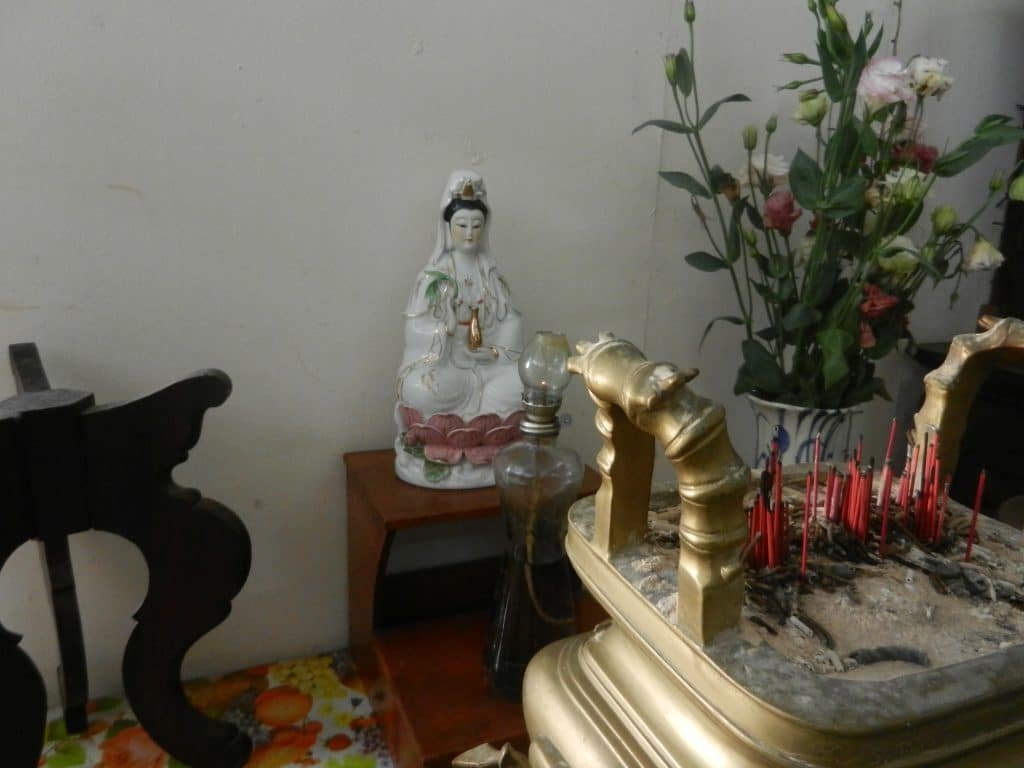
5. The Cao Dai faith also honors the feminine principle in nature and identifies it with Yin. The above shot is from the same Ho Chi Minh City Cao Dai temple. The graceful goddess with her own shrine is Quan Am. She’s more widely known by her Chinese name, Quan Yin, and she embodies the Buddha’s compassion.
So though the Cao Dai faith has prescribed rituals, temples where everyone gathers, and a centralized hierarchy, it also has a lot of flexibility. Believers can be herd-like and do the same rituals. Or they can meditate and commune with spirits. Or they can be devotional and worship a compassionate goddess. Caodaiism teaches that there is one Supreme Being and that all the world is unified in it. But it allows room for many ways of worshiping it, as long as they encourage love and justice for all beings.
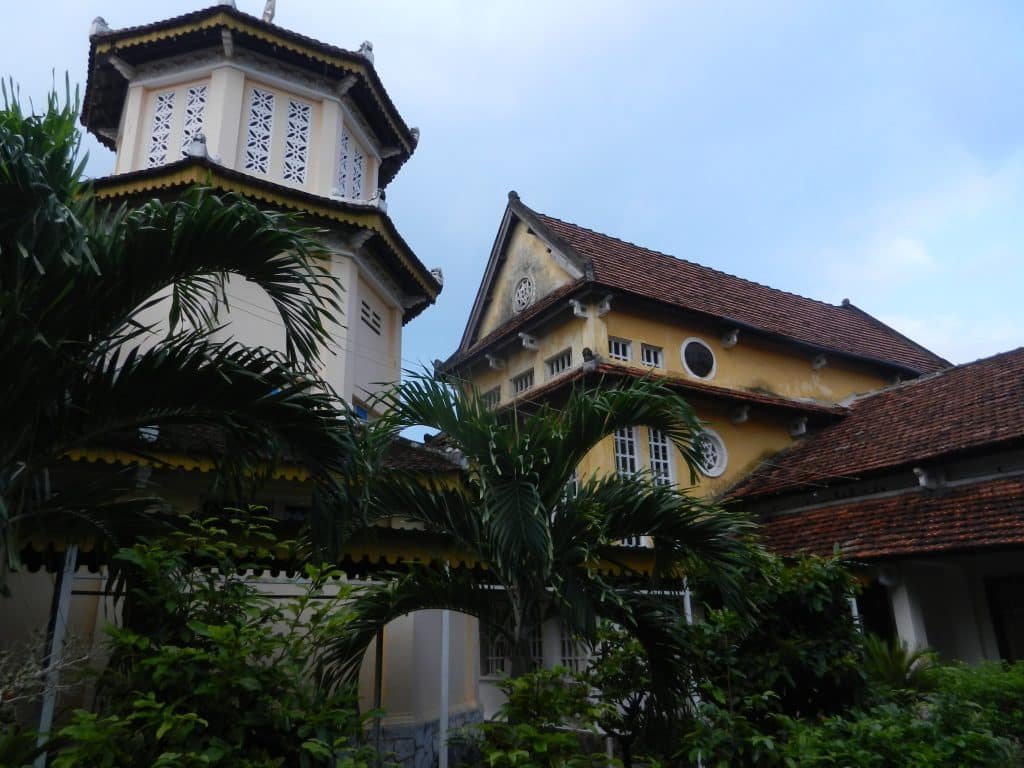
This flexibility is common in Southeast Asia. Caodaiism stresses harmony between multiple mindsets, rather than one ideology. The faith reflects this region and Vietnam–it blends ideas and art forms (including architectural in the above photo) in an endless variety of ways that add beauty to the world and help make people more tolerant. I’m not qualified to say if Cao Dai is a great religion from a theological standpoint. But from a cultural perspective, the eyes have it.