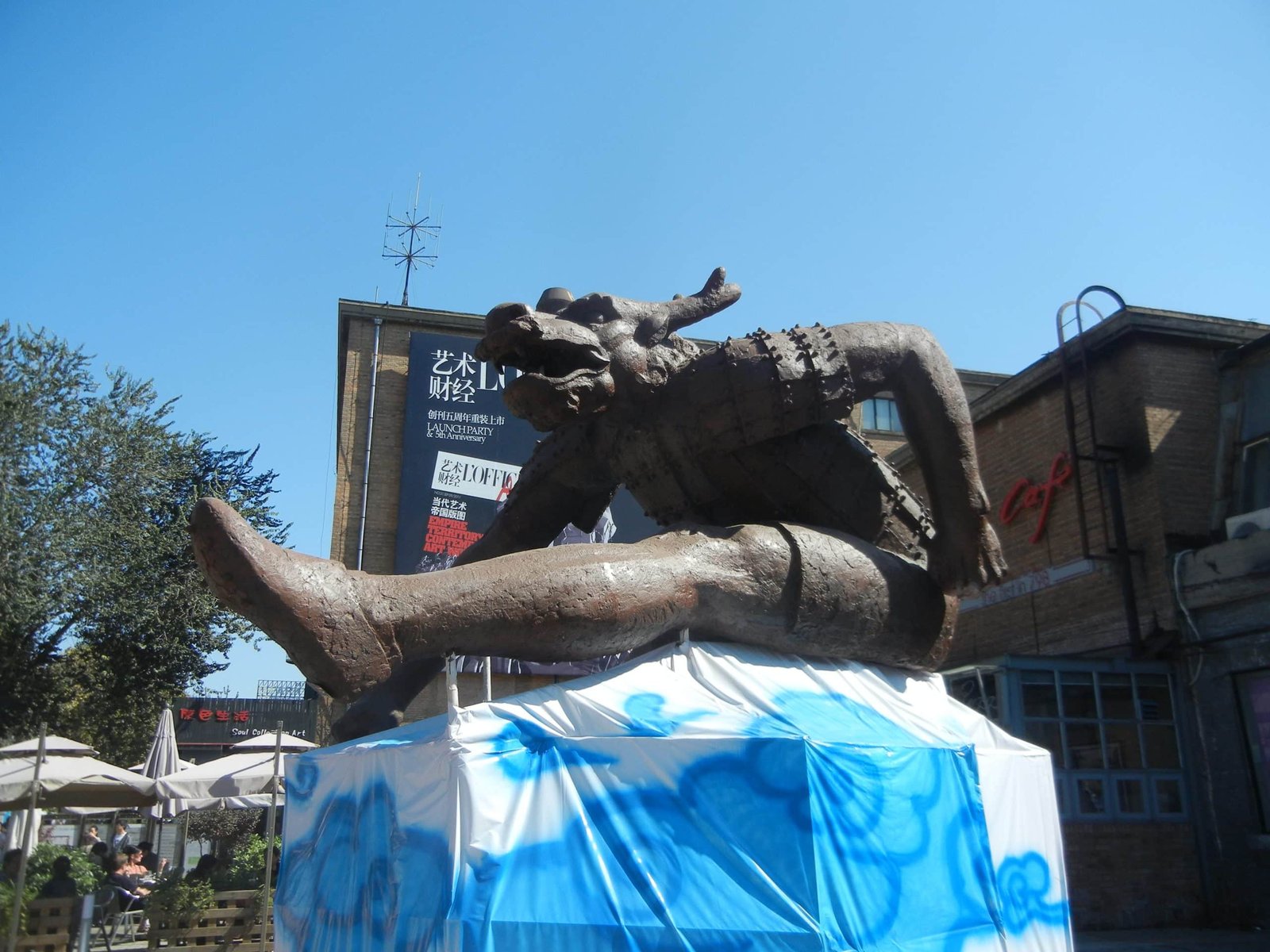
Beijing’s thriving modern art scene converged in a big old ugly factory that East Germans built. Artists found it to be a cheap and private place where they could experiment with new ideas and forms. But like many other avant-garde hubs around the world (Paris’s Montmartre, New York’s Greenwich Village, and San Francisco’s North Beach and Haight Ashbury), it became a popular tourist destination and gentrified.
But its success allows it to be a haven for lots of creative souls. Though 798 features modern artists, many still follow some of China’s most hallowed traditions, which have 5,000-year-old roots from the Yangshao period.
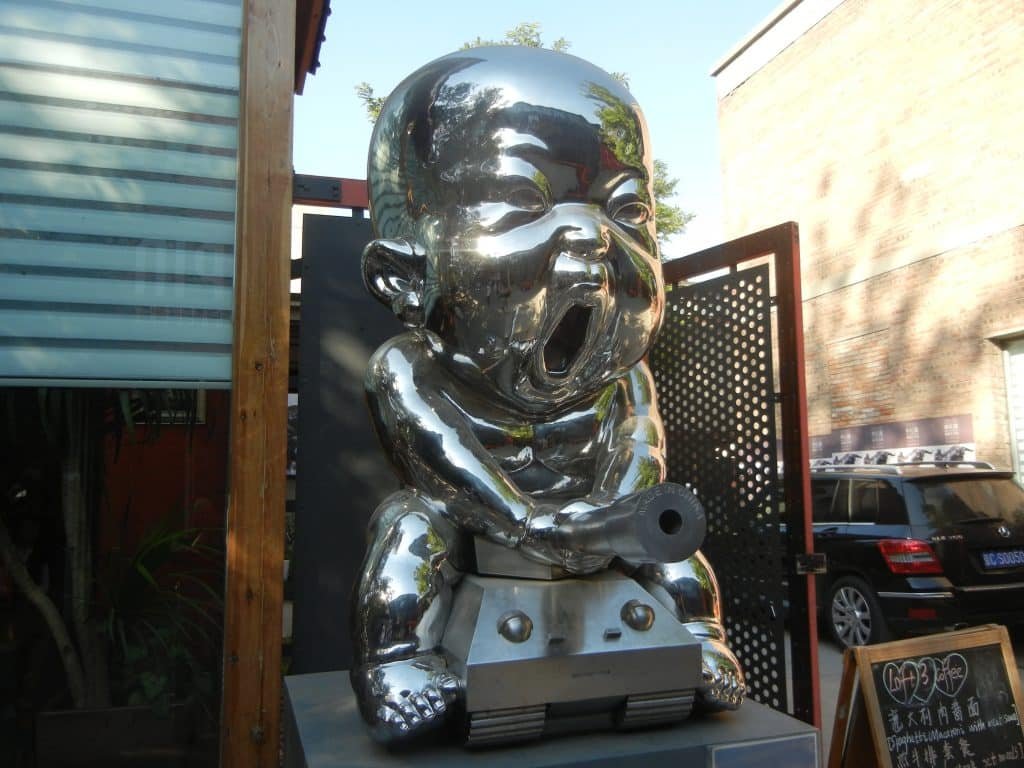
Though the work in the above shot criticizes modern military aggression, the forms of the tank’s rider reflect ancient yin/yang patterns. You don’t see any straight lines or flat planes in him. All his forms are circular, and light and dark colors alternate like yin and yang energies in landscape painting.
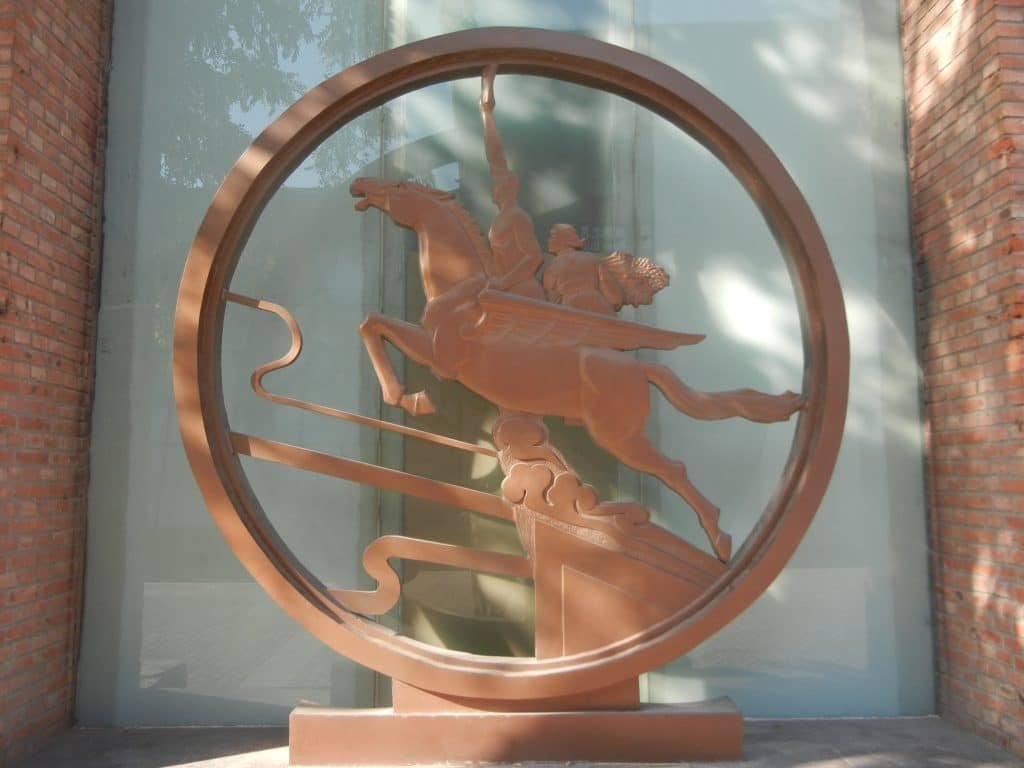
The sculpture above also evokes yin/yang patterns with its curving forms within a circle.
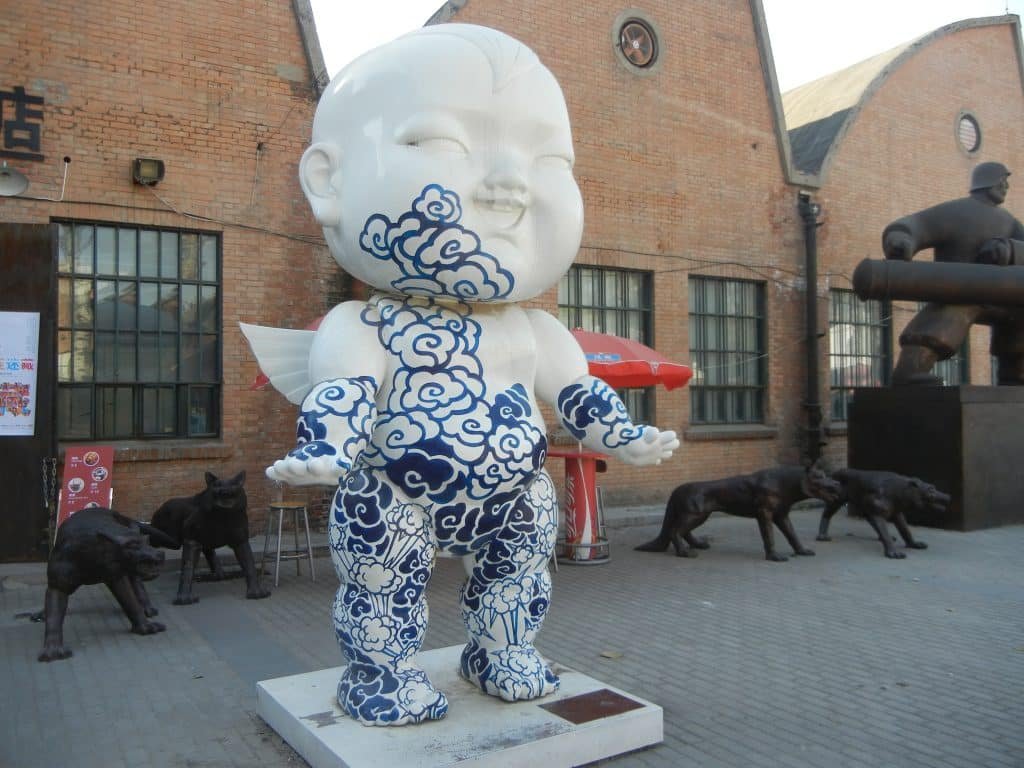
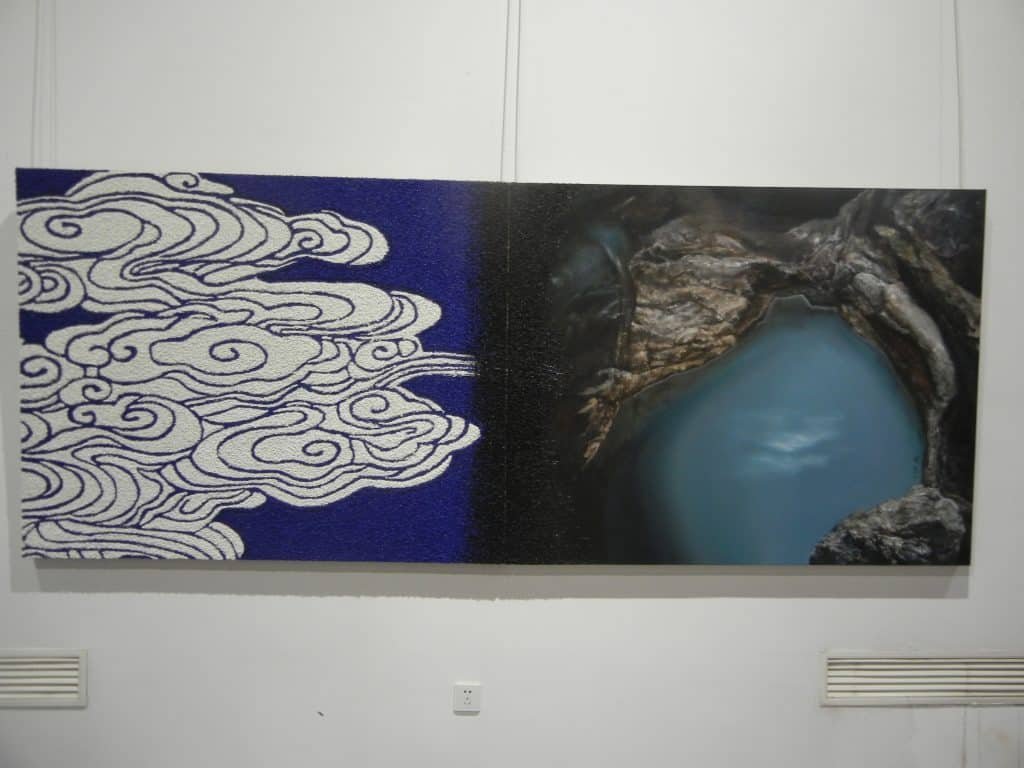
And the cloud patterns in the above photo have very deep roots, which were established in the Shang Dynasty or before, when clouds, wind, and rain acquired a wide field of meanings that created a seedbed for many of Chinese culture’s most central ideas.
You can also see ancient Chinese ideas in some of its modern skyscrapers.
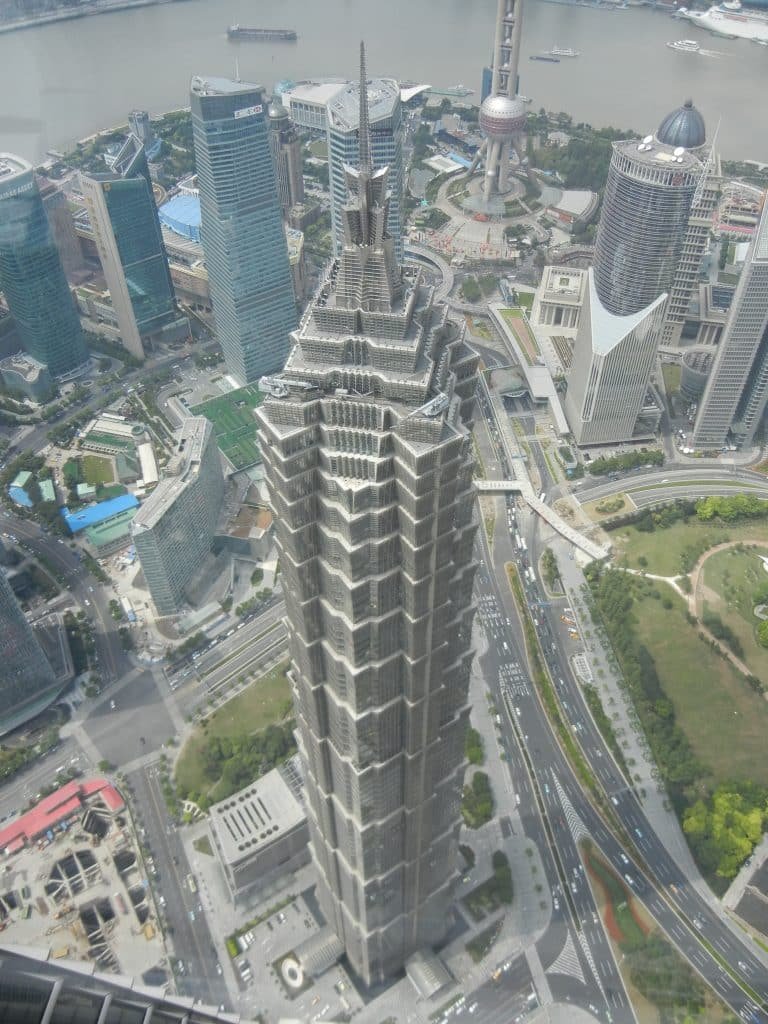
Shanghai’s first super-tall skyscraper, the Jin Mao Tower (above) rises in the form of pagodas from the Sui and Tang dynasties.
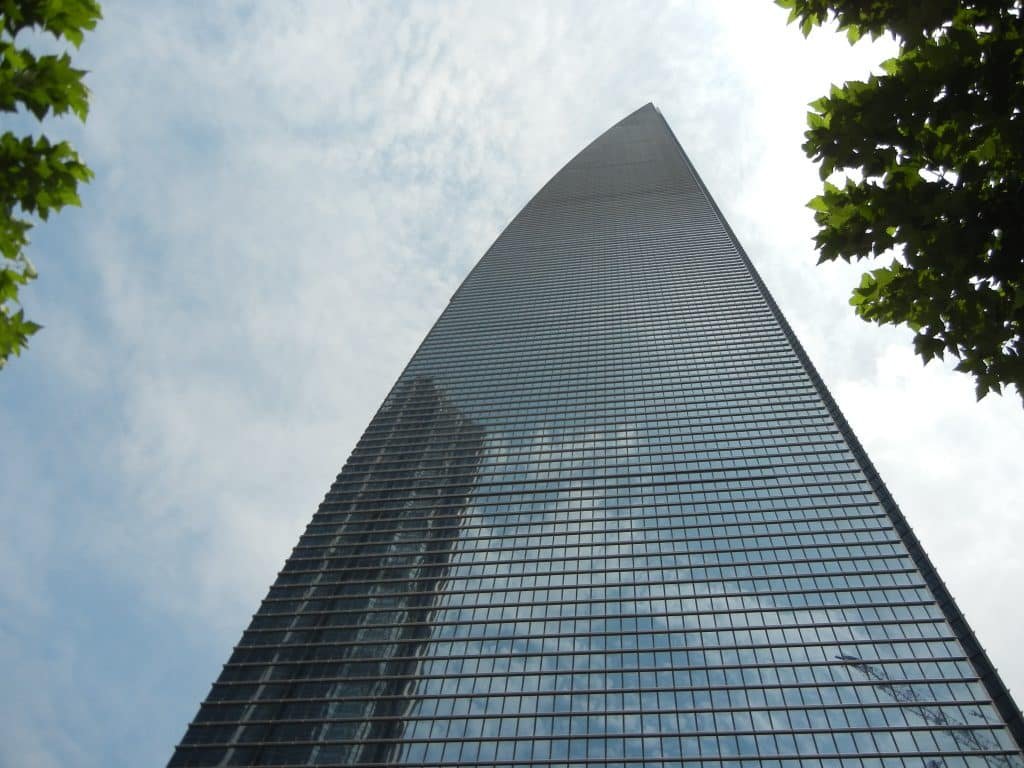
The Shanghai World Financial Center’s forms follow ancient yin/yang ideas. This side balances sheer size with soft flowing curves as gracefully as Chinese landscape paintings. It thereby harmonizes masculine and feminine energies.
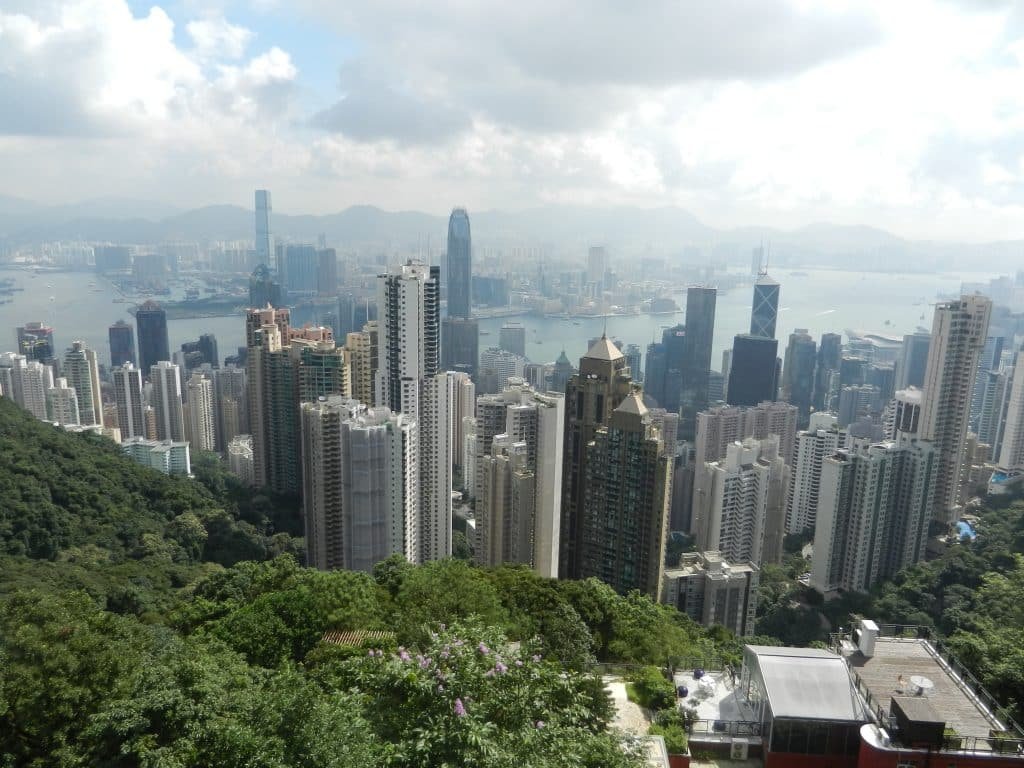
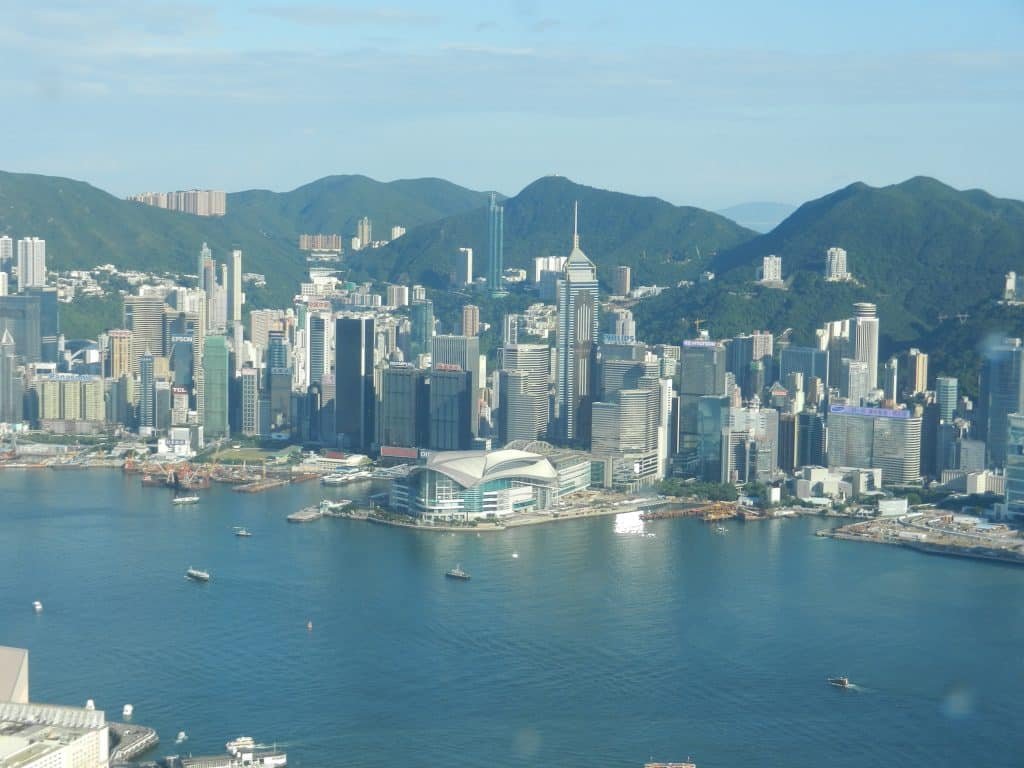
Hong Kong’s towers are often positioned to harmonize with the earth’s energies according feng shui.
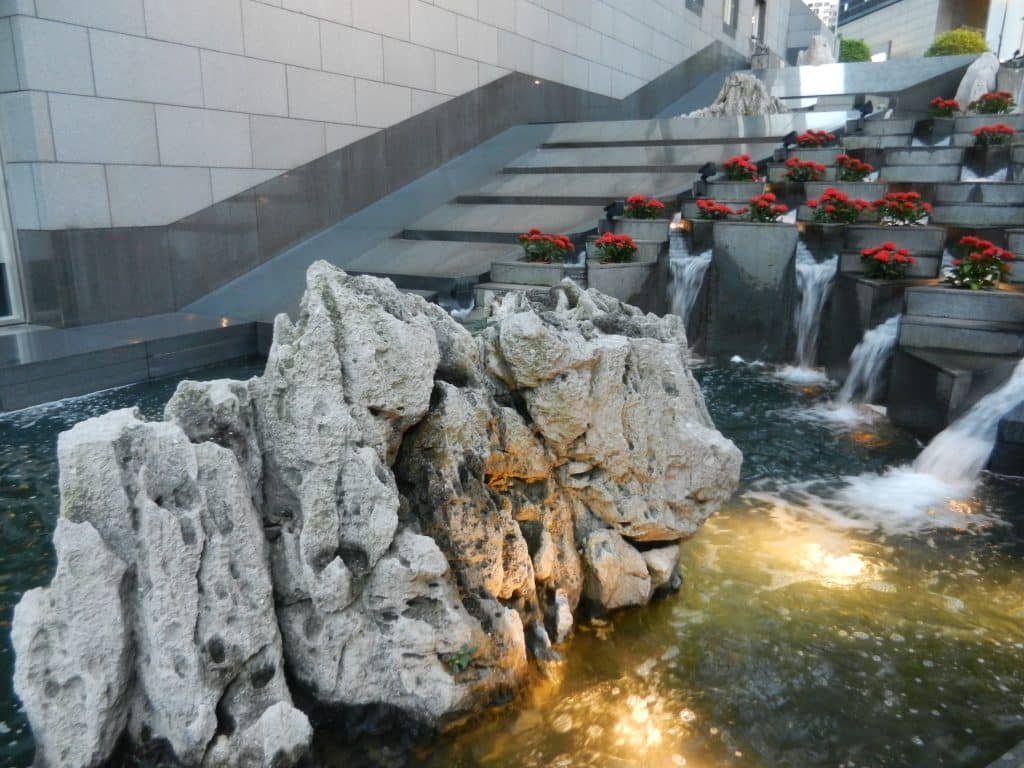
I found the below scene between two modern business towers. The flowing water and the animated rock made me feel that I was in a traditional landscape painting.
So modern art is much deeper than most people think it is–it sometimes reflects the ancient past as it questions its conventions. Cultural patterns that emerged in ancient times have reinforced each other and resonated with people’s experiences so deeply over the centuries that they often influence attempts to expand mental horizons beyond them.