We left the Khmers at their graceful old Chenla capital of Ishanapura, but their kings took some giant steps between the handsome Chenla temples and Angkor’s epic constructions.
Key events happened around 800 that created one of the world’s great cultures. If Westerners had traveled this far east, their jaws would have smacked the ground.
Events after Ishanapura’s glories are murky, but the Chenla royal line fragmented. A king named Jayavarman I seems to have reunited the land and extended it, perhaps farther than Cambodia’s current borders.
And people around Angkor began to build big temples in the 8th century. They constructed a temple called Ak Yum that was in the form of a mountain.
But the pace of Angkor’s growth picked up in the ninth century. Several things converged to make it the center of a great empire for the next 650 years.
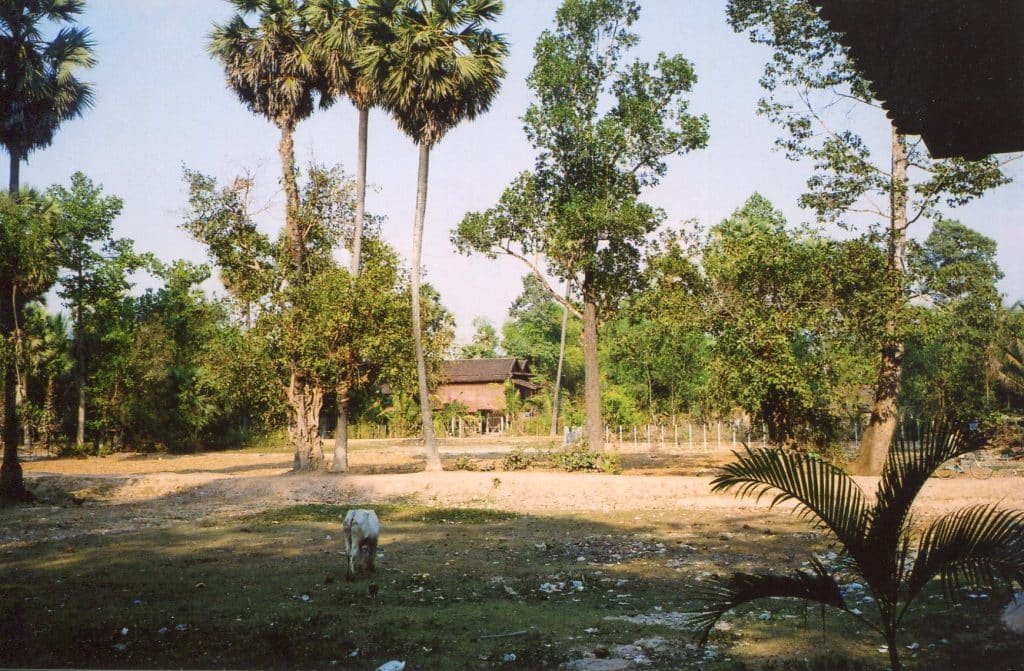
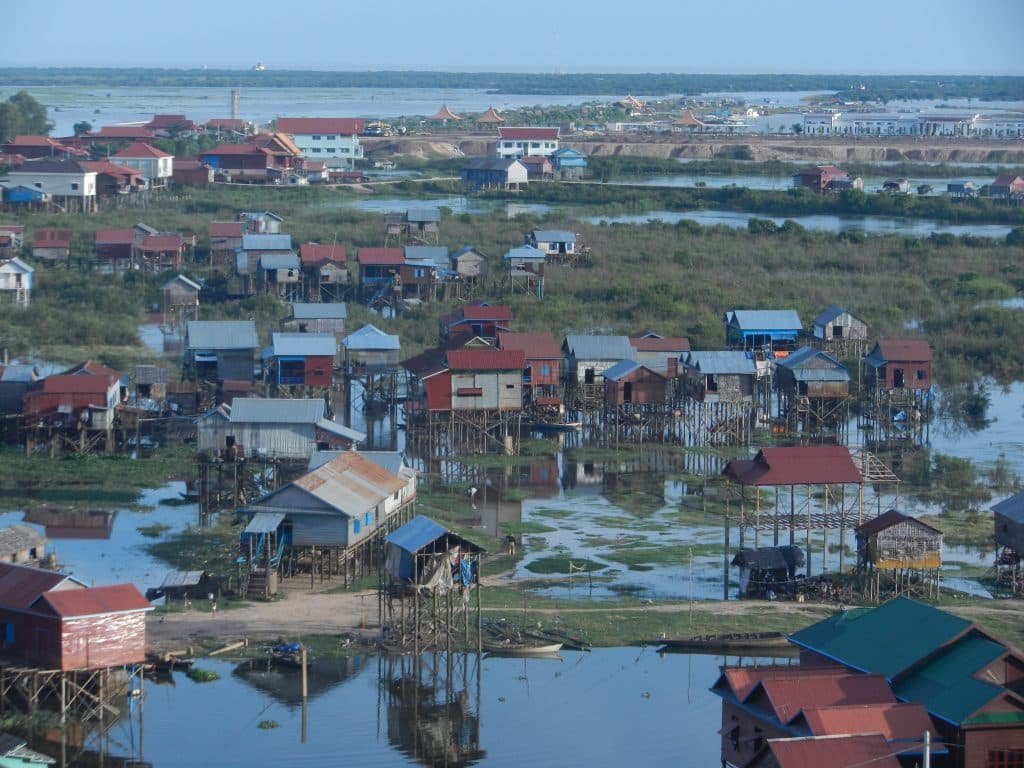
1. Nature was the biggest factor on Angkor’s side. It presides on a plain on the north shore of a lake called Tonle Sap. It’s bordered in the north by the Phnom Kulen hills. The mighty Mekong River flows 150 miles to the east. Its source is the Himalayas. When snows melt, it swells into a torrent that surges into the river that Tonle Sap flows into, and forces its current to reverse. Water thus flows into the lake every fall and rises to inundate the plain. When it recedes in October and November, millions of fish are trapped within the locals’ reach. This seemed as miraculous as the Nile’s annual flooding.
2. The monsoon that comes around May must have also seemed divine. It arrives at the hottest time of the year and drenches the parched earth in a burst of potency and grace.
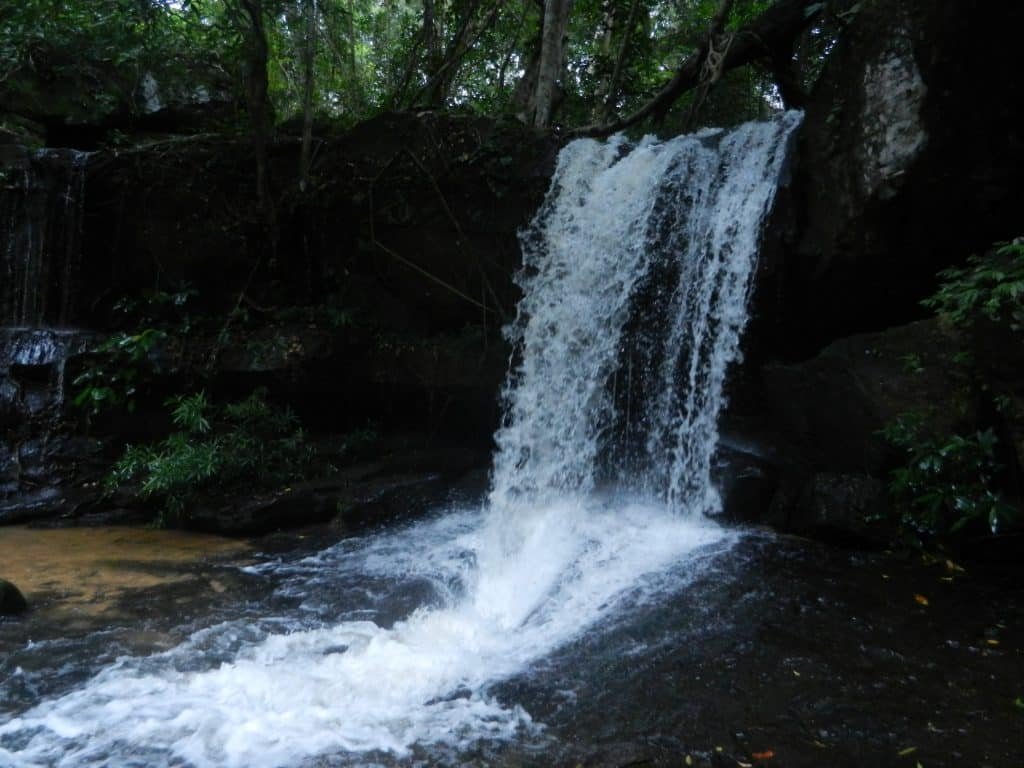
The waters run down the Phnom Kulen hills and bathe Angkor’s plain. Kings who were associated with nature’s sudden bestowal of waters must have seemed like gods.
3. Many people were migrating from central Cambodia to the northwest, where Angkor is. Kings thus had a labor pool that swelled as graciously as the waters.
One more key ingredient in the foundations of Angkor Wat was a great man called Jayavarman II. Like Egypt’s King Sneferu, he was an early ruler who did things his people never saw before. Both men’s deeds became intellectual horizons throughout their cultures’ histories.
Jayavarman turned ideas of Mount Meru (the sacred mountain in the center of the universe–you can see Mount Meru, Everest on Steroids in Ancient India) that Indian merchants and priests brought into an expression of his authority. He proclaimed himself chakravartin (universal king–literally, wheel turner) in a lavish ceremony on top of the Phnom Kulen ridge which borders Angkor’s north. Khmers associated these uplands with Mount Meru and Indra, the storm god who ruled in his palace on its summit–an Indian Zeus.
This association of the king with Indra would stick. Thais adapted it when they later sacked Angkor in 1431 and 1432, and brought its priests and artists to their capital, Ayutthaya. Thais still associated their popular late-20th-century king, Bhumibol, with Indra–Jayavarman’s footprints are very deep.
Many ancient Southeast Asian societies conceived of a sacred mountain and associated it with local nature spirits and ancestors. When Indians came, Khmers blended Mount Meru’s Hindu and royal symbolism with local ideas. They now had a dream team of concepts to ground royal authority in.
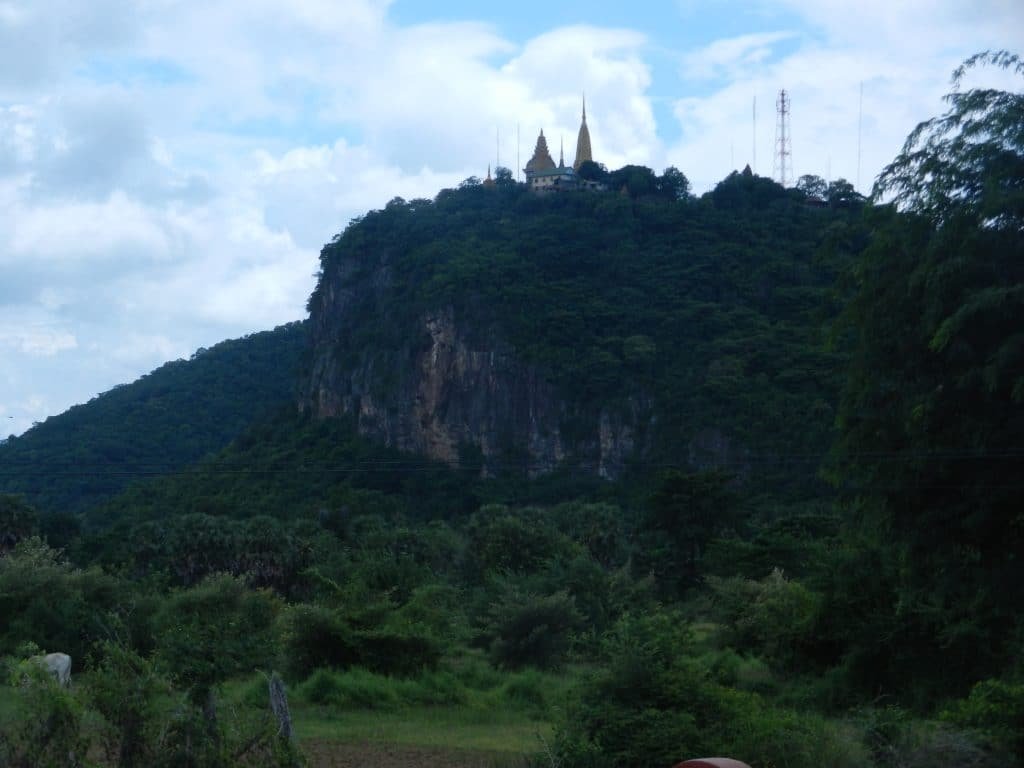
Hiram Woodward thinks that the Khmers were also putting Chinese royal symbolism into the mixture. Chinese emperors ascended Tai Shan to bring their realms in line with Heaven since the third century BCE. Southeast Asians are known to have been present at some of these shindigs.
Khmers were probably blending concepts from multiple lands to make their own ideas robust. The sacred mountain, royal authority, local spirits and Hindu gods fused into a key conceptual horizon for the rest of Khmer history.
Ever restless, Jayavarman II established at least five capitals for his court. Like Ancient Egypt’s King Sneferu building three pyramids, he experimented many times to realize a big vision.
He finally settled on Hariharalaya (in today’s Rolous). This remained the capital for most of the ninth century until it was moved 15 miles northwest to Angkor. Jayavarman had found a place where he could control the Khmer economy. It was based on wet rice farming, and Jayavarman linked the symbolism of water and soil fertility with ideas of the sacred mountain.
His descendants would complete Angkor’s conceptual foundations by building its first great temples. They became models for Angkor Wat, and they make Rolous a must-see for visitors to Cambodia.