After exploring the entrance facade of St. Denis in the last article, we’ll now venture inside. The person who spearheaded Gothic style, Abbot Suger, personally provided the pair of bronze doors for it.
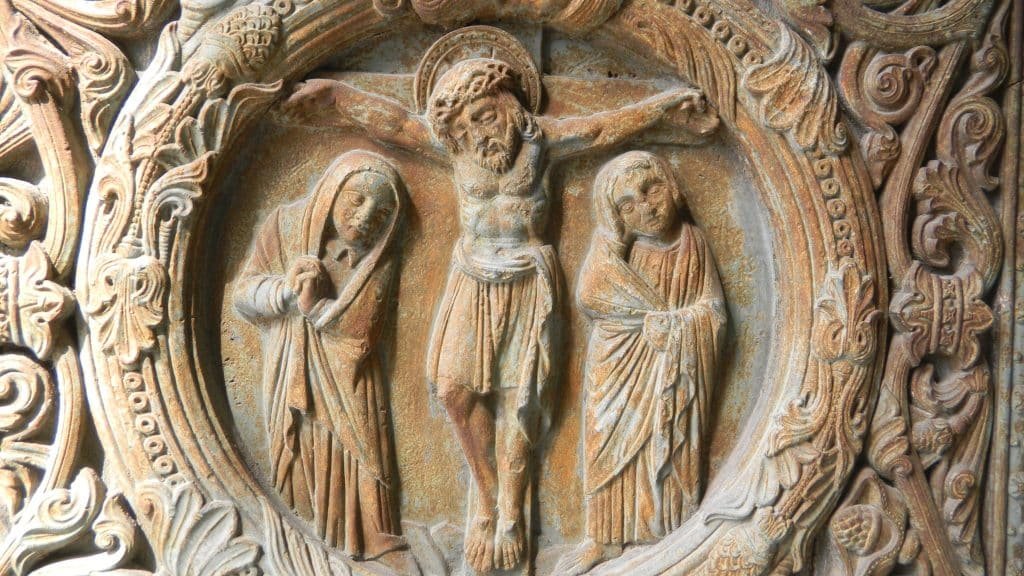
The north door (on your left as you enter), has scenes of the Passion of Christ.
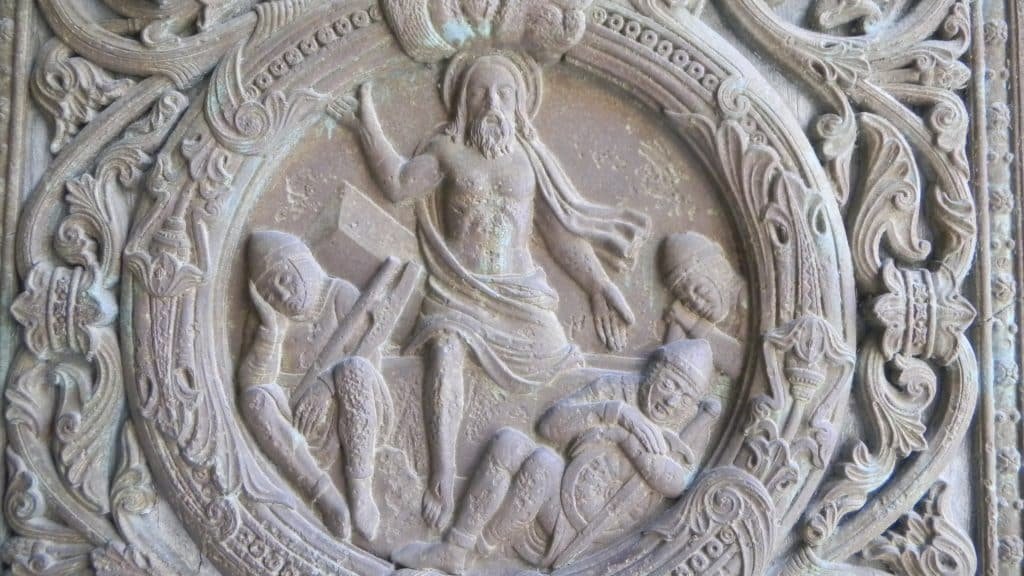
The south door has scenes of Christ’s resurrection. There’s an important reason for this arrangement, and it’s one of the keys for appreciating Gothic style.
The rising sun’s position returns from the south in spring, and thus during Easter. The architecture of the church thus corresponds with the seasons–with the larger universe. The church isn’t just an isolated building. The Gothic church represents the whole universe, as people in the 12th and 13th centuries saw it.
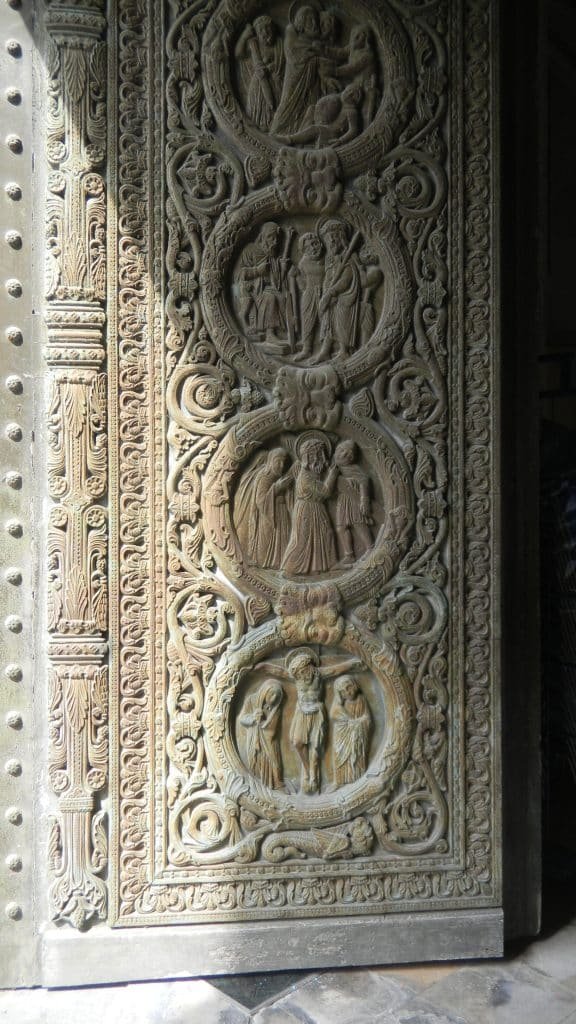
Above is the north door. Both doors were under the sculpture of the Last Judgment (see Gothic Style is Born, Part One). So the entrance and the entire west facade which you enter through represent salvation. The emerging realism and artistic variety in Gothic style brought this key event in the Medieval universe to life.
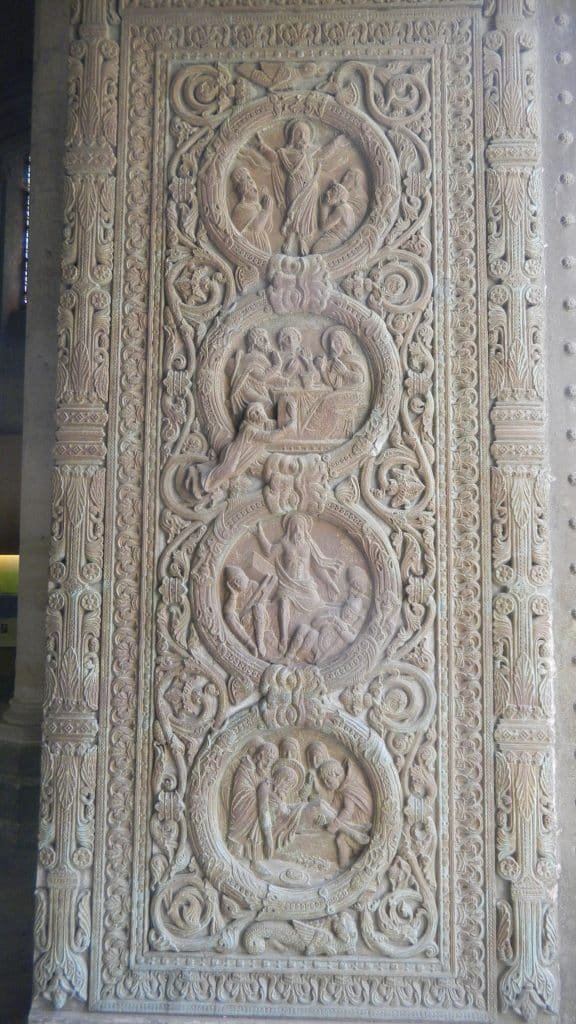
And it did so with linear forms–both doors (the south one’s pictured above) portray scenes from the crucifixion and resurrection in a clear linear order that complements medieval Europe’s Christian-centered cosmology–one god and one savior. Christ’s life was the central narrative in history, and all history advances towards one goal–the City of God. Walking under the sculpture of the last judgment as you enter the church makes this clear–you’re proceeding towards history’s final goal, by His grace. This linear order dramatically contrasts with the vast cycles in Indian art and thought.
But was the Gothic cosmic order so clear? Around the four scenes on each door, you see vegetal patterns that are so exuberant that they seem to want to burst through the clear lines and circles. Artists in the 12th and 13th centuries became increasingly skilled. They enjoyed portraying all of God’s vegetable and animal creations so much that their masters must have had to remind them to stay within the lines.
Gothic style made both the spiritual and material worlds more realistic and compelling. As more churches were built, both became even more realistic.
So the entrance to the abbey church of St. Denis is more monumental than even Abbot Suger thought–it encouraged more realistic ways of showing both worlds, and towns throughout Europe enthusiastically built cathedrals with more life-like art. But it also does the job Suger wanted it to–it’s a sublime entrance to the church, which leads to the climax at the far end. There, the greatest glory of Gothic style emerged.
Now we’ll proceed towards the end that had the most impact on history.
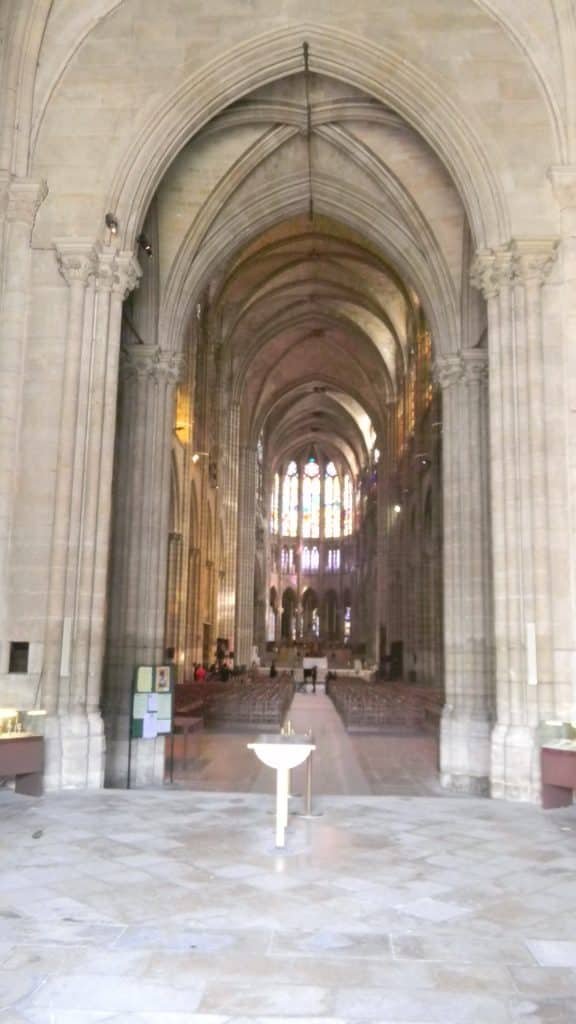
The great bronze doors are open (I’m standing between them in the above photo), so let’s walk in. Even the first few steps will bring us into an artistic revolution.
The narrow room that precedes the nave is called the narthex. This room, and the choir at the far end, are the two interiors that Abbot Suger transformed into Gothic style.
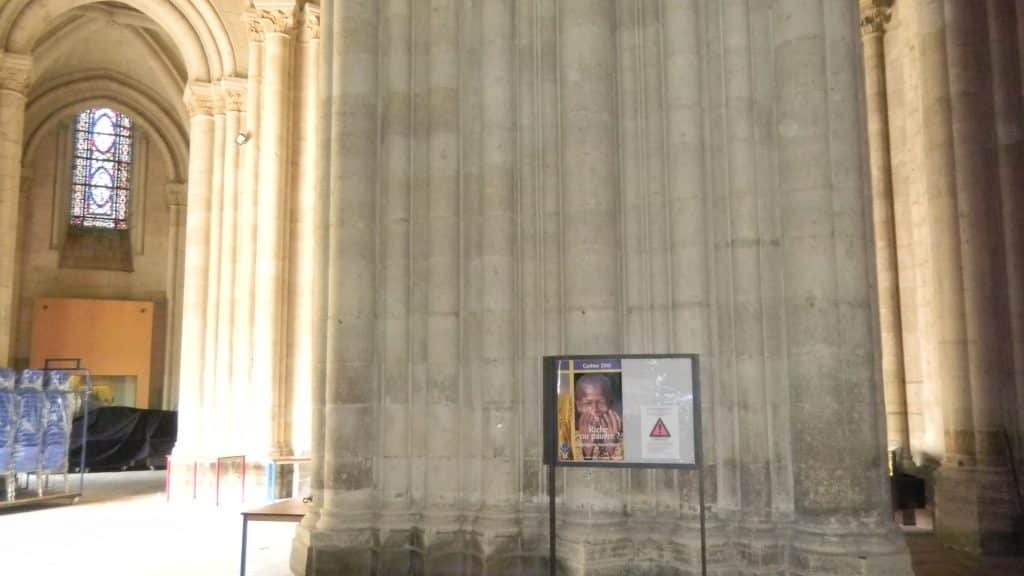
In the above picture, I’ve taken a few steps into the middle of the narthex, and I’ve turned towards the left. On the left side of the photo is the north end of the narthex. On the right is a brilliant transformation of the simple Romanesque pillar. This, and the three other pillars that surround me, have many indentations. This opens the church’s entrance to the third dimension.
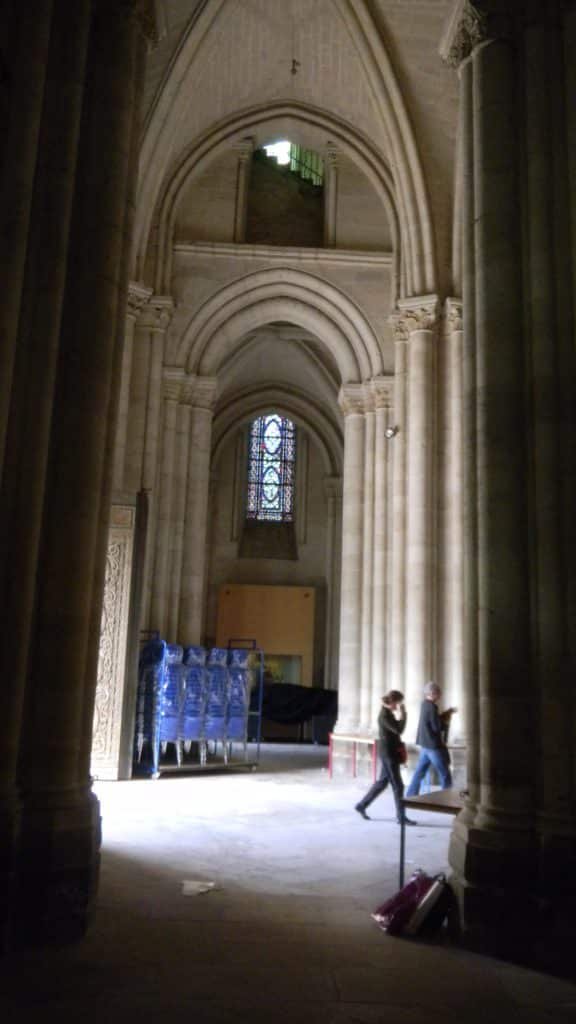
So, after viewing the bronze doors and the sculpture of the Last Judgment on the west facade and realizing that the church’s architecture embodies the journey to salvation, the three-dimensional narthex makes the first steps in the process living and breathing. The walls expand from the flat two dimensionality of Romanesque style, and give room to the people proceeding towards Jesus the Savior. Just like the sculpture on and over the doors, the narthex opens the perspective to include humanity.
But the greatest work is at the other end. Nothing like the church of St. Denis’ choir had been created before, and it’s one of the most influential works of art in world history. Gothic style was born at the church’s main entrance, but it attained full glory here.
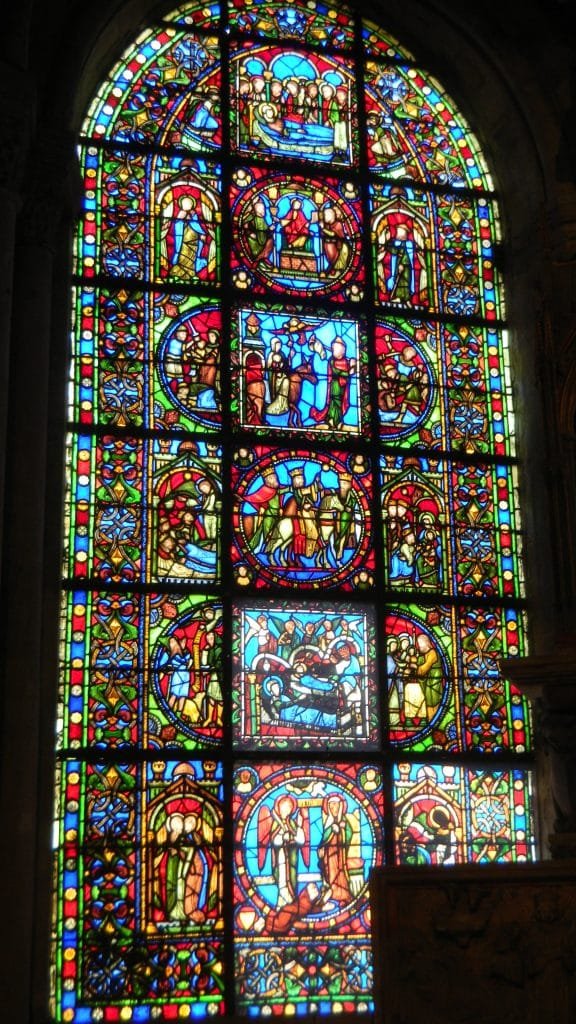
The choir’s creator, Abbot Suger, wanted light on the altar. Mission accomplished, and a whole lot more.
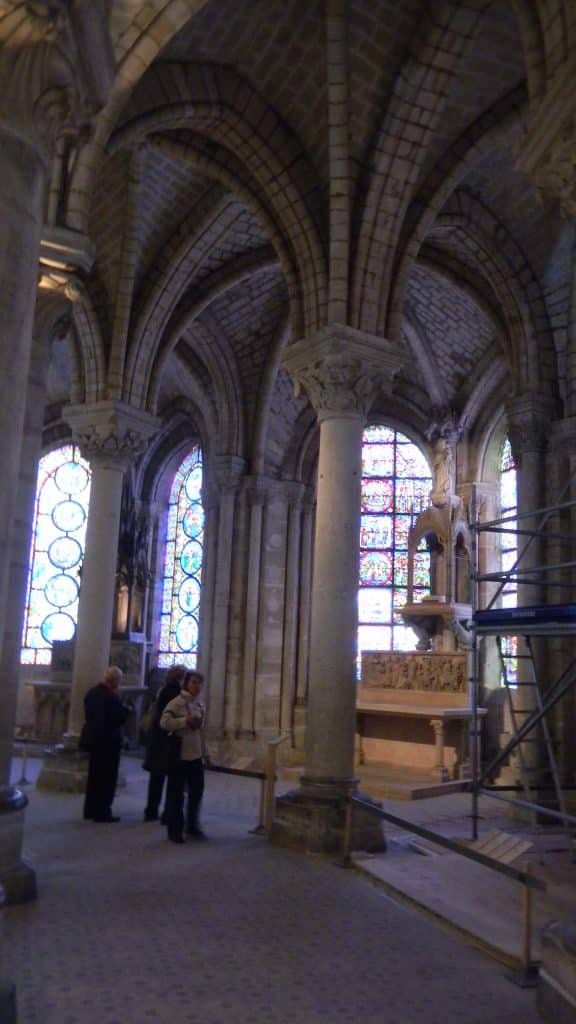
An ambulatory surrounds the choir, and 7 chapels project from a semi-circle that surrounds it. Each chapel has two stained-glass window panels. So the east end of the church is surrounded by a wall of 14 stained glass window panels that bathe the choir in light reflected from these illustrations of biblical themes. From the solid Romanesque wall, the church evolves to reflections of divine light.
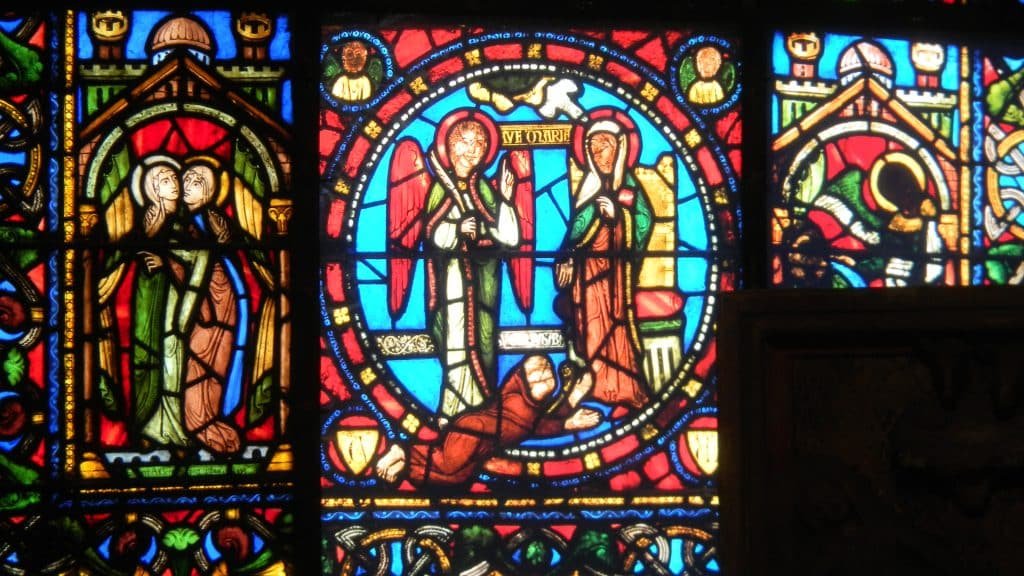
Both of the above photos are of the panel that illustrates the Childhood of Christ. The one immediately above is of the bottom scene, the annunciation to Mary of Jesus’ future birth. These images are not only a lot prettier than a wall, they open the perspective, and in two directions at the same time.
On one hand, the perspective goes metaphysical–into neo-Platonistic ideas that light was an early emanation of God. And this idea is fused with biblical stories and the centrality of Jesus in our life. The procession through the church that began with the sculpture of the Last Judgment and the bronze doors’ friezes of Christ’s passion and resurrection culminates here, where the windows immerse the altar in the prime aspects of creation. Jesus’ body and blood become spirit in the mass, and this transformation is bathed in divine images. Our salvation is made real.
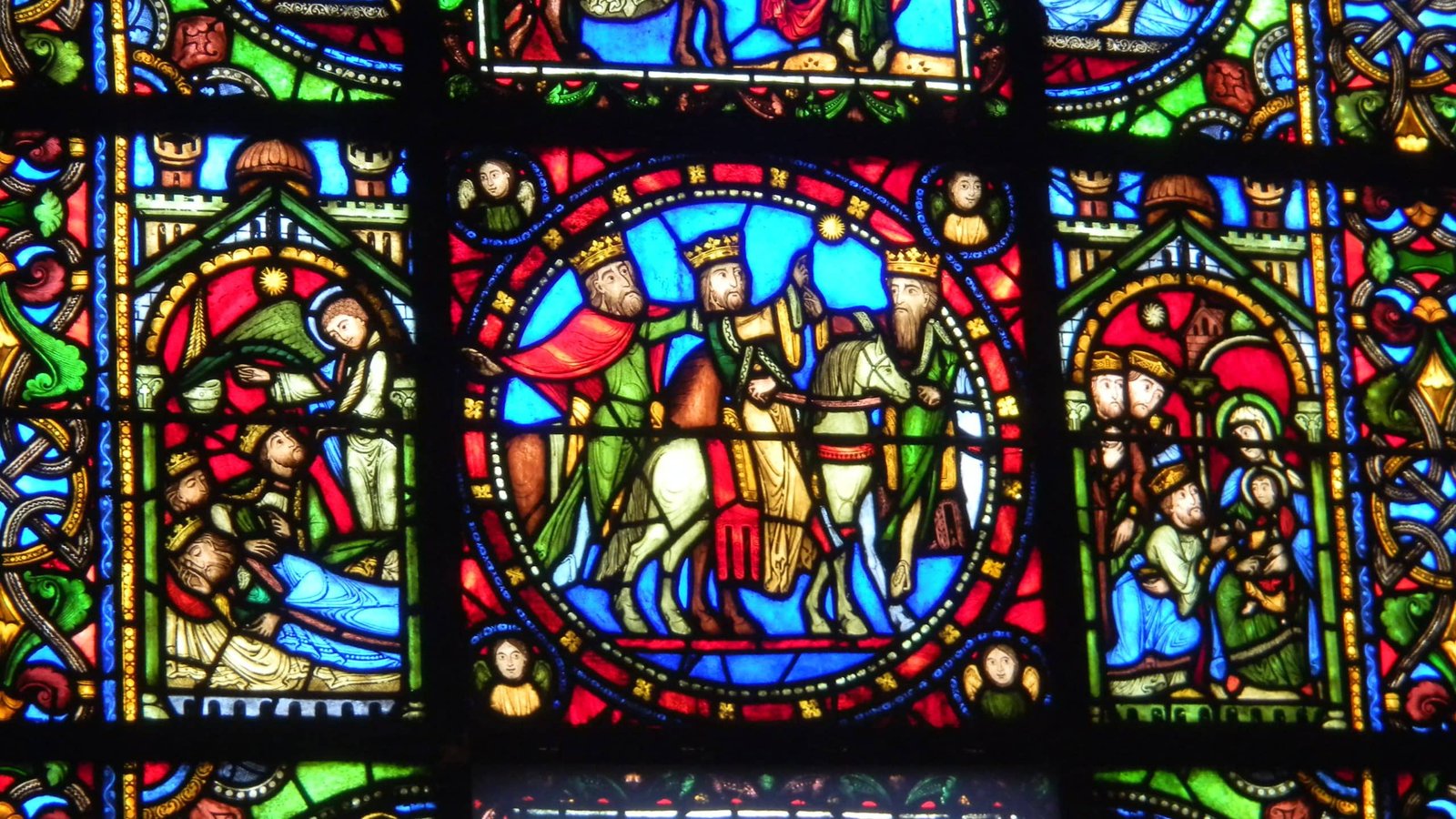
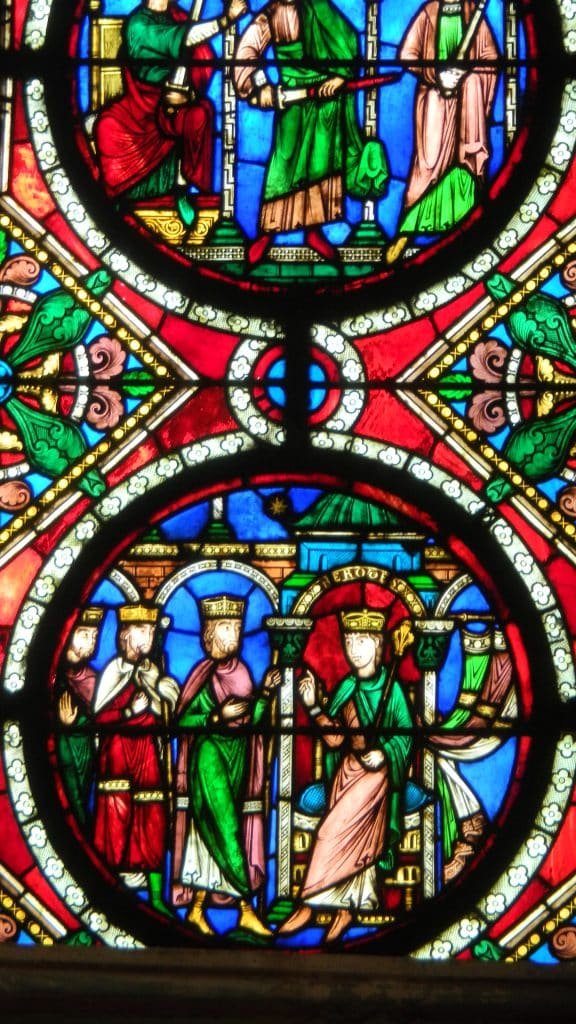
But perspectives also advanced in worldly directions. Above is a scene from the panel of the Life of Christ. Here’s Herod’s court portrayed like a 12th century French court. You can almost imagine King Louis the Fat chomping on a turkey leg.
Nobody in any culture had done this. Nobody had created a wall of glass and surrounded a large open space with it. Angkor Wat is jaw-dropping, but the Khmers couldn’t build stone arches, much less entire glass walls. Thai art is some of the world’s most enchanting, but only the medieval West could surround a whole space with windows and immerse it in reflections from their most meaningful images. How did they do it?
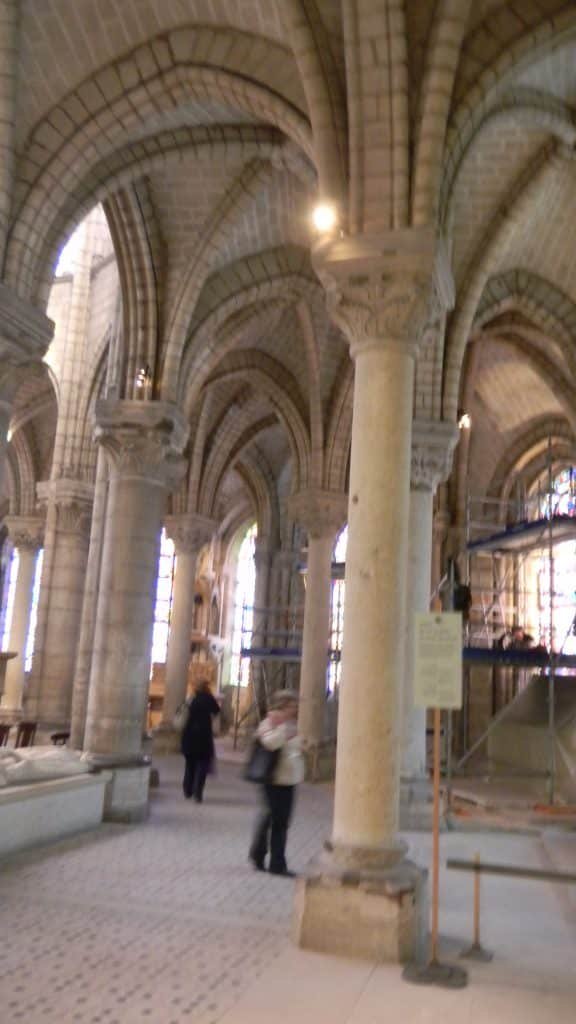
Above, you can see the ambulatory around the altar. The ribbed vaulting in the ceiling was mixed with pointed arches and narrow columns. Many churches in Normandy, England, and Germany had been built with ribbed vaulting around 1100, but its mixture with pointed arches and thin columns was the most efficient at distributing stress. Most of the space could thus be used for the surrounding windows.
Abbot Suger was elated. He wrote about creating this choir. On one hand he said, “–bright is that which is brightly coupled with the bright.” We can understand why he used spiritual language to describe it. But practically in the same breath, he wrote, “It was I, Suger, the leader while it was built.” In other words, God’s glory on earth; it was built by THIS DUDE!
But who wouldn’t have been proud. Suger sounds like a guy I’d enjoy eating dinner with. He advanced both idioms–spiritual and worldly. Medieval Europe would build on both at the same time, and soar to become one of the most interesting civilizations in world history.