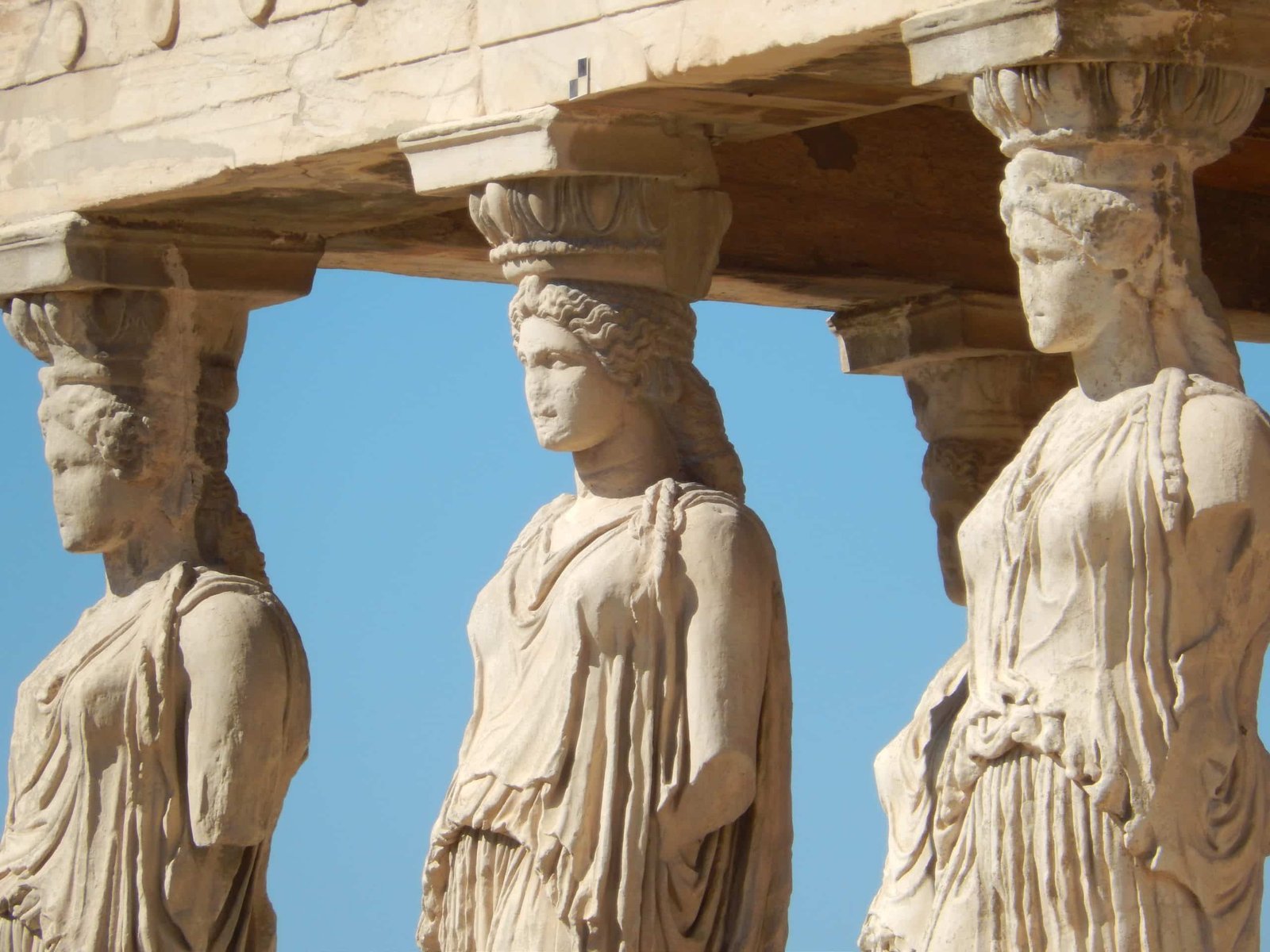
Most people have seen the acropolis at Athens as an expression of rationality. But next to the Parthenon was a highly emotional building, the Erechtheion.

Athena and Poseidon vied for control of the area by holding a contest on the acropolis. The temperamental god of the sea, earthquakes, and other incontestably powerful natural forces struck the ground with his trident and created a salt spring (a horse in other versions—as a mighty and sometimes temperamental animal that can run across vast distances with the stormy sea’s unopposed power, it reflected Poseidon). Athena then made an olive tree spring from the ground and was declared the winner. Athenians had established olives as their economic staple, so Athena was associated with wealth and a key basis of civilized life. This contest was sculpted on the Parthenon.
But since it’s always dangerous to slight Poseidon, Athenians honored him in the main temple next to the Parthenon, the Erechtheion. It housed multiple cults that were already several centuries old when the Parthenon was built. The hole that Poseidon’s trident made and the olive tree from Athena were given spaces at the temple. So were the marks that Zeus’s thunderbolt left in the ground when he parted them. The temple also housed an ancient wooden statue of Athena. This type of idol was called a bretas; it wasn’t visually fancy, but people thought it held a lot of supernatural power which protected the community. Statues of a line of women on the exterior facing the Parthenon held libation bowls, and they stood over the tomb of Kekrops, the mythical first king of Athens, who was born directly from the earth and was represented with a snaky tail.

Athenians started building the Erechtheion as a new temple for all these archaic cults in 420 BCE, 11 years after their disastrous war with Sparta began, a few years after about 25% of the people died in a plague, and about 25 years after they began the Parthenon. They embraced old ideas that comforted them and framed them in a building that’s so elegant and quirky that some historians have called it escapist.

The Parthenon’s proportions and sculptures expressed reason; the Erechtheion appealed more to emotion in the traumatic times.