
He’s young and chill, but he probably knows things about his culture’s heritage that AI systems don’t. The psychologist Jerome Bruner, in The Culture of Education, described a British mother speaking with her two-year-old son. She told him that the woman on the back of a penny she showed him was the queen. He insisted that she was “Granny,” and his mom replied that they’re sort of the same thing. Since many British people feel a combination of respect and affection for their queen, Bruner concluded that intimate human interactions, including ones experienced in infancy and early childhood, are interwoven with background knowledge that’s textured by the whole culture.

I saw many two-to five-year-old children in Thai wats imitating their parents by prostrating in front of the main altar and putting the palms of their hands together in surprisingly graceful motions. But they were also able to play as long as they didn’t disrupt others. They learned that the Buddha rules, but benevolently.
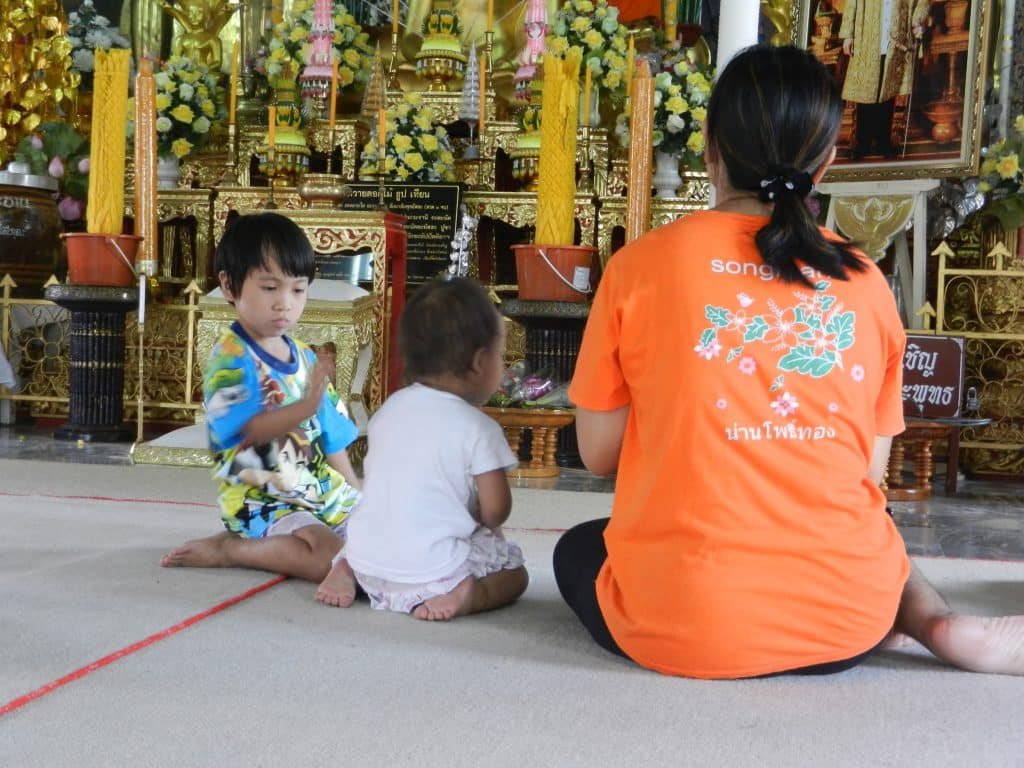
The anthropologist Nancy Eberhardt studied Shan villagers in northern Thailand, near the Burmese border, and she noted that parents there sometimes call young children hai. This word in this context means wild and uncontrolled, and it’s sometimes applied to spirits in the forest.

People sometimes use it for a baby’s leg kicking and impulsive grasping for things within arm’s reach. Eberhardt said that parents tolerate this kind of behavior in young children, but they expect them to slowly gain control over their appetites. Polite expressions and respectful salutations for elders are thus often among the first words and gestures that children learn. Eberhardt said that children who refuse to join their hands to thank an adult for a gift often provoke remarks that they must be from the mountains. I was impressed by the graceful, fluid motions of such young kids as they bowed; Thais learn from an early age that this is one of the main aspects of being human.
I also saw how a culture is interwoven in young children in China. In 2011, I shared an overnight sleeper car on a train from Xi’an to Pingyao with an elderly husband and wife and their two-year-old grandson. The latter two sat on the bottom bunk, across from mine. The boy kept wiggling and she said “Huaidan!” The expression literally means bad egg, and it has deep meanings in a culture in which people learn to conform with the group. Her tone was harsh, with the implicit message, “Knock it off!” Many Chinese children frequently receive messages that they should follow group norms and respect elders.

The focus on nuances of human relationships is evident in many traditional societies throughout Africa. The historian of religion Simon Bockie wrote that Kongo people educate kids about their families’ histories. Elders linger over stories about where their ancestors came from. By the age of 25, a person is so immersed in his family’s past that he carries it with him for the rest of his life. When working elsewhere he sometimes returns to hear the elders’ daily reminiscences.
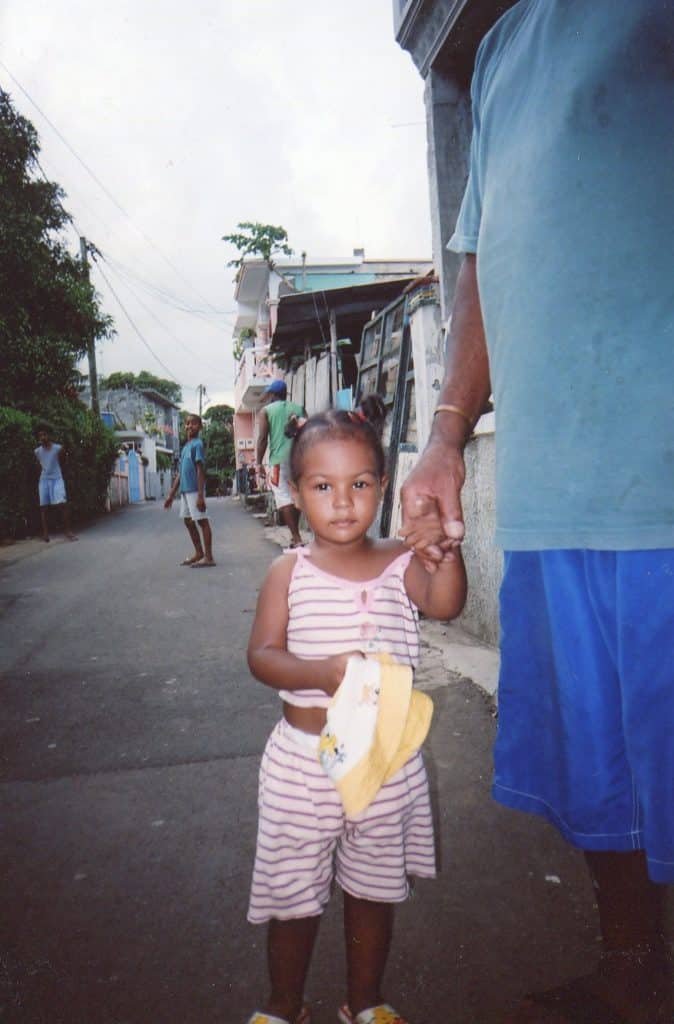
In Facing Mt. Kenya, Jomo Kenyatta wrote that mothers and nurses were the educators of very young children in Kenya’s traditional Gikuyu society. They sang lullabies that conveyed the family’s and clan’s histories; kids had heard them daily by the time they could speak. Elders then asked them questions about their communal histories: Who is your father? What is his age group? What is the name of your grandfather? And your great-grandfather? What is the name of your grandmother? What are their age groups? Why were they given those names? Human relationships thus became basic in Gikuyus’ ideas of the world.
A lot of AI systems and machine learning models focus on learning tasks or acquiring domain-specific knowledge. But people learn on several levels at the same time, which include the holistic cultural landscape, and this begins in the first year. From an early age, infinitely deep cultures with ancient histories create backgrounds of our thoughts and perceptions. AI systems still have a lot to learn about human cultural wealth and how deeply it’s embedded in our experience.