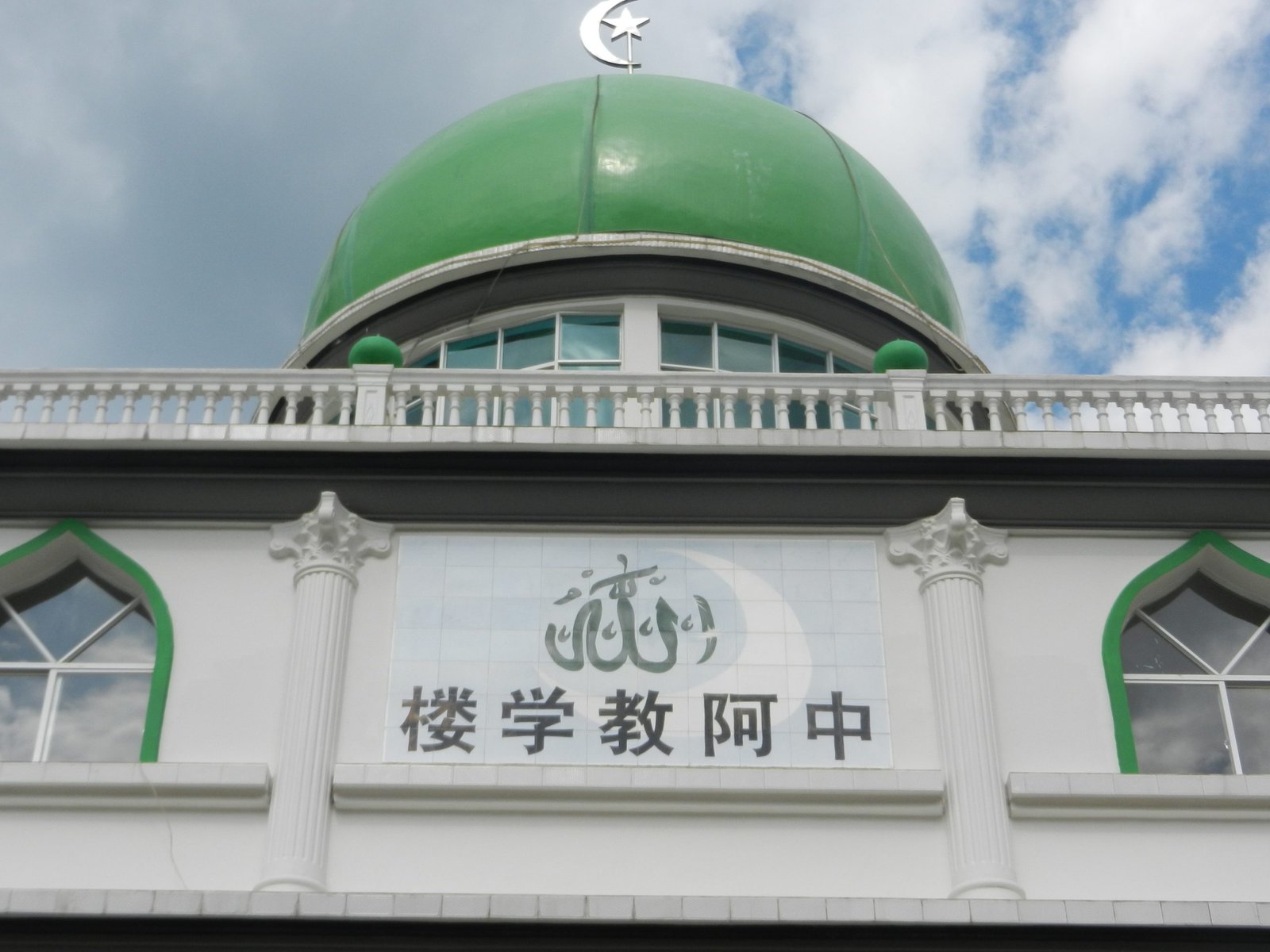
Islam and China have created vastly underappreciated cultural fusions.
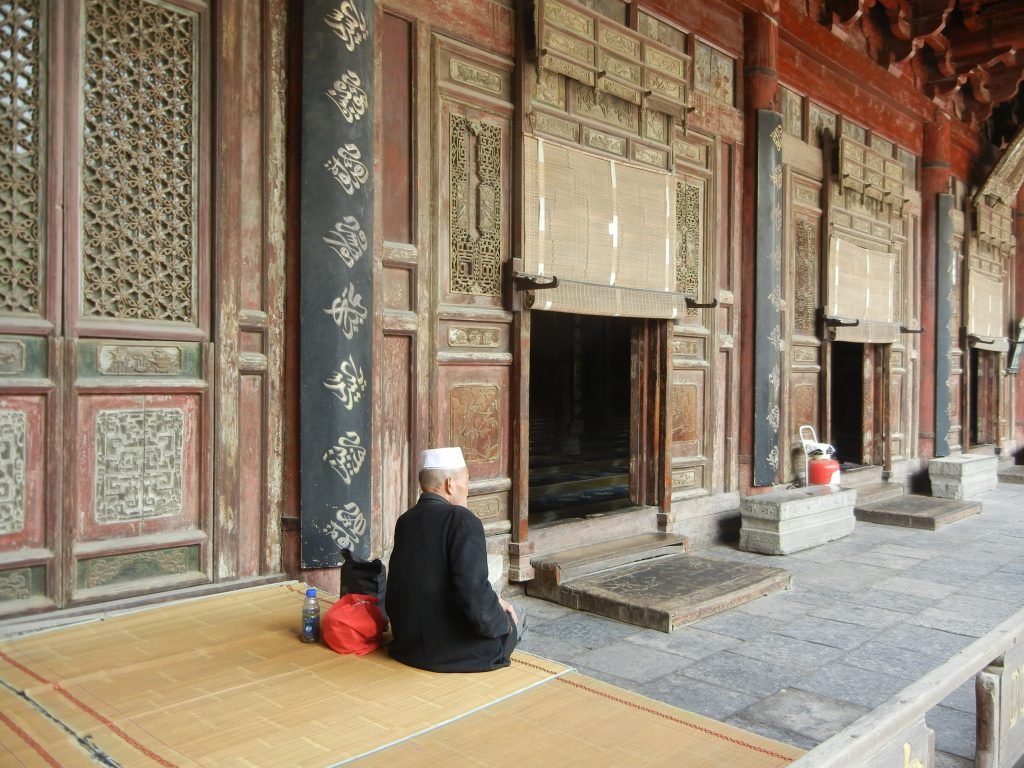
Islam was introduced to China in the Tang Dynasty through ports of the southeastern coastal cities of Guangzhou and Quanzhou and over land through Central Asia. It thus entered the capital in modern Xi’an from multiple sources. Many more Muslims came during the Yuan Dynasty. Nearly 1,500 years of cultural contact created one of the world’s most beautiful artistic fusions. I was amazed the first time I saw Chinese Islamic art.
My first time was in Malaysia.
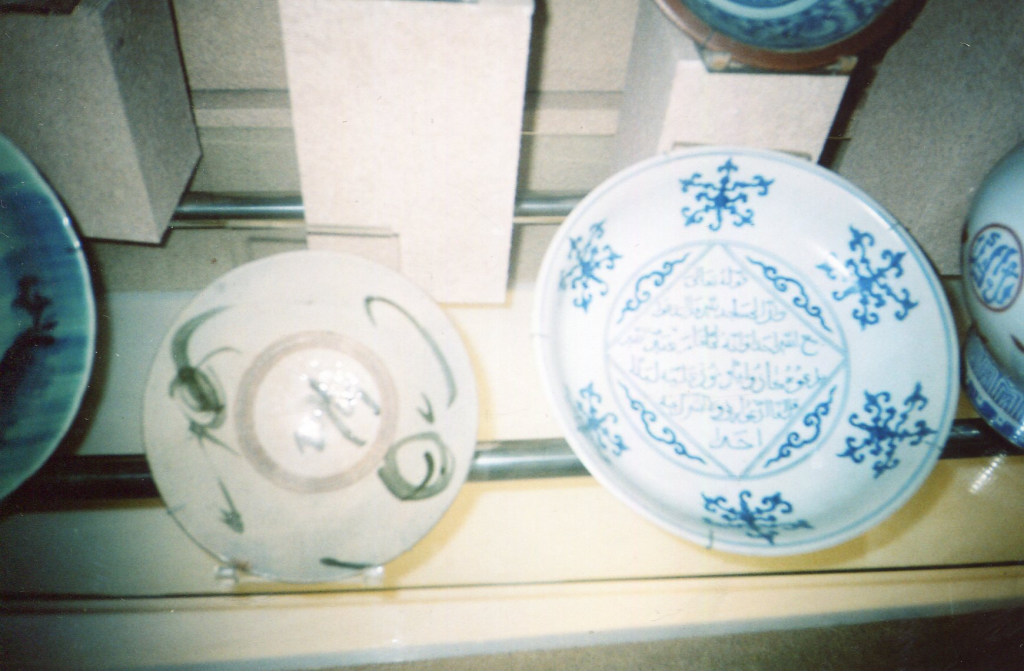
The bowl on the right has Arabic calligraphy in the center, and it’s surrounded by motifs that were partially inspired by Chinese cloud patterns. Both traditions blended perfectly:
Chinese and Islamic thought often emphasize the circle. There are differences though. Islamic ideas of the circle stress the creative power of God emanating from the center. Chinese ideas stress smooth circulation of energies throughout the circle, such as yin-yang flows. But both traditions see a circle as a dynamic and holistic flow of spiritual energy rather than an abstract shape which is defined by its perimeter.
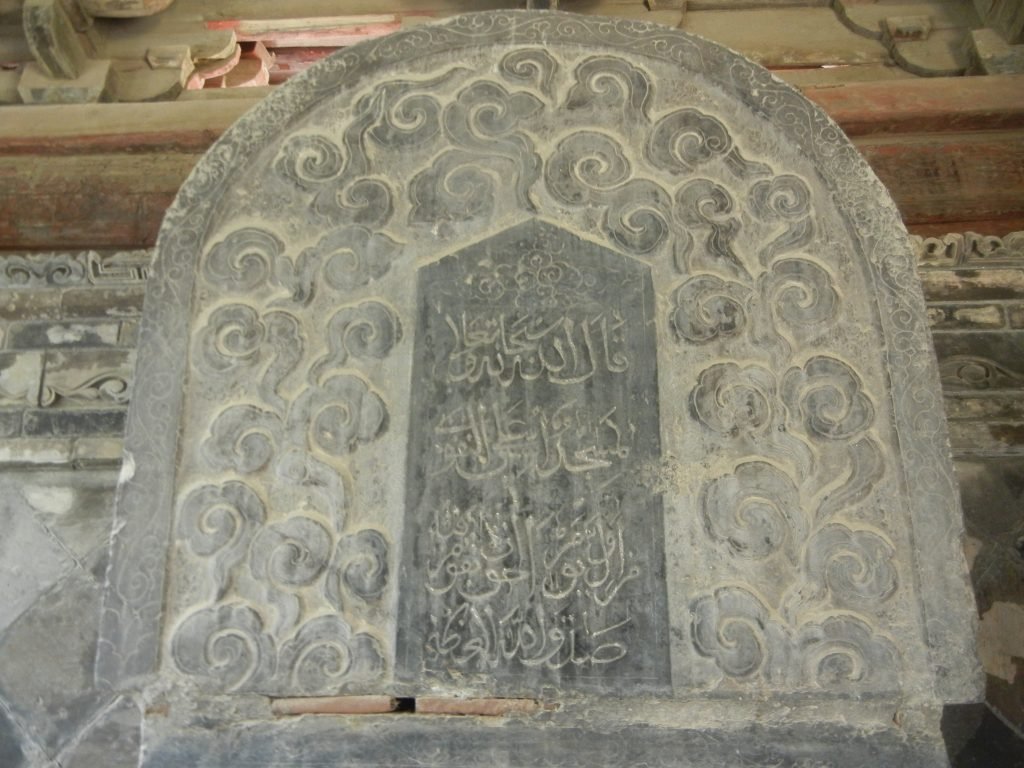
Chinese art and Arabic script also emphasize flow rather than distinct entities and static lines and shapes. Arabic letters are conjoined, and they can thus wrap around the insides of bowls and mesh with yin-yang patterns. Chinese cloud motifs, which go back to the Shang Dynasty, sometimes surround Arabic letters, as in the above shot of a tombstone in Xi’an’s Great Mosque. Both are elegantly animated and thus mix well. The clouds seem to represent the heavens that the departed soul aspired for. Traditional Chinese religions have emphasized ancestors, and many ancient tombstones show ancestors and gods surrounded by clouds. In Islam there is only God. Ancestor veneration is forbidden, but ancient Chinese designs that didn’t represent humans expressed this person’s concept of God.
So there are endless ways that ideas and art forms from both cultures can fuse. While in Malaysia, I thought, “Wow! There’s an immense world here, and few people know about it!”
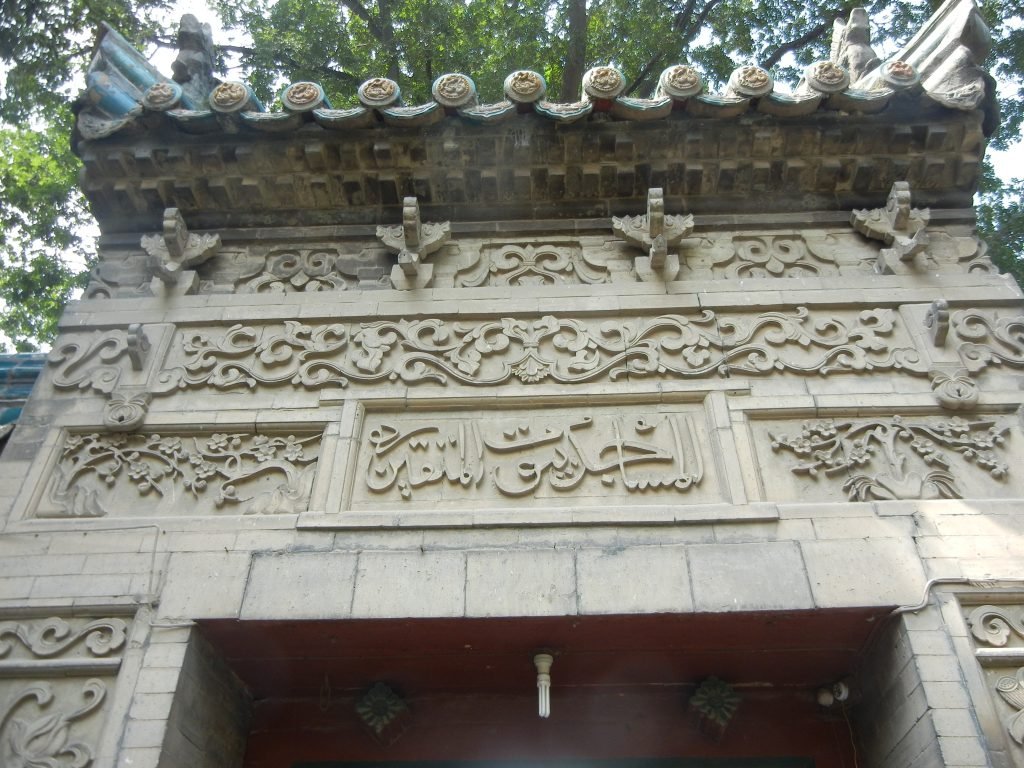
Islamic calligraphy and Chinese art forms are also happily married on this gate in Xi’an’s Great Mosque.
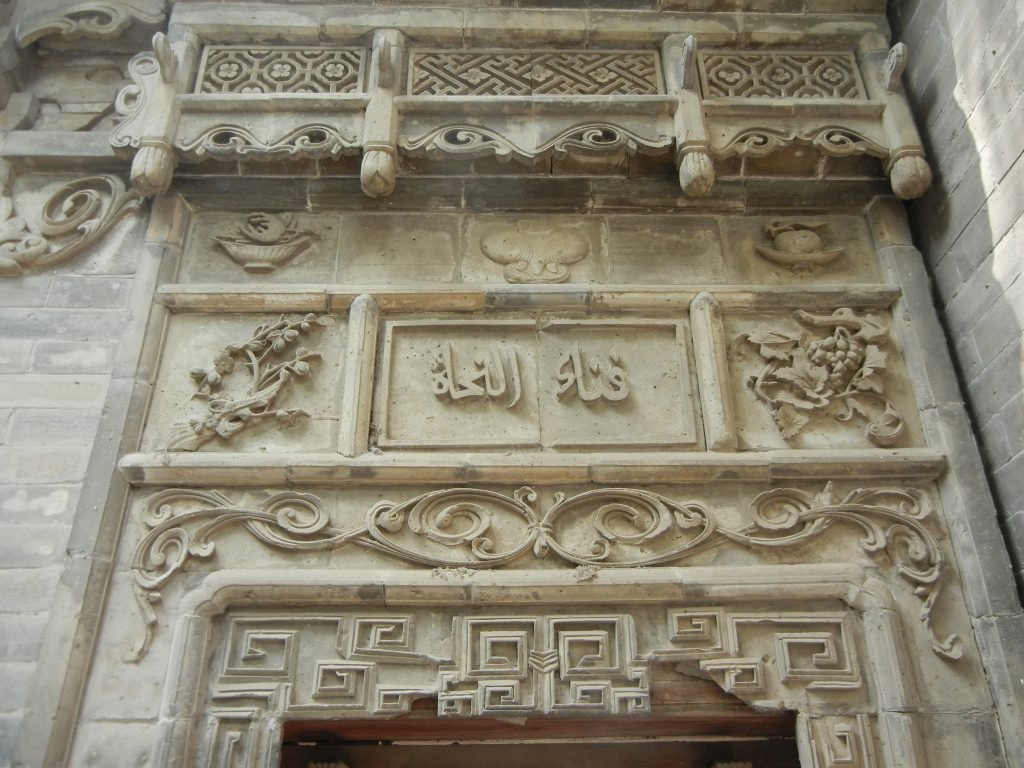
And over this other gate in the mosque.
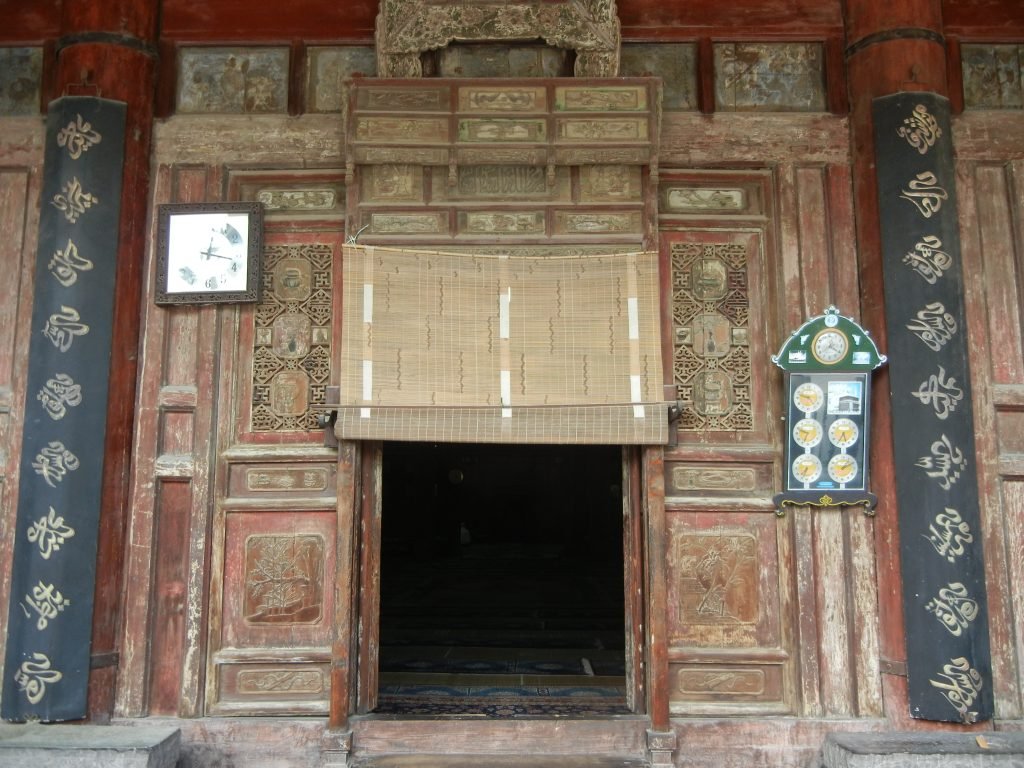
And around the entrance to its prayer hall.
Chinese calligraphy in the mosque expresses Islam’s tenants. The sign over the Phoenix Pavilion’s central opening (below) says Yi Zhen (One Truth), reminding visitors of Islam’s central idea: One God.
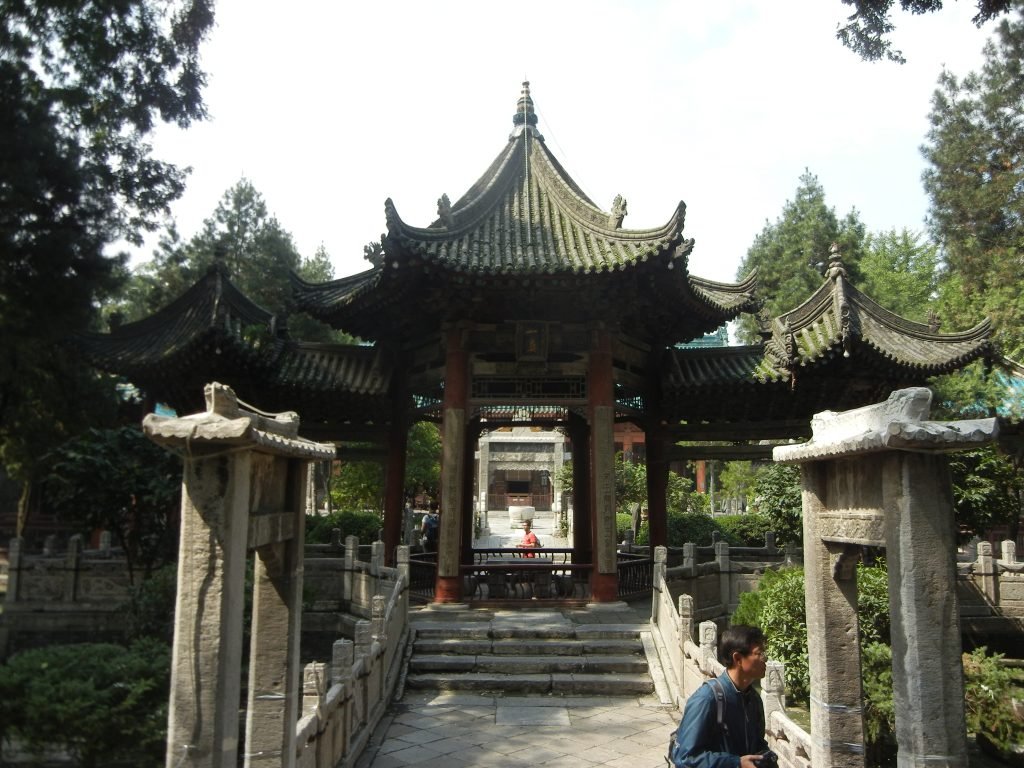
Below, a traditional Chinese pagoda form is used for the minaret. There’s a lot of cultural diversity in minarets’ forms around the world.
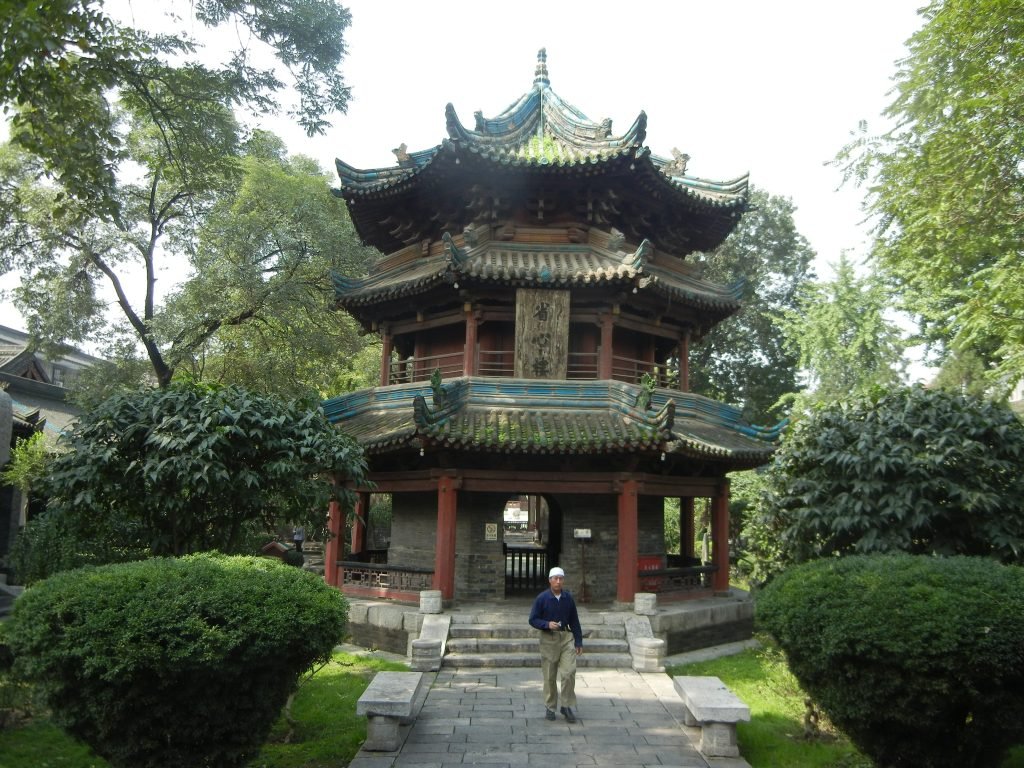
The three photos below are from Beijing’s Niujie (Ox Street) Mosque, which was originally built in the tenth century.
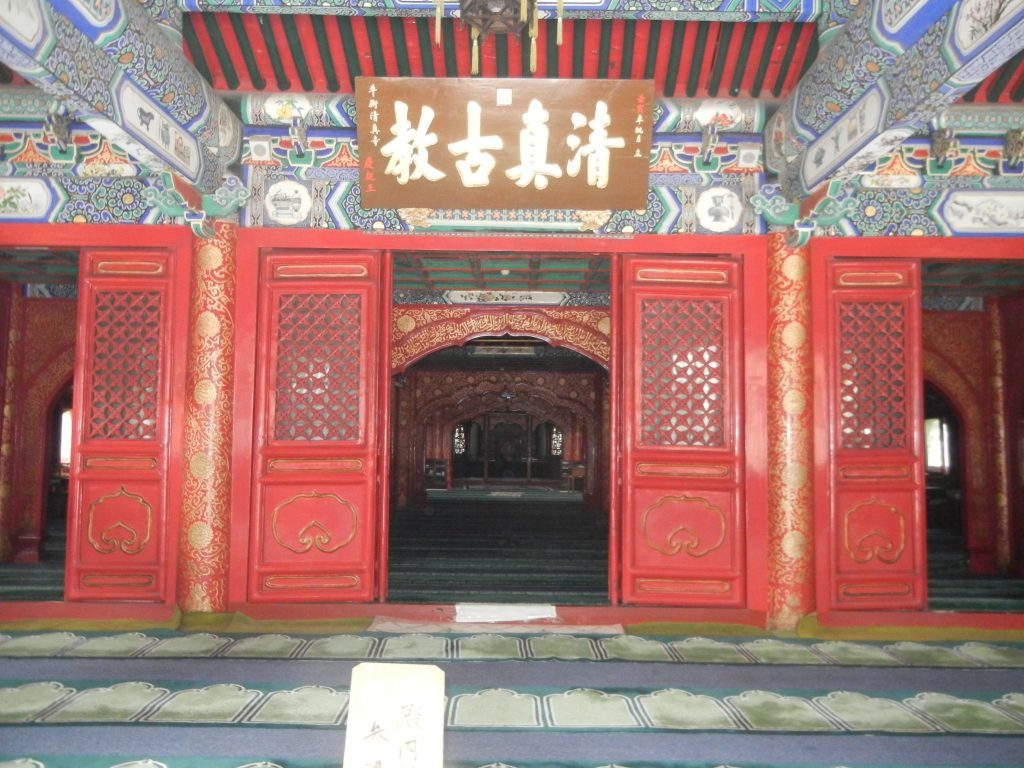
Here Persian designs mix with Chinese motifs.
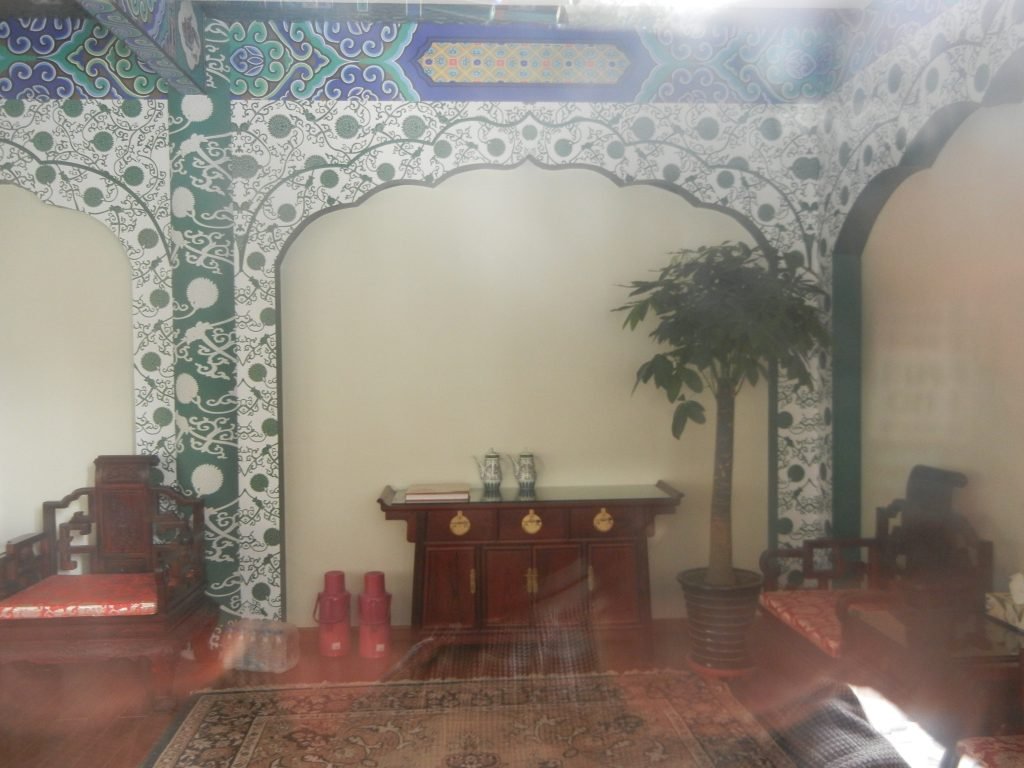
The glare comes from the window that I had to shoot through. Prayer halls and classrooms were closed to non-Muslims in the Beijing and Xi’an mosques.
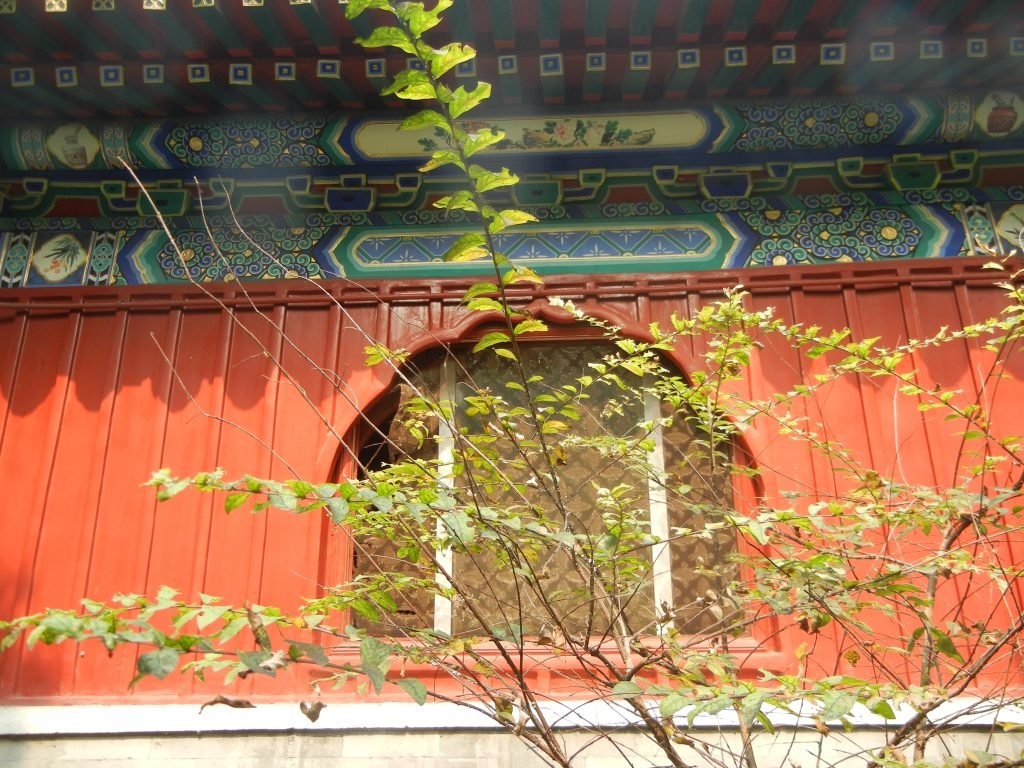
The picture below is from an Islamic village by Yunnan’s Erhai Lake.
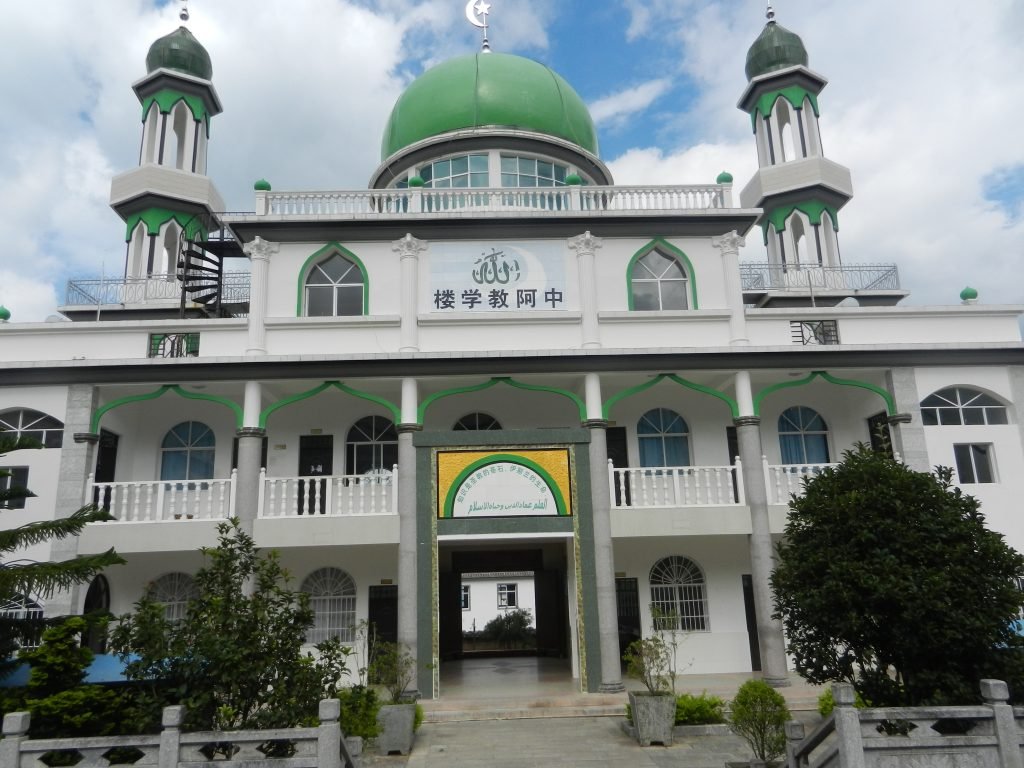
As I walked uphill through the town, the building looked like it could have been transplanted from Iran. But when I ventured through its gate, I was in the courtyard and in front of a traditional Chinese hall.
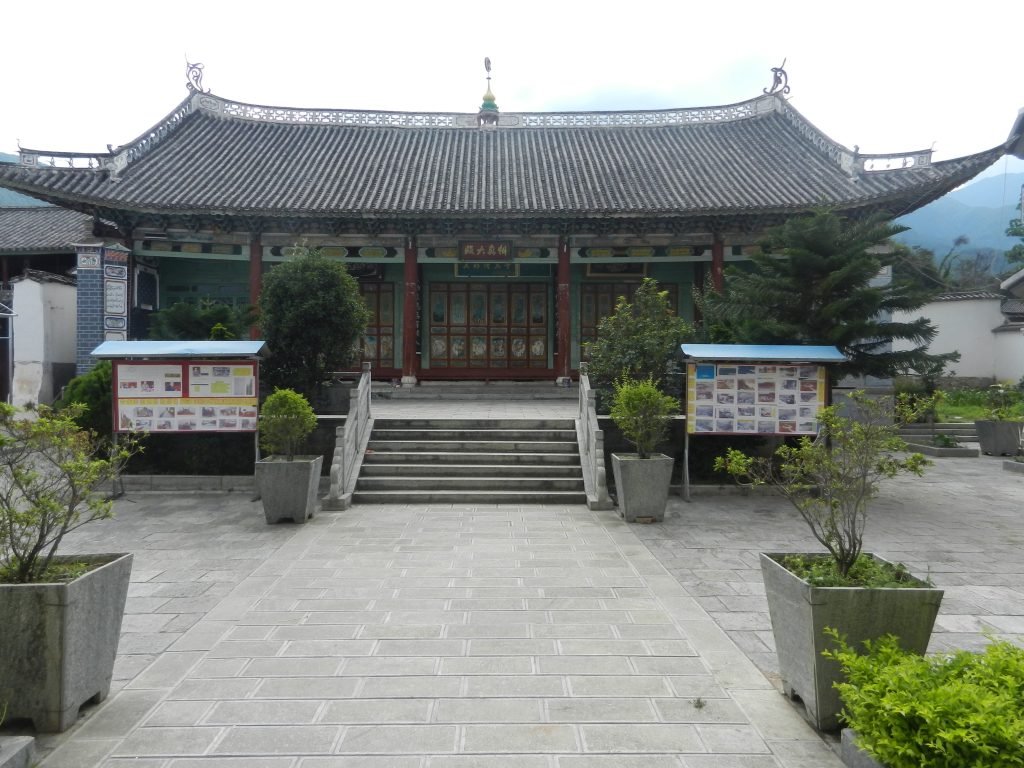
So buildings from two great civilizations faced each other (tragically, the government has recently been forcibly removing thousands of mosques’ domes in order to sinicize the architecture). The Chinese building was a hall which was similar to but smaller than the prayer halls I saw in Xi’an’s Great Mosque and Beijing’s Ox Street Mosque.
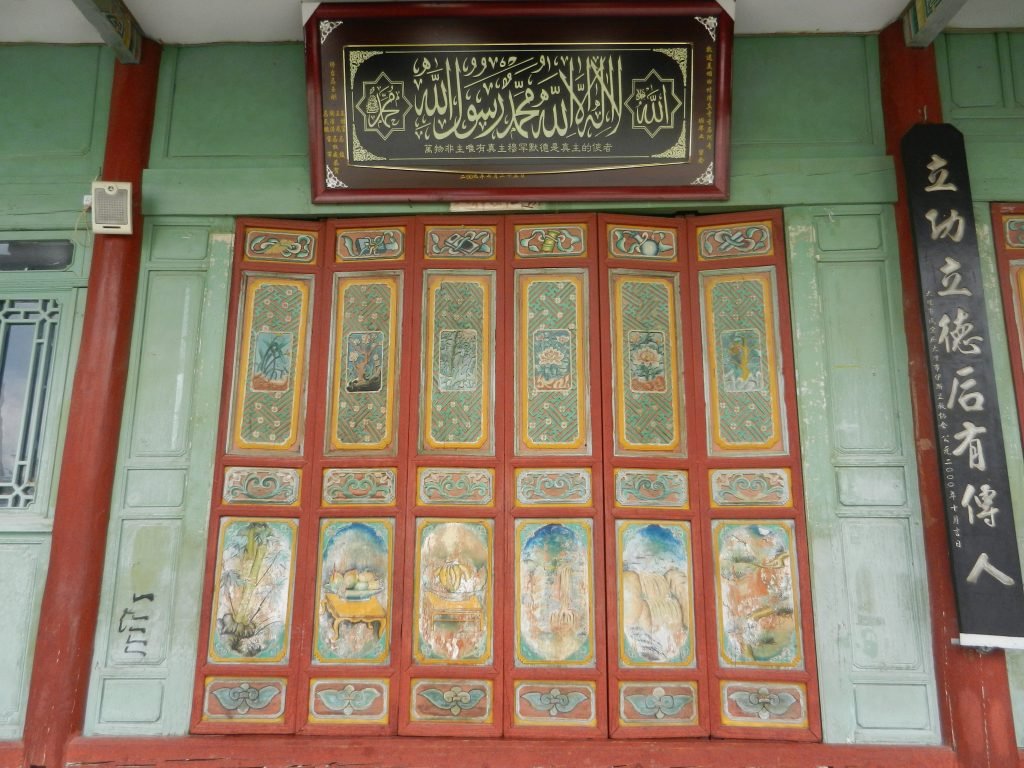
The screens at its entrance were Chinese in style, and I loved its soft earthy colors. But–
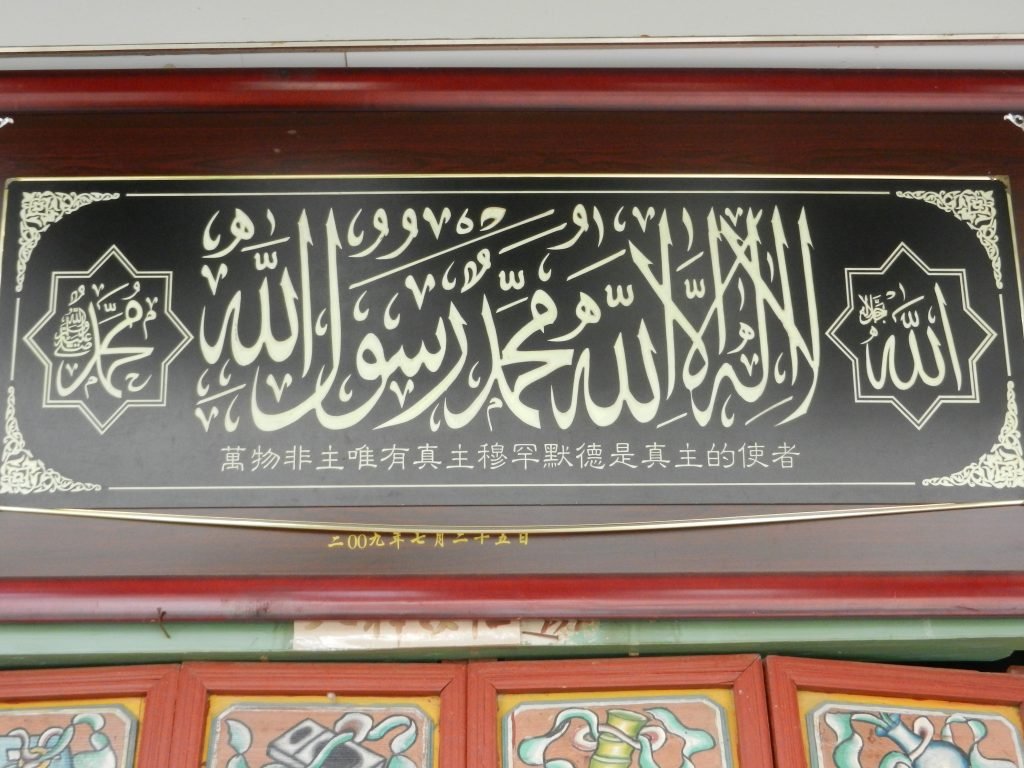
The most visible writings over the door are Islamic, in a script that flows as beautifully as Chinese landscape paintings. It’s in a style called naskhi, which balances clarity and flow, and has thus often been considered ideal for koranic passages. The letters’ luminous gold over the neutral colors in the screen makes them seem to come from heaven. The letters inside the right star spell Allah–they declare, like revelations. There are a lot of deep ideas behind Arabic letters.
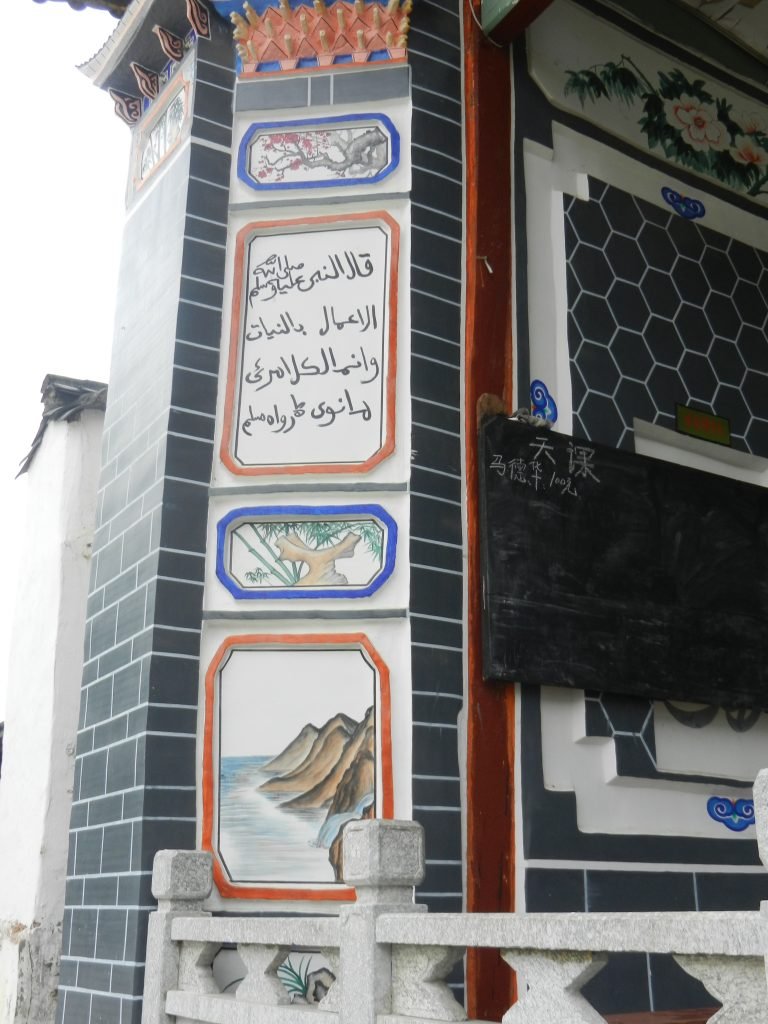
Flowing Arabic writings and Chinese landscapes also grace the sides of walls.
So what crowned the hill was a model for our globalized world–great cultures’ art and ideas blend so that traditions from each land express and enhance each other.
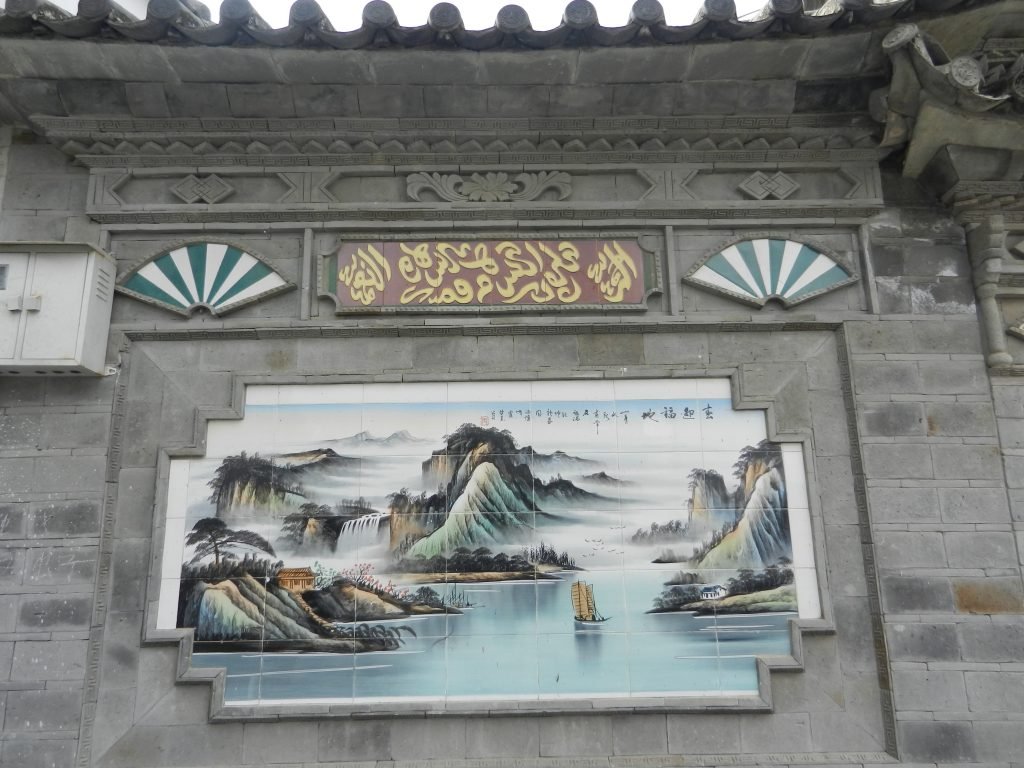
These blends extended from the mosque and radiated throughout the village–they graced the gates and outer walls of homes (above).
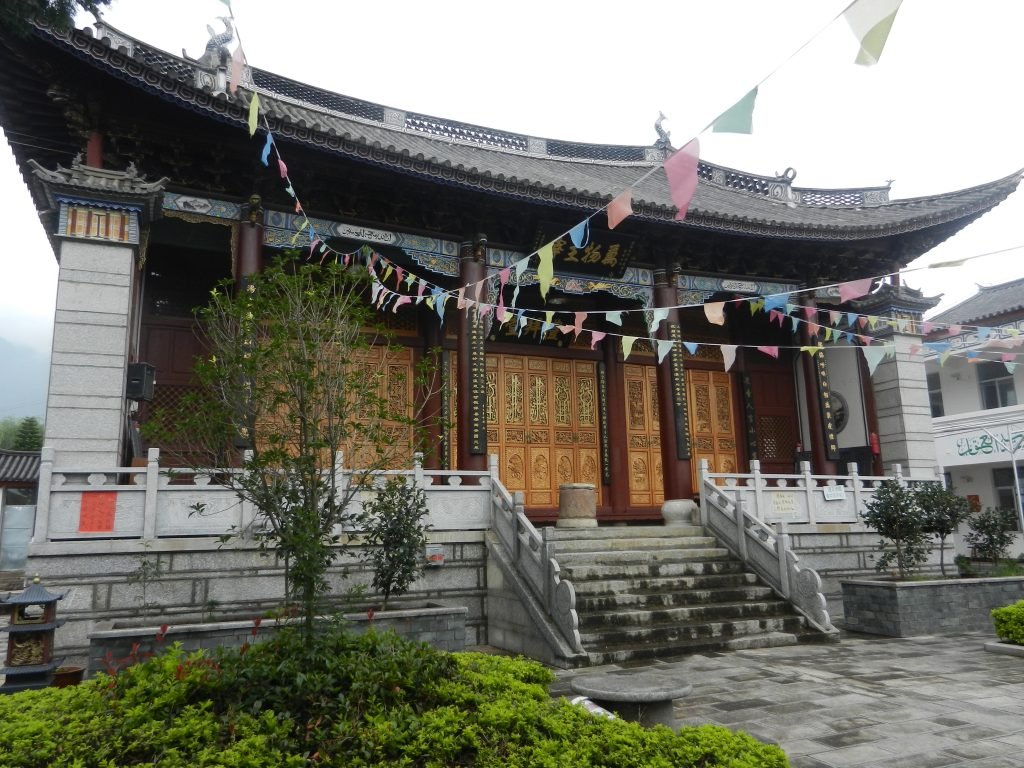
Old Dali’s main mosque is pictured below. I was looking at the prayer hall from the main courtyard.
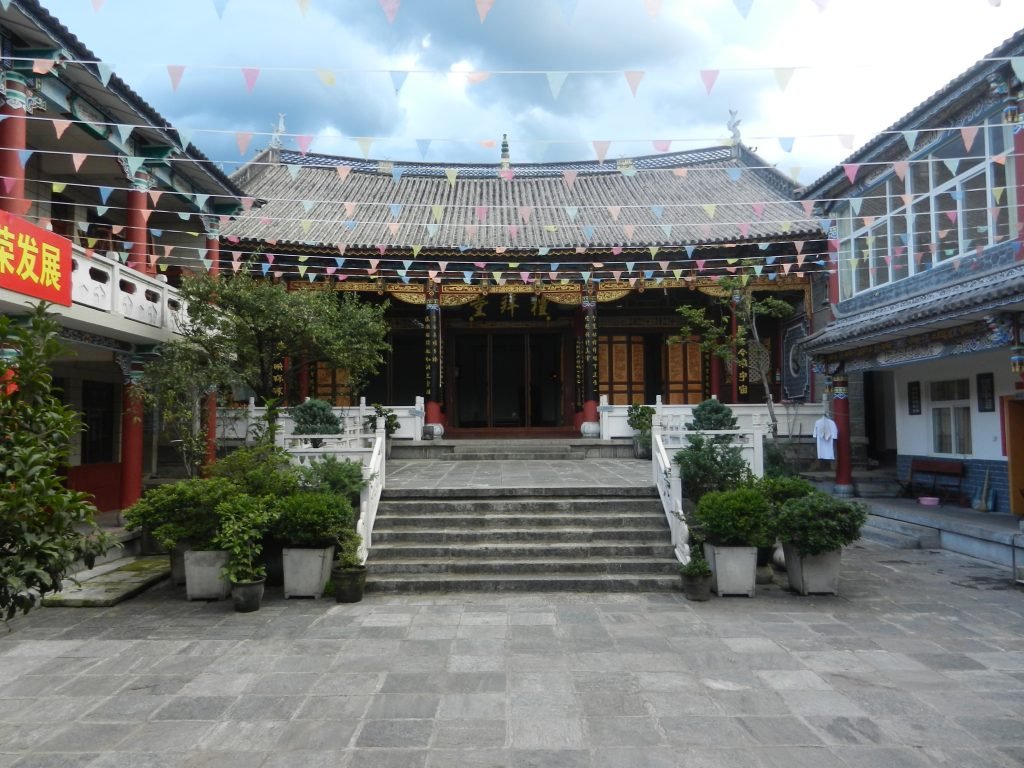
It was open so I ventured in.
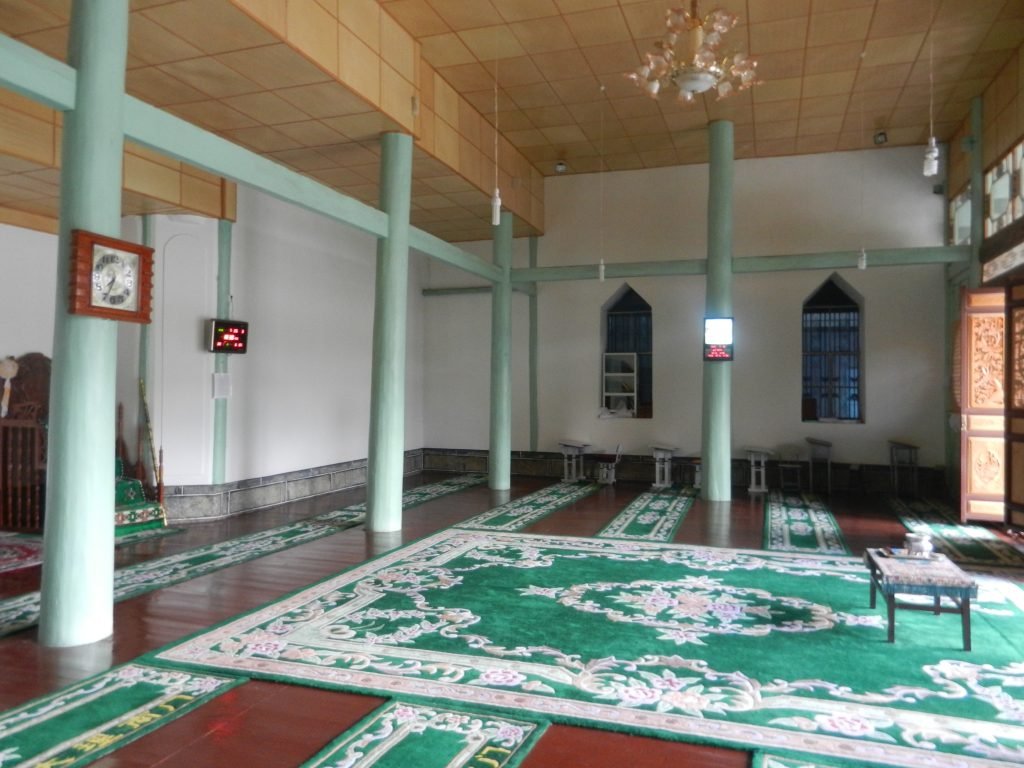
The prayer rugs were in Persian-influenced designs, but the entrance was through a traditional Chinese screen (below).
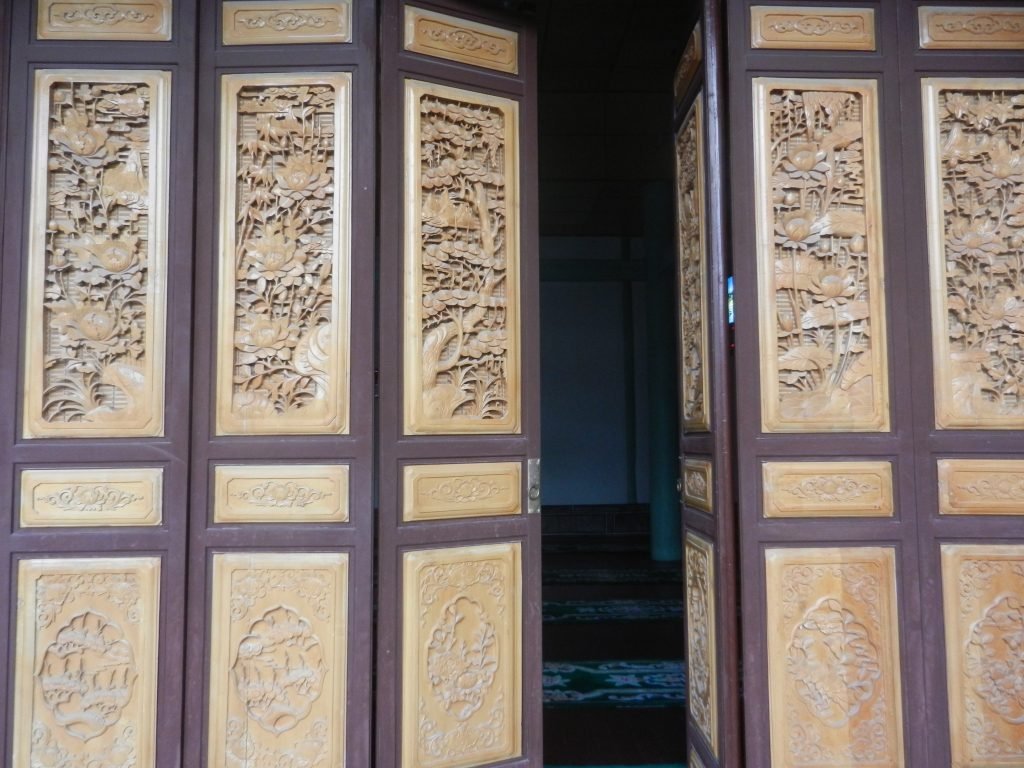
The prayer hall of another mosque in Old Dali is shown below.
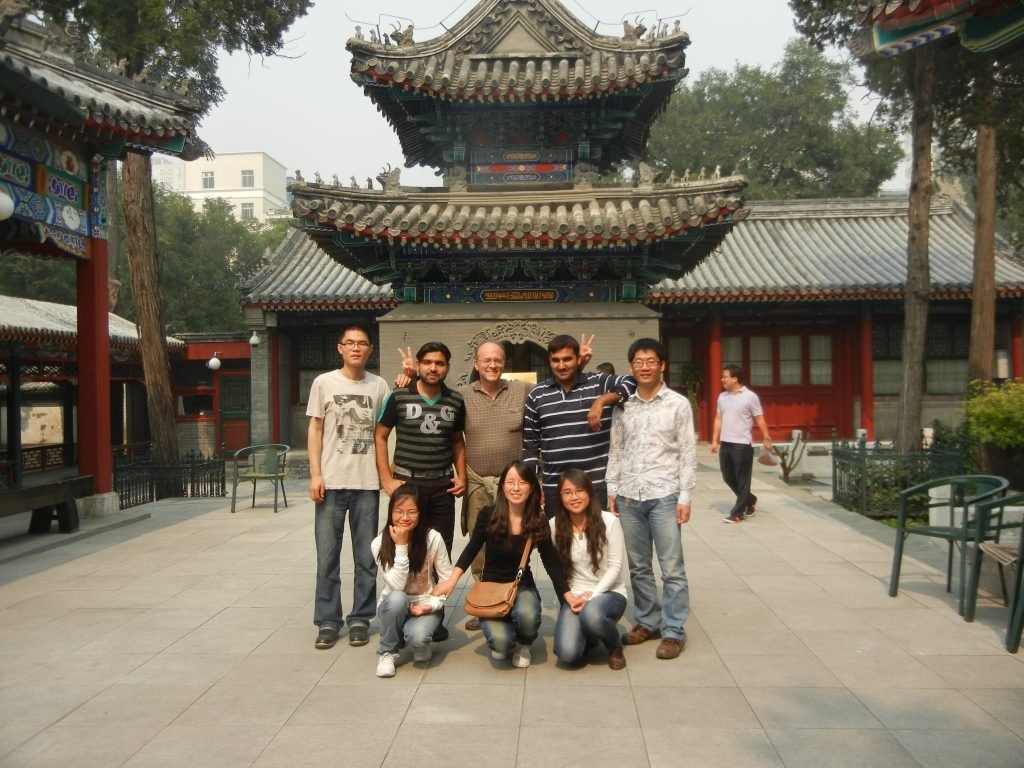
Back in Beijing’s Ox Street Mosque, I saw the two men who flanked me in the above shot leading a group of six local students. Thinking that they were from India and having lived there, I asked the two men where they’re from. They were actually from Pakistan and studying for PhDs in chemistry. That morning, their cohorts showed up at their dorm door, asking to take them to the mosque and give a tour. That was back in 2012, before Xi’s ruthless crackdowns. Under the noses of the oppressive CCP authorities is a fusion of two great cultures that encompass over one billion people, and many young people would be happy to explore it.
Islam has also fused with cultures in several other regions, including Southeast Asia and East Africa.