The Khmer king Yasovarman had set the pace for the next 500 years by building some of the most stunning monuments Cambodians had seen so far, founding the city of Angkor, and cementing thought patterns that lasted throughout the Khmer Empire’s history. His two sons who then became kings inherited a great legacy, but they were saddled with a tough act to follow.
Little is known about both, but neither seems to have had the resources to compete with Yasovarman’s grandeur. And their rule was challenged by their uncle, Jayavarman IV, who built his own capital about 50 miles north to rival Angkor. But they presided over the building of unique monuments that are almost as rewarding to explore as Yasovarman’s. They’re in the middle of Angkor, and thus easy to reach once you’re there.
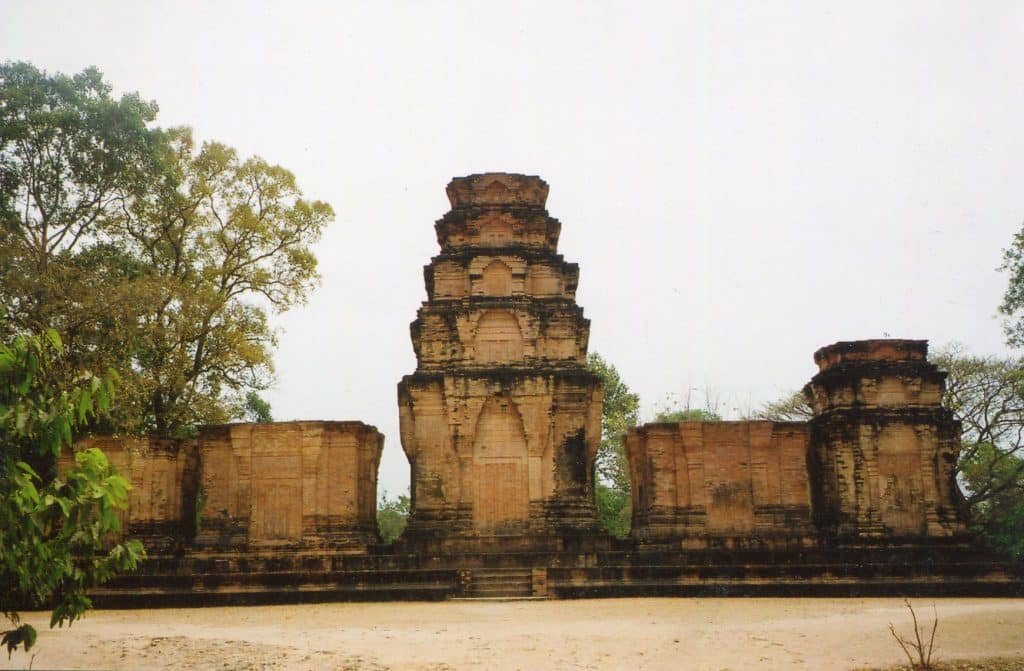
The first son to become king, Harshavarman I probably reigned when a high official built Prasat Kravan in 921. Here are some of its features:
1. It consists of a row of five towers on a base that’s about 150 feet long. Preah Ko previously integrated three rows of six towers on one platform. Prasat Kravan’s design was simpler, less cluttered and more stately.
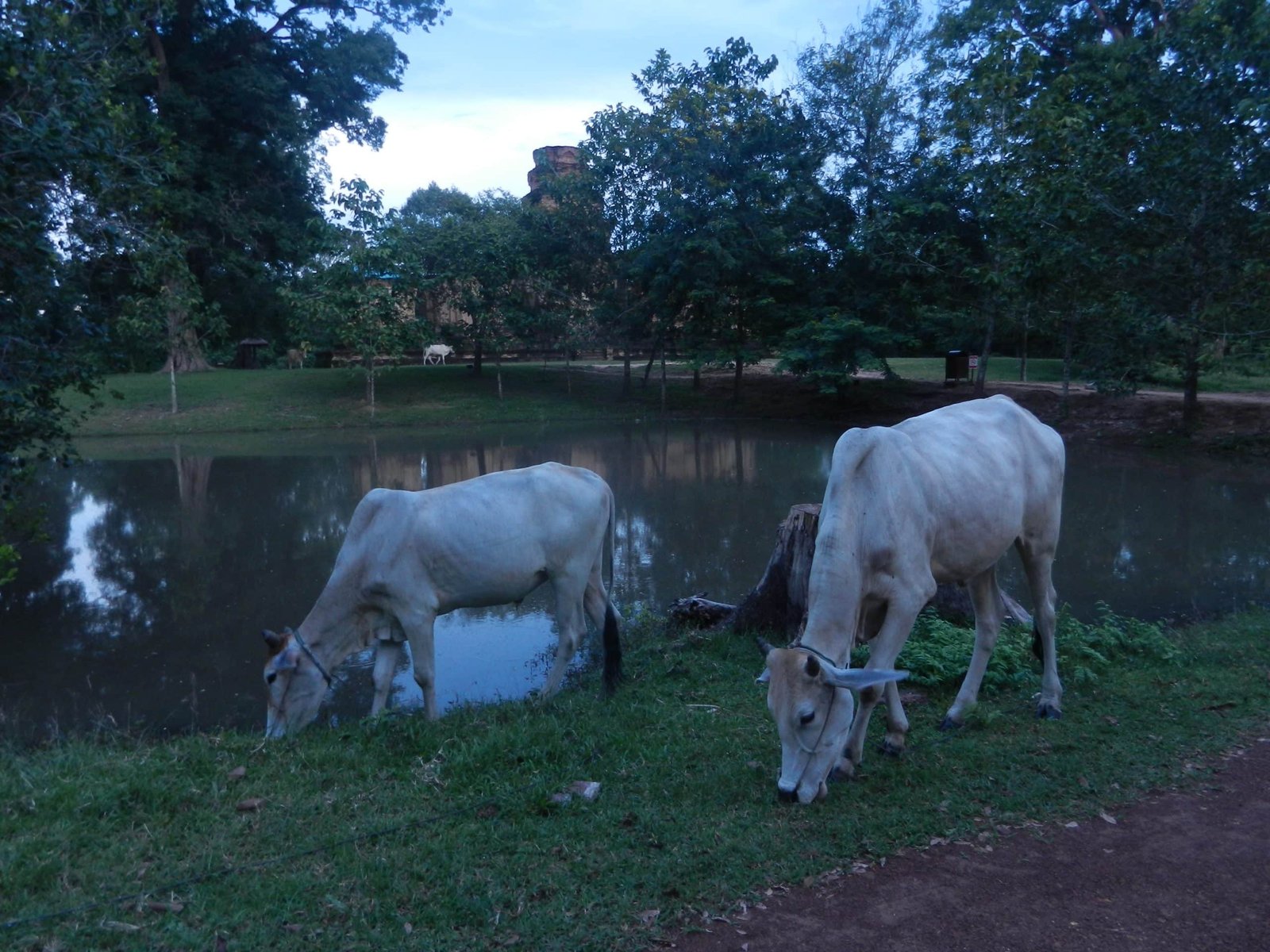
2. A reservoir once surrounded Prasat Kravan. Like Lolei it must have sparkled like a diamond in the lustrous water.
So the builders used earlier ideas in this temple, but they added to them to make Prasat Kravan their own statement.
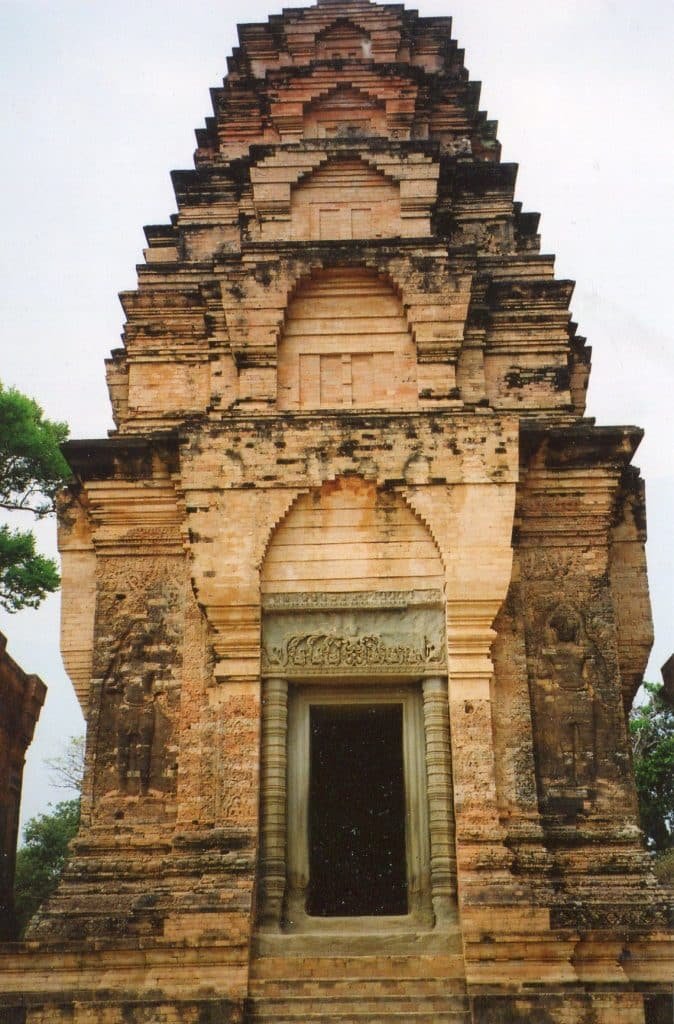
3. They made this temple symmetrical, as the Bakheng is, but it’s not huge. Its regularity doesn’t project overwhelming power. It’s elegant and intimate.
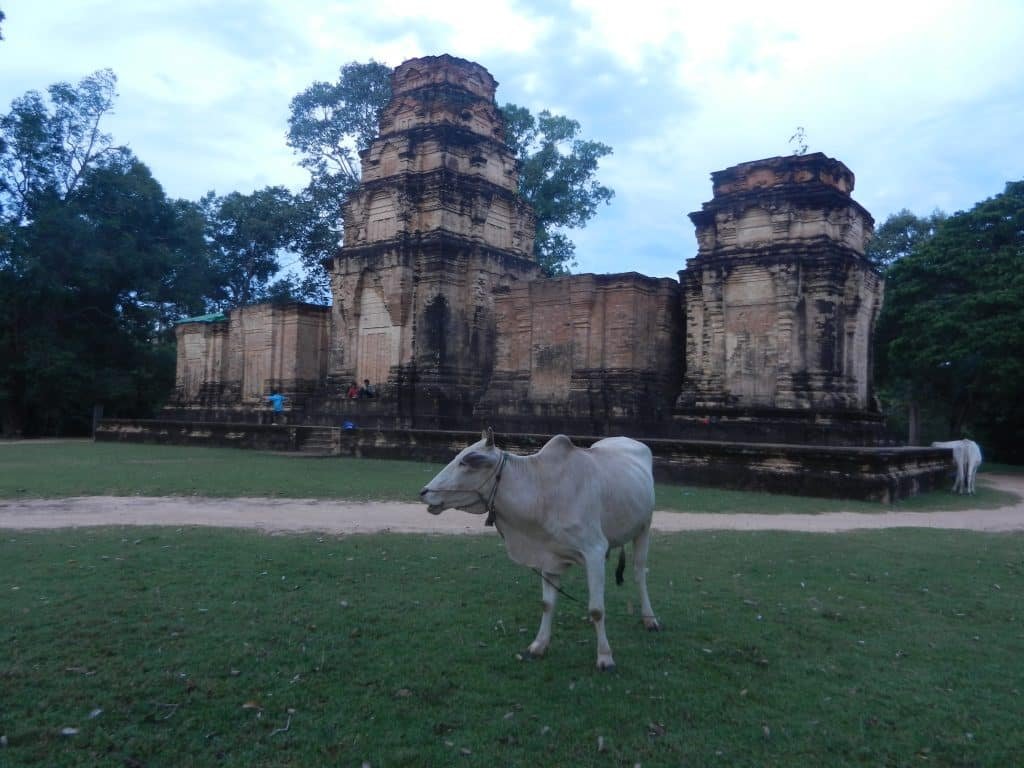
The sizes of the five towers complement each other. The central shrine’s five levels mirror the number of buildings, and the levels recede in pleasant proportions. They’re also clearly defined from each other.
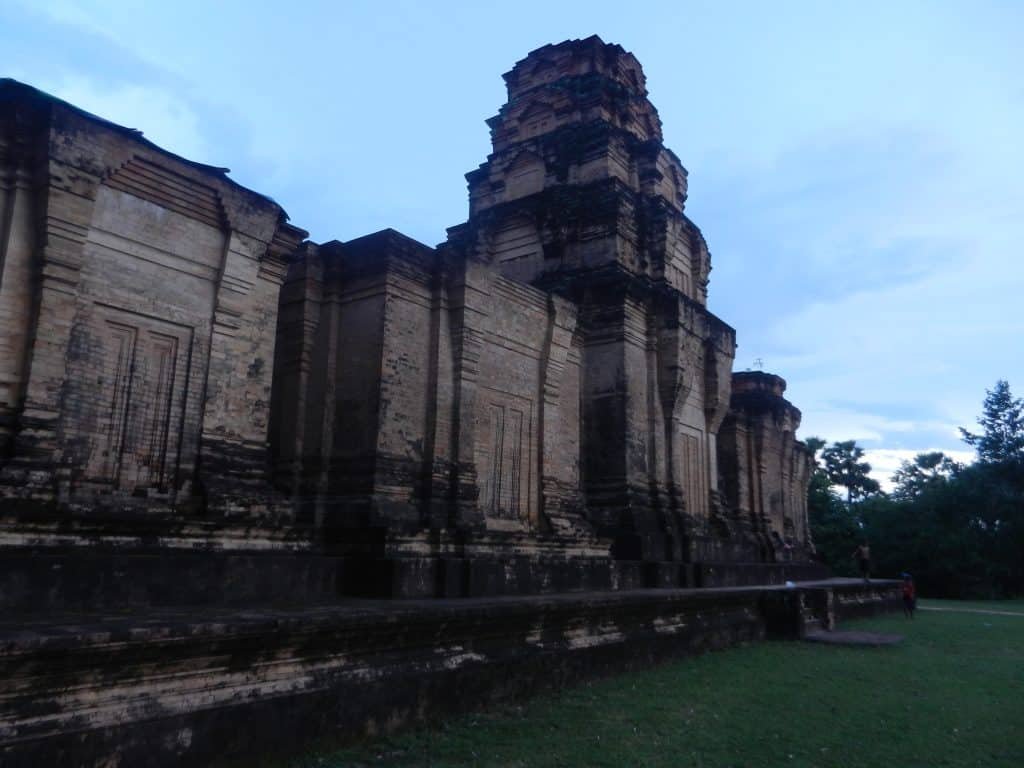
Prasat Kravan is as close as you can come at Angkor to the aesthetics of ancient Greek temples. Dad built huge monuments; the son and his officials enjoyed elegance and came up with new ways to express it.
4. Prasat Kravan was dedicated to Vishnu, rather than Shiva as most early Khmer temples were, and the central shrine’s interior has energetic reliefs of him.
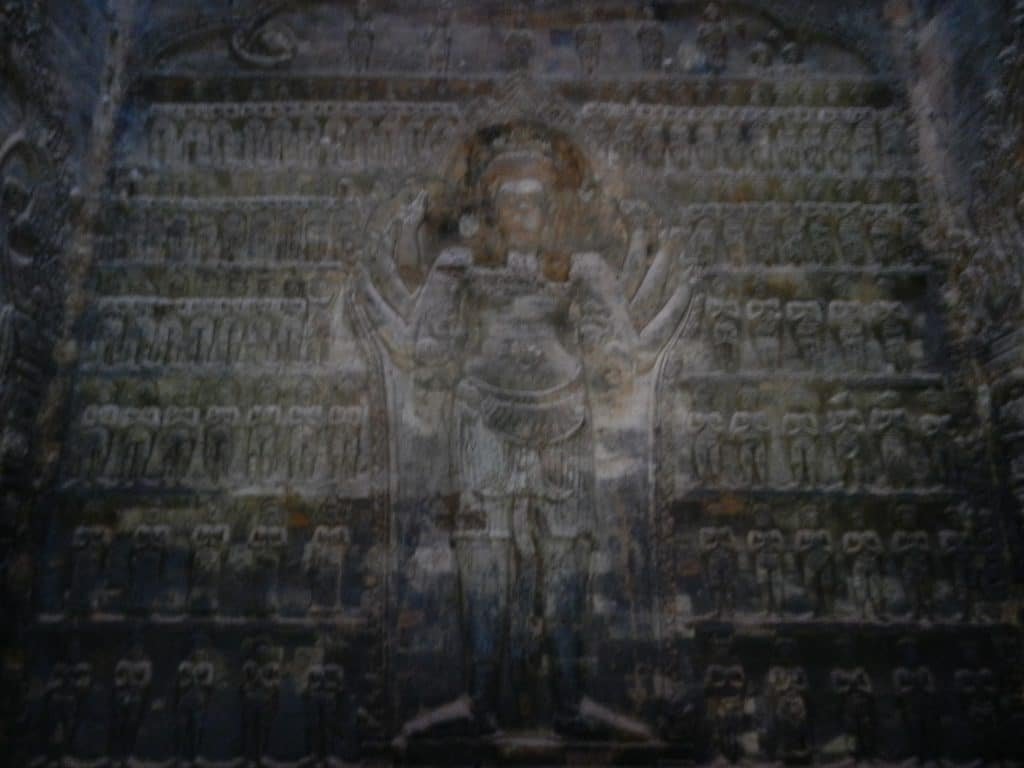
Above is an eight-armed manifestation of him, and he’s surrounded by devotees.
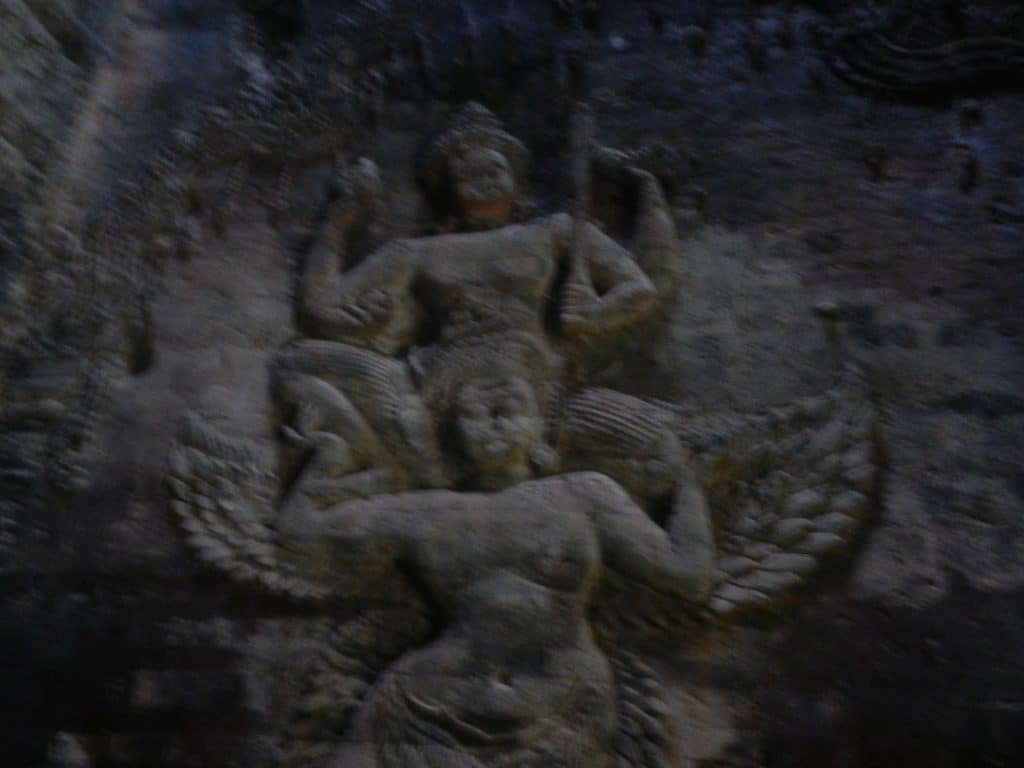
The above shot is of another wall, where he rides his traditional mount, the mythical bird Garuda.
Stepping inside the shrine and being surrounded by these lively images must have been dramatic after enjoying the exterior’s human scale and stately proportions. The room must have seemed infused with cosmic energy.
Although Harshavarman didn’t attempt to outdo his father, he and his men varied some of his ideas and expressed them in a temple that shows both the soft and sensational sides of Khmer temple architecture. The son and friends added to the stock of art forms that this prolific civilization would build later monuments from, including Angkor Wat.