
The psychologist Martin Seligman has updated research on the positive psychology that Abraham Maslow pioneered. In a book called Flourish, he said that he prefers not to use the word happiness because it’s hard to define and measure. He thus focuses on well-being, and he defined several components of it, which can be measured more accurately in experiments and surveys:
Positive emotion: I felt many types while exploring different cultures’ world-views. Sometimes I felt ecstatic while going beyond one convention after another. Other times, I felt warmth by relating to people with so many different mindsets. I also often felt gratitude for the experiences that I had in all countries.

Engagement: Seligman sees this as being in a flow. The psychologist Mihaly Csikszentmihalyi also considers flow to be central in happiness and well-being. Both see flow as a full involvement with your activity so that your consciousness becomes absorbed in it. I felt this in all the countries I visited. Walking through Khmer and Thai temples immersed me in their cultures.
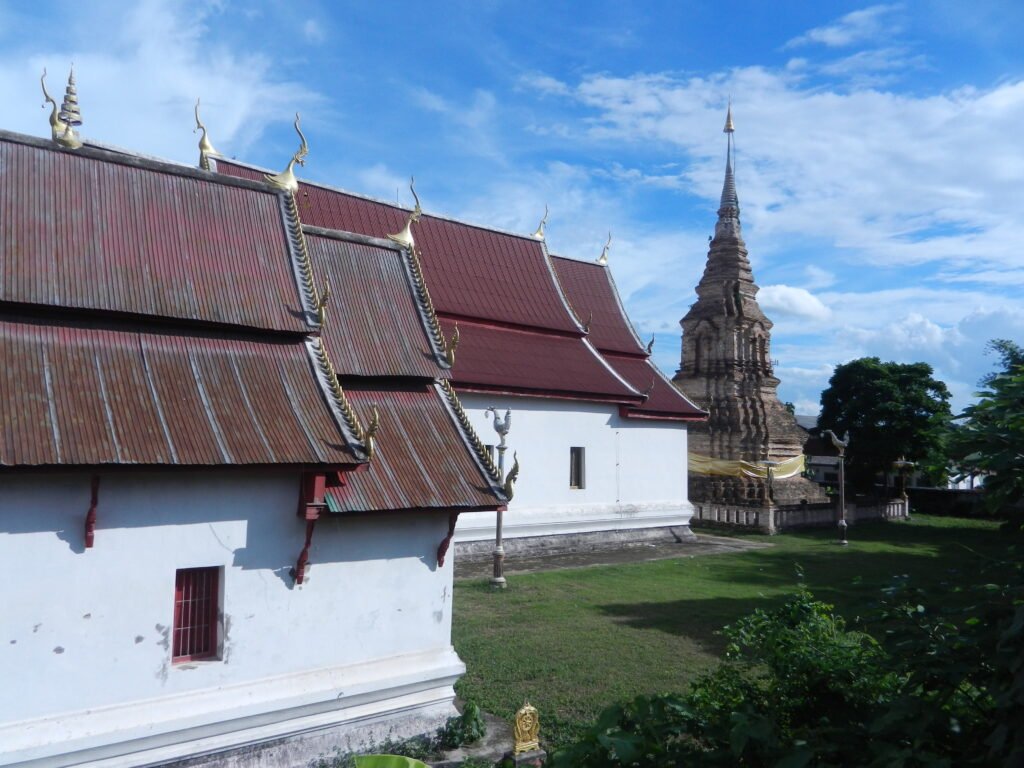
As I compared them with other cultures’ religious architecture, they ultimately became a larger flow that took me around the world.

Meaning: This is belonging to something larger than yourself. I first felt involved with each culture I visited. The feeling of engagement then expanded to the whole world as I kept comparing more cultures.
Fulfilling relationships with others: I enjoyed expanding the types of people I related to. For example, playing guitar allowed me to get closer to people in Thailand’s hill tribes.
Entering different cultures also kept expanding the types of happiness I experienced. I learned how the feeling sabai is embedded in Thai culture. This is a mellow happiness, and it often refers to sitting with friends and chatting after dinner. Sabai isn’t intense. It’s not what a rabid football fan feels when his home team scores a game-winning touchdown against its fiercest rival. It’s more of a combination of mild stimulation and harmony with the surroundings.

I equally enjoyed contemplative moods in Romanesque and Gothic cathedrals. I found that the more open you are to different types of happiness, the more often you can be happy.
Seligman found that curiosity, interest in the world, and tolerance of ambiguity enhance well-being. These are all in line with the constant growth of horizons that comes from exploring other cultures and increasingly appreciating their unity and infinity.
He also wrote that appreciating beauty can increase well-being, and he advocates remembering the times when you’ve been thrilled by excellence in art, music, movies, science, and mathematics. If you often have these experiences, and if you frequently remember them, you’re likely to enjoy more well-being. I found that exploring excellence and beauty in other cultures greatly expands the range of what you can appreciate, and it increases the frequency of these moments.
Looking At/With/Beyond can enhance many findings about what encourages happiness and well-being. When you see this mixture in the world and in yourself:
- You’re constantly open to enjoying more of the world’s diversity of cultures,
- You feel related to more types of people,
- You feel engaged with the whole world,
- You have many memories that elicit positive emotions,
- You have a greater diversity of ideas and experiences to enhance your creative flows,
- You enjoy more types of beauty.
More and more places and people can inspire peak experiences and become sources of joy. They make the ways in which you were trained to perceive and think less constricting, and the world around you can expand into limitless enchantments.