The psychologist Abraham Maslow made peak experiences his business, and he explored them in Toward a Psychology of Being. Many people today know him for his hierarchy of needs because high school and college freshman marketing classes teach this concept. According to this hierarchy, our physical needs must first be met. We then focus on social needs, such as the approval of others and the feeling of belonging. After they’re satisfied we strive for the highest human goals. This high end of the spectrum was Maslow’s main interest, and it included being the happiest and most creative that we can be.
Back in the 1930s, Maslow noted that psychology mainly dealt with troubled people and that it usually defined mental health in negative terms—as not being sick. But what about the top 50 percent on the scale of well-being? What about the top one percent? Wouldn’t it be better for us to study them and see them as models?
One trait that Maslow noticed in people in the top percentiles was they had more peak experiences. He saw several aspects of pinnacle experiences:
- A wider range of perceptions and ideas emerge.
- There is a more creative flow of thoughts, which is less bound to social conventions. Many great artists experience this. For example, Picasso painted in several styles throughout his long career. People can liberate themselves from the mechanics of a situation and see wider ranges of connections.
- People feel more deeply integrated with their surroundings and able to find more beauty in them.
- They feel more whole and they don’t fight with themselves. Instead of feeling like bundles of drives and social roles pulling in opposite directions, they’re spontaneous, joyful, and fully expressive, and they feel that whatever they do is good.
Looking At/With/Beyond gave me many peak experiences while traveling, in which multiple times and places seemed to fuse. Instead of being bound to one time and culture, I felt that I was in a larger field in which I could see a wider range of ideas and art forms reflect each other.
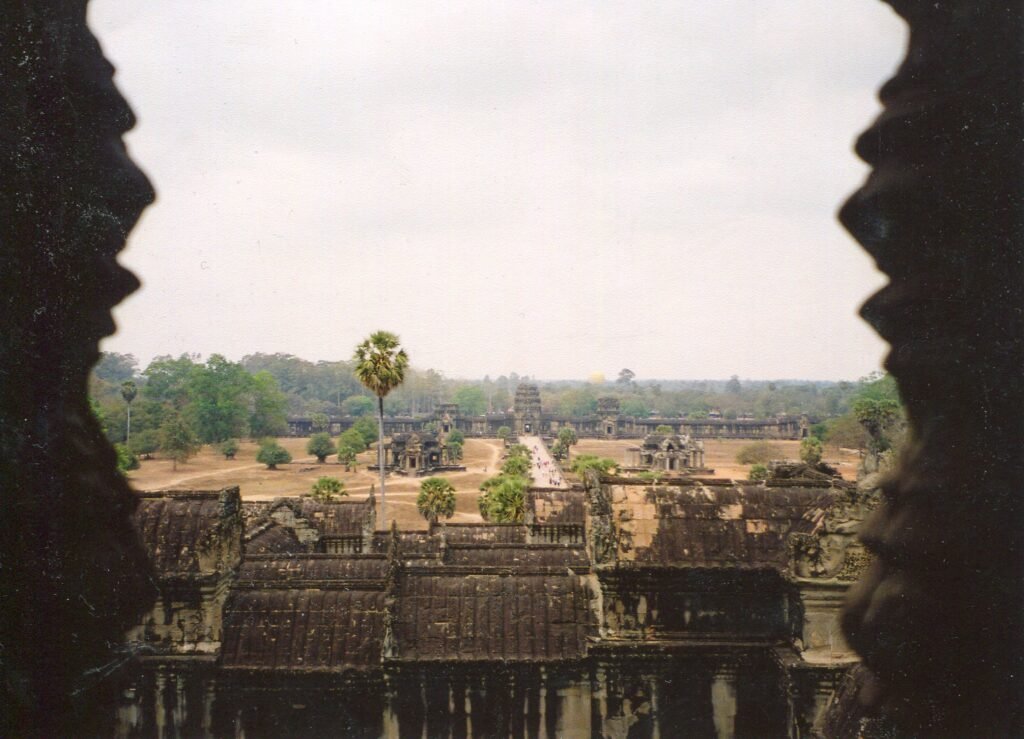
This first experience occurred when I reached Angkor Wat’s upper terrace. After the long procession through the temple, I found people from all over the world in this place which Khmers had envisioned as heaven. The visitors from many cultures, the terrace’s refined forms and carvings, the breezes through the window slats, and the chirping of birds and bats merged into a field that both transcended and included all times and places. I felt deeply integrated with all these times and places, and all became integrated in this field which seemed increasingly luminous.
I enjoyed Thailand’s sinuous forms in temples, markets, sculptures, and paintings even more than I would have if I had not seen Cambodia first because memories of the more monumental Khmer buildings were still fresh. I also often thought of the West’s greater focus on static linear forms and distinct bodies. Since Thais have created congenial streams of many patterns, my memories of other cultures added to the flows I saw and enhanced my experiences. All these cultures seemed to mesh into a larger graceful flow.

When I arrived at the Parthenon a year later, I stood in front of it and admired its balanced proportions, but I enjoyed them even more when I thought of other cultures’ ideas of balance. Thai flows are also balanced, but according to different perceptions, concepts, and shared experiences. They balance grace and animation and thereby tame the environment’s energies.
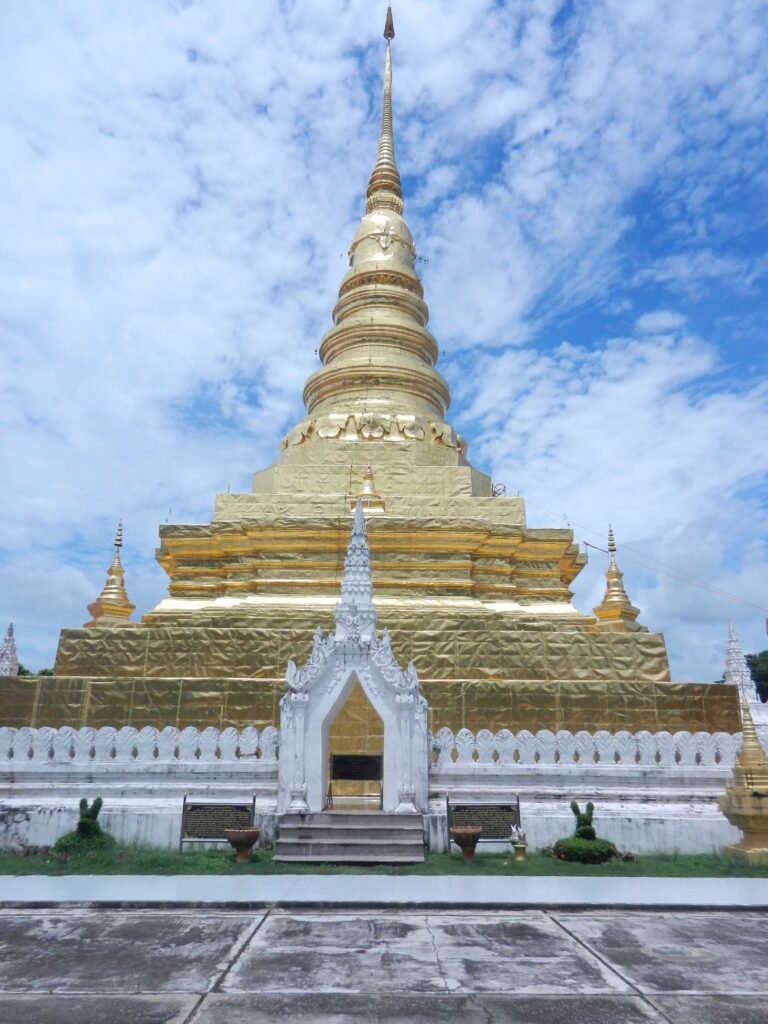
Many Khmer temples balance elegance and power. Chinese ideas of yin and yang also express balanced energy flows, but in a different way than Thai flows. They’re more symmetrical by moving in circular patterns that repeat.
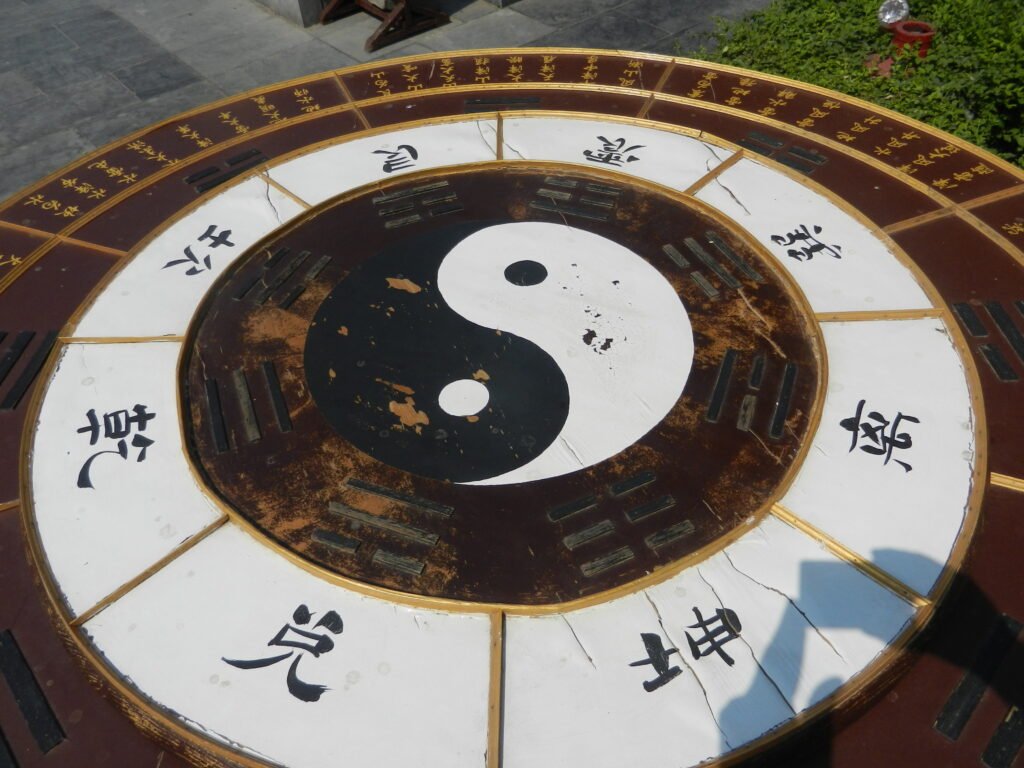
So the kind of balance that each society has emphasized reflects ideas it has considered most fundamental. When I was in front of the Parthenon, I thought that the idea of balance can now be expanded to our globalized world as a balance of many cultures’ perspectives. No single one dominates the others, and people are free to explore all the different varieties, synthesize them, and appreciate more types of beauty as they keep looking At, With, and Beyond in a circle that continues to expand to more places and people. I thus savored cultures from all over the world as I enjoyed the Parthenon. All mixed into a field that was richer than any single form.
I then went to Italy and when I arrived in Florence from Rome, I sat on the cathedral’s front steps, which face the baptistery that Brunelleschi painted to demonstrate three-dimensional perspective.
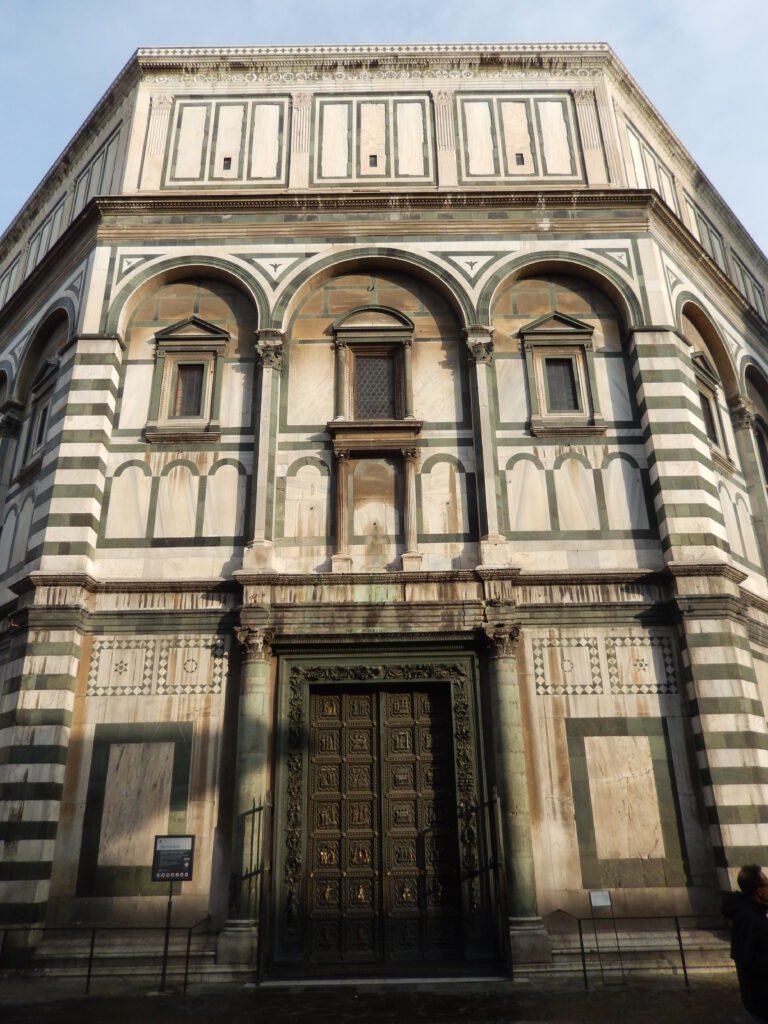
As I thought that it’s now possible to expand our views of the world to include all cultures, the baptistery’s static shapes and thick lines (above) became less rigid, and they became part of a dialog with other societies’ favored patterns, like Thai flows, yin-yang patterns, and India’s vast metaphysical landscapes. The baptistery’s lines highlighted my memories of these patterns and the cultures that have emphasized them because they contrasted with them. In turn, these other cultures accentuated the West’s focus on abstract lines and shapes. The lines and forms seemed to twinkle like stars as they expanded into a larger field in which all cultures illuminated each other.
Many places thereby expanded from one time and culture. Multiple mindsets, times, and places became interlaced in a bigger field in which everything’s meaning deepened. One place after another expanded from mechanics to magic. It became a portal to higher levels of integration in which things became increasingly free from one system of concepts, and in which unexpected vistas emerged. Places became increasingly luminous, and as they did, they glimmered together so that the whole world seemed like a field of light and love.