Something was missing. Those stately Romanesque and Gothic arches in the cathedrals I spent 4 months exploring in a trip through Northern Europe were supposed to encompass everything God created, but they left out some of the people who helped build their society.
Cities that built some of the greatest cathedrals, including Speyer, Mainz, Worms, Rouen, Troyes, Cologne, Bonn and Strasbourg, had thriving Jewish communities with some of Europe’s most vibrant intellectual life. But you have to dig to find them.
Jews lived up in Cologne at least since the 4th century. Others were living in Italy and Southern France. Urban institutions that held the Roman Empire together disintegrated in the 6th century. Urban life grew again in Charlemagne’s time (r. 768-814), but declined during barbarian invasions in the late 9th century. But towns began to grow continuously from the late 10th century to the early 14th, and they built the great Romanesque and Gothic cathedrals.
Jewish families moved into Europe’s main towns in their early stages of growth and helped build Europe’s economy. The Frankish empire, which spread from the Pyrenees on the modern Spanish border to the Elbe River, relied on Jewish merchants and seamen to manage caravans to the East. Muslims were largely excluded from East-West trade after they were defeated at the Battle of Poitiers in 732.
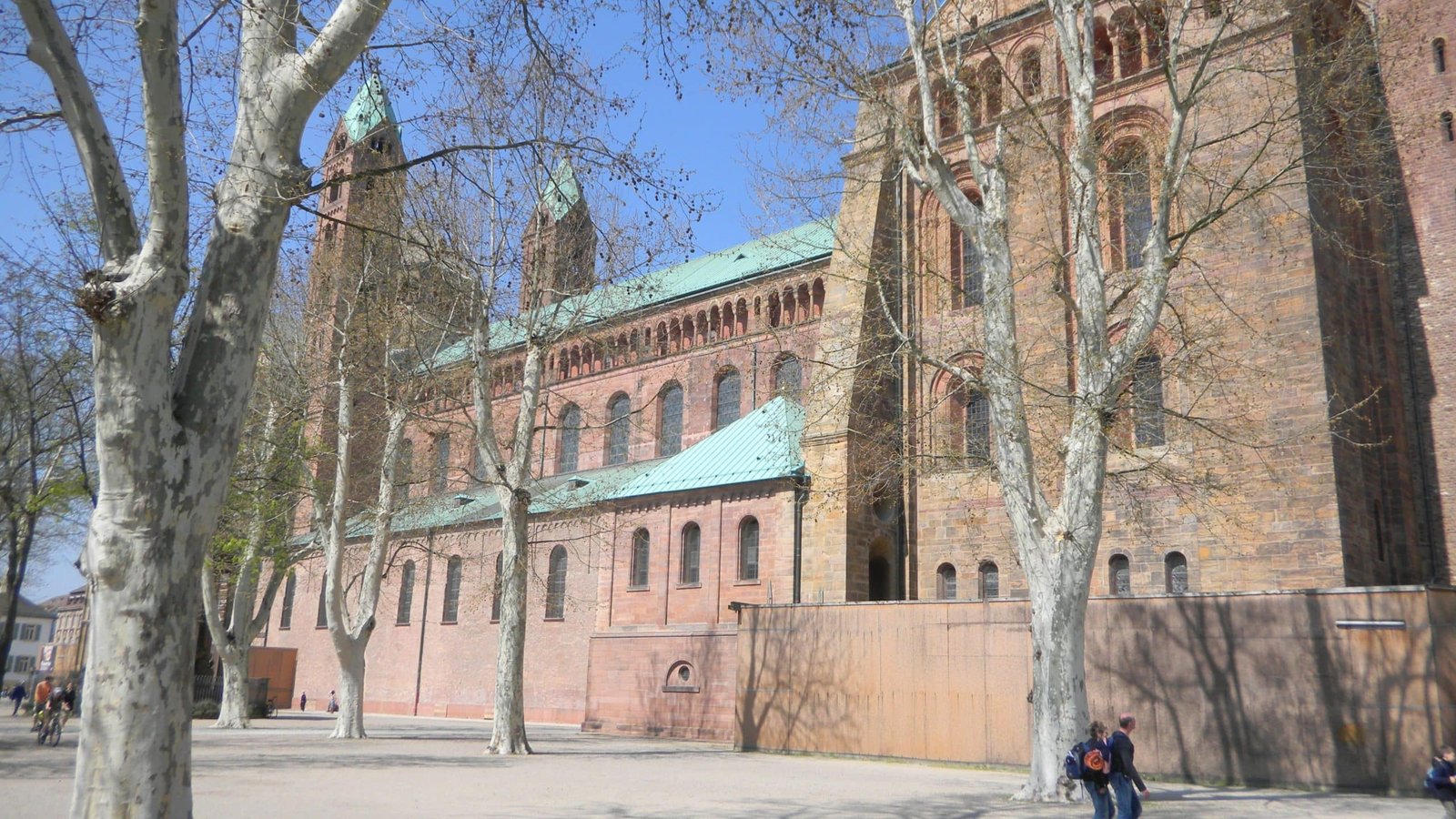
Christians were forbidden to lend money with interest, so Jews found a niche in banking. They helped finance some of the growth of Europe’s towns. Speyer’s Jewish community lived just a few blocks from its mammoth cathedral (in the above photo). The surname Shapiro is a Yiddish pronunciation of the city’s name.
As Medieval Europe’s towns grew in the 11th and 12th centuries, Jewish intellectual life lit up. But the Romanesque and Gothic cathedrals that were built portrayed all-encompassing views of the universe only in Christian terms. As glorious as these cathedrals are, they were blind to their neighbors, who lived in the same towns, within sight of their towers.
1. Some of the world’s greatest interpreters of the Talmud lived in Europe. The Talmud is a literary tradition of interpretations of Jewish law, in which its meanings and applications are discussed by rabbis. Rashi of Troyes (1040-1105) is the most renowned legal scholar from Europe’s Middle Ages. Many towns in France and Germany had Talmud schools, and they constantly networked by exchanging teachers and letters.
2. The Bahir was published in Provence in the 12th century, and it formulated some of the most basic ideas in the Kabbalah, the Jewish mystical tradition. It detailed the 10 basic numbers, the sefirot, as sacred emanations that everything in the universe came from. The patterns that the universe emerged in can be read in the Torah (the first 5 books of the Jewish Bible), because each Hebrew letter has a numerical value. Passages in the Torah thus have metaphysical meanings that are deeper than literal readings.
But Jewish legal and mystical traditions were not encompassed by Christian frameworks. You thus won’t see them in Gothic cathedrals’ stained glass windows.
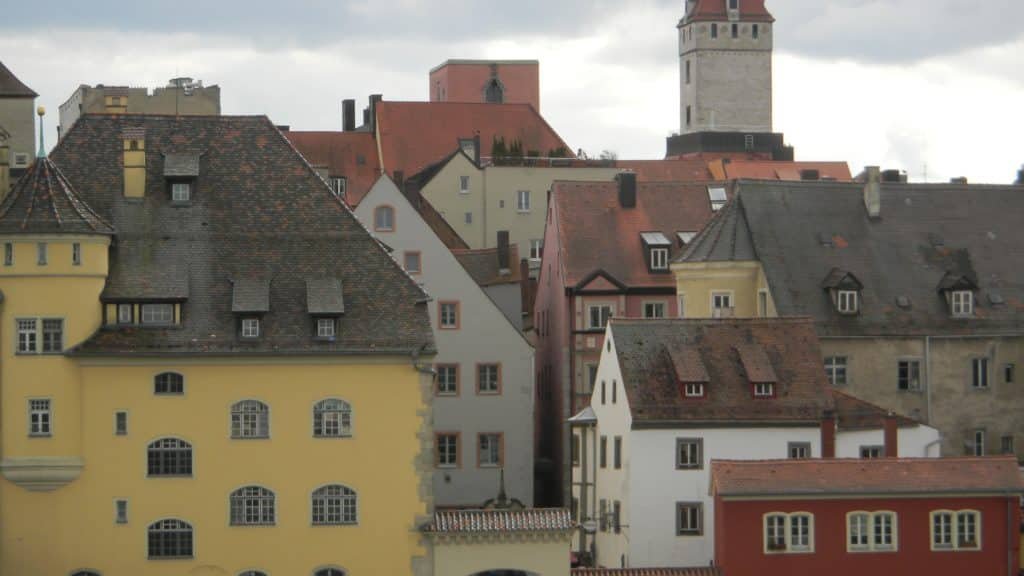
Medieval towns were crowded. Though Jews often lived in their own neighborhoods, people of both faiths surely interacted closely on a daily basis.
But institutionalized persecutions began in the 11th century. Mainz expelled most of its 2,000 Jews in 1012. Then during the First Crusade (in the 1090’s), Jewish populations in many towns were massacred.
I dissed Saint Bernard in Thinking in a New Light for being a prig, but he opposed the killing of Jews when he spearheaded the Second Crusade (1147-8). But large-scale persecutions increased in the late 13th and 14th centuries. Kings in France and England forced them to leave their countries–largely to cancel their debts after borrowing money from them to finance their castles and wars.
Many Jews fled into Eastern Europe. They again established urban communities and commercial networks. And they synthesized the Yiddish language from High German, Hebrew, Polish, and Russian. It was still widely spoken in New York’s lower East Side in the early 20th century, and it’s full of idioms that blend humor and sarcasm of an urban people who had to live by their wits. Jewish communities thrived in Europe until the Nazi regime, and produced some of its greatest lights, including Einstein. Nietzsche once wrote that he feared for Europe if the Jewish intellect is ever subtracted from it.
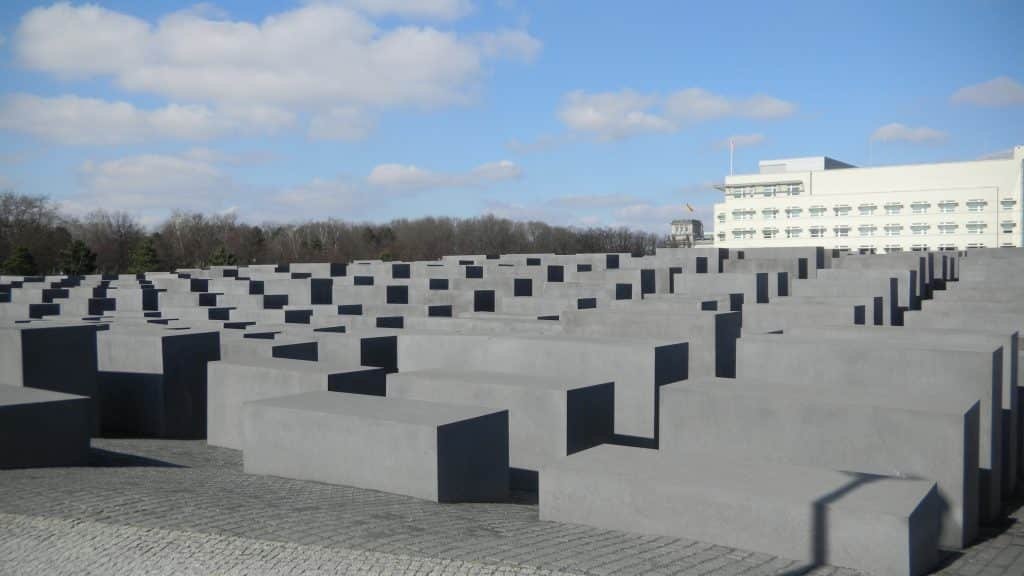
The all-encompassing visions of the universe that Gothic cathedrals embodied are beautiful. But Europe’s urban cultural landscapes have been even more so when their diversity has been allowed to thrive. The world’s ecology of minds (a term coined by Gregory Bateson) is too rich to be reduced to one framework. In the Talmudic tradition, you only keep exploring.