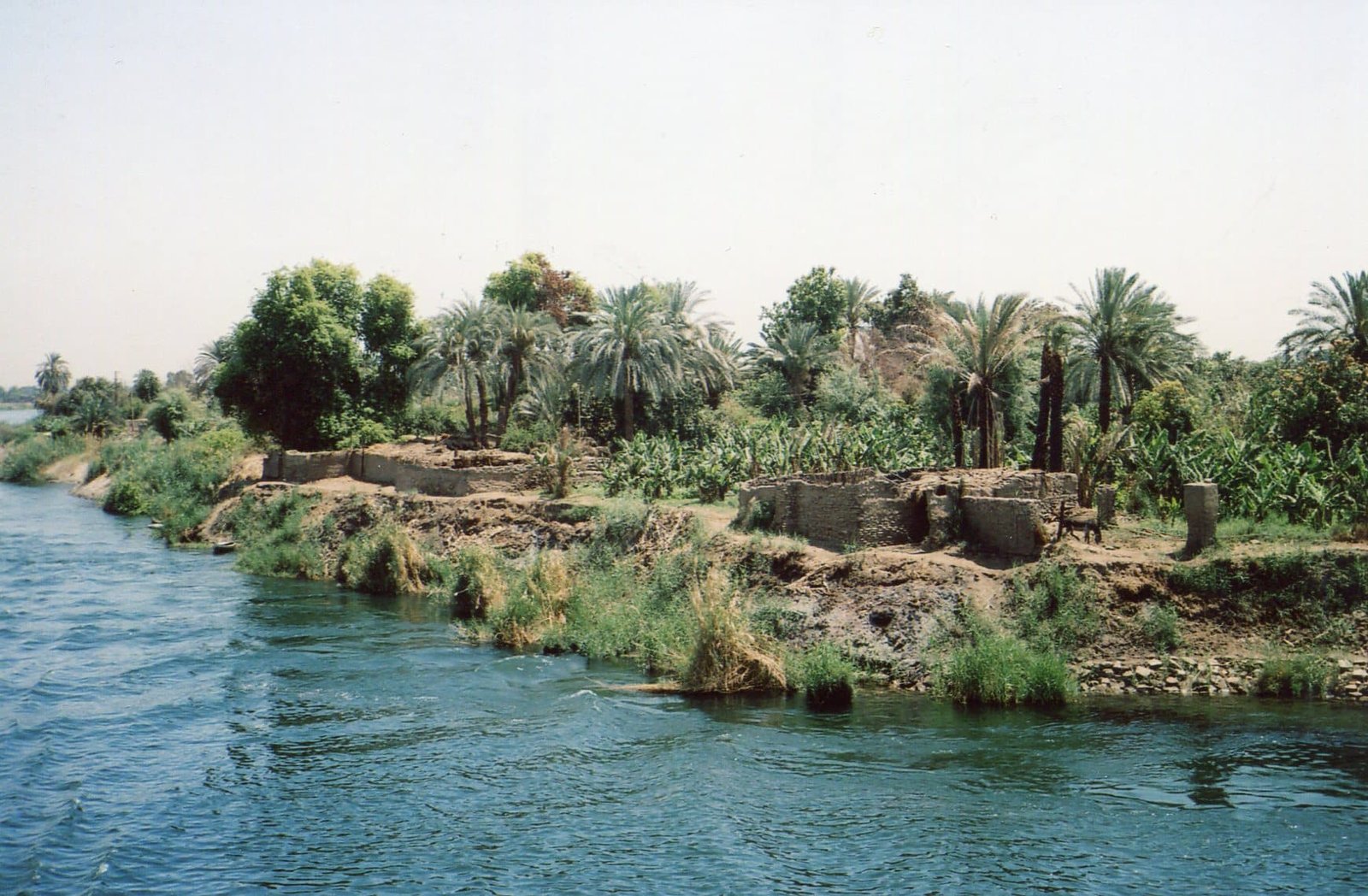
The Niger River is dramatically different from the Nile, and it spawned a civilization that contrasts with ancient Egypt. It carves a 3,000-mile-long arc through southwestern Africa. It begins in Sierra Leone’s mountains and winds northeast until it spreads into a delta in Mali. It then narrows, turns southeast, and flows through southwestern Niger, along Benin’s northern border, through Yoruba country in western Nigeria, and then into the ocean. It spawned a great civilization.
Roderick J. McIntosh and John Reader noted that the Niger’s inland delta sustained a high population density for 1,600 years, beginning in 500–300 BCE (back when Greeks built the Parthenon). A site named Jenne Jeno supported about 30,000 people. But instead of forming one urban mass, they organized a network of several communities and thrived without a single ruler. Many locations specialized, some in agriculture, some in animal husbandry, others in fishing, and others in iron-working. The society grew rice, sorghum, millet, and cotton. People with each specialty clustered together and pooled their skills. If rice crops failed, farmers lived on milk and meat from pastoralists and on fish from net fishermen. Folks worked out systems of exchange without a king imposing a single order from above.
The Niger’s rainfall varies a lot. In a normal year, it nourishes the mountains of Sierra Leone from June to September. Like the Nile, it swells and inundates the land, but it’s less reliable. There is often too much rain, which floods the area. The land suffers from drought in many other years. It’s thus hard to predict what will happen in the following seasons. In Egypt a system of ideas emerged that linked the Nile’s steadier flooding, the cosmic order (Ma’at), the glorious sun’s rising, the land’s political unity, the king’s power, the rejuvenation of Osiris, and the attainment of eternity in the afterlife. All reinforced each other in an optimistic view of an orderly and morally good universe. But people around the Middle Niger lacked the luxury of a steady river.
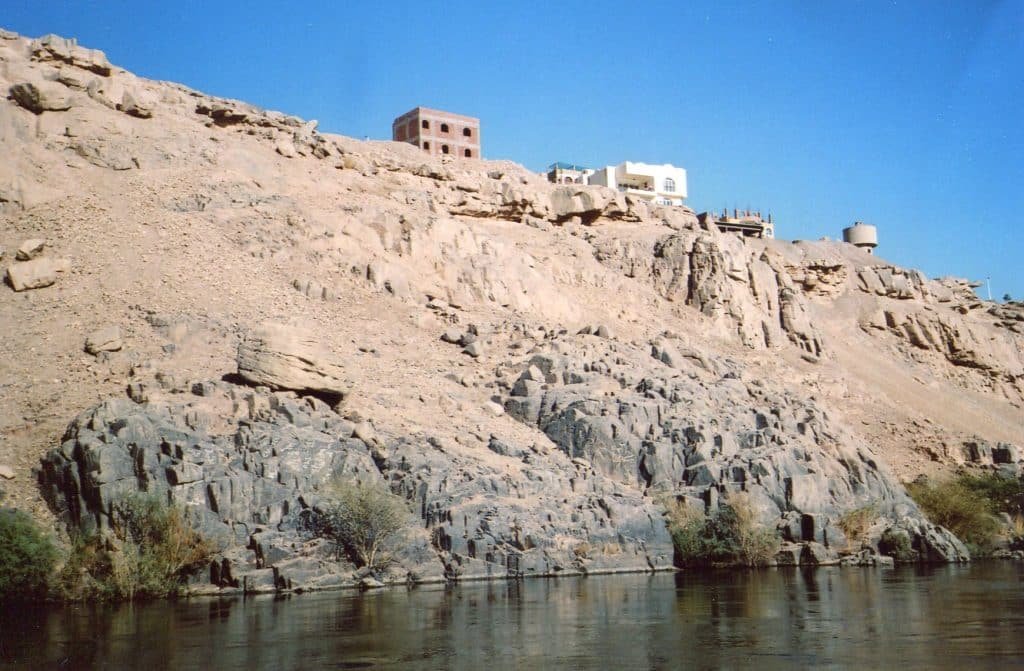
McIntosh noted other features of the Middle Niger that encouraged people to stress cooperation at the local level more than centralization imposed from the top. Its soils are relatively poor. The sediments that the river carries lack phosphorus and nitrates, which crops need. The Nile and upper great lakes transport more of these nutrients because their up-waters are in volcanic lands. The Middle Niger also lacks gold, silver, and copper, so there was less basis for a strong man to build an empire by controlling a resource that everyone wanted. Political flexibility thus worked better than a single state imposing one system of ideas.
The Middle Niger is also geographically diverse. McIntosh described six different regions. The Nile was easier to unify conceptually. Egyptians often thought in terms of dualities that reflected the upper and lower areas of the river. Nekhbet was the tutelary goddess of Upper Egypt (Southern Egypt—the upper part of the Nile), in the guise of a vulture. Wadjet protected Lower Egypt as a cobra. Each region had a different royal crown and representative color. The Pharaoh unified both and wore a headdress that combined both iconographies. There was also a sharp contrast between the narrow, fertile belt of the Nile with its dark soils and the barren desert. Egyptians called them the black land and the red land; the difference was as clear as the distinction between life and death. But the Middle Niger is more complex. Each of its six basins is a different system of lands with unique seasonal patterns which affect hydration.
McIntosh wrote that ideas of sacred geography that the local Mande people hold are more suitable for this region. The entire Middle Niger is infused with nyama (spiritual power). It’s not exclusively concentrated in a king and his court, but distributed throughout the land. Spiritual leaders, artists, and political leaders can harvest it for the community. Several people can thus coordinate their work and amplify it.
Jenne Jeno’s residents created a way for their society to live for 1,600 years by sharing livelihoods and emphasizing different types as their needs changed. The climate’s fickleness, the land’s diversity, and the poor soils didn’t allow political centralization or a focus on one crop. But by learning to adapt to unforeseen circumstances, this society flourished longer than ancient Rome did. It accomplished this with close communication between all groups of people.
Cultures throughout sub-Saharan Africa have treated the community as the main source of wisdom. You can explore more of this way of seeing the world here. This way of thinking is so deep that it influences all aspects of life, including assumptions about music.