
Chinese intellectual traditions have usually considered the universe to be highly resonant and less partitioned into distinct domains, as Westerners have often emphasized. The last article explored these assumptions in ideas of yin-yang patterns and basic elements. This assumption has been basic in so many experiences that it’s no surprise that Confucians have also assumed that resonance throughout the world is fundamental. Confucianism has been the most influential philosophy in traditional China, and it’s still widely followed (the above photo is of people crowding around his tomb at Qufu).
Confucius (Kongzu) lived in the late sixth century and early fifth century BCE, when China consisted of states that were frequently at war with each other. According to the eminent late-second-early-first-century-BCE historian Sima Qian, he was a court official who became frustrated with the violence and corruption of his time. He detested the divisive politics of many of his contemporaries and felt that society had degenerated from the Western Zhou Dynasty (mid-11th century–771 BCE), which had emerged in the Wei River valley (in today’s Shaanxi Province), conquered the Shang Dynasty, and established what he saw as a model society.
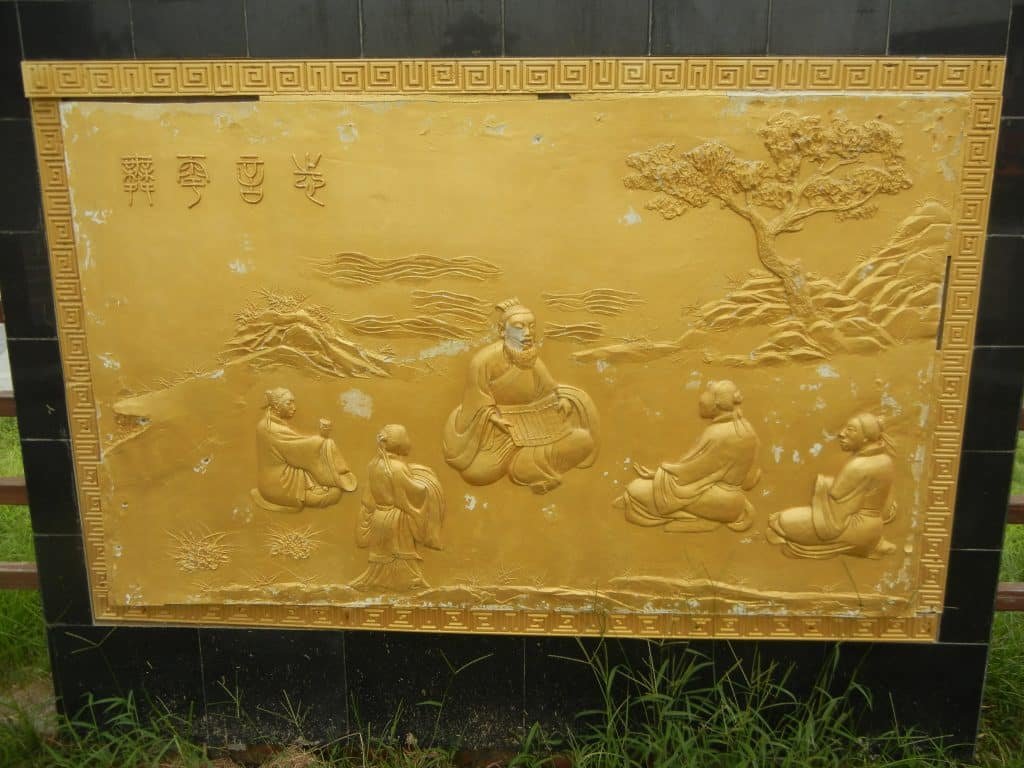
But as generations passed, the close kinship ties between Zhou kings and provincial lords weakened so that:
- The world became multipolar, with several independent states that often fought each other. Frequent wars between numerous states made the idea of a unified and harmonious society harder to maintain.
- Conscription became a common way of boosting the numbers of soldiers in militaries. Armies were now larger and more impersonal instead of being based on lineages. A lot of people must have felt that the world was increasingly cold and violent.
- Money began to be used so that transactions extended beyond traditional ritualized exchanges between people who were intimately related to each other. Economic exchanges were now based on an impersonal medium that anyone could use.
- Political power dissipated from the central court to multiple kings and their lords, and then to a wider group of aristocratic families and their retainers. People then had less faith in a single ritual center that could maintain harmony in all political domains.
- The loss of political unity made some writers question the power of heaven to ensure well-being. Early Zhou Dynasty political leaders made heaven a central concept, saying that it provided their mandate to overthrow the Shang Dynasty when its last emperor became cruel and corrupt. The mandate of heaven (tianming) ensured humane government and harmony between heaven and earth. But the diffusion of political authority and the opportunistic and often violent politics of later eras made some people doubt this idea.
Confucius tried to restore the world’s unity and harmony by teaching that people have the resources they need to build and maintain a just and prosperous society if they sincerely follow traditions, including the accomplishments of the most exemplary past kings and dukes who founded an orderly kingdom of virtuous rulers and subjects. If each person maintains traditions in a humane way and does his duty according to his position in society and his family, the world will be in harmony. Heaven, the social order, and the individual resonate with each other. Thus when people obey the emperor and when sons obey their fathers, everyone creates harmony that resonates in society and nature. The 20th-century Confucian philosopher Tu Weiming said that people are more than sums of their genes, psychic energies, and sociological forces; we are creative participants in the cosmic process, and self-cultivation leads to world peace.
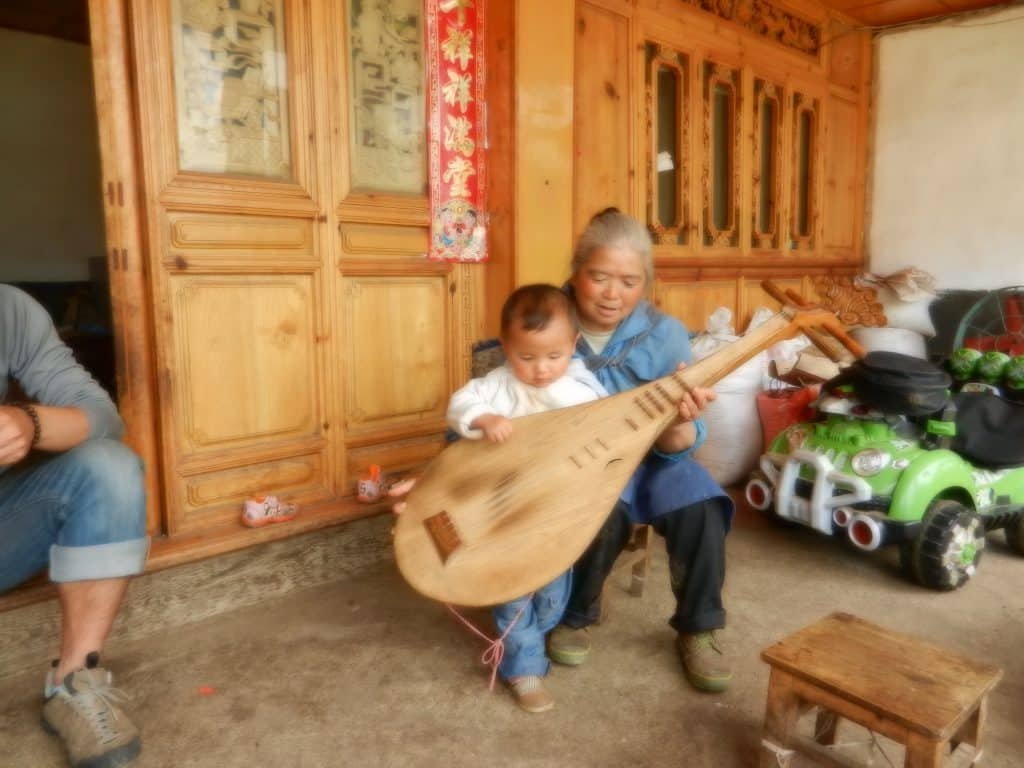
Books from the Han Dynasty (206 BCE–220 CE) told myths about society’s founding sages and rulers who established humanity’s means for living. Fu Xi observed the patterns of heaven and earth, created the I Ching’s hexagrams from them, and used the hexagrams as models for fashioning nets for hunting and fishing. He united with Nü Wa and they thereby invented marriage. His successor, Sui Ran, created fire, and his follower, Shen Nong, invented agriculture and established the first market. After he passed away, Huang Di (Yellow Emperor) invented medicine, pottery, armor, and the chariot.10 Yu the Great earned his position as emperor by saving humanity from a flood that completely covered China. These leaders founded civilization’s essential patterns, and they further influenced later generations by the resonance of their moral examples.
Their accomplishments resonate with basic Confucian virtues which each individual is supposed to cultivate, such as benevolence, politeness, uprightness, loyalty, sincerity, and diligence. A ruler who practices them resonates with the earlier sages and kings and with the people that he governs. Societal and natural harmony are thereby strengthened. This concept of resonance has depth because it’s associated with many yin-yang, the I Ching, medicine, music, ritual, and aesthetics. Resonance is seen as basic in many areas; the universe hangs together through it.
The assumption that resonance is a basic aspect of the universe has influenced Confucian ideas of what knowledge is. Education is a paramount Confucian value. The Book of the Great Learning, which became one of the basic books in the Confucian literary canon during the Song Dynasty (960 CE–1279), explained that if a person investigates the nature of things, he will understand himself. If he understands himself, he will have a happy family.

If his family is happy, his community will be well run. If his community is well run, the state will be in harmony. And if the state is in harmony, so are heaven and earth.
The concept of sincerity (cheng) reinforces the idea that learning resonates through all domains in society and nature. Cheng is a key idea in the use of the I Ching. When an inquirer is sincere, her situation is supposed to resonate with the archetypal patterns in the universe. The third-century BCE philosopher and statesman Xunzi wrote that sincerity is the way of heaven, and that a person who attains sincerity can transform and nourish the operations of heaven and earth because he forms a trinity with them.
Ideas of knowledge, sincerity, political influence, resonance, and a holistic and harmonious universe have reinforced each other in China for more than 2,000 years. To learn is not to only acquire facts about distinct things and master abstract formulas. Confucian thinkers have typically seen the inquirer, not as basically separate from what she studies, but as interwoven with society and nature. The goal of inquiry in traditional China has not mainly been to explain the nature of things as distinct entities, but to create harmony in oneself, one’s community, and the universe.
Self-cultivation is a core Confucian concept, and it’s a life-long process. The associations between learning, sincerity, the other Confucian virtues, political rule, and the integration of the self with its community reinforced these concepts of the resonance of inquiry throughout society and the cosmos. This web of ideas has influenced people’s assumptions about knowledge.
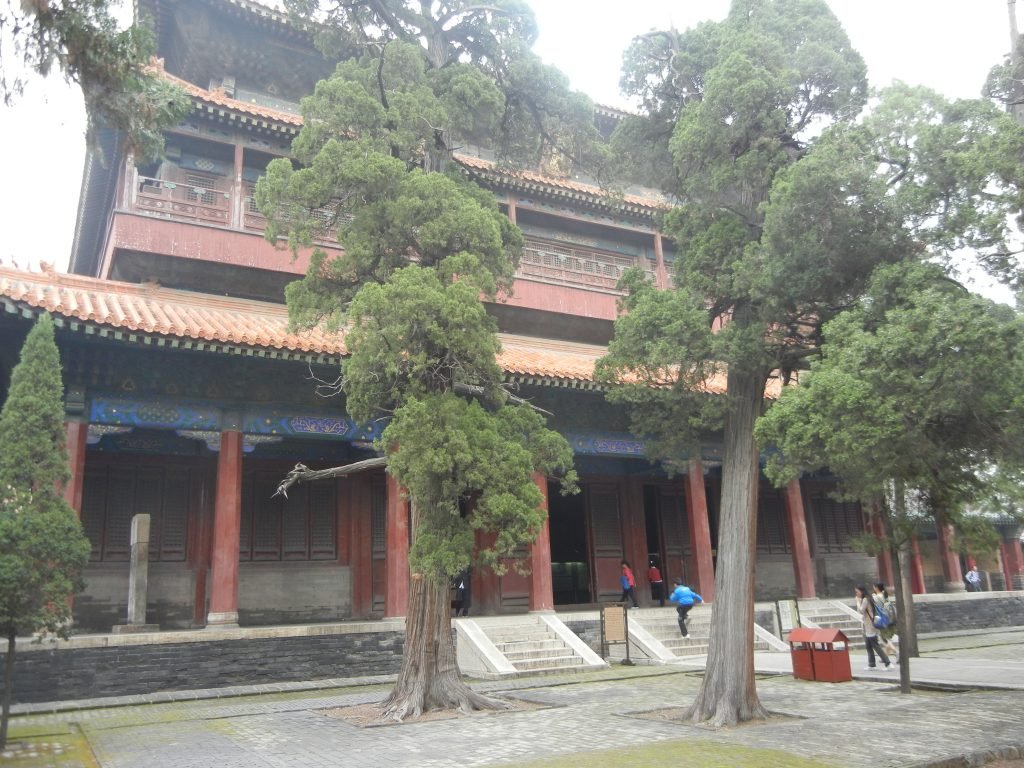
Two Confucian terms for learning show even more facets of these associations. One is zheng ming (the rectification of names)—everything is defined in its place within a harmonious society. Confucians have felt that names pertain to the types of relationships that people have with each other, such as ruler and subject, parent and child, husband and wife, friend and friend, and older and younger siblings. Mencius (Mengzi), a Confucian thinker from the fourth century BCE, saw these as the five basic relationships between people. Confucians have said that a government is good only if a ruler behaves like a ruler, a minister behaves like a minister, a friend like a friend, a father like a father, and a son like a son. Peimin Ni, in Understanding the Analects of Confucius, wrote that people in ancient China were generally not as interested in the ability of definitions or language to correspond with visible objects or prove statements as ancient Greeks were. They instead focused on using names for social roles in order to shape people’s inclinations and influence their behavior.
Confucians have defined norms for these social relationships with a fertile network of concepts, including:
- Ren (humanity, compassion, and benevolence)
- Li (politeness, respectfulness, adherence to rituals, and elegant demeanor)
- Yi (propriety and a sense of appropriateness)
- Chih (uprightness)
- Xiao (filial piety)
- Yung (courage)
- Cheng (sincerity)
They’re interrelated and they balance each other. For example, uprightness cannot be effective if it’s artificial. It must be sincere (cheng). At the same time, it needs to be balanced with conventional manners that hold society together (li) or it will sometimes be expressed in ways that are offensive to others, like an extreme religious fundamentalist confronting a woman for being bare-shouldered in public.
The character for ren combines an ideogram for human being with the character for the number 2. It thus refers to the ethics that guide a person’s relationships with people, including oneself. Mencius said that one helps others and himself at the same time so that both enhance each other. Having no desires for oneself or having no concern for others is like being what he called a dried up gourd. Many Confucians distrusted people with no ambitions; they felt that useful people are engaged with the world. By being so, they develop their selves as effective agents, strengthen others, and help harmonize society.
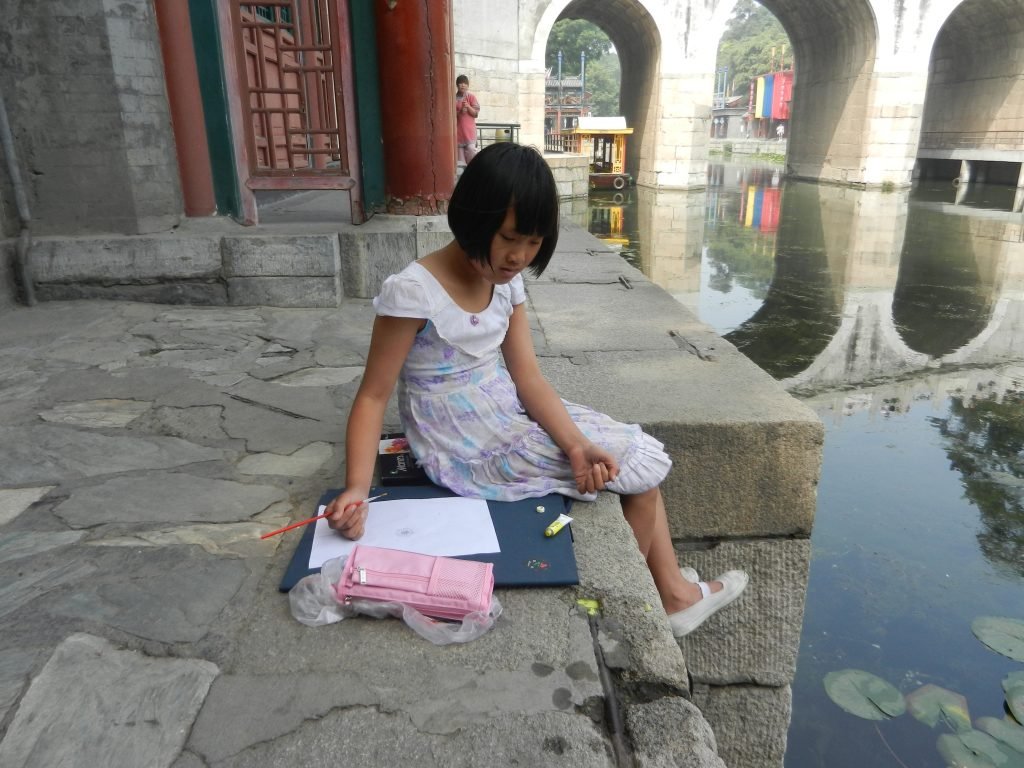
One’s virtue depends on his understanding of his relationships with others. The growth of his knowledge will thereby make him more virtuous—when he understands the norms for human relationships, he will follow them. These standards will then resonate in his family and society.
The other term for learning is ko wu, which has usually been translated as the investigation of things. Each thing has its own principle which, if deeply understood, helps people decide between doing right and wrong. Ko wu’s ultimate result is thus a peaceful and harmonious society rather than only knowledge of things as distinct entities. The most suitable definition of a thing pertains to its relationships with other things in a moral and well-run society and universe. Knowledge is supposed to rectify the mind, make thoughts sincere, and encourage people to make positive ethical choices. Like zheng ming, ko wu is inseparable from society and ethics.

David Schaberg, in A Patterned Past; Form and Thought in Early Chinese Historiography, noted that definitions were often seen more in terms of relating things to the whole than as a separate thing’s essential characteristics as a distinct object. He and several other historians of Chinese thought noted that enumerations were common. For example, a commentary on the Spring and Summer Annals, called the Zuo Zhuan, lists the six defiances, the six compliances, the five crimes of foreign tribes, the five advantages of a large state’s visit to a smaller state, the six breaths of heaven, the five flavors, the five colors, the five sounds, the six illnesses, the four seasons, and the five sections. The last article explained that that several of these were grouped under the number 5 and correlated with each other. Things were often defined according to their places within the entirety.
Several sinologists, including Etienne Balazs, Herrlee G. Creel, and Derk Bodde, saw political dimensions in this kind of thinking, noting the central importance of governmental bureaucracy and the uninterrupted continuity of a ruling class of scholar officials from Confucius’s time to the 20th century. Being concerned with the whole state, they classified things according to province and region as they administered the calendar, rivers, irrigation canals, transportation, governmental monopolies, reserves in public granaries, education, the currency, and defense.
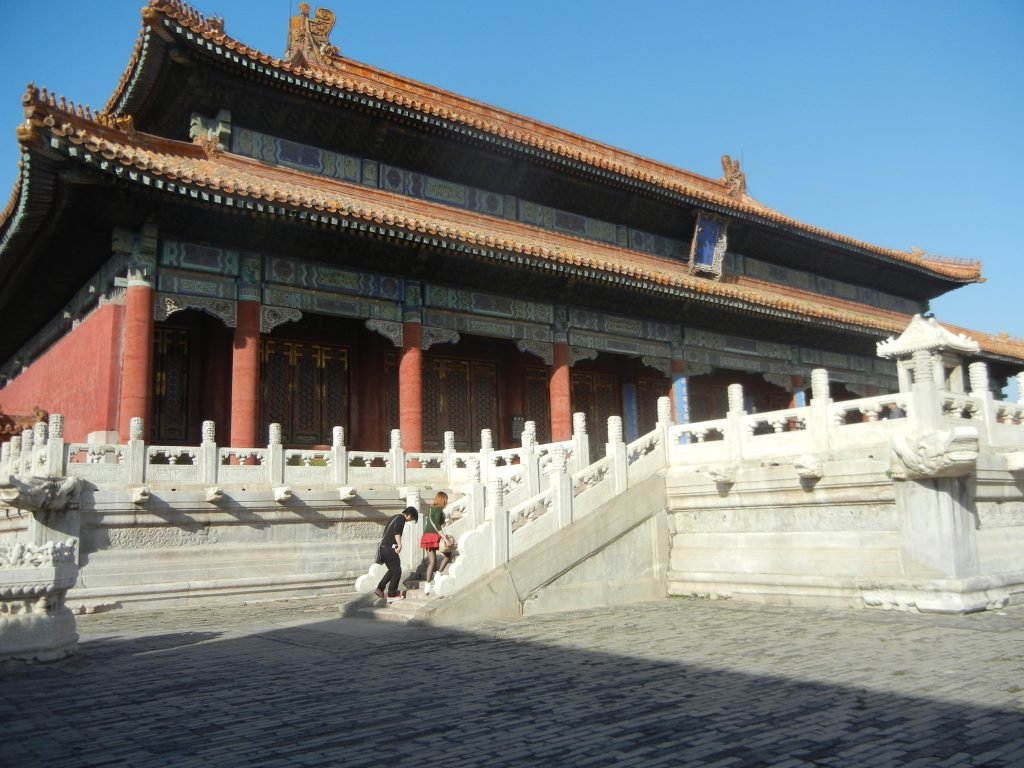
Bodde felt that the bureaucratic state also encouraged an emphasis on the written word, since all affairs were documented and stored. He wrote that this has given writing cultural continuity in time and space. This experience, along with the class of officials administering the state as an entirety, probably also encouraged a focus on defining things according to where they fit within a harmonious whole.
So a lot of experiences converged to encourage assumptions that reality is a self-sufficient whole which is highly resonant, and they have given the Confucian tradition a lot of depth.