Different cultures develop fascinatingly diverse ideas about light. Some of the makers of stained glass in medieval European cathedrals followed the third-century CE Egyptian-Greek philosopher Plotinus’ idea that light is a primary manifestation of creation (Jesus and Mary are avoiding the massacre of the innocents in the below photo of the Basilica of Saint Denis).

Composers of India’s oldest literature, the Rigveda, treated jyoti as a particularly subtle light. Ordinary people cannot see it with their eyes, but it was a basic aspect of the universe at creation, all other types of light are rooted in it, and it still pervades the universe.
Many Native American cultures have also considered light to be basic in the universe. In Navaho Religion; A Study of Symbolism, Gladys A. Reichard wrote of a convergence of ideas that reflects experiences that Navajo widely shared. The most basic symbol of light is pollen. It shines in all directions. Since sunlight is necessary for generation, pollen is a symbol of fructification, vitality, and the continuity of life and safety.
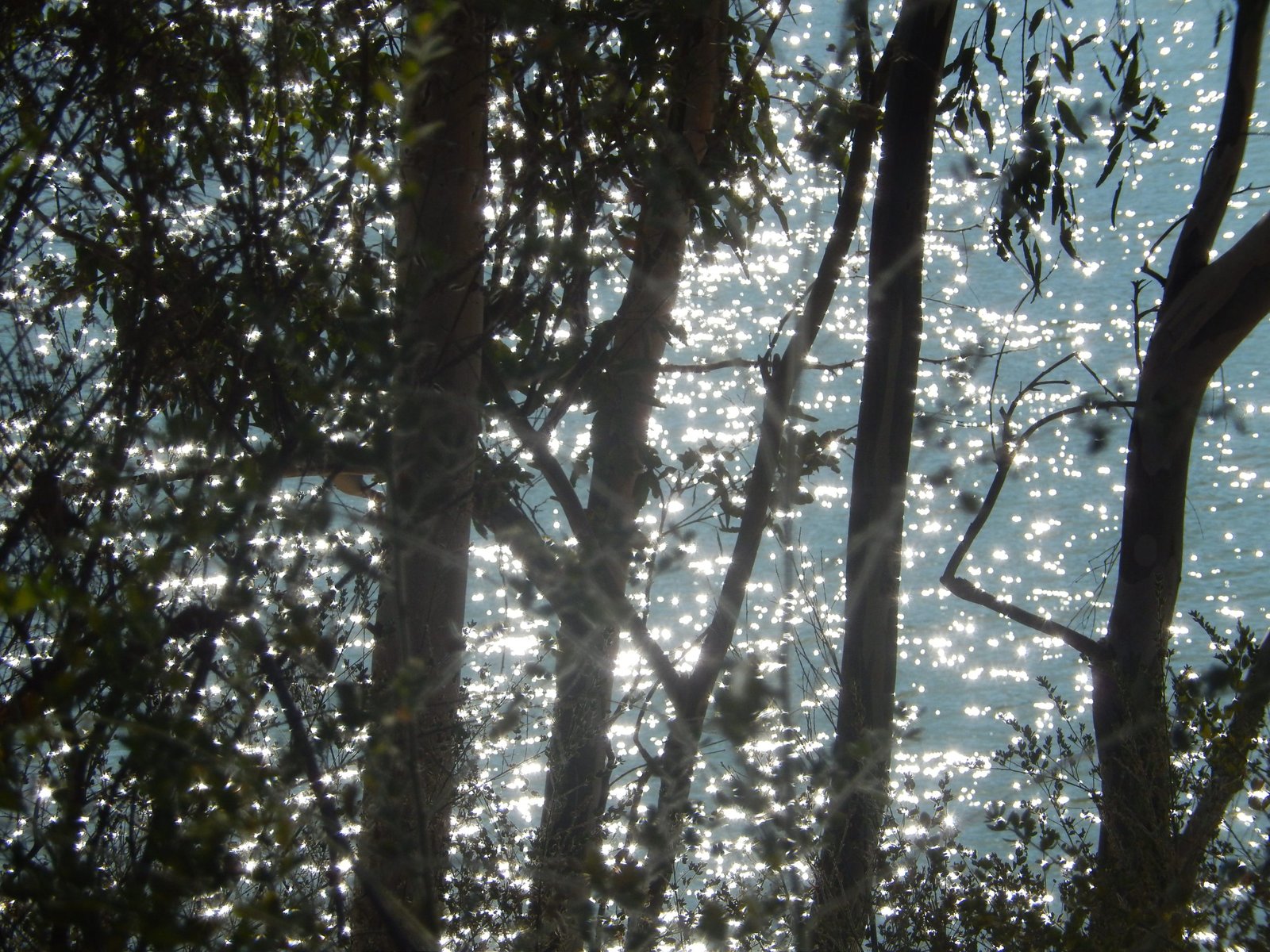
The association of light, pollen, fertility, and animals included glint or sheen as an essential aspect of an animal, person, or object. Bear has sheen from a red glow on his fur. Magpie’s feathers, though black, project it. Water snakes sometimes have it. The legs and lower body of Buffalo are outlined in yellow to highlight their warmth and moisture, which produce pollen and make plants grow.
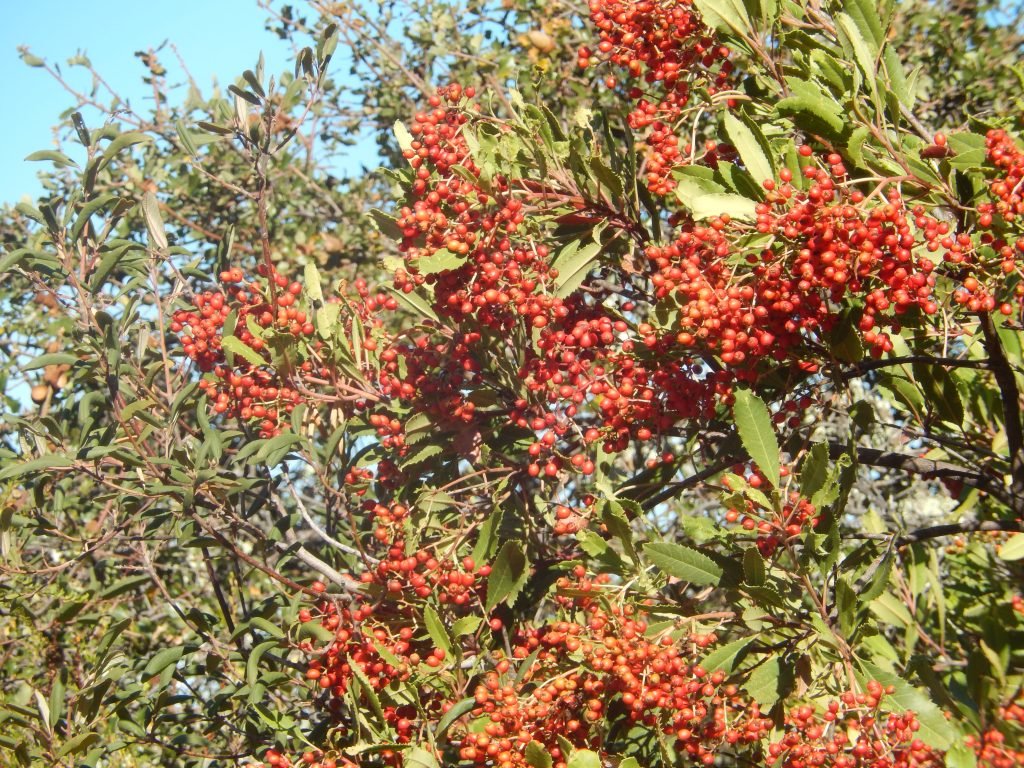
Reichard said that “real pollen” is that of the cattail rush. It “seems to supersede even” corn pollen, which is very important during some ceremonies. Snake pollen was associated with the shine on its scales.
What Navajo call water pollen comes from a fine yellow powder that collects on the surface of pools during the summer rains. Reichard said that pollen symbolizes the water’s light, its power of motion, and life.

We can compare these ideas with ancient China, where agriculture was central. The ideogram for man included an image of orderly rows of agricultural fields.
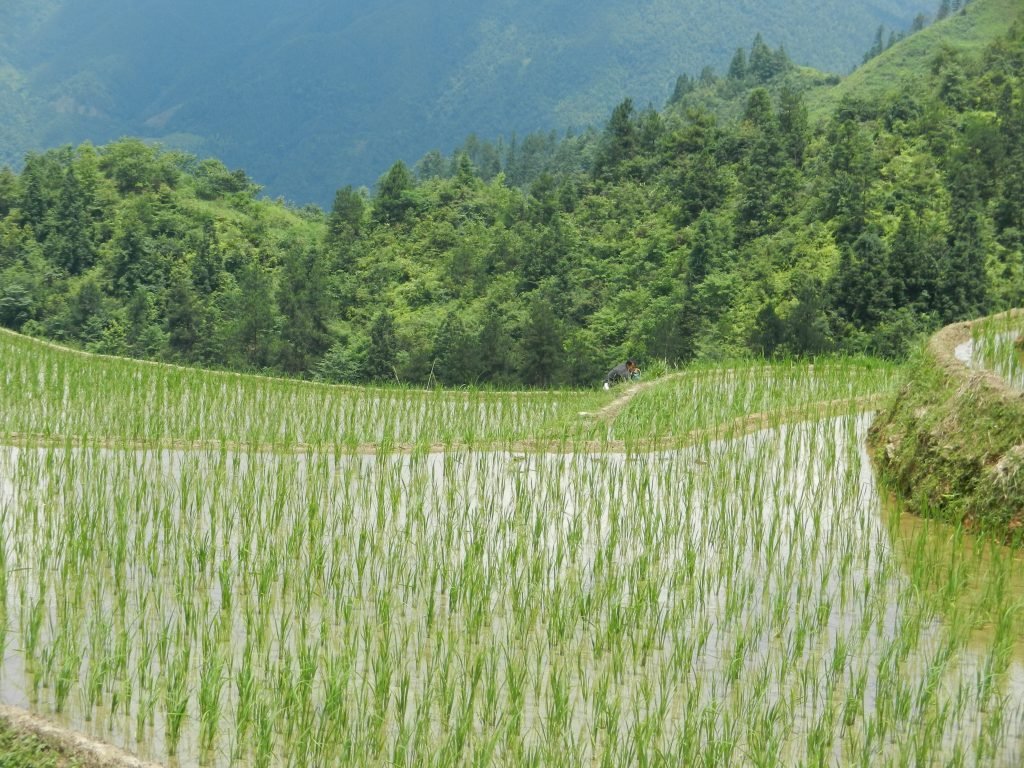
But in Navajo culture, the source of fertility was directly in nature, and deep associations developed between light, pollen, water, and animals.
So it’s not surprising that Navajo have defined a lot of aspects of light, including:
Polished, glassy, smooth from high polish
Opaque, greasy
Lustrous like wax
Lustrous like agate, which is often used in beads
Somewhat clear
Superficially clear
Clear all the way through, pure
Somewhat crystalline
Having a crystalline structure
Glittering (in separate particles, frost)
Scintillating (as a diamond)
Iridescent, like abalone
Having coppery reflections
Shimmering
Navajo have emphasized process and motion more than static states. The earth and sky are always expanding and contracting. They stretch outwards from the center, spiraling clockwise. They will then shrink back to the center. The motion is continuous and gradual. Verbs predominate in Navajo, as they do in other Native American languages. The Navajo word translatable as to go has thousands of conjugations, while there is little use of any word analogous to to be. To Westerners, a mountain is in a certain location. Navajo view it as having moved to its location; it is in the process of residing in its current place.
This view of nature as dynamic has enabled the many ways of seeing light and associating it with other ideas. The variety of concepts of light reinforced concepts of the universe as alive and vibrant.