Many people have the impression that reading is cold and dry. Mark Twain said, “A classic is something everybody wants to have read, but no one wants to read.” But reading in ways that look At, With, and Beyond can turn learning into a lifelong exploration full of enchantments.
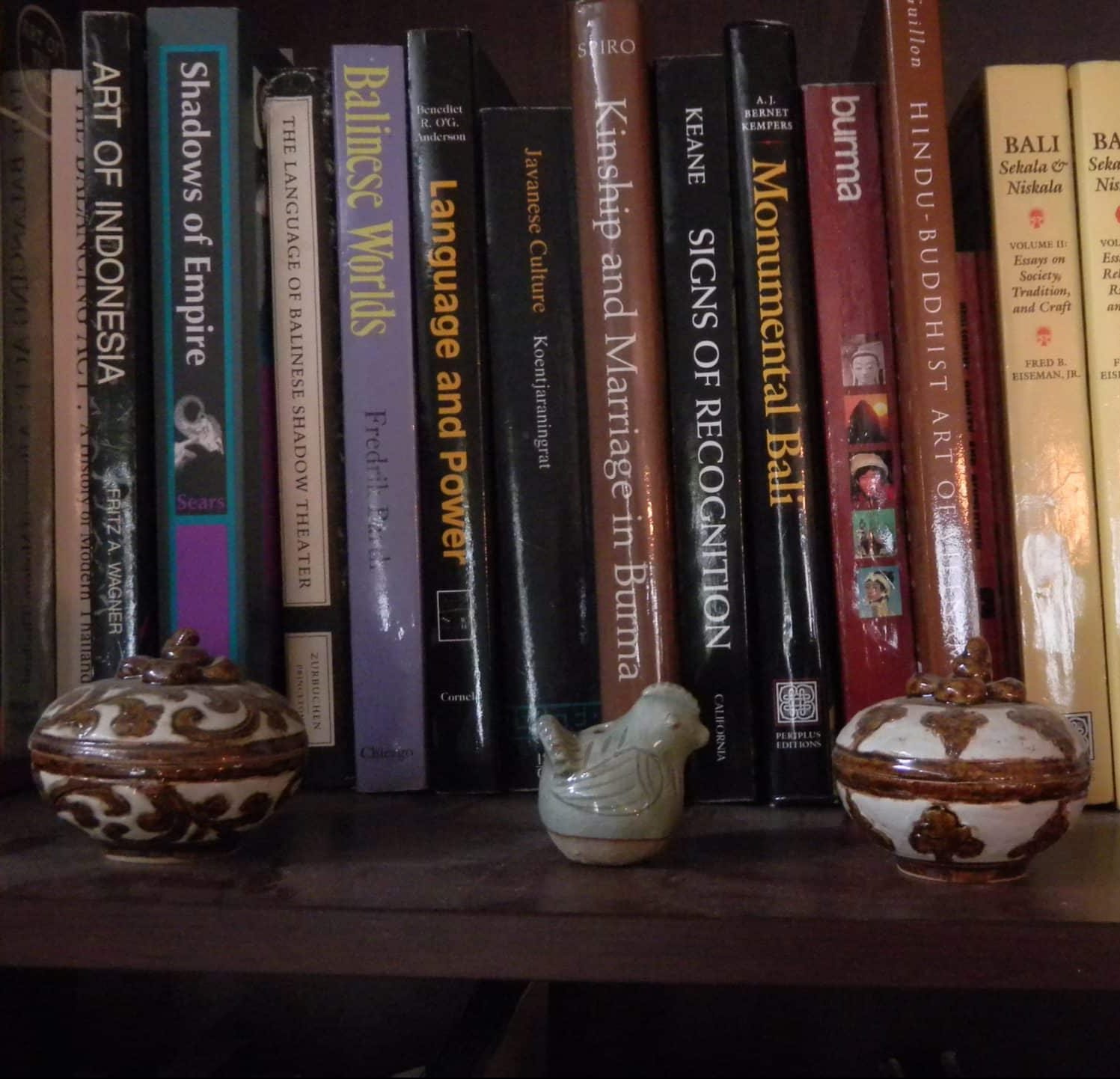
I became a bookstore rat when I was a student in college. I hung out in the shops around the campus and bought used books about world history, cultural anthropology, philosophy, and psychology. I started to build my collection according to a pattern:
Half of my humanities books were about western cultures, and the rest covered other societies.
Seventy-five percent of my humanities books were about the West, the Middle East, China, and India. I emphasized them because each influenced over a billion of today’s people.
The other twenty-five percent focused on little-known cultures. Many of these societies are indigenous, and these books were written by anthropologists who had lived in them. Their studies gave me a lot respect for pre-literate communities. Because their intimacy with the environment and their mythic lives were very rich and largely forgotten by literate cultures, these books exposed me to a wider range of mindsets than ones that have emphasized writing.
I also bought books about science. I focused on liberal arts because cultures fascinated me from an early age, but I found science equally absorbing, and it has been central in modern Western culture. Studying science can add more mental discipline to cultural studies, and exploring other cultures can increase the imagination for studying nature—the range of concepts that scientists use, the diversity of patterns they appreciate, and the types of questions that they ask can broaden. Mixing science and the study of world cultures can enhance both.
The combination of books that I bought encouraged my mental framework to keep expanding, but half of my humanities books were still about the Western tradition because I was born into it. I thereby learned where I came from and discovered the depth in things from my daily life, including religious art (St. Peter’s Basilica in Rome graces the below photo) and the classical architecture on the backs of America’s paper money.

Becoming more grounded in my own culture enabled me to find more meaning in places outside the West than I otherwise would have, because I had something to compare them with. I could then return to the West and see even more richness in it.
My life changed within six months after I started to collect books. Windows to different places and times kept opening up and I began to approach professors in the history and psychology departments, as well as students from different cultures, and discuss their backgrounds with them. My world transformed from one place and time to a wealth of places and times that reflected each other.

A different distribution of books might work better for you. You might be interested in a half-and-half mixture of science and humanities or 75% science. As long as you combine At, With, and Beyond, your horizons will constantly grow.
I draw vertical lines by the margins of the parts of a book that I want to remember and then revisit them. I also write names and terms that I want to recall in the back. If you make a little extra effort to internalize as much as you can from books, you’ll have more perspectives, facts, and facets of ideas in your head to appreciate.
In Silicon Valley I sometimes meet people who whip out their mobile phones to look up names and facts as we converse. These devices make it easy to rely on technologies for basic knowledge. AI-based systems like ChatGPT and Google’s Bard can exacerbate this problem by composing essays on topics that people specify, even when they have little or no knowledge of them. Instead, put as much knowledge in your head as possible, and examine it from more and more angles.
You can combine book reading with other ways of learning. You can spend time in nature, listen to traditional musical performances from many cultures, visit museums, watch plays, and study another language. If you mix these with book reading and read about diverse topics, you’ll cultivate a garden of experiences and ideas that’s much richer than limiting yourself to one culture or discipline. Keep looking At, With, and Beyond your knowledge and ideas. You can regularly have out-of-the-box insights and become a connoisseur of the world and its diverse cultures’ ideas and art.