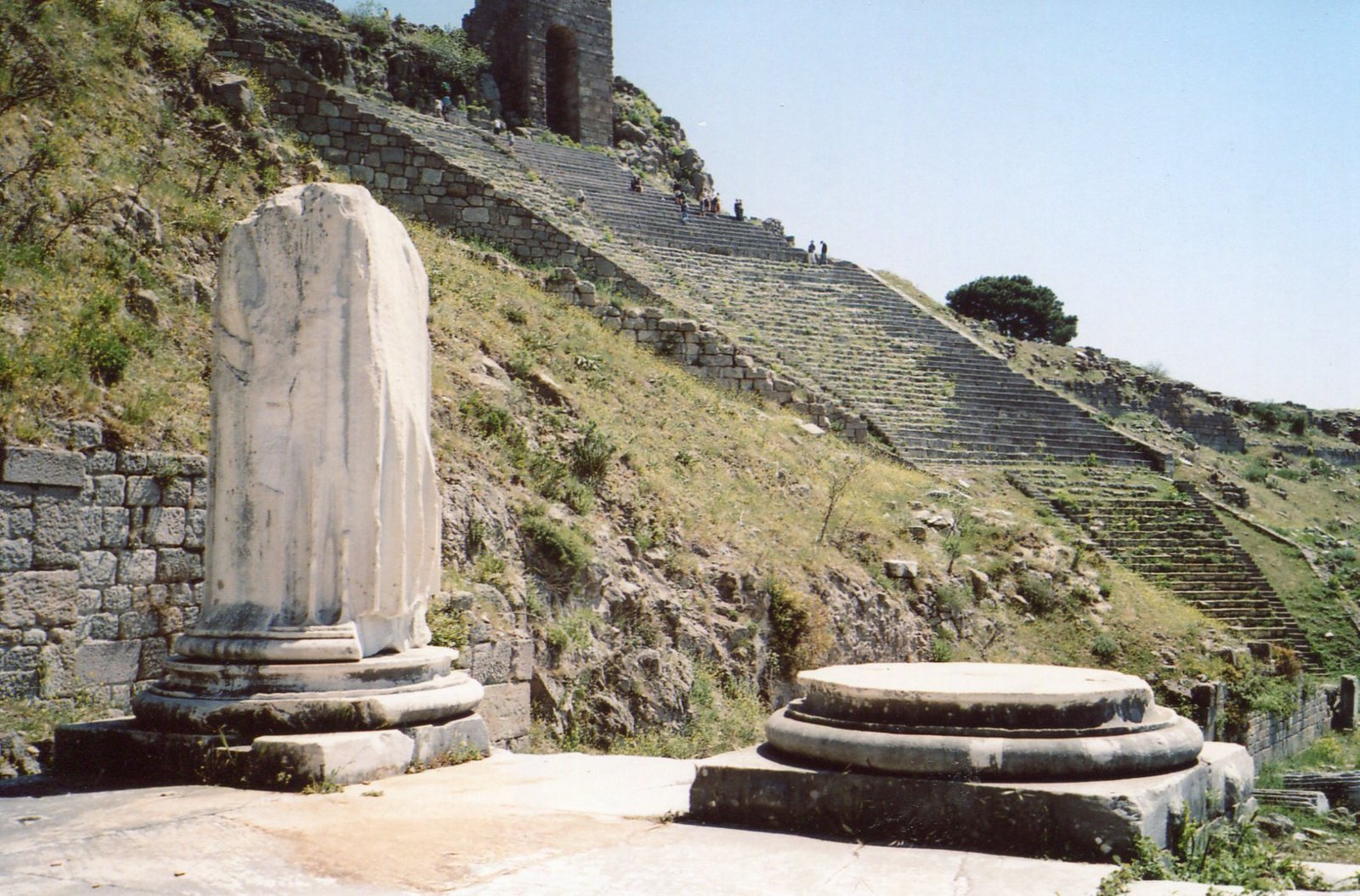
It’s easy to adopt your culture’s assumptions about what a narrative is and not look beyond them. Western assumptions about what narratives go way back to the Homeric poems and Genesis.
Both Homeric poems are unified stories. They’re structured by plots that focus on a problem that the main characters must solve. The Iliad begins with the most physically skilled Greek warrior, Achilles, withdrawing from the war with the Trojans when the Greeks’ leader, Agamemnon, insulted his honor and stole his concubine, Briseis. An ego clash between two guys treating a woman like property isn’t good for the reputation of Western literature’s dead white males, but you can conjure up vivid images of the event. The epic ends with an equally compelling scene. The Trojans, with tears streaming down their cheeks, bury their best warrior, Hector, who gave his life while trying to defend them from the Greeks. The Iliad emphasized human drama that we can visualize and identify with.
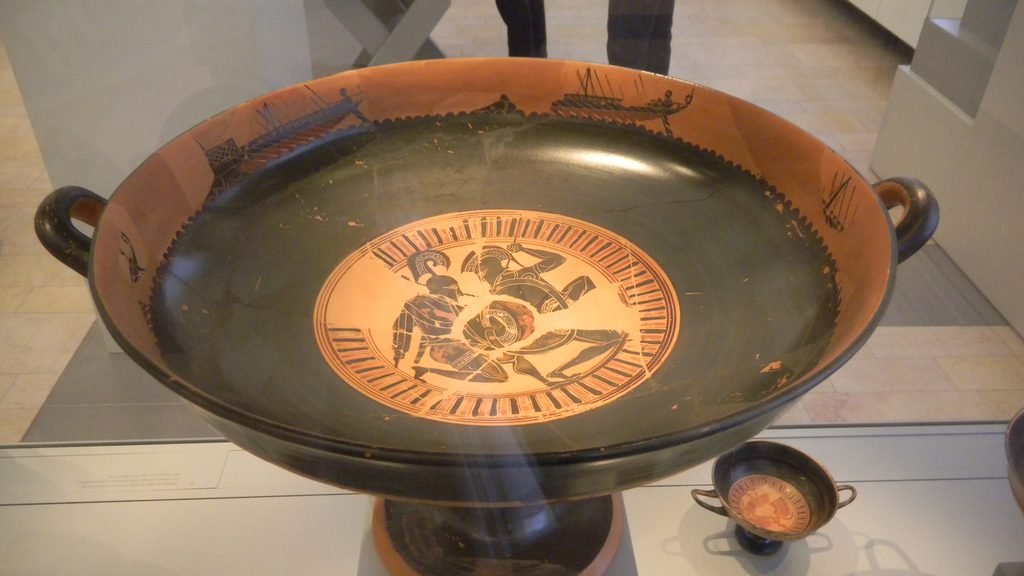
The Odyssey recounts the crafty warrior Odysseus’s journey home after the war. And what a journey! He sails throughout the western side of the known world, encounters fantastic creatures from the giant one-eyed cyclops to Calypso, who holds him prisoner on her island for seven years, tries to make him her husband, and offers him immortality. But during his travails he longs to return to his wife and home. He finally arrives and vanquishes the intruders in his house, who had been vying for his wife and property after assuming that he was dead. The Odyssey is about a nostos, or return. Odysseus returned to family and community—to what’s tangible and cozy.
So both Homeric poems have a goal, and this propels their stories and unifies them. Winning the war and returning home are worldly outcomes that the characters focus on. To a lot of Westerners, it might seem self evident that narratives have this trait.
But India’s most foundational text, the Rigveda, doesn’t have a definite plot or ending. Instead, it’s a collection of hymns that people used in rituals for different occasions. It’s not linear like the Homeric poems’ plots. Its horizons are more open-ended and less bound to temporal and spatial limits. It is not mainly descriptive; its main purpose is not to vividly describe people, places, or events. It’s efficacious instead. It attunes its reciters, chanters, and listeners with the universe’s fundamental energies, which are supposedly conveyed through the Sanskrit language’s vibrations. The Homeric writings are intensely visual instead, and their characters interact with each other much more. The oldest texts in both cultures were created with different assumptions about the purpose of language and poetic verses.
Indra and the Maruts were the Rigveda’s most frequently visualized gods, but the verses don’t go into nitty-gritty details about them. The portrayals are idealized instead. Short passages describe Indra as radiant in arms, breastplates, garlands, ornaments, and chariots. Depictions of him are much briefer than the portrayal of the shield that Achilles used in his fight with Hector. When imagery is used in the Rigveda, it’s in ritualized verses that praise attributes of gods. The Maruts are honored in a similar way. They’re acclaimed for their ornaments, gleaming golden helmets, and glinting spears of lightning. The Rigveda is not nearly as concerned with what the ordinary person sees in daily life. Instead its images are often hyperbolic and embellished in order to dramatize connections between gods and cosmic energies. This tendency to use visualization to idealize and empower gods as they’re praised rather than describe all their visual details has remained dominant in Indian religious art throughout its history.
The Rigveda is also less bound to distinct places, while the Iliad focuses on the city of Troy. The Greeks’ expedition to sail to and conquer the town structures the whole epic. In contrast with the Rigveda, the Iliad is centered on one place and sees it as the goal for the characters. The Rigveda mentions rivers, and one of its earlier books (Mandala 7) recounts a battle by the River Parushni (Ravi), which a chief or king called Sudas fought against a group of 10 tribes. But it only names rivers and people in passing without lingering over their characteristics. Its less detailed geography enables more emphasis on energies that range throughout the cosmos.
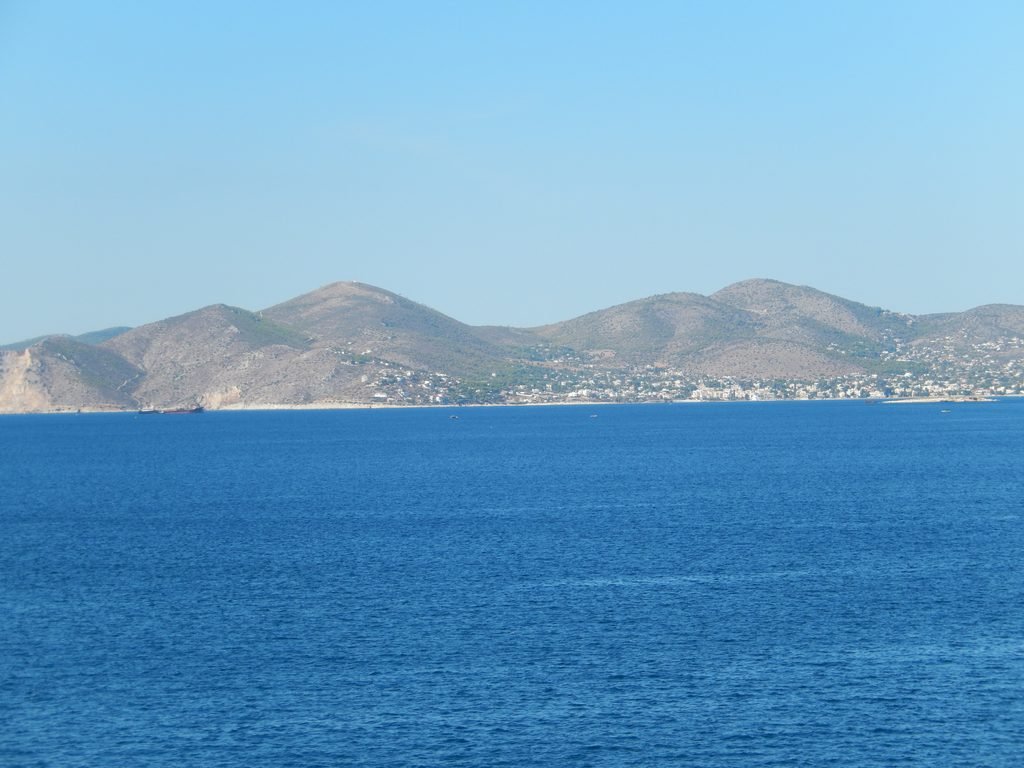
The coast is especially prominent in the Iliad. The Greek troops and ships are beached there, where some of the story’s pivotal dialogs and battles take place. The Odyssey largely looks west, as the Iliad looks east to Troy, and it’s as focused on coasts as Odysseus sails from one island to another until he has his nostos on his own shore. Throughout the Homeric poems, the theme of seafaring to distinct coasts dominates and structures the stories.
Within this world of coasts, sailors, and warriors, the Homeric epics focus on personal interactions and make them seem vividly real. The beginning of the Iliad immerses its audiences and readers in the argument between Achilles and Agamemnon. Different people give impassioned speeches. An ugly little man named Thersites then says, “We have been at war for too many years. Aren’t we sick of all the troubles? We’re only fighting so Agamemnon can take more booty for himself. Let’s just go back home.” Odysseus whacks him on the head with his studded club, and Thersites yelps like a dog and crouches down on his heels with spots of blood glistening on his scalp. The soldiers’ morale returns and they howl with laughter. “Odysseus has struck many blows, but none more useful than the one that just shut this little squealer up!” People are not this life-like in the Rigveda.
But what about gods in the Homeric poems? They’re often like us. The Iliad’s first book ends in a banquet on Olympus, and the gods are arguing as people do. Zeus and his wife, Hera, are going at it. He threatens to lay his hands on her, which no warrior ever withstood. Hera’s son Hephaistos, a crippled blacksmith, comforts her with a goblet of nectar. He pours drinks for the other Olympians. They laugh uproariously at his limp, feast away, and savor Apollo’s lyre playing. This is fantastic balance! An earthly quarrel between men and a heavenly row bracket the first book and impart one of the West’s most common views of reality: the focus on interactions between equally sized entities within tangible spaces that can be visualized.
The Rigveda doesn’t emphasize lateral relationships nearly as much. It’s more centered on gods than on people, and the gods don’t interact in nearly as much detail. It doesn’t focus as much on description or narration. It emphasizes ritual sacrifice and its efficacy. It sings of Indra freeing up the rains by slaying the massive serpent Vritra, but the narratives are short, without lingering over dramatic ups and downs, relationships with other gods, or visual details. Its orientation is more vertical than lateral. Its horizons are less hemmed in by the limits of interpersonal encounters and geographic locations. It also expresses an abundance of energies rather than a few forms that are in proportionate relationships with each other.
Several ancient Greek writers said that the 6th century BCE philosopher Anaximander was the West’s first known mapmaker; he was said to have drawn the inhabited world on a tablet. His fellow Milesian Hecataeus has been admired for making a model that was probably more detailed. Instead of meditating on subtle energies flowing through the vast cosmos, Hecataeus composed his Journey Round the Earth as a description of different places and their inhabitants in the order in which ships passed while sailing along the coasts. Some historians think he wrote it after consulting with local merchants who frequently sailed.
About 100 years later, Herodotus expanded this geography to the whole known world. He came from another town on Turkey’s southwestern coast, Halicarnassus, and was also captivated by the visible world’s diverse places. He wrote about Egypt, Persia, India, Scythia, and Mediterranean societies, describing their customs, histories, and natural features. He traveled to many places and relied on people’s reports about other locations. Some tales are more reliable than others, but he evaluated them and was as objective as he could be. Edith Hall, in Introducing the Ancient Greeks, said that his narratives are so colorful that they have enabled ancient Greeks and Persians to still remain living presences. His description of Spartans’ heroic last stand at Thermopylae and of the Persian king Xerxes ordering the Hellespont’s waters to be flogged bring the ancients to life. Herodotus began the West’s tradition of vivid historical writing, which Thucydides strengthened by detailing the Peloponnesian War.
Indians at that time (the fifth century BCE) were spreading stories about their own historical events. Bards were singing tales that praised kings and glorified their military victories. Stories about the kingdom that the Kuru clan ruled, which was based in modern Delhi’s area, became the core of the Mahabharata. People today still find details about members of the Pandava and Kaurava branches of the clan engaging. They fought over the throne, and tales about them have provided examples of how and how not to live. An elderly man told me that his parents would say, “Don’t be like Bhima” when he was a boy. Bhima was an especially strong warrior, but he had a fiery temper. However, so many didactic teachings (including the Bhagavad Gita) and so many stories from other places and times were added to the core narrative that they finally dwarfed it by the fourth century CE. The Sanskrit professor E. Washburn Hopkins wrote that the Mahabharata seems like a collection of strings wound around a nucleus almost lost sight of.
While Greek historians’ mental frameworks remained more bound to specific places and times, the Indian epic expanded into the whole universe. Its temporal framework extended beyond the local events and into a much longer cosmic history and its succession of cycles of creation and destruction. The American poet and literary critic Kenneth Rexroth, more comfortable with Homeric human-scale stories, geometric proportion, and sharp outlines, wrote “The Mahabharata is as inexhaustible and as exhausting as India itself.” But many Indians have found the epic inspiring. Because it’s all-enveloping, it conveys the deepest meanings of the universe. Rexroth felt that the epic lacks perspective because it includes an overwhelming number of sub-stories and subplots, but its perspective is more on a vast and all-inclusive whole than one place or time. Its association with the whole universe has enabled Indians to see it as part of the Vedic tradition, so it has been called the Fifth Veda.
As the societies that composed the Rigveda migrated into India, their culture converged with local societies that venerated powers (often feminine) that engendered forces of nature that are very dramatic in India, including the heat, monsoons, and abundant growth of lifeforms. Many cultural products there reflect this abundance, including music and visual arts.