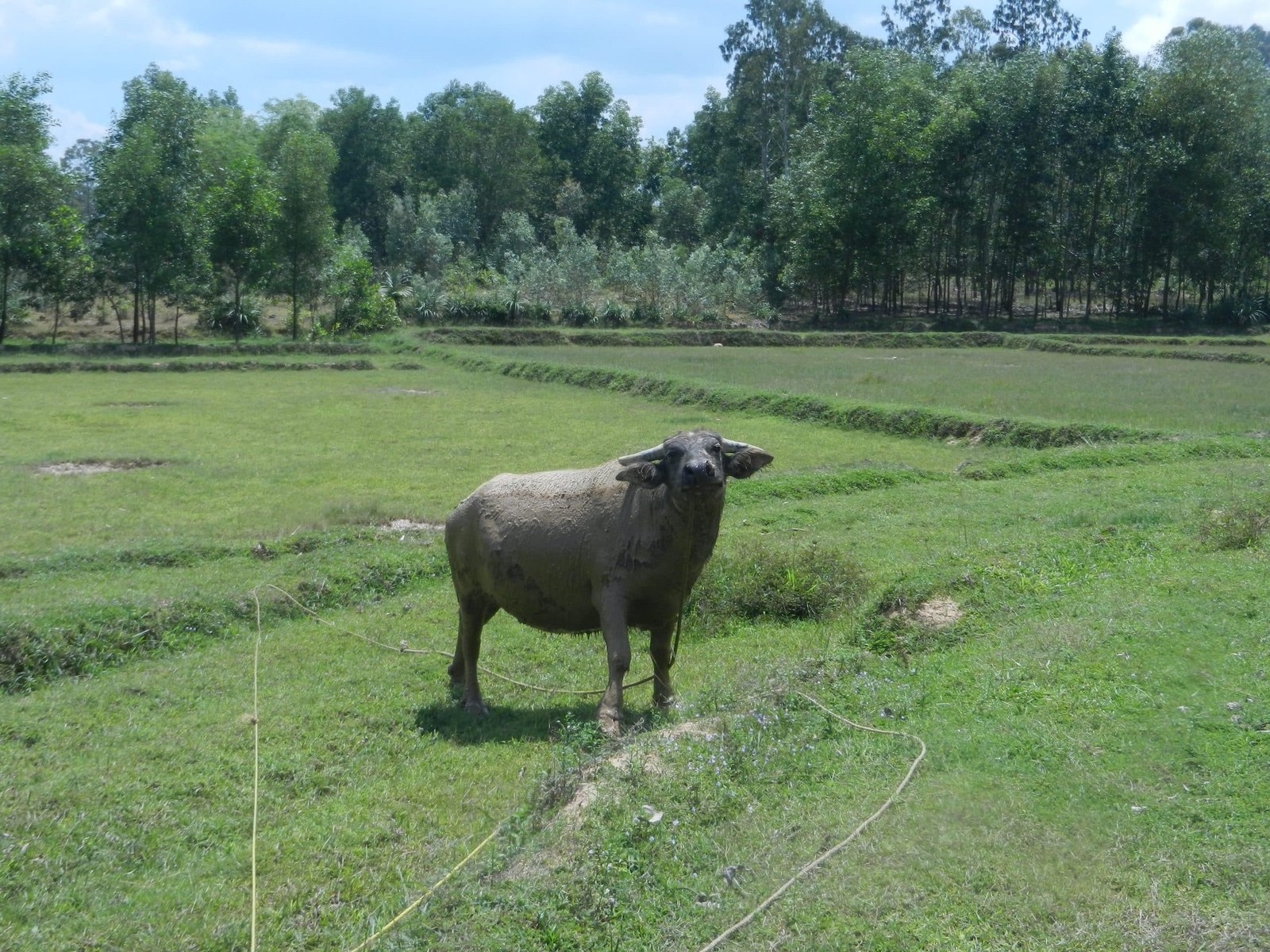
The relationship between people and buffaloes is hallowed in much of rural Southeast Asia, and a man in a village near Yangshuo, China wanted to show me. He was swimming in the river as I explored the countryside. A buffalo suddenly lumbered towards me. It was big and ugly, so I backed off. The man got out of the water and came over to demonstrate that the beast was friendly, and he asked me to pet it. The hairs on its head were as thick as an elephant’s, but it enjoyed the rubbing. I guess it just wanted some love, and its owner went so far out of his way to show me that he must have identified with this animal which people in his region have worked closely with since ancient times.

The buffalo is also highly honored in Vietnamese culture. The image of a child on a buffalo’s back has symbolized peace and prosperity in Vietnam. These are blessings that people in this stunningly beautiful land have often lacked because of invading foreigners and its own rapacious politicians. One of the most ancient images of wellness in Southeast Asia consists of a man on one end of a plow and the strong, docile animal on the other. In lands full of mysterious energies, the buffalo has represented civilized life.
So I will tell you a short story from Laos about the buffalo’s importance in creation. It shows how much humanity’s ancient relationship with this strong, docile animal has influenced thought in one of the world’s most fascinating regions.
Once upon a time, the supreme deities ordered all people to give them offerings at each meal. But the people, being human, disobeyed. The gods caused a flood which covered the earth and drowned almost everyone. But three elders saved themselves, their wives, and their children on a raft. Not too different from Noah’s ark so far.
But they sailed to the gods’ kingdom and hung out there for a while. When the waters receded, they left, and the king of the gods gave them a buffalo. When they returned to the earth, they began to plant rice with the help of their new partner.

Three years later, the noble beast died. A vine grew from its nostrils, and three enormous pumpkins emerged from it. The elders pierced the fruits, and humanity came into the world from them. The elders taught them how to cultivate rice and build houses, and they explained the importance of marriage.
Humanity’s birth from pumpkins issuing from a dead buffalo makes this story different from the Noah’s ark tale, and it expresses the worlds of Southeast Asia rather than the West. Yahweh created Adam directly. But the Laotian tale says we’re consubstantial with animals and plants. We’re embedded in nature, and its energies generate many life forms together.

But we didn’t come from just any animal. We issued from a creature that our ancestors have had a partnership with in producing crops since ancient times. The patterns of civilization are thus close to the forces of creation.
Whether you’re a Christian or not, it’s hard not to find this optimistic view of the world appealing. Life forms are embedded with each other in an ecosystem that’s civilized. I found the lush green fields ringed by mountains stunningly beautiful. Many walks through them made it easy to see how this view of the world could have emerged.