
People in Thailand created a different way of ordering the world than Egyptian temples and pyramids.

Previous articles here explored some of the enchantments of northern Thai temples. The ancient Haripunchai kingdom created highly influential pyramid-like monuments in the town of Lamphun (about an hour’s drive south of Chiang Mai) before the first Thai kingdoms were founded. Lanna’s king Mangrai annexed Lamphun in 1281, but it was one of Thailand’s most influential artistic centers before then. From the 11th to the 13th century, this state battled the Khmers for independence. But during that time, it created art forms that spread to both Chiang Mai (Lanna’s capital since the 1290s) and Sukhothai.
Thai artists took architectural forms from Sri Lanka and India and made them more graceful by lengthening and narrowing them. Haripunchai created its own variety.
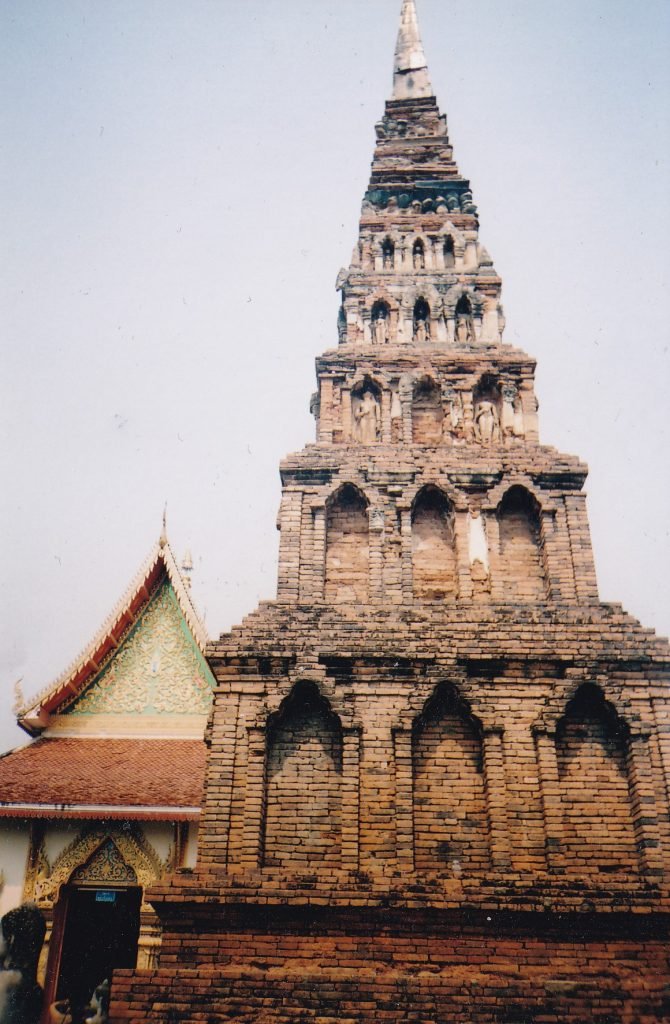
Its characteristic stupa (also called a chedi) is a tall, narrow pyramid with five increasingly small levels.
Its slender outline makes it more light than bulky. It doesn’t spread an overwhelmingly large horizontal frontage like Angkor Wat does. Instead, it playfully rises and tickles the sky.
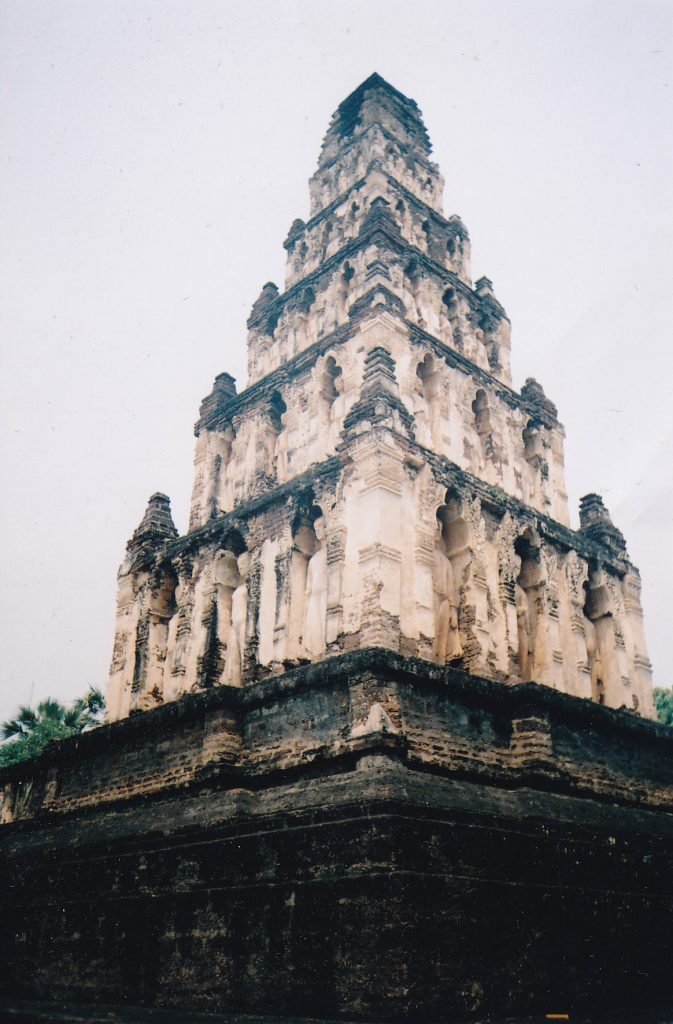
Each side of every level contains three niches with a Buddha statue in a standing position. So five layers of trinities calmly smile and bestow grace on all quarters of the realm.

Lamphun’s Wat Ku Kut sports a stupa that stands next to a large vihara in a style from Ayutthaya (with a stately high roof). As you can see in the above picture, both buildings complement each other. The gossamer spire and the regal hall balance each other. Both are surrounded by greenery. The interplay of art forms thus takes place within nature’s abundance. Art tames the intense power of life in the tropics and makes it graceful.
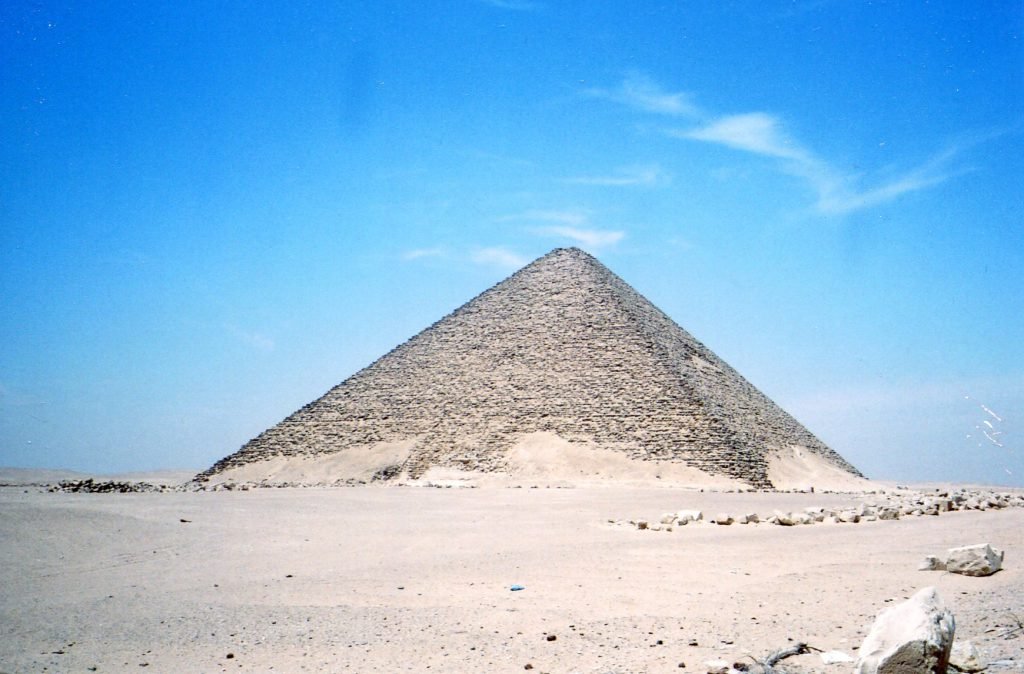
Ancient Egyptians created a different kind of monument that linked the world’s order with the heavens. Pyramids were supposed to be the sun’s rays, which kings’ souls could ascend. Greeks were inspired by this simple geometry when they established a trading community a little north of Giza in the seventh century BCE.
Thai ideas of geometry have been different. Instead of being based on static shapes and abstract lines and curves, as Euclidean ideas are, it’s often oriented to graceful flows of energy. This idea converged from many types of experiences in a natural environment that has been profuse with vegetal growth and in cultures that emphasized a plentitude of different spirits that must be respected. The environment is full of powerful flows of energies, and ideas of geometry render them tame and pretty so that people can live with them. You can explore more of the depths of this way of ordering the world in Thai perspective, sculpture, and another article on temple architecture. Basic ideas about geometry aren’t so basic; they converge from experiences with a lot of historical depth and connections with diverse natural environments. The Islamic world developed another way of thinking about geometry.