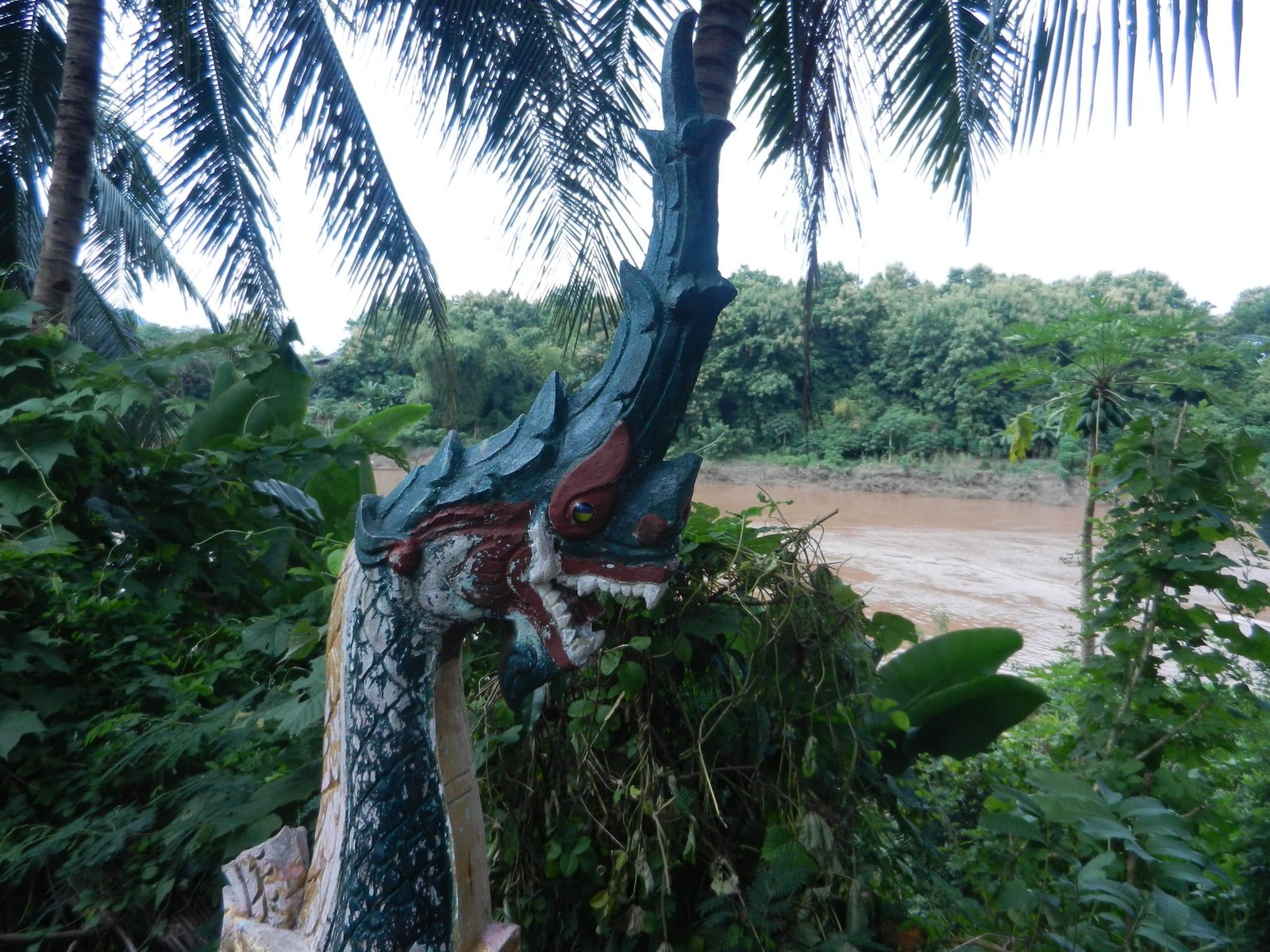
When the great Lao kingdom of Lan Xang was founded in the 14th century, its first king, Fa Ngum, brought the Buddhist faith up from the Khmer court at Angkor, where he had grown up. But this was Laos–things get funky there. Its landscape of diverse valleys and its Tai (the spelling Thai refers to the modern country; Tai refers to all Tai ethnic groups, which live in many countries) cultural roots blended with Buddhism in cool ways.
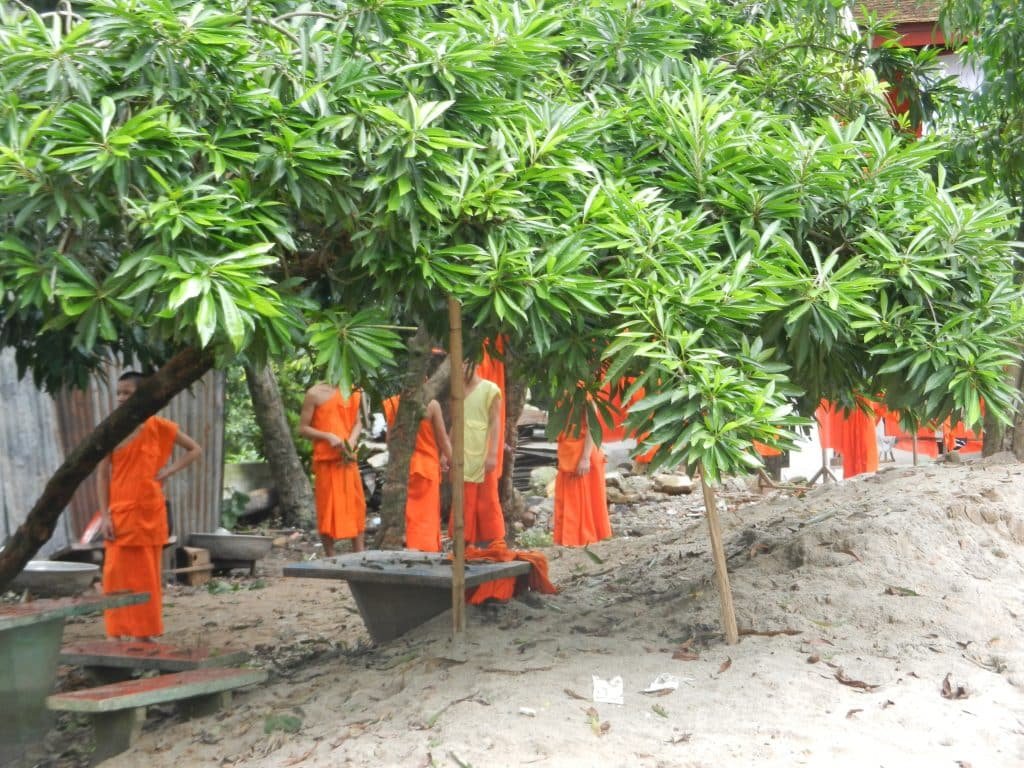
People in Lan Xang already had a wealth of local spirit cults. They called spirits phi, and some folks in Laos still do. John Clifford Holt, in Spirits of the Place, and Yukio Hayashi, in Practical Buddhism Among the Thai-Lao, wrote that people in Laotian villages populate their environment with a colorful variety of spirits.

Some of the most important are the phi sia–spirits of the deceased father and mother. They protect the family and reside in one of the house’s pillars. Several traditional cultures in Indonesia also held this idea. Roxana Waterson, in The Living House, wrote that this idea might have formed around the Yangtze River when communities began to farm rice before 5000 BCE. They later migrated into mainland and island Southeast Asia as their own populations grew.
Parents living in one of your house’s pillars? It’s an attractive idea if you all got along, but not for a man or woman with a nasty mother in law. There’s Fred Flintstone’s worst nightmare!
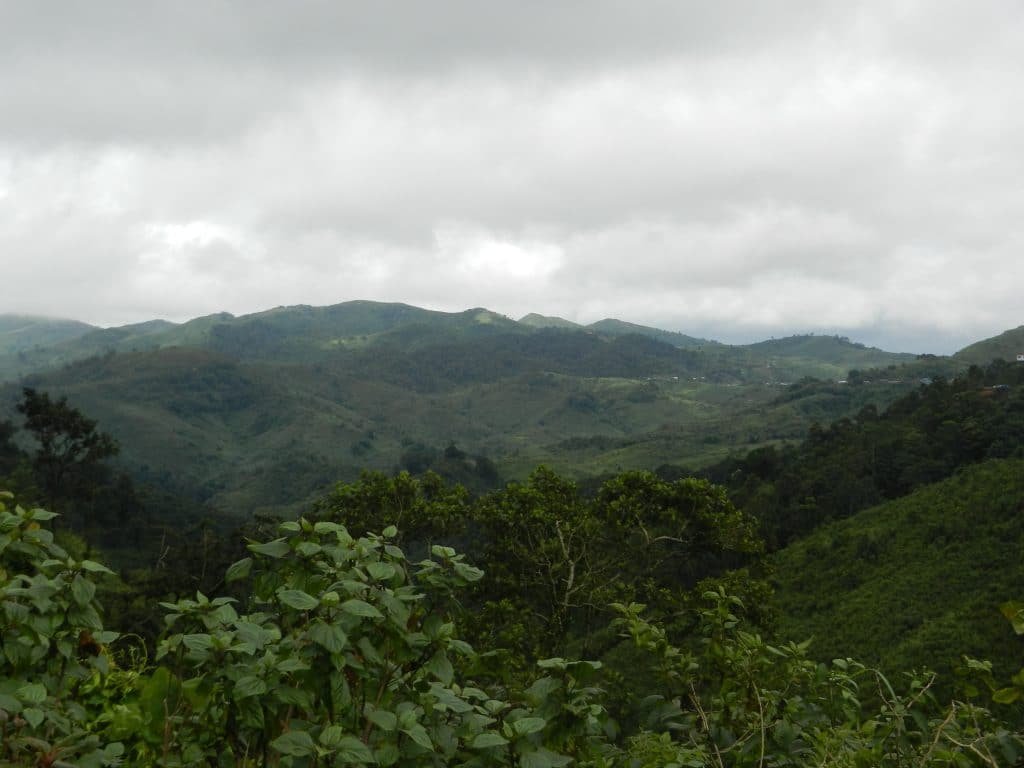
But this is Laos, not Bedrock, so its natural and spiritual landscapes are much more lively. Lots of other spirits are supposed to hang around Laotian villages, including:
Phi ban–village spirits, who look out for the whole territory.
Phi fa and phi thaen–celestial spirits and sky spirits.
Phi Tonmai–spirits of the trees.
Phi pa are spirits of the forest–they’re untamed.
Phi thammasat are spirits of the natural environment in general.
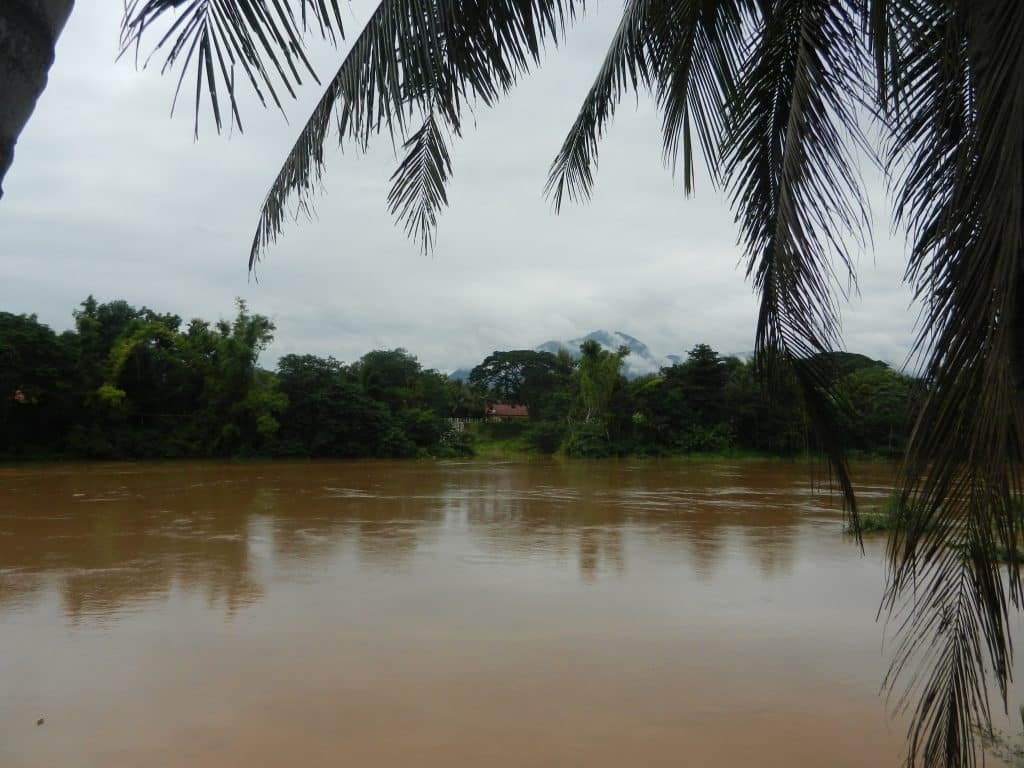
With the abundance of foliage, rivers, and mountains in Laos, it’s no surprise that imaginations have cooked up many beings who energize them.
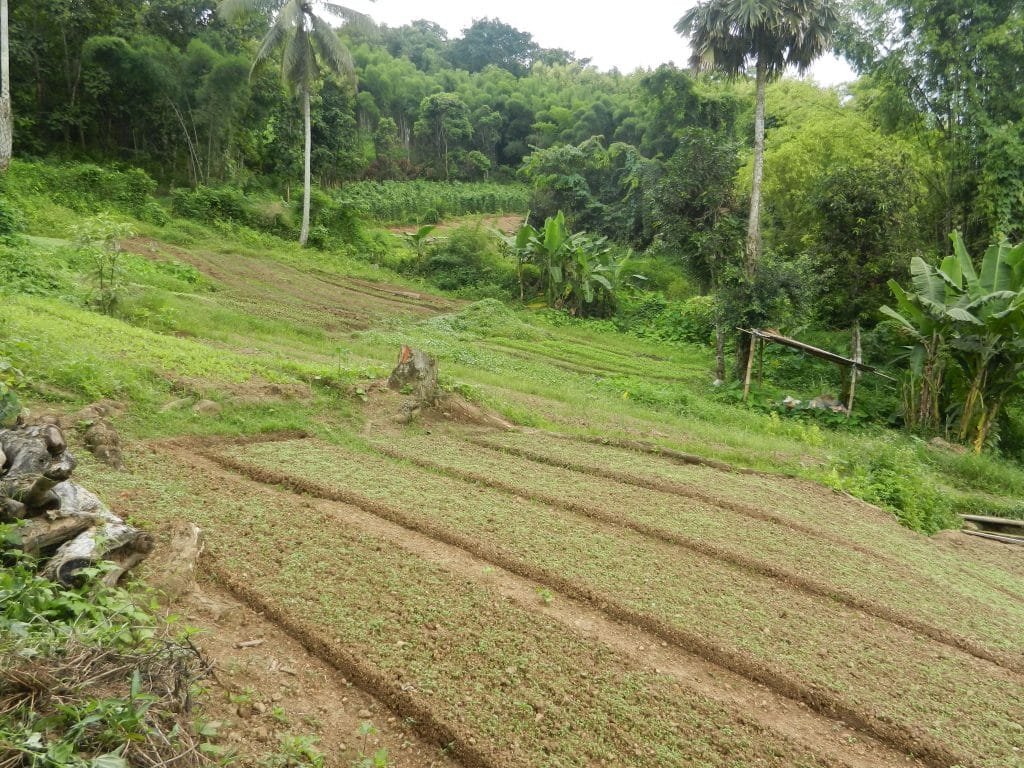
There are also phi hai and phi na, who are spirits of the rice fields, who empower and guard them.
Spirits with bad attitudes abound too. Phi taihong are spirits of people who died violently, phi borisat are anonymous evil spirits, and Phi ba are crazy spirits.
Most cultures in Southeast Asia have imagined an abundance of spirits in their surroundings. Their worlds have been pluralistic; no single spirit dominates nature to the extent of rendering the others insignificant. No Yahweh or Allah towers over everything and insists, “Only me!”
Many cultures that embraced Buddhism then brought the spirits into a hierarchy under the great teacher. John Clifford Holt saw this in Sri Lanka and modern Thailand. This has been common throughout Southeast Asia. All the spirits are in their current existences because of karma from past lives. A murderer thereby becomes an angry ghost. The different types of spirits were thus rationalized into a system. Each one’s is in his place because of the law of karma. All depend on the Buddha’s compassion for liberation.
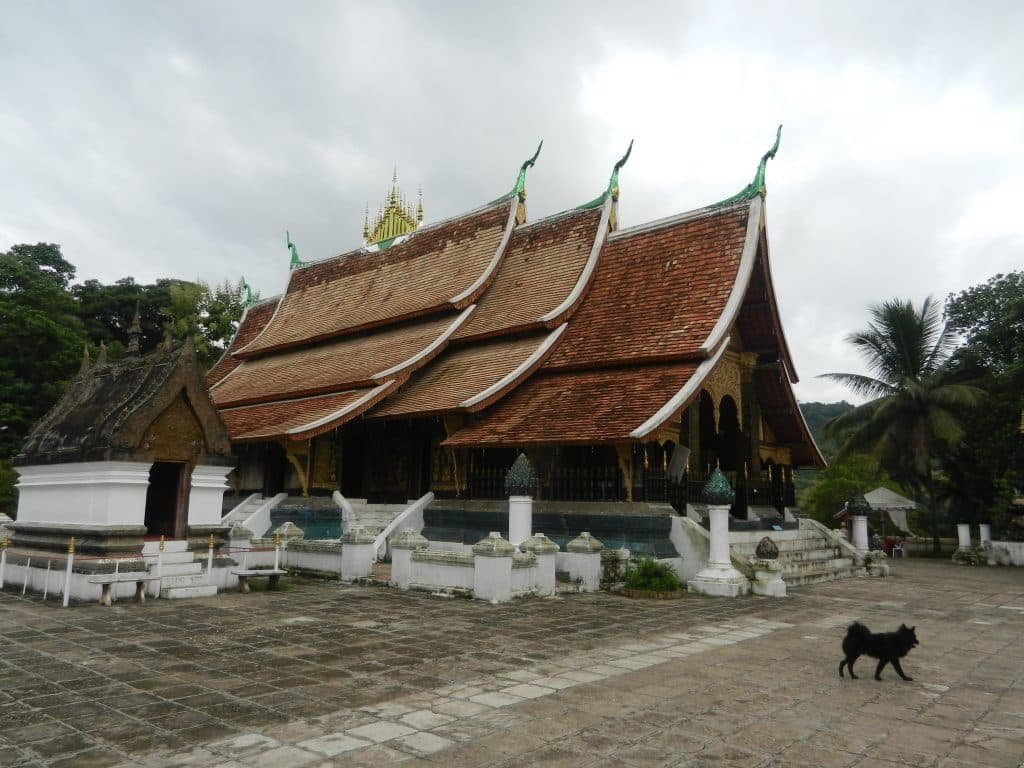
But Holt found Laos to be more dynamic than a static hierarchy, as many other Southeast Asian cultures are. Buddhism and spirit cults have usually been two coexisting systems. People visit the local wat (like Luang Prabang’s Xieng Thong in the above photo) and respect local phi without integrating both belief systems into one framework.

Mountains divide it into riverine valleys, and different communities follow their own local traditions. This fosters a cultural landscape that’s as vibrant and diverse as the natural one.
Three-dimensional perspective, which Westerners have emphasized, is less meaningful here. Laotians adapted Thai styles of painting, which blend many scenes and characters into scenes that are both vibrant and graceful.

Laotians have done the same with sculpture.

This includes ways they’ve arranged Buddha statues.

In the next article, we’ll see that when Lan Xang grew in the 16th century, it still retained a lot of old beliefs so that multiple ways of seeing the world still existed side by side when Laos was most centralized. We’ll also find that this unique kingdom deserves to be much better known than it is.