
A recent article here began to explore ways that ideas of truth can vary in different cultures. A common theme I’ve found has been constancy. This is what the Middle English (spoken from about 1150 to around 1475) word treuthe and the Old English treowth meant. People are expected to be true to their word, and lovers are supposed to be true to each other. Many modern Westerners have held that thought should be constant to facts and scientific laws. But other cultures have shown that there is a magnificent amount of variety in ideas of what is held constant to what. The previous article about truth examined ancient Greece, ancient India, and traditional China. We’ll explore more societies’ ideas here and see how they together can help us update ideas about truth.
People in many indigenous cultures have conceived of natural powers and spirits, which they have tried to keep their lifestyles constant to. For example, the anthropologist Colin Turnbull, in The Forest People, wrote that the most important deity for the Pygmies was a spirit that permeated the forest that they lived in. This spirit sustained all life in the forest and made it a safe home for its inhabitants.

Pygmies thanked this spirit with a ceremony that they called the Elima. This ritual celebrated the harmony between their community and the forest, and it was considered so sacred that it was the only ceremony that they would not let Turnbull observe.
Many other societies conceive of a fusion of power and soul that permeates and animates nature (such as Polynesian mana, Lakota wakan, Iroquois orenda, and Nuer kwoth). It can animate objects, often ones that are prominent or unusual (such as an oddly shaped stone or an unusually large tree) or valuable. In Java the musical instruments of traditional gamelan orchestras are believed to have this power. Musicians must walk around them because stepping over them is considered sacrilegious. This power can be beneficial or harmful, and people in these societies must live in harmony with it.
People can also acquire it. In Java it can give a ruler his strength, and a businessperson his wealth. Many Javanese believe that people who have a lot of this power are calm. Those who show emotional extremes are thus often seen as lowlifes. Several years ago, I was in a restaurant in a city in central Java called Yogyakarta, and I met an American couple who had just arrived in Indonesia. America’s baseball season had just ended and I asked them which team won the National League West. I was elated when they told me that a team I was rooting for was going into the play-offs. “Yes! Yes!” Though I didn’t shout it, it was louder than normal conversation. Several people in the room quickly turned in my direction, as though they had never seen anyone show his feelings in public before. This power is a constant in nature and society, and people’s behavior is expected to be constant to it. Mine wasn’t constant to it, so the people around me found it alarming.
Many Native American cultures have emphasized constancy to helpful spirits. The anthropologist Paul Radin wrote that many indigenous societies in North America have seen nature in terms of personalities. The Apaches, for example, have associated some animals with archetypal spiritual powers. A person can invite the power of an animal to enter him. Eagle and buffalo powers have been particularly common. He is then responsible for treating it with respect. His behavior must be constant to the ways of his guardian spirit.
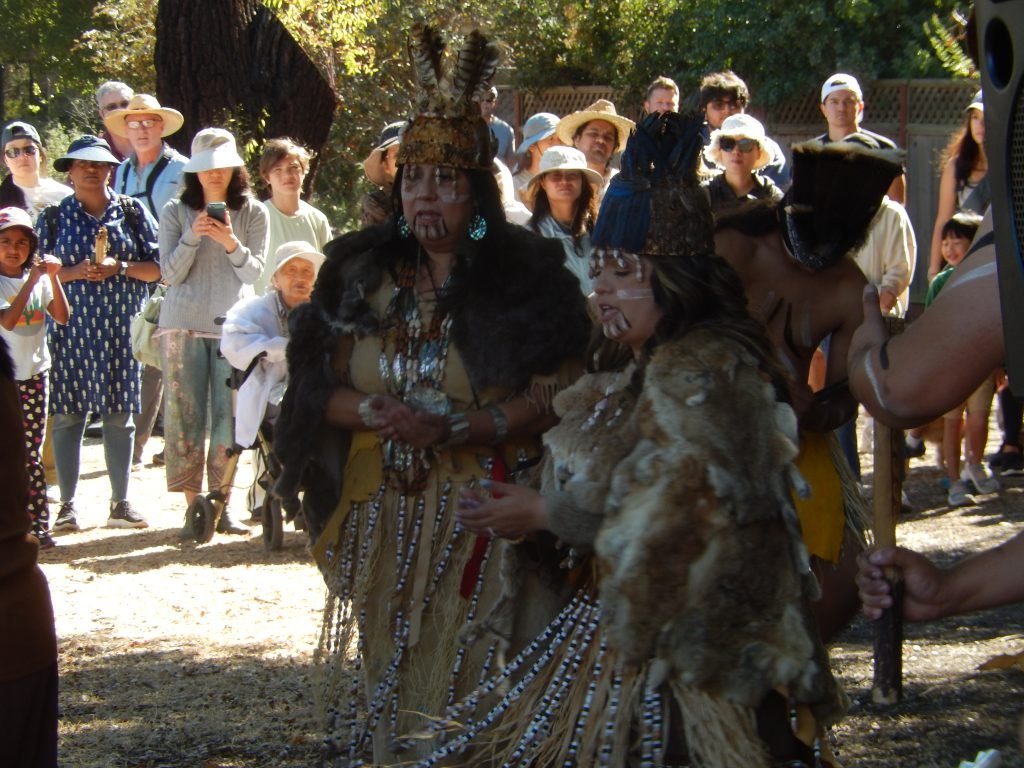
The Ojibwa in the north Midwest have believed that a person can obtain health and good fortune with the help of guardian spirits, called grandfathers. Before contact with the modern world, a person’s aptitudes and successes were believed to depend on help from these guardian spirits, and he had moral responsibilities to them. These gifts were not free; the Ojibwa believed in a principle of reciprocity in nature, and people thus had to respect these spirits or they could no longer count on their help. The need for good relationships with the grandfathers was thus a constant aspect of life.
People in many indigenous cultures also conceive truth as constancy to traditions. They live in ways that are constant to them, which many societies believe were created in mythic times. Australian aborigines have felt that the world and society were created in Dreamtime, when the world was not yet fully awake. The British anthropologist Peter Worsley wrote that Aborigines have seen their land as full of sacred sites where the Great Beings passed when they created the world. They emerged from their slumber under the ground and began to wander the land in search for food, shelter, and company. As they wandered, they shaped the surface of the land, forming plains where they lied down, hills where they vomited, and creeks where they urinated. After forming the land, each Ancestor transformed himself into one of its features.
Dreamtime is thus a conceptual framework for the world. Each Ancestor left a meandering path of features on the landscape that were created by events during his journey. The Ancestors sang the names of places and things into the land on their travels. Australia is marked by thousands of these songlines. People sing songlines as they travel, and different sites have different songs. These songs contain social taboos, customs, and instructions for hunting particular animals and gathering particular foods and medicines. Aboriginal culture has often focused on being constant to what happened in Dreamtime.
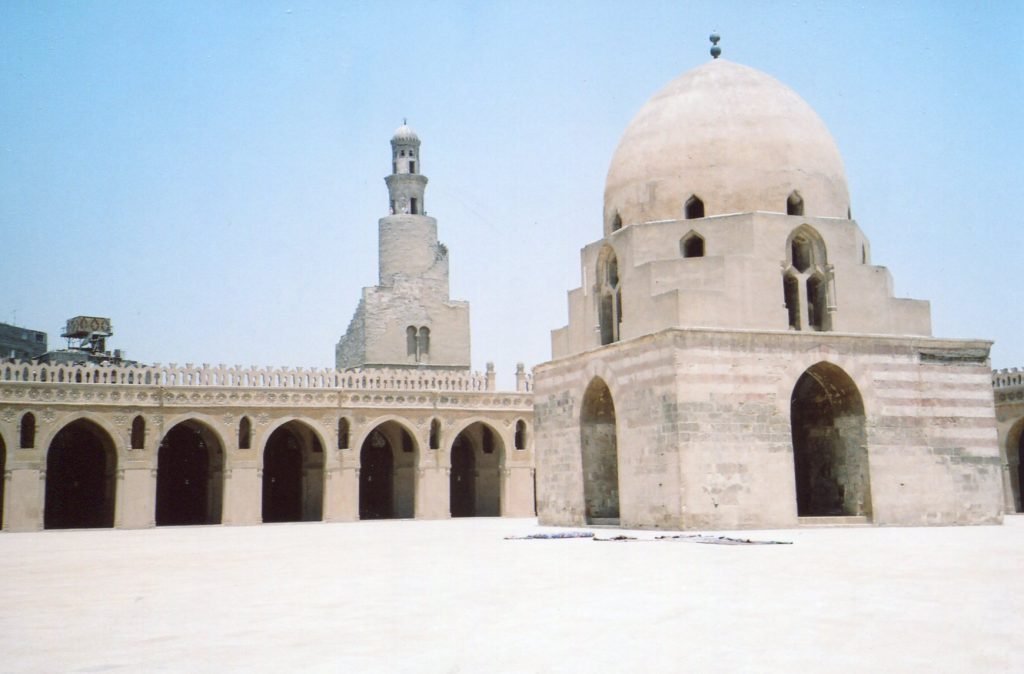
Many Christian, Islamic, and Orthodox Jewish traditions see truth as being constant to God. Muslims thus follow His proclamations in the Quran. The second Surah of the Quran proclaims that this book is not to be doubted. The Quran is believed to be God’s last and most complete message to humanity, right down to proper horse care. God for Muslims is al Haqq (The Truth), and all creation and all laws are constant to Him. One of the most sublime expressions of this idea is the rule that every Muslim face Mecca at a precise time, five times a day. While performing a prescribed sequence of gestures while standing, kneeling, and prostrating, he recites the first Surah of the Quran. All believers thus face the same direction at the same time and praise the God who created them, in the words that He gave humanity to live by. All are thus from Allah. He created nature and people, and His creation praises Him. Mosque’s courtyards, like the one in Cairo’s Ibn Tulun Mosque, express people’s direct relationship with God by placing them directly under the sun.
The Torah and Talmud are central books in Jewish religious traditions. Both contain God’s laws, and children are encouraged to debate the meanings of laws from the Talmud, including how they apply to the internet today. The Talmud is thus still a living tradition. The Shariah is divine law according to Islam, and it’s also still a living tradition. Seyyed Hossein Nasr wrote that because Islam is a total way of life, the Shariah embraces all aspects of life, from religious rites to business. According to Nasr, Shariah came from shr (road), and all Muslims must follow this road. Both Jewish and Islamic cultures developed detailed systems of God’s laws, and much of their thought has focused on interpreting them and being constant to them.
Jewish and Islamic traditions have also had strong devotional aspects as well as legal ones. Devotional traditions go back to books from the Old Testament such as The Song of Songs and Psalm, which are full of prayers to and praises for, the Almighty. Psalm 148 sings, “Fire, and hail; snow, and vapors praise the name of the Lord.” As in the bow to Mecca, all nature praises its creator.
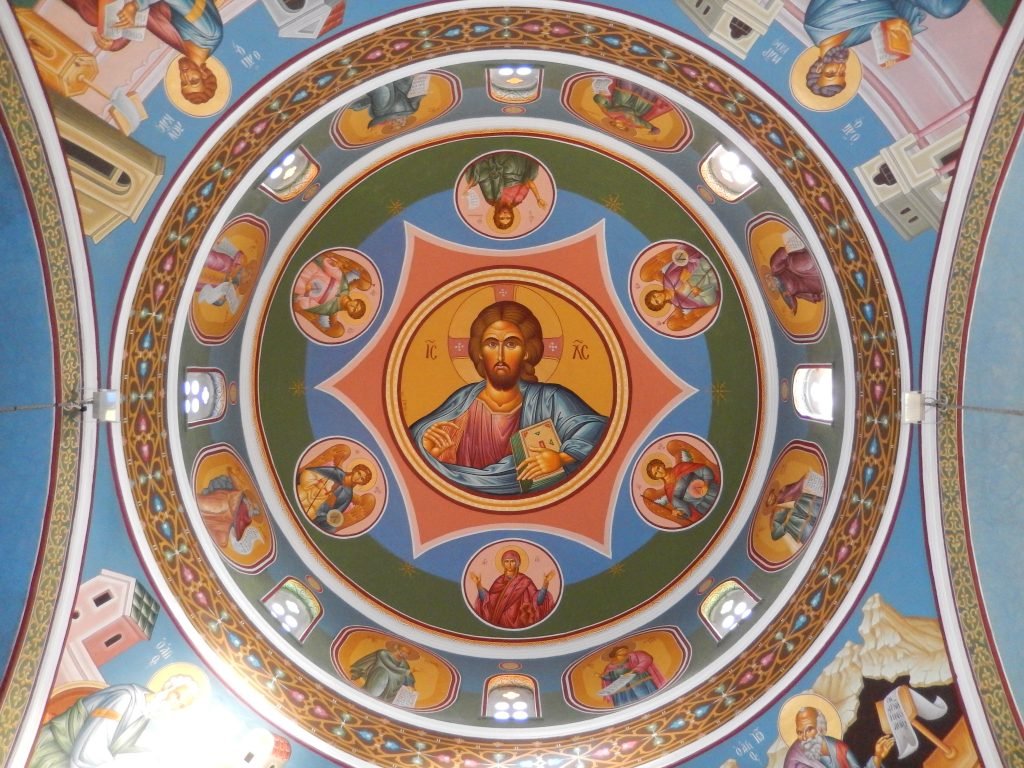
Many mystics see truth as constantly remembering divinity. Islamic mystics call this remembrance dhikr. which means seeing divinity in everything one thinks and does. This is also what Krishna told Arjuna to do in last book of the Bhagavad-Gita. According to many raja yoga traditions, if one constantly thinks about one thing, he will ultimately realize it. Thus the spiritual aspirant should always think about divinity. The 15th century German ecclesiastic Thomas a Kempis said a similar thing in his Imitation of Christ; Christians should think of Jesus in everything they do. Orthodox Christian iconography encouraged worshippers to do this as well.
All these spiritual traditions help the aspirant realize that all people came from a common spiritual source, which we must try to reunite with. Sufis imagined a beautiful metaphor for this. The ney (a Persian flute) is known for emitting a melancholy tone because it longs to reunite with the reed bank that it was cut from. Mystical ideas of truth take the idea of constancy to the extreme extent of surrendering oneself and merging in the source of everything in the universe.
In mathematics, a system of axioms has to be consistent. It must not be possible to deduce two mutually contradictory results from the same system. 2 + 2 can only equal 4, not 4 and 5, or mathematics would be as useless as building a skyscraper out of rubber. Mathematical laws are constant; they do not change. Physical laws are grounded in mathematics and are thus sound.
Another idea of truth that some modern Westerners have held has been existential. What is true is so for the individual. Each individual has his own patterns of thought and living and what is true for him is what is constant to those patterns, but it may not be constant to the patterns of other people.
So there is a marvelous variety of ways that different societies and disciplines have conceived what is constant to what and the nature of this constancy. There are many ways that ideas can mix in a world-view. Assumptions about what is most fundamental (and thus what knowledge must be constant to) reflect the rest of the world-view This doesn’t mean complete relativism though, since cultures emerge and live within the limits of their natural environments; both reflect each other.
People thus often get trapped in their culture’s assumptions of what truth is. They assert something that all knowledge must be constant to, reduce it to its terms, and become blind to other ways of thinking. But assumptions about what truth is have a wonderful aspect: if we examine them deeply enough they automatically point beyond the conceptual framework that they hold knowledge constant to, and they don’t point beyond only once, to another perspective which is now treated as the ultimate, but over and over, into views of the world that become ever more rewarding. The cultures that hold thought constant to basic principles have so many facets, and these facets reflect other cultures’ varieties. So as we look At/With/Beyond, our thought automatically expands to other more varieties. Expansion is as basic to thought as constancy to a limit.